
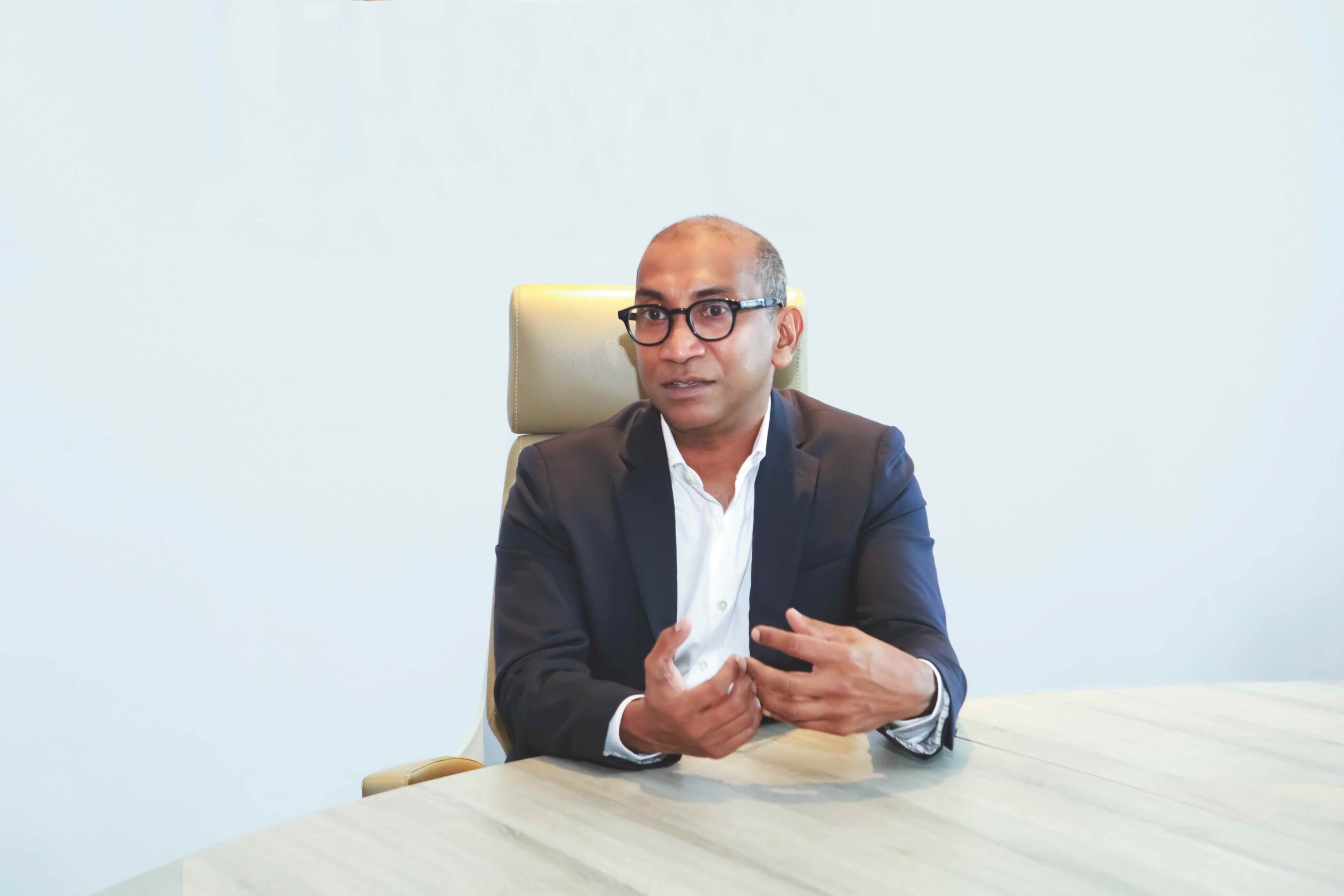
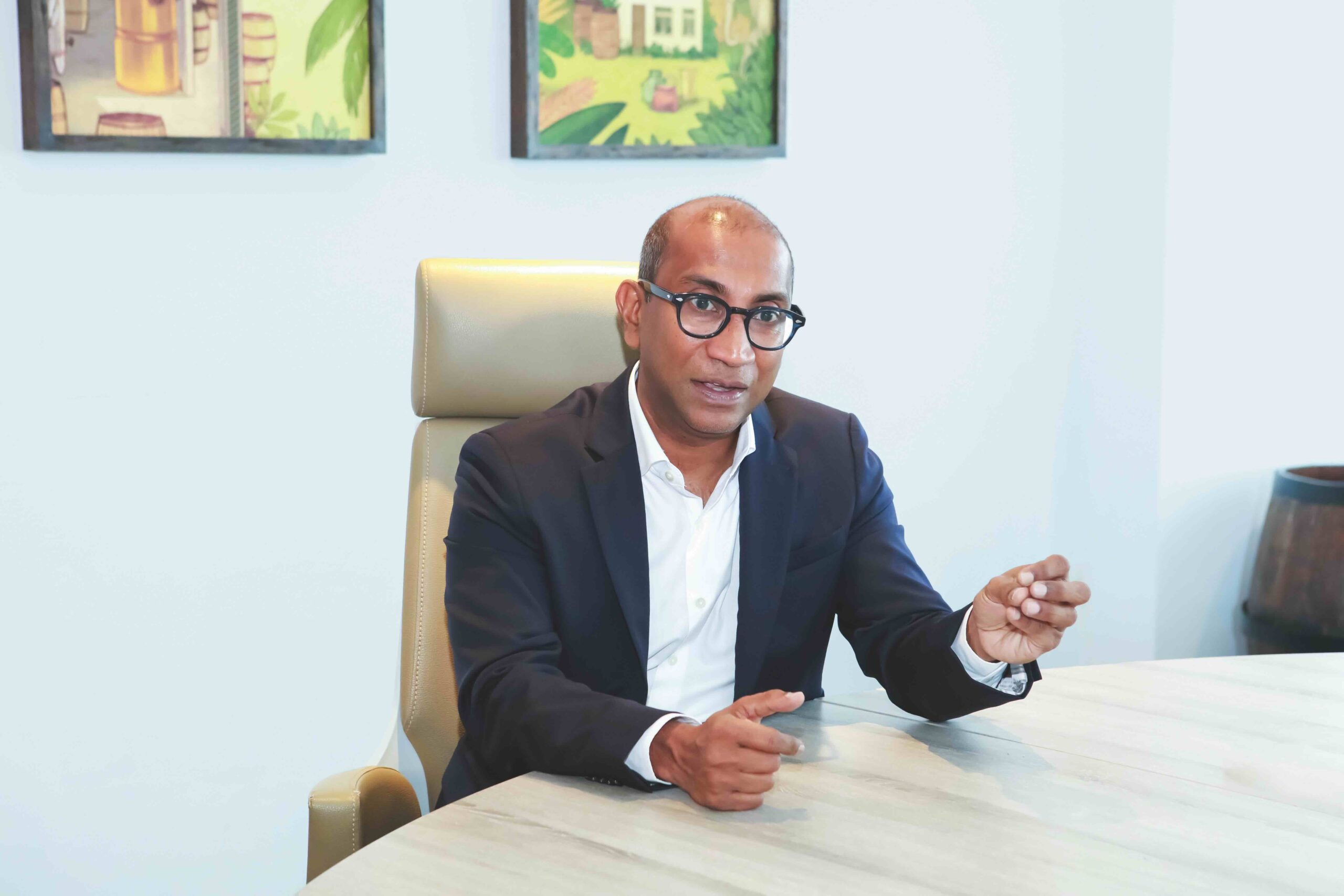
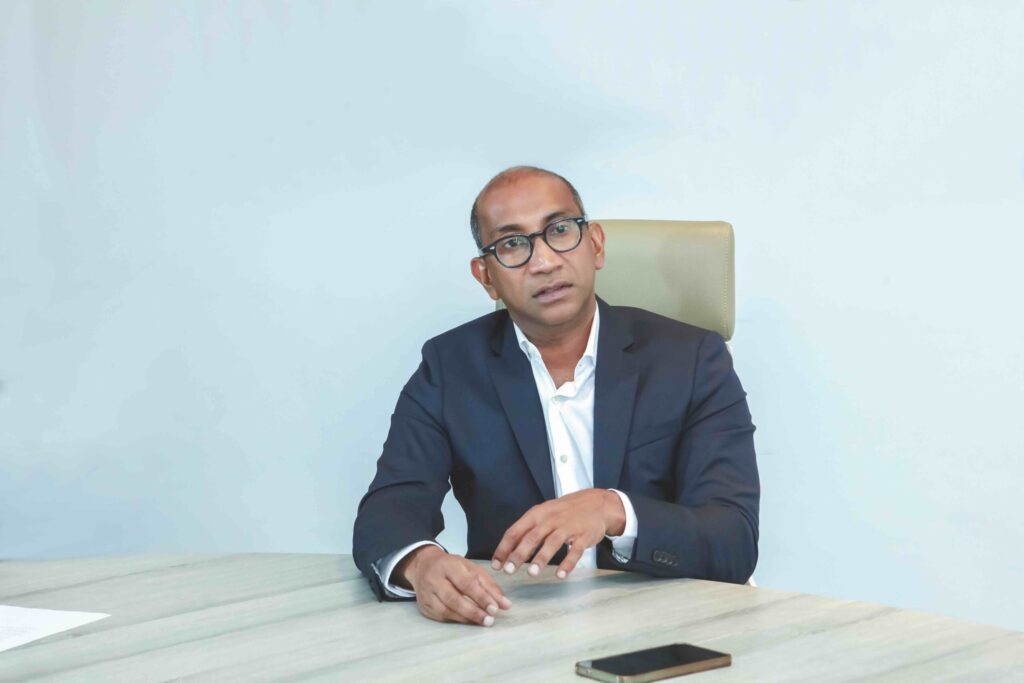
From its century-old origins in Sri Lanka’s distilling industry to its growing global footprint, Rockland Distilleries continues to evolve while remaining firmly rooted in its heritage. Speaking with Business Today, Managing Director Amal de Silva Wijeyeratne reflects on the company’s philosophy of balancing tradition with innovation, its response to shifting consumer trends, and the importance of people and culture in sustaining long-term growth. He shares insights into Rockland’s expanding global outlook through Three Families, a collaborative creation developed with Dilmah’s Dilhan Fernando and award-winning mixologist Ryan Chetiyawardana, which brings together Sri Lankan ingredients, tea expertise, and contemporary mixology to redefine Asian flavor on the world stage.
Words: Jennifer Paldano Goonewardane.
Photography: Sujith Heenatigala.
Rockland has been one of Sri Lanka’s most recognizable alcohol beverage companies since 1924. How do you see the company evolving while preserving its distinctly Sri Lankan identity and heritage?
One thing we always ensure, and consider extremely important, is that we never lose sight of our roots, traditions, and history. That heritage is the very magic of Rockland, and we are deeply committed to preserving it. Even as we redesigned this office space into a modern, cutting-edge environment, we consciously retained elements of the old alongside the new, because that balance reflects who we are as a company.
While we speak of Rockland evolving, we are simply continuing the vision our founders began in 1924. Back then, it was an ambitious and entrepreneurial undertaking, driven by the excitement of creating the finest arrack in Sri Lanka using modern steel distillation methods and establishing one of the country’s first commercial distribution networks. Innovation, therefore, has always been embedded in Rockland’s DNA. It continues to shape how we move forward today while remaining firmly grounded in our Sri Lankan identity and heritage.
As consumer preferences, particularly among younger audiences change rapidly across the beverage industry, how is Rockland adapting its brand strategy and product innovation to remain relevant in this evolving landscape?
Consumer preferences today are very different from those in the past. Earlier, people simply enjoyed a drink, whereas today consumers, particularly younger audiences, want to know more about what they are consuming, from the ingredients to the craftsmanship and story behind the product.
As a result, we place significant emphasis on the ingredients and authenticity of our brands. Take Colombo No. 7 Gin, for example. It was developed as a classic London Dry Gin infused with distinctly Sri Lankan ingredients such as curry leaves, cinnamon, and ginger, giving it a unique local identity while maintaining international standards.
However, consumer tastes continue to evolve. Today’s drinker is increasingly looking for lighter, more refined flavor profiles. This led to the creation of Colombo No. 9 Gin, which incorporates Earl Grey tea and offers a softer, more floral and oriental character while still remaining within the London Dry Gin tradition.
Another shift we have observed is in drinking culture itself. Consumers are no longer focused on quantity; instead, they are seeking quality and experience. People want every drink to feel exceptional. Even if they consume only one or two drinks, they want those drinks to be perfect. That insight led us to develop Pelican Tonic.
We recognized that if consumers are pairing our spirits with mixers, those mixers must meet world-class standards as well. Modern consumers are also increasingly conscious of health and wellness, seeking options with less sugar, fewer calories, and more natural ingredients. We incorporated those expectations into our mixer range as well. I believe we will also see growing interest in lower-alcohol alternatives and similar innovations within the industry.
What have been the biggest business challenges facing the industry in recent years, and how has Rockland positioned itself to navigate economic volatility and shifting market conditions?
Like many businesses and entrepreneurs in Sri Lanka, we navigated a highly challenging economic environment over the past few years. The industry faced significant pressures, particularly from rising taxes and excise duties, which have increased consumer costs and reduced overall market volumes.
As a result, operating within the distillery sector has, at times, become increasingly difficult from a commercial standpoint. However, we have remained resilient and continued to move forward.
A key part of that has been our ability to identify internal efficiencies and strengthen operational discipline, ensuring that the business remains profitable and sustainable even during periods of economic volatility. At the same time, one principle we have never compromised on is integrity, committed to running this company with the highest standards of transparency, responsibility, and professionalism. That long-term approach has helped position Rockland to withstand market challenges while continuing to build trust with consumers and stakeholders alike.
Speaking of challenges, what more needs to be done to address the growth of the illegal alcohol trade in Sri Lanka?
It requires strong governance and consistent enforcement. It’s encouraging to see greater action being taken against those operating outside the legal and tax framework, and as a result, illicit operators are no longer as visible in the marketplace as they once were.
While the issue may be less apparent in Colombo and the Western Province, it has historically been more prevalent in other parts of the country. It’s encouraging that recent enforcement efforts appear to be making a meaningful impact.
A notable increase in government excise revenue indicates that income that may previously have been lost to illegal operators is now returning to the formal economy. The authorities have clearly made progress in suppressing illicit alcohol production to a significant extent. That said, there is still more work to be done. Measures such as the effective implementation and monitoring of excise duty stickers can be strengthened further, and there remains an opportunity to reduce the production and distribution of moonshine alcohol even more aggressively. Beyond the economic implications, this is also an important public health issue, as illicit alcohol can pose serious health risks to consumers. Positive progress is being made, and it’s encouraging to see the direction things are moving in, although continued vigilance and enforcement will remain essential.
The beverage industry is closely tied to hospitality, tourism, and nightlife culture. To what extent has the revival of tourism influenced Rockland’s business outlook and growth strategy?
The revival of tourism is extremely important for the hospitality sector and for companies like Rockland, which play a supporting role in Sri Lanka’s wider food and beverage ecosystem. At times, I believe tourism authorities, hoteliers, and even bar and restaurant operators underestimate the value beverage companies bring in elevating the overall visitor experience.
Over the years, we have invested significantly in industry training and education, and have trained more than a thousand bartenders. Many of them now work not only in Sri Lanka but also in markets such as Dubai, the Maldives, and the wider Middle East, while still contributing back through remittances and by carrying forward the standards they learned here.
For us, this goes far beyond selling spirits. A guest staying in a premium hotel expects a complete experience. A poorly made cocktail at sunset in a luxury setting can define an entire stay. That is why we have focused heavily on bartender training, beverage knowledge, and service standards across the industry. Rockland is also one of Sri Lanka’s largest importers of wines and premium spirits.
Today’s traveller expects variety and quality—whether it is single malts, curated wine lists, or well-crafted cocktails. Hotels and bars can no longer rely on limited offerings, and we have worked to help the industry meet these rising expectations through both product curation and training. At the same time, we have invested in sourcing premium wines from family-owned vineyards and educating the industry on proper storage, service, and presentation standards. These elements are essential to building a globally competitive hospitality sector. However, Sri Lanka does face challenges in its food and beverage cost structure. International travelers now carefully assess overall value, and Sri Lanka can appear expensive—particularly due to high taxes on imported wines and premium beverages.
While imported wines contribute only a small portion of total excise revenue, the high duties significantly increase costs across the tourism sector. This can discourage middle-income travelers and families from choosing Sri Lanka, which ultimately impacts broader tourism earnings. A more balanced approach could deliver greater long-term benefit—lower taxes could encourage higher consumption in hotels and restaurants, increase tourism spending, and ultimately generate stronger revenue flows for the economy.
Beyond product sales, how important are storytelling and brand experience in building a modern beverage company today?
What can visitors expect from a factory tour, and how does it showcase the company’s century-long distillation heritage? Storytelling and brand experience have become increasingly important in today’s beverage industry, as consumers increasingly want to connect with the authenticity, heritage, and craftsmanship behind a product. It’s no longer just about what is in the bottle; people want to understand the story, the process, and the passion behind it. That is precisely why our distillery tours are such an important part of the Rockland experience.
The tours allow visitors to see the process firsthand, experience the authenticity, and gain a deeper understanding of the history and craftsmanship that have shaped the company over the past century. It’s about bringing the story of Rockland and Sri Lankan arrack to life in a meaningful and immersive way. We have now opened our distillery tours to visitors, and anyone interested can get in touch with us to arrange a visit. I believe there is still room for us to improve how we communicate and promote the booking process, but the response so far has been very encouraging, with many people reaching out independently to request tours.
How important are data and consumer insights in shaping business decisions today compared to the more traditional relationship-driven approach that companies once relied on?
I believe relationships remain extremely important because business is ultimately built on people. If you are not approachable, willing to listen, and genuinely interested in understanding others’ needs, meaningful partnerships are difficult to build. At Rockland, we place great value on humility, openness, and the ability to provide customized solutions. Those long-standing relationships and friendships continue to be a very important part of how we operate.
At the same time, data and consumer insights have become increasingly valuable in understanding market shifts and evolving consumer behavior. Data helps identify which categories are expanding or contracting, how macroeconomic and microeconomic trends are influencing purchasing patterns, and where opportunities may exist within the market. That information is important for shaping short-term marketing strategies, product positioning, and portfolio decisions.
However, when looking at long-term innovation and growth, companies also need vision and instinct. Consumers don’t always know what they want until they experience it. If Steve Jobs had asked consumers years ago whether they wanted an iPhone or an iPad, many would likely have questioned the need for such products. Innovation often requires companies to anticipate future behavior rather than simply respond to existing demand. That same thinking applies to concepts such as Three Families. It’s sometimes difficult for consumers to immediately understand a completely new idea solely through research or data.
You have to create the experience, present the product, and allow people to discover its value firsthand. That requires conviction, creativity, and a willingness to trust your own strategic vision. So I believe the balance lies somewhere in between.
Many may not know that Rockland ventured into producing one of Sri Lanka’s premium bottled waters. How do you ensure the premium quality and sustainability of Olu Tropical Water, from sourcing natural mineral water to eco-friendly packaging practices?
When we launched Olu, we were among the pioneers of PET bottled water in Sri Lanka. At the time, plastic was seen globally as an innovative solution because it was lightweight, durable, and recyclable.
However, over time, we began to better understand its long-term environmental impact and the limitations of recycling at scale. The reality is that only a very small percentage of PET is effectively recycled, while much of the rest becomes environmental waste. In countries without strong recycling infrastructure, this often ends up in oceans and natural environments, causing serious harm to marine ecosystems.
There is also increasing evidence of their health risks as well. This is why we transitioned Olu from PET to glass, despite the significantly higher cost. The decision was driven by both sustainability and our commitment to a more responsible, premium product experience. Olu’s uniqueness also lies in its source.
As far as I am aware, it remains Sri Lanka’s only natural mineral water sourced from the cloud forests near the World’s End region in the central highlands. These rare ecosystems play a vital role in generating rainfall and sustaining biodiversity. The water naturally filters through mountain terrain over long distances before being collected, giving it its distinctive purity.
Our presence in the hill country also made us more aware of broader environmental challenges, including habitat fragmentation caused by historical deforestation and plantation development, which has disrupted wildlife corridors, used by species such as leopards to move between forest ranges. As a result, we have supported reforestation and conservation initiatives aimed at reconnecting these ecological pathways and restoring biodiversity.
Innovation, has always been embedded in Rockland’s DNA. It continues to shape how we move forward today while remaining firmly grounded in our Sri Lankan identity and heritage.
What kind of internal culture has enabled Rockland to sustain itself and grow through challenges, and what role do your people play in that journey?
What many people may not see from the outside is the deeply rooted culture we have built at Rockland—one defined by passion, commitment, and a sense of shared purpose. Our people are not just employees; they are deeply invested in what the company stands for and where it’s going.
Today, over 30 percent of our workforce comprises women. This is not driven by targets or quotas, but by experience. We have found that in many roles, particularly those requiring precision, consistency, and attention to detail, women have brought tremendous strength to the organization. For me, the inspiration has always been rooted in ideas of loyalty and unity.
Even as a child, I was fascinated by the story of King Arthur and his knights—the idea of a group of individuals bound by a shared purpose, each deeply committed to something larger than themselves.
In many ways, I see that spirit reflected in our leadership and teams today, each person brings that same sense of purpose, contribution, and responsibility. That culture becomes especially important in moments of crisis. For example, when our factory was recently affected by severe flooding and sustained significant damage, it was not systems alone that helped us recover—it was our people. The team’s commitment, resilience, and collective effort enabled us to respond, rebuild, and move forward.
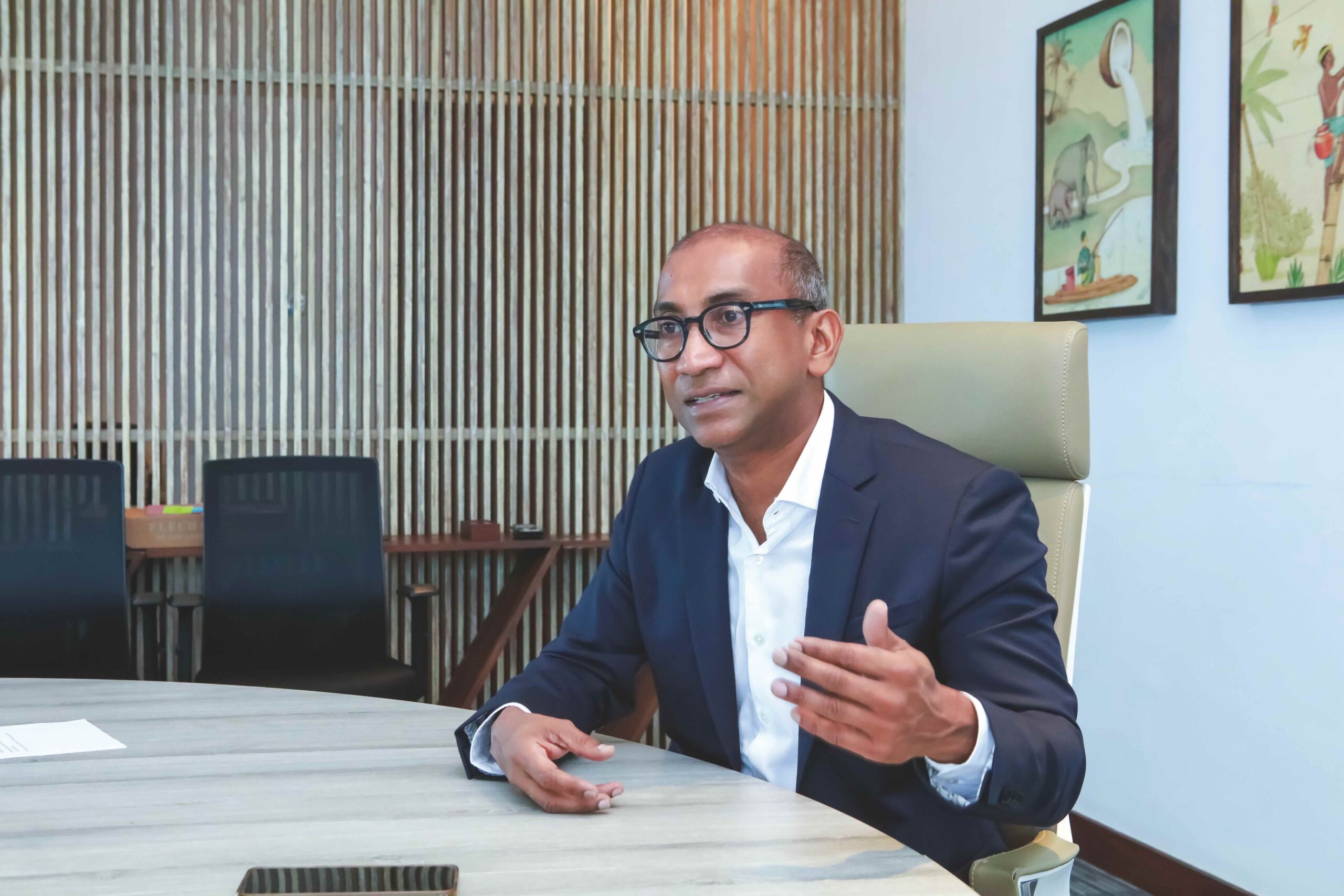
Could you tell us about the thinking behind the collaboration and launch of Three Families? What market opportunity did you identify that made this partnership timely?
We have long been focused on taking Sri Lanka’s signature spirits—particularly arrack and Colombo Gin—to international markets. Through that journey, we identified a clear gap in the global flavor landscape.
As cocktails became more complex, especially in Western markets, bartenders increasingly relied on bitters and flavoring agents based on European botanicals and fruits such as raspberry, peach, and rhubarb.
While these are excellent ingredients, they are largely disconnected from Asia and its flavor heritage. This led us to a simple question: if we are creating truly authentic Asian beverages, why are we not using Asian ingredients such as rambutan, mangosteen, or kalamansi—flavors that are widely familiar across Asia but relatively unknown in the West? We saw this as a significant opportunity, though not without challenges.
In many Western markets, an education process is required to help consumers understand and appreciate unfamiliar flavor profiles. Interestingly, the response within Asia has been extremely positive, with strong enthusiasm for products that reflect authentic regional identity.
In Europe and the US, there is also growing interest among those who have experienced these flavors through travel or exposure. The idea for Three Families emerged from this thinking. As distillers, we knew how to extract and work with flavors, but we needed a strong base to carry these complex botanicals, which led us to Sri Lankan ingredients, particularly green tea. In total, the blend contains around 30 botanicals and natural ingredients, making it a highly layered and sophisticated composition.
To bring the concept to life, we collaborated with partners who shared the same vision for innovation—Ryan Chetiyawardana for mixology expertise, and Dilhan Fernando from Dilmah, alongside our own expertise in distillation and flavor extraction. The combination of these three distinct areas of expertise naturally led to the name Three Families – an authentic reflection of the collaboration itself.
How does this collaboration enhance your global market positioning, especially in premium segments, given that Rockland has built a strong export advantage?
One of the key milestones for us was recognition from The Spirits Business Magazine, one of the most influential publications in the global spirits industry. We were ranked second among the Top 50 Most Innovative Spirits Launches in the world, alongside some of the largest and most established global spirits houses.
For a relatively small company from Sri Lanka, that recognition was a significant moment, and one we are extremely proud of. It has reinforced the perception that something truly distinctive and innovative is emerging from Sri Lanka, helping to position our products within the global premium segment, where originality, provenance, and craftsmanship are highly valued. We are also beginning to see increased interest from high-end restaurants and hospitality venues, not only in cocktails but also in culinary applications.
Consumers increasingly want to connect with the authenticity, heritage, and craftsmanship behind a product. It’s no longer just about what is in the bottle; people want to understand the story, the process, and the passion behind it. That is precisely why our distillery tours are such an important part of the Rockland experience.
Can Three Families be seen as a step towards repositioning Sri Lanka as a source of high-value ingredients rather than just a production base?
I believe it absolutely can. In many ways, every time we introduce a product that highlights Sri Lankan or Asian ingredients, it becomes an opportunity to spark curiosity and conversation. Ingredients such as rambutan or mangosteen are unfamiliar to many international consumers, and that unfamiliarity often becomes the starting point for discovery, a small advertisement for Sri Lanka.
Even Rockland deliberately showcases Sri Lankan botanicals such as curry leaves, cinnamon, and ginger. Cinnamon, in particular, is a uniquely Sri Lankan product and holds a position in our portfolio that is comparable in symbolic value to something like champagne in France. It’s a point of pride and a powerful storytelling element when we present our products internationally.
How do you navigate the opportunities and challenges of seasonal, naturally diverse tropical ingredients and ensure consistency and reliability in your supply chain?
That has been one of the more complex aspects of our journey. It took us nearly three years to properly understand and stabilize certain ingredients within our production process. For example, when we first worked with mangosteen, we quickly realized the challenge of seasonality. There were periods when the fruit was simply unavailable. In one instance, we had to wait until the following season to secure a fresh supply, which significantly delayed our development cycle. Even after sourcing, it took further time for experimentation and refinement before we could achieve the consistency we needed.
Altogether, that process alone extended over 18 months. A similar situation applied to rambutan and other seasonal fruits. Over time, however, we have developed a far better understanding of seasonal cycles and sourcing strategies, enabling us to manage supply more effectively and reduce disruption.
How do you see the global spirits industry evolving in terms of incorporating natural, region-specific ingredients, particularly from tropical markets like Sri Lanka?
The global spirits industry has largely remained anchored in traditional categories such as whisky, gin, brandy, and rum, with tequila being one of the few truly globally recognized indigenous spirits to emerge outside that core framework. Mezcal followed as a more artisanal extension of that.
In that sense, I see arrack as being in a similar position to where tequila once was—an authentic, plant-based spirit with a strong cultural identity that has yet to achieve full global recognition.
We are already beginning to see growing global interest in plant-based and regionally distinctive spirits. For example, at international cocktail festivals and industry platforms, there is increasing curiosity around spirits that move beyond traditional Western categories.
In fact, Rockland arrack is featured in upcoming discussions and publications exploring plant-based spirits from around the world, including Sri Lanka’s contribution. This signals a broader shift in the industry: consumers and professionals are increasingly looking for originality, authenticity, and provenance in what they drink.
There is a clear trend toward discovering ingredients, flavors, and spirits that reflect specific regions and ecosystems rather than relying solely on established global templates. I believe this evolution presents a significant opportunity for tropical markets like Sri Lanka to define their own identity within the global spirits landscape.
How does this partnership influence your approach to product development within Rockland’s core portfolio?
Rockland will continue to remain highly innovative in its approach to product development. It’s important to note that the concept behind Three Families actually originated within Rockland itself, so innovation remains very much at the core of what we do. At the same time, when there is a shared objective—particularly around showcasing Sri Lanka and its potential—there is real value in collaboration. If different stakeholders operate within the same market and even serve the same hospitality ecosystem, working together can often create a greater impact than working in isolation. That was also the thinking behind our collaboration with the Dilmah family.
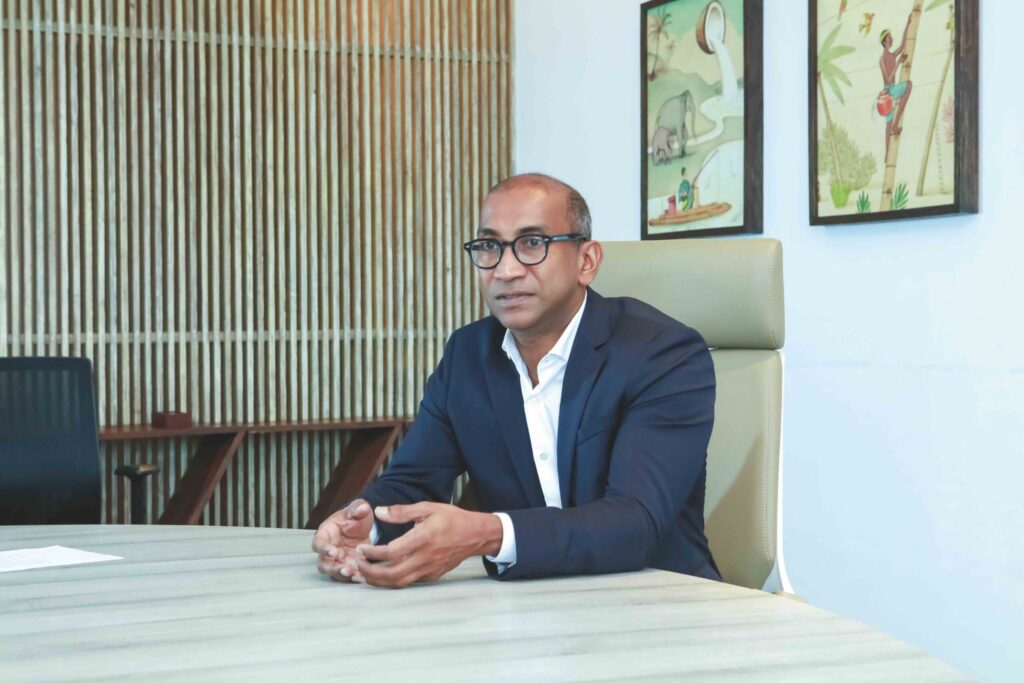
What do you envision the future of the Three Families evolving into?
t’s difficult to define exactly where Three Families will ultimately evolve, but I see it as something that goes beyond a traditional product format. In many ways, it functions as a form of ‘seasoning’ rather than just a conventional beverage component. While the term ‘cocktail’ traditionally refers to alcoholic drinks, the concept today extends far beyond that.
Three Families can be used in alcoholic and non-alcoholic applications, allowing it to move beyond the conventional use of bitters, which were historically designed primarily for bartenders and highly technical usage. In contrast, Three Families has been designed with accessibility in mind.
Traditional bitters require precision—just a single extra dash can significantly alter a drink, making them less suited to everyday home use. Three Families, however, is designed to be more user-friendly, with a dashboard system that allows consumers to easily control usage and experiment.
For example, it can be paired with sparkling water, used in homemade non-alcoholic drinks, incorporated into cocktails, and even used in food applications. An example would be pairing it with desserts like vanilla ice cream to create an Amethyst Punch-inspired experience.
The intention is to allow consumers—not just professional mixologists—to create layered, sophisticated flavor profiles at home with ease. It’s about democratizing flavor complexity, enabling experimentation without requiring technical expertise.
Three Families has been designed with accessibility in mind. Traditional bitters require precision—just a single extra dash can significantly alter a drink, making them less suited to everyday home use. Three Families, however, is designed to be more user-friendly, with a dashboard system that allows consumers to easily control usage and experiment.
Family-owned and locally rooted companies often have a different decision-making culture compared to multinational corporations. Do you see that as an advantage in today’s business environment?
Yes, I do think Sri Lankan family-owned companies have been able to compete very effectively with multinationals. Examples such as Dilmah competing with global brands, it’s clear that local companies can succeed at a high level while staying rooted in the local context and understanding. One key advantage is that we are not bound by a global template. We can design solutions that meet international standards while also being better suited to the local market.
At the same time, we can make decisions that consider what is right for our people and the country, not just what is immediately profitable. For example, when we decided to move Olu Tropical Water away from plastic packaging, we saw a significant loss—around 80 to 90 percent of turnover in that segment. From a purely commercial perspective, it was a very difficult decision and could even have threatened the viability of that operation. However, as a family business, we prioritized long-term environmental responsibility over short-term financial gain.
That said, I would not describe it simply as an advantage—it’s more a different way of operating. Family businesses endure because ownership and responsibility are passed from one generation to the next, carrying forward shared values. However, this continuity can also become a challenge if leadership is not fully transferred, as reluctance to let go can sometimes hinder progress.
In our case, I have been fortunate to experience a clear and complete transfer of responsibility across generations. My grandfather passed the business to my father, and once I had proven myself and gained the necessary experience, my father handed over full leadership to me, without any partial control or divided authority.
I believe a complete handover is critical. It empowers the next generation to act decisively, respond to evolving consumer expectations, and adapt to market realities. In contrast, multinationals often require structured, multi-year transitions with extensive approvals, which can limit agility.
Looking at the Sri Lankan private sector more broadly, what do you believe local companies must do differently to build stronger brands that can compete regionally and internationally?
One of the first questions we always ask is: What is truly unique about the product or service you are offering? In today’s global market, most categories are already well established, so the real opportunity lies in identifying what is distinctive and meaningful within what you already have. For Sri Lanka, there are still powerful opportunities rooted in our natural and cultural strengths.
Cinnamon is a good example—it’s uniquely Sri Lankan, with an extraordinary global story, yet its full value has not been fully realized. There is significant scope for storytelling and value creation around it. More broadly, I believe we need to think beyond individual products and focus on “recipes” or Sri Lankan value systems. That could range from hospitality experiences such as hotels and bars, to food products, spice blends, confectionery, or everyday consumables. If something is already embedded in our culture or traditions, it can often be refined and taken to the world in a more structured and sophisticated way.
The key is execution. Ideas alone are not enough—products must be well packaged, meet international quality and hygiene standards, and deliver consistent reliability to build trust in global markets. That balance of authenticity and professionalism is essential. We can already see this trend globally. In Europe, for example, shelves feature chocolate and products from Ghana, India, and other origins, reflecting a strong consumer appetite for authenticity and origin-based storytelling. Sri Lanka, as the “Spice Island,” is well-positioned to build entire categories around its spices, ingredients, and culinary heritage. The question is not whether the opportunity exists, but how far companies are willing to go in developing it.
Brand building and category creation are long-term journeys that require patience, discipline, and consistency over a decade or more. The real differentiator is whether companies can stay the course when progress is slow.
At Rockland, our journey of taking Sri Lankan spirits to international markets has been ongoing since the launch of Ceylon Arrack in London in 2009. It’s a long and demanding process, but those who persist ultimately build successful global brands rather than remain local.
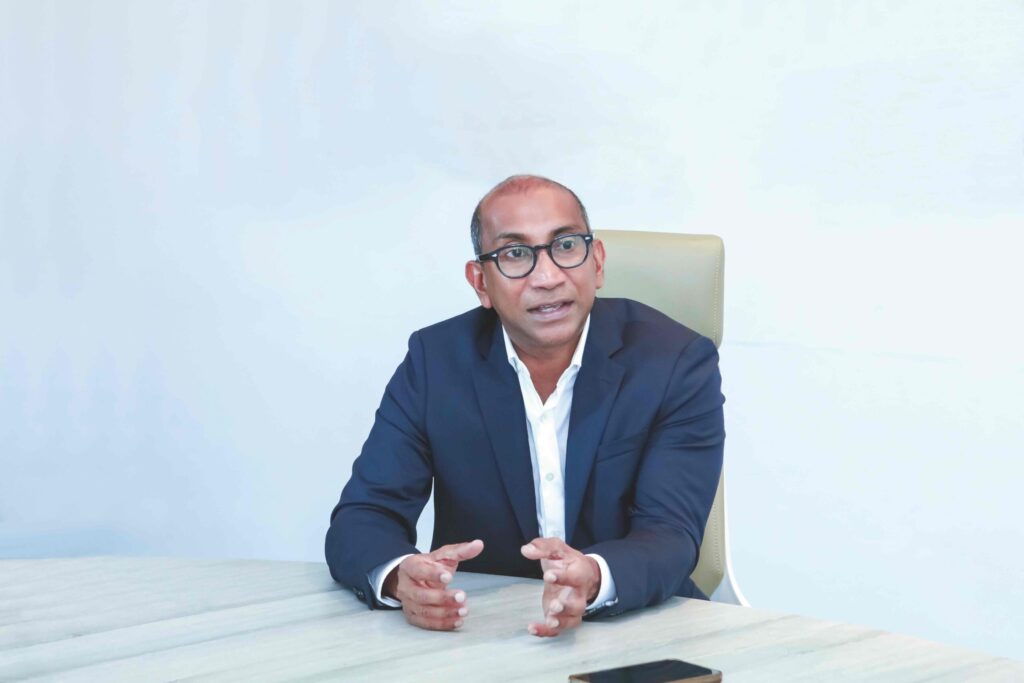
As a fourth-generation leader, how do you define stewardship in a business that must remain both rooted and future-ready?
I often recall a saying from Captain America: ‘Yield when you can, but stand firmly rooted when you must not move.’ In many ways, that reflects the philosophy we try to embody at Rockland. It’s about knowing when to adapt and evolve, and when to remain anchored to your core values and identity.
Being part of a family business also comes with a certain sense of continuity and responsibility. There is a natural balance between the care and protection that comes from that legacy and the willingness to gradually let go and allow new ideas and leadership to emerge when needed. One of the most important shifts we have made is in our leadership structure.
At Rockland, we operate as a roundtable rather than a hierarchy. There are twelve members around the table, and I am simply one among them. Every voice carries equal weight in decision-making. It does not matter whether someone is younger or older, male or female—each perspective is valued equally. That principle of shared responsibility defines how we operate today.
‘Yield when you can, but stand firmly rooted when you must not move.’ In many ways, that reflects the philosophy we try to embody at Rockland. It’s about knowing when to adapt and evolve, and when to remain anchored to your core values and identity.
What keeps you hopeful and excited about the future of Rockland Distilleries at a time when consumer culture, branding, and lifestyle trends are evolving so rapidly?
It’s the ability to continuously surprise and engage consumers with experiences they do not expect. Increasingly, people are looking for experiences, stories, and moments of discovery. We are seeing strong responses to innovations such as gin infused with Earl Grey, Three Families with flavors like rambutan and mangosteen, and Verdant Sinhaya, which evokes the sensory experience of the Sinharaja rainforest when added to sparkling water. The challenge lies in sustaining that level of innovation consistently.
Developing high-quality, innovative products is not easy or inexpensive, especially when aiming to introduce something new every year or even more frequently. However, I believe we are well-positioned to continue on that path. Rockland is ultimately about more than beverages. It’s about creating meaningful experiences and continually redefining what those experiences can be. And I think there are still many exciting developments ahead that will expand what people associate with the Rockland name.