
From a family-founded pharmacy in Gampola to a diversified, publicly listed conglomerate with leadership positions across healthcare, consumer goods, and agribusiness, Sunshine Holdings has built a remarkable growth story.
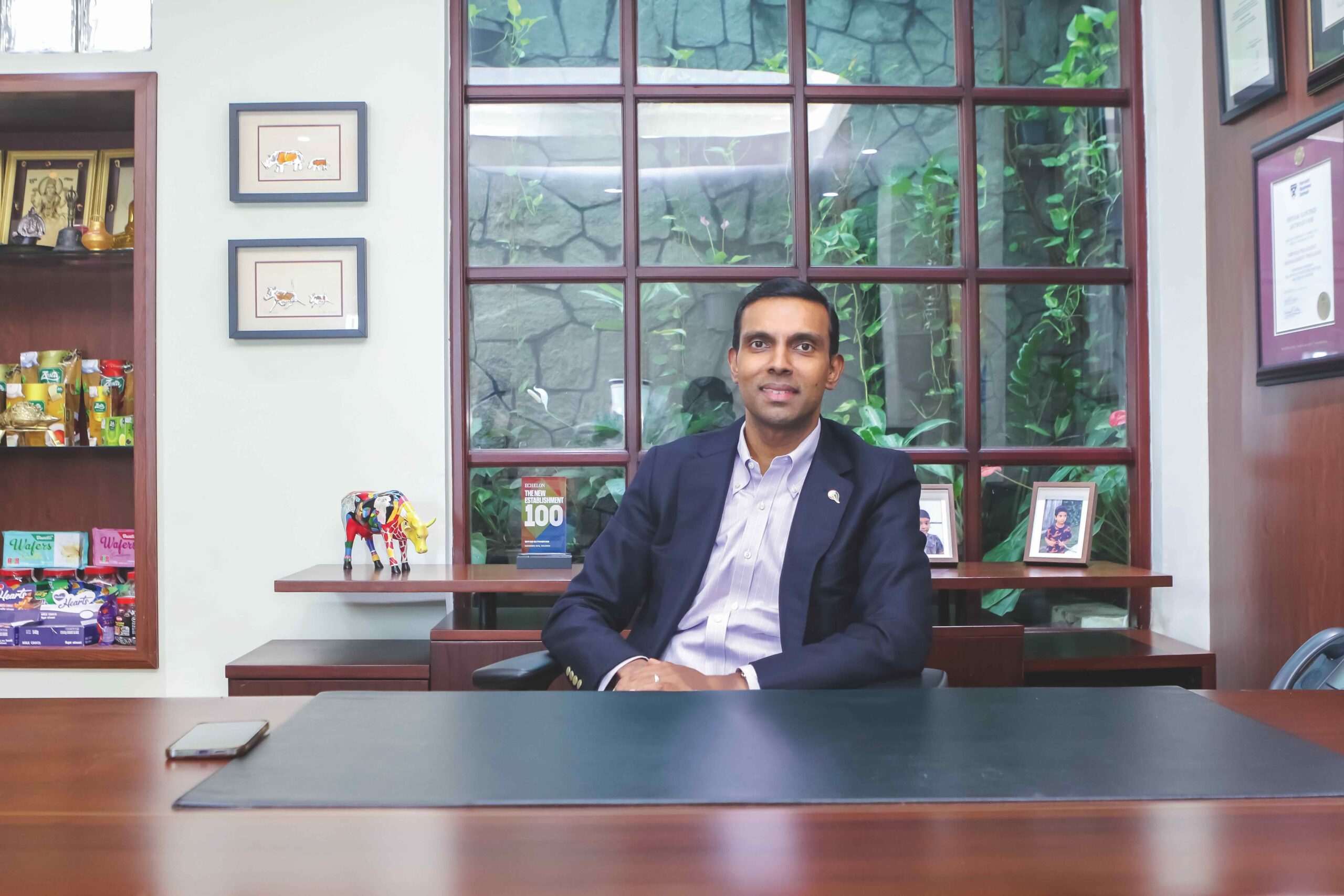
Shyam Sathasivam, Group CEO of Sunshine Holdings and second-generation family representative, discusses the strategic priorities shaping Sunshine’s next phase of growth — including expansion into export markets, deeper investment in pharmaceutical manufacturing, and the growing role of technology, digital transformation, and consumer insight-led decision-making across the Group. He also elaborates on how the organization is balancing commercial performance with affordability, accessibility, and broader societal responsibility.
Words: Jennifer Paldano Goonewardane.
Photography: Sujith Heenatigala and Dinesh Fernando.
Sunshine Holdings delivered strong growth in FY 2024/25. As you reflect on the first nine months of FY 2025/26, how has that momentum evolved across your three core sectors?
Growth has fundamentally been about identifying and capitalizing on opportunities. We operate across healthcare, consumer products, and agribusiness, and our focus has been on driving meaningful expansion in each. In healthcare, we have continued to scale our pharmaceutical manufacturing operations significantly. We are now the largest supplier of respiratory products to the Government of Sri Lanka, and we continue to invest further in this space.
We have also seen growing demand in premium healthcare and wellness products. Healthguard continues to expand steadily, and particularly within the Colombo District, there is a clear and increasing willingness among consumers to invest in wellness-oriented products and services. Within the consumer sector, our focus has been on strengthening the domestic branded market for tea and confectionery, as well as growing our export business.
We recently acquired a cinnamon company, which aligns closely with our broader strategy of promoting naturally grown Sri Lankan products — including spices and tea — under the “Ceylon” brand in international markets. This remains a key growth driver. Agribusiness, however, has presented certain challenges. Palm oil continues to be a subject of ongoing dialogue with the Government. That said, we are seeing encouraging momentum and remain hopeful that evolving policy will create a more supportive operating environment.
Despite some impact from adverse weather conditions, we have remained resilient throughout FY 2025/26. Our businesses operate in fundamentally resilient sectors, and the strength of our teams, combined with strong execution capabilities, has enabled us to continue delivering solid results.
To what extent has profitability been driven by operational efficiencies versus top-line expansion and portfolio optimisation?
Our focus has centered on two key areas. The first is the consumer and customer space — understanding emerging opportunities, identifying evolving preferences, and aligning our offerings accordingly, whether in healthcare or consumer products. Our emphasis has consistently been on delivering products and solutions that genuinely resonate with what customers need. The second is our people. At its core, every business depends on execution, and execution rests in the hands of its people.
Today, access to capital is no longer the defining constraint for many leading companies. For at least the top ten percent of companies in Sri Lanka, I would say capital is no longer what differentiates success. What truly sets organizations apart is execution capability. Over the past decade and more, we have remained deeply focused on investing in our people, and that has been a major driver of our growth. It has translated into greater operational efficiency, stronger execution, and more effective resource utilization — particularly through the adoption of digital technologies.
We also believe the impact of AI is only beginning to emerge. What we are experiencing today represents the conclusion of the first phase, as we move into what could be described as the next stage of digital and AI-driven transformation.
Our strategy is to continue expanding within the healthcare segments we already operate in, while leveraging the sector’s long-term growth potential. Although our current focus remains largely product-driven, we also see future opportunities in healthcare services as the sector continues to evolve.
With healthcare contributing over 60 percent of Group revenue in 2024/25, how did this segment perform in FY 2025/26, and how do you plan to sustain high growth in a segment that is already dominant within your portfolio?
Our healthcare business continues to be driven by a diversified, portfolio-based approach across five distinct segments. Pharmaceuticals remain a core focus, where we ensure access to high-quality medicines through partnerships with global companies such as Novo Nordisk, Abbott Laboratories, Siemens Healthineers, and GE HealthCare, while also sourcing affordable generics from regional markets including India, Pakistan, and Bangladesh.
Medical devices continue to offer strong growth potential, particularly given that Sri Lanka remains significantly underpenetrated in advanced diagnostics, surgical products, and healthcare technology. Retail healthcare is another important growth avenue through Healthguard, which enables us to engage directly with consumers and develop a deeper understanding of evolving healthcare and wellness needs.
We have also invested heavily in our nationwide distribution and cold chain infrastructure, which is critical given our long-standing position as Sri Lanka’s largest insulin supplier. Our pharmaceutical manufacturing business has expanded significantly over the past three years, and we are now the country’s largest domestic manufacturer of respiratory products, including complex inhalation therapies. Our strategy is to continue expanding within the healthcare segments we already operate in, while leveraging the sector’s long-term growth potential. Although our current focus remains largely product-driven, we also see future opportunities in healthcare services as the sector continues to evolve.
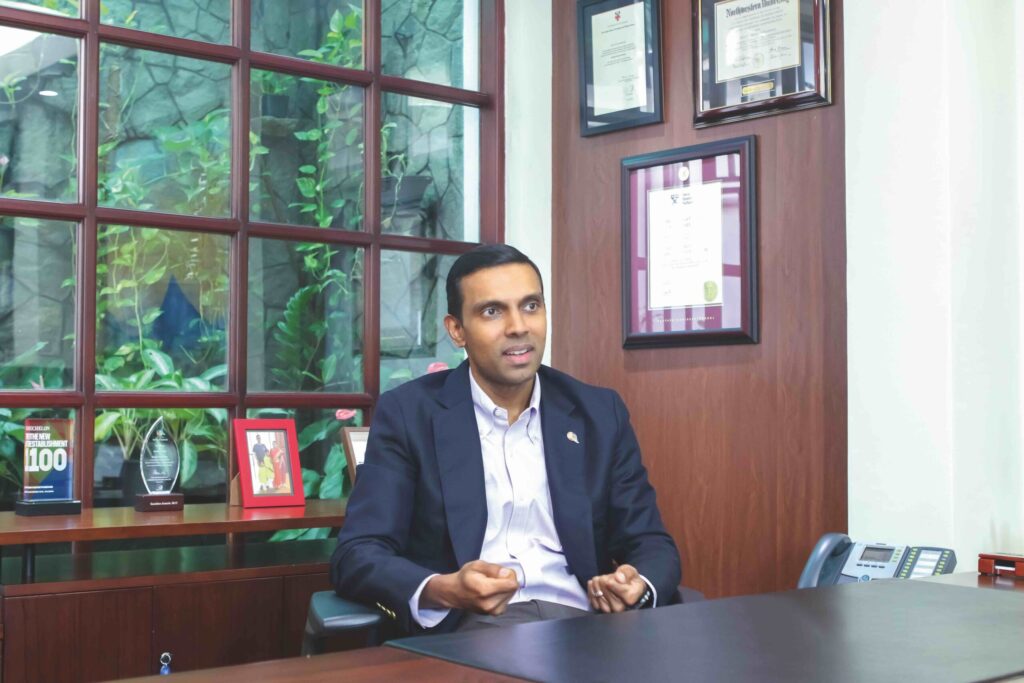
With domestic pharmaceutical manufacturing being a key priority, what challenges — regulatory, infrastructure, or talent-related — must be addressed to accelerate this ambition?
We are highly optimistic about the long-term potential of domestic pharmaceutical manufacturing, but accelerating growth will require addressing several key challenges across regulatory, talent, infrastructure, and industry competitiveness.
From a regulatory standpoint, the industry needs greater consistency, transparency, and predictability. While maintaining high standards is non-negotiable, companies also need a stable regulatory environment to commit to long-term investments and move up the value chain with confidence. Greater digitization across the regulatory ecosystem would further improve efficiency and transparency. Talent development is another critical area, particularly as the industry moves toward more advanced manufacturing, R&D, and quality assurance capabilities.
Specialized expertise cannot develop organically at the pace required, which is why industry participation in building talent pipelines is essential. We are already working closely with institutions such as the University of Kelaniya and other academic partners to strengthen sector capabilities.
Government support for domestic procurement has provided an important boost to local manufacturers. However, long-term success will ultimately depend on competitiveness, innovation, and technology adoption. This is why we are exploring deeper manufacturing partnerships that can bring advanced technologies and expertise into Sri Lanka. Pricing remains an important consideration as well.
While affordability is crucial, the regulatory and pricing framework must also support accessibility, sustainability, and innovation to ensure the long-term viability of the industry. Encouragingly, industry bodies such as the Sri Lanka Chamber of Pharma Manufacturers continue to engage constructively with the National Medicines Regulatory Authority of Sri Lanka on many of these issues.
Globally, GLP-1 medicines have emerged as a transformative development in the treatment of obesity and related non-communicable diseases. While Sri Lanka has seen growing demand for these therapies, access remains limited. How is Sunshine Holdings engaging with regulators and global partners to improve access for Sri Lankan patients?
Obesity has become a major health concern both globally and in Sri Lanka, contributing significantly to non-communicable diseases. Even modest weight loss can greatly improve health outcomes and quality of life. We represent Novo Nordisk, the global leader in weight management therapies including Ozempic and Wegovy and have already submitted the necessary dossiers for regulatory approval in Sri Lanka.
While demand for GLP-1 therapies has surged worldwide, supply constraints have limited access, with manufacturers initially prioritizing larger developed markets. However, expanding manufacturing capacity and recent launches in India are expected to improve availability in regional markets such as Sri Lanka.
The National Medicines Regulatory Authority of Sri Lanka has been supportive of facilitating access to innovative therapies, provided the required clinical and regulatory documentation is in place. Going forward, regulatory efficiency and a balanced framework will be important to attract innovative products while ensuring affordability.
We also expect increased competition and the availability of generic alternatives to improve access over time. At the same time, these medicines must be introduced within a well-regulated clinical framework to ensure safe and appropriate use under medical supervision.
The foundation for Sunshine Holdings was laid nearly 60 years ago by my father, G. Sathasivam, with a very simple purpose — to support his family. The business began as a small pharmacy, Lanka Medicals, in Gampola. It gradually expanded to Kandy, marking the first stage of meaningful scale.
What role have brand strength and pricing strategies played in sustaining performance in your Consumer Goods segment, which has shown resilience despite inflationary pressures?
Sunshine is the market leader in Sri Lanka’s branded tea segment, with over 50 percent market share built over 25 years.
Our strategy has been to develop a strong, diversified brand portfolio that caters to different consumer needs across premium, mass-market, and value segments. We recognize that consumers seek very different experiences from their cup of tea. Zesta serves the premium segment, while Watawala Tea holds over 28 percent market share as the leading mass-market brand.
We also offer Ran Kahata in the value segment, ensuring consumers have options based on taste, affordability, and preference.
Our portfolio spans the full spectrum of consumer needs, allowing people to make choices based on affordability, pricing, taste preferences, and the overall tea experience they are looking for.
Our market leadership has ultimately been built on consistently delivering value and maintaining a sharp understanding of evolving consumer preferences. Success in tea branding requires a deep knowledge of the consumer and a clearly differentiated value proposition — and that has been central to our growth and resilience, even amid inflationary pressures and shifting market dynamics.
As you have highlighted wellness-oriented categories as a growth area, how are you repositioning your portfolio to align with changing consumer preferences?
Consumer behavior has evolved significantly in recent years, shaped by both the post-COVID environment and Sri Lanka’s economic crisis, which have heightened awareness around health, affordability, and value. At the same time, greater access to global media and information has made Sri Lankan consumers far more informed about international trends, lifestyle shifts, and product innovations.
To respond effectively, our approach begins with deep consumer research and an understanding of regional and cultural consumption habits. Consumer preferences continue to evolve rapidly, making ongoing engagement and insight generation essential.
As part of this shift, we see strong long-term potential in wellness-oriented categories and have been repositioning parts of our portfolio accordingly. We have already introduced wellness-focused tea products targeting areas such as energy enhancement and sleep support, while ensuring authenticity and credibility remain central to our positioning. Portfolio evolution also requires balancing changing economic conditions, generational shifts, and emerging lifestyle trends.
While tea continues to remain relevant among younger consumers, the challenge is to keep the category contemporary and appealing. We are also closely observing the growing influence of coffee culture within Sri Lanka’s hot beverage market, which reflects broader global consumption trends and will continue to shape our portfolio strategy going forward.
How is Sunshine Holdings leveraging data and digital platforms to deepen consumer relationships in an era when digital engagement is becoming increasingly important?
Before the COVID-19 pandemic, we made a deliberate decision to aggressively invest in digital transformation, recognizing that businesses that failed to build digital capabilities risked becoming obsolete.
One of the key early steps was transitioning fully to a cloud-based architecture, which proved highly valuable during the pandemic. Since then, our focus has been on building strong digital data capture systems and using data not simply for collection, but to drive faster and more effective decision-making. We have invested significantly in business intelligence tools, dashboards, CRM platforms, sales force automation, and frontline operational systems to strengthen both supply chain management and customer engagement.
A major priority has been digitally enabling our frontline workforce, particularly across healthcare and consumer sectors, where our teams interact daily with nearly 100,000 grocery outlets and thousands of healthcare touchpoints nationwide. These interactions generate valuable consumer insights while also improving engagement and responsiveness at the point of contact.
The transformation journey has involved experimentation — some initiatives have succeeded; others have required redesign. But many of our most valuable learnings have emerged through that process, and a significant portion of our recent growth and operational improvements can be attributed to these digital investments. We believe the next wave of disruption, driven by artificial intelligence, will be even more transformative. That is why we continue to approach digital transformation with urgency, adaptability, and a constant focus on staying ahead of evolving consumer and technological trends.
Given agribusiness’s volatility in input costs and regulatory constraints, which structural reforms would most benefit this sector in Sri Lanka?
Sunshine Holdings has made significant investments in palm oil and dairy farming, which we view as strategically important for Sri Lanka’s food security and for reducing import dependency. Sri Lanka currently produces less than ten percent of its edible oil requirement despite having favorable conditions for cultivation, highlighting the sector’s considerable untapped potential.
To strengthen agribusiness, Sri Lanka needs greater modernization through improved inputs, technology adoption, and productivity enhancement. While labor shortages remain a challenge, industries such as tea have demonstrated that innovation and efficiency improvements can help overcome these constraints.
We see similar opportunities in edible oil and dairy, where technology has already helped improve operational efficiency and reduce costs.
From a policy perspective, the sector would benefit from balanced and forward-looking regulatory frameworks, including labor and sector-specific reforms that encourage investment, productivity, and sustainability. Constructive collaboration between the Government, private sector, and labor stakeholders is essential to modernise agriculture and create long-term value. Ultimately, large-scale investment in agribusiness will depend on a shared commitment to building a more productive, sustainable, and competitive agricultural ecosystem.
Your vision to transform Agribusiness into a high-value, ESG-aligned export engine is ambitious. What are the key milestones you aim to achieve over the next three years?
About fifteen years ago, we made a strategic decision to pursue Roundtable on Sustainable Palm Oil (RSPO) certification for our plantation business, becoming the first company in South Asia to achieve this globally recognized sustainability standard. The process took nearly ten years, and we received initial certification in 2021. We have since been successfully recertified, reaffirming our commitment to internationall y benchmarked sustainability practices.
Over the next three years, one of our key priorities is to extend similar sustainability frameworks across the wider agribusiness portfolio. We believe long-term success in agriculture must be built on strong partnerships with communities, employees, regulators, and other stakeholders.
We view ESG not as a compliance exercise, but as an integral part of building a responsible and future-ready business. We have already invested in ESG-focused training and sustainability initiatives across the Group, with the goal of embedding ESG principles into our core business strategy and decision-making. Sustainability cannot be treated as an afterthought or a parallel initiative — it must become part of the business’s fundamental operating framework.
With traceability and sustainability gaining importance globally, how is Sunshine positioning itself to meet international standards and capture premium markets?
Our approach to traceability and sustainability is built around aligning with internationally recognized standards and targeting premium export markets.
We actively pursue certifications such as geographical indication (GI) status and adhere to globally accepted frameworks, including those from Control Union Certifications and JASTECA, to strengthen credibility and market access.
We have deliberately focused on high-value, differentiated segments rather than low-margin, high-volume categories. We believe long-term value creation lies in premium markets where quality, origin, purity, and authenticity are the key drivers of demand. This is especially relevant in markets such as Japan and Germany, where stringent requirements around sourcing,contamination control, and single-estate production are critical. To meet these expectations, we have invested significantly in processing infrastructure and end-to-end traceability systems.
Global buyers now require fully verifiable supply chains, and digital traceability has become essential for accessing leading retail shelves. We have accordingly strengthened supply chain visibility and compliance systems across our operations. Our acquisition in the cinnamon value chain through Joint Agri Products Ceylon was also driven by its strong capabilities in organic production and certification, reflecting growing global demand for verified organic products. Stricter testing and compliance requirements are, in our view, helping to raise overall industry standards — which we see positively. Our experience in highly regulated healthcare markets has reinforced a strong internal discipline around quality and compliance, which naturally carries through into our agribusiness operations.
With multiple growth priorities across sectors, how are you prioritizing capital allocation within the Group?
Our approach is guided by discipline, strategic fit, and return expectations. While capital availability remains strong, investor expectations for performance and returns have increased significantly, requiring us to be highly selective in where we deploy capital.
As a publicly listed company, we must consistently demonstrate our ability to create superior value for shareholders.
Not every attractive opportunity is necessarily the right fit for Sunshine Holdings. We evaluate investments based on whether we have the capabilities to generate differentiated value and whether the opportunity aligns with our long-term strategic direction. This is why, in pharmaceutical manufacturing, we have chosen to focus on higher-end, niche, and technologically complex segments, while in consumer products we have prioritized organic and premium value-added categories over low-margin volume businesses. Capital allocation decisions are also shaped by the quality of partnerships, operational complexity, and long-term growth potential. We remain equally focused on capital efficiency and strong ROI across the portfolio. Investments that do not meet return expectations or strategic relevance must be reassessed, with capital reallocated where it creates more value. That said, we also recognize that certain sectors — particularly manufacturing — require patience and long-term commitment, often over a five–ten-year horizon.
Our overall approach is therefore to balance long-term strategic investment with disciplined capital stewardship, ensuring every commitment is anchored in sustainable value creation and measurable returns.
You had mentioned thoughtful leadership transitions as a contributor to performance. How do you ensure continuity while bringing in fresh perspectives?
About ten to 15 years ago, Sunshine made a deliberate shift to become a “family-owned but not family-run” business, decentralising decision-making and extending leadership well beyond the family.
Today, I am the only actively involved family member, with professional CEOs leading each of our nine business sectors. This structure is supported by clear governance, defined decision rights, and strong succession planning.
My role has evolved toward capital allocation, leadership selection, and overseeing key transitions across businesses. We have already completed one full leadership cycle and are now strengthening the next layer of leadership for continued growth.
A key principle is balancing autonomy with accountability. Empowering professional leaders with genuine decision-making authority has helped us attract and retain strong talent, while governance frameworks ensure appropriate oversight and timely course correction. This remains an evolving journey, but our experience shows clearly that investing in strong, professional leadership has been one of the most significant drivers of our growth over the past decade.
Could you elaborate on the technology partnerships Sunshine Holdings has established with global players and how these collaborations support your long-term growth strategy?
Our technology partnerships with global companies have primarily been designed to address the domestic market opportunity in Sri Lanka. In our pharmaceutical manufacturing business, Lina, we initially adopted technology-transfer models from Indian generic manufacturers, which helped establish a strong production base and build core capabilities.
As we move into the next phase, our focus is shifting toward deeper collaboration with international partners in more complex manufacturing segments.
With the local market now more stabilised from a manufacturing standpoint, we are actively engaging global companies to expand our capabilities further. We also recognize that Sri Lanka has work to do in positioning itself as a more attractive destination for foreign direct investment, and we see it as part of our responsibility to contribute to that effort.
Our partnership with the International Finance Corporation reflects this intent, particularly through support for pharmaceutical manufacturing investments via capital mobilisation and strategic development.
We are currently engaging with several global partners and are optimistic about launching initiatives in more advanced and complex manufacturing areas in the near term.
Across healthcare, consumer, and agribusiness sectors, how critical is digital transformation to your long-term competitiveness?
Digital transformation is fundamental to the long-term sustainability and competitiveness of any business. In our view, it will be among the most critical enablers of future growth across all sectors.
Our ability to effectively engage with consumers is increasingly dependent on our digital capabilities, just as our ability to connect with and empower our employees is now closely linked to the strength of our digital systems. We therefore see digital transformation not as an optional initiative, but as a core requirement for remaining competitive and relevant over the long term.
Are there specific technologies — such as AI, supply chain digitization, or precision agriculture — that you see as game changers for Sunshine Holdings?
We see consumer insight-driven technologies, AI, and precision agriculture as key game changers for the future of Sunshine Holdings. A major focus for us is improving how we capture and interpret consumer behavior data — not just through direct feedback, but by understanding actual engagement patterns across physical and digital environments.
In healthcare and consumer sectors, digital tools and visualisation technologies are helping us build deeper customer insights by analysing how consumers interact with stores, products, and retail environments. These capabilities support better decision-making, stronger customer engagement, and more effective frontline operations.
We also see growing potential for digital tools to improve employee engagement and leadership decision-making internally.
In agriculture, precision farming technologies are becoming increasingly important for driving productivity and efficiency.
We are already using drone-based mapping and visualization across our plantations to gain deeper insights into cultivation, fertilizer application, harvesting cycles, and input management. Compared to traditional field inspections, these technologies deliver far more accurate and actionable data.
We believe the next major transformation in agriculture will come through the wider adoption of affordable digital and precision technologies. As costs decline and accessibility improves, tools such as drones and AI-driven systems could significantly transform agricultural productivity — including precision monitoring and input delivery at scale.
How do you define the Group’s long-term identity? What role do exports and regional markets play in your future growth strategy?
Our long-term identity remains that of a Sri Lankan company with a clear ambition to grow beyond Sri Lanka. While we are firmly rooted in the domestic market, our growth outlook is increasingly global.
Today, approximately 90 percent of our business is derived from the Sri Lankan consumer market, with exports accounting for around ten percent. However, given the structural limitations of a 22-million-person market, we recognize that sustained long-term growth will require us to expand our footprint beyond Sri Lanka.
Accordingly, a key strategic priority is to leverage our existing capabilities in international markets. Our most recent acquisitions have deliberately been in export-oriented businesses, particularly in tea and spices.
We see our future value creation as a balanced combination of strong domestic performance and a growing international presence — especially in categories intrinsically linked to Sri Lanka’s unique identity, such as Ceylon Tea and Ceylon Cinnamon. These products naturally lend themselves to global positioning and premiumisation in export markets.
Exports will therefore be a significant driver of our long-term growth strategy, requiring sustained investment in understanding international consumers, building global distribution networks, and evolving our value chains. We are clear that replicating the level of growth achieved over the past decade will not be possible into the next decade without a meaningful expansion of our export business.
Sunshine Holdings operates at the intersection of essential sectors — health, food, and daily consumption. How do you balance commercial success with societal responsibility?
Healthcare has been at the core of Sunshine’s business from the very beginning, shaping our long-standing focus on affordability, access, and value creation.
We were among the early pioneers in introducing generic pharmaceuticals from India to Sri Lanka, helping improve access to affordable healthcare solutions while building strong partnerships with international pharmaceutical companies.
Our philosophy has always been that consumers should not bear the cost of inefficiency. In healthcare, we have built one of the country’s most efficient distribution networks, including strong cold chain capabilities, enabling us to maintain quality standards while remaining both affordable and profitable. We apply the same value-driven approach across our other sectors.
In tea, for example, while Zesta serves the premium segment, much of our growthhas come through Watawala as an affordable mass-market brand with a presence in nearly 200,000 outlets nationwide. We do not view commercial success and societal responsibility as conflicting goals.
Sri Lankan consumers are looking for value, not simply the lowest price, and our role is to deliver accessible, high-quality products efficiently and responsibly. We see that balance as central to our long-term sustainability and purpose as a business.
Sunshine Holdings has evolved from a family-founded pharmacy into a diversified listed conglomerate. Could you take us through the key milestones in that journey and the factors that shaped its growth?
The foundation for Sunshine Holdings was laid nearly 60 years ago by my father, G. Sathasivam, with a very simple purpose — to support his family.
The business began as a small pharmacy, Lanka Medicals, in Gampola. It gradually expanded to Kandy, marking the first stage of meaningful scale. The next phase of growth involved moving to Colombo and transitioning from retail into importing and distribution. A significant milestone was our entry into agribusiness through the acquisition of Watawala Plantations during the privatisation of the tea plantations — done in partnership with the Tata Group, marking our first strategic equity partnership with a global organization. From there, we expanded into consumer goods, building and developing tea brands that became a core part of our portfolio.
Over time, the business evolved from a privately held family enterprise into a publicly listed company, more than two decades ago.
A key turning point in our governance journey was the transition toward professional management and independent leadership.
My father, who served as Chairman at the time, was instrumental in shaping the philosophy that long-term value creation does not require family members to occupy every leadership position — that the organization must be driven by strong governance structures and professional management. This was further strengthened with the appointment of our first independent Chairman, Rienzie T. Wijetilleke, who played a significant role in shaping our corporate governance framework. Since then, we have consistently maintained independent, non-executive chairmanship for the Group.
Leadership of the business subsequently transitioned to my uncle, Vish Govindasamy, who initially led the plantation business before overseeing the broader Group. Following his retirement two years ago, I assumed the role of Group CEO.
Over the past decade, our focus has been on building an organization that is not dependent on any single individual or family member, but on a strong institutional foundation and capable leadership teams.
Our independent directors have played a critical role in this transformation, and under the leadership of our current Chairman, Amal Cabraal, we continue to pursue an ambitious growth agenda. More recently, we have strengthened our access to global capital and strategic partnerships.
Our partnership with the International Finance Corporation, which has invested in Sunshine Healthcare, further reinforces our growth trajectory. These developments have been made possible by the governance standards we have established and the confidence that institutional investors have in our management structure.
A key belief that has guided our journey is that businesses must ultimately be driven by their people, not by ownership alone. This has been central to our ability to scale and professionalize over time. At the same time, we have retained the entrepreneurial spirit that defined our origins.
My father’s mindset has always been one of ambition and possibility — constantly questioning why we should not expand into new sectors or explore new opportunities. That thinking took us from healthcare into agriculture and beyond, and it continues to shape our approach today.
Our transition into a listed company was another important milestone, enabling access to capital while broadening our ambitions across multiple sectors. The Sunshine name itself was adopted through this process and has since come to represent our aspirations and values. Our brand symbol — the Sun and its rays in the shape of a conch — reflects this philosophy. It represents auspicious beginnings and a call toward prosperity, rooted in both cultural heritage and our corporate identity.
Profitability is an outcome of business. But our deeper focus remains on purpose — understanding why we exist, how we create value, and how we continue to grow from the simple foundation of a family pharmacy into a diversified, professional, and globally connected organization.
Given the opportunities for diversification during the 1970s and 1980s — such as investing in sectors like banking — why did your father choose to remain focused within his core business rather than pursue broader acquisitions?
My father has always believed in building businesses organically. His approach has been centred on scaling within the sectors he understood best, rather than expanding through unrelated acquisitions. He began his career as a pharmacist at 16, and as a result, healthcare has always been his core area of focus — a sector he understands deeply and continues to view as central to the Group’s identity and long-term potential.
Much of the Group’s expansion has been driven by the next generation, who have built on the strong foundation he created. Yet even today, he continues to see significant untapped potential within healthcare itself. For example, he has had a long-standing interest in pharmaceutical manufacturing — a space he has been keen to enter for over a decade. It has taken time to identify the right partners and structure the right entry strategy.
Healthcare, therefore, remains very close to the founder’s vision of where the Group can and should grow. That conviction continues to influence our strategic direction, and we expect healthcare to remain the Group’s largest and most important sector in the future — fully in line with his original vision and long-term belief in the space.