
Chandrasekaran’s exit opens a new chapter in power, governance, and the future of India’s most influential corporate house.
Words: Arvind Rayan.
The impending departure of Natarajan Chandrasekaran from the chairmanship of Tata Sons is not merely another executive succession at the summit of Indian business. It is an institutional moment for the Tata Group, bringing into sharper focus the delicate relationship between ownership and professional management within one of the world’s most unusual corporate structures.
For an institution of Tata’s scale, uncertainty at the top is itself a strategic consideration. The group is simultaneously executing some of the most ambitious corporate projects in its history.
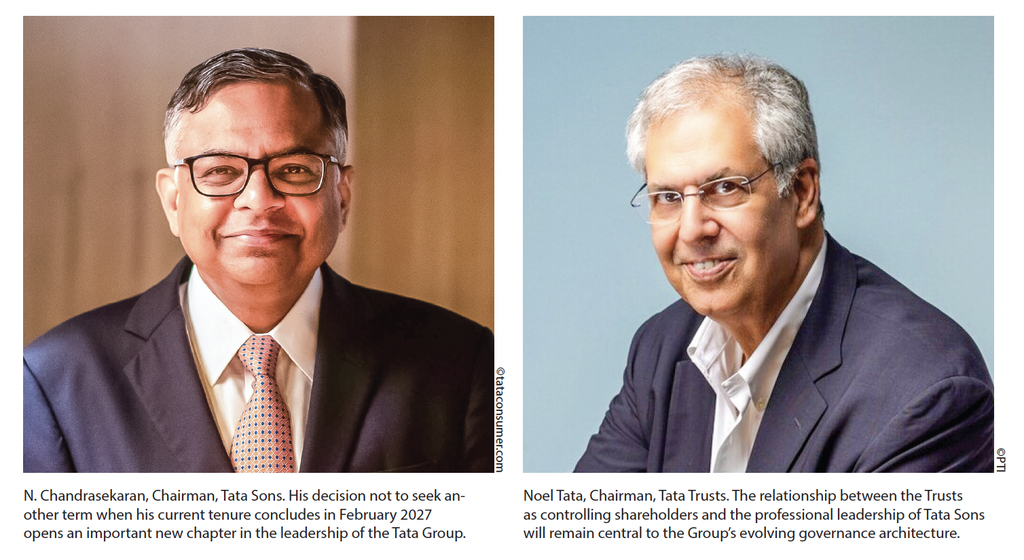
Chandrasekaran has announced that he will not seek another term when his present tenure concludes on February 20, 2027, and until then, he remains Chairman of Tata Sons. That distinction is important. This is not an abrupt resignation from the Tata empire, but a decision not to continue beyond the existing mandate. Nevertheless, the circumstances surrounding that decision have transformed what might otherwise have been an orderly succession into a much larger discussion about governance, capital allocation, shareholder interests, and the future distribution of authority at the top of the Tata Group.
Chandrasekaran’s tenure has been characterized by a willingness to position Tata in industries expected to define India’s next industrial era. India has long sought a meaningful position in global semiconductor supply chains, and Tata’s investments place the group near the center of that national ambition.
Tata is no ordinary conglomerate. Tata Sons is the principal investment holding company and promoter of the Tata Group, while around two-thirds of its equity is held by philanthropic trusts. Beneath Tata Sons sits an extraordinary collection of businesses spanning information technology, automobiles, steel, power, aviation, hospitality, consumer products, financial services, electronics, and emerging technologies. Many of these companies are publicly listed, with their own boards, shareholders, and management teams. The result is an architecture in which commercial enterprise, professional management, long-term ownership, and philanthropy coexist on a scale almost without parallel in global capitalism. It is also an architecture that inevitably raises a fundamental governance question: when strategic differences arise, where does ultimate authority reside?
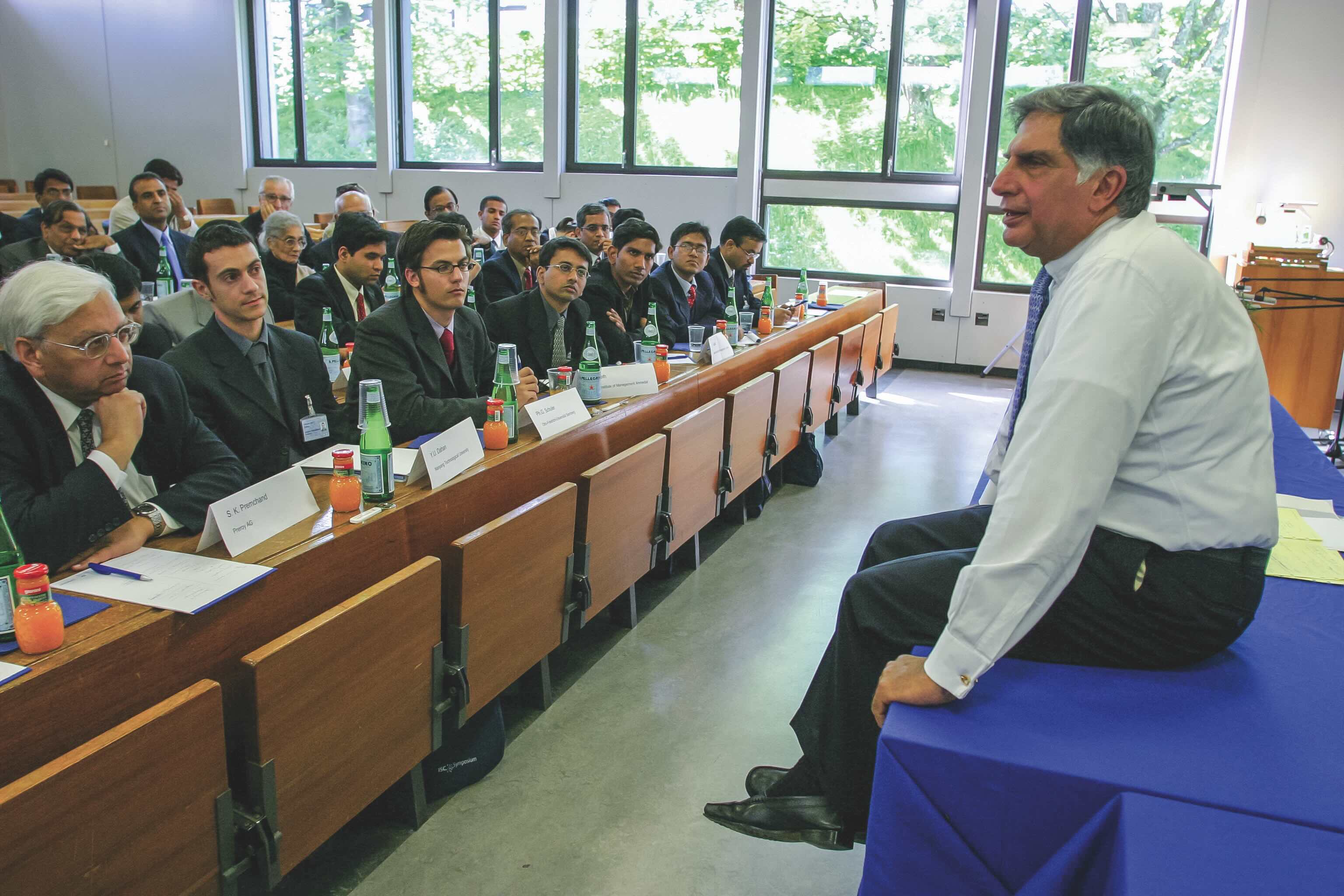
For many years, Ratan Tata’s stature helped provide an answer. His influence extended across both the corporate and philanthropic sides of the Tata establishment, allowing institutional authority, history, and personal credibility to coexist. Differences could arise, but the presence of an individual commanding exceptional respect across the Tata ecosystem provided a natural point of equilibrium. His death in October 2024, therefore, represented considerably more than the passing of one of India’s most admired industrialists. It marked the beginning of a new era in which Tata would increasingly have to rely on institutional mechanisms rather than on the authority of a single towering personality to reconcile the interests of ownership and management.

Noel Tata subsequently became Chairman of Tata Trusts, while Chandrasekaran remained Chairman of Tata Sons. These are distinct positions within the Tata architecture, but their ability to function in alignment is enormously important because Tata Trusts collectively control the majority of Tata Sons. The developments that followed should not be sensationalized as a personal confrontation between two men. The more important story concerns institutional alignment. During 2026, the question of extending Chandrasekaran’s tenure remained unresolved, and what could have been a straightforward continuation became a broader debate over leadership, strategy, and the group’s future direction. Eventually, Chandrasekaran decided that clarity over leadership was necessary and announced that he would not seek another term.
Chandrasekaran, therefore, did not simply administer the Tata portfolio he inherited. He attempted to reshape it. That record makes the debate over his continuation more significant, not less.
For an institution of Tata’s scale, uncertainty at the top is itself a strategic consideration. The group is simultaneously executing some of the most ambitious corporate projects in its history. It is rebuilding Air India, investing heavily in semiconductor and electronics manufacturing, developing battery capacity, navigating the global transition towards electric mobility, expanding renewable-energy interests, and confronting the enormous implications of artificial intelligence for the technology-services industry. At the same time, Tata must continue to manage mature multinational businesses that require substantial capital and sophisticated operational oversight. These are investments and transformations measured not in quarters but in years, and they require sustained management attention, financial discipline, and confidence about who possesses the authority to make long-term decisions.
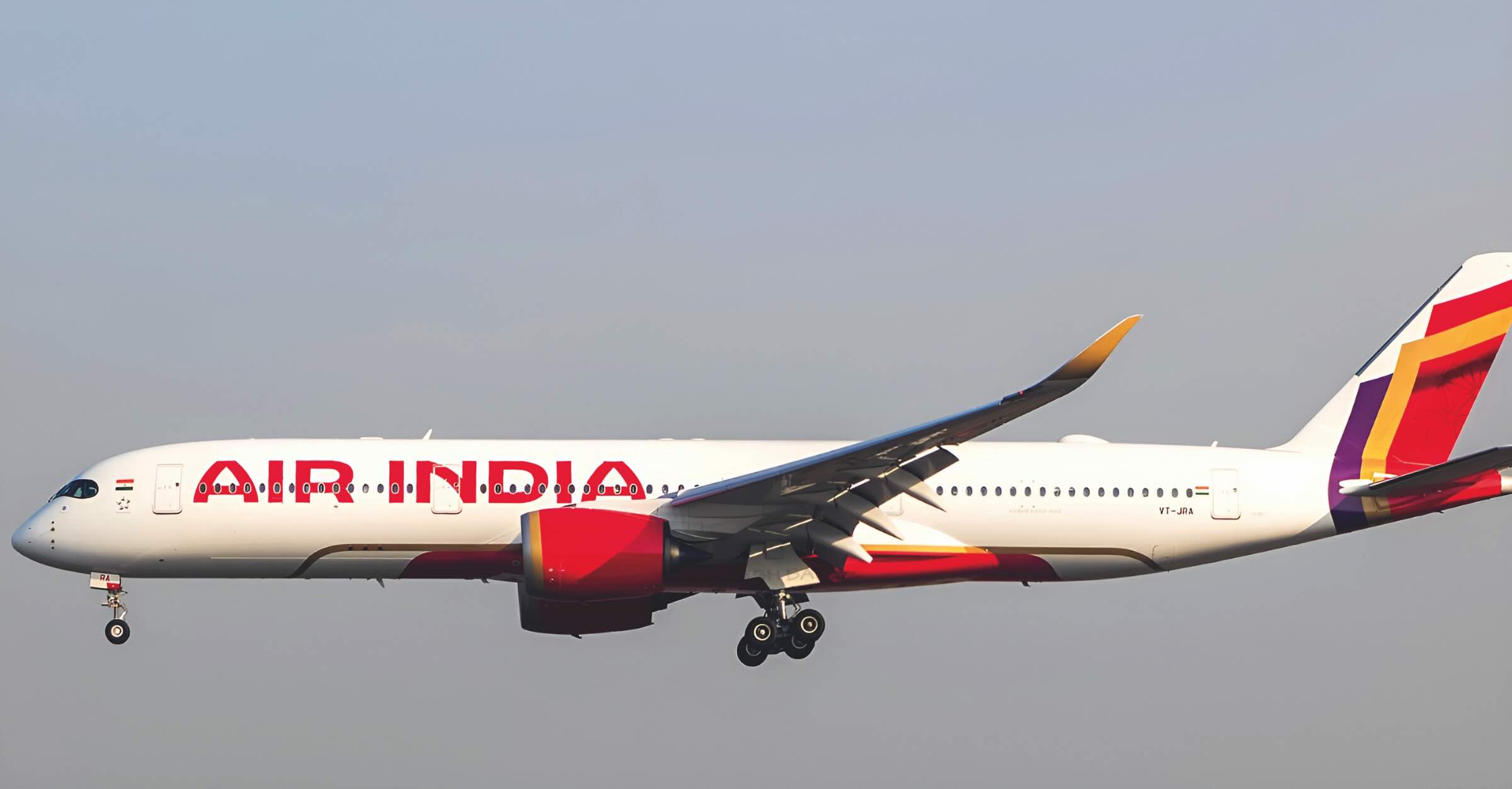
Air India perhaps illustrates the dilemma most clearly. The airline’s return to Tata ownership was one of the most symbolically significant transactions in modern Indian corporate history.
Air India originated within the Tata world before nationalization separated it from the group, making its return decades later both commercially important and emotionally resonant. But historical significance does not eliminate financial reality. Turning around a major international airline requires extraordinary resources: fleet renewal, aircraft acquisitions, technology modernization, maintenance infrastructure, customer-service improvements, training, route development, organizational restructuring, and the integration of previously separate airline operations. Tata has consolidated its aviation interests to build a carrier capable of competing effectively in both Indian and international markets, but this transformation inevitably requires substantial capital before the full economic benefits can emerge.
The strategic argument behind Air India remains compelling. India is one of the world’s largest and fastest-growing aviation markets, and a successful national-scale carrier could capture a much larger share of international traffic that has historically transited foreign hubs. Yet the financial burden of rebuilding the airline is equally undeniable. Losses and ongoing capital requirements naturally invite questions from boards and shareholders about the pace of recovery, the amount of additional investment required, and the point at which strategic patience should begin to produce sustainable economic returns. Such questions should not automatically be interpreted as hostility towards management. They are legitimate responsibilities of ownership and governance, particularly when an investment of this scale sits alongside several other capital-intensive strategic projects.
The same principle applies to Tata’s investments in semiconductors, electronics, batteries, electric vehicles, and digital businesses. Chandrasekaran’s tenure has been characterized by a willingness to position Tata in industries expected to define India’s next industrial era. Semiconductor manufacturing is among the most striking examples. India has long sought a meaningful position in global semiconductor supply chains, and Tata’s investments place the group near the center of that national ambition. Yet semiconductor fabrication is among the most capital-intensive manufacturing activities in the world, demanding enormous upfront investment, technological expertise, sophisticated supply chains, and considerable patience before returns become visible. Electronics manufacturing, battery production, and electric mobility have different economics but share the need for substantial investment before mature returns.
Each of these strategic commitments can be defended independently. The more difficult governance question emerges when several are undertaken simultaneously. How much capital should Tata commit to businesses whose returns may take years to mature? How quickly should shareholders expect those investments to become profitable? Which projects represent essential long-term strategic positioning, and which should eventually be reconsidered if economics fail to improve? How much risk should Tata Sons absorb while protecting the strength of the wider group? These are precisely the questions that sophisticated boards and controlling shareholders are supposed to debate, and the existence of disagreement does not in itself demonstrate institutional dysfunction. The true test of governance is whether disagreement can be processed through clear mechanisms without allowing uncertainty to undermine strategic execution.
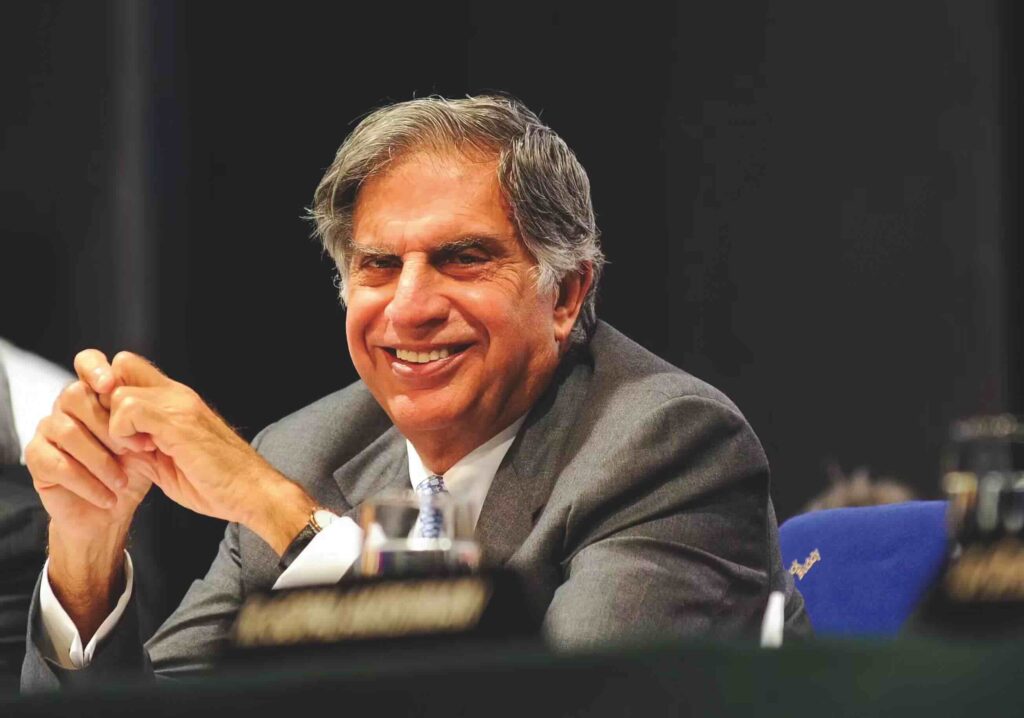
That distinction is particularly important when assessing Chandrasekaran’s record. His tenure cannot credibly be characterized as a period of general financial weakness. Tata Sons and the wider group remain financially formidable, and several major Tata businesses have strengthened considerably during his chairmanship. Chandrasekaran took control at an exceptionally difficult moment in Tata history, following the removal of Cyrus Mistry, and helped restore stability to a group that had been shaken by one of India’s most dramatic corporate governance battles. Having entered Tata through Tata Consultancy Services and risen to become its Chief Executive, Chandrasekaran represented perhaps the ultimate expression of Tata’s professional-management tradition: an executive who joined the organization as a young employee and eventually reached its highest corporate office.
Tata’s largest strategic programs are at important stages of execution, making continuity during the transition essential. A carefully managed handover would demonstrate that the institution has absorbed the lessons of previous leadership transitions.
Under his leadership, Tata moved beyond the immediate task of stabilization and began positioning itself for a substantially different economic future. Tata Motors underwent a major transformation; Jaguar Land Rover recovered from periods of considerable financial pressure; Tata established an early position in India’s electric-vehicle market; Tata Steel continued restructuring and expansion; Indian Hotels accelerated growth; Tata Capital increased its significance within financial services; Tata Electronics emerged as an ambitious new industrial platform; Air India returned to the group; and Tata’s semiconductor program placed the conglomerate inside one of the most strategically important industries of the twenty-first century. Chandrasekaran, therefore, did not simply administer the Tata portfolio he inherited. He attempted to reshape it.
That record makes the debate over his continuation more significant, not less. The underlying issue is not easily reduced to whether a chairman performed well or poorly. It concerns competing judgments about how aggressively Tata should deploy its enormous resources and how strategic authority should be shared between Tata Sons and the trusts that ultimately control it. A professional manager may reasonably argue that investments in aviation, semiconductors, batteries, and advanced manufacturing must be assessed over ten or twenty-year horizons. A controlling shareholder may equally reasonably insist that long-term ambition must be balanced against capital discipline, portfolio risk, and preservation of institutional wealth. Neither position is inherently incompatible with Tata’s interests. The challenge is creating a governance structure capable of reconciling them.
Another difficult question concerns the future ownership structure of Tata Sons itself. The possibility of a listing has been debated for years and carries implications extending far beyond valuation. For an ordinary private company, an initial public offering might primarily concern capital, liquidity, and price discovery. For Tata Sons, a listing could potentially alter the architecture through which the wider group is controlled. Public-market expectations, disclosure obligations, minority shareholder rights, and market valuations would introduce pressures fundamentally different from those surrounding the existing private structure. For Tata Trusts, whose holdings provide effective control of Tata Sons, the issue therefore concerns not simply financial value but the long-term character of the institution.
The position of the Shapoorji Pallonji interests adds another dimension. Their substantial minority holding in Tata Sons represents considerable economic value, and questions surrounding liquidity and an eventual exit have remained part of the broader ownership debate. Reconciling the interests of a major minority shareholder with the desire to preserve Tata’s existing institutional structure is exceptionally complicated. Liquidity can affect ownership, ownership can affect control, control can affect governance, and governance ultimately influences management independence and strategic decision-making. What appears initially to be a shareholder issue, therefore, reaches into the heart of how Tata itself will be governed in the decades ahead.
The parallels with the Cyrus Mistry period are impossible to overlook, although the circumstances surrounding Chandrasekaran are materially different and should not be conflated with that earlier confrontation. Mistry’s removal in 2016 produced an extraordinary corporate and legal dispute and raised fundamental questions about the relationship between the Chairman of Tata Sons and Tata Trusts.
Chandrasekaran’s appointment was, in part, the beginning of Tata’s recovery from that disruption. Nearly a decade later, the fact that questions surrounding another chairman’s continuation have again drawn attention to the relationship between ownership and professional management demonstrates why Tata needs governance arrangements that do not depend primarily upon personal chemistry or informal consensus.
The next Tata Sons chairman will consequently inherit much more than an impressive corporate title. The successor will need the confidence of Tata Trusts, credibility with the Tata Sons board, the respect of chief executives running major listed companies, and the ability to reassure institutional investors, governments, international partners, and employees. At the same time, that person must understand the philanthropic philosophy embedded within Tata’s ownership structure while remaining commercially disciplined enough to make difficult decisions about capital allocation. Few corporate positions require such a complicated combination of managerial authority, diplomacy, financial judgment, and institutional sensitivity.
This raises perhaps the most consequential question of all: how independent should the Chairman of Tata Sons be? Professional managers require sufficient autonomy to make commercial decisions and accept accountability for their outcomes. Controlling shareholders, meanwhile, have a legitimate right to influence the strategy of the company they own. Neither proposition is controversial. The difficulty arises when the boundary between them becomes ambiguous. If a Tata Sons chairman possesses too little strategic autonomy, the position risks becoming predominantly administrative. If the chairman lacks sufficient alignment with the controlling shareholders, major strategic differences can eventually become institutional disputes.
The long-term answer, therefore, cannot simply be to find another exceptional personality capable of maintaining good relationships across the Tata establishment. The governance architecture itself must be strong enough to function when personalities disagree. Responsibilities need to be understood, decision-making mechanisms need to be clear, succession should be predictable, and major disagreements should have established routes towards resolution. Tata has entered an era in which institutional authority must increasingly replace the personal authority that Ratan Tata was uniquely capable of exercising.
Every great corporate institution eventually faces this transition. Over the course of an exceptional leader’s lifetime, personality can compensate for weaknesses or ambiguities in governance structures. Relationships can sometimes substitute for rules, and personal authority can resolve disagreements before they become institutional crises. But companies designed to survive generations cannot depend indefinitely upon extraordinary individuals. Eventually, charisma must become process, personal credibility must become institutional credibility, and unwritten understandings must become durable governance mechanisms.
This may ultimately be the most important meaning of the Chandrasekaran episode. The internal differences surrounding his decision should not be exaggerated into a simplistic narrative of corporate warfare. There are genuine strategic questions confronting the group, but Tata remains financially powerful, operationally diverse, and globally ambitious. Those realities are not contradictory. Indeed, the disagreements matter precisely because the stakes are so high. Tata is deciding how the enormous strength accumulated over generations should be deployed during the next industrial transformation.
Should the group continue committing substantial capital to the long-term rebuilding of Air India? How aggressively should it pursue semiconductors and electronics? How much patience should emerging businesses receive before financial performance becomes decisive? Should Tata Sons remain permanently private? How should minority shareholder liquidity eventually be addressed? Where should the practical boundary between Tata Trusts and Tata Sons be drawn? And what authority should the next chairman possess to make decisions across this vast portfolio? These questions cannot be answered through succession alone because they concern Tata’s operating philosophy.
For CEOs and controlling shareholders elsewhere, the episode provides a powerful lesson. Succession planning is not the act of selecting a successor shortly before an incumbent leaves. Genuine succession planning establishes the authority attached to the office, develops potential candidates, aligns significant shareholders, clarifies decision rights, and creates a transition mechanism that can function even during periods of disagreement. A corporation may possess enormous financial strength and still discover that uncertainty at the top represents one of its greatest vulnerabilities.
There is an equally important lesson about the relationship between owners and professional managers. Executives cannot reasonably be expected to make enormous long-term investments while remaining uncertain about the boundaries of their authority. Yet managerial independence cannot eliminate shareholder accountability.
The strongest governance systems do not attempt to abolish this tension because it is inherent in modern capitalism. Instead, they channel it through boards, clearly defined responsibilities, and mechanisms that allow disagreement without destabilization.
Attention will naturally turn towards the identity of the next Chairman of Tata Sons, and speculation about potential candidates will intensify as the transition approaches. But concentrating entirely on names would miss the more important issue. Tata does not merely need another chairman; it needs clarity about the chairmanship itself. What exactly will the next chairman be empowered to decide? Which strategic matters require deeper alignment with Tata Trusts? How should major capital-allocation disagreements be resolved? What is the long-term position regarding the ownership structure of Tata Sons? And how can Tata ensure that leadership succession becomes an institutional process rather than a moment of uncertainty whenever a chairman’s tenure nears its end?
Chandrasekaran, meanwhile, still has months remaining in office, and those months matter. Tata’s largest strategic programs are at important stages of execution, making continuity during the transition essential. A carefully managed handover would demonstrate that the institution has absorbed the lessons of previous leadership transitions. It would also allow Chandrasekaran to leave behind a group substantially different from the one he inherited in 2017: more ambitious in aviation, electronics, semiconductors, batteries, electric vehicles, and digital businesses, while remaining enormously influential in technology, steel, automobiles, hospitality, energy, consumer products, and financial services.
Perhaps the most important asset being transferred to the next generation of leadership, however, cannot be found on Tata’s balance sheet. The Tata name has accumulated public trust over more than a century and a half. That trust does not belong to any chairman, trustee, or generation; it belongs to the institution. Protecting it requires profitable companies and successful investments, but it also requires a governance system capable of surviving legitimate disagreement without allowing those differences to weaken confidence in the institution itself.
Chandrasekaran’s decision not to seek another term should therefore be understood as more than the approaching end of one chairman’s tenure. It is a test of Tata’s ability to move from an era in which exceptional personalities could hold a complicated institutional architecture together, towards one in which the architecture itself must provide stability. If Tata manages that transition successfully, the present tensions may eventually be remembered not as a crisis but as an important stage in the evolution of one of the world’s great corporate institutions. The identity of the next chairman will matter enormously, but the larger objective is more enduring: ensuring that the Tata system remains stronger than any individual who occupies the chairman’s office.