
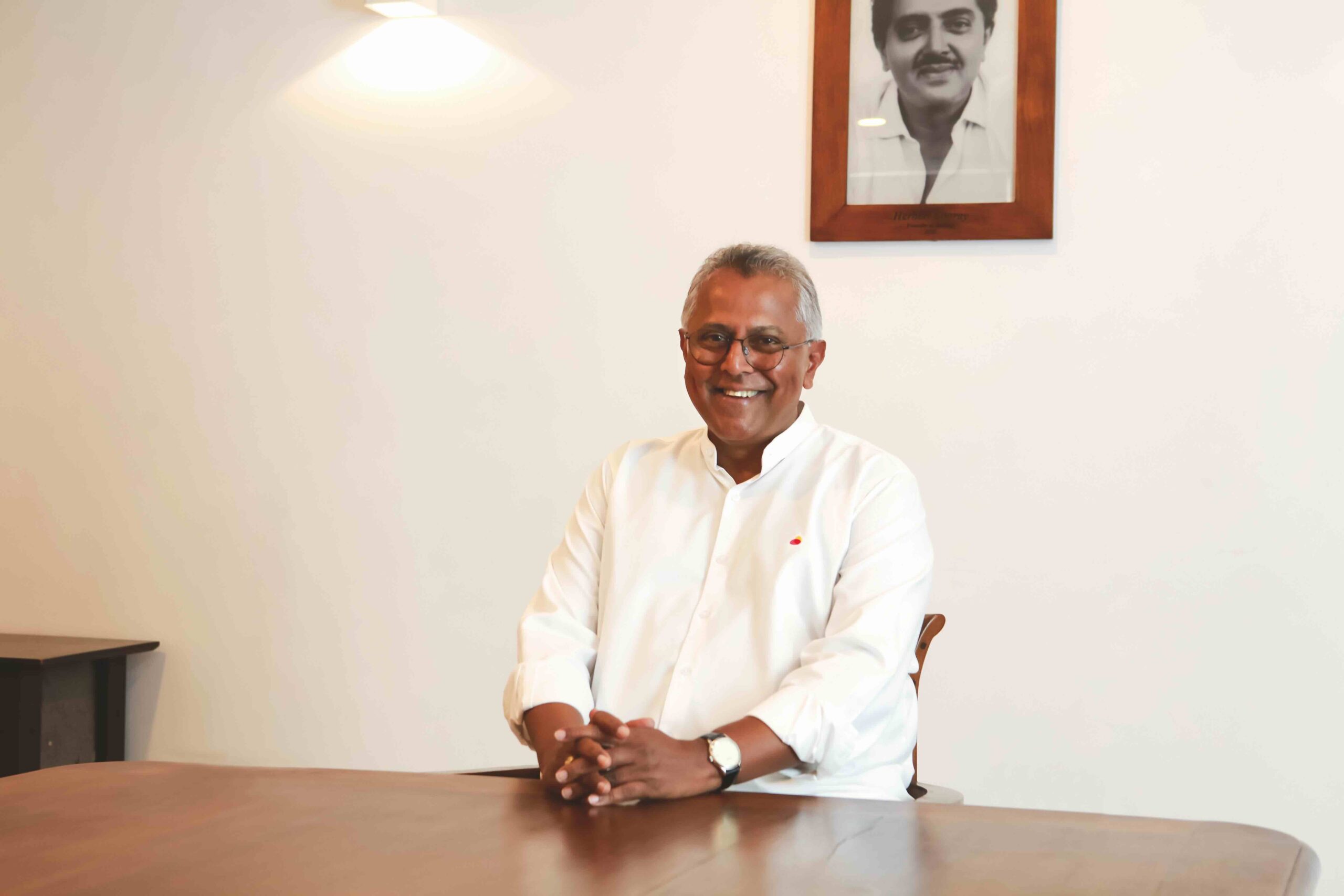
Hiran Cooray, Chairman of Jetwing Symphony and Lighthouse Hotel, asserts that Sri Lanka’s greatest strengths are its people and diverse natural and cultural treasures. Speaking with Business Today, Cooray stresses the need to shift from measuring success by tourist arrivals to targeting 10–12 billion dollars in tourism revenue by 2030, warning that missing this mark would be a lost national opportunity. He identifies the need for leadership, united industry alignment, and a confident national narrative. Cooray’s core message: Sri Lanka must assert its identity as a high-value, experience-rich destination through confidence, sustainability, and strategic clarity.
Words: Jennifer Paldano Goonewardane.
Photography: Sujith Heenatigala.
Your recent appointment to the Board of Trustees of the PATA Foundation is a significant milestone. What does this recognition mean for you personally, and more importantly, for Sri Lanka’s standing within regional tourism?
Personally, such positions do not mean much to me in an individual sense. Whenever I am appointed, elected, or entrusted with a role of this nature, I first thank God for what He has done, and I remember my parents with gratitude. Beyond that, I do not let these titles define me or take them to heart personally.
I have been associated with PATA since 1990, and I must say that I have benefited immensely from that relationship. Much of my learning came through PATA because, unlike today, when young people have countless opportunities to learn through the internet, podcasts, YouTube, and websites, such resources simply did not exist then.
When I joined the travel industry in 1987, resources were scarce. We had to travel to learn, since there was no internet. I had just started working for my father.
At that time, we had a consultant director, Mr. M. Y. M. Tahir, a former Director General of Sri Lanka Tourism and one of the most experienced professionals in the field. He advised my father, Herbert Cooray, to send one of his children to these PATA meetings. That is how I first began participating in PATA meetings with Mr. Tahir. Since 1990, I have been actively involved with PATA. At that time, PATA was important for marketing, networking, research, and industry intelligence. Back then, one had to actively seek knowledge, understand emerging trends, and stay up to date on global tourism developments.
This became an important educational opportunity for me, and I benefited greatly from it. Naturally, I have sought to introduce some of those learnings into our own companies, and whenever I have had the opportunity, I have spoken about them publicly as well. Some people may have benefited from what I have shared. At the same time, some governments have entrusted me with positions of responsibility. I served as Chairman of the Advisory Committee under two ministers, and at different times, ministers have also appointed me to the boards of certain government bodies. Whenever I am asked for support or assistance, I am always there to help.
From your vantage point, how does Sri Lanka currently compare with other Asia-Pacific destinations in terms of strategic direction and global positioning?
Sri Lanka is, in many ways, a blessed destination. Despite being a small island, we possess remarkable tourism diversity. Within this compact geography, we have pristine beaches, rich culture and history, abundant natural landscapes, and renowned tea plantations. In recent years, Jaffna has emerged as a promising destination in the North. Along the East Coast, places such as Pottuvil and Arugambay, and the surrounding national parks, have become prominent attractions. Sri Lanka’s uniqueness lies in allowing visitors to experience the entire island in just two to three weeks.
The country benefited significantly from the period of peace and stability between 2009 and 2019. However, we experienced a substantial downturn between 2019 and 2023. Since then, we have recovered well and are now in a relatively comfortable position. That said, external factors such as the ongoing conflict in the Middle East continue to pose challenges for us. Nevertheless, we are currently in a stronger position than we have been in recent years.
Sri Lanka holds a key position internationally, especially within the Asia-Pacific region. Despite past fluctuations, we are ready to claim our place as one of the world’s most sought-after island destinations. With sustained strategic positioning and stronger engagement from successive governments, Sri Lanka can fully capitalize on its opportunities to be effectively marketed and positioned globally.
As a result, much of Sri Lanka’s tourism growth has occurred organically. Visitors are drawn to the country’s prevailing peace, stability, and sense of safety rather than through a deliberate, well-executed global positioning strategy.
How would you assess the current tourism policy framework in Sri Lanka? Where is it working, and where is it falling short?
That is a very pertinent question, because tourism is not an area that lends itself to rigid, tightly controlled policy frameworks. In my view, there has not been a clearly defined or consistently articulated tourism policy in Sri Lanka —not only under the present government, but also under previous administrations.
A proper policy statement must be carefully considered and must clearly outline the country’s intended direction. We have not yet seen this necessary level of clarity or decisiveness. One main reason for this is the inherently complex and fragmented nature of the tourism industry.
Tourism encompasses many stakeholders: airlines, shipping and transport providers, hoteliers, travel agents, guides, tuk-tuk drivers, small-scale street vendors, and suppliers in the hotel sector. In one way or another, all of these groups are part of the tourism ecosystem. Given this diversity, one segment’s needs in a tourism policy may not align with those of another segment. Creating a single, unified policy that fully satisfies everyone is not realistic. Airlines, travel agents, hotels, guides, and transport providers all have distinct priorities.
At times, competing interests can also hinder collective progress, where different parties may prioritize their own positions rather than working towards a common objective.
When a new government takes office, various stakeholders try to influence decisions. If the minister or officials lack tourism experience, they must listen to multiple, sometimes conflicting perspectives. This often leads to confusion and a lack of clear direction.
Sri Lanka currently lacks a clear, consistent tourism policy, making it difficult to coordinate direction and progress in the industry.
In your view, what should be the core pillars of a future-ready tourism strategy for Sri Lanka over the next decade?
Sri Lanka is a small island. We cannot realistically compete with larger regional destinations such as Thailand, Vietnam, or Malaysia in terms of scale, as they attract significantly higher tourist volumes — often exceeding 20 million visitors annually. In comparison, Sri Lanka considers figures such as 2.5 million arrivals to be a strong performance.
Our strategy should focus on maximizing tourism value, not just on increasing visitor numbers. The emphasis must shift from focusing on overall volume to measurable revenue growth. For instance, if we set a clear target —looking ahead from 2026 to 2030 — we must aim to generate approximately 10–12 billion dollars in tourism revenue. If the national economy, which has declined from around 80 billion to approximately 60 billion dollars in GDP, were to recover and expand to, say, 120 billion, a tourism contribution of 10–12 percent would be a meaningful and desirable outcome.
At the same time, we must be mindful of the pressures associated with higher tourist volumes. Increased arrivals inevitably place greater strain on natural resources such as water and electricity, as well as on the food supply. If not carefully managed, this could come at the expense of local communities.
In any strategy, Sri Lanka’s interests must come first. We cannot allow public services, such as transportation — which are heavily subsidized for the benefit of Sri Lankan citizens — to be over-utilized by visitors, thereby compromising accessibility for locals. For example, public transport systems like Sri Lanka Railways operate at significant losses due to subsidies, and similar challenges may exist in other state transport services. These are important considerations when planning for tourism growth. Therefore, any future tourism strategy must ensure that the benefits of the sector are felt by Sri Lankans and that visitor activity does not diminish the quality of life for local communities.
At the same time, tourism represents a critical opportunity for the country. It has the potential to generate substantial foreign-exchange earnings, strengthen national revenues, and contribute to debt repayment. In that sense, tourism can play a pivotal role in supporting Sri Lanka’s economic recovery and long-term stability.
My aspiration is to see the sector grow meaningfully and achieve a revenue target of 10–12 billion dollars. This is a goal that all stakeholders — within the industry and in government — must collectively work towards in the coming decade.
Do you believe there is sufficient alignment between government policy and private sector ambition in tourism?
It is a challenging question, and as I mentioned earlier, much of this difficulty stems from the fragmented nature of the tourism industry.
No government minister can realistically satisfy all stakeholders. If a minister consults with me, I will present one perspective. If the same minister engages with airlines, travel agencies, or other stakeholders, each will bring their own priorities and agendas to the table. While we are all interdependent within the tourism ecosystem, our objectives often differ, making alignment inherently complex.
This is precisely why I believe it is more effective to focus on a common, measurable goal — such as generating 10–12 billion dollars in tourism revenue. Achieving such a target would require the collective effort of all stakeholders, including airlines, travel agents, hoteliers, transport providers, and tour guides.
To use a simple analogy, we must all be “kicking the ball” towards one goal. If different stakeholders pursue different directions without a unified vision, it becomes difficult to achieve meaningful progress.
Strong leadership is therefore critical. A capable minister or a highly effective secretary of tourism would be able to consolidate diverse stakeholder perspectives and translate them into a coherent national objective.
Once such a shared goal is established, policy can then be developed in alignment with that vision. This would include planning and investing in infrastructure, enhancing facilities at historical, cultural, and natural sites, and implementing effective visitor management systems.
These elements collectively form a comprehensive tourism policy framework. However, in practice, this level of coordinated and goal-oriented approach has not yet been fully realized.
Despite its challenges, Sri Lanka continues to attract global interest. What are the strongest positives you see in the country’s tourism offering right now?
First and foremost, our greatest strength lies in our people. Sri Lankans are, by and large, friendly, warm, and welcoming. I would say that 99 percent of our people are genuinely hospitable, although, as in any destination, there may be a few exceptions. It is this authenticity and the quality of human interaction that have sustained Sri Lanka as a tourism destination, even during the most challenging periods.
During difficult times, visitors from markets such as Germany and the United Kingdom continued to travel to Sri Lanka, largely because of the service ethos and the strong involvement of local communities. In that sense, our people remain our most valuable asset.
It is also important to recognize that Sri Lanka is a multi-religious and multi-ethnic society. Not many countries today can claim such diversity while maintaining a significant degree of social harmony. This coexistence is a strength, and we must continue to preserve it.
Beyond this, the country’s natural and cultural assets are equally compelling. Sri Lanka offers an exceptional range of experiences — from pristine beaches and scenic highlands to wildlife reserves, historical landmarks, religious sites, and a rich culinary tradition.
In essence, we offer almost everything a traveler seeks, except snow, all within a relatively small area. For instance, many are surprised to learn that Sri Lanka is home to over 4,000 elephants, with more than 3,000 living in the wild.
Similarly, the opportunity to witness marine life such as sperm whales and blue whales within a short distance offshore is a rare and significant attraction.
Taken together, these are powerful advantages. The task ahead is to leverage these natural, cultural, and human assets effectively. We must also remain mindful of the legacy left by ancient kings, whose visionary constructions — many built over 2,000 years ago — continue to benefit the country and enrich the visitor experience even today.
In that sense, Sri Lanka possesses a strong foundation. The focus now must be on how we build upon these strengths in a sustainable and strategic manner.
Are there emerging travel trends or niche segments where Sri Lanka is particularly well-positioned to excel?
Yes, one of the key trends that is gradually evolving — perhaps not fully realized yet, but likely to become more prominent in the coming years — is the shift towards independent, self-directed travel. Increasingly, travelers prefer to explore destinations at their own pace rather than rely solely on traditional, operator-driven models.
Historically, a significant proportion of Sri Lanka’s tourist arrivals — I would estimate as high as 95 percent — came through organized group tours, often referred to as modular tourism. In this model, everything is pre-packaged, including airline tickets, accommodation, meals, transportation, and entry fees, all offered at a single price point. However, today’s travelers, particularly younger segments, are moving away from this approach. They seek greater independence, flexibility, and a sense of adventure. They are more inclined to experiment with different modes of transport and a wider range of accommodation options. It is now common for the same traveler to stay in a luxury hotel one night and opt for a homestay the next. In contrast, modular tourism maintained consistency across its offerings.
This shift has given rise to what is now widely described as experiential travel. At its core, an “experience” can take many forms — from as simple as sharing a conversation or a drink with a local to participating in a cultural or lifestyle activity. For example, during a recent visit to Peru, my wife and I joined a tour led by a young guide who was also an economics student in Lima. We discovered that he was the same age as one of our sons, and we found his perspective on life and studies particularly engaging. We eventually invited him to join us for a drink. That personal connection became one of the most memorable aspects of our trip — an experience that went beyond the tour’s formal structure.
This evolving trend also creates new opportunities within the tourism ecosystem. For instance, individuals such as homemakers can offer authentic experiences by preparing and sharing Sri Lankan home-cooked meals with visitors. It enriches the traveler’s experience, enables broader community participation, and provides supplementary income. In that sense, experiential travel is expanding the scope of tourism by involving more people and creating more diverse, personalized offerings. It’s a trend that is likely to continue evolving, and one in which Sri Lanka is particularly well-positioned to excel.
Given that Sri Lanka is constantly criticized for trailing competing destinations in the region, why do you think we struggle to effectively pitch our tourism proposition on the global stage?
One of the primary reasons, in my view, is a lack of confidence — both within the tourism industry and at the administrative level. Too often, we tend to undervalue ourselves. For instance, when discussions arise about attracting high-end or high-net-worth travelers, there is a tendency to suggest that Sri Lanka lacks the necessary facilities. In doing so, we inadvertently diminish our own proposition. Instead, we should be confidently highlighting what we do offer. Colombo, for example, is a vibrant city with museums, churches, temples, attractive public spaces, quality dining options, and retail experiences. However, if our mindset is that Colombo has little to offer, we are effectively undermining our own narrative. Unfortunately, this tendency is quite prevalent, and I consistently encourage stakeholders not to project such sentiments because it reinforces a negative perception.
When such views are echoed within the industry, they inevitably influence policymakers. Ministers and officials may become hesitant to invest in promoting the country globally, concerned that such efforts may not yield adequate returns. This, in turn, affects broader areas such as marketing and positioning — challenges I have alluded to earlier.
It becomes a classic catch-22 situation. To break this cycle, we must first build confidence in our own offering and communicate that conviction to the world. We should be able to present Sri Lanka as a compelling and beautiful destination, inviting visitors to experience what we offer — and to do so at a price that reflects its true value.
Confidence is also critical when it comes to pricing. There must be a willingness to stand by the value of what we offer rather than continuously negotiating downwards. If a product is worth 100, we should not be prepared to accept 10 simply to secure a sale. However, due to concerns about unsold inventory, many operators tend to heavily discount, further eroding perceived value. This lack of pricing discipline has contributed to our inability to position Sri Lanka effectively in the global marketplace. When a destination is not positioned with confidence, it becomes difficult to command appropriate price points. To illustrate, consider the four key Indian Ocean island destinations — the Maldives, Mauritius, Seychelles, and Sri Lanka.
While Sri Lanka is the largest and arguably the most diverse in terms of landscape, culture, and experiences, it is nevertheless positioned below the others in terms of pricing and perception. The others, while offering distinct and attractive experiences — often centered on beach tourism — have successfully positioned themselves at a higher value level.
As a result, there is a significant pricing disparity. A three-star hotel in Mauritius, for instance, may command rates of around 400 euros, whereas a similar property in Sri Lanka may struggle to achieve even 80 euros.
This highlights the broader issue of positioning. When we speak of high-end tourism, it is not limited to five-star luxury properties alone. Effective positioning elevates the entire value chain. If a five-star hotel can command rates of 800 dollars, then a three-star property can reasonably achieve 400. Conversely, if top-tier properties are priced at 400 dollars, then mid-range properties will struggle to secure even 100. Therefore, it is essential that Sri Lanka positions itself with greater confidence on the global stage. When this is achieved, it enhances visibility, attracts the right market segments, and creates a positive trickle-down effect across the entire tourism ecosystem — from luxury hotels to smaller operators such as homestays.
If we can establish this level of confidence and consistency in positioning, I believe our broader goal of generating 10–12 billion dollars in tourism revenue will become far more attainable.
What structural or strategic gaps are holding Sri Lanka back as we witness countries like Thailand and Vietnam moving faster to capture market share? Is the issue primarily one of branding, consistency, policy execution, or something deeper within the ecosystem?
I am glad you raised this question, because it is important to approach such comparisons with nuance. For instance, while Vietnam is often cited as a strong performer in terms of tourist arrivals, it may not necessarily be the best benchmark in all respects. Although arrival numbers are high, the corresponding revenue per visitor is relatively low. I recall visiting Vietnam a couple of years ago, where prices were extremely competitive — for example, a beer cost around one dollar, and many offerings followed a “buy one, get one free” approach. Similarly, good quality hotels were available at rates of 40–50 dollars. One reason for this is overcapacity: the country has developed a large volume of accommodation, and to maintain occupancy, prices are often significantly discounted. These are practices that we should be cautious about replicating. The question is not whether Sri Lanka should aim to attract 20 or 25 million visitors simply because other countries have achieved those numbers. Rather, our focus should remain on how much value we can derive from a more manageable volume — for example, the 2.5 million visitors we currently attract.
It is possible that Sri Lanka may reach around 3.5 million arrivals by 2030. Within that number, there will naturally be a mix of high-end and lower-end travelers. However, the key objective should be to generate between 10 and 12 billion dollars in tourism revenue.
We must also recognize that countries such as Thailand and Vietnam operate at a very different scale. They are significantly larger and have far greater carrying capacity. A single beach destination in those countries may offer between 25,000 and 60,000 rooms, whereas Sri Lanka’s total room inventory is around 45,000. It is therefore neither practical nor strategic for Sri Lanka to attempt to compete on volume or price. In fact, when some operators point out that destinations like Thailand are cheaper, I often respond that we cannot compete at that level.
In cities such as Bangkok, accommodation can range from five to 500 dollars. Competing at the lower end of that spectrum is simply not viable for Sri Lanka. This brings us back to the importance of positioning. While these countries are undoubtedly successful, tourism plays a central role in their economies, supported by their scale and capacity. Sri Lanka must instead focus on its own strengths, assess its carrying capacity, and determine the optimal balance between visitor numbers and economic returns.
Rather than viewing other destinations solely as competitors, we must also see them as sources of learning. Every country has both strengths and shortcomings. Ultimately, the challenge is not simply branding or policy execution, but defining a clear, sustainable strategy that aligns with Sri Lanka’s scale, resources, and long-term interests.
I have been associated with PATA since 1990, and I must say that I have benefited immensely from that relationship. Much of my learning came through PATA because, unlike today, when young people have countless opportunities to learn through the internet, podcasts, YouTube, and websites, such resources simply did not exist then.
You mentioned overbuilding in Vietnam. In that context, where does Sri Lanka stand, given its own ambitions to expand room capacity in the tourism sector?
Development must be approached with careful consideration of each location. There are areas where additional capacity can be introduced, and others where development has already reached — or even exceeded — sustainable limits. Take Yala, for example. It remains one of the most sought-after destinations in the country, primarily because of the high likelihood of leopard sightings. However, Yala is already operating beyond its optimal capacity. It’s currently overvisited, and the park is under significant pressure. If the ecosystem is not managed properly and wildlife begins to move away, the long-term viability of the destination — and the hotels that depend on it — will be at risk.
To illustrate the extent of the issue, on some days nearly 800 vehicles enter the park. This level of traffic is difficult to find in most other national parks worldwide. Such volumes are not sustainable. This is precisely where a clear and well-enforced policy framework becomes essential. Visitor numbers must be regulated in line with the park’s carrying capacity, and authorities must take a firm stance in preventing overcrowding.
At the same time, it is important to recognize that other regions in the country — such as Jaffna and the East Coast — have the potential to accommodate further development and increased visitor flows.
Jaffna, in particular, presents a compelling opportunity. It is a region rich in heritage, with many traditional homes that were affected during the conflict but still retain their structural integrity. In many cases, these properties have been abandoned, either because the original owners are no longer living or have relocated overseas.
There is an opportunity here for a structured restoration initiative. Authorities could identify the rightful owners or their next of kin and, where there is no redevelopment interest, facilitate long-term leasing arrangements with investors. This would allow for the restoration and reuse of these properties, while ensuring that owners or their families receive a share of the returns. For instance, restoring even 50 such houses, each with four rooms, would add approximately 200 rooms to Jaffna’s accommodation inventory. This approach not only increases capacity but also contributes to the preservation of heritage and enhances the destination overall. I have advocated for this concept, and it is encouraging to see the Urban Development Authority show interest in pursuing it.
A similar approach can be applied nationwide. Many traditional residences — including walawwas and other historic homes — can be restored and integrated into the tourism offering, thereby expanding capacity without resorting to excessive new construction.
At the same time, it is important to maintain and enforce planning guidelines. For example, there was once an informal understanding that buildings along the beach should not exceed the height of coconut trees. However, this principle has not always been adhered to in recent years. This is where strong regulation and oversight become critical. Development must be guided by clear standards to ensure that growth does not come at the expense of the very assets that make Sri Lanka an attractive destination.
How does the perception of Sri Lanka as a “route destination” rather than a primary one impact the industry, and what can be done to reposition the country as a standalone destination?
I believe Sri Lanka is, in essence, very much a standalone destination. That said, some long-haul travelers, particularly from North America, tend to visit multiple countries on a single trip. This is largely due to the distance they travel. When visitors undertake long-haul journeys, they typically stay longer and often combine three or four destinations in the region. This is especially common among retirees and long-stay travelers. We are, and should continue to be positioned as, a primary destination in our own right.
How important is air connectivity in this equation, and are we doing enough to secure the right airline partnerships and routes?
Air connectivity, in this context, is primarily driven by demand and supply dynamics rather than by perceptions of Sri Lanka as a route or a standalone destination.
Most international airlines, other than Sri Lankan Airlines, operate flights to Sri Lanka only when they see clear commercial viability. If there is no demand, airlines will not operate routes here — it is as simple as that.
If the objective is to attract more airlines, certain policy measures, such as reducing landing fees, can be considered. However, such incentives alone are not sufficient to bring in carriers. Airlines will only operate routes if they see a profitable opportunity to sell seats.
Leading international carriers such as Singapore Airlines, Emirates, and Qatar Airways operate to Sri Lanka because their flights are commercially viable and consistently well patronized. When demand is strong, they remain; when demand weakens, they will naturally redeploy capacity elsewhere. This is the fundamental principle of aviation economics.
At present, we already have a strong presence of major carriers operating to Sri Lanka, which is a positive indicator. We are also hearing of new additions, such as British Airways commencing operations from the end of the year, which is very encouraging.
The presence of strong, reputable global brands and their continued interest are certainly positive developments for the industry.
It is essential that Sri Lanka positions itself with greater confidence on the global stage. When this is achieved, it enhances visibility, attracts the right market segments, and creates a positive trickle-down effect across the entire tourism ecosystem — from luxury hotels to smaller operators such as homestays.
How do you view the influence of Online Travel Agents (OTAs) on Sri Lanka’s hospitality sector?
The online space has fundamentally transformed the world — particularly the way we travel and make bookings. In many ways, my own traditional marketing knowledge has become less relevant, as I come from an “old school” marketing background. Earlier, marketing meant physically meeting people, traveling extensively with brochures — often carrying 20 kilos in one hand and another 20 kilos in the other — moving from city to city, such as Berlin, London, Frankfurt, and Paris. We traveled across the world with large volumes of promotional material, even paying excess baggage charges.
Today, all you carry is a mobile phone. Pricing structures have also evolved significantly. Earlier, we used to set rates and block them for two years in advance, signing fixed contracts that remained unchanged regardless of market conditions. The only possible adjustment was downward; rates could be reduced but not increased. Today, pricing is entirely dynamic. What you see in the morning may not be available at the same price by evening.
The digital revolution has reshaped how decisions are made and how information is accessed. Earlier, we relied on personal memory and relationships — knowing what a guest preferred to eat or drink. Today, everything is system-driven and data-driven.
We have had to embrace this transformation, and Online Travel Agents (OTAs) have played a significant role in opening up the industry. They have democratized access to hospitality, allowing individuals — for example, someone with an extra room in their home — to list it and participate in tourism. This was not possible in the past. Tourism, in that sense, should not be limited to large operators alone. It must benefit a wider segment of society, and online platforms have enabled that inclusion.
The only concern from the perspective of the formal sector — such as established hotel companies — concerns taxation and compliance. Many in the traditional sector feel that the playing field is not entirely level, particularly when informal operators do not contribute taxes in the same way. What we are essentially advocating for is fairness and consistency. If formal operators are paying taxes and service charges amounting to around 33 percent of turnover, then similar standards should apply across the board. Beyond that, however, I believe the overall impact of OTAs and the digital ecosystem has been overwhelmingly positive for the industry.
Despite the rise of OTAs, Sri Lanka continues to see a relatively high number of travelers opting for organized tours through traditional tour operators compared to many other destinations. What, in your view, accounts for this continued preference?
That is a very relevant question. At present, we estimate that approximately 50 percent of our business still comes through organized travel agents and tour operators. Earlier, as I mentioned, this figure reached 95 percent. So clearly, it has been on a gradual downward trend, and this shift will likely continue. However, I also believe it will eventually stabilize.
There will always be a segment of travelers who prefer the reassurance and convenience of organized travel. For example, my wife and I traveled to South America about two months ago, and we chose an organized tour. Despite my travel experience, it was our first visit to that region, and we do not speak Spanish. In that context, we felt more comfortable with an organized arrangement.
Similarly, there remains a segment of travelers who, particularly when visiting Sri Lanka for the first time, prefer to travel through organized tours. This provides them with a sense of comfort and security. Therefore, I believe this segment will stabilize at around 45–50 percent of total arrivals, while the balance will increasingly be driven by independent travel and direct bookings. Nonetheless, traditional travel agents and tour operators will continue to play an important role in the industry, as there will always be travelers who value the convenience, structure, and reassurance they provide.
Although Sri Lanka is often described as a luxury destination with a unique, high-end offering, pricing often does not reflect this positioning. Why does this disconnect exist?
As I was saying, lack of confidence. That’s it.
What needs to change—mindset, policy, or product—to ensure Sri Lanka commands the premium it deserves?
To begin with, it is fundamentally a matter of mindset. This is then followed by the product and the quality of service. The product offering must be of a consistently high standard. One cannot charge 500 and deliver a 50 dollar experience. In today’s environment, such mismatches will be quickly exposed, particularly given the influence of social media, where customers have an immediate platform to share their experiences and feedback. This can significantly impact reputation.
Therefore, if one is charging a premium, there must be clear value delivered in return. More importantly, there must be the confidence and conviction to stand by the product being offered — to genuinely believe that it is worth the price being charged. That confidence in what we offer is critical.
From a policy perspective, it cannot be imposed in a rigid, top-down manner. In the hotel sector, for example, some operators may align with certain policy directions while others may not. We operate in a free-market economy, and therefore, policy cannot be forced uniformly across all stakeholders. However, what can be achieved is consensus — a coming together of industry stakeholders to agree on broad principles, even if there are differences in execution. This is why the country’s positioning becomes so important. Once there is a clear and consistent national positioning, stakeholders are better able to align with it and confidently support appropriate pricing structures.
Increasingly, global travelers are seeking authentic, sustainable experiences. How can Sri Lanka better integrate sustainability into its tourism model without commodifying it?
Last year, on first January 2025, I personally felt a great sense of optimism when the “Clean Sri Lanka” program was launched. I was among many who listened to the President’s address, which was delivered very eloquently. At that moment, I felt a sense of hope that, at last, our country would move towards becoming more environmentally clean.
While I still hold that the vision is excellent, I do not see the level of progress initially expected. That said, it does not mean the program is without value or relevance. On the contrary, I believe “Clean Sri Lanka” has the potential to become a strong and meaningful national branding platform.
As articulated by the President, Clean Sri Lanka is not limited to environmental cleanliness alone, but also envisions a country that is politically, ethically, and financially clean. That is a very powerful and commendable vision, and I left that occasion feeling very encouraged. However, as with any vision, it requires consistent execution and collective effort to translate it into reality.
If we are able to implement this vision over the next three to four years and truly position the country accordingly, I believe it can become one of the most effective pathways forward for Sri Lanka. Sustainability, in this broader sense, is not limited to environmental aspects alone. It also includes the involvement of local communities, environmental stewardship, financial viability, and ethical governance. All of these elements together define true sustainability. This presents a significant opportunity to position Sri Lanka as a “clean” destination in the widest sense of the term — and to use that as a national branding proposition. If we can do so, it will also help attract greater foreign investment into the country.
At present, there are still significant procedural and administrative delays in project approvals. In many cases, unless there are improper practices involved, approvals tend to take considerable time. While I do acknowledge that the situation has improved compared to earlier periods, delays remain a concern.
From an investor’s perspective, particularly for foreign investors, it’s unrealistic to expect them to wait two or three years for project approvals. In such cases, they will naturally look at alternative destinations where processes are more efficient and predictable. These are the areas that need to be addressed if we are to elevate Sri Lanka’s positioning and competitiveness. That, in my view, is also part of sustainability — creating a system that is efficient, transparent, and supportive of long-term growth.
I believe success would be defined by our ability to move decisively towards a tourism revenue target of 10–12 billion dollars by 2030, rather than simply celebrating increases in tourist arrivals.
If you were to define a singular vision for Sri Lanka tourism over the next 10–15 years, what would success look like?
I believe success would be defined by our ability to move decisively towards a tourism revenue target of 10–12 billion dollars by 2030, rather than simply celebrating increases in tourist arrivals. If we do not achieve this target in tourism earnings by 2030, I would consider that we have not fully realized the sector’s potential. Arrivals alone are not the benchmark; value generation is the true measure of success.
To reach that objective, we must have confidence, drive, commitment, passion, and a genuine sense of ownership and pride in what we offer. These are the essential ingredients for taking Sri Lanka tourism forward in a meaningful and sustainable way.