
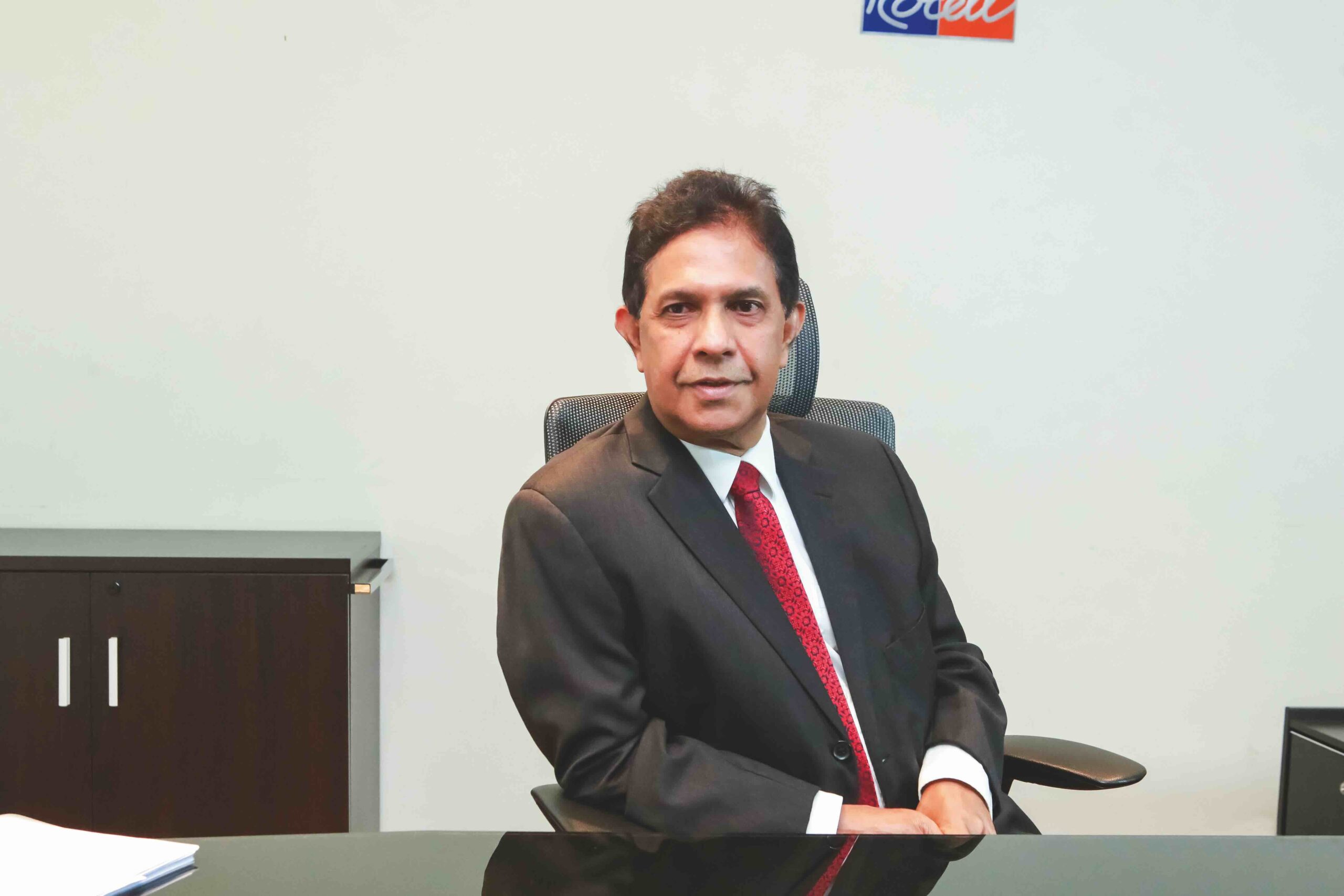
Royal Ceramics Lanka (RCL) has withstood a period of market disruption, intense import competition, and global supply chain volatility by focusing on its core strategic priorities. Speaking with Business Today, Managing Director Aravinda Perera outlines the strategic choices that enabled the Group to sustain resilience, including cost optimization, manufacturing efficiency, product innovation, and brand diversification. Perera discusses how RCL balances efficiency, sustainability, and long-term investment while adapting to domestic and global pressures across the evolving tiles, bathware, and aluminum sectors.
Words: Jennifer Paldano Goonewardane.
Photography: Sujith Heenatigala and Dinesh Fernando.
Royal Ceramics Lanka delivered a resilient performance despite challenging conditions in the tile sector in 2024/2025. What were the key strategic decisions that enabled the Group to sustain profitability during this period?
In 2024/25 we were faced with low-priced imports, slow domestic construction recovery, and suspended government procurement.
We responded with strategic decisions centered on innovation, cost optimization, and efficiency. At the factory level, new production processes, material choices, and energy efficiency initiatives helped manage input costs, aligning with our ongoing focus on profitability.
On marketing, we shifted from commoditized segments to higher-margin, distinctive products like large-format tiles, aligning with premium customer preferences and improving margins.
We addressed underperformance in our sanitary ware segment through rigorous cost management and by complementing local manufacturing with imports, thereby restoring profitability. These measures helped us navigate a difficult environment, deliver resilient performance, and position the business for stronger growth in 2025/26.
The finance segment contributed nearly half of the Group’s profits. How do you view the balance between industrial and financial services within your portfolio going forward?
The finance segment now accounts for a significant part of the Group’s profit. Our role remains that of a passive shareholder with a stable, long-held stake that yields good returns.
We are encouraged by LB Finance’s performance, which continues to rank among the top-tier finance companies in the country. Our investment in the business has delivered substantial value, and we are satisfied with its contribution to the Group’s overall performance.
However, we do not engage in the day-to-day or strategic management of the finance business, with our involvement limited to oversight as shareholders. We value the finance segment for steady returns, while our main strategic efforts remain focused on strengthening our core industrial businesses.
As the aluminium sector staged a strong turnaround, what operational or market shifts drove this recovery, and how sustainable is this momentum?
The aluminium sector’s turnaround came from market diversification—especially export expansion—and tighter operational discipline, easing domestic competitive pressures.
Operationally, strong cost reduction and improved working capital management were the main contributors to profitability. This segment has maintained positive momentum through export growth, cost discipline, and operational efficiency, positioning it for sustainable performance despite ongoing competition.
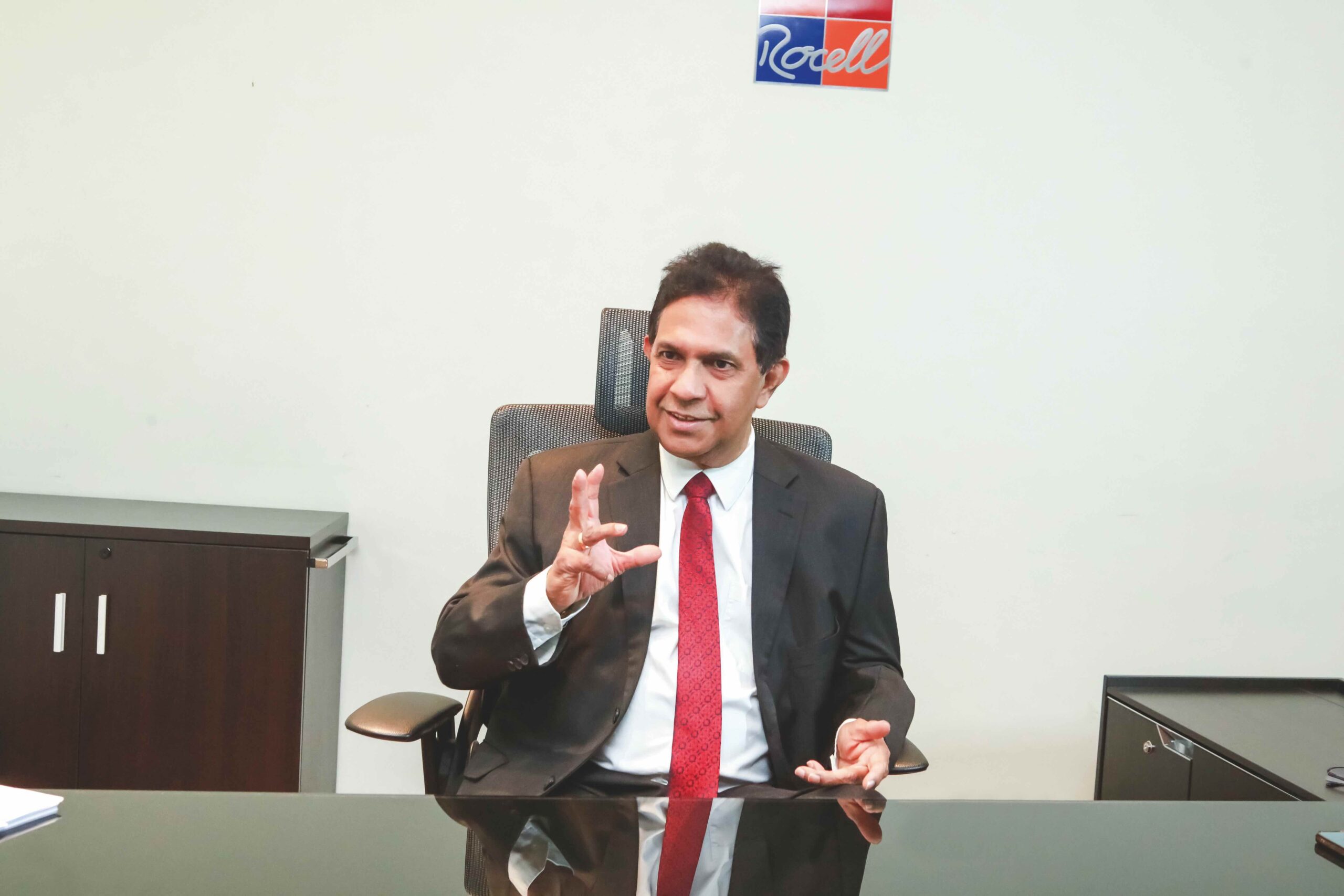
The tiles business faced subdued domestic demand alongside a sharp increase in imports from India and China. How is RCL adapting its strategy to remain competitive in this more open market environment?
During the pandemic, supply disruptions and industry-government collaboration led to capacity expansion. This has now resulted in a more crowded landscape for the sector. This shifted the domestic tiles market from a balanced demand between imports and local manufacturers to a more crowded field, now with three major players. Post-pandemic, subdued domestic demand, rising imports from India and China, and gradual removal of para-tariffs, particularly CESS, challenge local manufacturers as protection decreases.
In response, we are adapting our strategy on multiple fronts. A key priority is to pursue anti-dumping measures. While the regulatory framework for anti-dumping has already been approved and gazetted, it is yet to be actively utilized.
We are taking steps to initiate this process, aiming to address unfair pricing practices in which imported products are sold in Sri Lanka at prices lower than in their countries of origin. We are engaging policymakers for transitional support, with CESS reductions for tiles and bathware were deferred to January 2027.
Our approach to remaining competitive in a more open market environment combines policy engagement, potential trade remedies such as anti-dumping, and continued efforts to strengthen our market positioning amid increasing competition.
Did the post-COVID capacity expansion take place during a period when import restrictions were in effect, and how did that shape industry dynamics?
Yes, the expansion was very much influenced by the import restrictions in place at the time. The government had effectively curtailed imports by limiting access to foreign exchange. Prior to COVID-19, the industry was carrying substantial inventory—approximately nine to ten months of tile stocks and nearly 12 months of bathware stocks. However, as uncertainty grew during the pandemic and concerns mounted over the availability of imported materials, customer behavior shifted significantly. Buyers began purchasing well in advance of their actual requirements, fearing future shortages, even before construction projects had reached the tiling stage. This led to a rapid depletion of existing inventories.
The situation quickly reversed from excess stockholding to extended order books, in some cases stretching seven to eight months ahead. As a result, tile and bathware manufacturers came under considerable pressure from customers, as we were unable to meet demand in a timely manner. This environment effectively compelled the industry to invest in capacity expansion.
Then as the country returned to normalcy and import restrictions were lifted, it led to increased domestic capacity alongside resurgent imports.
With Rocell and Lankatiles continuing to lead in market share, what role do design innovation and brand positioning play in defending this leadership?
Design innovation and brand positioning are central to sustaining Rocell’s leadership, particularly given that the three local manufacturers operate across distinct market segments in both tiles and bathware. Rocell, for instance, is positioned in a more niche, premium segment and works closely with architects, engineers, and developers. This engagement allows us to stay closely aligned with evolving design and functional requirements.
Our approach to innovation is anchored in global design leadership. We collaborate with leading European designers and partners, particularly from Italy and Spain, to bring contemporary, internationally benchmarked designs to Sri Lanka. Innovation is a continuous process. Each year, we introduce new tile designs, while phasing out older ranges to keep the portfolio fresh and relevant. This constant renewal is essential to maintaining our competitive edge. In addition to larger-format tiles, we are also responding to changing lifestyle trends. For example, the growing demand for outdoor living spaces, by developing products suited for gardens, vehicle parking areas, and other extended living environments.
We have also strengthened our bathware and accessories portfolio by introducing internationally recognized brands such as Hansgrohe. This enables us to cater to the premium end of the market, offering globally renowned products to customers seeking high-end solutions.
Our strategy is to maintain a strong, differentiated brand presence across multiple segments, while continuously driving design innovation. This ensures we remain relevant to a broad customer base and reinforces our leadership in the market.
With significant capex directed toward tiles, what specific capacity or capability enhancements are you prioritizing?
In FY 2024/25, our capital expenditure was not directed toward expanding production capacity, but rather toward strengthening and upgrading existing operations. The focus was on enhancing efficiency, improving quality, and ensuring greater sustainability across our manufacturing processes.
A key priority was energy optimization. We invested in energy-saving initiatives, including heat exchange systems, to reduce overall consumption and improve cost efficiency. At the same time, we introduced selective automation to streamline operations. For example, at our Horana facility, we implemented robotic handling on the polishing line, replacing a previously manual process. While this does not directly increase output, it reduces material damage and waste, improves workplace ergonomics, and eases the physical burden on employees.
These types of investments reflect our broader capex approach—continuous reinvestment to maintain operational excellence and progressively enhance capabilities, even without immediate capacity expansion. It is a capital-intensive industry, and sustaining performance requires ongoing upgrades.
Capex will increase in FY 2025/26 and beyond, with a greater emphasis on strengthening our market presence. This includes expanding our retail footprint through additional showrooms and a new Rocell Concept Centers format, enabling us to deepen customer engagement and improve accessibility across the country. We will increase our factory outlets with a view to compete with our competitors, both local and imported tiles.
As you identify exports as a key growth lever, how critical is export expansion in addressing inventory pressures and improving capacity utilization?
Export expansion is an important component of our growth strategy, but we would not view it as a singular or critical driver of success. The challenges we face in the domestic market—particularly from low-priced imports—are also present in international markets, making it equally competitive to scale exports purely on volume. Our approach, therefore, has been to focus on niche segments rather than compete broadly. We have established a presence in select markets, including the Maldives, Hungary, Mexico, India, and China, supplying specialized products tailored to specific requirements.
A key element of this strategy is our partnerships with global players. For instance, we manufacture for Kohler, one of the world’s leading bathware brands, producing under their label for export markets. In addition, we supply highly specialized sanitary solutions for a company that serves ships and luxury liners—a relatively small global niche that larger manufacturers tend to overlook. This has enabled us to secure stable and meaningful volumes.
While export volumes are still modest relative to the domestic market, they play a valuable role in supporting capacity utilization and easing inventory pressures. Importantly, these partnerships offer a more predictable business model—we focus on manufacturing and delivery, while our partners manage marketing and distribution.
Are there plans to establish international distribution partnerships or localized presence in key export markets?
We are cautious about establishing a direct international distribution presence. We have previously explored this approach—for instance, in Australia—but the outcome was not successful.
One of the key challenges is channel conflict: if we set up our own distribution or retail operations in a market where we already supply local partners, we risk becoming a competitor to those partners, which could lead to the loss of those existing relationships.
As a result, we will only pursue a localized presence where there is a clear and compelling business case. That said, we remain open to alternative models. For example, if a partner wishes to establish a presence under their own control while carrying our products, we would be willing to support such an initiative.
In the meantime, our strategy is to continuously engage with potential partners across different markets. Each year, we evaluate two to three new markets and initiate discussions with prospective buyers. For instance, we have engaged with large-scale buyers in the UK who have shown interest in our products. However, pricing competitiveness remains a constraint at this stage. We believe changes in global trade dynamics—particularly duty structures—could improve the viability of our products in certain markets. We therefore aim to maintain these relationships and keep opportunities open, so that we are well-positioned to scale when conditions become more favorable.
How are you managing input cost volatility, particularly in energy-intensive manufacturing processes such as tile?
At present, we have not fully passed these increases on to customers, although a pricing review is under consideration. However, given the persistence of cost inflation, it is clear that this situation cannot be absorbed indefinitely.
Our primary response has therefore been to focus on internal efficiency improvements. Over the past decade, we have consistently implemented total production management practices to optimize processes, reduce waste, and improve productivity. These initiatives have helped us partially offset rising input costs and maintain relatively competitive pricing levels.
At the same time, we face a structural challenge in which imported products often remain artificially low in price for long periods. For example, certain imported tiles have remained at approximately 3.50 dollars per square meter for over 15 years, despite significant global cost increases. This raises concerns around unfair pricing practices in the market.
In such an environment, it becomes difficult to compete solely on cost. As a result, our strategy has increasingly focused on differentiation, moving into unique designs, product innovation, and higher-value segments that help us stay ahead of the competition and sustain profitability.
Rocell, for instance, is positioned in a more niche, premium segment and works closely with architects, engineers, and developers. This engagement allows us to stay closely aligned with evolving design and functional requirements.
With construction activity showing signs of recovery, how quickly do you expect demand to normalize, and which segments—residential or commercial—will lead this rebound?
Construction activity has already shown signs of recovery over the last financial year, with the notable exception of government-led procurement.
In the residential sector, we are seeing a gradual improvement in demand. However, it’s important to recognize a structural gap that emerged during and after the COVID-19 period. Sri Lanka experienced a significant outflow of professionals—particularly among those aged 25 to 40, including engineers, doctors, bankers, and lawyers. This cohort typically represents a key driver of residential construction activity, as they are at the stage of building or investing in homes. That segment of demand is therefore still normalizing. We expect that a portion of these professionals may return and resume construction activity, but the timing and scale of this remain uncertain.
In general, while market conditions have clearly improved, we are still in a gradual recovery rather than a full normalization. This is reflected in our own sales volumes, which indicate steady improvement, particularly in the residential segment.
To what extent are lower interest rates and improving macroeconomic conditions translating into real order book growth?
The impact of lower interest rates on our business is not broad-based; it is specifically linked to housing finance, construction lending, and consumer loan rates. At present, we are not seeing a meaningful reduction in these specific lending rates—particularly housing loan interest rates—which are the most relevant for our sector. As a result, the direct transmission of monetary easing into order book growth remains limited.
That said, there is a broader relationship between macroeconomic stability and demand. When the overall economic environment improves, disposable income levels tend to rise. This typically translates into increased spending on home improvement and renovation activities. For example, households may move from basic cement flooring to tiling, upgrade existing tiled surfaces to higher-quality finishes, or renovate bathrooms and sanitary installations.
These are the types of discretionary investments that directly support demand in our industry. Therefore, while general macroeconomic improvement is positive, the real acceleration in demand for our products will depend more specifically on whether construction-related and housing-finance interest rates decline to levels that make home building and upgrading more affordable.
As a large industrial group, how is RCL integrating sustainability into its manufacturing processes, particularly in energy use and raw material sourcing? Sustainability in our manufacturing processes is closely aligned with cost efficiency and operational optimization, particularly within Rocell. Our approach has been driven by continuous improvements in total production management, with a strong focus on waste reduction, yield enhancement, and, where possible, substituting high-cost inputs with more efficient alternatives.
A key area of improvement has been energy efficiency in our tile manufacturing process. For instance, in both of our tile factories, we have significantly reduced kiln cycle times—the time it takes a product to move from the kiln’s entry point as a wet tile to its final finished form. By reducing this cycle time, we are effectively producing more output for the same energy consumption. In practical terms, this means that if a kiln is designed for a capacity of 100 tiles, we can now achieve approximately 110 tiles, thereby improving energy efficiency per unit and reducing gas consumption per square meter of production. While this improvement increases overall output, it creates an interesting operational dynamic, particularly in periods of subdued demand when we are unable to sell all that we produce. However, from a cost perspective, higher output efficiency remains beneficial, as it reduces unit cost and improves overall margins. Energy sourcing remains a critical challenge for us. Exchange rate fluctuations have a dual impact on our business. On one hand, a weaker currency can provide some protection against imports, but on the other hand, it increases the cost of imported inputs and spare parts. More significantly, our primary energy source—LPG—is imported, meaning we are directly exposed to both global price increases and currency depreciation.
Given these constraints, our focus has been on maximizing energy efficiency. During periods such as the COVID-19 pandemic and when LPG supply was constrained, we were compelled to adapt quickly. As one of the largest users of LPG in our sector, we invested in alternative fuel systems, converting certain dryers to operate on kerosene and bunker oil where necessary. While these are not the most efficient energy sources, they ensured continuity of production during supply disruptions.
In FY 2024/25, our capital expenditure was not directed toward expanding production capacity, but rather toward strengthening and upgrading existing operations. The focus was on enhancing efficiency, improving quality, and ensuring greater sustainability…
Are there innovations in product design or materials that could redefine your competitive edge in the coming years?
At present, we have not seen any breakthrough innovations redefining product design or materials. However, one area that could meaningfully s t r eng th en the industry’s competitiveness lies in the localization of raw materials.
For example, in bathware production, although Sri Lanka has natural resources such as ball clay and kaolin, these materials are not currently suitable for our manufacturing processes without further refinement.
Our machinery and production systems require materials of specific purity and consistency, which can currently only be sourced internationally. As a result, we are compelled to import key raw materials for sanitary ware production.
If there were scientific or technological advancements that enabled the refinement of local raw materials to meet the required industrial standards—without compromising yield or quality—it would be a significant advantage for the entire sector. This would reduce import dependency and improve cost competitiveness for all manufacturers, regardless of scale. These are precisely the areas where collaboration between industry and academia becomes important. There is considerable potential for joint work between research institutions, universities, and the manufacturing sector to explore how locally available mineral resources can be processed and adapted for industrial use.
We are already engaging in this direction. Through the Ceramic and Glass Council of the Chamber of Commerce, where I serve as Chairman, we work closely with institutions such as the Industrial Technology Institute (ITI) and maintain active collaboration with the University of Moratuwa.
With ongoing global conflicts and geopolitical volatility affecting supply chains, how exposed is RCL to disruptions in raw material sourcing?
Royal Ceramics faces some exposure to global supply chain disruptions, particularly given that a portion of our key raw materials is sourced from regions affected by geopolitical volatility, including areas beyond the Suez Canal and the Strait of Hormuz, as well as suppliers in Europe, such as Scotland.
In response to this risk, we have been actively working to diversify and reconfigure our sourcing strategy. The objective is to identify alternative suppliers in more stable, and logistically secure regions. While we have identified potential alternatives, full one-to-one substitution is not always straightforward due to differences in material specifications and performance characteristics. As such, this remains an ongoing process of qualification and validation.
Over the past year, we have already experienced the practical impact of extended supply chains. Some materials have had to be routed through alternative shipping corridors, resulting in longer lead times and higher logistics costs. In isolated cases, disruptions have even affected our export customers, requiring the airfreighting of materials to avoid production stoppages.
These experiences have reinforced the importance of supply chain resilience. Our current focus is therefore on expanding sourcing options, improving buffer planning, and reducing reliance on high-risk trade routes, while ensuring that material quality and production consistency are not compromised.
We believe changes in global trade dynamics—particularly duty structures—could improve the viability of our products in certain markets. We therefore aim to maintain these relationships and keep opportunities open…
Given ongoing challenges such as low-priced imports and global uncertainty, how do you see the future of Rocell’s business model, which is focused on quality and premium positioning?
The future remains uncertain for the global industry as a whole. Trade policies and tariff structures are changing rapidly across major markets, including the United States, where recent adjustments have not always followed predictable economic logic. These shifts, however, can sometimes create indirect opportunities for exporters like us, depending on how global trade flows are restructured.
We are closely monitoring anti-dumping developments, which we believe will be an important tool in addressing unfair pricing practices. For example, recent changes in China’s export incentive policies—such as the removal of the nine percent export rebate—have already begun to influence global pricing dynamics.
In this environment, our approach is to remain flexible and responsive rather than rely on a fixed forecast. We must continuously adapt to changing global conditions while maintaining operational strength and competitiveness.
At the core of this is our responsibility toward approximately 1,500 employees and their families, which underlines the importance of sustaining the business through all market cycles.
Our position is that, having come this far, there is a strong rationale for continuing to build and defend this sector.
With significant investments already made, what are the key milestones you are targeting in the next two to three years?
Over the next two to three years, we do expect continued capital investment, though the focus will be on renewal and optimization rather than large-scale expansion alone. It’s important to recognize that past expansions have been largely supported by borrowing, and therefore a key parallel priority going forward is to gradually rationalize debt and reduce our dependence on external financing.
At the same time, once we have adequately balanced returns to all stakeholders—including shareholders through dividends—we intend to strengthen the Group’s balance sheet by improving financial discipline and reducing leverage where possible.
That said, capital expenditure will remain necessary. A significant portion will go into upgrading and replacing machinery, reconfiguring existing production lines, and ensuring that our manufacturing base remains efficient and competitive.
Beyond the operational side, there is also a broader structural consideration. The industry directly and indirectly supports around 15,000 families and represents investments exceeding 100 billion rupees. In that context, we believe it is important for policy frameworks to recognize the full impact of the sector across its value chain. For example, when a product that sells for around six dollars in international markets is imported into Sri Lanka at approximately 3.50 dollars, the government effectively loses potential revenue—not only from import duties on the value differential, but also from downstream VAT and income tax generated through local value addition. We, as a group, take our tax responsibilities very seriously, and we expect a level playing field where compliance and value addition are consistently upheld across the industry. We are encouraged by the strength of our team at Rocell and by the Group’s overall resilience. We remain financially stable, with strong technical capabilities and significant investments already made across our operations.
From a manufacturing perspective, our factories are well equipped, and we have built solid expertise in production and process management over time. This gives us confidence in our ability to navigate current challenges and continue improving performance.
While the operating environment remains complex, we believe we are well-positioned to perform steadily and grow in the years ahead.
We are encouraged by the strength of our team at Rocell and by the Group’s overall resilience. We remain financially stable, with strong technical capabilities and significant investments already made across our operations.
How would you describe the strength and role of your team in supporting Royal Ceramics Lanka’s continued growth trajectory?
We are supported by a strong and cohesive team at RCL, with a collaborative group structure that enables us to cross-promote products and leverage synergies across our showroom network. Our operational capabilities are strengthened by highly skilled personnel, particularly within our manufacturing and technical teams, who play a critical role in maintaining quality and efficiency.
In parallel, we have made timely investments across the Group and continue to focus on driving growth while remaining agile in a dynamic environment. This has ensured that we are financially robust and well-supported by solid technical expertise.
Importantly, our internal teams are guided by a well-positioned and highly qualified Board, whose strategic insight and counsel provide a strong foundation for decision-making. Together, these elements position us well for sustained success in the years ahead.