
In the midst of digital transformation, Commercial Bank of Ceylon stands out as a leader in stability and innovation in Sri Lanka’s banking sector. With a robust balance sheet, capital strength, and top CASA deposits, the Bank has achieved record profitability and expanded domestically and internationally.
Speaking with Business Today, Chairman Sharhan Muhseen and Managing Director/ CEO Sanath Manatunge share insights on the Bank’s strategic priorities, from supporting SMEs and driving export-led growth to advancing financial inclusion through digital innovation. The Chairman and MD/CEO are leading Commercial Bank as a trustworthy and resilient service provider, creating long-term value for shareholders, customers, and the wider economy, while positioning itself as a regional banking champion with a forward-looking approach to technology, sustainability, and governance.
Words Jennifer Paldano Goonewardane.
Photography Sujith Heenatigala and Dinesh Fernando.

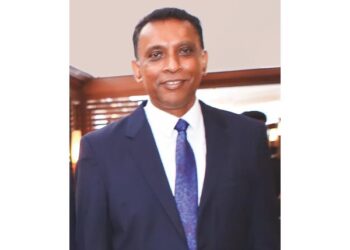
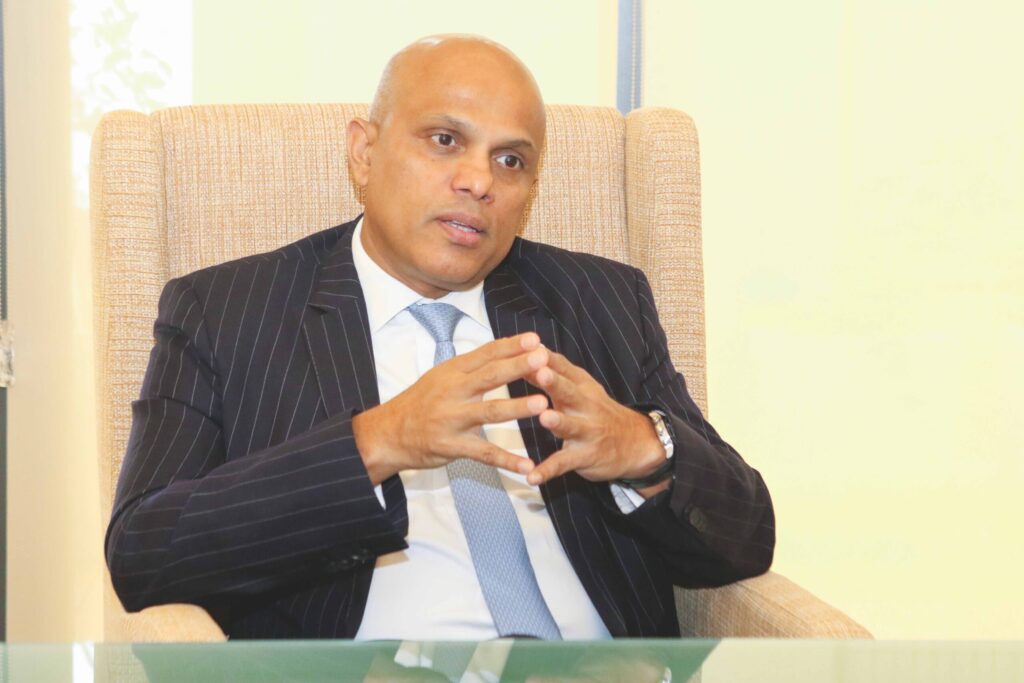
Sharhan Muhseen, Chairman, Commercial Bank.
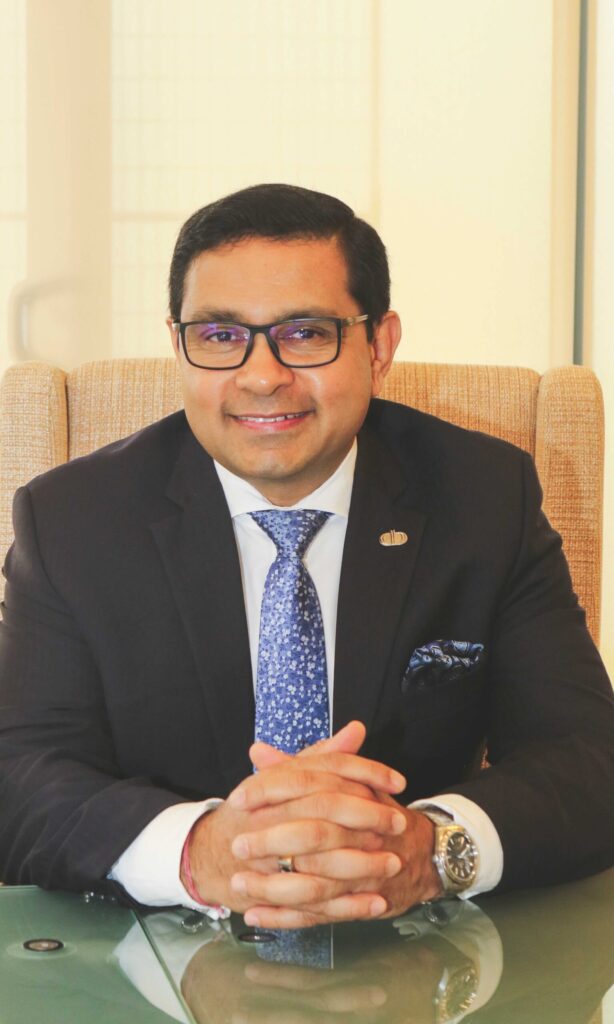
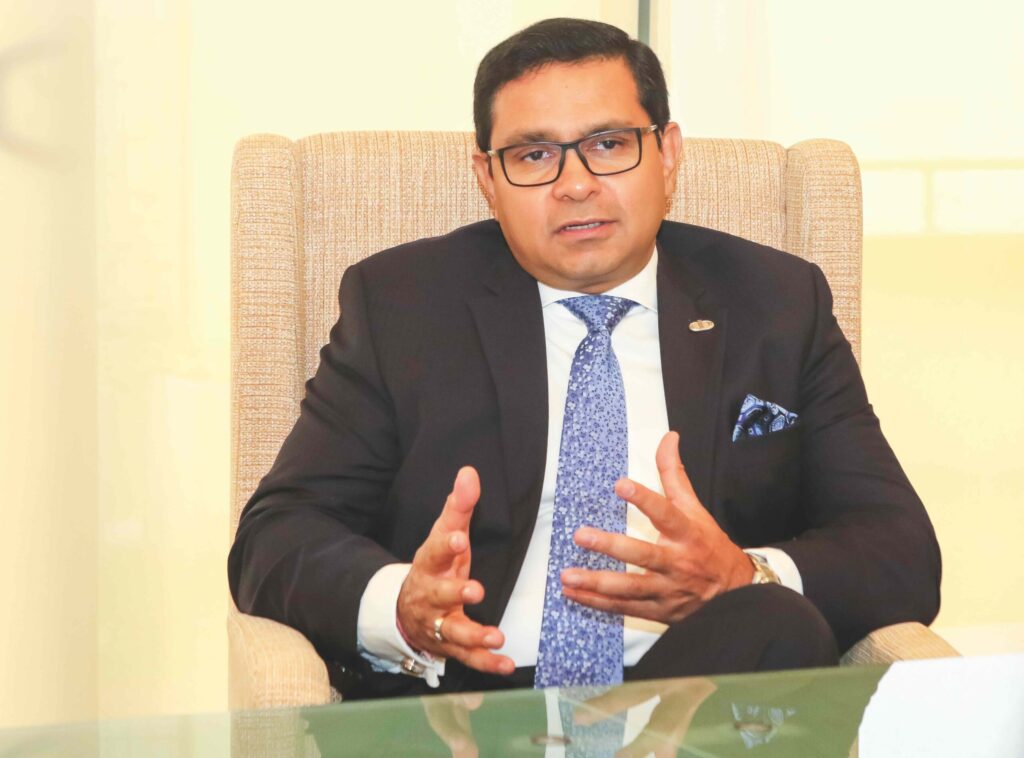
Sanath Manatunge, Managing Director/CEO, Commercial Bank.
Twenty-twenty-four was described as a year of resilience and record profitability. What do you identify as the single most significant factor behind Commercial Bank’s highest-ever profits amid economic volatility?
Sanath Manatunge: Our record profitability in 2024 stemmed primarily from the prudent provisioning strategy adopted after Sri Lanka’s sovereign default in 2022.
At that time, we made substantial provisions of around 92 billion rupees against our investments in Sri Lanka International Sovereign Bonds. We anticipated a deep haircut when the debt restructuring happened. This conservative stance meant that when restructuring was finalized, the immediate impact was about 45 billion, well within our pre-set buffers.
By choosing the local currency restructuring option with only a ten percent haircut, the actual loss was significantly lower than anticipated. Consequently, part of the earlier provisions was reversed, adding meaningfully to earnings. This net impairment reversal contributed about 15 billion rupees after tax to 2024 profitability.
Despite absorbing a substantial loss from the SLISB restructuring, Commercial Bank delivered strong PAT growth. How did your provisioning and balance sheet strategy mitigate this impact and position the Bank for future stability?
Sanath Manatunge: The SLISB restructuring had an impact on short-term profitability and capital. However, we responded with prudence and strengthened our balance sheet.
First, we retained more earnings to strengthen capital. Our Tier 1 capital ratio rose from about 11–12 percent to over 14 percent. Total capital grew to above 18 percent, significantly strengthening our foundation.
In parallel, we proactively raised fresh capital. We completed a rights issue of approximately 22 billion rupees and a Tier 2 capital issuance of around 20 billion rupees, totaling roughly 42.5 billion rupees. This significantly enhanced the balance sheet’s resilience and flexibility.
We reversed some ISB-related provisions as conditions stabilized and profitability improved. At the same time, we strengthened our loan book buffers. In 2023, our loan-loss provision coverage, which represents the percentage of potential loan losses covered by reserves, was below 43 percent. By the end of 2024, it had increased to around 64 percent. In 2025, it rose further to approximately 73 percent—one of the highest in the industry.
We tightened our provisioning policy—for example, moving to 100 percent provisioning for loans in default for three years, instead of four. This gave us a cleaner, more conservatively provided loan book and greater resilience against future credit shocks.
Sharhan Muhseen: Our “fortress balance sheet” approach is built on three essential pillars: strong capital base, high asset quality, and robust provisioning.
First, we ensure a robust capital base to absorb shocks without losing stability. Second, we focus on high asset quality through disciplined underwriting and tight credit risk management. Third, we maintain conservative provisioning to recognize risks early and build buffers in advance. With these three elements, our balance sheet becomes resilient and flexible, capable of withstanding volatility from macroeconomic or market disruptions. Our deliberate strategy to build this “fortress” is evidenced by our performance during the SLISB restructuring.
Lending reached historic highs, and the loan book expanded robustly in 2024. What credit segments drove this growth, and how do you balance credit expansion with asset quality in a recovering economy?
Sanath Manatunge: The robust expansion of our loan book in 2024 was driven by our SME banking model and strong corporate and trade finance franchise.
The first was our deeply embedded SME banking model. In 2019, we worked with McKinsey to redesign our SME lending framework, and that investment proved invaluable during the economic crisis. We established dedicated SME units across all regions, enabling us to remain close to our customers and continue lending even during challenging conditions. As a result, Commercial Bank has been the largest lender to Sri Lanka’s SME sector for the past five years, according to Ministry of Finance data.
Within this segment, our focus is not just on growth but on economic sustainability. We actively support export-oriented SMEs that generate foreign exchange, as well as businesses involved in import substitution, helping them scale up into more resilient and viable enterprises.
The second driver was our strong corporate and trade finance franchise. As the economy recovered, we reactivated and deepened relationships with leading organizations. We focused especially on trade-linked and working-capital-intensive sectors. This led to renewed credit demand and strong balance sheet growth.
We continued to expand in strategic long-term lending segments. We are the nation’s largest provider of green financing, which grew by about 38 billion rupees during the year under review. This shows strong demand for renewable energy and sustainable projects. In project and infrastructure finance, we shifted focus to funding corporates involved in national infrastructure and development-oriented projects, supporting long-term recovery.
In 1Q and H1 2025, the Bank approached the three trillion rupees asset milestone and reported solid profit growth. How sustainable is this trajectory, and what are the key drivers for continued momentum in 2025?
Sanath Manatunge: Commercial Bank is the first in Sri Lanka to achieve an asset base of three trillion rupees.
Our growth relies on our franchise and funding model. For 10–15 years, Commercial Bank has maintained one of the highest CASA ratios in the industry, close to 40 percent. This provides a stable, low-cost deposit base that supports profits and liquidity, even in volatile conditions.
On the asset side, we have strengthened our capital position. Our capital adequacy ratios are now among the strongest in the banking system. This enables us to safely expand our loan book and remain well above regulatory thresholds. Our strong capital base and ample liquidity from deposits give our businesses and branches the confidence to engage customers and grow credit responsibly.
Commercial Bank has one of the strongest CASA ratios in the industry. How important is low-cost deposit mobilization to your overall funding strategy, and what initiatives have contributed to maintaining this advantage?
Sanath Manatunge: Low-cost deposit mobilization is central to our funding strategy, providing a durable competitive edge. Our CASA base ensures stable funding, supports margins, and enables resilience across cycles.
Our advantage comes from our strong franchise and focus on customer convenience. Commercial Bank pioneered the unibanking concept in Sri Lanka and built the country’s largest ATM network. Early and ongoing investment in digital banking has made transactions, saving, and investing easier for customers.
The result is a powerful CASA engine. Today, we open around 1,100 new accounts every day, reflecting the trust customers place in the Bank and the accessibility of our services. This scale, combined with convenience and reliability, has enabled Commercial Bank to become the market leader in CASA.
Digital penetration has further strengthened this position. About 1.8 million customers use our digital platforms. Currently, 65–70 percent of fixed deposits are opened through digital channels. We continue to expand touchpoints across branches, call centers, and digital platforms. We also deploy digital assistants in branches to help customers adopt digital services.
Commercial Bank is the first in Sri Lanka to achieve an asset base of three trillion rupees. Our growth relies on our franchise and funding model. For 10–15 years, Commercial Bank has maintained one of the highest CASA ratios in the industry, close to 40 percent.
You completed a large rights issue and Tier II capital raise in 2024. How will this strengthened capital base support the Bank’s growth ambitions, including digital transformation and regional expansion?
Sharhan Muhseen: Capital is fundamental to banking. It is both the fuel that drives growth and the shield that protects depositors, who are our most important stakeholders. Given Commercial Bank’s strong growth trajectory, it is essential that we periodically raise capital to ensure the balance sheet remains well-supported and resilient.
In addition to external capital, we also generate substantial capital internally. With a return on equity of over 20 percent, our business produces strong retained earnings, which further strengthen the capital base. Together, this gives us significant capacity to fund expansion while maintaining prudent buffers.
What is equally important is how capital is deployed. We place a great deal of emphasis on capital optimization—ensuring that every rupee is allocated to activities that generate sustainable value. A large portion of this capital supports loan growth across our core corporate, SME, and retail segments. At the same time, we deliberately channel capital into building the bank’s future.
Digital transformation is a key pillar of that future. We have a high and growing IT investment program, as we believe technology will increasingly define competitiveness in the banking sector. We are investing aggressively in areas such as artificial intelligence, blockchain-based solutions, digital platforms, and supply-chain financing, which will enhance efficiency, customer experience, and risk management.
Our shareholders have shown strong confidence in this strategy by providing fresh capital, and we, in turn, are highly disciplined in how we deploy it. The strengthened capital base provides us with the flexibility to pursue growth— both in our core markets and through digital and regional expansion—while maintaining the safety, stability, and long-term value of the franchise.
How is the Bank leveraging its international footprint—with operations across Bangladesh, Maldives, Myanmar, and Dubai—to diversify revenue and reduce concentration risk?
Sharhan Muhseen: Our international network is a strategically important pillar of Commercial Bank’s growth and risk-diversification strategy. Among Sri Lankan private sector banks, we have one of the most extensive and well-established overseas footprints, and we see this not as an exception but as a natural extension of our role as Sri Lanka’s leading private bank.
Bangladesh is a particularly strong growth engine for us. We have operated there for over two decades and have built a highly credible franchise, as reflected in our AAA credit rating in that market for over ten years. Bangladesh is a large and fast-growing economy, and our presence there provides both scale and earnings momentum that are independent of Sri Lanka’s economic cycle.
The Maldives is another important contributor. Our operations in the country delivered strong loan growth and profitability, benefiting from the tourism-led economy and robust foreign-currency flows. This provides natural diversification of both income streams and currency exposure.
Across all our international operations, our objective is to diversify the Group’s top line and bottom line, reduce concentration risk, and build earning streams that are not solely dependent on the domestic Sri Lankan economy.
At the same time, we see ourselves as a regional banking champion for Sri Lanka. Our overseas presence enables us to expand the Sri Lankan banking brand into high-growth markets, support cross-border trade and investment, and foster a more balanced, resilient, and internationally connected banking group.
How are you developing leadership pipelines and technical expertise to support a multi-country, tech-driven banking environment?
Sharhan Muhseen: Our greatest strength has always been our people. The commitment, integrity, and professionalism of our teams have consistently placed us at the forefront of Sri Lanka’s banking sector, and we treat talent development as a strategic priority at the highest level of the organization.
We have a robust board-level governance framework that prioritizes succession planning and leadership development at its core. From senior management to frontline teams, we ensure that our leaders are exposed to multiple roles, diverse responsibilities, and international best practices. Our top management is given opportunities for overseas training, cross-functional assignments, and global exposure, enabling them to lead a multi-country banking group with confidence and expertise.
We place particular emphasis on middle management, as they represent the medium-term leadership of the Bank. Through structured development programs, professional training, and a strong focus on diversity and women’s empowerment, we ensure that this layer of the organization is equipped with both leadership and technical capabilities.
Our international footprint also serves as a powerful development platform. We actively rotate staff across our overseas operations, allowing them to gain experience in different markets and regulatory environments. The establishment of our international banking and DIFC operations is particularly important in this regard, as it provides our teams with direct exposure to global financial institutions and international banking practices, enabling valuable knowledge transfer back to Sri Lanka.
Sanath Manatunge: At the same time, we recognize that the future of banking is fundamentally digital and technology-driven. The skills that were sufficient 20 or 30 years ago are no longer enough on their own. We therefore encourage our people to continuously upgrade their capabilities in areas such as digital banking, data, artificial intelligence, automation, and advanced banking platforms.
We invest heavily in training and capability building in these areas, providing our teams with access to world-class knowledge through partnerships with leading global consultants, such as BCG and McKinsey. When our staff work alongside these firms on major transformation projects, they are exposed to best-in-class thinking, global benchmarks, and cutting-edge digital practices.
Organizations in Sri Lanka have been challenged with retaining skills. Do you think your international footprint and the opportunities it provides have helped you retain people?
Sanath Manatunge: Talent retention has been one of Commercial Bank’s quiet strengths, even during periods when the broader industry was under severe strain. While attrition across the banking sector rose to 18–20 percent during the economic crisis, our peak attrition was around eight percent, one of the lowest in the industry.
Most of the departures we experienced were not people moving to competitors, but individuals choosing to migrate overseas in response to the broader economic environment. It is very rare for someone to leave Commercial Bank to join another local bank, which reflects the strength of our employee value proposition.
Our international footprint plays a meaningful role in retention. Staff are given opportunities to gain overseas exposure, work in different markets, and rotate across business lines, branches, and divisions. These experiences enable individuals to grow professionally without needing to leave the organization. Combined with structured development pathways, this creates a compelling reason for talented employees to build long-term careers within the Bank. Just as importantly, we invest in building a strong sense of community through what we call the “ComBank Family.” Regular staff events, engagement initiatives, and open communication reinforce a culture of belonging that goes beyond a traditional employer–employee relationship.
Sharhan Muhseen: I would strongly echo that. The ComBank Family culture is one of our most powerful retention tools. It creates a genuine sense of belonging and pride. Even after retirement, many of our former employees remain deeply connected to the Bank, which speaks volumes about the emotional bond they develop with the institution.
We also make a point of recognizing and celebrating long service, through awards and formal ceremonies, honoring the people who have devoted decades to building the franchise. This recognition, combined with fair rewards, professional growth opportunities, and a caring culture, fosters strong alignment between the Bank and its people.
As the largest private sector bank in Sri Lanka, Commercial Bank sees itself as a banking champion for the country, not only locally, but also regionally and globally. We aim to be the go-to partner for international institutions entering Sri Lanka, while playing a key role in driving national economic development.
In a competitive landscape, how does Commercial Bank differentiate itself in product innovation, customer experience, and digital offerings? Are there specific transformations planned for 2026?
Sanath Manatunge: We have well-defined roadmaps that guide our technology, AI, and information security strategies, which are reviewed and updated annually to reflect evolving customer needs and industry trends.
On the technology front, our largest annual investment is in digital platforms and infrastructure. For 2026, we plan to launch the country’s most advanced super app, alongside a corporate digital application, both designed to provide a seamless, integrated experience for retail and business customers.
Our AI roadmap, developed in collaboration with BCG, is another key differentiator. We were the first in Sri Lanka to implement AI-powered SME underwriting, making credit decisions more objective, data-driven, and efficient, rather than relying solely on subjective assessments by credit officers.
Ensuring information security is a critical component of our digital strategy. As we scale our technology and AI-driven initiatives, we continue to invest heavily in safeguarding customer data and ensuring the integrity of our systems.
Sharhan Muhseen: Our transformation is guided by a clear five-year plan with specific strategic objectives. Over the past few months, we have introduced several market-first digital initiatives, reflecting our commitment to innovation and customer engagement.
Looking ahead, digital banking at Commercial Bank will become even more interactive, convenient, and globally accessible, enabling Sri Lankan customers to experience world-class digital tools while maintaining the reliability and trust of a leading local bank. This combination of innovation, security, and user-centric design is what sets us apart in a competitive banking landscape.
What frameworks have you established to ensure business continuity and cyber resilience as reliance on digital platforms increases?
Sanath Manatunge: Our approach is guided by both regulatory requirements and international best practices. We adhere rigorously to Central Bank Direction 16, the regulatory framework for technology risk management and operational resilience, which mandates strong oversight of all IT operations. Compliance with this framework is integrated into our daily operations and governance processes.
On the certification front, we maintain PCI DSS compliance, one of the few banks in Sri Lanka to have done so consistently for many years, demonstrating the robustness of our systems, procedures, and data security practices.
Our information security governance follows a three-lines-of-defense model. The first line will entail IT security officers embedded within operational teams, who will monitor and enforce security protocols. The second line will involve a Chief Information Security Officer (CISO), who reports directly to me, oversees enterprise-wide information security policies and risk management, and the third line will have independent information systems audits report to the Board Audit Committee, ensuring objective review of security controls and governance. These frameworks and oversight mechanisms give us confidence in the resilience, integrity, and continuity of our digital platforms, enabling secure and uninterrupted banking services for our customers.
How does the Bank assess the impact of climate risk on its portfolio, especially in sectors like agriculture, SME lending, and export finance?
Sanath Manatunge: Commercial Bank has long integrated climate and environmental risk assessment into its credit and portfolio management. We were the first bank in Sri Lanka to voluntarily adopt the IFC’s Social and Environmental Management System (SEMS) framework back in 2009. Today, our credit policies require that every project and business loan be evaluated for its social and environmental impact, using a structured checklist and risk categorization.
Projects are classified into Categories A, B, and C, based on potential environmental and social impact. Category A encompasses high-impact projects, including certain industrial developments. For loans exceeding a specified threshold in this category, we require independent external certification to verify environmental compliance. Categories B and C encompass medium and low-impact projects, including those involving SMEs. Even here, lending officers use a standardized ESG checklist, which is independently reviewed by our risk department to ensure compliance.
Regarding SME lending and export-oriented businesses, we actively advise our customers on ESG compliance to prepare them for global markets, particularly in regions like Europe, which have stringent sustainability standards. We also run capacity-building programs for SMEs to enhance awareness and adoption of ESG practices.
For agriculture, we incorporate climate data, flood and drought risk, and regional vulnerability assessments into lending decisions. We may recommend risk mitigation strategies such as crop insurance or diversification to strengthen resilience.
For green financing, we have pioneered green bonds and debentures in Sri Lanka, raising 15 billion rupees to support environmentally sustainable projects, which has helped us build a green-ready loan portfolio. We also collaborate with the International Finance Corporation (IFC) to enhance our capacity for climate risk measurement and green project advisory, ensuring that our portfolio remains resilient and aligned with international best practices.
Sharhan Muhseen: Climate risk and ESG considerations are now a strategic priority at the highest governance level. We recently established a Sustainability Board Committee to oversee these initiatives. Topics such as ESG-compliant pricing structures, client advisory, and incentives for climate-friendly practices are regularly discussed at the Board Credit Committee and sustainability forums.
In 2024, we hosted Sri Lanka’s first Bank led sustainability summit, highlighting our commitment to ESG awareness and knowledge sharing. Our approach is clear: clients who align with ESG standards benefit from advisory support, capacity building, and attractive financing, while Commercial Bank strengthens the resilience and sustainability of its portfolio.
What macro trends—such as tourism recovery, foreign direct investment, or export growth—offer the most opportunity for Commercial Bank in the next three to five years?
Sharhan Muhseen: Tourism is a compelling area because its impact extends beyond hotels and guesthouses to encompass the entire value chain, including tour operators, logistics providers, restaurants, and other service sectors. This creates multiple lending opportunities and foreign exchange flows from credit card payments and currency conversions, allowing the Bank to engage across credit and transaction banking. FDI tends to be more project-specific and episodic, often requiring structured financing, project lending, and follow-on support such as working capital and cash management solutions. While important, its impact can fluctuate with global investment trends.
Export-led growth is the most structurally significant and sustainable trend. It drives stable demand for project financing, capital expansion, and trade finance, and is less sensitive to short-term volatility compared with tourism or FDI. Commercial Bank currently holds a 21 percent market share in export finance, which has grown positively over the past three years. We see further potential for expansion as Sri Lankan exporters scale their operations. Among these three trends, export growth offers the most durable and strategic opportunity, benefiting both the Bank and the broader economy through long-term structural impact.
With Sri Lanka’s economy stabilizing and growth prospects improving, how do you see the Bank’s role in national economic development evolving?
Sharhan Muhseen: As the largest private sector bank in Sri Lanka, Commercial Bank sees itself as a banking champion for the country, not only locally, but also regionally and globally. We aim to be the go-to partner for international institutions entering Sri Lanka, while playing a key role in driving national economic development.
There are several areas where we see our contribution as most significant. One is the acceleration of private sector investment and SME growth.
We have been the largest lender to SMEs for five consecutive years, and this trend is expected to continue. SMEs are the backbone of the economy, as they are the largest employers and a significant contributor to GDP. By supporting them with credit, advisory services, and capacity-building initiatives, we enable them to grow, innovate, and create jobs.
Second is digital transformation. We serve a large, digitally savvy customer base, and our digital roadmap is closely aligned with national priorities. We are among the largest investors in digital consumer financial services, providing seamless, secure, and accessible digital banking solutions that support economic efficiency and inclusion.
Next is savings mobilization. Through our robust CASA deposit base, we channel private sector savings into productive investments, providing a stable and low-cost funding base to support economic growth.
Fourth is sustainability and corporate responsibility. We strive to be a role model in governance, transparency, and sustainability. Initiatives such as our environmental summits, ESG-focused lending, and green financing reinforce our commitment to being a responsible corporate citizen and positively influencing the wider business ecosystem.
Sanath Manatunge: Another critical area is financial inclusion, which has historically been underemphasized by commercial banks. We now recognize our responsibility to provide sustainable financing options for non-urban customers. To achieve this, we are expanding our agency banking network through digital connectivity.
Instead of relying solely on traditional brick-and-mortar branches, we will appoint third-party agents digitally linked to the Bank, enabling farmers, fishermen, and other underserved customers to conduct transactions without travelling to towns. Over time, this digital onboarding will enable us to extend micro-lending and other financial services to these segments, fostering greater inclusion and providing more equitable access to finance nationwide.
Are these underserved sectors ready to embrace this leap forward?
Sanath Manatunge: Yes, they are ready. When customers visit an agent in their village or local area, they gain access to digital platforms that enables them to open accounts, deposit funds, and conduct transactions. Over time, this can be extended to responsible lending and other financial services. Importantly, all our digital channels are trilingual, ensuring accessibility for a wide range of users.
Sharhan Muhseen: The digital tools themselves are now highly sophisticated yet user-friendly. Even rural farmers, with minimal assistance, can navigate our platforms and understand the structure of their borrowings. Bringing the informal sector into the formal financial system is a priority, and it is critical that services are offered at affordable and acceptable pricing for these borrowers. By combining technology, local agent support, and financial literacy, we are confident that these previously underserved segments can fully participate in the digital economy.
Our key message to local and foreign investors is that Commercial Bank is focused on sustainable, long-term shareholder returns. Everything we do is designed to deliver consistent, disciplined, and risk-mitigated value creation, with a strong emphasis on return on equity (ROE), which currently stands at over 20 percent, reflecting our profitability and operational efficiency.
What message would you like to convey to local and foreign investors about Commercial Bank’s strategy, resilience, and long-term value creation?
Sharhan Muhseen: Our key message to local and foreign investors is that Commercial Bank is focused on sustainable, long-term shareholder returns. Everything we do is designed to deliver consistent, disciplined, and risk-mitigated value creation, with a strong emphasis on return on equity (ROE), which currently stands at over 20 percent, reflecting our profitability and operational efficiency.
Investing in Commercial Bank provides two main advantages. It is a reliable proxy for Sri Lanka’s economy. Investors gain broad exposure to the country’s growth story through a risk-managed and professionally governed institution, allowing them to participate in long-term economic growth in a controlled manner.
We have strong governance and capital discipline. We are a role model in governance, accountability, and transparency, underpinned by a well-defined five-year strategic plan. Shareholder capital is managed carefully, and our capital allocation is highly disciplined.
We also have a diversified income profile, with 20–25 percent of revenues generated from overseas operations, which mitigates domestic concentration risk and strengthens resilience. This combination of strategic growth, diversification, and disciplined governance positions Commercial Bank as a trusted vehicle for creating long-term value. We sincerely thank our shareholders for their support, especially during challenging periods, and we continue to reciprocate that trust through strong financial performance and robust corporate governance.
Sanath Manatunge: From an investor perspective, all our strategies are designed with key investor metrics in mind, from ROE to return on sales (ROS). We approach planning and execution not just for a single year but with a medium- to long-term horizon of up to five years, ensuring that every initiative aligns with sustainable financial performance and maximizes shareholder value.
In terms of customer trust and brand perception, how do you maintain confidence in the Bank’s future, especially among depositors and retail clients?
Sharhan Muhseen: Maintaining customer trust and a strong brand perception relies on two complementary factors: financial strength and credibility. On the numbers side, our fortress balance sheet, with robust capital, strong asset quality, and high provision coverage, demonstrates that we manage the Bank responsibly while delivering consistent, outstanding performance.
Equally important is the aspect of trust, which is built over decades. Commercial Bank has a long and respected history, and we have always prioritized professionalism, integrity, and accountability in every interaction. From the Board to corporate management, we uphold the highest standards, ensuring that we consistently do what we say and say what we do.
Commercial Bank’s story spans over 100 years, with rapid growth and sustained momentum, positioning us as Sri Lanka’s leading private sector bank. While our international footprint has been developing for the past 20 years, we are still in the early stages of regional expansion, with an international division driving growth and knowledge transfer.
The foundations we have built over the last few years — strong capital, disciplined governance, digital capabilities, and international presence — equip the Bank for sustainable, long-term success. Over the next five years, we anticipate a very exciting growth trajectory, domestically and internationally, and Commercial Bank is fully prepared to capitalize on these opportunities while maintaining the trust and confidence of its customers.
Sanath Manatunge: Beyond financial performance, our reputation is grounded in governance, honesty, and integrity. These values are embedded in our culture and DNA, from frontline staff to senior management and the Board. This consistent commitment to ethical practices strengthens our relationships with customers and reinforces long-term trust.