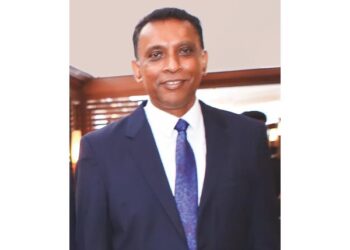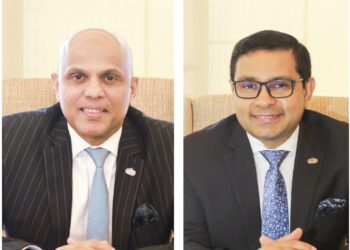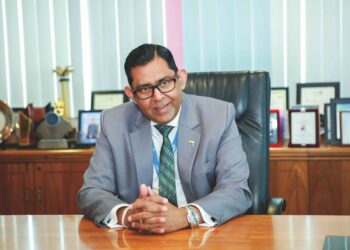

It’s been a year since Milinda Rajapaksa and Iraj Weeraratne, a politician and the latter an entertainer, launched their Bai Thaksalawa YouTube channel. It’s a political show, an influential one according to its creators, a show that brings satire to political conversations, making serious topics accessible and enjoyable while maintaining respect for all sides. Speaking with Business Today, Milinda and Iraj explained how they’ve disrupted the typically hateful political YouTube space in Sri Lanka by creating content that families can watch together. They addressed questions about their political biases of supporting the opposition, their responsibility as influencers, and how they maintain credibility despite close relationships with politicians. They emphasized that they criticize even politicians they support when necessary and never accept money to attack others. They plan for expansion, taking their show beyond Colombo and globally, while reiterating their commitment to honesty, independence, and responsible content creation.
Words Jennifer Paldano Goonewardane.
Photography Sujith Heenatigala and Dinesh Fernando.
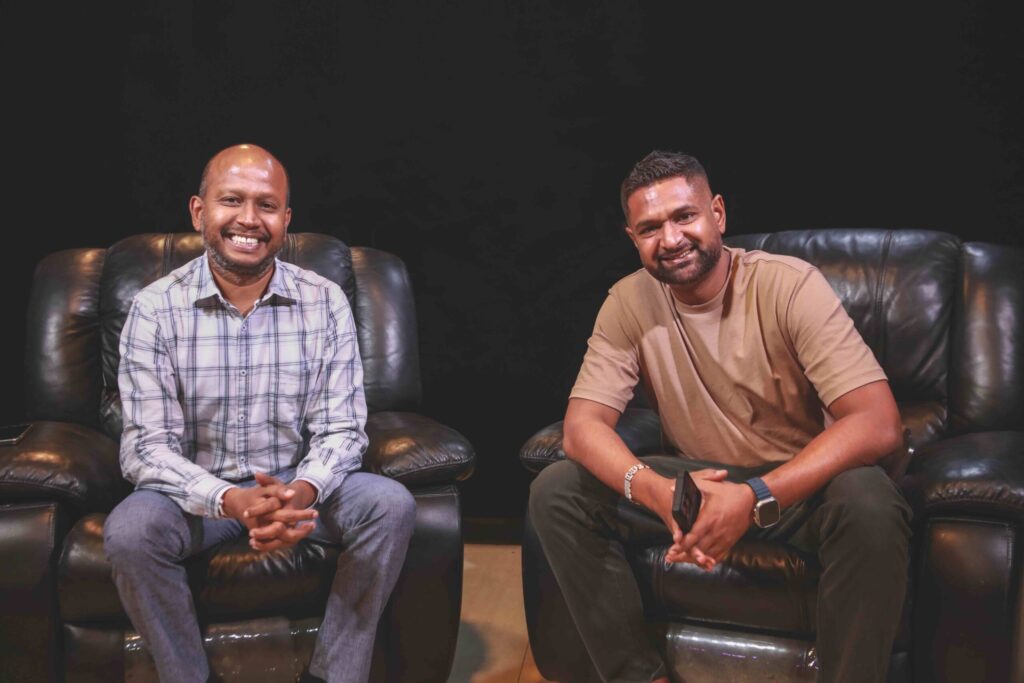
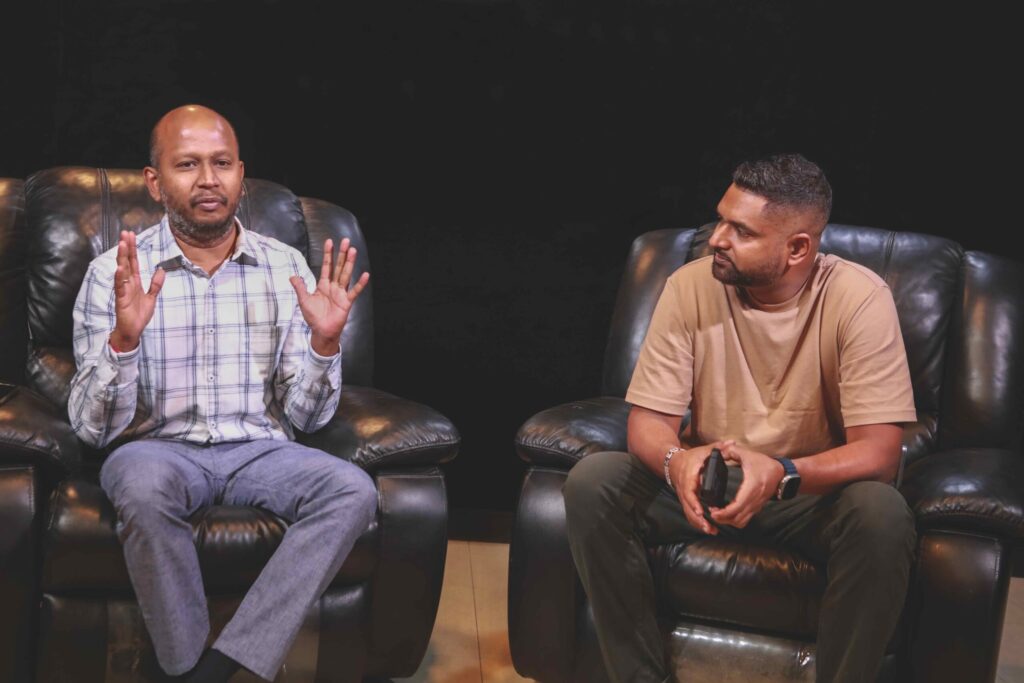
Milinda Rajapaksa and Iraj Weeraratne.
Tell us about your Bai Thaksalawa YouTube content and what you create.
We are likely the number one political show in Sri Lanka, but we approach political content in a distinctly different way. We brought satire into Sri Lankan political conversation, making it light and easy to understand. Before us, the political YouTube space in Sri Lanka was very hateful and one-sided, with many personal attacks. We made it comfortable for everyone, and our show became the platform where all political leaders, except the government, came. Three presidents have spoken on our show.
We created a comfortable and respectful space, bringing in satire for the first time. Today, many people are copying our presentation style. We started Bai Thaksalawa in December 2024, producing a daily video at 10am. Today, the Sri Lankan diaspora in Australia, the UK, and other countries is watching and supporting us by sharing our videos on multiple platforms.
At what point does political loyalty cross from analysis into advocacy, and do you see yourselves as commentators or campaigners?
We support the opposition, essentially, by providing a platform for all parties. One reason people love our show is the honesty we bring to the table. We’ve been very honest about our political affiliations, opinions, the people we support, and the ideology we work around. Our political ideology represents the opposition of Sri Lanka at the moment. In our program, we directly engage with the president, prime minister, and ministers, providing them with accurate information. However, we ensure that we address them respectfully, using titles such as ‘sir’ or ‘madam’. We know they watch our program every day. At least their media teams brief them daily about our show. We have created an impact since starting the show. For instance, the government decided to change the price of food in the parliament canteen after we spoke about it. The President reversed the decision to import cabs for parliamentarians because we spoke about it on our show. So, we have been impactful.
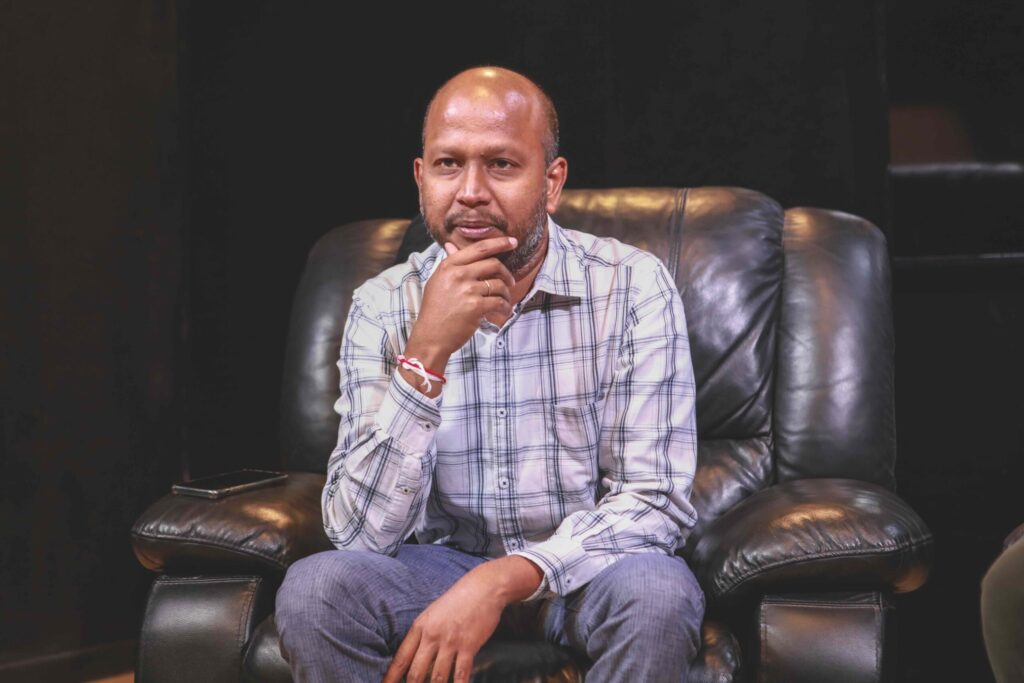
Milinda Rajapaksa.
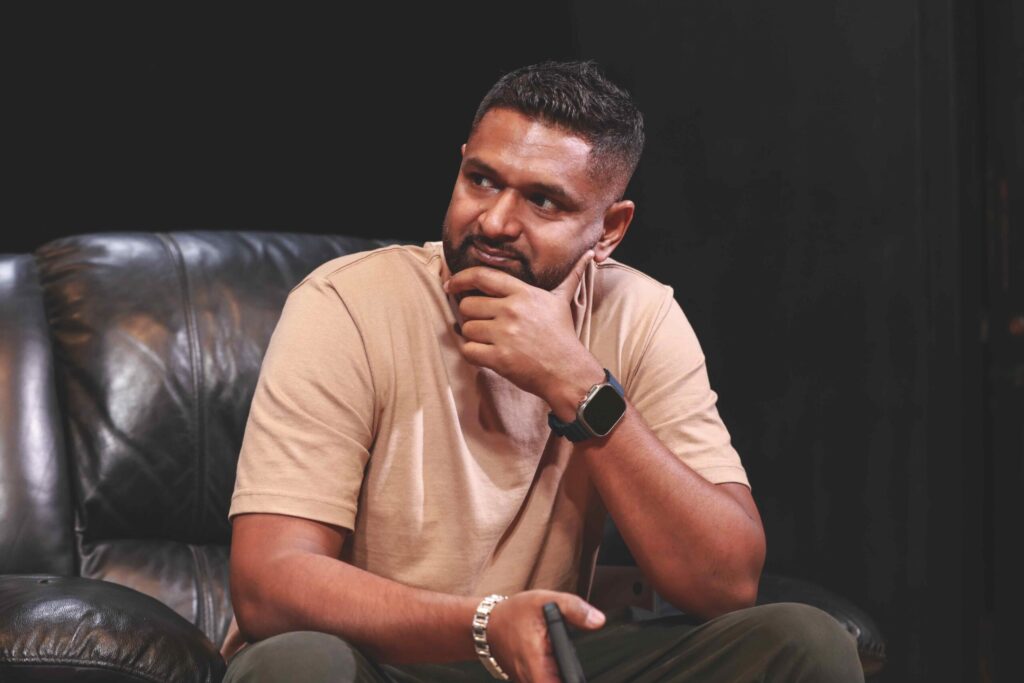
Iraj Weeraratne.
How do you ensure that proximity to political actors does not dull your critical edge? Or does access itself become a form of soft power?
Milinda Rajapaksa: We have access to politicians in two different ways. Iraj has grown up in Colombo and is known to most politicians and their families. Being a star, he has access to most of these people. I have access due to my political career, from student politics to serving on a municipal council. We have different power dynamics with these politicians. It’s very funny how the two of us deal with politicians. I call them based on seniority, while Iraj calls them “Machang.” Yes, this access to politicians has helped our show in terms of information gathering, but we’ve never misused it politically. No matter how close we are to politicians, whenever we need to criticize them, we do. We have criticized Sajith Premadasa and Namal Rajapaksa for their political stance. However, most politicians support us, and we witnessed this when they attended a special event we organized to mark the 250th episode, where who’s who in politics attended, except for the President.
How much responsibility do content creators bear when their narratives intensify mistrust in institutions, dissenting voices, or democratic processes?
Social media influencers have tremendous power today. During the recent flood disaster in Sri Lanka, community kitchens and support were mostly mobilized by social media influencers in the first ten days. We ran a massive community kitchen, cooking 10,000 food parcels within a few days. From politics to community work, our level of influence is unbelievable. There’s also a significant space for misuse of influence – some YouTubers take money to blackmail others or attack institutions, brands, and companies. The area of work once embraced by YouTubers has evolved into a business, but it’s a business that these individuals are engaging in by abusing their followers’ immense trust. It’s like treading a very fine line today because, unlike established mainstream media institutions that are accountable to their shareholders and owners, we are not responsible to anyone. But we differ. We have policies in our show – we never take money and haven’t accepted any brand support. We’re only responsible to our conscience and try to keep it clean and respectful.
Moreover, our close connections with political leaders demand greater responsibility. The only interview Mahinda Rajapaksa gave for his eightieth birthday was to our channel. Former President Ranil Wickremesinghe’s first YouTube show was our show. You name a Sri Lankan political leader, and they have been on our show. Therefore, we have a responsibility to protect their faith and the faith of their followers. We can’t play dirty politics after they’ve trusted us.
Even though we might have brands supporting our program in the future, we will not take any political responsibility. We’re very careful about our political engagement. Although Sajith Premadasa has appeared on our show multiple times, we’ve also called him out on several occasions. Senior politicians respect our opinions and know that we will not hesitate to call them out or criticize them for their politics. They know very well that we will not “scratch their back” for which they respect us.
We’re independent from our viewers, our political biases, and our political beliefs. We are independent of everyone. We have asked everyone to call us with suggestions or send us a text message, but we will maintain our independence.
You identify your viewers very clearly, don’t you?
Yes, we’re very honest about our audience. We even sometimes call ourselves “Baiyyas.” We’re transparent about who we are and what we do. We don’t accept money from anyone, even when it’s offered. People offer support purely out of love and affection. Our followers have sometimes kindly offered us monetary rewards, which we prefer not to accept. What we desire is for them to stand by us.
Politicians know we’re genuine, which is why they continue to come on our show. We’ve created what we like to call a family political show—one you can watch in your living room with your father, grandmother, children, and spouse—because we’re mindful of the language we use and the values we uphold. As public figures, we have a responsibility to conduct ourselves with integrity and care. We are mindful not to contribute to the culture of hate that many others perpetuate, as we encounter people in public spaces every day—and we should always be able to face them with respect and a clear conscience.
Do you think being disruptive is always a virtue? Do you think relentless narrative warfare exhausts a society already fatigued by crisis?
Milinda Rajapaksa: Iraj is one of the most disruptive entertainers in Sri Lanka, bringing that same spirit of disruption from his music into our show—this is precisely what sets it apart. In a society grappling with deep economic, social, and political crises, spreading hate is the easiest path to popularity. We could have grown much faster had we chosen that route. Instead, we deliberately went against it, choosing to focus on positivity, good energy, and genuine laughter. In doing so, we disrupted the country’s political conversation in a different way. Today, countless people don’t just listen to us—they laugh with us.
Iraj Weeraratne: I suppose my music has disrupted the way we listen to sound, the way we dance, and even the way we see people. I’ve always been drawn to doing new things. I listen to a lot of American and European music, and I grew up immersed in hip-hop and rap, inspired by artists like Dr. Dre and Snoop Dogg. I would watch their music videos and think, one day, I should do this too.
Experimentation is something I truly love. At the same time, I’m conscious that there are boundaries—and certain things I need to approach with care.
Have there been instances where your political convictions have been proven wrong? And if so, how publicly did you acknowledge that to your audience?
In our show, we often refer to it as a show for the opposition, but no one has scolded that audience as much as we have. We’ve criticized our own audience to a level where people have called us and said, “Don’t criticize your own people that much.” We are honest about our own mistakes and decisions. And we have made fun of the opposition leaders too whenever something has gone wrong. That is one unique aspect of our show. We’re not slaves of any ideology, party, or leader. We take it as it is, and we’ve had good fights with everyone. We’re independent from our viewers, our political biases, and our political beliefs. We are independent of everyone. We have asked everyone to call us with suggestions or send us a text message, but we will maintain our independence.
Should there be an ethical framework for political content creators? Or does influence without responsibility come with the territory?
The biggest ethical framework is your conscience. However, social media and platforms like YouTube have given people a great deal of power to create whatever they want, which we see as a strong need for regulating this space. There’s no one we’re responsible to, but it’s the right time for social media influencers to work together and create a framework to support a legal framework, which currently doesn’t exist. Regardless of political camps and views, we fully support building that logical and ethical framework. It’s happening in other countries, and it’s time for us to do it too. In the absence of a legal framework, the government can utilize emergency powers to regulate this space; therefore, the time is right for some regulation to establish an ethical framework guiding how individuals operate within this space.
When your audience echoes your talking points with absolute certainty, does that concern you, or is that the intended outcome of strong opinion-making?
We are confident in our content and the information we provide. It becomes the topic of the day, and some politicians even take what we say into their political shows on mainstream TV or in Parliament. That ’s where the responsibility lies. People message us, send videos, and communicate with us through various channels. Even before contacting a politician, they send us information and ask us to talk about issues. We have our own ethical framework about what to include and what not to include. We don’t expose government officials. But we don’t hesitate to expose politicians because they are elected. We have an ethical framework that guides us on what to include and what not to. We conduct our own verifications because if you lose credibility, it’s lost forever. Many content creators have lost credibility. However, because we maintain independence and credibility, many smaller content creators use our content to create TikTok videos for their channels, which we don’t block, allowing them to monetize and do as they please. Our facts have not been challenged, even after performing 300 shows; only our opinions have been questioned.
Don’t you think social media can sometimes be a curse, given how much unproductive time many Sri Lankans spend on it? Do you believe your program can help channel that attention towards building a more productive and efficient society?
Iraj Weeraratne: That’s why I actively promote places like Umandawa and the work being done by Venerable Sri Samanthabadhra. Young people, in particular, are not using social media to its full potential. Platforms like YouTube offer endless opportunities to learn— marketing, tutorials, skills of every kind—yet too many of our people remain consumed by narrow, backward content. Consider countries like Australia, where certain social media platforms have been restricted for individuals under 16 years old. Even within these platforms, there is immense potential for doing meaningful and constructive work. The government must play a role, much like South Korea, where state support has helped build a globally successful entertainment industry through K-pop.
In Sri Lanka, we still face numerous unresolved issues, particularly those related to copyright. As a musician, I’ve long advocated for proper intervention and reform. The government needs to step in, educate the youth, and take responsibility for their actions. Most importantly, it must first establish a clear, structured system.
Milinda Rajapaksa: Our show, which is recorded daily at 10am and airs around 9pm, undergoes extensive editing to ensure its perfection. When I see the silly and frivolous content, I feel sad because these individuals can also produce something great, innovative, and disruptive – content that can reach both the Indian and English markets. We are just continuing to produce content for Anuradhapura and Kurunegala. Today, we can introduce content to the world. Additionally, I believe the government should also get involved.
I have witnessed how hard Iraj is trying to take his music to India without any support from any system this country has. I have also seen how certain foreign missions are working hard to bring their businesses, including entertainment, to Sri Lanka. Our artists are able to do foreign shows because an organization or group in that country invites them and sponsors the entire event. Currently, India is supporting its influencer ecosystem and utilizing them to promote the country. There’s a lot we can harness for which government support is necessary.
Despite the backlash, I have 1.1 million subscribers to my YouTube channel and a large following on Facebook. Our political channel has 200,000 subscribers in a year. We have a good community on TikTok who use our content to create smaller content. Although Milinda and I record this show daily, my main occupation is music…
If history judges this political era harshly, are you confident your content will read as courageous truth-telling—or as unwavering loyalty to power?
Very courageous. When we started this show a year ago, our level of acceptance was at a nadir event, though we had forged different careers. We initially faced a great deal of pressure. Everyone advised us against teaming up for this program; they said we should stop wasting our time and do something else. A year ago, the situation was such that we couldn’t even go to a restaurant in Colombo or to public spaces. Very few people watched at first, and everyone told us to stop wasting time. However, we pursued it because we had a clear understanding of our content, our target audience, and the purpose behind it. Many people have called to warn us against each other, cautioning us not to work together, but we were clear about our vision and ideology.
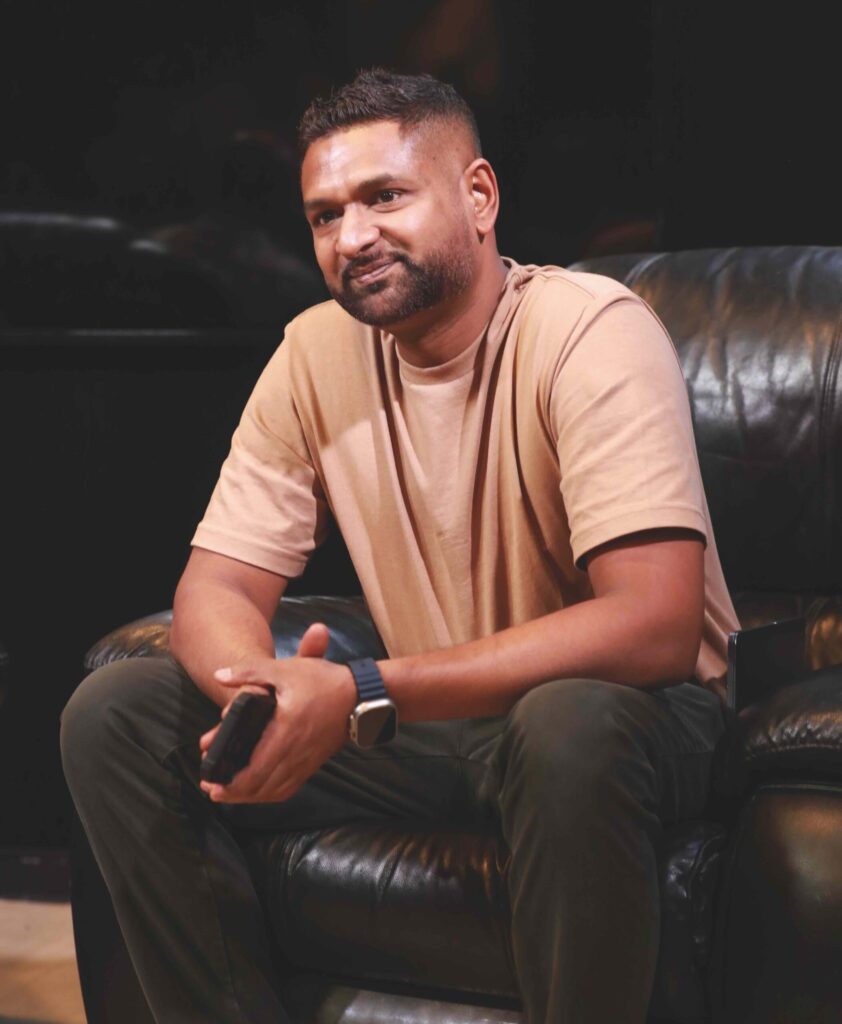
What is your working relationship like? Do you complement each other, or is it that opposites attract?
Milinda Rajapaksa: It’s easy for me because Iraj is a natural entertainer. This is his studio, his team, and they’ve accepted me. Iraj respects my political understanding and perception. We respect each other’s words most of the time, although we’ve debated and argued at times. For any content creator, creating content daily can be challenging, especially on YouTube. You must conduct research, study, and plan. You have to be current – in two days, the news is old.
Iraj Weeraratne, the entertainer, is the son of a well-known movie producer, Preethiviraj Weeraratne, which means you have a very visible and large base that you can leverage.
Iraj Weeraratne: Yes, my father was a movie producer, but I chose music. So, I was the first to promote Umandawa on my platforms because I liked the vision and the concept. I promote many places, especially temples and programs, on my platforms. We reach out to cancer patients together using my social media platforms, which we don’t publicize.
You must be the only entertainer receiving so much hate because of your political content creations. Are you ready to take criticism?
Iraj Weeraratne: Yes, I am. I receive a lot of criticism, especially from government supporters and those on the government side. I don’t delete comments and respect everyone’s opinion, especially on Facebook. I’ve never mixed my music with politics in my music enterprise, but when I travelled to other countries, government supporters organized hate campaigns against me. Despite this, all my shows were 200 percent successful and sold out.
I have the freedom to discuss or talk about politics, even if I want to support certain individuals; I also have the freedom to do that. Despite the backlash, I have 1.1 million subscribers to my YouTube channel and a large following on Facebook. Our political channel has 200,000 subscribers in a year. We have a good community on TikTok who use our content to create smaller content. Although Milinda and I record this show daily, my main occupation is music, which I pursue throughout the day.
What does the future hold for you regarding this joint venture?
Milinda Rajapaksa: I will be actively involved in politics. I’m a professional politician and aspire to one day govern this country according to my ideology. That day, Iraj will probably be a big critic of the work we do. From the show’s perspective, we’ve tried new things, such as taking the show abroad, which was successful. We went to Dubai and performed two shows with our supporters, which will be available on YouTube soon. The shows were organized entirely by our supporters. There’s a possibility that this show will go international, and it’s already happening, as it’s leaving Colombo. There are many people inviting us to perform the show in various places.
Alongside this, we have established a library called Thaksalawa, for which we are currently collecting books. The aim is to make these resources accessible to our followers, whom we believe will benefit greatly from improved political and social literacy.
Iraj Weeraratne: My concern is that after the current opposition takes power, the program might be discontinued. I might have to find an alternative solution, perhaps by inviting someone from the current government when they are in opposition. But I’ll continue with my entertainment – I’m a musician and an artiste, so I’ll always be making music.