
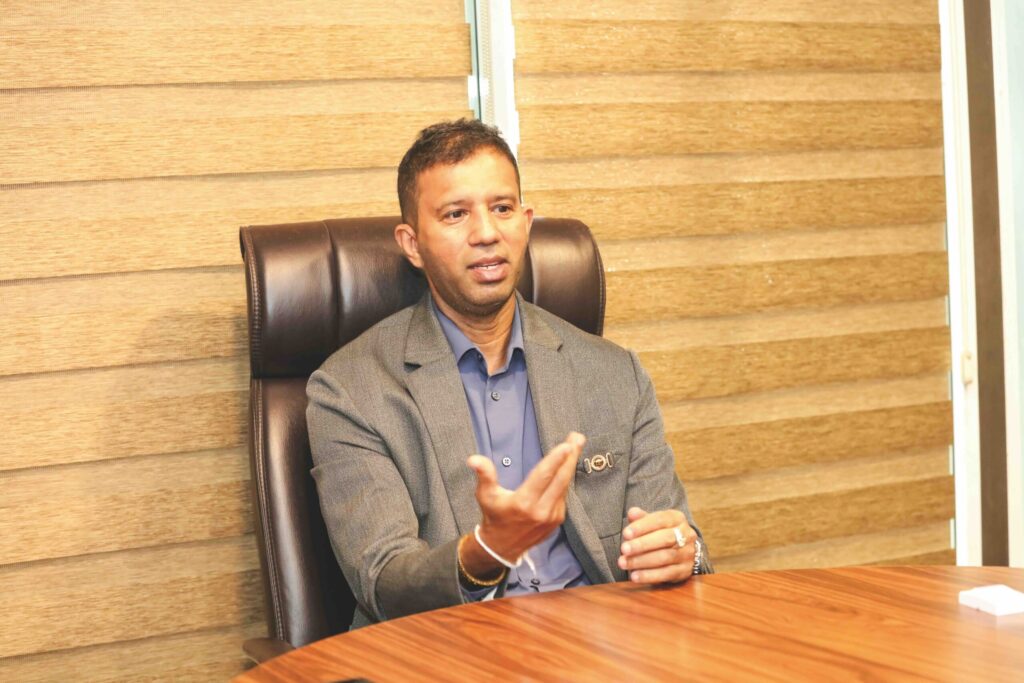
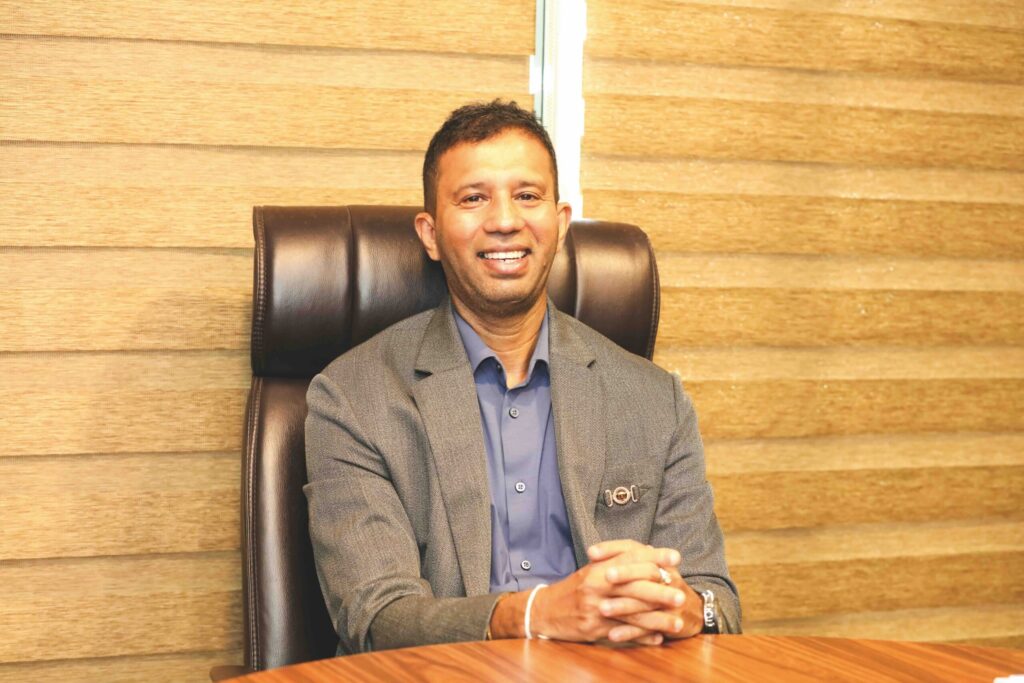
Former Sri Lankan cricketer Kumar Dharmasena, a right-handed batsman and right-arm off-break bowler who was a member of the 1996 Cricket World Cup-winning team, now serves as the Chairman of Pintanna Holdings, renowned for its agarwood, or oud-based products. It’s the only Sri Lankan company producing and marketing this rare wood-derived ingredient locally and internationally, sourcing the trees from plantations owned by the company.
In an interview with Business Today, Kumar Dharmasena shared insights into his journey from sports to entrepreneurship – his inspirations, lessons learned, challenges faced, and vision for the future. His transition into business has been shaped by his international cricketing career, instilling in him a resilient, never-say-never attitude that continues to define his entrepreneurial path.
Words Jennifer Paldano Goonewardane.
Photography Sujith Heenatigala and Dinesh Fernando.
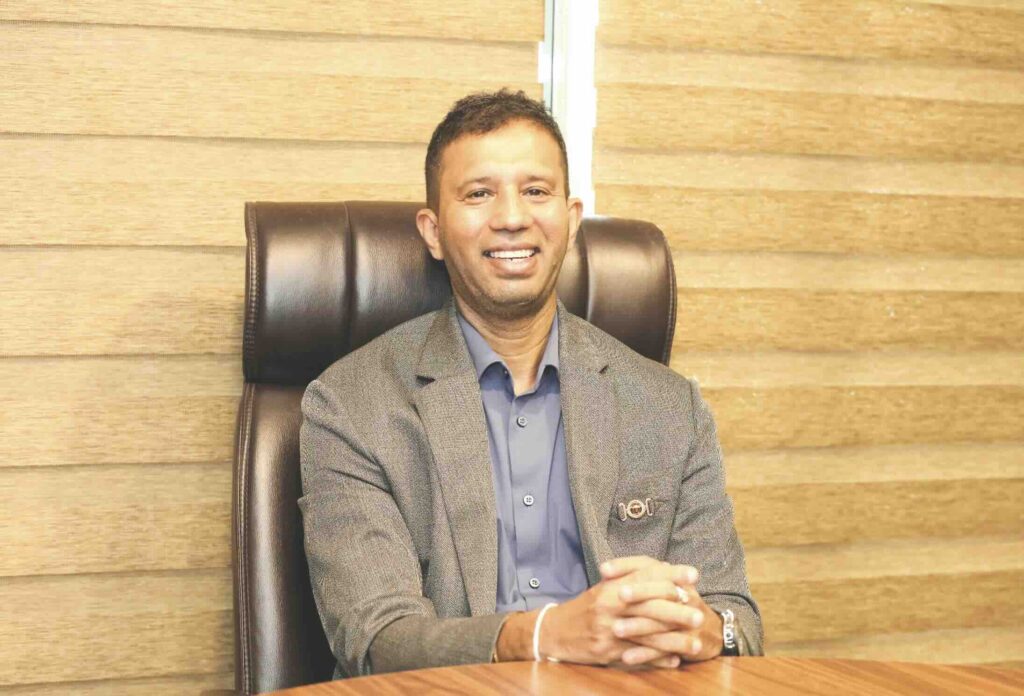
Kumar Dharmasena.
What inspired you to transition from a successful career in international cricket and later as an umpire to entrepreneurship?
Ayagama estate, which began as Pintanna Plantations, has been part of my family for more than three decades, so it was always close to my heart, even during my cricketing years. The idea of cultivating agarwood emerged after an Indian friend, a fifth-generation member of a family engaged in agarwood production, introduced me to this fascinating tree while I was in Hyderabad. He shared with me the intricate process of cultivating trees of the Aquilaria genus, producing agarwood, also known as oud, and developing a range of value-added products from it.
The journey was far from easy at the beginning. I had to conduct extensive research on my own, and in doing so, I discovered that Sri Lanka has its own indigenous species, Gyrinops walla, popularly known as Wallapatta. This tree, which produces agarwood, has a history dating back thousands of years on the island. Interestingly, when compared to other species within the Aquilaria genus, Wallapatta has the most extended recorded history. That discovery inspired me to focus on cultivating Wallapatta on my plantation, while expanding production and refining my range of agarwood-based products.
How did your experience as a cricketer shape the way you approach business?
My journey in cricket was not an easy one — I had to work extremely hard and earn my place in the national team. That experience instilled in me the values of perseverance, discipline, and resilience. When I transitioned into agarwood production, I faced a similar learning curve. I began planting in 2009, and it took several years before we were able to produce agarwood commercially.
The early stages were challenging, as I was venturing into a completely new field. However, the lessons I learned through cricket — particularly the importance of persistence and staying focused during difficult times — helped me navigate those challenges. Cricket taught me discipline, the ability to adapt, and the mental strength to overcome setbacks, all of which have been invaluable in my journey as an entrepreneur.
How has being Kumar Dharmasena helped you promote your business?
I certainly utilize my cricketing background in promoting my business. As a member of the ICC Elite Panel of Umpires for the past fifteen years, my work involves extensive international travel. That allows me to meet a wide range of people, particularly in regions such as the Gulf, Bangladesh, Pakistan, and Dubai — markets where agarwood and its related products are highly valued.
Through these interactions, I have introduced our products to individuals who already have a deep appreciation for agarwood. The global exposure and network I have built through cricket have provided me with valuable opportunities to create awareness, build relationships, and expand our customer base.
How did you educate yourself about the business aspects of agarwood production, given its niche nature?
As I mentioned earlier, it was an Indian friend who first introduced me to agarwood and taught me the fundamentals of its cultivation and various applications. From there, I immersed myself in learning — conducting my own research, observing practices during my travels, and most importantly, learning through experience. Since I began planting in 2009, I have faced numerous challenges and encountered instances where things did not go as planned. However, each mistake became a valuable lesson, helping me refine my approach and develop a deeper understanding of the process.
My learning has mainly been practical, driven by trial and error. Today, the next generation of my family is also actively involved in the business. My son, who is studying perfumery in France, and one of my daughters, who is pursuing a qualification in cosmetology, both intend to contribute their expertise to expand and enhance our agarwood product range further. Their academic knowledge, combined with my hands-on experience, will help us take the business forward with greater innovation and sophistication.
How long does it typically take for a tree to be ready for harvest?
It generally takes a minimum of eight years for a tree to be ready for harvesting. After about four years, once a tree meets certain growth parameters, we introduce a specific type of fungus into it. That triggers the natural formation of resin within the core of the trunk and branches — a defense mechanism of the tree against the fungal infection. Over time, this resin hardens into a dense, aromatic wood, known as agarwood, which is the source of its distinctive fragrance.
Agarwood is prized for its unique fragrance and is one of the most valuable raw materials used in the perfume industry. At Pintanna, we have trained specialists who determine the optimal time and method for inoculation to ensure the best possible yield and quality of the resin.
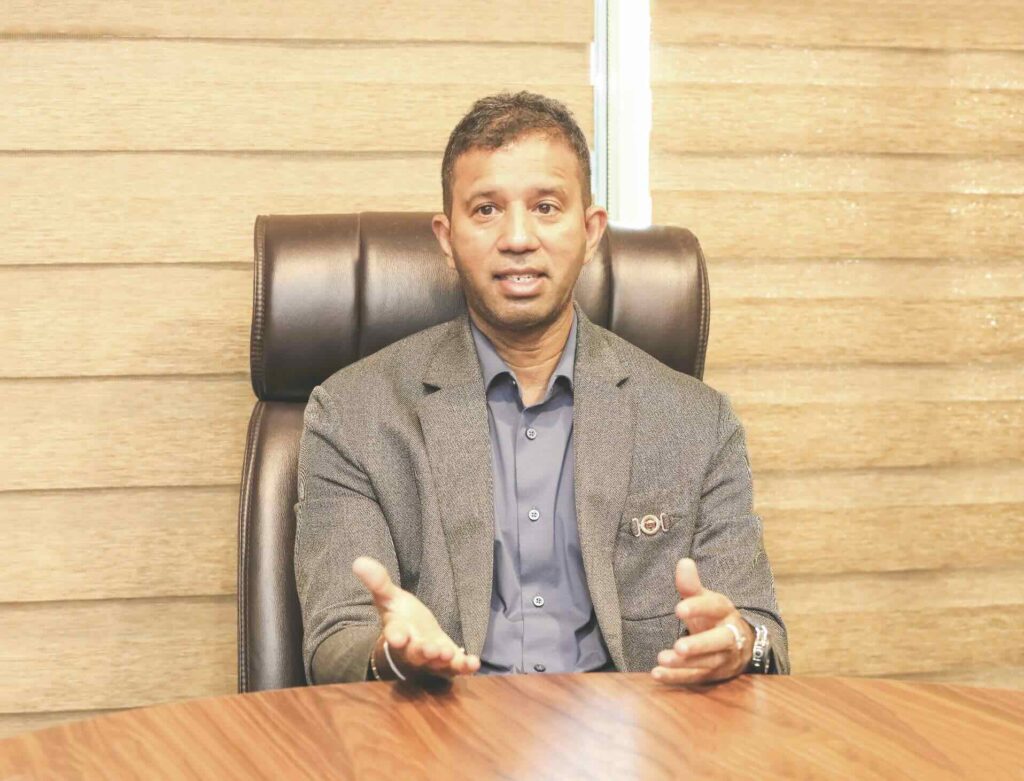
Cricket taught me discipline, the ability to adapt, and the mental strength to overcome setbacks, all of which have been invaluable in my journey as an entrepreneur.
What challenges does this long growth cycle present?
The long growth cycle brings several challenges, particularly in managing diseases and pest infestations that can affect the trees. The high water content in the trees also poses a difficulty, as it can influence the quality of the agarwood produced. This issue becomes more pronounced during the rainy season, when increased moisture attracts insects that damage the leaves — especially those of younger seedlings.
However, over time, experience has taught us the importance of continuous monitoring and proactive management. Through careful observation and timely intervention, we have been able to minimize these risks and maintain the health and quality of our trees throughout the cultivation cycle.
How do you ensure the quality and authenticity of the wood?
I am proud to say that our cultivation practices are entirely organic. Our oud distillation facility is certified by the Control Union of Sri Lanka, reflecting our commitment to maintaining the highest production standards. The distillation process itself is powered by solar energy, underscoring our dedication to sustainability.
We source the water used in distillation from a natural spring within the plantation, which contains high levels of alkalinity. That allows us to avoid using chlorinated water. The alkaline-rich spring water enhances the distillation process, enabling us to produce superior-quality oil through entirely natural methods.
Additionally, our team includes several former members of the Forest Department who bring extensive expertise in sustainable forestry and tree cultivation. We have established one of the largest Aquilaria nurseries in Southeast Asia. I also place great emphasis on integrating technology into our operations to continuously enhance efficiency and maintain quality throughout the entire process, from cultivation to the final product.
Given the long maturation period of the trees, how do you ensure long-term viability and transparency for stakeholders through your Husma program?
Under the Husma program, we plant an average of 400 trees per acre, out of which 300 trees accommodate our wealth plan. The remaining 100 trees — or roughly 25 percent — are retained by us. This structure ensures that we maintain a built-in buffer in every acre, providing added security and stability for both the stakeholders and the company. Additionally, approximately 10 to 15 percent of the total plantation land is owned solely by Pintanna Plantations. When combined with the 25 percent of trees we retain per acre, this means that nearly 40 percent of the total assets remain under the company’s direct ownership. This structure strengthens our long-term financial resilience and ensures that we can safeguard stakeholders’ interests while maintaining transparency and accountability throughout the program’s duration.
What inspired you to introduce this Husma Agarwood wealth plan proposition?
Sri Lanka has historically been an agrarian nation, blessed with fertile soil and ideal climatic conditions. We felt that this plan, centered on sustainable agriculture, would resonate strongly with Sri Lankans.
It’s essential to note, however, that inviting people to fund in trees represents only a small segment of our operations — approximately 20 percent. Pintanna Plantations has evolved into a diversified business portfolio that includes oud oil and its byproducts, retail showrooms, other spice-based ventures, and tea. Our newest expansion will be into the leisure sector. At the heart of all these ventures lies agarwood, which remains the foundation and inspiration for our growth.
Do you believe the Husma scheme is a sustainable model for agribusiness ventures in Sri Lanka?
Yes. The Husma scheme enables individuals who may not own land or those who are too busy to engage directly in cultivation to fund in trees and share in the returns of harvested agarwood at maturity. It creates a mutually beneficial arrangement — stakeholders gain from an environmentally responsible venture, while we expand sustainable agricultural production. Currently, we have more than 8,000 valuable customers who have partnered with us.
From an stakeholder’s perspective, this model also provides the satisfaction of contributing to an agriculture-based enterprise that generates significant employment and supports rural livelihoods. Pintanna Plantations employs more than 1,300 people directly and indirectly, reflecting our commitment to both economic and social sustainability.
Can you elaborate on how you’re expanding your business around the concept of agarwood?
Our business expansion around agarwood operates on two main fronts. The first is funding in the trees themselves, allowing individuals to participate in the cultivation process. The second is production. We focus on three primary products: oud oil, oud chips, and Aga tea. From these, we have developed two distinct brands. Unanduwa represents a collection of oud-based perfumes, while Silani includes a range of oud-inspired products.
I am particularly proud of the Unanduwa brand, which incorporates a Sinhala letter as part of its identity. We sell it here and internationally. It’s a source of pride to showcase a uniquely Sri Lankan element on the global stage. Beyond these brands, our portfolio continues to expand, encompassing tea, other oud-related products, and ventures into the leisure sector.
We plan to expand the Silani beauty range to include hair-to-toe solutions and will launch new oud oils in the market. Additionally, we are introducing the Unanduwa energy drink, a blend of green tea and oud, which will be Sri Lanka’s first Halal-certified energy drink once approved.
Through all of these initiatives, the tree remains central to our identity and underpins every aspect of our business. I am proud to share that we have planted 475,000 trees of the Aquilaria genus on this small island, and our goal is to increase that number to over one million in the years ahead.
What obstacles have you faced in doing this kind of business?
Sri Lanka currently offers a relatively conducive environment for businesses. However, when I first ventured into plantation activities, I encountered challenges with certain State institutions—understandably so, as I was engaging in the cultivation of wild tree species traditionally found in forests, which naturally involves regulatory oversight. Similarly, when I began exporting my oud-based products, I faced comparable obstacles. At times, people have accused me of cutting down trees from the country’s forests. In reality, we operate entirely on our own land, cultivating and harvesting Aquilaria trees that we have carefully grown over the years for sustainable oud production.
Now that you have entered the export market, are you planning to expand to new markets as well?
We are currently preparing to open a factory in Dubai, having already laid the necessary groundwork, including the construction phase. We are already engaged in business within the Gulf region and plan to further expand into China, Europe, the United Kingdom, Australia, and New Zealand. I intend to promote our oud-based product range in Australia during the upcoming Ashes series in December, where I will be umpiring.
I am proud to say that our cultivation practices are entirely organic. Our oud distillation facility is certified by the Control Union of Sri Lanka, reflecting our commitment to maintaining the highest production standards.
Our expansion into these markets is progressing steadily and strategically. Moreover, my son, who is currently studying perfumery, will be an internationally qualified perfumer by 2029. With his expertise and exposure to global markets, I foresee the business entering an exciting new phase of growth, enriched by his fresh perspectives and innovative ideas.
Apart from agarwood, what other crops do you cultivate?
We cultivate tea, rubber, cinnamon, and pepper on a small scale. We supply our tea to other estates, and I take great pride in the fact that we sell to the New Vithanakande Tea Factory, which, in September, earned a Guinness World Record for producing the world’s most expensive tea.
We also supply rubber latex and produce cinnamon bark oil as well as several other cinnamon-based products.
How has your experience in cricket, particularly decision-making under pressure, influenced the way you navigate business challenges?
Becoming an umpire taught me invaluable lessons about precision, discipline, and the importance of continuous learning.
When I began umpiring in 2005, I had to study extensively to master the laws of cricket, playing conditions, and emerging systems. Umpiring demands not only a thorough understanding of the rules but also the ability to apply them accurately and decisively within seconds.
Similarly, entrepreneurship requires learning, quick decision-making, and the ability to respond precisely to challenges.
As a cricketer, I faced setbacks — including being dropped from the national team — but perseverance and continuous effort allowed me to succeed. This dedication earned me the nickname “Unanduwa,” which I proudly adopted as the name for my oud perfume brand.
The same principles guide my business: never giving up, continually improving, and striving to be one step better than before. Everything else becomes irrelevant if you know where you want to be.
This dedication earned me the nickname “Unanduwa,” which I proudly adopted as the name for my oud perfume brand. The same principles guide my business: never giving up, continually improving, and striving to be one step better than before.
How do local communities benefit from Pintanna Plantations?
Our plantations, located in Ratnapura, Kegalle, Matale, Galle, and Dambulla, primarily employ people from the surrounding villages, rather than outsiders. By providing steady employment, we offer a reliable source of income and livelihood. Additionally, working on the plantations equips local communities with valuable skills and knowledge in agriculture, thereby enhancing their learning opportunities and long-term capabilities.
What would be your advice to young people based on your entrepreneurial journey?
The number one rule is that you must know where you’re going to end up. Don’t start if you don’t know that. You can’t be here, there, and everywhere. When I started my business, I knew exactly where I wanted to be.
As I said, I learned and researched, and then learned from mistakes and experiences that helped me improve myself and navigate my business more effectively. I want the younger generation to adopt a similar approach, work hard, and be determined. It will not be easy, but know where you are going in your journey.
As an entrepreneur and former national cricketer, where do you think Sri Lanka’s future lies?
Having traveled extensively, Sri Lanka is one of the most beautiful countries in the world. We are blessed with natural wealth — from our mountains and seas to the monsoons — and our people are warm and resilient.
While there is room for growth in how we conduct ourselves and shape our national image, I am confident that the younger generation, empowered through education, will drive positive change. I am proud to be a citizen of this remarkable island and hope to remain so for the rest of my life.
What is your long-term vision for Pintanna Plantations?
My long-term vision is to elevate Sri Lanka on the global stage through our products and services. A nation thrives by producing and promoting its own brands, and I aim to make Pintanna Plantations a flagship brand that takes Sri Lanka to the world.