
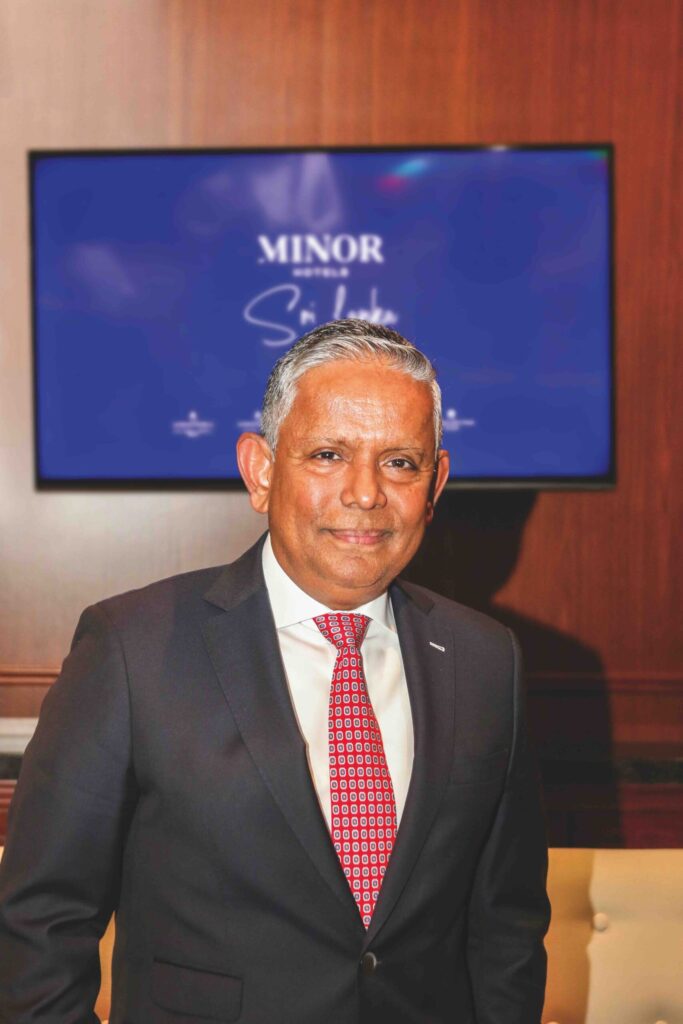
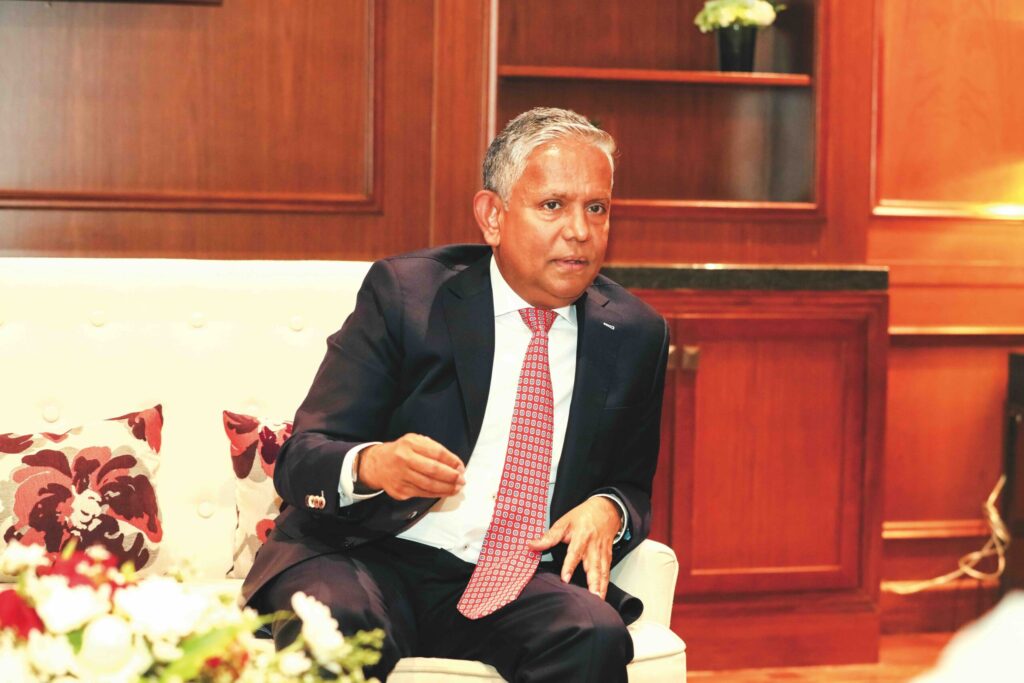
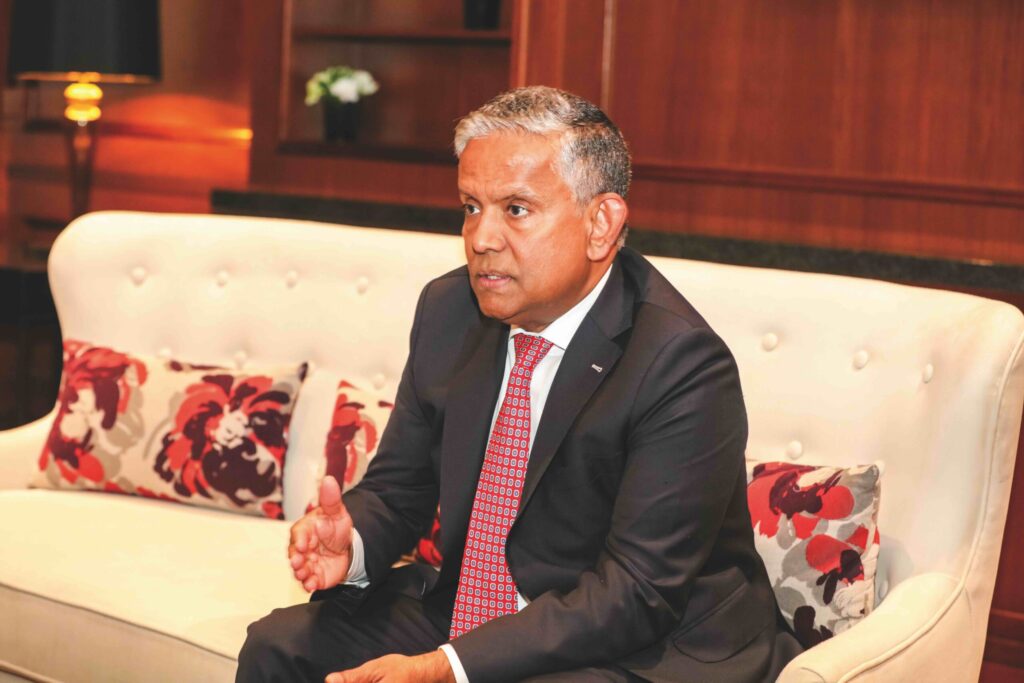
Dilip Rajakarier, CEO, Minor Hotels and COO, Minor International.
Dillip Rajakarier is the Group CEO of Minor International, parent company of Minor Hotels, a hotel owner, operator, and investor with a portfolio of over 640 hotels under 12 brands in nearly 70 countries across the Asia Pacific, the Middle East, Africa, the Indian Ocean, Europe, and the Americas. Speaking with Business Today, he discussed the strategic positioning of Sri Lanka as a tourism destination and Minor Hotels’ approach to hospitality in the region. He shared insights on Sri Lanka’s tourism potential and challenges, emphasizing how the country could learn from successful tourism models in other nations. He noted that Sri Lanka could unlock its untapped potential through strategic planning, robust infrastructure development, and a shift toward a learning mindset – transitioning from quantity-driven to quality-focused tourism.
Words Jennifer Paldano Goonewardane.
Photography Sujith Heenatigala and Dinesh Fernando.
How do you see Sri Lanka’s geographical position influencing Minor Hotels’ regional strategy in South Asia and the Indian Ocean?
Sri Lanka was one of the first countries we expanded to outside Thailand, where we currently operate five hotels and resorts under four brands. Sri Lanka has long been a key strategic location for us in the tourism sector for several reasons. Sri Lanka offers a range of experiences similar to those found in Thailand, including culture, beaches, mountains, wellness, temples, shopping, and urban experiences. As Sri Lanka is a small island, all these attractions are within reachable distances. Sri Lanka’s location provides a natural bridge between South Asia and the Indian Ocean, making it an ideal hub for regional connectivity and a stopover destination for tourists. We were pioneers as a global brand entering Sri Lanka in the early 2000s, because we believed in the destination’s strategic location and its potential to drive tourism growth.
In what ways can Sri Lanka serve as a testing ground for innovative hospitality concepts before they are scaled globally?
Sri Lanka has immense untapped talent and experiences. Currently, Sri Lanka’s image is that of a mass tourism or cheap destination in Asia. This mindset needs to change. Soft power would be a key driver in tapping into tourism potential. For example, The White Lotus, Season 3’s portrayal of Thailand helped to position it as a luxury destination rather than a cheap backpacker destination. When Taylor Swift performs, it moves the needle of that economy by a few basis points. Soft power, high-end destination development, experiential travel, and wellness should be focus areas, especially after COVID, when people are increasingly interested in longevity and healthy living. Sri Lanka is undoubtedly an ideal candidate to offer these innovative concepts, as we have a wealth of stories and wellness offerings to share.
What lessons from other emerging luxury destinations can Sri Lanka apply in its journey to become a global tourism hotspot?
Sri Lanka can learn from the Maldives and Thailand in developing seamless tourism from arrival to departure, with a focus on infrastructure, logistics, and easy visa access from arrival to departure. These proven strategies have allowed them to attract high-value travelers and long-stay guests. The focus should shift from tourist numbers to how much people spend, similar to Bhutan’s approach. Bhutan doesn’t focus on arrival numbers. They talk about value spend. Bhutan requires a minimum spending requirement to obtain a visa for travel to the country. Thailand leveraged the success of filming The White Lotus there, illustrating how pop culture can elevate a destination’s profile, a strategy that Sri Lanka could also explore. Sri Lanka can also follow Minor Hotels’ lead in terms of biodiversity and community initiatives, as sustainability can be a differentiator, making the destination stand out.
Sri Lanka can learn from the experience-driven immersive tourism promoted by Thailand and Vietnam and leverage its ability to offer wellness retreats, culinary journeys, and heritage stays. We discuss attracting long-haul tourists, but do we have the long-haul flights to support them? Sri Lanka must work on bringing back carriers like British Airways and increasing frequencies from airlines such as Cathay Pacific and Emirates, with more A380s landing here. More direct flights targeting high-end European travelers will encourage longer stays and higher spending. Sri Lanka is a year-round destination—Russians in January, Chinese in February, Europeans in March and April, and visitors drawn to different coasts with the changing seasons. What we need now is a clear roadmap to target these segments effectively. With the right strategy, tourism can thrive.
Sri Lanka can learn from countries like Thailand, Bhutan, Singapore, and the United Arab Emirates about developing tourism roadmaps. Seamless travel is crucial. For example, I arrived from the Middle East and used the Business Class fast-track service, which costs 50 dollars per person. However, the line took over an hour. Basically, we ended up paying for Business Class but received Economy Class service — a mindset that urgently needs to change. Sri Lanka can learn much from destinations like Thailand, Bhutan, Singapore, and Dubai, which have transformed into major tourism hubs through clear strategies. We need to adopt that same learning mindset.
As travelers increasingly seek immersive, historical experiences, Sri Lanka can elevate its storytelling through heritage stays and curated tours. We also witness a rise in demand for holistic wellness, such as Ayurveda treatments and mindfulness retreats.
How important is collaboration between the private sector and the government for Sri Lanka’s tourism success? And where do you see the most significant gaps?
Collaboration is crucial to unlocking Sri Lanka’s full tourism potential. A private-public partnership is essential because the public sector alone cannot carry out infrastructure development, streamline visa services, and expand air connectivity. The private sector can lead in some areas, as it understands the areas requiring funding and which markets to target. Currently, there’s a disconnect between the private and public sectors that demands more collaborative tourism promotion. A unified approach will help position Sri Lanka as a premium, experience-rich destination, ensuring long-term competitiveness.
With increasing global scrutiny on sustainable operations, how do you strike a balance between luxury and responsibility in a destination like Sri Lanka?
Today’s guests seek experiences and sustainable tourism. Sustainability is no longer optional – it’s what guests want. It creates experiences, helps connect tourists with local culture, and gives them a sense of contributing to the community. Sustainability has always been in Minor’s DNA, as evidenced by its work with animal foundations, orphanages, and scholarship programs.
Minor Hotels supports initiatives like Ayati Trust in Sri Lanka, a national center dedicated to helping children with disabilities, providing diagnostic, therapeutic, and educational services to children and families across Sri Lanka.
The Dollar for Deeds program has played an essential role in connecting hospitality with meaningful community support. The initiative invites guests to opt in at check-in by contributing one US dollar per night of their stay. We match each donation in full, with funds directed to chosen charitable and environmental projects tailored to each location. We spend the money collected in Sri Lanka or Thailand in those respective countries.
The Dollar for Deeds program is a key sustainability initiative that gives back to the communities where we operate. Guests value such efforts because modern travel is about stories, not just sea, sun, and sand. They want to connect with local culture, contribute meaningfully, and share those experiences with others.
Sustainability also encompasses reducing our carbon footprint, preserving water, and minimizing waste, which we are committed to respecting and adhering to in our business operations, ensuring that we maintain the planet for future generations to inhabit. That has been one of our principal commitments to reduce our carbon footprint, thereby contributing to the goal of carbon neutrality by 2030.
Do you foresee Sri Lanka playing a role in diversifying Minor Hotels’ brand portfolio?
Absolutely, but Sri Lanka needs to be seen as an attractive tourist destination, not just a discounted one. Sri Lanka should promote its value-added products, natural beauty, and culture, rather than just offering discounts. With proper infrastructure, logistics, and a well-defined tourism roadmap, Sri Lanka can become an attractive destination for investment.
Minor Hotels has over 600 hotels and 80,000 rooms globally, and can drive traffic to Sri Lanka; however, the focus must be on tourist spending rather than the number of visitors. Sri Lanka must offer investment incentives, tax incentives, and promotional activities to attract investors. Channel the money in the right direction. Without these essentials, Sri Lanka will struggle to
attract investment, particularly in the face of alternatives elsewhere. To become truly competitive, we need a clear roadmap supported by strong governance frameworks and transparency. Having said that, Minor Hotels is always on the lookout for new opportunities to expand our portfolio that align with our long-term vision. Moreover, Sri Lanka’s cultural richness supports our emphasis on character-driven, locally rooted guest experiences, a key differentiator for our evolving brand portfolio. In 2024, we added two properties to our Sri Lankan portfolio, NH Collection Colombo and NH Bentota Ceysands Resort, reflecting our confidence in Sri Lanka’s tourism trajectory as arrivals continue to rise.
Sri Lanka’s location provides a natural bridge between South Asia and the Indian Ocean, making it an ideal hub for regional connectivity and a stopover destination for tourists. We were pioneers as a global brand entering Sri Lanka in the early 2000s, because we believed in the destination’s strategic location and its potential to drive tourism growth.
How do you see Sri Lanka shaping future hospitality leaders, and what advice would you give young professionals aspiring to build their careers in the industry?
Sri Lanka boasts an impressive talent pool across various sectors, including the hospitality industry. In many countries, a career in hospitality is highly respected and regarded as a rewarding field. In Sri Lanka, however, it’s quite the opposite, leading to a drain of talent. Many skilled professionals leave the country in search of better recognition and opportunities abroad. That’s precisely why companies must focus on training, retention, and internal promotion of their team members.
In Thailand, Minor Hotels has partnered with Les Roches Switzerland to establish a hospitality school, Asian Institute of Hospitality Management (AIHM), aiming to cultivate talent and make a career in hospitality a viable option. We offer the same globally recognized curriculum as Les Roches, enabling students from across the region to pursue world-class hospitality education. There’s no reason not to choose hospitality as a career when such training is available. Sri Lanka has great talent, but limited opportunities continue to drive it abroad.
My advice to aspiring professionals is to do what they love with passion, put in 120 percent hard work, and focus on things they can control rather than things they cannot.
Sri Lanka has faced multiple crises in recent years. What has been your most significant learning about building resilience in the hospitality sector?
I see a crisis as an opportunity. Every country faces crises, but what matters is how quickly you bounce back. We cannot despair. Every crisis must be a stepping stone. Sri Lanka has faced war, bombings, a tsunami, and the Easter attacks — yet we’ve endured. Adaptability is key to recovery. Other countries, like Thailand, face crises regularly but recover quickly. It’s not about how hard you fall, but how fast you rise again — and our hotels have shown that resilience. No one expected the spread of the coronavirus to reach crisis proportions. But even during the COVID crisis, we had to act quickly to protect the company and preserve cash. By taking decisive measures early, we emerged stronger than before. In essence, every crisis has led to a stronger, more innovative industry. I believe resilience is built by embracing change, learning from setbacks, and viewing them as opportunities for growth and improvement. Moreover, we strengthen organizational resilience by investing in internal talent and leadership development. Public-private partnerships help the sector respond quickly and recover effectively in times of crisis.
What emerging travel trends are you most excited about, and how can Sri Lanka align with them?
Post-COVID travel trends include slow travel, multi-generational travel (where families travel with children and grandparents), wellness tourism, and “bleisure” (a combination of business and leisure travel). There’s also a trend of digital nomads and millennial travel.
As travelers increasingly seek immersive, historical experiences, Sri Lanka can elevate its storytelling through heritage stays and curated tours. We also witness a rise in demand for holistic wellness, such as Ayurveda treatments and mindfulness retreats. Our urban wellness centers can tap into this demand and contribute to the growth potential of this segment. Bleisure travel, which combines business and leisure activities, is gaining popularity.
Colombo is well-positioned for MICE events with easy access to leisure destinations. Sri Lanka can harness the benefits of increased eco-conscious travel by protecting biodiversity and promoting low-impact experiences. The island can also tap into the segment seeking cultural engagement, given that ours is a diverse society with rich histories. Therefore, Sri Lanka must capitalize on these trends and focus on them.
Every individual involved in tourism must align with the country’s vision and positioning. When all stakeholders buy into that vision, everyone’s lives improve through sustainable tourism and added value. All stakeholders — government, public sector, staff, and service providers — must be trained to deliver exceptional guest experiences.
As someone leading both Minor Hotels and Minor International operations, how do you balance a global vision with local realities?
Minor Hotels’ brands are not cookie-cutter brands. Our mantra is to think globally and act locally, adapting to the local market realities wherever we operate around the world. Our success comes from understanding cultural nuances and consumer behavior in each market. Moreover, it’s essential to empower local teams to lead initiatives, ensuring that decisions reflect the ground realities. In all this, we aim for guests to feel connected to the local culture through our design, architecture, experiences, food, and cuisine. While maintaining global brand standards, we ensure local cultural connections because guests today seek storytelling experiences rather than standardized ones. Minor Hotels began focusing on experiences 25 years ago, when it established the Anantara brand.
Since you spoke about the generation that is looking for sustainable practices, how do you balance tourism with concerns about exploitation, particularly regarding wildlife experiences?
There are indeed concerns about wildlife tourism. Minor Hotels operates sustainable high-end safari camps in Africa, specifically in Tanzania and Kenya. They understand the importance of protecting wildlife without encroaching on their territory. Compare that with Sri Lanka. I was at Yala National Park, where I witnessed how safari operators constantly communicate with each other to share animal sightings. Suddenly, dozens of jeeps would crowd around the animals. Such practices are harmful to the animals. You even find people coming in by the busload. It’s shocking to see the garbage people leave behind at those locations. That’s not how we promote sustainable tourism. We can learn from Africa about promoting sustainable wildlife tourism the right way. In Africa, we build camps without pouring concrete directly into the earth; instead, we pour it into barrels onto which we fix the footings, making them removable without causing environmental damage. There are also limitations on the number of visitors allowed. Rwanda’s gorilla trekking packages are a good example of sustainable tourism, where the charges increased from 750 dollars before COVID to 1,500 dollars per visitor after COVID for a two-hour experience. It’s not about the money, it’s about sustaining a natural heritage through controlled tourism. Right now, we are doing the opposite in Sri Lanka.
How does education play a role in creating awareness among all stakeholders and service providers?
Every individual involved in tourism must align with the country’s vision and positioning. When all stakeholders buy into that vision, everyone’s lives improve through sustainable tourism and added value. All stakeholders — government, public sector, staff, and service providers — must be trained to deliver exceptional guest experiences. Take Thailand: despite language barriers, their hospitality comes from the heart, leaving guests genuinely impressed. To achieve this, Sri Lanka needs collaboration and training across all sectors to ensure the delivery of quality-driven, memorable tourism experiences.
What can Sri Lanka do better in developing luxury tourism?
Sri Lanka can do much better than it is currently doing. Take the Maldives, for example. It has always positioned itself as a high-end destination attracting private jets. Comparatively, Sri Lanka offers a more diverse range of experiences, but it isn’t attracting the same caliber of tourists.
Sri Lanka has great potential, but we need leadership that understands both how and why to develop the industry. Instead of just celebrating rising tourist numbers, we should focus on attracting high-end travelers and private jet passengers, enabling hotels to charge premium rates rather than relying on discounted deals. To achieve this, we require the proper infrastructure — including private jet terminals, fast-track airport services, and seamless experiences. In Thailand, private jet passengers are out in five minutes. High-end tourists expect efficiency, and we must learn from such models to elevate our offering.
You are emphasizing Sri Lanka promoting itself as a high-end destination. Do you see more potential in that?
The potential in promoting Sri Lanka as a high-end destination is immense. Today, many tourists spend 30 to 50 dollars on a room, making it unrealistic to sell a 100 dollars spa treatment, 40 dollars’ worth of food and beverage items, or a bottle of champagne. For too long, our market has been making low-budget offerings; that mindset must change. Without shifting focus to premium experiences, we’ll continue the same model and only celebrate tourist numbers, not profitability or quality.
But for that change, it needs a very concerted effort, right? You can’t just make that leap.
Yes, change requires a concerted effort, but you have to start somewhere — and we haven’t even begun. The key is prioritizing the right areas.
Start with low-hanging fruit, such as seamless and experiential travel, and focus on attracting high-end tourists who can spend 500 dollars a night. For them, a 50 dollar visa fee is negligible. Thailand doesn’t charge a visa fee — look at the results: in 1983, both Thailand and Sri Lanka had 500,000 annual arrivals; today, Thailand has nearly 40 million, Sri Lanka just two million. Without taking such initiatives, we won’t progress.
Look at Dubai: it has transformed itself through vision and innovation. Ten years ago, I spoke with top officials from Customs, Immigration, and other departments about providing five-star service across all verticals. Today, Dubai offers seamless experiences: visas, employment permits, and other services are all streamlined into one-stop processes. That was possible because they embraced learning and adaptation. For Sri Lanka to move forward, leadership needs to consistently prioritize tourism as a key economic driver. Progress depends on keeping the focus on long-term national interests.
What drove your decision to invest in Colombo when others were reluctant to venture due to the proliferation of hotels?
Minor Hotels believed that, as a global company, we could drive high-end tourism to Sri Lanka. When building Anantara Tangalle, we aimed for rates of 300 to 500 dollars, despite skepticism, and we achieved those rates. We sought a hub in Colombo to support our properties elsewhere and attract European guests, which is why we made our acquisition in Colombo.
Sri Lanka is in a strategically strong position, situated near China and India, two of the world’s largest economies. Those two markets alone can drive our tourism industry, but we aren’t capitalizing on this advantage.
Can Sri Lanka learn from best practices?
Absolutely. But first, we need to adopt a mindset that recognizes our shortcomings — not everything is bad, but there’s much room for improvement. We must be open to learning, developing talent and infrastructure, and strengthening public–private collaboration. There’s no reason Sri Lanka can’t lead in tourism, but the focus must be on sustainable, quality-driven growth rather than mass, low-cost tourism.
What keeps you optimistic about Sri Lanka despite its challenges?
The rising number of arrivals is a continuous assertion of confidence in the country and what it has to offer. Our small size allows travelers to experience beaches, heritage, wellness, and city life within short distances.
Moreover, the island’s cultural depth and natural beauty lend themselves to immersive concepts adaptable to other markets.
I am also most hopeful about Sri Lanka’s potential and ingredients to attract high-end tourists, transforming the country’s image as a valuable destination.
Of course, one cannot help but acknowledge the strength of our inherent ability to exude warmth and charm, which has become a signature of Sri Lankan hospitality.