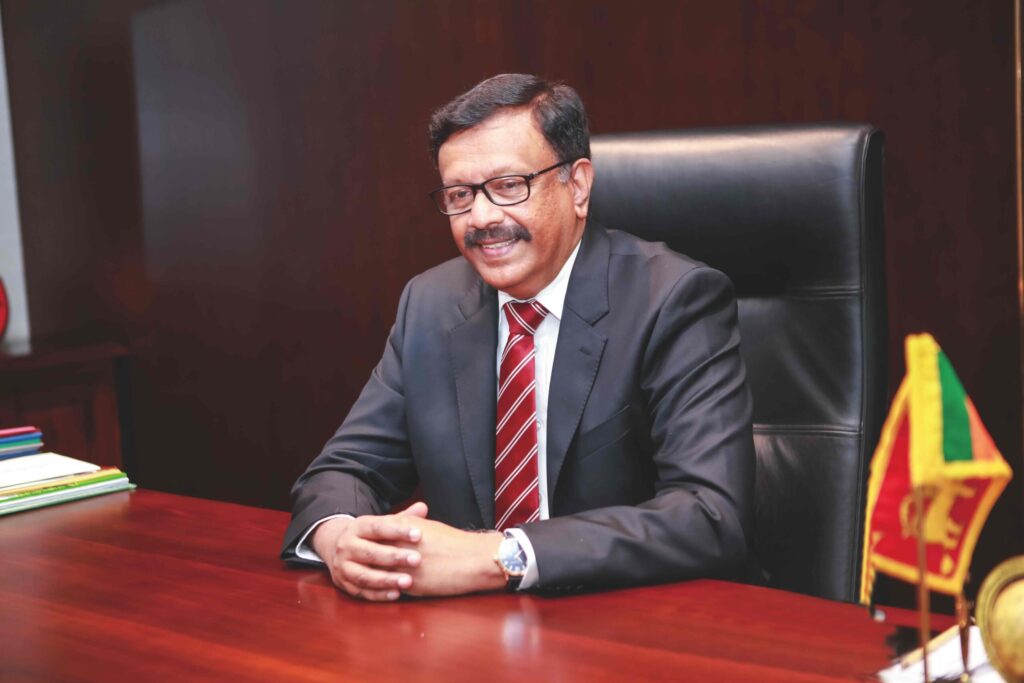

LOLC, one of Sri Lanka’s fastest-growing conglomerates, has distinguished itself as a pioneering multinational with a presence in 27 countries across Asia, Africa, and Central Asia. The Group has achieved remarkable growth across financial services, plantations, and leisure, driven by a strategy of geographic and sectoral diversification, innovation, and a strong focus on SMEs and inclusive finance. Speaking with Business Today, Kapila Jayawardena, Group Managing Director and CEO, shares insights on LOLC’s growth trajectory, the principles behind its multinational expansion, and the vision that positions the Group as a catalyst for economic development and global value creation.
Words Jennifer Paldano Goonewardane.
Photography Sujith Heenatigala.
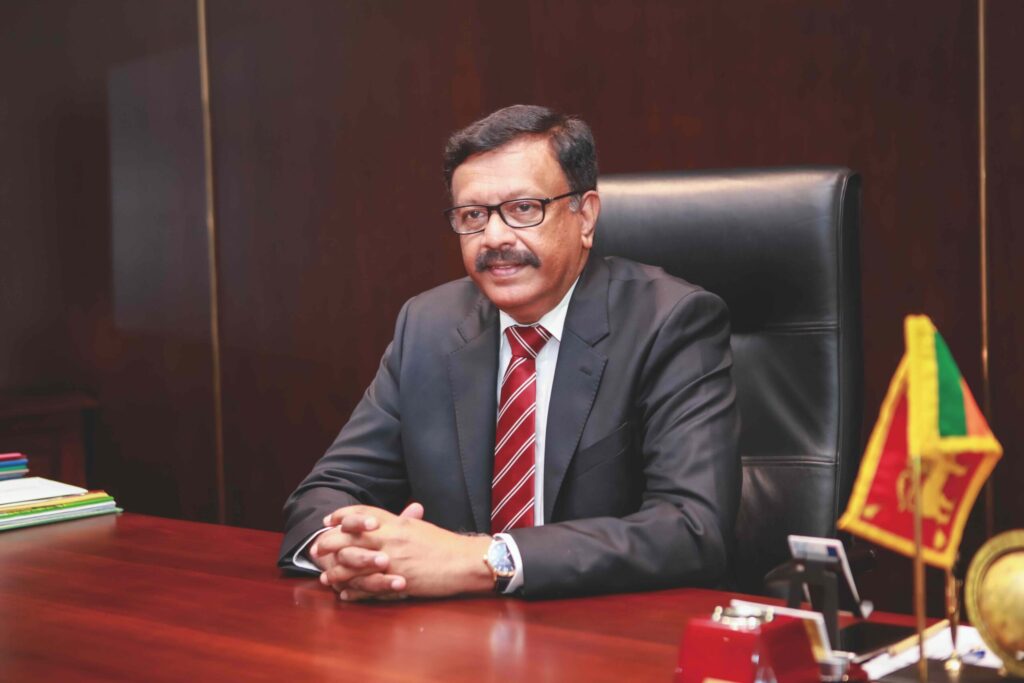
Kapila Jayawardena, Managing Director and CEO, LOLC.
LOLC once again delivered a strong performance in FY2024/25 despite global volatility and the post-crisis adjustments in Sri Lanka. What were the most important strategic decisions that shaped this outcome?
Our deliberate diversification across industries and geographies has been the most decisive factor behind our strong performance. Operating in nine business verticals and across 27 countries, our international footprint has been a major stabilizing force during times of crisis, such as the COVID-19 pandemic, Sri Lanka’s financial crisis, and the recent cyclone. The strength of our overseas operations has helped offset local disruptions, maintaining the Group’s overall stability.
This twin diversification—across sectors and regions—remains our most critical strength. It has enabled us to grow, manage risk, smoothen earnings, and remain resilient in the face of various shocks.
Our people form the second major pillar of our success. Human capital drives our organization and is our highest priority. We are committed to sustaining a motivated and engaged workforce through a transparent and inclusive value-creation framework. We share significant profits with employees via two annual bonuses, paid in December and April. This ensures that our people share in the success they help create, building loyalty, accountability, and long-term commitment.
As Sri Lanka’s only true multinational, we give our employees unique international exposure. With global operations, we provide staff with opportunities to work and grow across diverse global markets. This international mobility strengthens our talent pool and broadens professional capabilities across the Group.
The Group has successfully carried this momentum into the first half of FY2025/26. What are the key drivers sustaining growth across geographies and sectors at this stage of the cycle?
Financial services primarily drive the Group’s performance. Growth across our international footprint is fueled by rising demand for financial products in developing markets, favorable demographic trends, and limited access to traditional banking services. Unlike mature markets, many of our core markets offer high growth rates due to the need for greater financial inclusion as well as our ability to provide customized products to cater to specialized needs.
For example, in Africa, we operate in countries with GDP growth rates of five to eight percent. In Asia, we are active in fast-expanding markets such as Cambodia, the Philippines, and Indonesia. There, economic growth ranges from mid-single-digit to double-digit levels. These environments generate strong and sustained demand for financial products and services. This demand—which includes consumer lending, SME finance, microfinance, and payments—continues to drive our performance.
Sri Lanka remains an important part of this momentum. The liberalization of the motor vehicle sector has accelerated credit demand, especially in vehicle financing. More broadly, the gradual economic recovery is driving increased borrowing and financial activity across multiple segments.
You’ve often highlighted that LOLC’s geographic and sectoral diversification is its greatest strength. How has this model specifically insulated the Group from macroeconomic shocks over the last two years?
The COVID-19 pandemic and Sri Lanka’s economic crisis clearly illustrate the effectiveness of LOLC’s diversification. Despite disruptions, we sustained growth momentum and remained resilient in both topline and bottom-line results. Diversification has acted as a shock absorber for the Group. Sri Lanka, like many emerging economies, regularly cycles through growth followed by stress. During such disruptions, every sector is affected; however, our diversified approach enables us to remain steady.
Our broad geographic footprint opens up a larger client base whilst acting as a buffers against downturns. When one market is challenged, others often perform strongly, maintaining Group stability and growth. Operations across varied regions ensure we’re not dependent on any single country.
LOLC is now one of the most geographically diversified financial services groups to emerge from Sri Lanka. Which regions or markets contributed most strongly in FY2024/25, and where do you see the next wave of growth?
The Group continues to see the strongest growth prospects in the financial services sector. Across emerging markets, expanding populations, rising incomes, and increasing financial inclusion drive substantial and sustained demand for financial products and services. This demand has contributed significantly to LOLC’s performance across the geographies where we operate.
Agriculture, especially through Browns Plantations, is our second key growth engine. Browns Plantations became the world’s largest tea producer this year. This significant global milestone was reached through the strategic acquisition of Lipton’s plantations and earlier investments in Finlays’ Kenyan operations. These acquisitions strengthened our international footprint and enhanced our global tea value chain positioning. We see plantations, especially tea, as offering considerable long-term growth potential for the Group.
Leisure and tourism represent the third major pillar of growth. LOLC now stands as Sri Lanka’s third-largest leisure operator, with a portfolio of around 11 properties. In the year under review, our leisure and tourism segment recorded strong growth, aligning with the global recovery in international travel. Our properties in Sri Lanka, the Maldives, and Mauritius benefited from higher tourist arrivals and improved operating margins. The restoration of political and economic stability has also supported Sri Lanka’s tourism resurgence.
In 2024/25, which regions or markets contributed most strongly to your growth?
Sri Lanka led the Group’s growth in the financial year. Domestic financial services remained the top profit driver, led by LOLC Finance. It achieved its highest-ever after-tax profit and strong growth in loans and deposits. The Sri Lankan market remains the anchor of the Group’s earnings, driven by a high market share, improved asset quality, and growing financial intermediation.
Our insurance businesses also delivered a robust performance. LOLC Life Assurance achieved significant growth in gross written premiums. It established itself as one of Sri Lanka’s fastest-growing life insurers. We have witnessed a rise in market confidence. Economic activity has accelerated, resulting in increased demand for financial services and credit nationwide. Significant contributions were made by South and Southeast Asia, and Central Asia operations. This growth came from our ongoing focus on financial inclusion and microfinance. Markets such as Cambodia, Myanmar, Indonesia, the Philippines, and Pakistan expanded their loan books and customer bases, boosting Group growth beyond the domestic market.
In Central Asia, operations in countries such as Kazakhstan, Tajikistan and Kyrgyzstan, recorded notable growth in both loan portfolios and deposits, reflecting strong momentum in underserved and high-growth markets.
Africa also made an increasingly important contribution, following major strategic investments and acquisitions in both plantations and financial services. Our operations in Zambia and Rwanda expanded their loan portfolio and customer base becoming key institutions for financial inclusion.
Our broad geographic footprint buffers against downturns. When one market is challenged, others often perform strongly, maintaining Group stability and growth. Operations across varied regions ensure we’re not dependent on any single country.
What key differences do you see in plantation operations in Kenya and Sri Lanka?
Before acquiring plantation operations in Kenya, we deliberately built our operational capabilities by managing tea plantations in Sri Lanka for nearly five years. This was done to ensure that we had the expertise, systems, and management depth required to expand beyond the domestic market. Today, our Kenyan operations are delivering very strong operating profits, validating both our preparation and our strategic intent.
One of the most striking lessons from Kenya is the significant role that technology and scale play in driving efficiency and profitability. The plantations we operate there are highly mechanized and technologically advanced. In contrast to Sri Lanka, where tea leaves are still plucked largely by hand and fertilizer is applied manually, Kenyan estates use large automated plucking machines and drones to apply fertilizer. These technologies significantly reduce labor costs, improve consistency, and enhance productivity. As a result, yields are substantially higher and cost structures far more competitive.
A key factor enabling this level of automation is scale. Kenyan tea estates are much larger, which allows the high capital cost of mechanization to be spread over vast acreages, making automation economically viable. In Sri Lanka, plantations are comparatively smaller, and the cost of introducing advanced machinery often cannot be recovered through productivity gains alone.
Geography also plays a critical role. The terrain in Kenya is generally gentler, allowing machines to operate efficiently across large tracts of land. In Sri Lanka, the steeper gradients of many plantations make mechanization significantly more challenging, as heavy equipment struggles to navigate such landscapes.
Operating across multiple jurisdictions presents both opportunities and regulatory complexities. How does LOLC balance growth ambitions with strong governance and compliance across markets?
We manage this balance fundamentally through a robust and well-structured shared services model.
Under this model, the Chief Executive Officers of our individual companies are primarily responsible for the commercial performance and profitability of their respective businesses. However, all critical control functions—including finance, human resources, information technology, risk management, and compliance—are centralized within the Group’s shared services structure. This ensures that while business units are empowered to grow and compete in their local markets, they do so within a common framework of policies, standards, and controls set at the Group level.
This centralized approach allows us to deploy specialized expertise in areas such as regulatory compliance, governance, and risk management, rather than duplicating these capabilities across each entity. It also enables consistency in how regulatory requirements are interpreted and applied across different jurisdictions, reducing the risk of gaps or inconsistencies.
LOLC’s investments in research, innovation, and technology are often understated. How do you see them contributing to growth?
Research and innovation represent a critical engine of long-term growth for the Group. A flagship initiative in this area is our investment in advanced materials through our dedicated graphene research, development, and production platform. These efforts are anchored in Ceylon Graphene Technologies (CGT), a joint venture between LOLC Advanced Technologies, our research and innovation arm, and the Sri Lanka Institute of Nanotechnology.
CGT is focused on the research, development, and manufacture of high-quality graphene materials. It operates across the full value chain, transforming Sri Lanka’s high-purity vein graphite into advanced graphene products, from raw material processing through to application-level development. This vertically integrated model allows us not only to create cutting-edge materials but also to customize them for specific industrial and commercial applications.
One of CGT’s key achievements has been the development of graphene blends that significantly enhance the performance of battery technologies, including improved charge acceptance in lead-acid batteries. In parallel, CGT has been scaling up the production of graphene oxide and reduced graphene oxide, which are utilized across a wide range of industrial applications, including energy storage, coatings, composites, and electronics.
Beyond manufacturing, LOLC Advanced Technologies has also been building strong international research partnerships to accelerate innovation and facilitate the commercial adoption of graphene-based solutions in global markets. This ensures that our scientific capabilities are closely aligned with real-world commercial opportunities.
Digital transformation is another major pillar of our innovation strategy. We continue to invest heavily in digital platforms and technologies across all our business verticals to enhance efficiency, improve the customer experience, and create new growth opportunities.
What role should large diversified groups like LOLC play in accelerating private-sector-led growth, employment, and exports in Sri Lanka?
I believe that innovation must take center stage. Sri Lankan companies must move beyond merely replicating successful practices or policies from other countries. While adaptation has its merits, it is equally important to cultivate genuine innovation—both in terms of creative thinking and in developing new products, services, and business lines. Diversified groups, in particular, have a responsibility to invest in areas that enhance value addition within the economy.
Take exports, for example. Sri Lanka has historically focused on basic commodities, with minimal value addition. It is only recently that a few leading tea brands have begun producing value-added products. Diversified companies have the scale, resources, and expertise to lead such transformations, creating higher-value goods that can compete in global markets and generate employment along the value chain.
At the same time, the public sector must play its part by establishing benchmarks for productivity. Introducing incentive schemes or performance-based metrics could significantly improve efficiency within state institutions, which, in turn, would support a more competitive and dynamic private sector.
Given LOLC’s exposure to multiple markets and sectors, how does the company approach risk management, particularly in an environment of geopolitical uncertainty and fluctuating interest rates?
LOLC approaches risk management through a robust governance and oversight framework that spans all our markets and business verticals. At the core of this framework is a strong culture of integrity; we maintain uncompromising standards to ensure that the integrity of our people and processes is never in question. We have also established a comprehensive monitoring and control system to ensure accountability. This unit rigorously tracks performance, compliance, and operational standards across every country in which we operate, as well as within all our business verticals and shared services. By continuously evaluating service levels, operational effectiveness, and emerging risks, we ensure that any potential issues are promptly identified and mitigated.
How do you prioritize capital allocation between organic expansion, acquisitions, debt optimization, and shareholder returns?
Capital allocation decisions are fundamentally guided by the potential return on equity. We evaluate each opportunity—whether it involves organic growth, strategic acquisitions, debt restructuring, or shareholder distributions—through the lens of expected returns.
Typically, we set a benchmark of approximately 20 percent for return on investment. Opportunities that demonstrate the highest potential return relative to risk are prioritized for capital deployment. Our approach is therefore deeply rooted in a disciplined risk-reward framework, ensuring that every allocation maximizes value creation for the Group and its shareholders while balancing growth, stability, and long-term sustainability.
How conducive has Sri Lanka been for private sector growth over the years?
I believe the trajectory has been shaped by a combination of ups and downs. Sri Lanka, as a small economy, is particularly susceptible to exogenous or external shocks. This vulnerability stems from its relatively small population, limited market size, and constrained economic scale.
Interestingly, I do not attribute the country’s economic challenges primarily to political leadership. While there are, of course, exceptions, many of our politicians have earnestly attempted to steer the nation toward progress, and some have even made significant personal sacrifices for the country’s development.
Unfortunately, due to the structural vulnerabilities inherent in a small economy, Sri Lanka often experiences the brunt of global shocks more intensely. The COVID-19 pandemic is a case in point—we were among the countries most severely affected relative to our size. Coupled with a high debt burden, these structural and external pressures magnified the economic impact, illustrating the challenges faced by the private sector in such a context.
How important a role can the private sector play in the current economic trajectory in driving growth and taking Sri Lanka to the next level?
To date, the private sector has not been able to play a truly transformative role in Sri Lanka’s economy, largely because government institutions dominate much of the commercial landscape.
Currently, approximately 65 percent of the country’s economic activity is controlled by the state. For instance, the two state-owned banks command a 45 percent share of the banking sector. The Ceylon Petroleum Corporation controls around 80 percent of the petroleum market, while the Ceylon Electricity Board retains a 94 percent share of the energy sector, with the remaining six percent managed by LECO, another government-controlled entity. Even the national carrier remains state-owned. As a result, the private sector accounts for only 35 percent of the economy. Expanding this private-sector share is critical—not only would it create space for more competitive growth, but it would also allow the government to focus more on governance rather than operational management. The private sector’s involvement in key industries is essential; it cannot drive meaningful economic growth by being limited to small-scale, deregulated niches alone. When large state accounts and high-value sectors remain closed to private enterprise, it constrains opportunities for growth, innovation, and efficiency. For example, private banks cannot expand significantly if the most important corporate and institutional accounts are held by state banks.
It is worth noting that many of Sri Lanka’s executive leaders have recognized this challenge and sought to address it. Unfortunately, their efforts were often stymied—sometimes even by colleagues or cabinet members— due to entrenched bureaucracy. The country has had capable leaders with good intentions, but they were constrained by systemic obstacles that prevented them from fully executing their reforms. The lesson is clear: for Sri Lanka to achieve sustainable growth, the private sector must be empowered to play a larger and more meaningful role in the economy
Would you say that the private and public partnership has been quite weak in Sri Lanka in harnessing economic potential?
On the surface, it may not appear so, but a closer look at the numbers tells a different story. The private sector accounts for approximately 35 percent of the economy, while the government controls the remaining 65 percent. Until the private sector is allowed to participate meaningfully in these regulated areas, the economy will struggle to achieve exponential growth.
Historically, we saw a different approach under President J. R. Jayawardena between 1977 and 1984, when certain barriers in state-controlled sectors were removed. Take the insurance industry, for instance, which was dominated by a single state-owned entity at the time. By opening the sector to private players, the industry has grown substantially and now stands as a highly valuable component of the economy. Today, Sri Lanka’s insurance sector is technologically advanced, having embraced digital transformation more effectively than many of its regional peers. The companies are profitable, their employees enjoy modern workplaces, and digital infrastructure supports efficient operations.
Jayawardena’s reforms also included inviting foreign banks into Sri Lanka, allowing them to manage government accounts, which further strengthened private-sector participation in the economy. Unfortunately, this process was halted over time, resulting in the departure of several foreign institutions from the Sri Lankan market.
To unlock Sri Lanka’s full economic potential, it is imperative to reverse this trajectory. The country must enable the private sector to play a significantly larger role in driving growth, innovation, and value creation across key industries.
To unlock Sri Lanka’s full economic potential, it is imperative to reverse this trajectory. The country must enable the private sector to play a significantly larger role in driving growth, innovation, and value creation across key industries.
Working in diverse geographies, what has been your experience with human resource capabilities?
Across the 27 markets in which we operate, we have consistently found Sri Lankans to be among the most capable and intelligent professionals. This is why we have deployed a significant number of Sri Lankan employees in our overseas operations. Their ability to understand not only the inherent risks and rewards of business but also the cultural and operational nuances of the host countries is exceptional.
Sri Lankans bring a unique combination of analytical ability, adaptability, and cultural insight, which allows them to navigate complex international business environments effectively. We consider this human capital to be one of our greatest strategic assets, and we actively leverage the skills and expertise of our Sri Lankan workforce to drive the success of our operations abroad. Their contributions are critical to maintaining LOLC’s high standards of performance and governance across diverse geographies.
The SMEs are a significant group in your financial services portfolio. Does your substantial involvement indicate a strong trust in their growth potential?
Sri Lanka has undergone multiple cycles of economic development, and we have observed that developing economies often face similar challenges, despite differences in demographics, governance, and local business practices.
In every market, there exists a segment of micro-entrepreneurs whose primary responsibility is to support their families. Their financial needs are straightforward but crucial—they require timely access to capital to grow their businesses. The key parameters we consider are not superficial factors such as educational certificates or social background, but rather their drive for growth and their commitment to sustaining their families. Our approach is deeply centered on assessing risk in this context while supporting growth.
We observe a natural progression: micro-entrepreneurs grow into lower-end SMEs, which in turn evolve into larger SMEs, while smaller SMEs aim to scale up further. This segment forms the engine of growth across the countries in which we operate. While some may argue that we are heavily exposed to this sector, in reality, it is diversified by nature. Each entrepreneur represents a small unit, and our portfolio spans thousands of such clients across multiple markets. This “safety in numbers” model, mitigates risk while maximizing impact.
We focus on providing small, accessible loans rather than high-end, large-ticket financing. Many of our clients are individuals who have historically felt marginalized by traditional banking institutions, often hesitant to approach banks due to prior negative experiences. By understanding, respecting, and addressing their needs, we build trust and long-term partnerships. It is this commitment to the diversity and aspirations of micro and small entrepreneurs that underpins our confidence in their growth potential.
In that sense, the services you offer to this group of entrepreneurs—which others may not provide—are contributing not only to personal development but also to the broader economy.
Absolutely. These entrepreneurs make significant contributions to the economies of the countries in which they operate. As they grow, they create small ecosystems around themselves, employing staff and engaging service providers, suppliers, and other business partners. This generates a knock-on effect that extends far beyond their individual enterprises. In essence, we act as a catalyst for economic development across all our geographies.
Within the Group, we have developed specialized products tailored to specific needs, including programs for women entrepreneurs, initiatives in key sectors such as food security and transportation, and other targeted offerings. These solutions leverage the expertise we have built in Sri Lanka, which serves as a foundation for new product development in other markets. However, we recognize that what succeeds in one country may not work identically in another. For instance, a product that performs well in Sri Lanka may require modifications to succeed in Tanzania or Myanmar.
Our approach involves local teams collaborating closely with the central shared services unit. Together, they refine products, conduct pilot runs, and continuously monitor performance to ensure effectiveness. Success requires ongoing assessment, adjustment, and optimization. By combining local insights with Group-level expertise, we ensure that each initiative is adapted to the specific market context, delivering sustainable impact for entrepreneurs and the broader economy alike.
LOLC is a relatively young conglomerate, yet within a short span, it has expanded exponentially, while some of Sri Lanka’s oldest conglomerates have remained more conservative. How was this achieved?
I believe the driving factor has been vision. Credit must go to our Executive Chairman, Ishara Nanayakkara, whose foresight recognized micro-enterprises and SMEs—not large corporates—as the true engines of a country’s growth. By focusing on this segment, he identified a sector with immense potential, both in Sri Lanka and in rapidly developing regions such as Africa and Central Asia. SMEs offer the highest margins with relatively lower risk, because the risk is inherently dispersed across many small enterprises. In contrast, banking large corporates carries concentrated risk; the failure of a single corporate can significantly impact a bank’s stability.
The key to our success lies not merely in diversification, but in the safety it provides through dispersed exposure. Equally important, the Chairman assembled a team of highly capable professionals—operationally astute and well-versed in risk management—who brought diverse expertise and qualifications to the table.
LOLC describes itself as a multinational. For a company that began in Sri Lanka and expanded globally, what vision has driven its success, and what lessons can other Sri Lankans learn from it?
I would summarize it in a single sentence, which is also our guiding tagline: “Imagine the possibilities.” This reflects our core philosophy—we never accept “no” as an answer. When we identify an opportunity, we envision the potential to seize it and bring it to life. Success, for us, lies in converting possibilities into tangible outcomes. By cultivating a mindset that constantly imagines what could be achieved, we are able to turn ambitious goals into practical results. Opportunities exist everywhere, and the ability to envision them is the first step toward creating lasting impact.
Looking ahead, what would you like LOLC to be most recognized for regionally and globally?
We aspire for LOLC to be recognized foremost for value creation. On numerous occasions, we have acquired companies with limited prospects and successfully transformed them, revitalizing their operational and financial performance to create significantly greater value than at the time of acquisition.
We want to be acknowledged as catalysts for global value creation. Equally important, we strive to be recognized as an exceptional employer. Our employee retention rates are among the highest in the market. Once individuals join LOLC, it is rare for them to leave, except for personal reasons or migration. We aim to be the employer of choice, attracting and retaining top talent across all our markets.
For us, value creation extends beyond organizational performance. It encompasses enriching the lives of our people, strengthening our businesses, and enhancing our governance frameworks.