
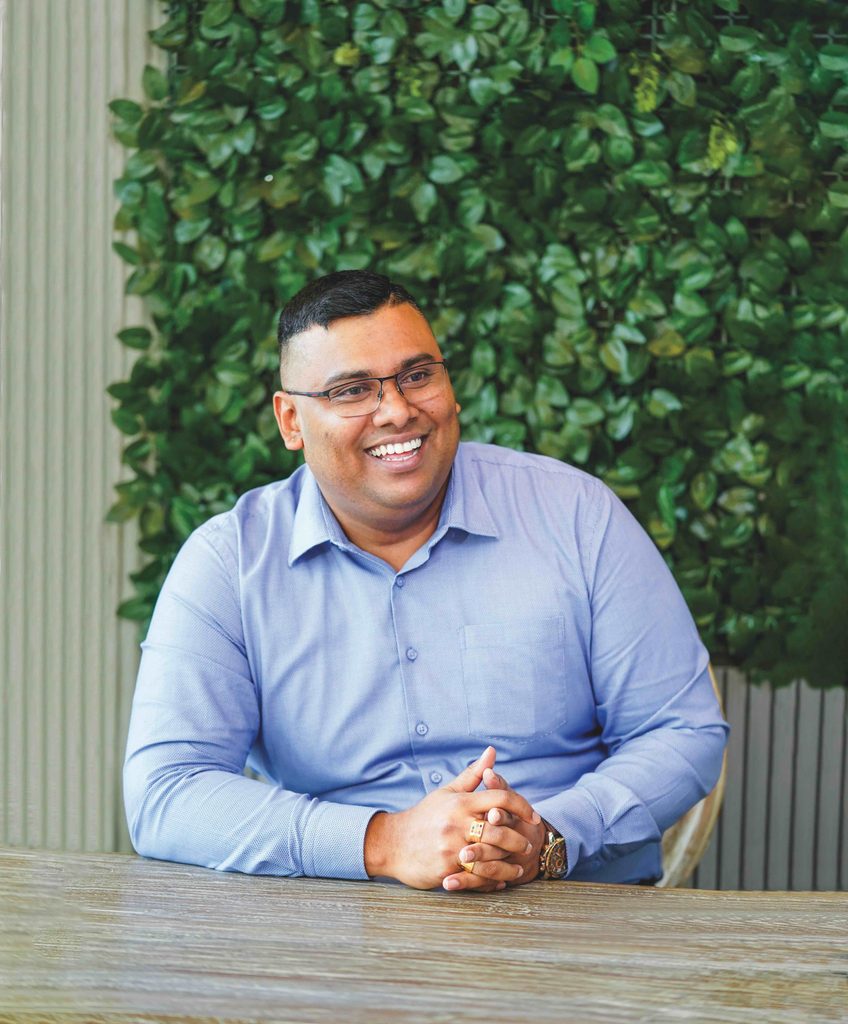
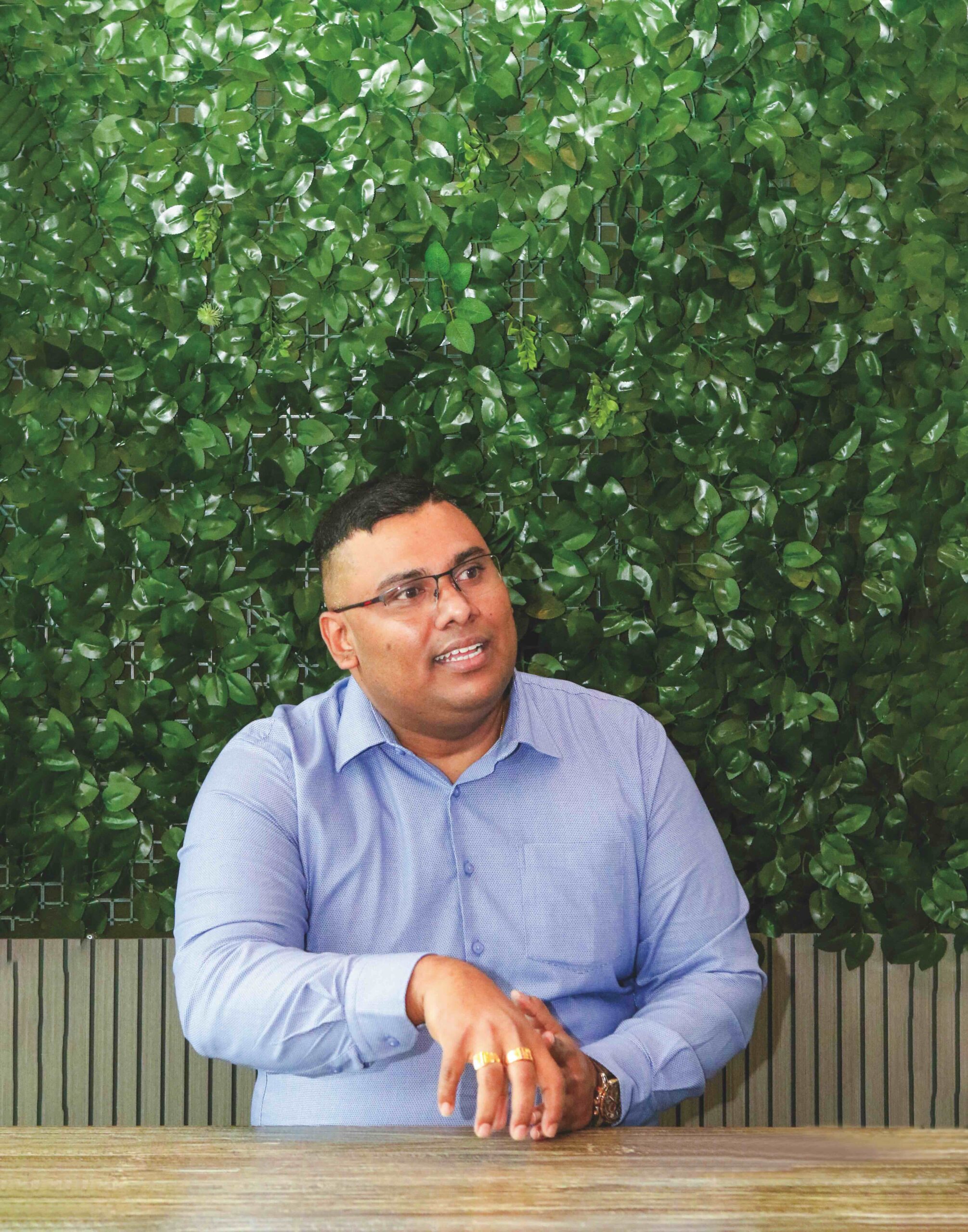
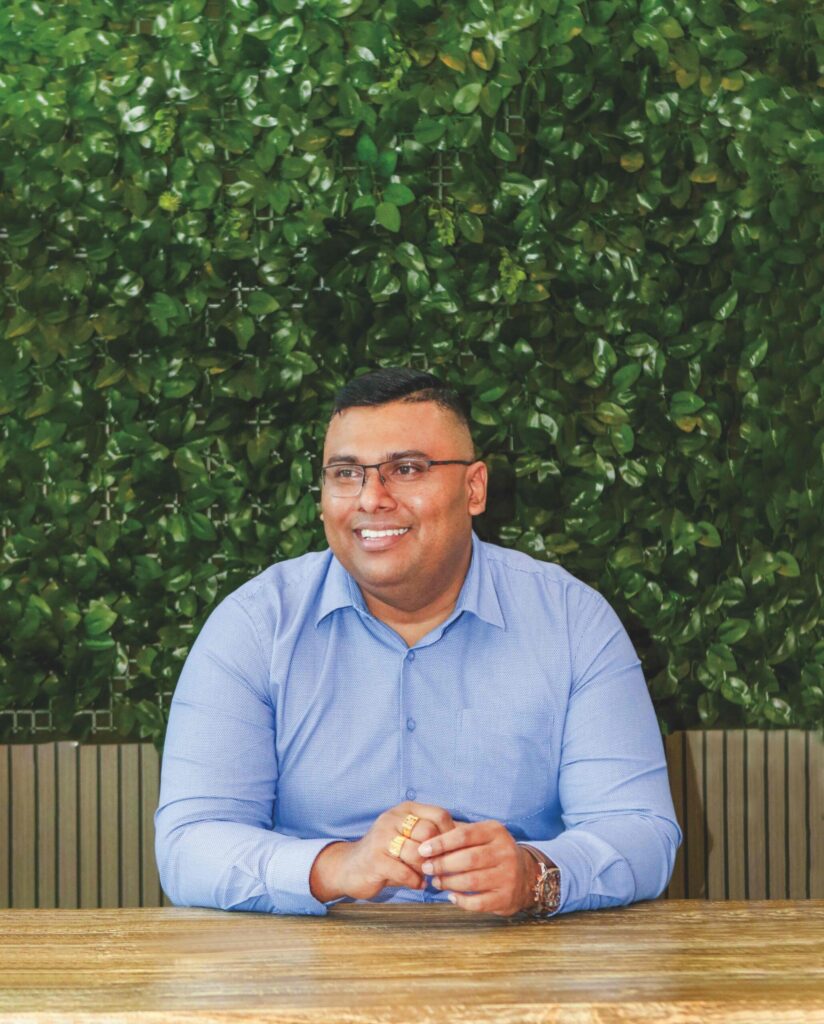
Ranil Gunasekara, Founder, Vito Wood Fired Pizza.
From its beginnings as a small pizza operation in Kandy, Vito Wood Fired Pizza has grown into a multi-outlet brand with a presence in Colombo, Negombo, Galle, and the City of Dreams. Founded by Ranil Gunasekara, who has a background in finance and hospitality. The business was developed by combining locally sourced ingredients, wood-fired preparation, and an emphasis on affordability. Its expansion has been shaped by a willingness to adapt.
Speaking with Business Today, Gunasekara discusses Vito’s evolution, the thinking behind its expansion strategy, the importance of its people, and the opportunities and challenges that lie ahead.
Words: Jennifer Paldano Goonewardane.
Photography: Rasanga Dissanayake and Dinesh Fernando.
Why pizza, and why wood-fired pizza? What made you believe that Sri Lankan consumers would embrace a product that was relatively unfamiliar to the mainstream market at the time?
It was certainly a challenging proposition. We initially focused on tourists because, at the time, I was operating a hotel on lease, and our Vito range of wood-fired pizzas was primarily offered to foreign guests. However, from 2017 onwards, a number of developments began to affect the tourism sector, most notably the 2019 Easter attacks. This had a significant impact on tourist arrivals and prompted us to rethink how we could take the business forward.
That was when we decided to introduce Vito pizza to the Sri Lankan market. We subsequently developed the brand specifically for local consumers, positioning it around the concept of wood-fired pizza. We also built our marketing strategy around Garfield, the much-loved cat who inspired the Vito name. Garfield became central to our promotional campaigns and helped us connect with a younger audience, particularly children, while making the product more familiar and approachable to Sri Lankan consumers.
You started Vito in Kandy rather than Colombo. Was that a deliberate business decision, and what did Kandy offer you that Colombo did not at that stage?
Vito’s beginnings in Kandy were largely due to the business environment in which I was already operating. My background is in accountancy, and I had worked in finance within the hospitality sector before establishing a management company to operate hotel properties that we had leased. Our model involved leasing buildings, converting them into hotels, and managing them primarily for the tourism market.
One of the properties we managed was Kandy City View, located on Saranankara Road near Kandy Lake. Its restaurant became the starting point for developing and introducing our pizza range. Saranankara Road is a popular area for tourists, with several established hotels in the vicinity, which provided us with a natural customer base and the impetus to experiment with a new food concept.
We initially served the pizzas during the evenings, primarily catering to tourists staying in the area. Therefore, starting Vito in Kandy was not so much a decision to choose Kandy over Colombo as a natural extension of the hospitality business we were already operating there. The presence of our hotel, the concentration of tourists, and the location itself provided the right environment for us to test and develop the concept before taking it further.
What experience in pizza making did you possess when you decided to venture into the business?
I did not come into the business with specialized experience in pizza making. My background is in finance within the hospitality industry, which gave me broad exposure to how different departments of a hotel operate. That experience eventually gave me the confidence to move beyond formal employment and establish my own hotel management business, leasing buildings, converting them into hotels, and managing them. Hotel management was therefore my first entrepreneurial venture, and it was the knowledge and experience I gained from that business that I brought to Vito.
When we first introduced pizza at one of our hotels, the restaurant served only breakfast and was underutilized during the rest of the day. We saw an opportunity to use the space in the evenings and brought in chefs to develop a range of pizzas for dinner. The response from tourists and customers in Kandy was positive, and at one point, the restaurant was ranked number one on TripAdvisor among nearly 300 restaurants and cafés in Kandy. That gave us the confidence to develop the concept further.
Our team has also been central to Vito’s growth. Several members of our original team, who joined in 2017, stood by the business through COVID-19 and later played an important role in our expansion from Kandy to Colombo.
Today, Vito is very much a team-driven business. Our Head Chef, F&B Manager, Operations Manager, Accountant, and other senior employees manage the day-to-day operations. Their experience and commitment have been essential to building and growing the business.
Vito began with a very small team. How has your role evolved from building the first restaurant to managing a growing multi-outlet business?
Our first outlet outside Kandy was at Independence Arcade in Colombo. Traditionally, restaurant brands expand from Colombo to other parts of the country, so bringing a brand from Kandy into Colombo created curiosity. We deliberately built our marketing around that story, and the response was strong from the first day.
The expansion also changed how I managed the business. Instead of creating a new management structure in Colombo, I promoted experienced members of our Kandy team and gave them greater responsibility. This became the foundation of our expansion strategy. I move on to a new outlet only when I am confident that the existing team can operate independently.
We followed the same approach as we expanded to Peradeniya, Negombo, Galle, and the City of Dreams. Today, our six outlets are managed by outlet managers and head chefs, with support from a Group Head Chef, F&B Manager, Group Accountant, and Operations Manager.
My role has therefore evolved from being directly involved in the day-to-day running of the first restaurant to building the people, systems, and processes that allow the business to operate effectively without my constant involvement. That has been essential to managing our growth.
Opening an outlet at City of Dreams was a significant decision in your expansion strategy, particularly given that the development was still establishing itself. What factors did you consider when deciding to enter this location?
City of Dreams was a development I wanted Vito to be part of from the outset. I had also considered One Galle Face, but felt it was already well served by food and beverage outlets. City of Dreams, by contrast, was still developing, with new components such as the cinemas expected to become operational in October. We were also approached by management about opening an outlet there.
When we first visited, we recognized that the Shops had not yet attracted significant daily footfall. While the hotel was performing well, the retail component was still building its customer base. We felt Vito could contribute by offering an accessible food option and giving people another reason to visit.
We also did not want to reposition Vito as a premium brand simply because we were entering the City of Dreams. The brand has always remained true to its Kandy roots, with affordability and accessibility at its core. Our objective is to make good pizza accessible to a broad customer base, and that philosophy continues to guide our marketing.
Our opening day at City of Dreams generated the longest queue we have experienced for a new outlet, supported by attractive opening offers. That response reinforced our belief that there was demand for an affordable food offering within the development.
You built Vito through several periods of disruption, including the Easter attacks, COVID-19, and Sri Lanka’s economic crisis. Which period tested the business most severely, and what did those experiences teach you about operating a hospitality business in Sri Lanka?
We started Vito in Kandy with a relatively small customer base, and we continued operating on that model even after the Easter attacks. COVID-19 was the most significant test because the country went into complete lockdown, and normal business activity came to a standstill. We responded by obtaining the necessary clearances to start delivering within a 20-kilometer radius of Kandy. At a time when people were confined to their homes and had limited food options, the decision proved effective. Our daily sales increased to around three times normal levels, and many customers who discovered Vito through delivery later became regular customers at our Kandy outlet.
I give much of the credit to my team, who encouraged us to take that step and were willing to continue working while following the required health protocols. Their initiative helped us turn a difficult period into an opportunity to build our customer base.
We faced further challenges during the Aragalaya and the fuel crisis, when we used motorcycles for deliveries, and, more recently, amid uncertainty caused by the conflict in the Middle East. We ensured our delivery teams had access to fuel so that we could continue operating even when customers were reluctant to travel.
These experiences taught me that resilience in hospitality is not simply about financial strength. It is about adapting quickly to changing circumstances, understanding customer needs, and having a team that is willing to find solutions during difficult periods.
How do you balance maintaining the brand’s quality and experience with the purchasing power of the Sri Lankan consumer?
When we started, we primarily catered to tourists, so we used several imported ingredients, including Italian cheeses and sauces. However, the import restrictions introduced during the economic crisis forced us to reconsider our approach. We had to identify local alternatives, and that ultimately proved beneficial for the business.
Today, we use 100 percent locally produced mozzarella. When we first made the transition, we deliberately continued serving pizzas made with local ingredients to foreign guests at our Kandy outlet. We wanted to assess whether there was any noticeable difference in quality and taste. The response was positive, and we received no complaints about the change. This gave us confidence that we could achieve the same result using locally sourced ingredients.
It has also helped us manage our costs. If imported ingredients become more expensive, we cannot simply pass the entire increase on to the customer by raising our prices. That would not be a sustainable business model. Today, less than ten percent of our ingredients are imported, which means that although Vito is an Italian pizza concept, it is largely built around locally sourced ingredients.
Consistency is equally important. We prepare our toppings at a central kitchen in Kandy and distribute them to our outlets. This allows us to maintain greater control over the preparation process and ensure consistency in taste and quality across the chain.
The wood-fired aspect of our pizzas also gives the brand a point of difference. There is already a familiarity with the flavor and appeal of wood-fired food in Sri Lanka, particularly through the traditional preference for wood-fired bread, so the concept is not entirely unfamiliar to local consumers.
At the same time, we have adapted some of our flavors to suit the Sri Lankan palate. Rather than keeping the menu exclusively Italian, we have introduced fusion elements and flavors local consumers are familiar with. The objective is to balance the character of an Italian pizza with flavors that Sri Lankan customers can relate to, without compromising the Vito brand’s identity.
What, in your view, is Vito’s real competitive advantage? Is it the product, the wood-fired experience, the locations, the price point, the service, or the brand itself?
We certainly operate in a competitive market, but we do not view the major pizza brands in Sri Lanka as direct competitors. Our approach is different, from the taste of our pizzas to the way we market the brand. Rather than competing by replicating what others do, our objective is to establish our own identity and customer base.
In fact, I believe the major pizza brands have helped us grow. They have played an important role in developing a pizza-eating culture in Sri Lanka and expanding the overall market. Each brand has its own customer base, although consumers may move between brands depending on their preferences and circumstances. We see that as an opportunity rather than a threat.
Our social media content is also designed to contribute to the broader pizza market. We show customers how pizza is made, what ingredients we use, and even how to enjoy it. The objective is to encourage more people to appreciate pizza. Whether they choose Vito or another brand is secondary; what matters is that we continue to expand the overall customer base and earn our share of it.
Our social media marketing is also deliberately local. We communicate with consumers in a language and tone that they are familiar with, using expressions such as “machang”, “aiyya”, “malli”, and “nangi”. This helps the brand feel more connected to Sri Lankan consumers rather than presenting itself as a foreign pizza concept.
What is the logic behind your choice of locations? Are you primarily following population density, customer footfall, tourism flows, lifestyle patterns, or a combination of these factors?
Kandy was where we started, and our subsequent expansion has largely been guided by population density, customer footfall, and the potential to build a sustainable customer base. When we moved into Colombo, we chose Arcade Independence Square because we saw it as a strategic hub. It is close to government offices, the BMICH, and several sports and recreational facilities, giving us access to a large and varied population.
The same thinking influenced our decision to open at City of Dreams. Colombo has a large population, and we believe there is an opportunity to attract customers from surrounding areas, including those who visit Galle Face Green. We expect that, over time, more people will have reasons to visit City of Dreams, and we want Vito to be part of that growth. However, that process cannot be rushed; it is about establishing the outlet and building customer traffic over time.
Negombo was probably the most challenging location we considered. We wanted to enter the market because Negombo has a strong association with pizza and a sizeable population with links to Europe. Many people from the area live or have lived in Europe and are familiar with different styles of pizza and European food culture.
That presented both an opportunity and a challenge. Customers who are familiar with authentic pizza are also more likely to recognize differences in taste and quality. If our product did not meet their expectations, we knew they would be direct in their feedback and would be unlikely to return. Therefore, we approached the Negombo expansion carefully, knowing that we had to establish the product on its own merits.
Galle presented a different opportunity. We had already found that some customers visiting our Kandy outlet while traveling to the Temple of the Tooth were from Galle and other parts of the country. Some of these customers would specifically ask us to open an outlet closer to where they lived. That existing familiarity with the brand gave us greater confidence in entering the market in Galle.
The wood-fired aspect of our pizzas also gives the brand a point of difference. There is already a familiarity with the flavor and appeal of wood-fired food in Sri Lanka, particularly through the traditional preference for wood-fired bread, so the concept is not entirely unfamiliar to local consumers.
How do you ensure that the pizza, service, and customer experience remain consistent across different outlets while allowing each location to retain its own character?
We have developed many of our senior employees internally, and I have placed several of them in charge of our outlets. Because they have grown with the organization, they understand what is expected of them and the standards we need to maintain. This has helped us achieve consistency in service and customer experience across our outlets.
Making wood-fired pizza is also a specialized skill with a significant technical component. When we started expanding, we could not simply hire experienced wood-fired pizza makers from outside. Instead, we developed our own people. Some employees initially joined us in support roles, such as working at the juice bar, but through working alongside our chefs and learning on the job, they gradually developed the skills required to make wood-fired pizza.
When we started, our order volumes were relatively small, which gave our chefs the opportunity to experiment and develop their technique. Much of our expertise was therefore built internally through experience. Over time, our teams have become highly proficient. Today, we can produce around eight pizzas in a wood-fired oven in ten minutes while maintaining consistency.
We also conduct specialized training programs and hold regular meetings to ensure our teams across outlets remain aligned with our standards and operating procedures. As the business has expanded, establishing these systems has become increasingly important.
Customer feedback is another important part of how I manage the business. I place considerable emphasis on reviews and comments on social media and other platforms. I work closely with a small management team, while a team of four manages and monitors our social media channels and customer feedback. If they identify a negative review or an issue that requires attention, they bring it to me immediately. In such cases, I engage directly with the relevant team members to understand what happened and address the issue.
Would franchising or partnerships ever form part of Vito’s expansion model, or is retaining direct operational control more important to the brand?
Since opening at City of Dreams, we have received several inquiries from companies interested in franchising and partnerships. However, for now, we prefer to retain direct control of our outlets in Sri Lanka.
We do not yet have sufficient evidence that franchising is the right model for Vito locally. A franchisee will naturally focus on returns, whereas we sometimes make decisions that may not be the most cost-efficient in the short term because we prioritize customer satisfaction and the brand’s long-term value. It is difficult to expect every franchisee to have the same commitment to those priorities.
Building a business requires time, sacrifice, and personal involvement, and I experienced that first-hand while building Vito. That level of commitment can be difficult to replicate in a franchise arrangement.
However, I recognize that our current model may not be sustainable if we want to expand significantly, particularly overseas. We will need greater capital, and financing foreign outlets through Sri Lankan bank loans would not be viable in the long term.
Therefore, while franchising is not our preferred model for Sri Lanka, it could become relevant for overseas expansion, where local regulations and operating conditions may make partnerships or franchising more practical. For now, we are comfortable retaining direct operational control of our Sri Lankan outlets.
How has your customer base evolved since you opened in 2017? What do today’s Vito customers expect that may have been different from what your original customers expected?
I still remember many of our customers from 2017, when the business was small, and I was personally working as the cashier. At that time, the relationship with customers was much more direct and personal. As we have expanded, my role has evolved, but my focus on the customer has remained the same.
What has changed most is the economic environment and its impact on consumers’ purchasing power. Sri Lanka has gone through several economic cycles since we started, and we have seen the effect on customers’ willingness and ability to spend. We have had customers, particularly younger ones, approach us personally and ask us not to raise our prices, saying they want to continue supporting the brand.
That is something we take seriously. We cannot increase prices simply because our costs have risen without considering the impact on our customers. We have to find ways to manage our costs and maintain affordability because purchasing power remains a concern for many Sri Lankan consumers.
At the same time, one expectation has remained consistent since 2017: customers want quality. They were conscious of the product’s quality when we started, and that has not changed. If anything, as we have grown, maintaining that consistency has become even more important because customers now have established expectations of what Vito should deliver.
Financial discipline has also been fundamental. Maintaining control over our finances has helped us develop a viable business model and ensure that the business remains sustainable as we grow. We have to make decisions with a clear understanding of what the business can afford rather than pursuing growth at any cost.
What, in your view, has been the key to Vito Pizza’s success?
I would say the team has been the most important factor. During the difficult periods we have faced, it was the team that supported me and helped the business navigate those challenges. The way they have interacted with customers and remained committed to the business has played a significant role in bringing Vito to where it is today.
My role as Managing Director is also to continue learning and acquiring knowledge, and then share that knowledge with the team. I believe a leader should not only manage the business but also create an environment in which people can learn and develop.
Financial discipline has also been fundamental. Maintaining control over our finances has helped us develop a viable business model and ensure that the business remains sustainable as we grow. We have to make decisions with a clear understanding of what the business can afford rather than pursuing growth at any cost.
I also believe in listening to young people. They bring diverse perspectives and are often more attuned to changing consumer behavior and emerging trends. We have a young promotions team that understands social media and current marketing trends very well. I learn from them, just as they learn from me. They understand how to communicate with today’s consumers and how to present the product in ways that connect with them.
You cannot rely on wood-fired pizza as the sole focus of the business indefinitely. Are you considering diversification, and if so, what areas are you exploring?
Yes. Any diversification we undertake is closely connected to the existing business. One area I have invested in is agriculture, specifically to supply certain inputs required by the pizza business. One of the challenges we face is the fluctuation in raw material prices. We cannot raise the price of our pizzas every time an input cost rises, so we have to look for ways to create greater stability in our supply chain.
That is why we have invested in growing some of the inputs we use. In the long term, I believe the business’s sustainability will depend in part on our ability to manage input costs and reduce our exposure to price fluctuations. Developing our own sources of supply gives us greater control over both availability and pricing.
In addition to Vito, I continue to operate several hotels in Kandy and a number of rental properties that were part of my business activities before Vito was established. However, Vito Pizza has become the business I am best known for.