
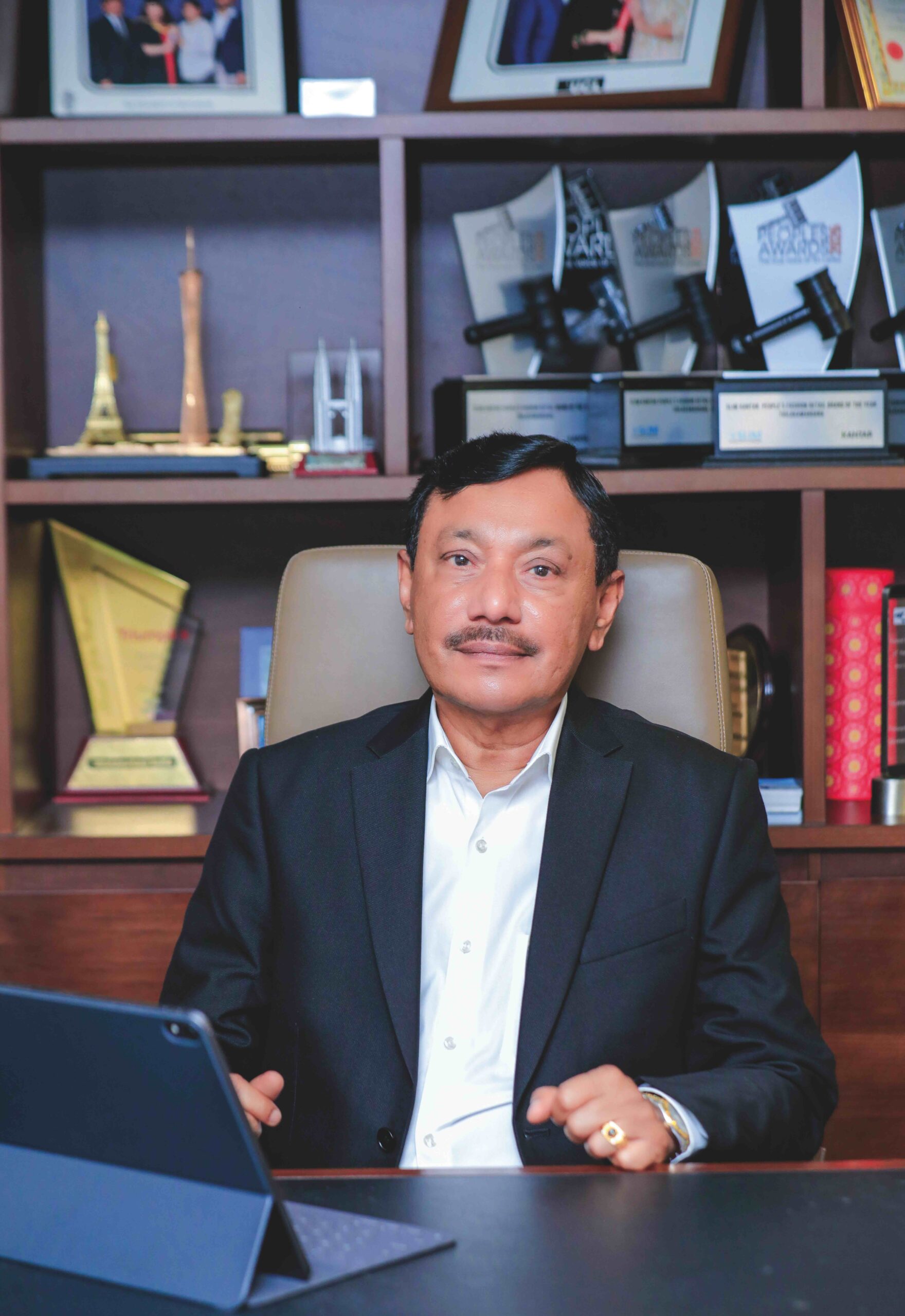
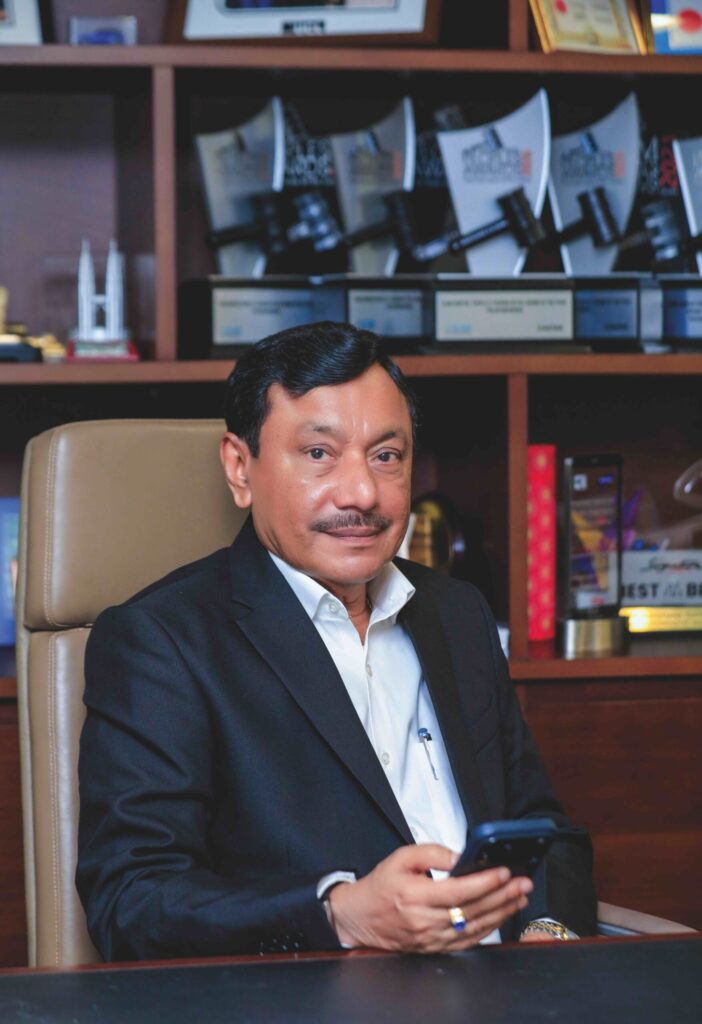
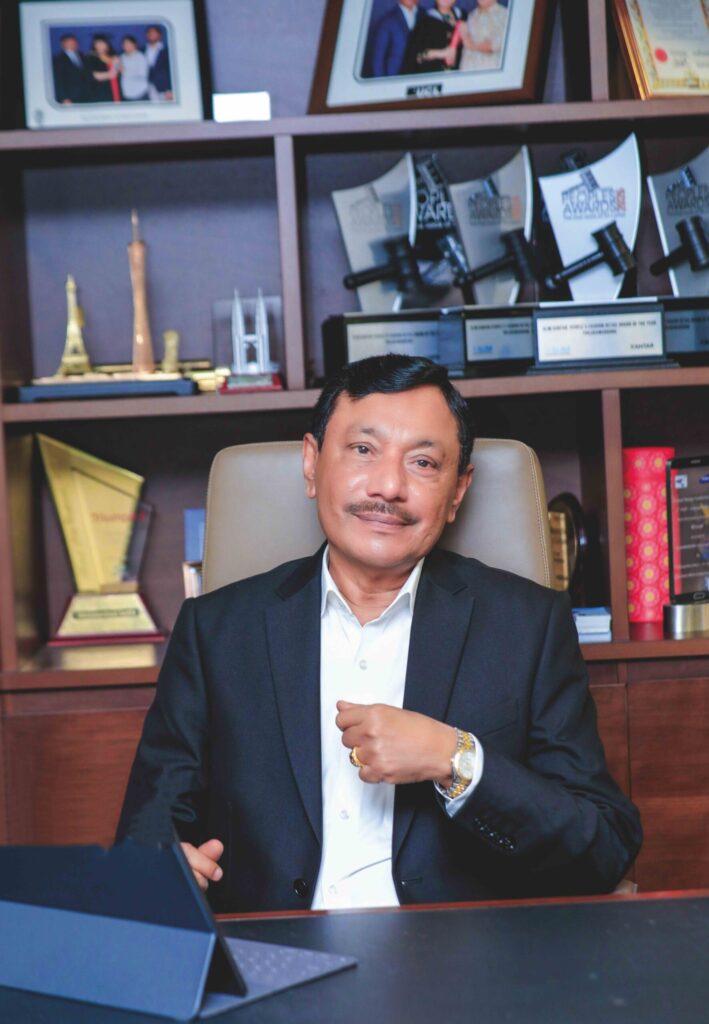
From a small retail clothing outlet in Kiribathgoda to building one of Sri Lanka’s most recognized retail networks, Sunil Thilakawardhana has a valuable story to share. As the founder of the Thilakawardhana Group of Companies, he spoke with Business Today to share insights on how the business was shaped by affordability, quality, and a deep understanding of local market dynamics.
Words: Jennifer Paldano Goonewardane.
When you started Thilakawardhana in 1986, what gap did you see in the Sri Lankan retail market that others had overlooked?
When I started Thilakawardhana in 1986, I saw a clear gap in Sri Lanka’s retail clothing sector—one that had been largely overlooked by existing players. Having spent six years in Singapore before returning, I could immediately recognize how underdeveloped the local market was. Retail clothing outlets in Sri Lanka were, by and large, very basic in their approach. Most shops functioned simply as textile vendors, with little attention paid to presentation or customer experience. Interiors were plain and functional, often just filled with rolls of fabric. There was minimal understanding of how store design or merchandising could influence customer engagement or drive sales. The focus was purely transactional: to sell fabric. Another significant gap I observed was in pricing strategy. Many merchants priced high-quality textiles at premium levels without considering the purchasing power of the broader population. Affordability was not factored into their approach. If a product was of good quality, it was simply priced high, and the assumption was that customers would pay. There was little attempt to balance quality with accessibility. I felt strongly that there was an opportunity to do things differently. My intention was to build a retail proposition that was more responsive to customer needs and economic realities. When I launched Thilakawardhana, we introduced a new retail culture—offering high-quality, imported apparel at affordable prices. Even our suppliers understood our philosophy: to provide value-driven products that aligned with the income levels of ordinary customers. Over time, customers began to recognize and respond to this approach. In the early years, however, the journey was not without challenges. There were moments when I questioned whether I should continue in business or seek employment abroad, given the limited purchasing power in the market, the small scale of the economy, and the difficulties of operating in such an environment. At times, I was also discouraged by operational challenges and the people I worked with. These were, I believe, the natural teething issues of a new venture. Despite these setbacks, I remained committed to the vision and persevered, growing Thilakawardhana Textiles into the Thilakawardhana Group of Companies.
Can you take us through how you established your first Thilakawardhana outlet and how it evolved in the early years?
I opened my first retail outlet in Kiribathgoda. It was a very modest beginning—just myself, my brother, and one sales assistant. As the business gradually expanded, one assistant was no longer sufficient, and we subsequently brought in another to support operations. From the very beginning, we focused on selling imported garments. At the time, there was a strong perception that imported apparel was beyond the reach of the average Sri Lankan consumer. However, we were determined to challenge that notion by offering quality imported clothing at affordable prices. Growth was steady rather than immediate. Customer numbers increased slowly but consistently, and it became evident that we had outgrown our initial premises. This led us to relocate several times to accommodate rising demand, eventually purchasing a larger site and constructing our own building. Initially, it was only a single-story structure, as our capital at the time was limited. Over time, the customer base continued to expand, and the business gained deeper acceptance within the community. While Thilakawardhana was not initially perceived as a prestigious name like some long-established family businesses, it gradually developed its own identity and credibility. Today, our Kiribathgoda showroom has become something of a landmark. The brand has grown into a trusted name that serves a wide range of customer needs. It has become deeply embedded in the community—so much so that people turn to Thilakawardhana not only for everyday clothing needs but also for essential requirements during important family occasions. Above all, what stands out is the trust the brand has earned over time, both within Kiribathgoda and beyond.
When you opened your first store in 1986, did you believe that it would succeed in a place like Kiribathgoda?
When I was preparing to launch my first store in 1986, I explored several possible locations, including Mount Lavinia and Kiribathgoda. However, I had a stronger inclination towards Kiribathgoda because I felt it offered a more suitable customer base for the kind of retail model I wanted to build. At that time, more urban and affluent consumers in places like Mount Lavinia often sourced their clothing and accessories from abroad or from established, upscale retail channels. There was less dependence on local neighborhood stores. Kiribathgoda, on the other hand, had a different character. It had a more community-oriented, semi-urban or “village-like” environment, where people were closely connected to their locality and tended to rely on local businesses for their everyday needs. I chose Kiribathgoda over even my own village of Matara, despite being offered free shop space by the owner of a store there. At the time, the retail landscape in Kiribathgoda was also very underdeveloped. There were very few dedicated textile or garment shops, and those that existed were informal and lacked structure or a clear value proposition. There was nothing distinctive that could truly attract or retain customers. I believed that if I could introduce a well-organized retail concept focused on quality and affordability, there was a strong opportunity for success. I saw Kiribathgoda as having greater commercial potential due to its dynamic, ever-changing population, which naturally generated ongoing demand for clothing and related goods. Despite moments of uncertainty and discouragement, I remained committed to building the business differently.
Would you say Thilakawardhana played a pioneering role in transforming the retail landscape in Kiribathgoda?
I believe many others in the market grew by observing the way we a beginning, our operations, expansion strategy, workforce management, and even our service and disciplinary standards have been closely watched. This is largely because we were able to elevate the business to a level that others found worthy of emulation. Over time, our practices set a benchmark in the local retail environment, influencing how others structured and developed their own operations.
Was the decision to expand and diversify beyond textiles into other categories a deliberate strategy from the beginning, or did it evolve organically?
Expansion was always part of our vision from the very beginning. Had we remained solely in the apparel business, I do not believe we would have achieved the level of growth and sustainability we enjoy today.
One of my greatest inspirations was the renowned Mustafa retail model in Singapore, where I worked before starting my own venture. When I founded Thilakawardhana, my ambition was to create a similar retail concept in Sri Lanka—a destination where customers could find virtually everything they needed under one roof.
With that objective in mind, we gradually diversified beyond textiles into categories such as mobile devices, electronics, home appliances, accessories, cosmetics, footwear, and many other consumer products. Our goal was to transform Thilakawardhana into a comprehensive one-stop shopping destination that offered convenience, value, and variety to customers.
Rather than serving a single need, we positioned ourselves as a retailer capable of meeting a wide spectrum of household and personal requirements, enhancing customer convenience and strengthening the relationship and trust we had built with the communities we served. The journey to build the business into what it is today has taken many years, but our aspiration to grow, diversify, and become a larger retail destination was present from the very beginning.
How has Thilakawardhana maintained high-quality standards while remaining affordable across such a diverse product portfolio?
Our business has always been guided by two core principles: quality and affordability. We firmly believe that customers should not have to compromise on quality simply because they are looking for value, and this philosophy has shaped our approach across every product category we offer.
Equally important to us is customer satisfaction. We stand behind the products we sell and are committed to ensuring that customers have a positive experience with our brand. In cases where a customer is genuinely dissatisfied with a product, we are prepared to offer refunds or appropriate remedies, as maintaining trust is far more important than any individual sale.
This customer-centric approach has been one of the key reasons for our longevity and growth. For us, the greatest measure of success is not simply sales or expansion, but the confidence and trust that customers continue to place in the Thilakawardhana brand.
In an increasingly competitive Sri Lankan retail landscape, how has Thilakawardhana remained relevant for several decades?
Our ability to remain relevant over several decades has been rooted in a deep understanding of our customers and their evolving preferences. Retail is ultimately about serving people, and it is essential to remain attuned to changing tastes, emerging trends, and consumer expectations.
Over the years, our experienced team—including many long-serving employees and purchasing specialists—has developed a strong understanding of what customers are looking for. Rather than focusing on what we want to sell, we focus on what our customers want to buy. This customer-driven approach has enabled us to continually adapt our product offerings to meet changing market demands. We have never been preoccupied with simply following our competitors. Instead, our focus has always been on staying true to our core philosophy: offering the right products at the right price while maintaining quality and value. By consistently aligning our merchandise with customer preferences and purchasing power, we have built enduring relationships with generations of shoppers.
Over the years, have the growth of Thilakawardhana and the development of Kiribathgoda become mutually reinforcing, with each contributing to the identity and visibility of the other?
I believe there is a strong association between Thilakawardhana and Kiribathgoda today. Over the years, many people have told me that when they think of Kiribathgoda, one of the first names that comes to mind is Thilakawardhana. In that sense, the brand and the town have become closely connected. As the business grew, it helped establish Kiribathgoda as a recognized retail destination, attracting customers not only from the immediate area but also from many parts of the country. The significant flow of visitors drawn to our stores has undoubtedly contributed to the town’s commercial activity and visibility.
At the same time, Kiribathgoda provided the foundation for our growth and success. The community embraced us from the beginning, and its strategic location and vibrant customer base enabled the business to flourish. I therefore see the relationship as mutually beneficial. Thilakawardhana has contributed to enhancing Kiribathgoda’s profile as a retail hub, while Kiribathgoda has played an integral role in shaping the identity and success of the Thilakawardhana brand.
Thilakawardhana’s expansion strategy appears to have been measured and selective rather than aggressive. What has driven this cautious approach to branch expansion?
While Thilakawardhana has grown significantly over the years, our approach to expansion has always been deliberate and carefully planned. Today, we operate branches in Kiribathgoda, Ja-Ela, Nittambuwa, Kurunegala, and Kandy, but our objective has never been to expand indiscriminately. When we began extending our footprint beyond Kiribathgoda, our strategy was to establish a presence in carefully selected locations rather than pursue rapid proliferation. We wanted each branch to serve a distinct market while maintaining adequate geographic separation to ensure operational effectiveness and avoid unnecessary overlap.
Over the years, many people have encouraged us to expand further and have suggested numerous locations for new branches. While such interest is encouraging, we believe that expansion for its own sake does not necessarily create long-term value. Uncontrolled growth can place considerable pressure on management, operational standards, and customer service quality.
Our philosophy has always been to grow sustainably. We prefer to establish and manage a well-planned network of stores within strategically chosen locations rather than pursue aggressive geographic expansion that may compromise efficiency or dilute the customer experience.
How do you ensure that a growing company does not lose the customer-centric culture that contributed to its success?
The foundation of any successful organization is its people. Employees are at the heart of service delivery, and maintaining a customer-centric culture begins with creating a motivated, engaged, and satisfied workforce. I firmly believe that only a happy workforce can consistently deliver the level of service that satisfies customers. As a business grows, it is important to ensure that employee well-being, development, and engagement remain priorities. Customer satisfaction cannot be sustained unless the people serving those customers feel valued and supported.
In many ways, our success has been built on the dedication and commitment of our employees. They are the face of the organization and the individuals who interact with customers daily. While the products we offer are important, customer loyalty is shaped just as much by the quality of the service experience.
Our sales teams, in particular, have played a pivotal role in building the trust and loyalty that the Thilakawardhana brand enjoys today. Customers return not only because of what we sell, but also because of how we treat them. Preserving that culture of service excellence has been essential to maintaining our customer-centric approach throughout our growth journey.
With every business facing setbacks at some point in its existence, can you share a period when the company had to navigate periods of uncertainty or challenges, and how you came out of it?
My philosophy has always been that while external circumstances may influence the business environment, they should not distract us from what we can directly control.
Whether the challenges stem from economic conditions, market disruptions, or broader national issues, our approach has been to focus on the business itself and determine how best to adapt and respond. There are many factors beyond any individual organization’s control, and spending excessive time dwelling on them does not create solutions.
Instead, we have concentrated on strengthening our operations, serving our customers, supporting our employees, and making the necessary adjustments to remain resilient. Adaptability has been a key factor in our success. Much like adjusting the sails to suit changing winds, businesses must be prepared to respond to evolving circumstances while remaining focused on their long-term objectives. By maintaining that mindset and focusing on areas within our control, we have successfully navigated challenges and continued to grow over the years.
What leadership philosophy has guided your approach to building and managing your workforce over the years?
I believe that effective leadership is built on respect rather than authority alone. A leader cannot simply issue instructions and expect lasting commitment from employees. While a leader may be strict when necessary, leadership based solely on authority often results in employees performing well only when they are being observed.
My philosophy has always been to create a sense of shared purpose. Employees should feel that they are part of a collective journey rather than operating within rigid hierarchical boundaries. When people feel genuinely valued and included, they naturally take ownership of their responsibilities and demonstrate leadership within their own roles.
Throughout my journey, I have tried to foster an environment where employees do not see a significant divide between management and staff. Instead, I want them to feel that we are working towards the same goals. When that culture exists, leadership becomes distributed throughout the organization rather than concentrated at the top.
Ultimately, my objective has been to cultivate a strong sense of ownership among our employees. I do not want them to see me simply as the leader of the organization; I want them to feel they are stakeholders in its success. I believe this sense of ownership has been one of the key factors behind the loyalty and commitment we have witnessed over the years.
While there may be practical limitations on career progression in certain areas of the business, we strive to compensate by creating a positive and supportive work environment. We place importance on employee well-being, fair remuneration, and meaningful benefits, ensuring that our people feel valued for their contribution to the organization’s success.
As retail increasingly moves online, how has Thilakawardhana transitioned into that space, and how do you see the relationship between physical stores and e-commerce evolving in Sri Lanka?
The retail landscape is evolving rapidly, particularly with the growth of digital technologies and changing consumer behavior. Recognizing this shift, I understood the importance of preparing the next generation of leaders to navigate this new marketplace.
With this in mind, my son and daughter pursued their higher education in the UK, where they gained valuable exposure to contemporary business practices and emerging retail trends.
Today, both are actively involved in the business, bringing their expertise to its continued growth and development. They represent a generation that has grown up in a very different environment from the one in which I started this business. There is a significant difference between my journey as an entrepreneur who built a business from the ground up and the perspective of my children who have received formal international education and training in a rapidly evolving business landscape.
I have great confidence that their knowledge, skills, and global exposure will help guide the business through the next phase of its growth and transformation. They are supported by a team of executives who form our management team and collectively drive the organization forward in a rapidly evolving landscape. Therefore, in response to your question, yes — as customer expectations continue to evolve, embracing digital channels is no longer optional; it is a natural and necessary progression for any modern retailer.
Accordingly, we have expanded our presence in digital marketing and online customer engagement, ensuring that the brand remains accessible and relevant to contemporary consumers. This aspect of the business is being led very effectively by my son, who has played an important role in strengthening our digital capabilities and positioning the company for the future.
I believe physical stores and digital platforms will complement rather than replace one another. Customers will continue to value the experience, convenience, and trust associated with physical retail, while digital channels will become increasingly important for engagement, communication, and accessibility.
Our ability to remain relevant over several decades has been rooted in a deep understanding of our customers and their evolving preferences. Retail is ultimately about serving people, and it is essential to remain attuned to changing tastes, emerging trends, and consumer expectations.
What personal values have guided your decisions throughout your business journey?
The values that have guided my business journey are deeply rooted in my personal beliefs and outlook on life. I draw considerable inspiration from Buddhist philosophy and its teachings.
While I have great respect for all religions and the values they promote, I have always sought to conduct my life and business in accordance with the principles I believe in. Those values have provided me with a strong moral compass and a framework for making decisions throughout my career.
Equally important has been maintaining a positive and balanced state of mind. I believe that sound judgment and effective decision-making stem from mental clarity, stability, and perspective.
Business inevitably presents challenges and uncertainties, and the ability to navigate them requires not only determination but also emotional resilience. I must also acknowledge the unwavering support of my spouse, whose contribution has been invaluable throughout this journey. By shouldering much of the responsibility of managing our family and home life, she created the stability and peace of mind that enabled me to devote my attention to building and growing the business.
Over the years, I have also come to believe that business success is not determined solely by education. Entrepreneurship requires qualities that extend beyond formal qualifications. It demands judgment, practical wisdom, discernment, and perseverance.
How do you view the role of social responsibility and community service in your journey?
I prefer not to think of these efforts as charity in the conventional sense. For me, helping those in need is a responsibility rather than an occasional act of generosity. When individuals or communities reach out for assistance, and we are in a position to help, I believe it is our duty to do so.
One project that is particularly meaningful to me was the development of a children’s ward at the Kiribathgoda Hospital.
Initially, I was approached to renovate the existing facility, which was a very small ward with limited capacity.
After assessing the need, I proposed constructing a separate building instead. As a result, we built a two-storey children’s ward equipped with 30 imported hospital beds, creating a significantly improved environment for patient care. We have also contributed to several religious and community projects, including the construction of the new relic chamber at Kelaniya Raja Maha Vihara. In addition, we regularly support community welfare initiatives, including organizing public Dansal and other outreach programs.
Whatever project we undertake, our objective is to ensure that the support creates a meaningful impact on the lives of those who benefit from it.
As Thilakawardhana transitions into its next phase of leadership, how do you balance continuity of the company’s founding values with the need for innovation and adaptation under the next generation?
I have communicated to my son my intention to gradually reduce my direct involvement in the day-to-day operations of the business, while remaining available to support him and the broader leadership team whenever needed. This transition is part of a natural evolution as the next generation assumes greater responsibility for guiding the organization forward.
My main advice to him has always been to remain closely attuned to customer needs. At the core of our business is a deep understanding of what the Sri Lankan customer wants, and our entire operating model is built around fulfilling those expectations with care and precision. A significant amount of effort goes into sourcing and importing merchandise from countries such as Thailand and China.
What matters most is not the volume or variety of products available globally, but the careful selection of items that are relevant to our customers locally. I believe it is essential that this customer-first culture continues to guide every decision within the organization.
Kiribathgoda provided the foundation for our growth and success. The community embraced us from the beginning, and its strategic location and vibrant customer base enabled the business to flourish.
What advice would you give to aspiring entrepreneurs beginning their journey in a highly competitive, uncertain business environment?
Perseverance and commitment are fundamental for success in any field. It is important for individuals to begin their journey with a clear sense of the bigger picture while maintaining focus, discipline, and dedication towards their long-term goals. Success rarely comes from a single attempt. One must be prepared to try repeatedly, learn from setbacks, and continue moving forward despite challenges.
My own journey is a testament to this approach—I am here today because I did not allow difficulties to deter me or divert my focus from the goals I had set. It is equally important not to fall into the mindset of believing that success is reserved for others or that it depends solely on luck. Such thinking can be limiting and counterproductive. Progress comes from effort, resilience, and a sustained belief in one’s ability to improve and succeed.
Who is Sunil Thilakawardhana?
A person who has contributed meaningfully to Sri Lanka, and particularly to Kiribathgoda. I am grateful for the respect I have earned from the people of Kiribathgoda through the work I have done in the area, and I take great satisfaction in that recognition.