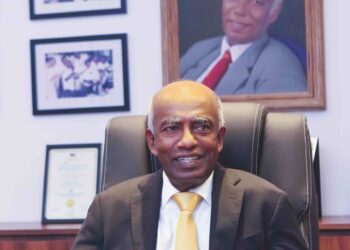

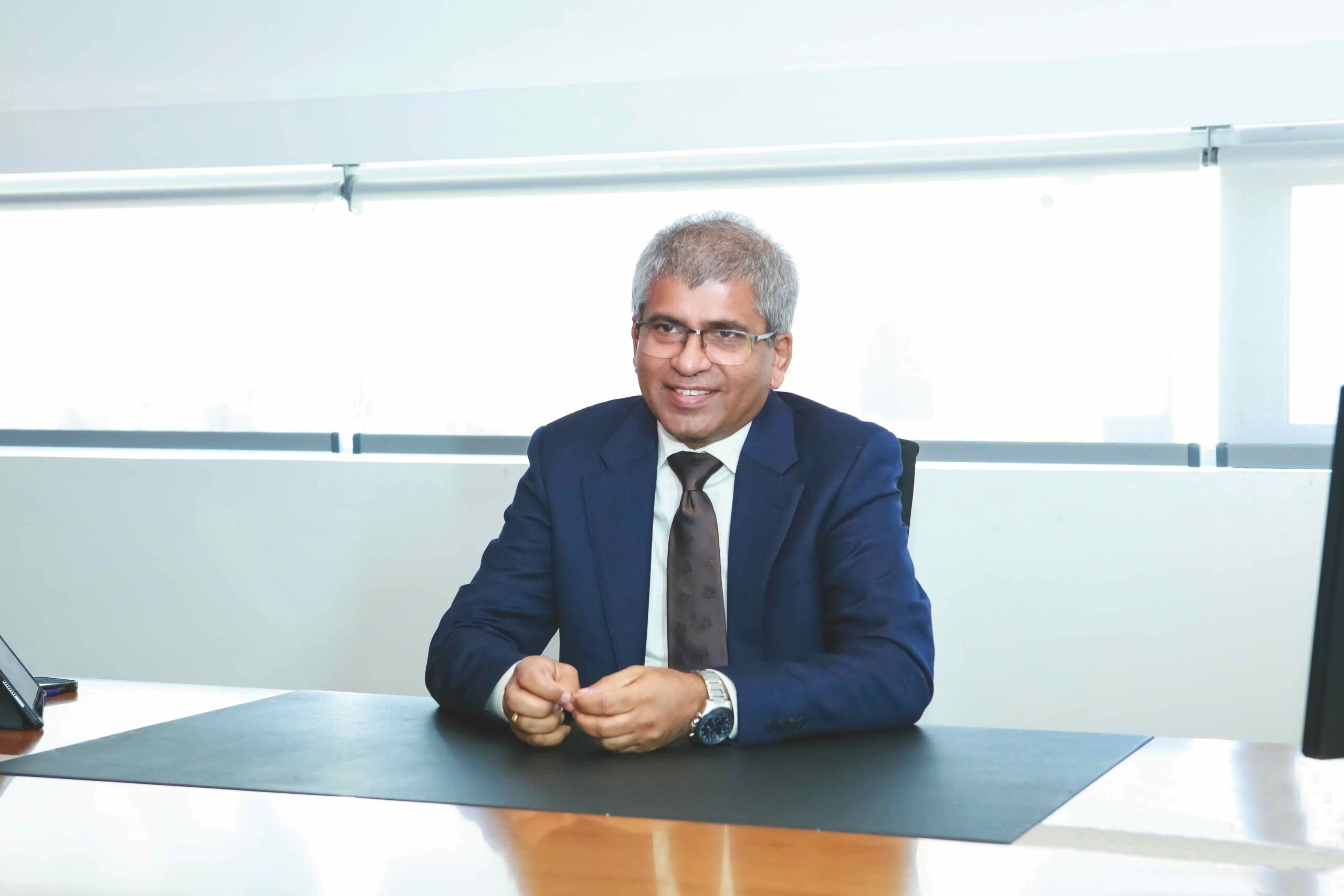
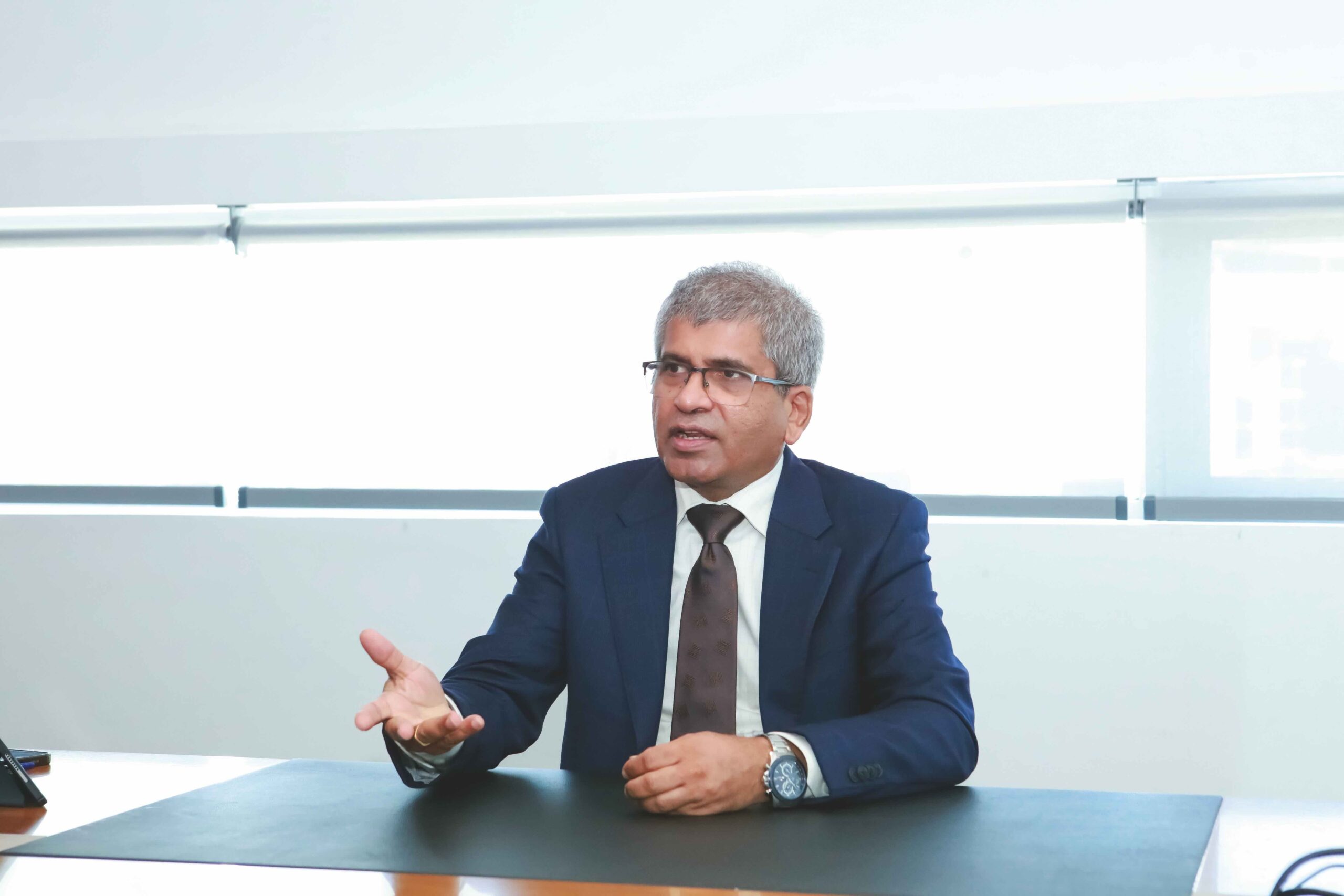
Empowering employees, fostering trust-based leadership, and enforcing strict credit discipline—especially in serving MSMEs and the informal sector—have been key to People’s Leasing and Finance’s sustained success. Speaking with Business Today, Sanjeewa Bandaranayake, CEO and General Manager, reflects on the company’s strong performance and the strategic thinking behind its recent growth. He credits a people-centric culture, wide regional reach, and strong governance as critical to delivering robust financial and growth results. Bandaranayake asserts that adaptability, regulatory consistency, and strong governance are essential for the sector’s long-term resilience.
Words: Jennifer Paldano Goonewardane.
Photography: Sujith Heenatigala and Dinesh Fernando.
People’s Leasing and Finance (PLC) recorded over 50 percent growth in loans and receivables in FY 2024/25. What were the key strategic levers that enabled this rapid expansion despite a still-recovering economy?
People’s Leasing and I have always believed that performance begins with people. As we approach our 30th year of operations, the company has built strong internal competencies, supported by a longstanding culture of rewarding and recognizing achievement. My role was to unlock that potential by creating the right environment for our teams to perform.
On taking leadership, I addressed performance barriers by focusing on empowerment based on individual capabilities. With teams in the right roles, greater autonomy and close oversight followed.
Having spent 18 years within the organization, I had a deep understanding of our talent base. This insight allowed me to make informed decisions about leadership, trust, and accountability across teams.
We encouraged open dialogue, especially when underperforming. Employees’ industry insights guided our strategy; the growth seen today comes from implementing their ideas. Cultivating motivation and value through trust, transparency, and performance has directly driven our growth trajectory.
Our main focus is investing in growth areas that deliver sustainable income, while maintaining prudent cost management. Equally important is our strong performance-oriented culture, which recognizes and rewards high performers, reinforcing a simple message…
With profitability remaining stable, with PAT at 3.6 billion rupees, despite rising operating costs, how did you balance growth with cost discipline?
Our largest expense is our people—but I do not view them as a cost; I see them as an asset. Their performance consistently outweighs the associated expense.
We emphasized income growth over narrow cost controls, believing in our people’s ability to generate revenue to cover increased costs while maintaining profitability.
FY 2024/25 was a year of deliberate investment in people. We focused on building capacity, empowering teams, and filling critical gaps with new talent. These strategic investments are now yielding results in the current financial year, enabling us not only to sustain growth but also to share its benefits with our employees.
In 2024/25, the Company achieved a significant reduction in non-performing loans. What were the most effective recovery and credit management strategies behind this turnaround?
For us, sound lending starts with the right people, but recovery and disciplined credit decisions at the outset are equally crucial.
We have invested heavily in training our teams to improve their credit assessment skills. As a non-bank financial institution, we often work with customers who do not qualify for traditional bank financing because we serve a relatively informal segment. In these situations, our deep regional knowledge and direct experience are vital for evaluating creditworthiness.
Our field teams drove lending and were measured by disbursements, credit quality, recovery, and loss metrics, ensuring strong accountability and embedding credit discipline at the point of lending.
Dedicated teams managed non-performing loans and arrears, engaging with customers to support repayment resumption. The drop in non-performing loans results from disciplined credit origination paired with structured recovery and collections.
What were the main drivers behind the 50 percent year-on-year rise in profits in the December 2025 quarter, which was supported by strong interest income growth?
Our main focus is investing in growth areas that deliver sustainable income, while maintaining prudent cost management.
Equally important is our strong performance-oriented culture, which recognizes and rewards high performers, reinforcing a simple message: if you take care of the company, the company will take care of you. Our investments in people are therefore tied to clear expectations around productivity and results.
We shifted performance expectations so surpassing 100 percent of targets became the standard, turning doubling performance into our aspirational goal without formal target raises. By rewarding top performers, we created healthy competition, boosting motivation and raising productivity across the company, driving profit growth.
With interest income reportedly growing by over 70 percent, which reflects higher lending volumes and yields, is this momentum sustainable over the next few quarters?
Sustaining high percentage growth is harder as the business expands, mainly because of the base effect. When starting from a smaller base, increases lead to higher percentage growth. For example, doubling from 100 to 200 yields 100 percent growth. As the base grows, similar increases produce lower percentage gains. This is normal and expected.
Though growth percentages may moderate as our base grows, our business momentum is strong and sustained by disciplined strategic execution. Annual plans set clear targets. Teams are encouraged and rewarded for exceeding them, supporting consistent growth. Ultimately, I have strong confidence in our people. Even in a challenging external environment, their capability and commitment position us well to sustain growth in absolute terms, even if percentage gains naturally taper over time.
How has the improving credit environment influenced customer behavior and repayment patterns in 2025?
Both a better credit environment and our targeted recovery efforts have improved repayment behaviors. Results come from a favorable external environment and our internal execution. Strong recovery efforts are crucial, but are most effective when supported by conducive economic conditions. Without that support, efforts can face limitations.
How is PLC positioning itself to support Sri Lanka’s MSME sector as a driver of economic recovery?
As a non-bank financial institution, People’s Leasing primarily serves the small and medium enterprise segment rather than large corporates. We also support parts of the informal sector—individuals who may not have access to traditional financing due to their risk profiles or lack of formal documentation.
Our 115+ branch network and local talent enable us to deeply connect with communities, personalize solutions, and build trusted client relationships. These relationships are particularly important when working with borrowers who may not operate within the formal financial system or maintain audited records. Our familiarity with clients, their businesses, and their income streams—often built through direct interaction and community insights—enables us to make informed lending decisions. Informal references and local knowledge play a significant role in assessing creditworthiness.
A major challenge in Sri Lanka is that many capable entrepreneurs lack access to financing. If financial inclusion is to be meaningful, mechanisms must be in place to bring these individuals into the formal economy. While informal lenders continue to fill this gap, it is not always in borrowers’ best interests. Our role is to bridge this divide by providing structured, regulated financing while leveraging our deep understanding of the informal sector.
There is often a perception that institutions like ours are overly stringent with such borrowers. In reality, our close relationships and local knowledge allow us to engage with them more constructively and support their transition into formal financial channels. Supporting MSMEs and micro-entrepreneurs has a broader economic impact. By distributing smaller loans across a wide base of borrowers, we enable entrepreneurship, create livelihoods, and reduce dependency on the state. For example, the capital extended to a single large borrower can instead be distributed among hundreds of smaller entrepreneurs, amplifying its social and economic impact.
To further strengthen this commitment, we established People’s Micro Commerce, a fully owned subsidiary focused on micro businesses and smaller-scale transactions that fall outside the traditional scope of People’s Leasing. Through this initiative, we are expanding access to finance and deepening our contribution to the MSME ecosystem—an essential driver of Sri Lanka’s economic recovery.
With total assets nearing 194 billion rupees and strong capital adequacy, how do you plan to optimize capital allocation going forward?
Stability is fundamental to the financial services industry, and strong capital adequacy is central to maintaining that stability. While regulatory benchmarks provide a baseline, we also uphold our own internal thresholds, recognizing the critical importance of financial strength and resilience.
Our capital allocation is guided by a clearly defined strategic plan that outlines our progression from our current position to targeted growth. This plan takes into account both macroeconomic conditions and our internal capacity.
Any decision to pursue growth—whether measured or more aggressive—is made within the context of maintaining a stable and well-capitalized organization. Without that foundation, aggressive expansion can be counterproductive. Therefore, our approach is to balance growth ambitions with disciplined capital management to ensure long-term sustainability.
You highlighted minimizing maturity mismatches as a priority. What steps are being taken to improve asset-liability management?
Maturity mismatch is a key challenge for non-bank financial institutions, particularly given our focus on longer-term lending to SMEs and the informal sector. To manage this effectively, we keep our lending structures simple and transparent—for example, offering fixed monthly repayments over a defined period, often with fixed interest rates.
This approach requires a corresponding discipline on the liability side. We place strong emphasis on aligning the maturity profiles of our funding with those of our assets. In some cases, we are willing to incur a slightly higher cost to secure funding that better matches the tenure of our loan portfolio.
Our funding strategy is therefore not driven solely by price. While cost is important, we also carefully evaluate how each funding source contributes to balance sheet stability. By appropriately blending short- and long-term funding, we ensure a more resilient asset-liability structure. This disciplined approach to funding and structuring has helped us strengthen our balance sheet, minimize maturity mismatches, and reduce overall risk exposure.
What specific sectors or products will drive the shift towards scaling green financing? What challenges do you face in expanding green lending in Sri Lanka’s current market context?
People’s Leasing is firmly committed to advancing green financing, in line with the Central Bank’s roadmap and evolving ESG frameworks. We have established a dedicated sustainable finance unit to drive this agenda and align our operations with emerging green taxonomies.
Key areas for scaling green lending include renewable energy—such as solar and wind—and electric mobility. However, expanding into these segments requires a shift in our traditional business model. As an NBFI, our core focus has been on financing income-generating assets, particularly commercial vehicles for entrepreneurs.
In contrast, much of the current electric and hybrid vehicle market is centered on private, consumption-driven use, which does not fully align with our mandate. This creates a structural challenge.
Our objective is to support MSMEs and small-scale entrepreneurs, and we cannot base lending decisions for commercial activity solely on whether an asset is green. For green financing to scale meaningfully within our model, there must be viable, income-generating green assets—particularly in the commercial vehicle segment.
The development of electric buses is a promising example. Given our strong presence in financing private buses, a transition toward electric fleets would present a natural opportunity. However, this shift depends on several enabling factors, including the availability of suitable vehicles, supportive infrastructure such as charging networks, and broader ecosystem readiness. Cost is another key constraint. Electric commercial vehicles, particularly buses, remain significantly more expensive than their diesel counterparts, raising concerns around affordability and adoption. Until these challenges—product availability, infrastructure, and cost—are addressed, scaling green lending in Sri Lanka will remain gradual.
People’s Leasing primarily serves the small and medium enterprise segment rather than large corporates. We also support parts of the informal sector—individuals who may not have access to traditional financing due to their risk profiles or lack of formal documentation.
FY 2024/25 placed strong emphasis on employee empowerment and engagement. How do you sustain this cultural momentum as the organization scales?
Culture is central to who we are as a company, especially as we approach 30 years of operations. Our key differentiator has always been the culture we have built—one that shapes how our people engage with customers, build relationships, and conduct themselves in every aspect of the business.
We strongly believe that people are our most valuable asset. If we take care of our employees, they in turn will take care of our customers and drive business growth. This belief is deeply embedded within the organization and is reinforced by consistent actions and behavior from leadership.
The message is simple: when the company performs well, employees are also recognized and rewarded. This alignment between organizational success and individual well-being helps sustain motivation and commitment across all levels. Employee care goes beyond compensation and incentives. It also includes accessibility and openness.
We maintain an open-door policy, ensuring that employees at all levels have access to management. Given the size of our workforce—around 3,000 employees—this direct engagement is particularly important. We also maintain ongoing dialogue with our teams to promptly address concerns and grievances. Where issues cannot be resolved at lower levels, I have encouraged employees to escalate them directly to me.
This sense of being heard, valued, and supported reinforces trust within the organization. As a result, employees remain motivated to perform, which in turn sustains the culture that continues to drive our growth and success.
You mentioned your extensive branch network. How do you ensure that your leadership style is consistently reflected across all branches? Given the importance of maintaining a unified culture, how do you make sure employees across the country feel the same direction, motivation, and support from leadership, and that this leadership approach is effectively cascaded throughout the organization?
That is one of the biggest challenges in a large, geographically dispersed organization.
People’s Leasing was originally built by Mr. D. P. Kumarage, who served as CEO and General Manager for nearly 20 years until 2017. Under his leadership, the company became the market leader for around 15 consecutive years. At that time, I was serving as a Deputy General Manager.
I used to tell my managers that I wanted a “Kumarage” in every branch. Of course, that is an aspiration rather than a literal expectation, because people are different and leadership styles cannot be replicated uniformly. However, that benchmark continues to guide my thinking on leadership standards across the network.
As the organization has expanded, ensuring consistency in culture and leadership has become more complex. To manage this, we rely on a structured regional framework. Our branch network is divided into 19 regions, and I closely work with regional managers and their leadership teams. I spend time communicating expectations around leadership behavior, particularly the importance of empathy and people management.
Leadership in our context cannot be a checklist exercise; it must be demonstrated by example. For that reason, I also maintain direct communication with branches and regularly take calls from branch teams to ensure our messaging effectively reaches the ground. We are also very firm about lapses in people management. While lending decisions can involve judgment and sometimes errors, any failure to treat people with respect is taken very seriously. We have made progress in embedding this culture across the network, though achieving it consistently at 100 percent is extremely difficult at scale. Nonetheless, it remains a personal priority and an ongoing challenge that I continue to focus on.
I used to tell my managers that I wanted a “Kumarage” in every branch. Of course, that is an aspiration rather than a literal expectation, because people are different and leadership styles cannot be replicated uniformly.
How do you assess the outlook for Sri Lanka’s non-bank financial sector over the next 12–24 months?
I am broadly positive about the outlook for Sri Lanka’s non-banking financial sector over the next 12 to 24 months. Challenges are not new to the country; over the past several decades, Sri Lanka has gone through multiple economic cycles, each of which has contributed to building a more resilient economy and a more adaptive population.
As a result, there is a strong ability to respond to and recover from periods of stress. Within the NBFI space, particularly given our exposure to informal and semi-formal segments of the economy, our key strength lies in the depth of our customer relationships. When difficulties arise, we can engage closely with clients, support them through temporary setbacks, and help ensure their businesses remain viable. This, in turn, allows them to continue their relationship with us and gradually recover.
In this sense, NBFIs play an important role in supporting small-scale entrepreneurs during uncertain periods. The next 12 months could present some challenges depending on developments in the external environment, particularly in terms of duration and intensity. However, unless there is a significant external shock, I remain confident that the sector’s underlying momentum will remain strong.
What regulatory or policy changes would most support sustainable growth in the finance industry?
I believe that what most strongly supports the industry is consistent regulation. Regulatory consistency is essential for effective long-term planning. We operate on five-year strategic horizons, and predictable regulatory frameworks are critical in enabling that planning. We also appreciate the regulator’s efforts to maintain stability in the industry.
Do you have adequate internal governance mechanisms and controls to ensure stability and prevent any compromises from within?
Internal controls are critical in the financial services industry. We ensure this through a structured governance framework focused entirely on the business, complemented by the regulator ’s robust oversight mechanisms for the sector.
At the core of an effective governance system, I believe, are independence and segregation of duties. While these concepts are closely related, they collectively ensure strong checks and balances across the organization. Different responsibilities must be assigned to different individuals so that no single point of influence can compromise the system. Without this separation, weaknesses can emerge, potentially affecting organizational stability.
In my management approach, once responsibilities are assigned, I avoid micromanaging or undue influence. We focus on selecting individuals with the right competence, technical expertise, and judgment, and then allow them the independence to execute their roles effectively. There is naturally an inherent tension between business objectives and governance requirements, but neither should be compromised for the other. Governance exists to safeguard the institution, and any compromise in this area can threaten long-term stability.
Both the Board and management take this responsibility very seriously, and as we continue to grow, we are continuously strengthening our governance framework.
In today’s increasingly digital operating environment, governance requirements have become more complex.
Addressing this requires professionals who understand the evolving ecosystem and are empowered to operate independently within it.
Like I said, independence, segregation of duties, and strong internal checks and balances are essential. As long as these principles are upheld without influence or shortcuts, we can continue to operate on a sound and transparent foundation.
For a company to remain successful, it must continuously understand what is happening in the external environment and adapt quickly. I often remind my teams that, while we have been successful over the past 30 years, what worked then will not necessarily work in the next 30. Continuous evolution is essential.
What would be your top strategic priorities for the next phase of growth amid volatile and dynamic global events?
For a company to remain successful, it must continuously understand what is happening in the external environment and adapt quickly. I often remind my teams that, while we have been successful over the past 30 years, what worked then will not necessarily work in the next 30. Continuous evolution is essential.
The external environment is constantly changing, and it is critical for leadership to recognize this dynamism and realign the organization accordingly, and do so quickly. Even when this need is understood, the ability or willingness to drive change can be a challenge, because change is inherently difficult—particularly for a successful organization. However, we are fully committed to adapting to change and responding swiftly when required, even in a short timeframe. I consistently emphasize this to my management team.
At the same time, change requires decisive action. Decisions can carry risk, but they must be taken with confidence, based on a clear understanding of the situation. Without timely and informed decision-making, organizations risk stagnation, which can ultimately be far more damaging.
In today’s environment, agility, adaptability, and the willingness to take informed decisions are essential to sustaining long-term success.