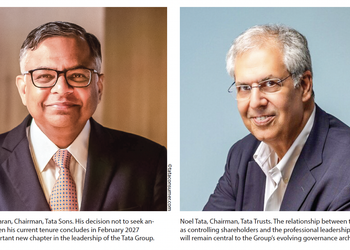

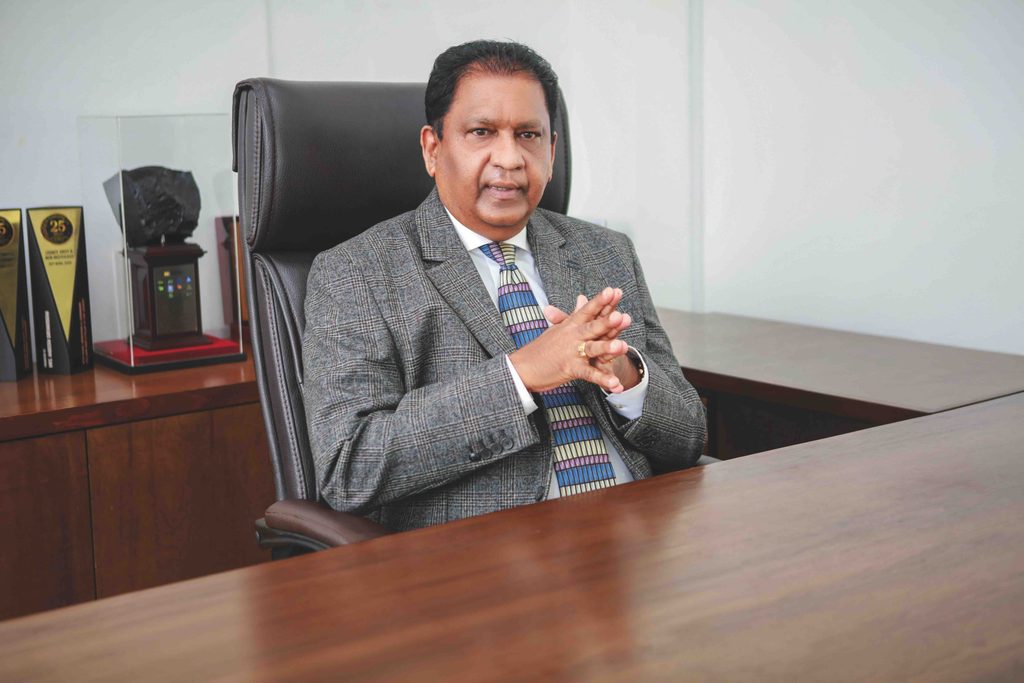
Ashoka Siriwardena, Chairman, Wardena Venture Holdings.
Ashoka Siriwardena, Chairman of Wardena Venture Holdings, has spent the past 25 years building businesses by identifying opportunities where others saw limitations. From establishing Bitumix in 2000 establishing Wardena Holdings with eleven vertical business entities his journey has been defined by diversification, product innovation, and a willingness to compete in sectors where the odds were not always in his favor.
Words: Jennifer Paldano Goonewardane.
Photography: Rasanga Dissanayake and Sujith Heenatigala.
What was the business opportunity you saw in processed bitumen when Bitumix was established in 2000?
The company was registered in 2000, and we built the factory and entered the market in 2001. At the time, there was only one company on the supply side of the bitumen market – my former employer, Lankem Ceylon, which was a Shell subsidiary.
I had worked there for about 14 years. After leaving Lankem, I spent around three years with two more corporates in Sri Lanka and three years overseas before returning to Sri Lanka and deciding to start my own business.
On the demand side, road construction and maintenance were active, and there was a steady requirement for bitumen despite the ongoing war. I saw an opportunity to meet that demand.
I had considerable industry knowledge, having worked in the business for many years, and a strong desire to become an entrepreneur. I knew I would be competing with an established player such as Lankem, particularly given its association with a multinational company. Nevertheless, I believed there was room for another supplier and decided to take the opportunity and build the business. My intention was to build a technically sound manufacturer of bitumen value-added products for the country.
What were the biggest barriers to building a manufacturing business in Sri Lanka at that time?
Funding was one of the main barriers. Setting up a manufacturing business requires significant capital for infrastructure, buildings, machinery, raw materials, and working capital. Securing that funding was a challenge.
Another challenge was obtaining the necessary approvals from the relevant authorities. This involved a number of statutory requirements, from the Grama Niladhari and Public Health Inspector to the Pradeshiya Sabha and the Central Environmental Authority. At the time, the approval process was not particularly smooth, making it more difficult to set up the business.
There was also the challenge of developing the right product, obtaining the required quality certifications, bringing it to market, and building customer acceptance. This was a specialized technical market, so establishing credibility and gaining acceptance took time.
Launching the business on my own and competing with an established company such as Lankem was another significant challenge. However, I approached each of these challenges carefully and worked through them step by step.
You have remained in a business that is closely connected to construction and infrastructure. How much of Bitumix’s growth has depended on the growth of the industry, and how much has come from creating new applications and markets for bitumen?
We built Bitumix around three principles: quality, customer service, and innovation. We have never compromised on quality because we see our role as serving an important national infrastructure requirement. Customer service was equally important. We worked closely with project and technical teams to understand their requirements and made reliable, on-time delivery a priority. In road construction, delays in receiving bitumen can hold up an entire project, so whether the requirement was in Mannar, Hambantota, or Trincomalee, we focused on providing on-time delivery.
Innovation was the third pillar. We continually evaluated how products could be improved and developed a broader portfolio beyond conventional refinery-grade bitumen, including emulsified, cutback, oxidized, and polymer-modified bitumen. We then moved beyond road construction into applications such as waterproofing and industrial uses, including the tire and solid-tire industries. This helped reduce our dependence on road construction alone. We also invested in technical education by conducting technical awareness sessions with universities and the Road Development Authority to promote better understanding and use of bitumen products. So, while infrastructure development created the underlying demand, our growth came from creating value through quality, service, innovation, product diversification, and technical knowledge. That helped us compete with a much larger established player and become a preferred supplier within three to four years.
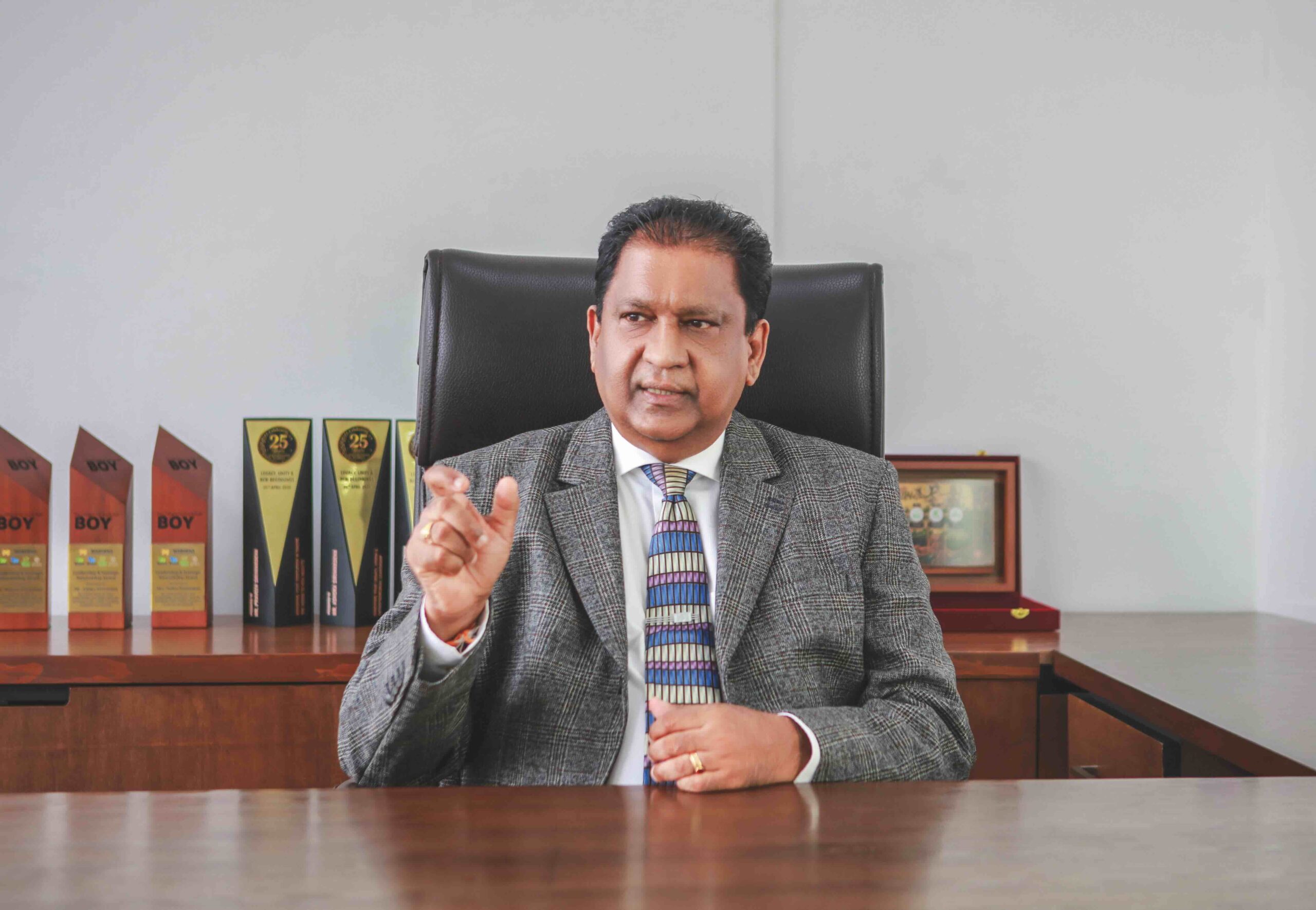
Bitumix describes technology leadership and product innovation as central to its strategy. Could you elaborate on that journey?
If you look at bitumen as a raw material, it is a by-product of the petroleum refining process. Crude oil is refined to remove volatile components, yielding fuel and other petroleum products. What remains is bitumen, which is produced at the refinery to specific quality standards and grades.
We use that bitumen as the starting point for developing value-added products. There are many potential applications beyond conventional road paving, and we have always sought opportunities to develop new products, particularly those that can replace imports or provide more effective solutions. For example, we look at how bitumen can be used as a coating, primer, sealant, protective material, waterproofing agent, or anticorrosive product. We study the chemical and physical properties of bitumen and identify applications where those properties can provide an advantage.
We have introduced a number of products that have replaced imports, and we continue to develop products for different sectors. Today, our portfolio covers road construction, general construction, and plantations. One example is a product we developed for the rubber plantation industry. It is used to protect the tapping panel of a rubber tree, allowing tapping to continue during rainy weather. This is particularly relevant in Sri Lanka because rubber-growing areas receive significant rainfall. The product allows the tapping panel to be covered and protected, and we are currently the only manufacturer of this product in Sri Lanka.
Innovation has therefore been an important part of our growth and has also provided resilience when conditions in our traditional markets have been difficult. There was a period, particularly after COVID-19 and the Aragalaya, when road construction activity and volumes declined significantly. During that period, our newer technology-based products for other sectors helped us sustain the business.
Your polymer-modified bitumen, for example, is designed for applications including heavy-traffic roads, airports, bridge decks, and other demanding environments. Does Sri Lanka have sufficient demand for such technically advanced products, or is the real opportunity increasingly in export markets?
At present, most of these products are developed for the local market. Exporting is challenging because bitumen itself is an imported raw material. Sri Lanka has no crude oil production, and our refinery is currently not operational, so importing bitumen, adding value, and then exporting can be difficult to make commercially viable. We have exported to India under SAFTA in the past, but there are logistical and cost considerations. However, I see significant potential in the local market as bitumen technology continues to evolve. Road construction, in particular, requires different bitumen grades depending on factors such as ambient temperature, terrain, and vehicle axle loads. A grade suitable for Hambantota, for example, may not be suitable for Nuwara Eliya. This is where polymer modification becomes important.
We identified this opportunity around 2013–14 and invested in developing awareness and technical expertise in Sri Lanka. We sponsored road construction professionals to study the technology overseas and brought an expert from the University of Wisconsin to conduct technical sessions for local engineers. We also supported the establishment of a quality-control laboratory at the Road Development Authority’s R&D division before importing the necessary machinery and beginning local production.
The market is still developing, but polymer-modified bitumen is increasingly being used in major infrastructure projects. We supplied the full requirements for the repaving of Hingurakgoda Airport’s runway, and there are opportunities in port infrastructure, viaducts, and flyovers.
Beyond road construction, modified bitumen can also be used in waterproofing, protective coatings, vehicle underbody coatings, and applications involving steel structures in marine environments. While exports remain a longer-term opportunity, our immediate focus is on developing specialized applications and expanding the use of modified bitumen in Sri Lanka.
Are you currently exploring opportunities in regions with potential for accelerated road construction?
Yes. This is an opportunity we have been exploring. If you look at the global bitumen market, much of the supply originates from the western regions, including the Middle East, Turkey, and Oman, while a significant share of consumption is in markets further east, such as Indonesia, Myanmar, Bangladesh, Vietnam, and China. Sri Lanka is positioned between these supply and demand centers, giving us an opportunity to develop a regional supply hub.
Our idea was to import bitumen in bulk shipments, store it in Hambantota, and then process and pack it into drums for distribution to regional markets. This would allow Sri Lanka to serve as a logistics and supply base for bitumen rather than relying solely on the domestic market.
We explored the opportunity, but establishing such an operation also requires working with various government authorities, and the process was not straightforward. As a result, we have not yet been able to establish the hub on the scale we had envisaged.
However, the potential remains. We are waiting for the right conditions and opportunity to move forward and position Sri Lanka as a regional hub for bitumen supply. Quality assurance would be central to such an operation. We already maintain international standards across procurement, production, and dispatch, and those standards would be equally important if we were supplying regional markets from Sri Lanka.
Bitumix emphasizes international standards and quality assurance throughout procurement, production, and dispatch. How important are quality standards, and how much does maintaining international standards add to the cost of doing business?
International standards are very important to us. In Sri Lanka, there is a strong emphasis on maintaining standards for raw materials used in road construction, and bitumen is no exception. We have to meet the required specifications, and there is very little room to compromise on quality.
In that sense, maintaining international standards does not necessarily entail high additional cost, as quality compliance is already an integral part of our operations. Some suppliers have attempted to introduce lower-quality bitumen, but the market has generally not accepted these products. The overall quality of bitumen used in Sri Lanka has therefore remained at a reasonable level.
We cannot reduce costs by compromising on product quality. If we are supplying bitumen for road construction, we must ensure it meets the required specifications.
The more immediate challenge today is the availability and sourcing of the raw material. The ongoing conflict in the Middle East has disrupted supplies from some of our traditional sources. For the past four to five months, supplies have been severely affected, creating a significant shortage of bitumen in Sri Lanka.
As a result, many road projects have been affected, including those at the Road Development Authority and at the provincial and municipal levels. Road maintenance activity has also been disrupted.
This situation has forced us to look at alternative sources, including markets connected to Russia and China. While sanctions and other restrictions must be considered, there are countries from which supplies can potentially be sourced.
However, there are commercial challenges as well. Suppliers in these markets often require large minimum order quantities. In some cases, the minimum order can be equivalent to two months of Sri Lanka’s total consumption, which means we have to commit to a substantial volume at one time. But the current situation has also created an opportunity to diversify our supply sources. Rather than relying heavily on traditional suppliers in the Middle East, we are now looking at a wider range of markets to ensure greater security of supply.
The key, however, is discipline. Entrepreneurs need to start with what they have, take calculated risks, and build their businesses systematically rather than using working capital for personal consumption.
Bitumen is heavily dependent on petroleum and international supply chains. How do fluctuations in crude prices, freight costs, and foreign exchange affect the economics of your business, and how much of that risk can actually be passed on to customers?
Because of this volatility, it is not practical to maintain a single price for an extended period. Prices can change even within a quarter, depending on movements in the international market and changes in logistics costs. Our customers understand this because they are familiar with the nature of petroleum-based products and the factors that influence their prices.
We therefore price our products based on prevailing international market conditions and the associated costs at the time of supply. This has become an accepted part of doing business in the sector, rather than a major difficulty for us.
Inventory management is also important in managing price risk. When we see periods of lower international prices, we may build up stocks, where feasible, to manage our costs and maintain supply when prices subsequently rise.
There is a limit to how much of these cost increases can be passed on to customers, so managing procurement and inventory effectively is important. Overall, however, the market understands that petroleum-based products are subject to price fluctuations, and this has not prevented us from continuing to operate and serve our customers.
What does the next phase of Bitumix look like? Is the focus on greater manufacturing capacity, specialized products, exports, new applications, or a combination of these?
If I look back at Bitumix’s 25-year journey, we started as a very small factory, using a combination of imported, auctioned, and refurbished equipment.
We gradually built our production capacity, quality-control systems, human resources, and technical capabilities. From the beginning, however, our ambition was to scale the business.
We also invested in technical knowledge and worked with universities and industry professionals, including supporting a specialized bitumen laboratory at the University of Moratuwa. Over time, we established ourselves as a reliable and technically capable supplier.
The next phase will focus on specialized products, new technologies, and exports. We want to bring new applications to Sri Lanka that can improve cost efficiency, quality, productivity, and safety, while developing specialized products for markets in Africa and countries such as Vietnam, Bangladesh, and Myanmar. Products such as further-modified polymer bitumen and our RainGuard sealant also have export potential.
We are also exploring a larger regional opportunity: partnering with an international player to import bitumen in bulk shipments, establish storage facilities at a port such as Hambantota, and distribute the product locally and to regional markets. This would require the right infrastructure and regulatory environment, so we are also looking at private-sector partnerships to take the business to the next level.
Bitumix and Wichy operate in completely different industries. What attracted you to the coconut business, and what did you see in the coconut that convinced you it could support a sophisticated export business rather than remain primarily a commodity?
When Bitumix became established, I began looking at diversification. Relying on a single product and market carries risks, so I wanted to enter a different sector while also adding value to Sri Lankan resources.
I was particularly interested in agricultural products such as tea, coconut, rubber, spices, and cinnamon, which have strong potential in international markets. Coconut stood out because Sri Lanka has favorable growing conditions and established processing capabilities. I saw an opportunity to move beyond the commodity market and develop value-added coconut products for export.
Around 2008–10, we began looking for businesses where we could apply this approach. That led us to Wichy, then a relatively small coconut-processing operation. We started with the Homagama facility and later expanded into Wariyapola.
Although I had limited knowledge of the coconut industry when we entered it, we applied the principles that had worked at Bitumix: quality, customer service, efficiency, and value addition. We strengthened procurement, logistics, quality management, and production while focusing on cost and productivity.
Over the past 15 years, Wichy has developed into a much larger operation with a broad portfolio of value-added coconut products. Technology and process improvement have been central to that growth, enabling us to compete in export markets rather than remain primarily a commodity producer.
The objective is to create a group that is less dependent on individuals and more driven by systems, professional management, and clearly defined performance targets. That provides us with a stronger platform for further diversification and growth.
Wichy positions itself as organic, natural, vegan, and gluten-free. How much of that positioning is driven by consumer demand in international markets, and how much is about deliberately moving Sri Lankan coconut products into higher-value categories?
Yes, consumer demand in international markets has been a major driver. Coconut has benefited from strong global demand, with the world market growing at an estimated compound annual growth rate of about 10 percent. We saw that as an opportunity to build a business focused entirely on export markets.
From the beginning, we positioned Wichy to serve different segments of the international market. This includes organic and conventional products, vegan products, specialized product categories, and different packaging formats to meet the requirements of individual markets and customers.
When we took over the business, it was exporting only about one or two containers a month. Today, that has grown to approximately 70 containers a month. Along the way, we have expanded our markets, product portfolio, and customer base, serving both retail and industrial customers.
At the same time, we deliberately focused on moving Sri Lankan coconut products into higher-value categories. To compete in those markets, you need the right certifications and systems. Wichy now has around 15 quality and related certifications covering areas such as the British Retail Consortium standards, organic certification, Fairtrade, and other requirements.
Today, our main export markets are the United States and Europe, while we also serve Australia, New Zealand, Japan, the Middle East, and several Asian markets. The objective has been to move beyond exporting coconut as a commodity and build products that meet the quality, certification, and consumer requirements of higher-value international markets.
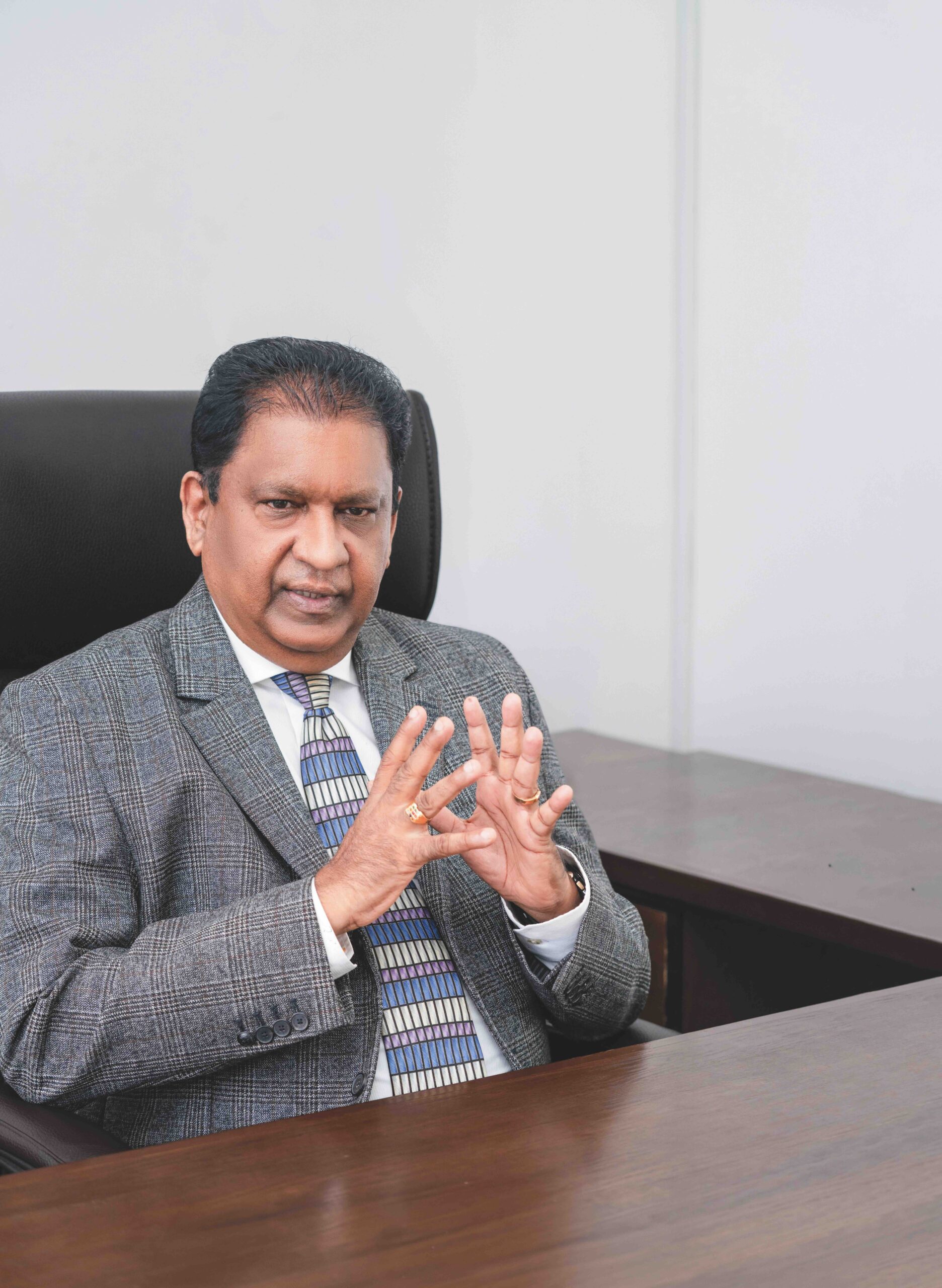
What are Wichy’s long-term ambitions?
Improving our product portfolio remains one of our priorities, and we have already taken a significant step in that direction over the past year with a major change in our packaging.
We introduced Recart packaging, which is a new packaging format for the coconut industry and, the first of its kind in Sri Lanka. We invested around two billion rupees in the technology. It was a significant commitment, particularly because we were introducing the format to the market for the first time, but we believed it represented the future of coconut product packaging. The investment is beginning to show results. In European markets, there is growing interest in moving away from traditional metal cans due to concerns about the materials used in can packaging and their potential impact on food safety. This is driving demand for alternative packaging formats, and Recart offers us an opportunity to respond to that shift.
Our other focus is international expansion. We want to use the Wichy brand, our manufacturing capabilities, and our existing relationships in overseas markets to expand beyond manufacturing and into international trading. This would involve sourcing products from other markets and distributing them into markets where we already have an established presence.
In a highly competitive global coconut-based product market, how does advanced packaging contribute to differentiation and premium positioning?
Recart offers us several advantages beyond meeting changing packaging requirements in the European market. There is a growing move in Europe away from traditional tin packaging towards alternative formats, and Recart allows us to respond to that shift.
The packaging also offers logistical advantages. Unlike the conventional round tin, the square Recart format allows more units to be packed into a container. This improves space utilization during transportation from Sri Lanka to overseas markets and can reduce freight costs.
There are also advantages at the retail level. Supermarkets can use shelf space more efficiently with square packs than with round tins, allowing more products to be displayed in the same space.
The format also offers a longer shelf life compared with traditional tin packaging. For the consumer, another advantage is convenience. The pack is easy to open and can be resealed after use, making it more practical for households.
While the packaging helps us differentiate the product and respond to market requirements, it also provides benefits across the supply chain – from transportation and retail to the end consumer. These factors contribute to the product’s positioning in higher-value market segments.
Wardena Venture Holdings operates across multiple sectors, from plantations and food manufacturing to engineering and construction solutions. How does this diversified group structure create strategic advantages and synergies that support the growth and innovation journey?
Over the past 15 years, we have progressively diversified the business. We started with Bitumix and Bitumix Exports and then expanded into areas such as Sri Lanka Roadkem, Megakem Lanka, and Megakem Engineering, which are involved in construction chemicals and related manufacturing. This allowed us to diversify within the broader construction chemicals sector.
On the other side of the business, we have Wichy Coconuts and Wichy Beverages, while Ecotrends focuses on value-added fiber products and has been operating for about four years. We also have Ayur Naturals, which produces lifestyle products such as cinnamon-based products, incense sticks, and mosquito repellents.
More recently, we have diversified into protected agriculture, including greenhouse cultivation, with plans to explore seed production in the future. Seed technology is a significant opportunity in Sri Lanka, and we see potential for further technical development in that area.
As the businesses expanded, it became necessary to change the way the group was managed. In the early years, the organization was very much person-driven, with many decisions ultimately depending on me. As the group grew, that was no longer sustainable. We needed to move from a person-driven model to a system-driven organization.
Succession planning was another important consideration. I have two sons who are qualified in chemical engineering and management, with postgraduate qualifications from the UK. They worked overseas as well as in local companies before joining the family business. I wanted them to gain experience outside the group, work with other organizations, and understand different management environments before coming into the company. That has now happened, and succession is being planned as part of the group’s broader organizational structure.
We have therefore focused on professionalizing management, bringing in experienced professionals, and improving efficiency and productivity. In a competitive environment, continuous improvement is essential, and it becomes increasingly difficult for the owner or founder to be involved in every operational decision as the organization grows. These changes were made during a difficult period, from COVID-19 and the Aragalaya to political changes, the economic downturn, and currency pressures. Despite those challenges, we established Wardena Venture Holdings as the group’s umbrella organization.
Today, the businesses are organized into two main clusters: construction chemicals and plantations. Each cluster has its own CEO and CFO, while the holding company has a central team responsible for overall group management. We also have a Group Executive Director.
My elder son serves as Group Managing Director, while my younger son is involved in strategic overseas sales and marketing for Wichy.
This structure has given us a more organized platform from which to manage the businesses and pursue the next phase of growth. We are now looking at partnerships, acquisitions, and mergers, as well as complementary businesses to our existing operations.
We have come through a difficult period in some of our core markets, particularly road construction, and are gradually seeing conditions improve. The current geopolitical situation has created additional challenges, but we expect the situation to stabilize.
With the group now being managed by a professional team, the focus is on measurable performance. Management is accountable for productivity, turnover, margins, profitability, and cash flow, while also focusing on improving financing arrangements and securing the best possible terms from lending institutions.
The objective is to create a group that is less dependent on individuals and more driven by systems, professional management, and clearly defined performance targets. That provides us with a stronger platform for further diversification and growth.
During this conversation, you highlighted how difficult the journey was, with many obstacles along the way. Despite that, you have grown into a diversified company. When you look at your success, what does it tell you about Sri Lanka’s large opportunity?
Sri Lanka has enormous potential for entrepreneurship. When I started Bitumix, I was told I was trying to compete with a multinational giant. I did not focus on competing with them; I focused on what we could do and on building a strong technical and commercial proposition. That approach worked, and I have maintained the same mindset in developing new products and businesses.
The entrepreneurial potential of Sri Lankans is evident across sectors. In the coconut industry, for example, people have progressed from collecting and selling coconuts to establishing mills and eventually becoming exporters. We have valuable agricultural products and natural resources, including graphite, gems, and minerals, as well as opportunities in IT and other sectors.
The key, however, is discipline. Entrepreneurs need to start with what they have, take calculated risks, and build their businesses systematically rather than using working capital for personal consumption. Access to finance can be difficult initially, but a business that demonstrates potential can build stronger relationships with financial institutions over time.
I believe the opportunity is there. What is required is the courage to take the risk, the discipline to manage the business properly, and the determination to build it step by step.