
Capital Metals is betting on Sri Lanka’s largely unexplored mineral sands by making a long-term commitment to this emerging sector, anchored by its Taprobane Minerals Project in the Eastern Province.
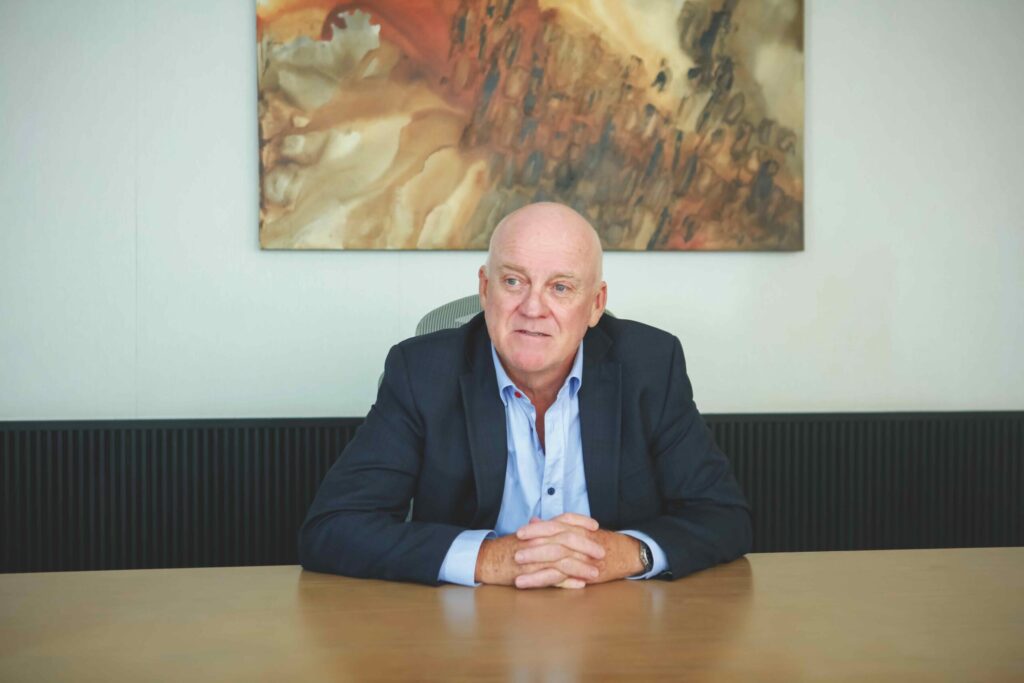
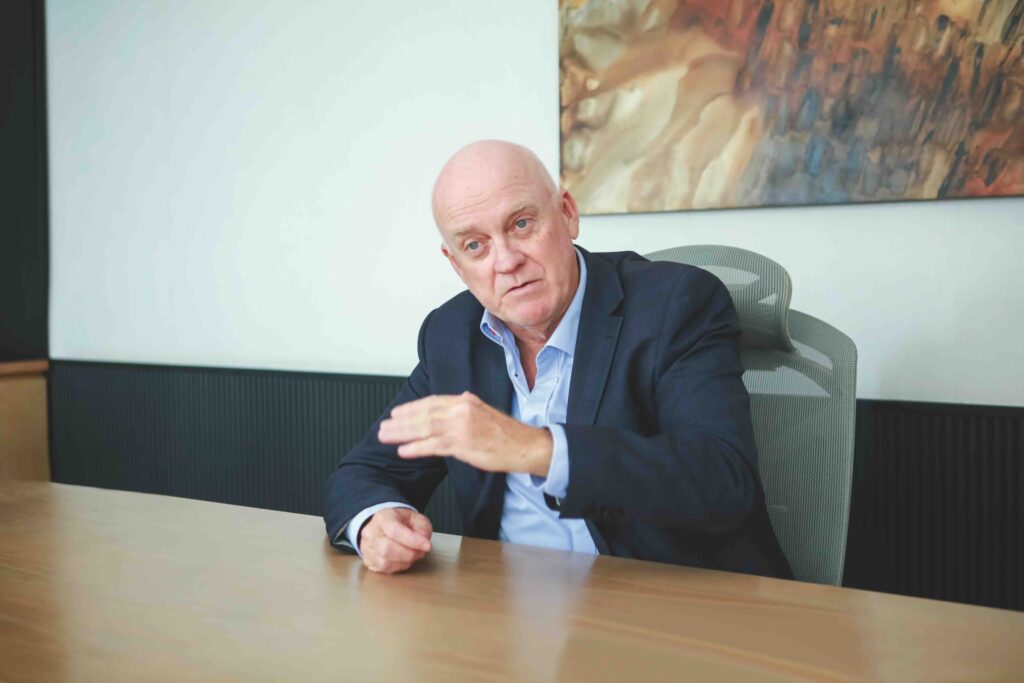
Speaking with Business Today, Chairman Gregory Martyr discusses the project’s development progress, regulatory and environmental challenges, and the broader potential of Sri Lanka’s mineral resources industry. Martyr also reflects on the importance of adopting global best practices, building local capacity, and creating a balanced framework for sustainable mining that delivers value to both investors and the country.
Words: Jennifer Paldano Goonewardane.
Photography: Sujith Heenatigala and Dinesh Fernando.
How would you describe the current stage of the Taprobane Minerals Project and its long-term commercial vision?
The Taprobane Minerals Project has been under development since 2010, and over the past decade, we have invested nearly 17 million dollars to advance what we believe to be a globally significant mineral sands deposit. Despite the economic and political challenges Sri Lanka has faced during this period, we have remained committed to the project due to its exceptional quality and long-term potential.
What makes the project particularly attractive is its grade. At approximately 18 percent, it is among the highest-grade mineral sands projects globally, compared with a world average of less than five percent. This gives the project a strong competitive advantage and underpins its commercial viability.
The deposit extends along approximately 60 kilometers of Sri Lanka’s eastern coastline southwards from Oluvil. Importantly, much of the project area is located in regions with relatively limited competing land uses, primarily agricultural activities such as coconut and groundnut cultivation.
We recognize the rapid growth of tourism in the Eastern Province and are committed to ensuring that any future mining activities are undertaken responsibly and in a manner that coexists with other forms of development.
From an operational perspective, we are ready to move forward. We currently employ around 30 personnel across our Colombo and site operations, including at our Thirukkovil office. We have already secured two mining licenses; however, additional licensed areas are required to support the scale of investment needed to commence production.
The total projected capital expenditure for the project is approximately 80 million dollars, with an initial development cost of around 25 million dollars. Before committing to that level of investment, it is essential to have sufficient licensed resources to support at least four years of continuous mining operations.
Accordingly, our immediate priority is securing an additional mining license that would provide the operational certainty required to proceed with development. We are also seeking greater clarity regarding Sri Lanka’s evolving policies on mineral value addition and export requirements. Once these regulatory matters are resolved, we believe the project will be well-positioned to attract significant foreign direct investment, generate export revenue, and contribute meaningfully to the country’s economic development.
How is Capital Metals working with stakeholders to support the development of Sri Lanka’s mineral sands industry?
Although Sri Lanka possesses an exceptional mineral endowment, particularly in mineral sands, graphite, and gemstones, unlike many established mining jurisdictions, the country does not yet have a mature mining industry. As a result, a learning process is underway as policymakers and regulators develop the frameworks needed to support responsible resource development.
Over the years, we have worked closely with government agencies, particularly the Geological Survey and Mines Bureau (GSMB), to help build an understanding of modern mining practices and the opportunities available to Sri Lanka. We appreciate policymakers’ and regulators’ willingness to engage with industry and recognize that developing a new sector requires careful planning and informed decision-making.
One of the initiatives we are particularly proud to support as a key sponsor is Sri Lanka’s first dedicated mineral sands conference. The event was developed by the Ceylon Chamber of Commerce in partnership with Mineral Technologies, a global leader in mineral sands processing and equipment solutions.
The conference brought together international experts covering the entire mining value chain, including exploration, metallurgy, mine planning, environmental management, rehabilitation, community engagement, and water monitoring. Importantly, the speakers participated because they recognized the potential of Sri Lanka’s mineral resources sector and the opportunities it presents.
The response to the event was extremely encouraging. With more than 200 participants from government institutions and industry stakeholders, the conference reached capacity well ahead of schedule. The Minister of Industries, Sunil Handunnetti, opened the event, underscoring the growing interest in responsibly developing the sector.
Do you think this conference was the start of a conversation that has not been opened much, of exposure, and awareness?
Absolutely. One of the most encouraging aspects of the event was that the international experts participating were doing so at their own expense. They were not compensated to attend or speak. Their willingness to invest their own time and resources reflects the opportunities they see in Sri Lanka and the potential they believe the sector holds.
The objective was simple: to provide a platform for stakeholders to listen, learn, and understand how successful mineral sands industries operate worldwide. There is a wealth of global experience available, and Sri Lanka can benefit greatly from adopting proven practices rather than attempting to create entirely new models. The opportunity is significant, and the country is well-positioned to capitalize on it.
At the same time, industry development should be approached in a measured and practical manner. It is important to build the sector progressively, establish successful operations, and foster trust between government institutions and industry participants. As confidence grows, the industry can expand sustainably and mutually beneficially.
Sri Lanka may be a relatively small country geographically, but it has the potential to become a significant producer of mineral sands on the global stage. Historically, however, several challenges have limited the sector’s growth.
Among the most significant have been uncertainty surrounding value-addition hurdles and inefficiencies within the regulatory approval process. Corruption has also been a longstanding concern within the sector.
One observation from other mining jurisdictions is that opportunities for undue influence tend to diminish once clear and transparent licensing frameworks are established. This is one reason an efficient, predictable licensing process is so important to the industry’s development. The current administration’s focus on improving governance and addressing corruption is, therefore, a positive development.
As a publicly listed company, we operate under strict corporate governance standards and have no interest in engaging in practices that compromise transparency or accountability. We are encouraged by the government’s efforts to create a more level playing field and believe this will help build investor confidence. Our own experience highlights the importance of these reforms.
During 2022 and 2023, we faced significant challenges that ultimately required legal action against a former minister. Following an appeal under the Mines and Minerals Act, we successfully had our licenses reinstated.
The journey has not been easy, and it has required considerable patience and perseverance. However, we remain committed because we believe the project’s long-term potential—and the opportunity it represents for Sri Lanka—makes the effort worthwhile.
What made Sri Lanka, specifically the eastern province, a strategically attractive location for mineral exploration compared to other global jurisdictions?
I have been involved in the resources industry for nearly 40 years, and competition for quality mineral assets has become increasingly intense. While Sri Lanka has long been recognized for its mineral potential, it has also been viewed as a challenging jurisdiction for project development. However, the quality of the resource made it a compelling opportunity.
Taprobane Minerals stands out because of its exceptionally high grade. Compared with similar mineral sands deposits globally, the resource is among the highest grade in the world, making Sri Lanka’s Eastern Province an attractive location for development.
The region also offered the opportunity to commence operations in a less densely populated area, where investment could create employment opportunities and support skills development within local communities. Like many mining projects worldwide, development has taken time.
Historically, the average period from discovery to production was around seven years. Today, that figure is closer to 15 years. The project was originally established by a local company in 2010, before Capital Metals acquired it in 2016. If we can commence construction this year and move into production next year, the project’s development timeline will be broadly in line with the current global average.
Our commitment to Sri Lanka remains strong. I visit the country every few months, while our Chief Operating Officer visits even more frequently. Other than the two of us Australians, who both have extensive international mining experience, every other employee is Sri Lankan.
Given the limited local mining industry experience, significant emphasis has been placed on training and skills development. We have invested heavily in building local capabilities and are extremely pleased with the strength and professionalism of our Sri Lankan team.
Given that mining projects often face a complex mix of regulatory, environmental, and community considerations, how has Capital Metals navigated the operating environment in Sri Lanka so far?
Community engagement and environmental responsibility have been central to our approach from the outset. In mining, securing a government license is only one part of the process. Equally important is earning the social license to operate by demonstrating to local communities that the project will be developed responsibly and in accordance with international standards.
We have invested significant effort in community engagement and education, particularly over the past three years since our licenses were reinstated. As Sri Lanka has limited experience with modern mineral sands mining, there is naturally some uncertainty about what such operations entail.
Our focus has been on providing information, addressing concerns, and demonstrating how modern mining projects are managed and rehabilitated. We have implemented a range of community initiatives and are establishing the first of many Coastal Regeneration Centers across the length of the Project, which will serve as both a nursery and an educational facility. The centers will be focused on collecting and propagating native plant species, supporting future rehabilitation efforts, and creating employment opportunities for local communities. Environmental management is another key priority. We work closely with leading ecologist Dr. Suranjan, whose expertise has helped strengthen our environmental planning and rehabilitation strategy.
Our approach is based on progressive rehabilitation, meaning that mined areas will be restored as operations advance rather than waiting until the end of the mine’s life. From an operational perspective, the project uses a relatively simple mineral sands processing method, where extracted sand is processed through gravity separation technology. The process does not require blasting or chemical treatment. Once the valuable minerals are separated, the remaining sand is returned to the mined area as part of the rehabilitation process.
What have been the key regulatory challenges in advancing the project, and have you seen any recent improvements in the approval process?
The regulatory process has been one of the more challenging aspects of developing the project. Approvals require engagement with multiple government agencies and stakeholders, including the GSMB, local authorities, district administrations, and environmental regulators. As a result, project developers must demonstrate to a wide range of stakeholders that operations will be conducted responsibly and in accordance with regulatory requirements.
However, we are now seeing greater willingness among policymakers to support the sector’s development and recognize its potential to contribute to employment, exports, and foreign investment. This represents a positive shift from previous years, when there was less clarity regarding the government’s commitment to developing the industry.
A significant development has been the transfer of the GSMB from the Ministry of Environment to the Ministry of Industries. While environmental oversight remains a critical component of the approval process, the move reflects a greater emphasis on balancing environmental responsibility with economic development and industry growth. Environmental compliance remains a key requirement. We completed an extensive Environmental Impact Assessment (EIA) for the northern section of our project between 2020 and 2022, involving consultations with local communities and other stakeholders.
We believe we are currently the only mineral sands developer in Sri Lanka with an approved EIA, and we are now finalizing approvals for the southern section of the project.
What do you see as the biggest untapped opportunities in the country’s mineral sector?
From our perspective, the greatest opportunities lie within the mineral sands sector. Given Sri Lanka’s size and resource distribution, we see considerable potential for consolidation and collaboration within the industry.
One opportunity would be the development of strategically located downstream processing facilities, potentially in areas such as Hambantota, Trincomalee, or the central region. Such facilities could process material from multiple projects, creating economies of scale and improving the sector’s overall competitiveness.
We have discussed this concept with the government and believe it warrants serious consideration. Beyond mineral sands, graphite represents another promising opportunity. Sri Lanka’s vein graphite is recognized for its exceptionally high grade and quality, with the potential to serve as an alternative to more costly synthetic graphite in certain applications. While the resource is highly attractive, the challenge remains in developing mining and processing operations at a scale that is commercially viable. We also see potential in strengthening and modernizing existing state-owned mineral assets.
Lanka Mineral Sands, for example, possesses a high-quality resource base, capable personnel, and established infrastructure. With the right partnerships and operating model, there is scope to improve performance and unlock greater value from the asset. Sri Lanka’s mineral sector presents opportunities not only through individual projects but also through industry-wide collaboration, shared infrastructure, and value-added processing. These are areas that could significantly enhance the country’s position as a competitive minerals producer.
What is the company’s broader global strategy—does Sri Lanka represent a flagship asset or part of a diversified portfolio approach?
Sri Lanka is a key focus of our strategy. At present, our sole asset is Taprobane Minerals, and our priority is to advance it into production. While we remain open to expanding our portfolio, any future opportunities we pursue are likely to be within Sri Lanka rather than in other jurisdictions.
A significant development for the company was the investment last year by Ambeon Capital and its co-investors, who collectively invested five million dollars and now hold around a 20 percent stake in the business.
We work closely with the team, which combines strong local market knowledge with international experience and networks. Ambeon Capital’s principals bring expertise from a range of professional backgrounds, including economics, law, property, government relations and investment. Their support provides both financial strength and strategic value as we continue to develop the project.
Importantly, they share our long-term view of Sri Lanka’s mining potential and see Capital Metals as a platform for future growth within the country’s mineral resources sector. Their backing positions us well as we move towards the next phase of development and explore additional opportunities in Sri Lanka over time.
If fully developed, what kind of export revenue potential could a project like this generate for Sri Lanka?
Based on the 2022 feasibility study, the project’s initial mine life was estimated at ten years. However, subsequent drilling has indicated that the resource potential is significantly larger than originally defined.
The initial resource estimate was based on shallow hand-auger drilling, which extended only to the water table, resulting in an official resource depth of an average of approximately 1.6 meters. In 2024, we undertook a more extensive reverse-circulation drilling program comprising 170 drill holes to test the deposit at greater depths and determine its full extent. The results confirmed additional mineralization and suggest the resource could support a substantially longer mine life.
While further drilling is required to fully define the deposit, our current view is that the project has the potential to operate for over 30 years, depending on the eventual scale of production. From an economic perspective, the initial ten-year mine plan is expected to generate more than 250 million dollars in royalties and taxes for Sri Lanka.
The project is also expected to create approximately 300 direct jobs and an estimated 1,500 indirect jobs through supporting industries and services. At full production, we estimate annual revenues could reach approximately 170 million dollars within the next four years, subject to project approvals and development timelines. Beyond the company’s share of earnings, the majority of the economic value generated would remain within Sri Lanka through capital expenditure, local employment, operating expenditure, taxes, royalties, and broader economic activity.
What role can Sri Lanka play in global mineral supply chains if projects like yours reach full-scale production?
Sri Lanka has the potential to become a meaningful participant in global mineral supply chains, particularly in mineral sands and graphite. However, achieving that potential will require a practical and commercially viable approach to value addition.
Historically, policies requiring investors to develop highly capital-intensive downstream facilities, such as pigment or slag plants, created significant barriers to investment. These operations require reliable infrastructure, specialized inputs, and substantial economies of scale. As a result, rather than encouraging it, such requirements prevented any development.
Our view is that value addition should be approached progressively. In mineral sands, value is added at every stage of processing. The first step is concentrating the heavy minerals from the sand, increasing the mineral content from approximately 18 percent in the natural deposit in our case to more than 90 percent in a mineral concentrate.
Subsequent processing separates individual products such as ilmenite, garnet, rutile, and zircon, each of which commands a higher market value.
Our plan is to undertake these processing stages in Sri Lanka before exporting the final mineral products. This would generate additional economic value, support skilled employment, and strengthen the country’s position within global supply chains.
Over time, as the industry expands and supporting infrastructure develops, there may be opportunities to move further downstream into higher-value processing. However, this must be driven by economic viability and market demand. The priority should be to establish a sustainable industry, generate export revenue, and build investor confidence.
Once that foundation is in place, the sector can gradually expand its value-added capabilities. If approached in this way, Sri Lanka can establish itself as a competitive supplier of high-quality mineral sands and graphite products while creating long-term benefits for the national economy.
Compared with similar mineral sands deposits globally, the resource is among the highest grade in the world, making Sri Lanka’s Eastern Province an attractive location for development.
With mining under increasing scrutiny for environmental impact, how is Capital Metals addressing ESG expectations in its Sri Lankan operations?
ESG compliance is not optional; it’s a fundamental requirement for both regulatory approval and securing the social license to operate. We do not believe that operating in an emerging mining jurisdiction allows for any reduction in standards.
On the contrary, the expectation is that projects are developed to international benchmarks from the outset. Without that commitment, neither government approval nor community acceptance is possible. There are well-established global precedents for responsible mineral sands development, and we are applying those standards in Sri Lanka.
Our approach is supported by ongoing engagement with specialist experts, including hydrogeologists, environmental consultants, and rehabilitation specialists, who will contribute to both project design and broader industry understanding.
The objective is to ensure that environmental management, rehabilitation, and community engagement are integrated into the project from the beginning, in line with accepted global practice.
What modern technologies or practices are you using to minimize the environmental footprint in mineral sands extraction?
The extraction process itself is relatively straightforward. Mining is conducted in cells or benches, with progressive rehabilitation carried out concurrently with operations. This approach ensures that land is restored continuously rather than left until the end of the mine life. The effectiveness of the model depends on execution—how systematically and transparently it is implemented.
Our approach is based on proactive self-monitoring and reporting, working hand in hand with external oversight.
At present, we are undertaking baseline studies covering both surface and groundwater conditions. This establishes a clear reference point against which any future environmental changes can be measured, ensuring full transparency and accountability throughout the life of the project. The process uses conventional, proven technology. It does not require chemical inputs or complex processing systems and is based on established mineral sands extraction methods widely used globally.
One opportunity would be the development of strategically located downstream processing facilities, potentially in areas such as Hambantota, Trincomalee, or the central region.
Do you believe environmental regulation is becoming a constraint on mining growth or an enabler of better long-term industry outcomes?
Environmental requirements continue to become more stringent as public awareness and expectations increase. This is a reality the industry must work with, and compliance is non-negotiable.
If regulatory demands become excessive, however, they can affect project economics and investment viability. We accept that strong environmental regulation is essential. It is not optional; it is a core requirement for operating a responsible mining project.
At the same time, regulatory processes can sometimes be influenced by differing agendas. In some cases, environmental frameworks are used to prevent mining activity altogether, while in others they reflect genuine efforts to ensure projects are developed responsibly.
As a result, developers must engage with a wide range of stakeholders and navigate a complex regulatory environment. The key is to balance environmental protection with practical, economically viable project development.
What factors give you confidence in the long-term investment stability of Sri Lanka despite global economic and political volatility?
Sri Lanka offers a degree of insulation from global volatility due to its geographic position and relatively contained market size, similar in some respects to Australia’s distance from major economic centers.
The country’s experience during the COVID-19 period and subsequent economic crisis underscored the importance of attracting foreign direct investment and strengthening governance frameworks, particularly in transparency and anti-corruption. There is now a clearer recognition of these priorities. The direction of travel is encouraging.
The electorate has signaled a desire for economic stability and improved governance, and there appears to be a renewed focus on creating an environment conducive to investment. While the country still faces structural and institutional challenges, there is a willingness to learn and adapt. That openness to reform is a positive foundation for longer-term investment stability.
Sri Lanka can establish itself as a competitive supplier of high-quality mineral sands and graphite products while creating long-term benefits for the national economy.
Do you think that Sri Lanka’s small size is an issue in really progressing in this direction?
The fact that Sri Lanka is a relatively small country is not, in itself, a constraint on developing a mining sector. There are often perceptions that scale may limit impact or increase risk, but these are not necessarily valid in practice.
The key considerations are whether the resource is viable and whether it can be extracted responsibly and economically. There are useful international comparisons.
Tasmania, for example, is similar in size to Sri Lanka and has a population of around 650,000, compared to Sri Lanka’s 22 million. Despite its scale, Tasmania has a well-established mining industry, including mineral sands and other commodities such as lead and zinc, and it contributes meaningfully to the regional economy. Sri Lanka is unlikely to become a major global mining hub, but it does not need to be.
A well-developed mineral sector can still make a significant contribution to national income, employment, and exports. Our presence in the country is based on the view that the project is economically viable. If it were not, we would not be investing. While global supply chains evolve and new producers emerge, Sri Lanka retains the potential to play a meaningful role in specific commodities, particularly mineral sands.
Our presence in the country is based on the view that the project is economically viable. While global supply chains evolve and new producers emerge, Sri Lanka retains the potential to play a meaningful role in specific commodities, particularly mineral sands.
What do you see as the main reasons behind regulatory and institutional caution toward mining projects in Sri Lanka?
The primary factor is limited exposure to modern mining as an established industry in Sri Lanka. Because larger-scale mining has not historically been part of the country’s industrial base, there is limited practical experience of how contemporary operations are conducted or how environmental and social safeguards are implemented.
As a result, perceptions are often shaped by general concerns or outdated examples rather than current industry practice. This creates a natural degree of caution among stakeholders, which is understandable. In the absence of direct experience, concerns can gain traction, and negative perceptions can dominate the discussion.
Is Sri Lanka already lagging behind in the global mineral exploration and extraction industry?
Sri Lanka is, by its own admission, behind in the global mining cycle. Mining has not developed as it might have under different historical and policy conditions. However, there is clear potential to catch up. The Minerals Sands Technical Conference was part of a broader effort to support knowledge transfer and reduce uncertainty around the sector.
Education and exposure are key to addressing the current gap in understanding and building confidence in how modern mining operates. There is also growing policy recognition of the need to develop the sector.
Recent statements from government stakeholders indicate a willingness to move forward, which is a positive signal. However, there remain areas where proposed approaches differ from international practice.
One example is the suggestion that the GSMB would lead exploration and subsequently offer areas for private sector bidding. In global mining jurisdictions, exploration is typically driven by the private sector, which brings both capital and technical capability. Government agencies generally play a regulatory and oversight role rather than acting as primary explorers, due to the high cost and technical requirements involved.
A more effective approach would be collaboration between government and industry, allowing each to contribute its strengths. Policy development is a gradual process, and it is important that frameworks are informed by industry experience to avoid unintended consequences that could delay sector development.
Our presence in the country is based on the view that the project is economically viable. While global supply chains evolve and new producers emerge, Sri Lanka retains the potential to play a meaningful role in specific commodities, particularly mineral sands.
Since you’ve overcome many hurdles in the past but continue to operate in the hope of finally extracting minerals, what’s your advice to investors considering entering Sri Lanka and to decision-makers here?
The key message for both investors and policymakers is the importance of learning from established international models rather than developing entirely new approaches in an emerging industry.
In sectors that are still developing locally, such as mining in Sri Lanka, there is limited historical experience to draw upon.
In such cases, it is more effective to adopt proven practices from jurisdictions where the industry is well established and adapt them to local conditions where appropriate. Sri Lanka already has strong international relationships, including with Australia, which has a highly developed and responsibly regulated mining sector.
The emphasis should be on applying globally accepted environmental and operational standards rather than reinventing frameworks without sufficient industry experience. For investors, patience is essential. These are long-term projects that require time to navigate regulatory processes, build relationships, and reach production. However, the long-term potential is significant for those willing to commit to the sector.
For decision-makers, the priority should be collaboration with industry participants to ensure that policy frameworks are practical, competitive, and aligned with international best practice. Constructive engagement between the government and experienced operators will be critical to unlocking the sector’s full potential.
How would you evaluate the availability of local expertise in this field, and how do you intend to collaborate with specialists going forward?
Mineral sands mining is a relatively straightforward process, and we are confident in our ability to develop local capability. With the support of our COO, Stuart Forrester, and other technical advisors, we have focused on training and building a skilled local workforce.
More complex mining operations, such as underground mining or projects requiring advanced metallurgical processing and chemical inputs, typically require a higher level of specialist international expertise.
In such cases, external technical partners can be brought in to support project design, training, and operational development. Companies such as Mineral Technologies play an important role in transferring knowledge and supporting local teams. Sri Lanka has strong underlying human capital, and we have found local teams to be capable and adaptable. While some skilled professionals have moved overseas, there is also a growing trend of expertise returning to the country.
As a London-listed company with a primary focus on Sri Lanka, we see ourselves as an informal ambassador for the country’s investment potential. We work closely with Sri Lanka’s High Commission in the UK, which has been supportive in facilitating engagement and promoting the project internationally.
From an operational perspective, Sri Lanka is also highly attractive to work in, with strong hospitality, a welcoming environment, and a well-established tourism sector. This contributes positively to both recruitment and long-term engagement in the country.
The focus is on operating the project to deliver value to both the company and Sri Lanka, including royalties, employment, and broader economic benefits, while maintaining strong engagement with local communities.
Where do you see Capital Metals and Taprobane Minerals in the next five to ten years?
The primary objective and immediate priority is to bring Taprobane Minerals into production.
Beyond that, the focus is on operating the project to deliver value to both the company and Sri Lanka, including royalties, employment, and broader economic benefits, while maintaining strong engagement with local communities.
Over time, there may be opportunities to expand into additional projects, with a continued focus on Sri Lanka as the core jurisdiction. Any future geographic expansion would depend on scale, capability, and shareholder support, but at present, the priority is to successfully develop and operate the existing project.