
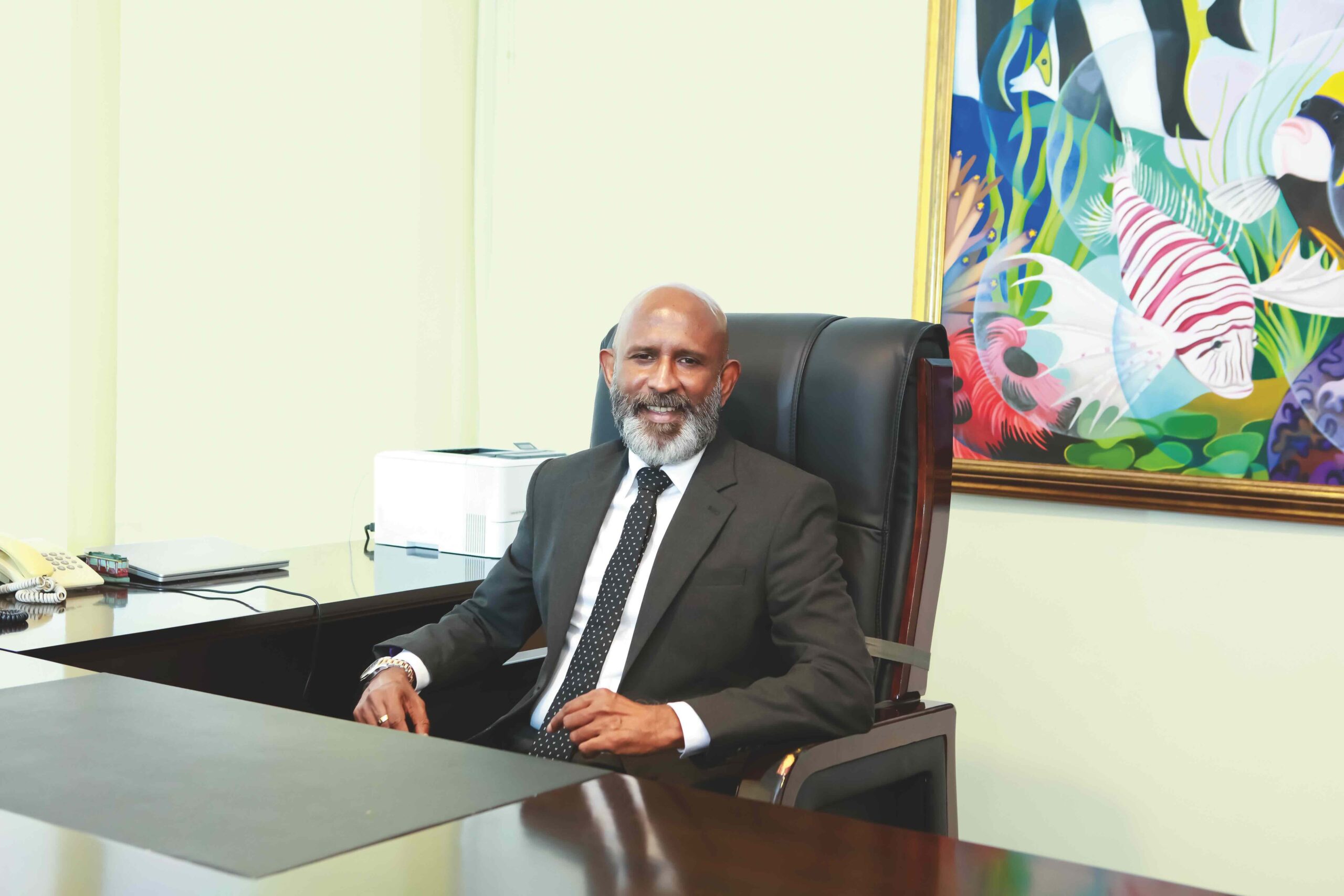
In a rapidly evolving financial landscape, Pan Asia Bank has distinguished itself through a strategic blend of disciplined growth, innovation, and a focus on niche markets. The bank has achieved record expansion, with its loan book growing by 35 percent to 217 billion and deposits surpassing 231 billion. Central to this growth has been a deliberate pivot toward SMEs and corporate lending, targeted support for remittances, tourism, and exports, and a forward-looking approach to digital and ESG integration. Speaking with Business Today, Director/CEO Naleen Edirisinghe shares insights into the strategies that have underpinned the bank’s remarkable resilience, the careful balance between aggressive expansion and risk management, and the ways in which Pan Asia is preparing for the future—both in serving a new generation of digitally savvy customers and in nurturing a workforce increasingly shaped by Gen Z. His perspectives offer a nuanced understanding of how a mid-sized bank can scale ambitiously while maintaining stability, trust, and relevance in Sri Lanka’s dynamic financial sector.
Words: Jennifer Paldano Goonewardane.
Photography: Sujith Heenatigala and Dinesh Fernando.
As 2025 marked your strongest balance sheet expansion in three decades, what were the key internal shifts that enabled such accelerated growth without compromising asset quality?
Let me begin with the strategic reset we undertook in 2023. We introduced a mid-term strategy anchored on five key pillars. Central to this was a deliberate shift in focus—from a predominantly retail-driven approach to a stronger emphasis on SMEs and corporates. This transition was guided by our recognition of the critical role these segments play in driving broader economic growth, which in turn creates a more enabling environment for retail expansion. While the SME segment presents a relatively higher risk profile compared to corporates, we approached this opportunity with strengthened credit monitoring frameworks and a significantly enhanced recovery function. We also expanded into select specialized corporate segments, particularly offshore lending and renewable energy projects, which offered both scale and strategic relevance. This repositioning contributed to a substantial expansion of our asset book, driven by larger-ticket facilities, while also improving its overall quality. Importantly, we remained vigilant to the associated risks. To this end, our specialist recovery team was fully empowered and equipped to proactively manage exposures and ensure optimal recovery outcomes.
With your loan book growing by 35 percent—the highest in the Bank’s history, which sectors drove this expansion most meaningfully, and how sustainable is this pace of credit growth?
As part of our revised lending strategy, we placed a strong emphasis on expanding our corporate portfolio—an area that had not been a primary focus previously. Historically, our ability to attract high-quality corporate clients was constrained by our cost of funds. However, with improved management of our funding costs, we were able to competitively position ourselves and scale up lending to corporates, including offshore financing.
In parallel, we pivoted more decisively towards SME lending, with targeted exposure to key sectors such as manufacturing, trading, and tourism. These segments have been instrumental in driving our recent growth momentum.
Collectively, these strategic shifts have enabled us to deliver substantial expansion, with our loan book increasing by approximately 120 billion rupees since the launch of our mid-term strategy in 2023. While the pace of growth has been strong, it is underpinned by a clear strategic focus and disciplined execution, giving us confidence in the sustainability of this trajectory as we continue to build on these investments.
What has been the key to building depositor trust in a volatile economic environment, as you report a growth in the value of customer deposits, passing 231 billion rupees?
Our presence in the industry over the past three decades has been fundamental to building depositor confidence. This sustained growth in customer deposits reflects the trust we have consistently earned by demonstrating stability, resilience, and the ability to deliver tangible results over time.
Equally important has been our focus on strengthening the Pan Asia brand as a credible and reliable financial services provider, supported by well-directed marketing and customer engagement initiatives. This has enhanced our visibility and reinforced our value proposition in a competitive environment.
Furthermore, our track record of consistent financial performance and profitability has provided additional assurance to depositors, encouraging them to place their confidence in us. Together, these factors have contributed significantly to the strong growth in our deposit base.
How do you differentiate Pan Asia Bank’s value proposition in an increasingly competitive banking sector?
Our differentiation lies in a focused, disciplined approach to niche segments rather than in scale alone. While larger banks may compete on breadth and size, we have strategically positioned ourselves in areas where we can deliver specialized value.
We have established a strong presence in segments such as government pension-related lending, remittances, pawning, leasing, and renewable energy project financing. By focusing on these targeted areas, we have built deep expertise and offer tailored solutions that resonate with specific customer needs. This focus on niche markets has enabled us to develop a clear and compelling value proposition, creating a distinct competitive advantage and reinforcing our position in areas where we consistently outperform broader market competition.
You’ve highlighted a pivot away from trading and government securities toward core lending. What risks did you anticipate in making this transition, and how have you mitigated them?
Our shift from a greater reliance on trading and government securities toward co-lending was a deliberate strategic decision, grounded in both opportunity and responsibility. While government securities offered relatively stable and attractive yields in the past, we recognized the need to more actively deploy depositor funds into the real economy, particularly as businesses began to recover and generate stronger returns.
Core lending, by its nature, involves extending credit rather than passively investing, thereby supporting economic activity while enabling the bank to achieve higher yields and expand its customer base. However, we were fully cognizant of the associated risks. Unlike investments in government securities, lending carries a higher risk profile, particularly in a dynamic economic environment.
To mitigate these risks, we have strengthened our risk management framework, ensuring that all credit proposals are rigorously evaluated by experienced, skilled professionals. Our credit monitoring and risk assessment processes are designed to remain proactive, enabling us to anticipate and manage potential challenges effectively.
Ultimately, this transition reflects our role as a financial intermediary, supporting businesses, fostering economic growth, and responsibly managing depositor funds. By maintaining a disciplined approach to credit expansion, supported by robust risk oversight, we have balanced growth with prudence.
Maintaining leadership in asset quality while aggressively expanding is challenging. What specific risk management frameworks or disciplines helped you achieve this balance?
Lending inherently involves a range of risks, arising from both external economic conditions and internal factors. Recognizing this, we have established a comprehensive and disciplined risk management framework to ensure that growth does not come at the expense of asset quality.
At the core of this framework is a dedicated risk management function, supported by experienced credit officers who are well attuned to emerging risks. All lending decisions are subject to rigorous evaluation, while a robust credit monitoring system ensures continuous oversight of exposures throughout their lifecycle.
In addition, we maintain specialized collections and recovery units that play a critical role in preserving asset quality. Facilities are closely tracked through structured delinquency “buckets,” beginning when they move beyond regular status. Each stage triggers defined monitoring and intervention protocols, enabling timely and appropriate recovery actions.
This is complemented by a proactive collections team that continuously reviews account performance and ensures that early warning signals are acted upon promptly. Together, these mechanisms create a dynamic, responsive system that allows us to sustain strong asset quality even as we pursue accelerated growth.
While government securities offered relatively stable and attractive yields in the past, we recognized the need to more actively deploy depositor funds into the real economy, particularly as businesses began to recover and generate stronger returns.
With SMEs forming a key part of your growth story, how are you managing credit risk in a segment that is still recovering from economic shocks?
The SME segment has faced a series of significant external shocks in recent years—from the 2019 Easter attacks to the COVID-19 pandemic, the 2022 economic crisis, Ditwah and subsequent global uncertainties. Despite these challenges, we have observed a high degree of resilience among many businesses.
In managing credit risk within this segment, we place considerable emphasis on track record and resilience. Businesses that have been in operation prior to 2018 and have successfully navigated multiple economic disruptions demonstrate a proven ability to withstand adversity. We view such enterprises as fundamentally strong and are committed to supporting them meaningfully. For newer entrants, however, our approach is more cautious and grounded in rigorous credit evaluation. SMEs inherently carry a higher risk due to factors such as lower capitalization, limited access to technology, and evolving managerial capabilities.
Accordingly, we conduct thorough assessments of their creditworthiness, business models, and growth potential. We also place importance on collateral-backed lending, particularly within the SME segment. This not only mitigates risk but also ensures a shared commitment between the borrower and the bank. At the same time, we recognize the increasing importance of cash flow-based lending.
As financial models and risk assessment frameworks evolve—particularly with the integration of advanced analytics and AI—cash flow is becoming an increasingly critical determinant in credit decisions, even within the SME space. By combining a focus on resilience, disciplined credit evaluation, collateral support, and a gradual shift toward cash flow-based lending, we can manage SME credit risk while continuing to support this vital segment of the economy.
Going back to 2024, PABC had outlined a goal of achieving a 50:50 split between retail and business banking. Where does the portfolio stand today, and what shifts are required to reach that balance?
Our corporate and SME portfolio has grown to approximately 55 percent of the total loan book, enabling us to achieve our targeted balance within a relatively short period of three years.
This shift reflects our strategic conviction that supporting businesses is integral to driving broader economic growth. As businesses expand, the benefits naturally extend to individuals and the wider economy. It is this philosophy that has underpinned our increased focus on corporate and SME lending.
In parallel, we have also progressed towards our vision of becoming a mid-sized bank, which we have realized through the expansion of our asset base to approximately 330 billion rupees. Achieving this scale has been essential in positioning ourselves as a meaningful lender, aligned with our long-term strategic objectives.
The Bank had also said that remittances, tourism, and exports will be key focus areas. How is Pan Asia positioning itself to capture value from these sectors differently from competitors?
Pan Asia has adopted a differentiated approach to capturing value across remittances, tourism, and exports by leveraging targeted strategies aligned with our strengths.
In remittances, we have established ourselves as a significant player despite not having an extensive branch network. This has been achieved through offering efficient foreign currency conversion facilities, enabling inward remittances to be seamlessly routed to customers’ preferred banks. As a result, we have secured approximately a seven percent share of the national remittance market—an important milestone given our scale. Building on this, we are set to launch Remit Max, a comprehensive proposition for Sri Lankans employed overseas, offering preferential interest rates, tailored loan schemes, and value-added support for their families in Sri Lanka.
In the tourism sector, we have consistently supported SME and mid-sized operators, including small and boutique hotels, particularly in the Southern and Central provinces. Despite the industry’s challenges in recent years, many businesses have demonstrated strong repayment behavior, reinforcing our confidence in the sector. We intend to further expand our support, as we remain optimistic about Sri Lanka’s tourism potential, even amid global uncertainties. My confidence in Sri Lanka’s tourism outlook is reinforced by the growing interest from foreign investors. We have recently engaged with several parties seeking to establish a presence in the Port City, viewing Colombo as a more attractive and stable base for their operations compared to parts of the Middle East at present. This reflects the broader opportunity for Sri Lanka to leverage its strategic geographic location.
Regarding exports, we see significant growth opportunities going forward. Together, remittances, tourism, and exports are critical sectors not only for the bank but also for the country, as they are key sources of foreign-exchange inflows. By strategically deepening our engagement across these segments, we are positioning ourselves to capture sustainable value while contributing to Sri Lanka’s broader economic recovery and growth.
As you emphasize digital and analytics-enabled transformation, which digital initiatives are most impactful and currently underway?
We have made significant strides in digital and analy tics-enabled transformation, with several initiatives already delivering measurable impact. Notably, we now operate one of the fastest customer onboarding platforms in the country, allowing new clients to complete registration in under ten minutes.
Building on this, we are developing a digital lending platform that will enable customers to access loans of up to 100,000 rupees directly through our mobile app. This facility will be available to customers who have maintained an account with us for at least six months. In parallel, we have streamlined our loan origination systems to make the application and approval process faster, more transparent, and user-friendly. Additionally, we have fully transitioned to an e-signature platform, eliminating the need for hard-copy memos and documents. This not only enhances operational efficiency but also supports our ESG objectives by reducing paper use while ensuring processes remain timely and compliant.
We have also progressed towards our vision of becoming a mid-sized bank, which we have realized through the expansion of our asset base to approximately 330 billion rupees. Achieving this scale has been essential in positioning ourselves as a meaningful lender.
In past reporting, management said it hopes to expand to 100 branches, an ambitious goal. Under such circumstances, how do you balance physical expansion with the rapid shift toward digital banking?
Currently, we operate 88 branches, leaving 12 to reach our target of 100. As part of this plan, we intend to open several new branches in 2026. In 2025, we added three branches, including our dedicated Private Banking Center in Horton Place.
While digital banking remains central to our long-term strategy, we recognize that in the Sri Lankan context, physical branches continue to play a vital role in building customer trust. For example, in locations such as Monaragala, a branch presence is often essential for customers to engage confidently with our services. This reflects a broader trend observed across South Asia, where physical banking infrastructure continues to influence adoption and trust.
However, we anticipate that this dynamic will evolve over time. As younger, digitally native generations—particularly Gen Z—become the primary customer base, reliance on brick-and-mortar branches is likely to diminish.
In the future, whether in Colombo, Monaragala, or Hambantota, banking transactions are expected to be largely digital. Regarding our branch expansion target, we plan to cap physical growth at 100 branches, maintaining a balanced approach that supports both digital transformation and the current expectations of our diverse customer base.
In the tourism sector, we have consistently supported SME and mid-sized operators, including small and boutique hotels, particularly in the Southern and Central provinces.
Is your growth strategy purely organic, or would you consider acquisitions or partnerships to accelerate scale?
Our growth strategy has been primarily organic, enabling us to build an asset base of approximately 330 billion rupees and placing us among the top 20 companies in the country by asset size.
That said, we remain open to exploring acquisitions or strategic partnerships should the right opportunities arise. To date, we have not encountered any prospects that align with our strategic objectives, but we are willing to consider such options in the future. Expanding our branch network may also be pursued selectively as part of our growth strategy. Currently, our primary focus is on achieving our goal of becoming a mid-sized bank by 2026. All growth initiatives will be deliberate and phased, ensuring that expansion is sustainable and aligned with our long-term objectives.
What concrete steps has the Bank taken to integrate sustainability into its core operations, as you declare that ESG and responsible lending are central to your future vision?
Pan Asia has established a dedicated department to oversee our ESG priorities, ensuring that sustainability is integrated into our core operations. Our initiatives are aligned with established accounting and reporting standards, and we are actively embedding these frameworks across our processes.
At the same time, we recognize that ESG must be practical and contextually relevant to Sri Lanka. While we consider ESG criteria in our credit and operational decisions, we adopt a measured approach, supporting businesses even if they do not fully conform to ESG frameworks. This reflects our understanding that sustainability adoption is a gradual process and must be balanced with real-world business realities.
Our commitment extends beyond lending: our CSR initiatives complement our ESG objectives, reinforcing our role as a responsible and forward-looking financial institution. Similar to our approach to digital transformation, ESG integration is progressive, allowing us to grow responsibly while creating meaningful impact.
Our growth strategy has been primarily organic, enabling us to build an asset base of approximately 330 billion rupees and placing us among the top 20 companies in the country by asset size.
As Pan Asia Bank charts its ambitious growth trajectory, how do you envision the evolving workplace with the increasing influence of Gen Z employees, and what changes will be necessary to accommodate their working style?
Gen Z values mobility, flexibility, and autonomy in the workplace. They have distinct ways of approaching work, and organizations must adapt to support their style. This includes offering flexible working hours and greater freedom in how tasks are approached.
Unlike previous generations, Gen Z often relies less on formal training and more on online resources for self-directed learning and skill development.
As digitization and AI increasingly reshape traditional work processes, routine tasks are being automated, and decision-making is becoming more data-driven. The workplace transformation driven by Gen Z will be significant, and organizations must proactively adapt to ensure they provide an environment that fosters productivity, creativity, and engagement in this new era.
At Pan Asia Bank, we are well-positioned to navigate both internal and external challenges. Our profits have risen to four billion rupees, and we are equipped with robust systems and risk management frameworks to sustain our momentum.
As you scale up, what are the biggest risks that could derail momentum, and how prepared is the Bank to navigate them?
The primary risks to our growth are largely external. While Sri Lanka’s current economic fundamentals are encouraging—with controlled corruption, improved transparency, and healthy reserves—the external environment remains a key factor that could influence momentum. For example, ongoing geopolitical tensions, such as the conflict in West Asia, could affect the broader economy if they persist for more than a few months.
Domestically, however, the outlook is positive. The recent quarter ending March 31, was one of our strongest, demonstrating the resilience and potential of the Sri Lankan economy. When transparent processes are in place and the private sector is empowered, the country has the capacity to achieve significant growth, even in the absence of large-scale government initiatives. Prudent fiscal management and substantial reserves further strengthen this foundation.
At Pan Asia Bank, we are well-positioned to navigate both internal and external challenges. Our profits have risen to four billion rupees, and we are equipped with robust systems and risk management frameworks to sustain our momentum. With a clear strategic vision and operational discipline, we are prepared to pursue ambitious growth and continue challenging larger competitors, while supporting Sri Lanka’s broader economic recovery.