
October 13, 2025
Prime Minister Dr Harini Amarasuriya’s speech at The Global Leader’s Meeting on Women
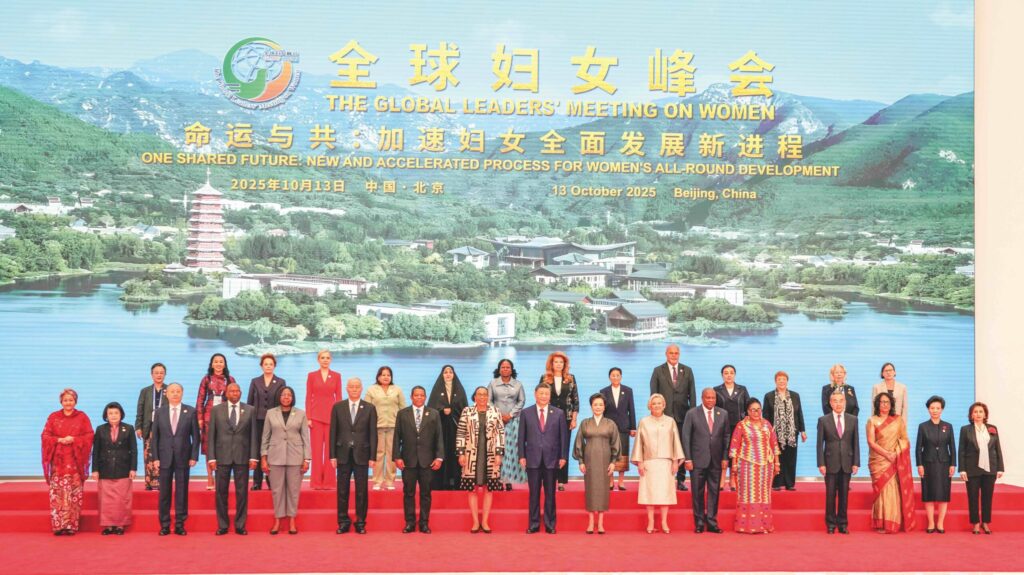
Prime Minister Dr. Harini Amarasuriya joins leaders at the Global Leaders’ Meeting on Women, themed “One Shared Future: New and Accelerated Process for Women’s All-Round Development.”
Thank you, President Xi Jinping, heads of government, distinguished delegates, and colleagues. It is a true honor to be here among you at this Global Leaders Meeting on Women, organized under the theme One Shared Future, New and Accelerated Process for Women’s All- Round Development. I bring warm greetings from my government and people, including the women and girls of Sri Lanka, who form the backbone of our society and economy.
President Xi Jinping, I thank you for your leadership at this significant moment, when leadership on gender and women’s equality is so crucial. All-round development of women is a holistic progress of women in education, health, economy, politics, society, and culture. I am filled with hope and determination as we reaffirm our shared commitment to advancing the rights and well-being of women and girls everywhere.
In this spirit, I would like to recollect the historic 1995 World Conference on Women, which profoundly shaped the global discourse on women’s empowerment and the advancement of women’s rights.
Thirty years ago, the world came together in Beijing for the Fourth World Conference on Women, held under the theme “Action for Equality, Development, and Peace.” The Beijing Declaration and Platform for Action, adopted by 189 countries at the conference, remains one of the most progressive and comprehensive instruments for achieving gender equality.
It laid out a clear vision and identified 12 critical areas of concern, highlighting the systemic barriers women face across every sphere of life, including poverty, economic, political, and institutional participation, as well as education and healthcare, that must be addressed to achieve full gender equality.
By addressing these interconnected areas comprehensively, the framework contributes to women’s overall development, ensuring not only their basic welfare but also their rights, empowerment, and ability to participate fully and equally in shaping society.
Despite gains, significant gaps remain. At the current pace, it will take an additional 137 years to end extreme poverty among women. Today, 47.8 million more women than men face moderate or severe food insecurity.
Women also remain underrepresented in the fields that will shape our future, accounting for only 35 percent of all graduates in science, technology, engineering, and mathematics. In politics, achieving gender parity in parliament remains a distant dream, with a target date of 2063.
The political declaration adopted at the 69th session of the Commission on the Status of Women, held early this year in New York, which also marked the 30th anniversary of the Fourth World Conference on Women, acknowledged a hard truth: no country has fully achieved gender equality and the empowerment of women and girls. Progress in fulfilling the commitments made under the 12 critical areas of concern of the Beijing Platform for Action has been slow and uneven.
My country holds the honor of having elected the world’s first female Prime Minister in 1960. Building on that legacy, our recently concluded general elections have paved the way for 22 women from diverse social backgrounds, including those from working-class and marginalized communities, to take a place in the country’s legislature, the most significant number of women to be represented in our parliament. Our government now includes two women cabinet ministers, including myself, as well as a woman deputy minister.
We have pledged to create the structural and social changes necessary to increase women’s political participation and ensure that women are represented in leadership and decision-making at every level across all fields. Standing here today, I reflect on the path carved by countless women who dreamed, who fought. It is on their shoulders that I stand as a woman, as a leader, and in solidarity with the hope and determination to carry forward the fight for greater gender equality and equal opportunity for every woman and every girl.
I am increasingly concerned about the global backlash against gender equality and human rights, which significantly affects what can be achieved at the national level. This is why, President Jinping, your leadership at this summit is so crucial at this moment. The gender divide is widening, with more young men turning to right-wing ideologies, which undermines the hard-won gains of women’s movements.
This backlash is at least partly rooted in the failures of neoliberalism, which has created a fertile environment for authoritarian, illiberal, and undemocratic narratives.
As we gather here in this defining moment, let us remember that the greatest gift we can offer to the world, to the future, and to ourselves is action that is not confined by borders or national agendas. This is the era to propel a bold and unwavering agenda for women’s empowerment.
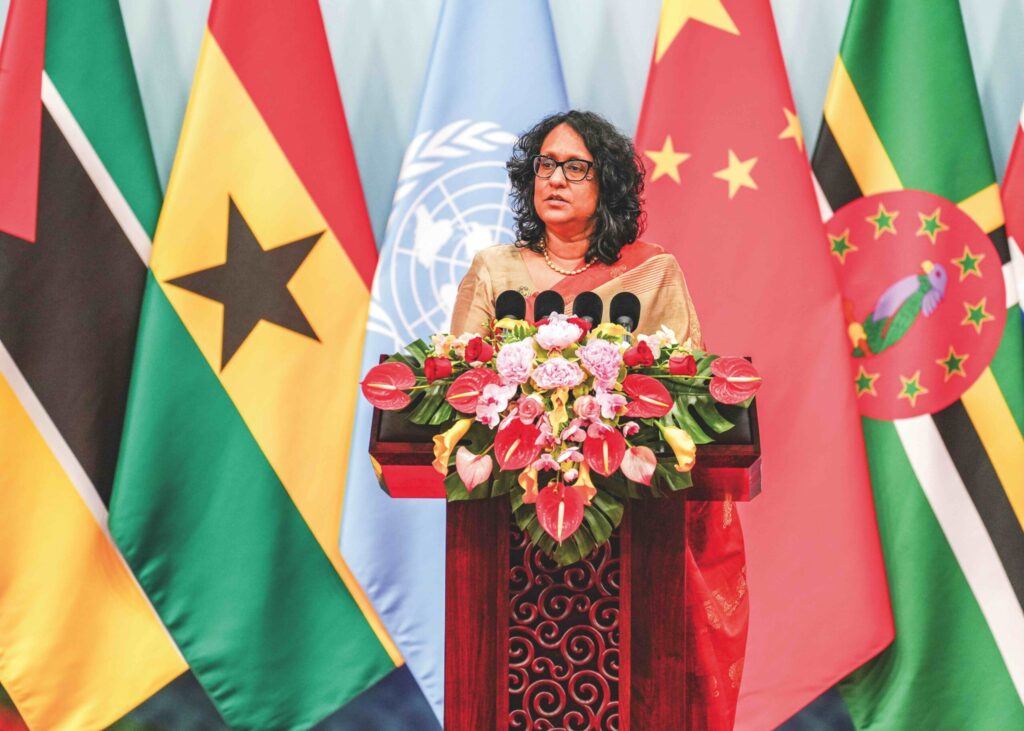
Prime Minister Dr Harini Amarasuriya.
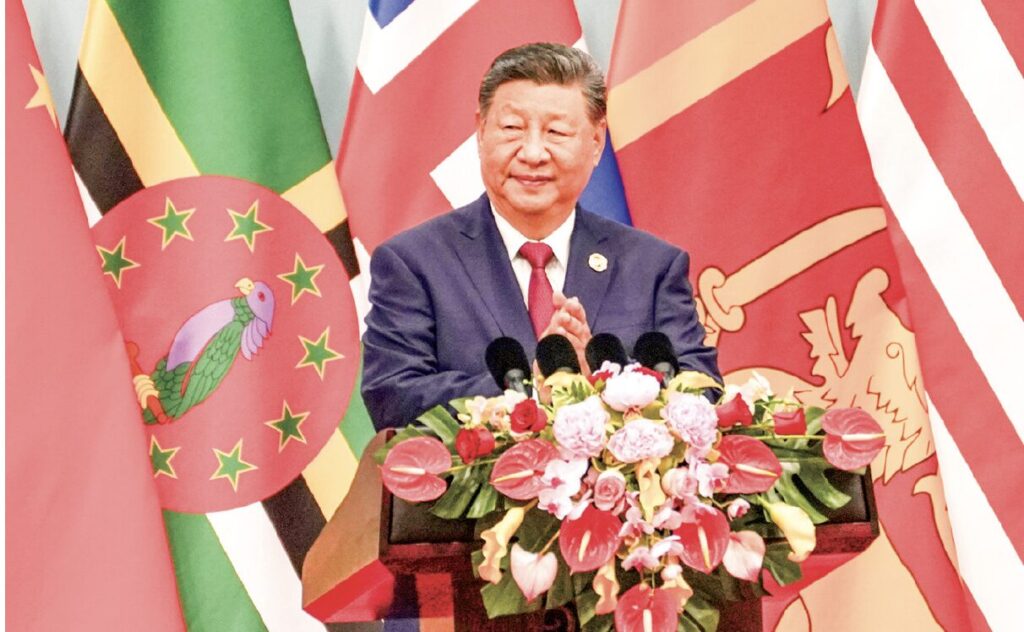
President of the People’s Republic of China Xi Jinping.
The global government initiative, as well as other initiatives announced by the Chinese government, along with the President’s announcement, are signs of genuine progressive and liberal thinking. We in Sri Lanka stand ready to support these initiatives.
As I stand here today, I stand with the women and girls whose hopes and dreams demand a brighter future. I speak for those who often strive against great odds to claim their right to education and quality healthcare. I speak for the mothers, daughters, and sisters who work tirelessly to provide for their families, balancing immense responsibilities at work and at home with unwavering resilience.
Their courage and determination inspire us all, and it is our solemn duty to ensure that their aspirations are not deferred but fulfilled, that every woman and girl has the opportunity to thrive, to lead, and to shape the destiny of our nation and our world.
As we gather here in this defining moment, let us remember that the greatest gift we can offer to the world, to the future, and to ourselves is action that is not confined by borders or national agendas. This is the era to propel a bold and unwavering agenda for women’s empowerment.
Gender equality is not a women’s issue. It is a societal issue that demands attitudinal and behavioral transformation. True progress requires that we leave no one behind. By embracing gender-sensitive policies and budgets, we can unlock the full potential of every citizen and build economies of opportunity for all.
Let us close the digital divide, ensuring that women and girls are not only users of technology but creators and leaders in innovation. Let us recognize the value of unpaid care work and reduce the burden through shared responsibility and supportive public services. No woman is safe until every single woman is safe.
Let us stand firm in declaring zero tolerance for gender-based violence, and let us commit to climate action that is not only urgent but also deeply gender-sensitive. Together, we can create a future that is more just, inclusive, and sustainable, a future where equality is not an aspiration but a living reality. I invite every one of you to join hands in securing this future for the women and girls in our respective countries.
Once again, I thank you for your leadership. Thank you very much.