

Sri Lanka’s Corporate Performance Ranking (Since 1997)
Recognizing Performance. Defining Excellence

Since 1997, Business Today has recognized the companies shaping Sri Lanka’s corporate landscape through its annual corporate ranking. Introduced as the Business Today TOP 10, the ranking progressively expanded to reflect the growth, diversity and increasing sophistication of the country’s corporate sector, eventually becoming the widely recognized Business Today TOP 40. Over nearly three decades, the ranking has established itself as an important benchmark for corporate performance, recognizing companies that have demonstrated financial strength, business leadership, and significant contributions to Sri Lanka’s economy.
In 2026, Business Today introduces a new chapter in this distinguished tradition with Business Today TOP Corporates, an expanded ranking framework that moves beyond the previous practice of recognizing a predetermined number of companies. Under the new approach, listed companies that meet the established eligibility requirements will qualify for inclusion in the final ranking. This evolution reflects Business Today’s commitment to recognizing corporate performance through clearly defined financial and operational benchmarks, while maintaining the credibility and independence that have characterized the ranking since its inception.
For the first time in the history of the Business Today corporate rankings, we are publicly disclosing the evaluation process and the criteria used to determine the rankings. Over the years, many corporate leaders, participating companies, shareholders, and members of the business community have expressed an interest in understanding how the rankings are determined. In response to these requests, Business Today has decided to provide a clearer explanation of the selection process, eligibility requirements, and performance indicators that form the foundation of the annual ranking. This initiative represents an important step towards greater transparency while safeguarding the proprietary elements of the evaluation methodology developed by Business Today.
The Business Today TOP Corporates ranking is designed to recognize corporate financial performance, shareholder value creation, profitability, contribution to government revenue, and employment generation. It provides a comprehensive assessment of companies whose operations meaningfully contribute to Sri Lanka’s economy, going beyond traditional measures of corporate size to consider a broader mix of financial strength and operational performance.
The evaluation begins with companies listed on the Main Board and Second Board of the Colombo Stock Exchange. The initial screening considers share turnover and market capitalization, reflecting each company’s standing and activity in the capital markets. Emphasis is placed on income generated through Sri Lankan operations, ensuring that the ranking reflects economic activity within the country rather than performance predominantly driven by overseas operations.
The evaluation also considers the relationship between parent companies and their subsidiaries. Where the revenue and profitability of a listed parent company and its listed subsidiary are closely interconnected, appropriate consideration is given to preventing the duplication of substantially the same financial performance. The intention is to ensure that the ranking reflects distinct corporate contributions and enables meaningful comparison among participating companies.
Following the preliminary screening, companies must satisfy three minimum financial requirements to qualify for the final evaluation. These are a market capitalization exceeding five billion rupees, annual revenue exceeding 20 billion rupees, and Profit After Tax exceeding one billion rupees. Companies must meet all three requirements to be eligible for inclusion. Unlike the previous TOP 10 and TOP 40 rankings, there is no predetermined limit on the number of companies that can qualify. Every company that meets the stipulated requirements will be considered for the final ranking.
The final ranking is determined through a comprehensive assessment of six financial and operational indicators: Revenue, Profit After Tax (PAT), Income Tax, Earnings Per Share (EPS), Return on Equity (ROE), and Number of Employees. Income Tax is considered separately from other direct and deferred taxes. Together, these indicators provide a multidimensional perspective on corporate performance, encompassing the scale of operations, profitability, earnings attributable to shareholders, efficiency in generating returns on equity, contribution to government revenue, and employment generation.
Revenue reflects the scale and commercial strength of a company’s business operations, while Profit After Tax measures its ability to generate earnings after meeting its financial and taxation obligations. Income Tax indicates the company’s direct fiscal contribution to the government. Earnings Per Share measures profitability attributable to each ordinary share, while Return on Equity evaluates the efficiency with which shareholder capital is employed to generate profits. The Number of Employees recognizes the company’s role in employment generation and its wider contribution to economic activity.
Each of these six indicators is assigned a specific weighting within Business Today’s proprietary evaluation model. The weightings reflect the relative importance attributed to the individual indicators in assessing overall corporate performance. While Business Today is disclosing the principal evaluation criteria and selection process for the first time, the individual weightings and detailed scoring calculations will remain confidential. These form part of Business Today’s proprietary methodology and are retained to preserve the independence, integrity and distinctiveness of the ranking.
The final positions are determined by the aggregate weighted performance of qualifying companies across the six evaluation criteria. This approach ensures that the ranking is not determined by a single measure, such as revenue, profitability, or market capitalization, but instead reflects a broader assessment of financial and operational performance.
Business Today TOP Corporates represents an important milestone in the evolution of Sri Lanka’s corporate rankings. By expanding eligibility beyond a predetermined number of companies and publicly explaining the principal criteria used in the evaluation, Business Today seeks to strengthen the relevance, transparency, and credibility of this longstanding initiative. The revised approach enables a wider representation of corporate achievement while maintaining the standards that have defined the rankings since 1997.
The introduction of this new framework also acknowledges the changing structure of Sri Lanka’s corporate sector. As companies expand their operations, strengthen their financial positions and contribute to national economic development, it is important that the ranking evolves to recognize performance across an increasingly diverse corporate landscape. The emphasis is no longer on identifying a fixed number of leading companies, but on recognizing every qualifying listed company and determining its relative standing through a consistent evaluation framework.
For the included companies, Business Today TOP Corporates recognizes their financial performance, shareholder returns, fiscal contribution, and employment generation. For investors, corporate leaders and the wider business community, it offers an annual perspective on the relative performance of companies operating within Sri Lanka’s listed corporate sector.
From the Business Today TOP 10 in 1997 to the TOP 40, and now to the Business Today TOP Corporates in 2026, the underlying objective remains unchanged: to recognize corporate achievement and highlight the companies contributing to the strength of Sri Lanka’s economy. What has changed is the scope of the ranking, the opportunity for companies to qualify, and the level of information made available about the evaluation process.
Business Today TOP Corporates 2026 marks the beginning of a new era in corporate recognition, one that honors the ranking’s distinguished heritage while establishing a broader and more transparent benchmark for measuring corporate performance in Sri Lanka.
Selecting Sri Lanka’s TOP 40 corporates was a meticulous process that wouldn’t have been possible without external support. For that we extend our gratitude to Shiron Gooneratne for his guidance and to KPMG for tabulating the data.
Resilience, Renewal, and the Strength of Sri Lankan Enterprise
Words: Jennifer Paldano Goonewardane.
Sri Lanka’s economy has entered an encouraging phase of recovery, reflecting the resilience of a nation that has navigated economic challenges and is steadily rebuilding the foundations for sustainable growth. The 2025–2026 reporting period witnessed renewed business confidence, improved economic activity, greater financial stability, and a gradual revival of investment and consumer demand. Across industries, businesses demonstrated their capacity to adapt, innovate, and pursue opportunities in an environment that, while more stable, still demanded financial discipline and strategic foresight.
Economic reforms, fiscal consolidation, improvements in the external sector, and a more predictable operating environment have helped restore confidence among businesses and investors. Tourism, trade, financial services, manufacturing, and construction have experienced renewed momentum, while the gradual strengthening of household purchasing power has supported domestic commercial activity.
International developments have added another dimension of uncertainty. The war in the Middle East and the resulting geopolitical instability have heightened concerns over global energy supplies, shipping routes, freight costs, and international trade. For Sri Lanka, an economy closely connected to imported energy, overseas markets, tourism and remittances, such disruptions carry considerable implications. Volatility in commodity prices, supply chain disruptions, and changing international financial conditions pose risks to operating costs, inflation, and external stability. Climate-related events and extreme weather have further demonstrated the importance of strengthening national infrastructure, business continuity, and economic resilience.
Yet, against this backdrop, Sri Lanka’s corporate sector has demonstrated a determination to move forward. The performance of the companies recognized in Business Today TOP Corporates 2025–2026 reflects not merely the benefits of economic stabilization but, more importantly, the ability of corporate leadership to translate improving conditions into productive activity, profitability, investment and long-term value creation.
A recurring theme in the messages of the corporate leaders is that recovery has created opportunities, but sustainable success depends on how effectively those opportunities are managed. Across the corporate landscape, leaders have emphasized prudent capital allocation, strong governance, operational efficiency, innovation, and human capital development. Their assessments convey measured optimism, recognizing the progress achieved while remaining alert to external volatility and domestic vulnerabilities.
Importantly, corporate leadership has increasingly moved beyond an emphasis on resilience alone. Having strengthened their businesses through challenging economic conditions, many organizations are now focusing on transformation, competitiveness, and expansion. Investment in technology, diversification of revenue streams, customer-centric solutions, and greater productivity have become central to their strategies. The underlying message is clear: economic recovery provides the opportunity for growth, but disciplined execution determines its sustainability.
Financial Strength and Renewed Confidence
Sri Lanka’s banking and financial services sector has played a defining role in the recovery. Stronger balance sheets, improving asset quality, increased lending activity, and renewed demand for financial services have enabled banks and non-banking financial institutions to support enterprises, households, and investment.
The leadership of major financial institutions has consistently emphasized the importance of maintaining capital strength, liquidity, and prudent risk management while expanding access to credit. Financing for small and medium enterprises, agriculture, exports, tourism, and other productive sectors has received particular attention, recognizing that meaningful economic recovery must extend beyond established commercial centers.
Digital banking, financial inclusion, sustainable finance, and technology-driven service delivery have also emerged as strategic priorities. The insurance sector, meanwhile, has reinforced its contribution to financial security through innovation, customer engagement, and improved protection solutions. Collectively, these developments reflect a financial services industry increasingly focused on connecting institutional strength with broader economic opportunity.
Manufacturing, Exports, and Industrial Competitiveness
Manufacturing has demonstrated the importance of domestic productive capacity in sustaining economic recovery. Companies operating in industrial products, building materials, electrical equipment, rubber-based products, packaging, food processing, and other manufacturing activities have benefited from improving demand while navigating international competition and volatile input costs.
Corporate leaders in these industries have highlighted operational efficiency, product innovation, value addition, and supply chain resilience as essential to long-term competitiveness. Investment in automation, advanced manufacturing technologies, research and development, and energy efficiency has strengthened Sri Lankan enterprises’ capacity to respond to changing market requirements.
Export-oriented manufacturers have continued to demonstrate that Sri Lankan expertise can compete internationally through specialized products, quality, technical capabilities, and enduring customer relationships. Their experience reinforces the importance of expanding export markets, strengthening domestic value addition and developing industries capable of generating sustainable foreign exchange earnings.
Consumer Markets and the Strength of Domestic Demand
The gradual recovery in consumer confidence has supported renewed activity across retail, consumer goods, and fast-moving consumer goods. Established brands, extensive distribution networks, and closer engagement with consumers have enabled companies to respond to changing purchasing patterns and evolving expectations.
Nevertheless, household affordability remains a significant consideration. Business leaders have emphasized the need to balance product quality, accessibility, and competitive pricing while managing operating costs. Product innovation, manufacturing efficiencies, supply chain improvements, and investment in distribution have contributed to stronger business performance.
The importance of agriculture and domestic sourcing has also become increasingly evident. Partnerships with farmers, dairy producers, distributors, and rural enterprises connect corporate growth with livelihoods and food security. Such relationships demonstrate how commercial success can generate wider economic benefits by strengthening domestic supply chains and supporting regional development.
Infrastructure, Construction, and Real Estate
Renewed construction activity and investment in infrastructure have provided encouraging signs of economic revival. Engineering companies, building material manufacturers, and property developers have responded to improving demand for commercial, residential, and infrastructure-related development.
Corporate leadership has highlighted disciplined project execution, financial management, and diversification as essential to navigating an industry still recovering from prolonged economic constraints. Investments in transportation, logistics facilities, energy infrastructure, and urban development are creating opportunities for businesses across interconnected sectors.
The renewed emphasis on sustainable construction, efficient resource utilization, and modern building technologies also reflects changing expectations. Beyond immediate commercial opportunities, infrastructure development remains fundamental to strengthening
Sri Lanka’s productivity, connectivity, and investment attractiveness.
Diversified Enterprises, Services, and New Opportunities
Sri Lanka’s diversified conglomerates have demonstrated the strategic advantages of operating across complementary industries. Their exposure to financial services, manufacturing, tourism, retail, healthcare, agriculture, transportation, and property has enabled them to capture recovery-related opportunities while managing risks across markets.
Their leaders have repeatedly emphasized portfolio discipline, selective investment, and the importance of maintaining strong institutional foundations. Diversification has increasingly been accompanied by a sharper focus on business performance, capital efficiency, and emerging growth opportunities.
The services sector has also strengthened its contribution to economic activity. Tourism and hospitality have benefited from renewed international travel demand, while maritime services, logistics, and transportation have supported Sri Lanka’s commercial connections with global markets. Healthcare and education have continued to attract investment, reflecting their importance to both social development and long-term economic competitiveness.
Telecommunications and technology businesses have emerged as important enablers of this transformation. Investments in digital infrastructure, artificial intelligence, automation, cybersecurity, and data-driven decision-making are reshaping business models and strengthening productivity across industries. The emphasis is no longer solely on adopting technology, but on integrating it meaningfully into operations, customer relationships, and future growth strategies.
Leadership, Responsibility, and the Road Ahead
Another defining characteristic of the reporting period has been the growing recognition that corporate performance must be supported by responsible governance and sustainable business practices. Across sectors, organizations have strengthened their attention to environmental management, renewable energy, resource efficiency, climate-related risks, and more transparent sustainability disclosures.
Equally significant is the emphasis placed on employees. Corporate leaders have acknowledged that resilience, innovation, and execution ultimately depend on people. Investment in skills, leadership development, workplace inclusion, and employee wellbeing has become increasingly important as organizations prepare for a more competitive and technology-driven future.
The Business Today TOP Corporates recognition brings together companies whose achievements extend beyond financial performance. Profitability, shareholder value, contribution to government revenue, employment generation, and the ability to sustain productive economic activity collectively reflect the corporate sector’s importance to national development.
The messages emerging from Sri Lanka’s business leadership convey confidence grounded in experience. They recognize that uncertainty will remain a feature of the global economic environment, but also that the country possesses the entrepreneurial talent, institutional capabilities, and commercial potential required to build a stronger future.
Business Today TOP Corporates 2025–2026 celebrates this spirit of enterprise and determination. The companies recognized represent the strength of Sri Lankan business, the progress achieved through responsible leadership, and the opportunities that lie ahead. As the nation moves from recovery towards renewed growth, their continued investment, innovation, and commitment to excellence will be instrumental in shaping a more resilient, competitive, and prosperous Sri Lankan economy.
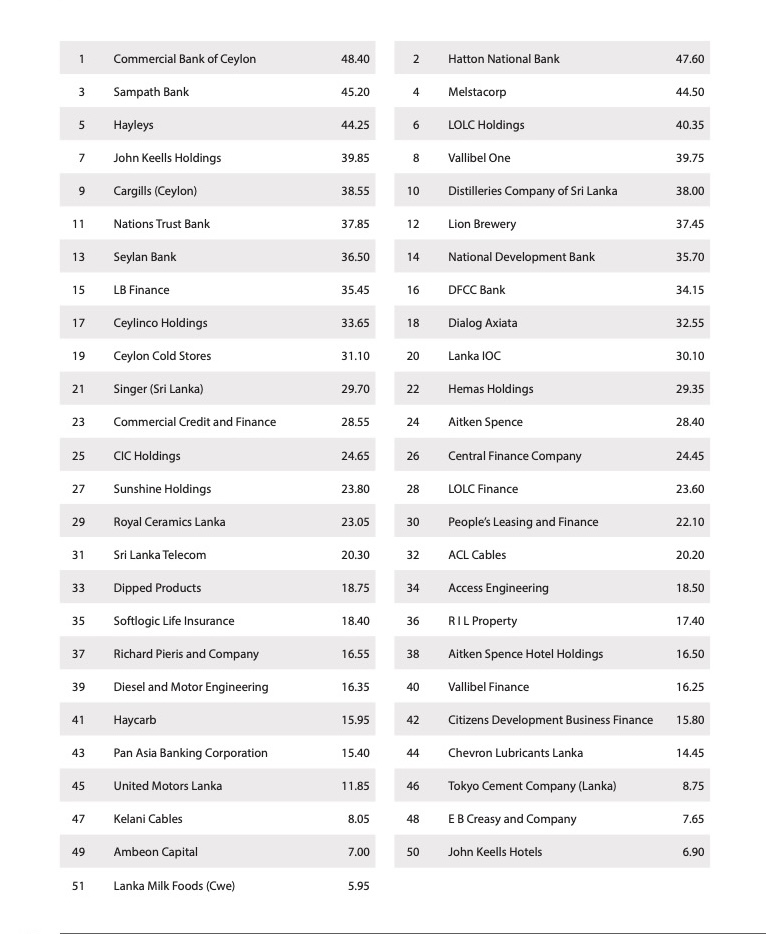
1. Commercial Bank of Ceylon
Ranked number one in Business Today TOP Corporates, Commercial Bank of Ceylon demonstrated the strength of a banking franchise built on financial resilience, disciplined growth and support for Sri Lanka’s productive economy. Its performance combined expanding income and profitability with shareholder value creation, fiscal contribution and investment in people.
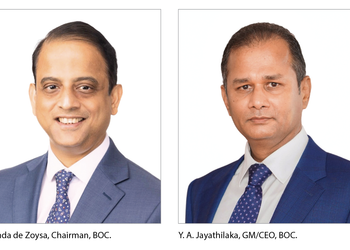
Chairman S. Muhseen emphasized earnings resilience, balance sheet strength, and prudent risk management as foundations of lasting stakeholder value. As economic confidence recovered, the Bank supported exports, tourism, agriculture and small and medium-sized enterprises, aligning lending with national development priorities while maintaining rigorous credit standards.
Managing Director and Chief Executive Officer Sanath Manatunge highlighted an execution strategy to expand lending, accelerate digital adoption, and improve asset quality. Deposit growth, strong liquidity, and capital above regulatory requirements provided capacity to support business activity without compromising financial stability.
Gross income and profit after tax increased, underpinned by stronger net interest income, business expansion and disciplined cost management. Higher dividends and rising net asset value per share supported shareholder value. Earnings per share and reported return on equity moderated, although return on equity strengthened against the previous year’s normalized performance. The Bank’s substantial income tax expense also reflected its fiscal contribution, distinct from taxes on financial services.
Commercial Bank’s leadership in SME lending reinforced its relevance to domestic enterprise. Expanded agricultural and microfinance services, alongside agency banking, widened access to finance for entrepreneurs and rural communities. Digital banking and trade platforms improved customer convenience and operational efficiency, supported by investment in cybersecurity and infrastructure.
Its employment contribution was complemented by training, leadership development, employee wellbeing and flexible working arrangements. Initiatives supporting women strengthened workplace inclusion and talent retention.
Green lending and a green bond issuance advanced sustainable finance, while community investments supported education, healthcare and environmental restoration.
Commercial Bank’s leading position brings into focus the breadth of corporate performance recognized by Business Today: earnings strength, shareholder returns, contribution to government revenue and the people, and enterprises sustaining economic progress.
2. Hatton National Bank
Coming in at second position in the Business Today TOP Corporates, Hatton National Bank demonstrated its capacity to translate Sri Lanka’s economic recovery into business growth, stronger shareholder earnings, and broader support for domestic enterprise. Its performance reflected the importance of financial resilience, purposeful capital allocation, and an evolving customer proposition.
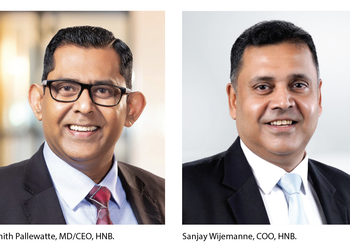
Chairman Nihal Jayawardene (PC) emphasized HNB’s role in mobilizing capital across key economic sectors, enabling households, enterprises, and communities to participate in the recovery. The acquisition of full ownership of its investment banking subsidiary strengthened the Group’s capabilities in capital markets advisory and structured finance, complementing its established banking and insurance businesses.
Managing Director and Chief Executive Officer Damith Pallewatte highlighted a transformation agenda centered on repositioning the balance sheet, accelerating digital and operational reforms, and strengthening long-term value creation. Funds were redeployed from government securities towards lending, supporting credit expansion across retail, corporate, SME, and microfinance segments.
Gross income, profit after tax, and earnings per share increased. Higher fee and commission income, supported by card usage and digital transactions, helped counter pressure on net interest income. Shareholder value was reinforced by growth in net assets per share and a higher total dividend, while return on equity moderated. Income tax remained a substantial fiscal contribution, separately reported from taxes on financial services.
Prudent underwriting and focused recoveries improved asset quality, strengthening the foundation for continued lending. Support for entrepreneurs, agricultural businesses and smaller enterprises reinforced HNB’s contribution to productive investment and livelihoods.
Digital innovation widened accessibility through a trilingual mobile banking experience and expanded payment capabilities. Investment in cybersecurity and data governance supported customer trust as digital adoption accelerated.
HNB also expanded employment and investment in learning and development. Its human resources transformation introduced clearer career pathways, refreshed performance management and strengthened compensation frameworks.
A sustainable bond issuance and increased lending to sustainable businesses advanced its responsible financing agenda. Together, these developments illustrate the combination of profitability, shareholder value, fiscal contribution, and employment that underpins HNB’s standing among Sri Lanka’s leading corporates.
3. Sampath Bank
Ranked third in the Business Today TOP Corporates, Sampath Bank delivered record profitability while expanding its lending, strengthening shareholder returns and investing in the capabilities required for its next phase of growth. Its designation as a Domestic Systemically Important Bank further underscored its significance within Sri Lanka’s financial landscape.
Chairman Harsha Amarasekera highlighted the results of an ambitious growth strategy supported by deposit mobilization, prudent capital management and deeper customer relationships. Lending expansion supported renewed economic activity, while stronger credit risk management contributed to improved portfolio quality. Capital buffers remained comfortably above the enhanced regulatory requirements accompanying the Bank’s systemic designation.
Managing Director and Chief Executive Officer Sanjaya Gunawardana outlined a strategy anchored in customer centricity, operational excellence, digital leadership, and sustainable growth. Advanced data analytics emerged as a core capability, supporting personalized services, faster credit decisions, and more responsive solutions for retail, SME, and corporate customers.
Gross income, profit after tax and earnings per share increased, while return on equity improved marginally. Growth in fee and commission income, exchange gains and gains on financial asset derecognition supported earnings despite lower net interest income and increased operating expenditure. Higher net asset value per share and a proposed increase in the final dividend reinforced shareholder value. Income tax remained a substantial fiscal contribution, separately disclosed from taxes on financial services.
Digital innovation included AI-enabled personal lending and an API-based banking platform that connects corporate systems with the Bank. These developments supported transaction efficiency and wider access to financial services, alongside investment in core technology and specialist expertise.
Employment expanded as Sampath strengthened customer-facing teams and recruited skills aligned with its transformation. Training in analytics, digital banking and leadership, supported by mentoring and internal mobility, developed organizational capability.
Its wider contributions included sustainable financing, financial literacy, and irrigation restoration, supporting rural livelihoods. Relief measures for customers affected by severe weather reinforced its role in economic recovery.
Sampath’s performance combined earnings growth with investment in people, technology and enterprise, reflecting the breadth of corporate contribution recognized by Business Today.
4. Melstacorp
In fourth place in Business Today TOP Corporates, Melstacorp combined the strength of its diversified portfolio with disciplined capital allocation to deliver higher revenue, profitability and shareholder earnings. Its performance demonstrated the value of established businesses complemented by investment in emerging opportunities and organizational capabilities.
Chairman D. Hasitha S. Jayawardena described a transition from stabilization towards transformation and growth, supported by stronger governance, prudent risk management and selective investment. Diversification enabled the Group to capture opportunities arising from Sri Lanka’s recovery while managing sector-specific pressures and external uncertainty.
Beverages remained the principal contributor to Group earnings, supported by established brands, innovation and operational discipline. Tourism achieved record profitability, benefiting from stronger performance across hotels, destination management, and aviation. Services delivered substantial earnings growth, while maritime and logistics operations demonstrated resilience despite disruptions to global trade.
Group revenue and profit after tax increased, alongside earnings per share. Higher dividends and net asset value per share strengthened shareholder value, although return on equity moderated as the equity base expanded. Lower net finance expenses supported profitability and financial flexibility. Income tax represented a substantial fiscal contribution, distinct from the excise duties associated with the beverage business.
The reaffirmation of the Group’s highest national-scale credit rating reinforced its financial standing. Investments in enterprise automation, analytics and cybersecurity supported operational efficiency, informed decision-making and resilience.
Leadership capability was strengthened through the appointment of Jude Fernando as Group Chief Executive Officer. Enhanced Board oversight of investments and sustainability further supported strategic execution and capital allocation.
Melstacorp’s employment contribution extended across its diverse businesses. Learning and development, succession planning, and talent management initiatives strengthened workforce capabilities and were complemented by attention to employee well-being, diversity, and inclusion.
Sustainability considerations were increasingly integrated into strategy and risk management through climate assessments, materiality reviews, and preparations for enhanced disclosure requirements.
Melstacorp’s fourth-place standing reflects a corporate contribution encompassing earnings capacity, shareholder returns, fiscal significance and employment, supported by a diversified platform for continued value creation.
5. Hayleys
Ranked fifth in Business Today TOP Corporates, Hayleys delivered record revenue while advancing a diversified growth strategy encompassing established industries and emerging business opportunities. Its performance reflected the scale of its domestic operations, export capabilities and contribution to employment and enterprise across Sri Lanka.
Chairman and Chief Executive Mohan Pandithage highlighted decisive investment, portfolio diversification and operational excellence as foundations of the Group’s progress. Stronger domestic demand supported growth, complemented by resilient export-oriented businesses and continued emphasis on value-added products.
Consumer and Retail emerged as the largest contributor to revenue and profitability. Transportation and Logistics, Purification, and Hand Protection also remained important contributors to earnings, demonstrating the breadth of the Group’s operating base. Entry into electric and hybrid mobility, alongside preparations for supermarket retailing, established new avenues for expansion.
Revenue and profit before tax from continuing operations increased, although profit after tax moderated as income tax expense rose. Earnings attributable to shareholders and earnings per share improved, while return on equity declined. Higher net assets per share and an unchanged dividend complemented shareholder returns. Income tax represented a substantial, separately disclosed fiscal contribution.
A successful rights issue strengthened equity and supported capital restructuring and strategic investment. Borrowings increased alongside business expansion and investment requirements, reinforcing the importance of disciplined financial management. The retention of the highest national-scale credit rating reflected the Group’s financial standing.
Hayleys’ extensive workforce remained central to execution. Leadership development, targeted upskilling, digitized human resources processes, and employee well-being initiatives supported organizational capability. Its relationships with suppliers, smallholder farmers and business partners extended its economic contribution beyond direct employment.
A Group-wide digital roadmap provided direction for innovation, automation and stronger use of data. Investment in manufacturing capacity and specialized products supported competitiveness and opportunities for greater value addition.
Guided by the Hayleys Lifecode, sustainability priorities were translated into sector-specific action covering emissions, water, waste, biodiversity and social impact. These initiatives complemented a corporate performance defined by commercial scale, shareholder earnings, fiscal contribution and a substantial employment role.
6. LOLC Holdings
LOLC Holdings, ranked sixth in Business Today TOP Corporates, strengthened its underlying operating performance while expanding the financial services and diversified businesses that underpin its earnings capacity. Its contribution to Sri Lanka spans enterprise financing, agriculture, manufacturing, tourism, digital payments and employment, alongside an extensive international presence.
Executive Chairman Ishara Nanayakkara emphasized responsible capital management, institutional strength, and disciplined expansion. Financial inclusion remained central to the Group’s approach, widening access to productive capital for entrepreneurs and businesses underserved by conventional financial institutions.
Group Managing Director and Chief Executive Officer, Kapila Jayawardena, highlighted operational restructuring, cost discipline, and process standardization as drivers of improved business performance. Several previously underperforming entities returned to profitability, while stronger operating frameworks supported greater consistency across the portfolio.
Gross income and revenue increased, accompanied by substantial growth in operating profitability. However, reported profit after tax, earnings per share, and return on equity declined compared with the prior period, which benefited from exceptional acquisition-related gains. Net asset value per share increased, reflecting a stronger equity position. Income tax expense rose, representing a separately disclosed fiscal contribution.
Financial services remained the principal earnings contributor, with LOLC Finance delivering record profitability and expanding its lending portfolio. Domestic lending growth supported households and enterprises, while the scaling of digital payments enhanced access to transactions. Trading and manufacturing businesses recorded growth, and Sri Lanka’s tourism recovery supported leisure operations.
Investment in agricultural processing and natural extracts advanced the Group’s emphasis on value addition. Financing solutions that support affordable electric mobility also connected its financial capabilities to emerging domestic opportunities.
LOLC’s diverse businesses maintained a large employment base, with management emphasizing local capabilities and the transfer of expertise across operations. A structured artificial intelligence initiative began identifying opportunities to improve productivity, decision-making, and resource utilization.
Sustainability oversight, green lending, and stronger climate-risk measurement complemented community relief and restoration through LOLC Divi Saviya. Together, these activities demonstrate the breadth of LOLC’s economic contribution, while its performance highlights the importance of distinguishing recurring operating progress from exceptional gains.
7. John Keells Holdings
John Keells Holdings secured seventh place in Business Today TOP Corporates, delivering stronger earnings as major investments began contributing alongside its established businesses. Its performance reflected the breadth of a portfolio that connects consumer demand, tourism, transportation, financial services, and property development to Sri Lanka’s economic growth.
Chairperson Krishan Balendra highlighted a transition from substantial capital deployment towards improved operating outcomes and cash generation. Disciplined investment, operational execution and portfolio management supported broad-based earnings growth while positioning the Group to realize further returns from recently commissioned assets.
City of Dreams Sri Lanka achieved positive operating earnings before interest, tax, depreciation, and amortization, while the West Container Terminal demonstrated encouraging throughput growth and profitability. These investments strengthened the Group’s participation in tourism and maritime infrastructure. John Keells CG Auto also made a substantial contribution to earnings, reflecting demand for new energy vehicles and the development of Sri Lanka’s electric mobility market.
Revenue, profit after tax and earnings per share increased, while return on equity improved. Retail, Transportation and Leisure were prominent drivers of operating earnings growth. Higher income tax expense reflected the stronger taxable earnings base, providing a fiscal contribution distinct from other taxes. Increased dividend distributions complemented shareholder returns.
Balance sheet management included refinancing on more favorable terms and selective divestment of non-core businesses and hotel assets. These measures supported capital efficiency, although overall net debt increased. Management’s emphasis remained on strengthening cash generation and gradually reducing leverage as major investments mature.
The Group’s employment contribution was supported by talent development, employee engagement, and initiatives to attract and retain specialized skills. Its inclusion agenda promoted gender parity, opportunities for persons with disabilities, and a workplace culture grounded in equitable treatment.
Governance, digital transformation and cybersecurity remained priorities, alongside stronger oversight of sustainability and climate-related risks. Community programs and disaster recovery support extended its contribution beyond commercial operations.
John Keells’ performance demonstrated the relationship between long-term investment and corporate value creation, combining stronger financial returns with infrastructure development, employment and broader economic participation.
8. Vallibel One
Vallibel One secured eighth place in Business Today TOP Corporates, supported by stronger earnings across a diversified portfolio spanning financial services, lifestyle solutions, aluminium, healthcare, packaging and consumer goods. Its performance reflected renewed domestic demand, disciplined execution, and investment in businesses that support Sri Lanka’s economic recovery.
Chairman Dhammika Perera emphasized diversification, prudent financial management, and responsive leadership as foundations of resilience. The Group’s strategic direction combined operational excellence with technology investment, human capital development and responsible resource allocation, strengthening its capacity to create value across economic cycles.
Managing Director Dinusha Bhaskaran highlighted broad-based contributions across the portfolio. Financial services remained the largest earnings contributor, supported by lending growth, customer activity and disciplined portfolio management. Microfinance and mobility financing widened access to capital for entrepreneurs and underserved communities.
The Lifestyle sector benefited from a recovery in construction activity and stronger demand for building materials and integrated interior solutions. Automation, procurement efficiencies, and energy optimization supported profitability. Aluminium and Healthcare recorded improved earnings, while Consumer Goods returned to profitability through wider product offerings and stronger market execution. Packaging expanded revenue and capacity, although margins remained under pressure.
Group revenue, profit after tax, earnings per share, and return on equity increased. Higher net assets per share strengthened shareholder value, while dividends were maintained. Income tax expense also rose, representing a substantial fiscal contribution separately identifiable from other taxes and levies.
Asset expansion increased the Group’s operating scale and was accompanied by higher borrowings. This reinforced the importance of capital discipline, liquidity management and productivity improvements as businesses pursued growth opportunities.
Vallibel One’s employment contribution extended across manufacturing, services and financial activities. Investment in training, leadership capability, and employee wellbeing and workplace safety supported the skills required for continued expansion.
Its Business Excellence Framework increasingly embedded sustainability within performance management. Renewable energy, water stewardship, waste recovery, and responsible production complemented stronger governance and sustainability disclosures.
Vallibel One’s performance brought together financial growth, shareholder returns, fiscal contribution, and employment, demonstrating the economic relevance of a diversified enterprise rooted in Sri Lanka.
9. Cargills (Ceylon)
Cargills (Ceylon) secured ninth place in the Business Today TOP Corporates, delivering record profitability through a business model that connects farmers, manufacturers, retailers, and consumers across Sri Lanka. Its performance demonstrated how integrated supply chains and disciplined execution can translate domestic economic activity into shareholder value and wider participation in growth.
Chairman Louis Page emphasized the competitive strengths of the Group’s nationwide distribution network, trusted brands, agricultural partnerships, and people. Investments in manufacturing, cold-chain infrastructure, logistics, and digital capabilities reinforced these foundations while supporting affordability and responsiveness to changing consumer needs.
Group Managing Director Imtiaz Abdul Wahid highlighted stronger volumes, operating efficiencies, and working capital management as drivers of earnings growth. Despite severe weather disruptions and rising external cost pressures, the Group restored affected operations, maintained essential supplies and supported employees, farmers and business partners.
Revenue, operating profit, profit after tax, and earnings per share increased. Higher net assets per share and dividend distributions strengthened shareholder value, while returns on capital and reserves improved. Income tax expense also rose, representing a substantial fiscal contribution separately reported from other taxes. Stronger operating cash generation and lower net debt reinforced financial resilience.
Retail growth was driven primarily by increased customer visits and volumes. Store expansion, personalized loyalty offers, and investment in fresh-food sourcing strengthened the customer proposition. The FMCG business benefited from product innovation, brand investment, and improvements in manufacturing and distribution.
Cargills’ domestic contribution extended through direct agricultural sourcing and dairy development. Farmer support, modernized milk collection, and digitized processes improved efficiency, transparency, and market access, linking commercial expansion to rural livelihoods.
Employment and skills development remained integral to this model. Structured training, vocational learning, and career pathways supported young people entering the workforce, while employee development strengthened service and operational capabilities.
Solar installations, resource efficiency and community recovery initiatives complemented the Group’s commercial progress. Cargills’ standing reflects a combination of financial performance, shareholder returns, fiscal contribution and employment, grounded in an extensive network of Sri Lankan producers, enterprises and consumers.
10. Distilleries Company of Sri Lanka
Distilleries Company of Sri Lanka secured the tenth place in the Business Today TOP Corporates, supported by its established brands, domestic market presence, and substantial fiscal contribution. The year combined stronger consolidated earnings with operational integration, while higher corporate taxation weighed on standalone profitability.
Chairman D. Hasitha S. Jayawardena emphasized the importance of preserving brand equity while modernizing production and responding to changing consumer expectations. Against cautious household spending and affordability pressures, the Group’s portfolio across spirits and beer helped maintain its market position and broaden its reach across product categories.
Integration of DCSL Breweries Lanka remained a management priority. Combining warehousing, logistics, distribution, and sales capabilities reduced duplication and improved resource utilization. These measures strengthened the operating platform while supporting a broader portfolio through a unified route to market.
Group revenue, profit after tax, and earnings per share increased, reflecting stronger consolidated operating performance and the fuller-year contribution from the brewing business. At the company level, revenue rose, but profit after tax and earnings per share declined due to the increased income tax burden. Returns on shareholder funds also moderated.
Higher net assets per share and increased dividends supported shareholder value. Minimal company borrowings and strong cash generation reinforced financial flexibility, while the highest national-scale credit rating affirmed its financial standing.
Income tax expense increased, representing a significant contribution to government revenue distinct from excise duties and other direct taxes. This distinction is particularly relevant when assessing the fiscal contribution of an alcoholic beverage manufacturer.
The workforce expanded, accompanied by investment in technical, functional, and leadership development. Succession planning and internal talent development supported continuity of expertise and management capability.
Governance priorities included stronger risk oversight, ethical business practices, and the establishment of a Board Sustainability Sub-Committee. Preparations for enhanced sustainability disclosures complemented attention to responsible manufacturing and resource efficiency.
DCSL’s performance demonstrated the contribution of an established domestic manufacturer through earnings, shareholder distributions, taxation, and employment, while highlighting the importance of operational discipline in a demanding fiscal environment.
11. Nations Trust Bank
Nations Trust Bank secured 11th place in Business Today TOP Corporates, delivering record profitability while expanding lending, strengthening asset quality and deepening its customer relationships. Its performance reflected disciplined execution across commercial, corporate and consumer banking, supported by investment in digital capabilities and organizational resilience.
Chairperson Sherin Cader emphasized scalable growth aligned with the Bank’s strategic priorities. The agreement to acquire HSBC’s Sri Lankan retail banking business represented a significant opportunity to strengthen its premium banking proposition.
Chief Executive Officer Hemantha D Gunetilleke highlighted support for SMEs, manufacturing, export-oriented industries, and import substitution. Corporate banking facilitated business expansion and foreign investment, while consumer banking responded to renewed demand for credit, including financing environmentally friendly mobility.
Operating income, profit after tax, and earnings per share increased. Higher net assets per share and dividends supported shareholder value, although return on equity moderated as the equity base expanded. Income tax expense rose with taxable profitability, representing a fiscal contribution distinct from taxes and levies on financial services.
Strong growth in lending and deposits expanded the balance sheet. Improved portfolio quality and disciplined credit management supported an impairment reversal, while capital and liquidity remained above regulatory requirements. Process redesign, digitization, and cost controls improved the cost-to-income ratio.
Digital transformation strengthened customer convenience and business efficiency. Enhancements to Nations Direct Enterprise enabled corporate clients to integrate payments and collections with their operating systems, while infrastructure modernization and stronger cybersecurity supported service reliability.
The Bank’s employment contribution was complemented by talent development, career mobility, and employee wellbeing. An inclusive workplace and balanced gender representation supported its broader people agenda.
Sustainability considerations increasingly informed lending and risk decisions, including financing for rooftop solar and waste-to-energy projects. Stronger sustainability reporting and disaster recovery support extended its contribution beyond financial intermediation.
Nations Trust’s performance combined earnings growth, shareholder value, fiscal contribution and employment with financing directed towards Sri Lanka’s productive economy.
12. Lion Brewery (Ceylon)
Lion Brewery (Ceylon) secured 12th place in Business Today TOP Corporates, delivering stronger profitability through operational discipline, product innovation and international growth. Its performance demonstrated the resilience of an established Sri Lankan manufacturer as it navigated domestic volume pressures, affordability constraints, and rising industry taxation.
Chairman D. A. Cabraal highlighted innovation and premiumization as strategic priorities, supported by the Innovation Brewery’s capabilities. New product launches broadened the portfolio, while investment in people, production standards and organizational resilience reinforced the foundations for sustained performance.
Chief Executive Officer R. H. Meewakkala emphasized consumer understanding, product quality and disciplined execution. Strategic sourcing, supplier diversification and local capability development generated efficiencies without reducing investment in brands or employees. International business growth helped balance domestic market pressures and strengthened foreign currency earnings.
Revenue, profit after tax and earnings per share increased, while returns on shareholders’ funds improved. Stronger operating margins and finance income supported profitability despite higher taxation. Dividend distributions continued, although the annual dividend declined as the Company considered future investment and growth requirements.
Income tax expense increased, representing a significant fiscal contribution separately identifiable from excise duties and other taxes. This distinction is essential when assessing a beverage manufacturer whose broader payments to the government span several tax categories.
Improved working capital management and operating cash generation strengthened cash reserves and financial flexibility. Business continuity capabilities also proved important when severe flooding disrupted operations, enabling production and supply chains to recover rapidly.
Employment expanded, accompanied by structured learning and leadership programs. The Lion Learning Framework, digital learning systems and external partnerships supported capability development, while enhanced benefits and flexibility strengthened the employee proposition.
Sustainability initiatives linked environmental responsibility with operating efficiency. Waste-to-value programs, circular packaging systems and methane recovery reduced resource dependence, while investment in flood defenses addressed longer-term climate exposure.
Lion’s standing reflects the contribution of manufacturing capability, shareholder earnings, government revenue and employment, supported by continued investment in the systems and people required for long-term competitiveness.
13. Seylan Bank
Seylan Bank secured 13th place in Business Today TOP Corporates, delivering record profitability while expanding lending, improving asset quality and strengthening shareholder returns. Its performance reflected broad-based progress across core banking activities, supported by customer relationships, disciplined risk management and digital investment.
Chairman Justice Buwaneka Aluwihare (PC) emphasized responsible leadership, stronger governance, and financial resilience. An oversubscribed debenture issue reinforced the Bank’s capital base, supporting future lending and business growth. A credit rating upgrade further recognized its improved financial standing and competitive position.
Chief Executive Officer Ramesh Jayasekara highlighted growth across retail, SME and corporate banking. Stronger trade activity, leasing, remittances, and card-related business supported fee income, while deposit mobilization funded credit expansion. Support for SMEs remained central, including a pilot initiative designed to accelerate credit decisions and improve access to timely financing.
Gross income, profit after tax, earnings per share, and return on equity increased. Higher net assets per share and proposed dividend distributions reinforced shareholder value. Income tax expense also rose, representing a substantial fiscal contribution separately identifiable from other taxes and levies.
Enhanced credit evaluation, early-warning systems, and restructuring of selected corporate facilities improved portfolio quality. Capital and liquidity remained above regulatory requirements, providing capacity to support growth while maintaining financial stability.
Digital transformation strengthened convenience and transaction capabilities. Improvements to mobile and internet banking, payment gateways, merchant services and cash recycling facilities broadened access for customers and businesses. A dedicated artificial intelligence and transformation team supported efforts to improve productivity, decision-making and service delivery.
Employment expanded, complemented by recruitment, succession planning and employee engagement initiatives. An experienced workforce provided continuity, while talent development supported the capabilities required for future growth.
Renewable energy financing, including solar loans for SMEs, connected business development with environmental objectives. The Seylan Pahasara school library program expanded its contributions by providing educational and learning opportunities.
Seylan’s performance demonstrated the relationship among earnings growth, shareholder value, fiscal contribution, and employment, as well as the financing that supports Sri Lanka’s productive economy.
14. National Development Bank
National Development Bank secured 14th place in the Business Today TOP Corporates, delivering record profitability while expanding credit, improving portfolio quality, and strengthening shareholder earnings. Its performance combined commercial banking growth with a development-oriented focus on enterprises, trade and productive investment.
Chairman Sriyan Cooray attributed the results to sustained investment in people and platforms, prudent risk management, and disciplined execution. These foundations enabled NDB to support Sri Lanka’s economic recovery while maintaining oversight of asset quality, capital adequacy, and longer-term resilience.
Director and Chief Executive Officer Kelum Edirisinghe highlighted a strategy that prioritized credit quality before accelerating growth. Tighter underwriting, enhanced portfolio monitoring, and stronger risk oversight supported lower credit costs and improved loan quality. Lending expanded across business segments, accompanied by deposit growth and capital and liquidity ratios above regulatory requirements.
Profit after tax, earnings per share, and return on equity increased, although reported gross income moderated. The comparison with the previous year was influenced by exceptional gains associated with sovereign debt restructuring. Income tax expense declined relative to the reported base but remained a substantial fiscal contribution, separately identifiable from taxes on financial services.
SME financing remained central to NDB’s domestic contribution, supporting business expansion and entrepreneurship. Wholesale banking benefited from a recovery in trade activity, with tailored financing and transaction services strengthening customers’ access to commercial opportunities. Project and infrastructure financing continued to support renewable energy development.
Digital investment enhanced both customer convenience and business capability. The upgraded NEOS platform, corporate banking solutions and TradeLinc supported transactions, trade services and wider digital engagement. Process improvements and stronger service management complemented these investments.
NDB’s employment role was supported by an emphasis on capability development, inclusion and employee engagement. Leadership recognized an equitable workplace and organizational culture as essential to sustained performance.
Environmental and social risk assessments increasingly informed financing decisions, alongside stronger sustainability reporting and community recovery support. NDB’s performance demonstrated the relationship between financial returns and its wider role in mobilizing capital for Sri Lankan enterprise and economic development.
15. LB Finance
LB Finance secured the 15th place in the Business Today TOP Corporates, delivering record profitability while expanding lending, strengthening asset quality, and advancing financial inclusion. Its performance reflected the reach of an established domestic franchise supporting individuals, entrepreneurs and businesses through physical and digital channels.
Chairman G. A. R. D. Prasanna emphasized prudent governance, operational excellence and customer trust as foundations of sustained performance. The Company’s focus on micro, small and medium-sized enterprises connected business growth with livelihoods, employment and wider economic participation across urban and rural communities.
Managing Director Niroshan Udage highlighted disciplined portfolio expansion, stronger recoveries, and operational efficiency. Lending growth was accompanied by deposit mobilization and diversified funding, while proactive credit monitoring supported improved asset quality. Capital and liquidity remained central to maintaining resilience as the business expanded.
Gross income, profit after tax, earnings per share, and return on equity increased. Higher net assets per share and dividends strengthened shareholder value, while an improved cost-to-income ratio demonstrated operating efficiency. Income tax expense rose alongside taxable profits, representing a substantial fiscal contribution distinct from other taxes and levies on financial services.
The acquisition of a controlling stake in Associated Motor Finance strengthened the Group’s position in mobility financing. Affordable housing, SME finance, electric mobility and energy-efficient financing broadened its exposure to emerging customer needs.
The launch of LB Sanmitha supported access to finance for MSMEs and underserved entrepreneurs. The branch network and LB CIM digital platform complemented this approach, combining local relationships with more convenient transactions and services.
Investment in artificial intelligence-assisted credit appraisal, analytics and process automation supported decision-making and productivity. Stronger cybersecurity and information security controls accompanied the expansion of digital services.
An extensive workforce underpinned execution, supported by recruitment, structured learning, leadership development and succession planning. These initiatives strengthened service capabilities and internal career opportunities. Environmental and social considerations were increasingly integrated into lending and risk assessment, alongside stronger emissions measurement and environmental management. Together, these developments linked LB Finance’s commercial progress with the shareholder, fiscal and employment contributions central to corporate performance.
16. DFCC Bank
DFCC Bank secured 16th place in Business Today TOP Corporates, delivering record profitability while strengthening its commercial banking capabilities and maintaining its development-finance heritage. Its performance reflected expanding business activity, stronger shareholder earnings and continued financing of productive investment in Sri Lanka.
Chairman J. Durairatnam highlighted strategic clarity, disciplined execution, and cultural alignment as foundations of the Bank’s progress. The agreement to acquire Standard Chartered Bank’s Sri Lankan retail banking operations marked a significant step towards broadening its retail and wealth management franchise, supported by established governance and financial capabilities.
Chief Executive Officer Thimal Perera emphasized customer convenience, operational competence, and purposeful transformation. Shorter approval cycles, simplified processes, and housing loan innovations sought to make banking more responsive, while investment in data, automation and artificial intelligence supported service delivery.
Total income, profit after tax from continuing operations and earnings per share increased. Continuing-operation returns on equity also improved. At bank level, the disposal of its investment banking stake provided an additional gain, distinguishable from recurring business performance. Higher net asset value per share strengthened shareholder value.
Income tax expense from continuing operations declined but remained a substantial fiscal contribution, separately disclosed from taxes on financial services. Lending and deposit growth expanded the balance sheet, while capital adequacy remained above regulatory requirements.
DFCC’s contribution extended through financing for enterprises, infrastructure, and renewable energy. Its approach to stressed borrowers prioritized restructuring and business continuity, supporting viable enterprises and employment. Targeted relief following severe weather disruptions reinforced this customer-focused approach.
Digital platforms, including DFCC ONE and iConnect, supported more convenient transactions and stronger business connectivity. Enhanced remittance partnerships complemented its role in linking overseas earnings with households at home.
Employment expanded alongside investment in training, leadership development, digital fluency, and credit expertise. An inclusive workplace and stronger collaboration supported execution across the organization.
Sustainable finance remained a distinguishing capability. A pioneering blue bond supported water and ocean-related initiatives, complementing green financing and environmental and social assessments within lending. These activities linked financial performance to enterprise development, employment, and broader economic contribution, all of which are central to DFCC’s purpose.
17. Ceylinco Holdings
In 17th place, Ceylinco Holdings delivered higher revenue and profitability through its insurance-led portfolio, complemented by education, healthcare and renewable energy. Its performance combined shareholder value creation with services that support financial protection, skills development, and economic resilience in Sri Lanka.
Executive Chairman and Chief Executive Officer A. R. Gunawardena highlighted innovation, financial discipline, and operational excellence as drivers of progress. The Group’s decentralized structure enabled subsidiary leadership teams to respond to sector-specific opportunities while maintaining governance oversight and regulatory compliance.
In his message, Deputy Chairman R. Renganathan, highlighted the strong performance of Ceylinco Life Insurance, driven by disciplined strategic execution, operational efficiency, and customer-centric innovation. He reaffirmed the Company’s commitment to strengthening financial protection, expanding distribution channels, and delivering sustainable value to policyholders and stakeholders.
Life and general insurance remained the principal revenue engines. Both businesses expanded gross written premiums, while Ceylinco Life retained its leadership in the domestic life insurance market. General insurance remained profitable despite substantial weather-related claims, demonstrating the importance of underwriting discipline, capital strength, and reinsurance protection.
Revenue, profit after tax, and earnings per share increased. Growth in net assets per share strengthened shareholder value, while return on equity remained stable and the proposed dividend was maintained. Income tax expense declined but remained a substantial fiscal contribution, separately disclosed in the financial statements.
Insurance claims and benefit payments extended the Group’s economic contribution beyond earnings. Settlements following severe flooding helped households and businesses recover, reinforcing insurance’s role in protecting assets, livelihoods and commercial continuity.
Education businesses recorded stronger financial performance, alongside investments in facilities, international academic partnerships, and programs aligned with emerging employment needs. Healthcare investments supported access to specialized treatment, while renewable energy operations broadened the Group’s contribution to domestic infrastructure and power generation.
Employees remained central to execution. Professional development, leadership capacity building and recruitment aligned with business expansion supported organizational capability, complemented by performance recognition and attention to remuneration.
Sustainability priorities included energy-efficient premises, renewable energy development and community programs supporting education and nutrition. Governance remained focused on stewardship, accountability and sound financial management across the portfolio.
Ceylinco’s performance demonstrated how earnings capacity, shareholder returns, taxation and employment can be reinforced by businesses that protect families, develop skills, and support national resilience.
18. Dialog Axiata
Taking its place at 18 in the Business Today TOP Corporates, Dialog Axiata delivered record profitability while strengthening the digital infrastructure connecting Sri Lankan households, enterprises and communities. Its performance combined revenue growth, improved operating efficiency and stronger shareholder returns with continued investment in national connectivity.
Chairman David Nai Pek Lau highlighted the successful integration of Airtel Lanka as a defining achievement. Network consolidation, improved spectrum utilization, and infrastructure reuse generated efficiencies while enhancing service capabilities. These outcomes strengthened the operating platform and supported investment in next-generation broadband.
Group Chief Executive Supun Weerasinghe emphasized disciplined execution, customer experience, and financial resilience. Integration benefits, sharper revenue management, and cost rationalization improved earnings capacity, while stronger operating cash generation and lower borrowings reinforced the balance sheet.
Revenue, profit after tax, earnings per share, and return on equity increased. Higher net assets per share and a proposed dividend increase complemented shareholder value creation. Income tax expense also rose, representing a fiscal contribution that is separately identifiable from other direct and indirect taxes collected through services.
The commercial launch of next-generation mobile connectivity marked a significant infrastructure milestone. Alongside broadband expansion, enterprise solutions and digital platforms, these investments supported the productivity and competitiveness of businesses operating in Sri Lanka.
Dialog AI introduced locally relevant generative artificial intelligence services in Sinhala, Tamil, and English. Govi Mithuru AI extended these capabilities to agriculture, supporting access to information and more informed farming decisions. Such initiatives connected technological investment with wider economic participation.
An expanded workforce supported the Group’s operations, complemented by attention to capability development, collaboration and organizational adaptability. The dedication of employees was particularly evident during severe weather disruptions, when rapid restoration efforts helped reconnect communities and essential services.
Sustainability priorities included energy optimization, renewable power and stronger infrastructure resilience. Disaster recovery commitments in healthcare and education extended the Group’s contribution beyond telecommunications.
Dialog’s performance demonstrated how commercial scale, profitability, shareholder returns, taxation and employment can be reinforced by infrastructure and services that enable Sri Lanka’s digital economy.
19. Ceylon Cold Stores
Ceylon Cold Stores secured 19th place in Business Today TOP Corporates, delivering record profitability through its manufacturing and supermarket businesses. Its performance combined stronger consumer demand, product innovation and operational execution with investment in capacity, distribution and customer experience.
Chairperson Krishan Balendra highlighted growth across both operating sectors, demonstrating the strength of a portfolio connecting established consumer brands with an extensive retail network. Manufacturing benefited from higher beverage and confectionery volumes, while supermarket performance reflected increased customer visits, stronger same-store sales and expanded market reach.
The Beverages business strengthened its offering through innovation, brand engagement and broader distribution. Confectionery achieved record volumes despite elevated input costs and weather-related disruptions. Within supermarkets, customer-focused pricing, private labels, fresh products and improved digital accessibility supported competitiveness and growth.
Group revenue, profit after tax, earnings per share and return on equity increased. Higher net assets per share and dividend distributions reinforced shareholder value. Income tax expense also rose, representing a substantial fiscal contribution separately identifiable from other taxes and levies.
Investments in manufacturing capacity and supermarket expansion strengthened the operating platform, although increased borrowings and finance costs underscored the importance of disciplined capital management. Advanced analytics, centralized distribution, and supply chain improvements supported productivity, product availability, and cost efficiency.
The Group’s contribution extended through relationships with distributors, suppliers, and farming communities. These connections supported domestic enterprise and access to markets, while investments in freshness, traceability and logistics strengthened the link between producers and consumers.
Employment expanded alongside investment in training and organizational capability. A defined employee value proposition emphasized wellbeing, career development, inclusion and performance, complemented by stronger employee engagement and occupational safety practices.
Renewable energy, waste recovery and plastic recycling initiatives connected environmental priorities with operational improvements. During severe weather disruptions, the businesses restored services and supported affected communities through essential supplies, meals and recovery assistance.
Ceylon Cold Stores’ performance demonstrated how manufacturing and retail scale can translate into earnings, shareholder returns, fiscal contribution and employment, supported by sustained investment in brands, infrastructure and people.
20. Lanka IOC
Lanka IOC secured 20th place in Business Today TOP Corporates, sustaining its contribution to Sri Lanka’s energy security while navigating pricing constraints, competitive pressures and volatile global markets. Its performance combined revenue growth with stronger cash generation and continued diversification beyond traditional fuel retailing.
Chairman Anuj Jain emphasized portfolio breadth, capital discipline, and operational agility as foundations of resilience. Reliable energy supply remained central to the Company’s national role, supporting transportation, industry, commerce, and the daily functioning of the economy.
Managing Director K. Raghu highlighted disciplined inventory planning, supply chain optimization, and treasury management. Coordination with its parent company and suppliers helped maintain product availability despite disruptions in international energy markets, while operational improvements strengthened working capital efficiency.
Revenue increased, supported by higher fuel sales volumes, although profit after tax and earnings per share declined due to margin pressures and higher taxation. Increased net assets per share and maintained dividend distributions supported shareholder value. Income tax expense rose, representing a fiscal contribution separately identifiable from other taxes and levies associated with petroleum sales.
Stronger operating cash flows and lower short-term borrowings reinforced financial flexibility. The predominantly equity-funded capital structure provided capacity to absorb market shocks and pursue investment opportunities.
Bunkering delivered stronger profitability, while lubricants continued to contribute and petrochemicals expanded volumes. These businesses broadened the earnings base and reduced dependence on regulated fuel margins by drawing on established sourcing, logistics, and distribution capabilities.
Retail automation initiatives sought to improve inventory visibility, service consistency, and decision-making. Preparations for electric vehicle charging reflected the Company’s response to changing mobility needs and the longer-term energy transition.
Employees remained fundamental to operational reliability, technical execution, and safety. Continued emphasis on learning, leadership development, and digital capabilities supported the expertise required across terminals, logistics, retail operations, and corporate functions.
Community investments included healthcare equipment, educational support, and disaster recovery assistance. Stronger sustainability reporting and climate governance complemented these activities.
Lanka IOC’s standing reflects the economic significance of a dependable energy supply, alongside profitability, shareholder distributions, fiscal contribution, and employment in an essential national industry.
21. Singer (Sri Lanka)
In 21st place, Singer (Sri Lanka) delivered strong earnings growth through an expanded product portfolio, improved operational efficiency, and deeper customer reach. Its performance reflected the economic contribution of a business that combined nationwide retail, domestic manufacturing, consumer financing, and after-sales service.
Chairman Mohan Pandithage attributed the results to structural and strategic changes executed across the organization. Closer integration of manufacturing and retail operations improved capacity utilization and cost efficiency, while broader product offerings strengthened Singer’s relevance to households, businesses and agricultural customers.
Group Managing Director Mahesh Wijewardene highlighted disciplined expansion supported by an established distribution network and experienced employees. New global brand partnerships, entry into additional mobility categories and the introduction of satellite connectivity products widened access to technology across urban and rural markets.
Group revenue, profit after tax, earnings per share and return on equity increased. Higher net assets per share and dividends reinforced shareholder value. Income tax expense also rose, representing a substantial fiscal contribution separately identifiable from other taxes and levies.
Greater sales volumes improved fixed-cost absorption and operating margins. However, expanded inventories and receivables increased funding requirements and borrowings, reinforcing the importance of liquidity management, capital discipline, and supply chain efficiency.
Local manufacturing remained a strategic strength, supporting affordability, employment, and product availability. Growth in washing machines, water pumps and furniture strengthened the case for further investment in domestic production capabilities.
Digital transformation supported more informed decisions, streamlined workflows, and stronger customer engagement. Data analytics helped refine product propositions, while digital service capabilities improved connections between customers and after-sales support.
Employment expanded alongside increased investment in training and skills development. Leadership capability, specialist recruitment and employee engagement supported execution as the business grew in scale and complexity.
Singer’s sustainability roadmap brought greater structure to priorities spanning energy, environmental management, people, and community wellbeing. More efficient products and responsible sourcing linked commercial opportunity with changing customer expectations.
Singer’s performance demonstrated how brand strength, manufacturing capability, and distribution reach can generate shareholder returns, fiscal revenue, and employment while supporting wider access to technology.
22. Hemas Holdings
Hemas Holdings secured 22nd place in the Business Today TOP Corporates, delivering record earnings across its Consumer Brands, Healthcare, and Mobility businesses. Growth across these sectors reflected the strength of a portfolio that serves everyday needs while supporting domestic manufacturing, healthcare access, and trade.
Chairman Ajith Fernando highlighted consistent performance, disciplined investment, and a strong balance sheet as foundations for the Group’s next phase of growth. Strategic priorities included product innovation, expanded healthcare capacity and opportunities adjacent to existing businesses, and closer attention to consumer needs and operational resilience.
Group Chief Executive Officer Ashish Chandra outlined an agenda centered on digital transformation, talent development, and stronger collaboration across businesses. Investment in enterprise systems, hospital platforms, sales automation and artificial intelligence aimed to improve efficiency, customer experience and decision-making.
Revenue, profit after tax and earnings per share increased. Higher net assets per share strengthened shareholder value, while return on equity moderated as retained earnings accumulated to support future investment. Income tax expense increased modestly, representing a substantial fiscal contribution separately disclosed from other taxes. Lower net finance costs supported profitability despite pressure on operating margins.
Healthcare remained the largest revenue contributor. Pharmaceutical distribution, local manufacturing and hospital services strengthened access to medicines and treatment. Expanded specialist facilities and laboratory networks supported service availability, while domestic pharmaceutical production contributed to affordability and local industrial capability.
Consumer Brands combined established market positions with innovation and distribution strength. The Mobility business benefited from maritime activity and established international partnerships, supporting Sri Lanka’s role in regional trade and transport.
An extensive workforce underpinned these operations. Increased training, succession planning, and movement of talent across the Group strengthened capabilities and career opportunities. Renewed employee dialogue supported engagement and alignment with strategic priorities.
Sustainability initiatives addressed energy efficiency, water management, and post-consumer waste recovery. Education, health, and inclusion programs extended the Group’s contribution to communities.
The Group’s performance is a testament to how earnings growth, shareholder value, taxation, and employment can be supported by businesses closely connected to Sri Lanka’s well-being and productive capacity.
23. Commercial Credit and Finance
Commercial Credit and Finance secured 23rd place in Business Today TOP Corporates, delivering stronger profitability and shareholder earnings while improving asset quality. Its performance reflected a focus on collections, funding discipline and organizational capability within Sri Lanka’s recovering financial services market.
Chairman G. B. Egodage emphasized resilience, ethical conduct, and long-term sustainability. Strong capital generation provided capacity to support future business requirements, while enhanced Board oversight and internal controls reinforced risk management and operational continuity.
Chief Executive Officer Roshan Egodage placed people development and principled leadership at the center of the Company’s progress. His review highlighted deliberate efforts to expand women’s participation in leadership and field-based roles, supported by training, broader responsibilities, and a culture that encourages shared decision-making.
Net interest income, profit after tax, earnings per share, and return on equity increased, although gross income moderated. Lower interest expenses supported wider net interest margins, while fee and commission income diversified earnings. Higher net assets per share and increased dividend distributions, including a proposed final dividend, reinforced shareholder value.
Income tax expense rose, representing a substantial contribution to government revenue separately identifiable from taxes on financial services and other levies.
The loan portfolio and total assets expanded, while stronger recoveries and strategic write-offs contributed to lower non-performing loan ratios. A predominantly secured lending portfolio supported risk management, although the improvement in credit metrics also reflected active balance sheet remediation.
Public deposits remained the principal funding source, complemented by increased borrowings. Capital ratios stayed above regulatory minimums, providing a buffer against uncertainty and capacity for continued operations.
Employment expanded alongside investment in internal capability. The Commercial Credit Academy provided structured learning and development, while management training and leadership opportunities supported career progression and greater inclusion.
The Company’s future priorities included expanding electric-vehicle leasing and connecting customer financing to lower-emission mobility. Its broader contribution remained rooted in access to finance and in the development of employees who serve communities across the country.
Commercial Credit and Finance’s performance combined stronger financial returns, fiscal contribution, and employment with continued emphasis on credit quality, governance and institutional resilience.
24. Aitken Spence
In 24th place among the Business Today TOP Corporates, Aitken Spence delivered stronger profitability through its diversified operations across tourism, maritime, freight logistics, and services, as well as strategic investments. Its performance combined improved shareholder returns with contributions to employment, infrastructure, trade, and economic activity in Sri Lanka.
Executive Chairperson and Interim Managing Director D. S. T. Jayawardena emphasized disciplined execution, financial stewardship, and organizational adaptability. Restructuring and settlement of borrowings reduced net finance expenses, supporting earnings and strengthening financial flexibility amid an uncertain operating environment.
Group revenue, profit after tax, earnings per share, and return on equity increased. Higher net assets per share reinforced shareholder value, while the recommended dividend was maintained. Income tax expense rose modestly, representing a fiscal contribution separately disclosed from other taxes and levies. International operations remained a substantial contributor to consolidated profitability, alongside the Group’s domestic businesses.
Tourism delivered its strongest profitability to date. Hotels, destination management, and aviation services benefited from the recovery of travel demand, while coordinated responses to severe weather supported operational continuity and the safety of guests and employees.
Maritime and port-related businesses provided resilient earnings, complemented by bunkering and maritime education. Freight operations faced disruption following the loss of an agency relationship, prompting new international partnerships. Investment in warehousing and integrated logistics supported the development of broader service capabilities.
Services recorded stronger profitability, led by business process outsourcing and improved elevator operations. Performance within Strategic Investments was mixed: printing and packaging strengthened, while apparel losses weighed on results. This variation reinforced the importance of selective investment and portfolio refinement.
The Group’s extensive workforce remained central to execution. Leadership development, digital literacy, succession planning and employee wellbeing supported capability and continuity across businesses.
Sustainability was increasingly integrated into strategy, risk management and capital allocation. Validated emissions-reduction targets, renewable energy operations and circular-economy infrastructure complemented community recovery assistance and local supplier engagement.
Aitken Spence’s performance validates the value of diversification supported by financial discipline, while its domestic contribution is extended through shareholder earnings, taxation, employment, and services that connect Sri Lanka with international markets.
25. CIC Holdings
CIC Holdings ranked at 25th place in Business Today TOP Corporates, delivering stronger revenue and profitability across a portfolio closely connected to Sri Lanka’s food security, healthcare and industrial development. Its performance reflected growth across its business segments, supported by operational discipline, product innovation and established market relationships.
Chairman S. H. Amarasekera pointed out that diversification and the maturity of the Group’s operations are foundations of resilience. Improving agricultural and industrial activity supported demand, while cost pressures and supply-chain uncertainty prompted greater attention to efficiency, responsiveness and financial management.
Group Chief Executive Officer P. A. Seresinhe highlighted a strategic shift towards greater value addition across the agricultural chain. Specialized fertilizer formulations, expanded processing capabilities, and differentiated food products were aimed at improving customer outcomes while strengthening the Group’s earnings potential.
Revenue, profit after tax, earnings per share, and return on equity increased. Growth in shareholders’ funds strengthened the financial base, while dividend payments continued. Income tax expense also rose, representing a fiscal contribution separately identifiable from other taxes and surcharges.
Crop Solutions remained a major revenue contributor, supporting farmers through productivity-enhancing inputs. Livestock operations benefited from stronger demand and capacity expansion, while Agri Produce strengthened market access and product offerings. Together, these businesses supported domestic food availability and agricultural livelihoods.
Health and Personal Care recorded stronger profitability, supported by pharmaceutical offerings and growth in herbal healthcare exports. Industrial Solutions supplied chemicals and packaging materials essential to manufacturing, thereby reinforcing continuity in the local supply chain.
Digital investment encompassed enterprise systems, analytics, sales automation and cybersecurity. These initiatives improved operational visibility and decision-making, while digitalized performance management supported clearer accountability.
The Group’s employment contribution was complemented by leadership development, specialist training and succession planning. Partnerships with farmers, distributors and smaller enterprises extended its economic reach beyond direct operations.
CIC’s next phase centers on capturing more value from Sri Lanka’s agricultural capabilities. By connecting better farm productivity with processing, branded nutrition and wider market access, the Group is positioning its commercial growth alongside a more productive and resilient domestic food economy.
26. Central Finance Company (CF)
Central Finance Company (CF) reinforced its position as a leading financial services institution in Sri Lanka, securing 26th place in the Business Today TOP Corporates ranking. The Company demonstrated strong business growth, financial resilience, and operational discipline, supported by its established market presence, prudent financial management, and commitment to delivering sustainable stakeholder value.
During the financial year, CF recorded substantial growth in its asset base and lending portfolio, reflecting improved economic conditions and renewed demand for credit. The Company maintained healthy profitability, strong capital adequacy, and liquidity buffers, alongside sound asset quality. Its disciplined approach to credit evaluation, portfolio management and funding diversification strengthened its financial position while supporting continued business expansion.
Chairman Arjun Rishya Fernando highlighted the importance of disciplined growth, prudent capital deployment, and effective liquidity management in navigating an evolving operating environment. Under his stewardship, CF strengthened its governance and risk management frameworks while pursuing opportunities for sustainable expansion. The Company also refreshed its corporate identity to enhance brand relevance and engagement with emerging customer segments.
Managing Director and Chief Executive Officer Arjuna Kapila Gunaratne emphasized the Company’s focus on operational efficiency, customer relationships, and strengthening institutional capabilities. Strategic initiatives centered on digitalization, portfolio quality, customer retention, and recovery effectiveness, contributing to improved operational performance. CF continued to refine its business model through technology adoption, service improvements, and a stronger customer-centric approach. Its CF Click mobile application and Centrix Digital Wallet contributed to the development of a more accessible financial services ecosystem.
Beyond financial performance, CF advanced its sustainability agenda through responsible lending, financial inclusion and community engagement. The expansion of financial solutions for micro, small and medium enterprises, together with the introduction of Liya Abhimani, a dedicated women’s empowerment initiative, reflected its commitment to inclusive economic participation. Investments in employee development, governance and sustainability-related disclosures further reinforced its long-term value creation strategy.
As Sri Lanka’s economic recovery creates new opportunities for enterprise and investment, Central Finance is positioning itself to translate renewed business confidence into productive financial activity. By combining its established financial strength with evolving customer needs and disciplined risk management, the Company continues to support enterprise development and broader economic participation.
27. Sunshine Holdings
Sunshine Holdings secures the 27th position in the Business Today TOP Corporates, reflecting the strength of a diversified Sri Lankan conglomerate with a significant presence across healthcare, consumer goods and agribusiness. Built upon an enduring entrepreneurial heritage, the Group has established a portfolio of trusted brands, integrated operations and strategic partnerships that contribute to economic development while reinforcing its competitive position in essential industries.
Sunshine Holdings continued to pursue sustainable growth through disciplined capital allocation, operational excellence and strategic diversification. Reflecting on the importance of responsible corporate leadership, Chairman Amal Cabraal emphasized that the future will reward organizations that combine resilience with adaptability, discipline with innovation, and ambition with sound stewardship. This thinking guided the Group through evolving market conditions, regulatory pressures, and economic uncertainties, while maintaining its commitment to governance and shareholder value.
Healthcare remained central to the Group’s operations, supported by pharmaceutical distribution, local manufacturing, medical devices, and the Healthguard pharmacy network. Continued investment in manufacturing capabilities and healthcare infrastructure strengthened its commitment to improving access to essential medical products and services. The Consumer business maintained its market presence through established brands including Zesta, Watawala Tea, Ran Kahata, and Daintee. Strategic brand development, product innovation and distribution capabilities supported consumer confidence and competitiveness. The acquisition of Joint Agri Products Ceylon expanded Sunshine’s export-oriented portfolio and created opportunities in international markets.
The Group also advanced digital transformation, supply chain efficiency, employee development, and environmental responsibility. Its agribusiness operations focused on productivity, sustainability and long-term competitiveness. These initiatives reinforced the Group’s ability to balance commercial performance with broader stakeholder responsibilities.
Sunshine Holdings remains committed to building businesses capable of sustaining relevance across generations. As Group Chief Executive Officer Shyam Sathasivam observed, their ambition extends beyond growth alone, building institutions that can endure, adapt, and create meaningful value for generations to come. This vision captures Sunshine’s determination to combine its established corporate heritage with innovation, resilience, and responsible expansion, strengthening its contribution to Sri Lanka’s economic future.
28. LOLC Finance
LOLC Finance secures the 28th position in the Business Today TOP Corporates ranking, reinforcing its standing as Sri Lanka’s largest non-banking financial institution. The Company has built a strong presence in the financial services sector through diversified lending, disciplined risk management, technological innovation, and a broad customer base. The year saw sustained business expansion, improving asset quality, and a commitment to financial inclusion.
LOLC Finance strengthened its financial position while navigating economic uncertainty, natural disasters, and evolving regulatory requirements. Growth across leasing, personal finance, SME lending, gold-backed financing, agricultural finance, and alternative financial services demonstrated the resilience of its diversified business model.
Reflecting on the Company’s achievements, Chairman Conrad Dias pointed out that leadership must be earned continuously through innovation, execution, and service excellence. This philosophy has guided its corporate governance, capital management, and long-term institutional development.
Digital transformation remained central to the Company’s strategy. iPay continued to advance digital payments, financial accessibility, and customer convenience, while innovations in gold loan processing, mobile banking, and automated operations improved efficiency. The Company also explored artificial intelligence, advanced analytics, and intelligent automation to strengthen credit assessments, fraud detection, and customer engagement.
LOLC Finance continued to expand its regional presence while supporting entrepreneurship, financial literacy, and underserved communities. Employee development, responsible lending, environmental sustainability, and enhanced risk management remained important priorities. Investments in digital infrastructure and workforce capabilities helped it build a more responsive, future-ready organization.
The Company is positioning itself at the intersection of traditional financial services and emerging digital technologies. Chief Executive Officer Krishan Thilakaratne observed that technology and human capital will remain the twin pillars supporting their future growth. By combining financial strength with digital innovation and inclusive lending, LOLC Finance aims to make finance more accessible and strengthen its contribution to Sri Lanka’s economic transformation.
29. Royal Ceramics Lanka
In 29th position in the Business Today TOP Corporates is Royal Ceramics Lanka, reflecting the strength of an industrial group whose manufacturing capabilities and established brands are closely connected to Sri Lanka’s construction and infrastructure sectors. Through Lanka Tiles, Rocell Bathware, Swisstek Aluminium, and Unidil, the Group offers design, manufacturing, and distribution across domestic and export markets.
The Group capitalized on the recovery in construction activity while responding to import competition, energy costs, and supply chain uncertainty. Improvements in manufacturing efficiency, stronger sales volumes, and the recovery of sanitaryware operations supported earnings.
In his message, Chairman Dhammika Perera stressed that Rocell continues to bring global expertise to enhance the designs and technology of its tiles and bathware, a commitment that has helped the Group refresh its product offering while maintaining a strong focus on affordability and quality.
Across tiles and bathware, new collections, large-format surfaces, and advanced manufacturing technologies strengthened Rocell’s positioning among architects, developers and homeowners. Swisstek Aluminium developed engineered architectural solutions, while Unidil broadened value-added packaging capabilities and consolidated its Kenyan operations. The Group supported these initiatives with showroom improvements, digital retail channels, and closer customer engagement. Strategic investments focused on optimizing existing facilities rather than expansion for its own sake.
Managing Director Aravinda Perera noted that product and process innovation remained a key driver of competitiveness across the Group during the year. That approach was reflected in production automation, improved inventory management, more efficient energy use and resource conservation. Alongside governance and employee development, the Group continued to advance its sustainability agenda by reducing waste, recycling water, and adopting more responsible manufacturing practices.
Royal Ceramics’ significance extends beyond supplying building materials. By connecting local industrial capability with international design standards, technical innovation, and export ambitions, it is helping shape the spaces in which Sri Lankans live and work, while strengthening the manufacturing foundation on which future development depends.
30. People’s Leasing and Finance
People’s Leasing and Finance secures the 30th position in the Business Today TOP Corporates ranking, reaffirming its standing as one of Sri Lanka’s leading non-banking financial institutions. With a wide presence across the island and a diverse range of financial solutions, the Company has built a strong foundation in leasing, lending, deposit mobilization, and financial inclusion. Its performance this year showed renewed business momentum, stronger profitability, and improved operational resilience as Sri Lanka recovers.
People’s Leasing advanced its growth strategy through disciplined credit management, stronger customer relationships, and prudent capital allocation. Improving business confidence and demand for financing supported expansion across vehicle leasing, business loans, gold-backed lending, and other financial services.
Commenting on the Company’s strategic direction, Chairman Prof. Ajantha Samarakoon emphasized that the Company remains focused on sustainable growth, deepening customer relationships, advancing digital capabilities, and enhancing operational excellence.
Operational transformation remained central to the Company’s progress, with continued investment in digital platforms, process improvements, and employee capabilities, strengthening service delivery and institutional efficiency.
Chief Executive Officer Sanjeewa Bandaranayake highlighted the importance of technology, noting that the digitization of operations is a key driver of future growth. This approach helped them build a more responsive organization that meets evolving customer expectations while maintaining sound governance and risk management.
People’s Leasing also strengthened its commitment to sustainable financing, supporting entrepreneurs, small and medium enterprises, and underserved communities. Its initiatives in electric-vehicle leasing, renewable-energy financing, women’s economic participation, and employee development demonstrate an approach that balances commercial growth with broader social and environmental responsibilities.
Beyond traditional financial intermediation, People’s Leasing strengthens the connections between capital, enterprise, and opportunity. By channeling financial resources into productive economic activity and building trust across diverse communities, it strengthens a more inclusive, resilient Sri Lankan economy.
31. Sri Lanka Telecom
Ranked 31st in the Business Today TOP Corporates, Sri Lanka Telecom reflects the renewed strength of an institution central to Sri Lanka’s communications infrastructure and digital economy. Under the SLT-MOBITEL identity, the Group achieved a strong financial and operational turnaround, restored market momentum, and strengthened profitability, cash generation, and financial resilience.
SLT-MOBITEL pursued disciplined cost management, debt reduction, operational restructuring, and improved customer engagement.
Reflecting on the transformation, Chairman Dr. Mothilal de Silva declared that the Group has emerged resilient, with a strong leadership position ready to shape Sri Lanka’s digital landscape. Stronger performance across mobile and fiber broadband services, improved collections, and more efficient use of resources strengthened the Group’s ability to invest in future growth.
With the commercial rollout of 5G, the expansion of fiber connectivity, and ongoing cloud development, SLT-MOBITEL strengthened its position as a national technology enabler. Its enterprise business advanced cybersecurity, systems integration, and managed digital solutions, while international operations through Xyntac expanded opportunities beyond Sri Lanka. SLT collaborated with government institutions, technology partners, and educational establishments to support digital inclusion, enterprise development, and emerging technologies.
Chief Executive Officer Riyaaz Rasheed emphasized that customer experience remains a cornerstone of their transformation strategy. The Group increasingly incorporated artificial intelligence, predictive maintenance, and intelligent network optimization into its operating model, alongside employee reskilling, leadership development, and organizational improvements. Its response to Cyclone Ditwah demonstrated the importance of resilient communications infrastructure in sustaining essential services and national recovery.
SLT-MOBITEL’s transformation represents more than a recovery in corporate performance. As it evolves from a conventional telecommunications operator into an integrated technology enterprise, it is at the center of Sri Lanka’s digital ambitions. Reliable connectivity, innovation, and institutional capability will determine the country’s competitiveness in an increasingly connected global economy.
32. ACL Cables
In 32nd position in the Business Today TOP Corporates ranking, ACL Cables’ performance demonstrates the strength of Sri Lanka’s leading cable manufacturer and its contribution to the nation’s industrial and infrastructure development. With a strong reputation for manufacturing excellence, product reliability, and technological innovation, the Group delivered strong performance, supported by recovering construction activity, expanding electricity infrastructure, and disciplined operational management.
ACL Cables capitalized on renewed demand from public infrastructure projects, private construction, and electricity distribution initiatives. The Group strengthened profitability, manufacturing efficiency, and market competitiveness while maintaining a robust financial position.
Reflecting on the Company’s achievements, Chairman U. G. Madanayake observed that they seized every opportunity with precision and agility. His assessment emphasized the importance of strategic clarity, operational discipline, and employees’ collective contributions in achieving outstanding results.
The Company’s integrated manufacturing, extensive distribution network, and diversified portfolio of electrical products strengthen its competitive position. They invested in production, product development, and quality assurance to support demand across residential, commercial, and industrial applications. Its export activities continued to create opportunities for international expansion, while its involvement in renewable energy and electricity infrastructure positioned the Group to benefit from changing energy requirements.
Managing Director Suren Madanayake expressed confidence in the Company’s direction, stating that the best chapter of ACL Cables may well still be ahead. This outlook reflects the Group’s ambition to strengthen manufacturing, deepen customer relationships, and pursue emerging opportunities. The appointment of Kusal Jayawardana as Group Chief Executive Officer further strengthened its executive leadership structure.
Beyond commercial achievements, ACL Cables continued to prioritize employee development, environmental stewardship, responsible manufacturing, and community engagement. Its emphasis on safety, energy efficiency, and sustainable resource management supported its long-term industrial competitiveness.
As Sri Lanka modernizes its infrastructure and advances towards greater energy security, ACL Cables occupies a distinctive position in connecting industrial progress with national development. Its manufacturing expertise, established market presence, and capacity for innovation provide a strong foundation for contributing to the country’s next phase of economic transformation.
33. Dipped Products
Ranked 33rd in the Business Today TOP Corporates, Dipped Products celebrates a remarkable legacy as one of Sri Lanka’s foremost export-oriented manufacturers.
As it celebrates its 50th anniversary, the Hayleys Group has strengthened its international reputation through advanced hand protection solutions, integrated manufacturing capabilities, and a diversified plantation portfolio. Its enduring competitiveness reflects a commitment to innovation, responsible sourcing, and sustainable value.
Dipped Products demonstrated resilience amid geopolitical uncertainty, shifting trade conditions, and intensifying global competition.
In his message, Chairman Mohan Pandithage focused on the Company’s evolution, noting that deliberate choices have shaped the journey from its incorporation in 1976 to where it is today. This philosophy has guided investments in manufacturing technology, international distribution, product development, and long-term customer relationships.
The Hand Protection sector strengthened its performance through higher-value products, manufacturing expansion, and customer-focused innovation. Investments in Sri Lanka and Thailand, including advanced glove production facilities, robotics and intelligent automation, enhanced production capabilities and operational efficiency. The acquisition of Hi-Care Thai Gloves further reinforced its international manufacturing presence, while specialized industrial, medical and protective applications created new opportunities in global markets.
Managing Director Pushpika Janadheera emphasized that DPL’s growth over five decades has not been defined by scale alone. Their vertically integrated operations, technical expertise, digital transformation, and responsible supply chain management have given them a strong competitive position to meet evolving customer needs. Meanwhile, its plantation businesses continued to pursue productivity improvements, climate adaptation, and sustainable agricultural practices.
Environmental stewardship remained integral to corporate strategy through renewable energy, biodiversity conservation, responsible manufacturing, and the DPL Pulse sustainability roadmap. Its anniversary initiatives supported healthcare, education, rural livelihoods, and communities affected by natural disasters.
Dipped Products demonstrates the global potential of Sri Lankan manufacturing and how specialized industrial expertise can drive global competitiveness. As the Company enters its next chapter, its ability to combine technological advancement with responsible production and enduring customer trust will shape its influence across international markets.
34. Access Engineering
Access Engineering secures the 34th position in the Business Today TOP Corporates ranking, reaffirming its contribution to Sri Lanka’s infrastructure development and economic transformation. Built on engineering excellence, the Group has grown into a diversified enterprise covering construction, property development, logistics, renewable energy, automobiles, and specialized healthcare infrastructure. Its performance reflects disciplined execution, strategic investment, and the resilience of an integrated business model.
Access Engineering navigated an uneven recovery in the construction industry while strengthening profitability, operational efficiency, and recurring income.
Chairman Sumal Perera affirmed that they are custodians of trust, reflecting the responsibility placed on them to deliver infrastructure that serves national development. Its diverse businesses provided stability in changing markets, and prudent capital allocation supported long-term competitiveness.
Civil engineering remained central to operations, with progress across major transport, port, housing and urban infrastructure projects. Significant milestones included developments at Colombo West International Terminal, Bandaranaike International Airport, and Marina Square Uptown Colombo. The Group’s commercial offices and logistics facilities contributed recurring income, while the reopening of vehicle imports supported its automobile businesses.
The start of operations at Access Medical Tracers marked a new focus on radiopharmaceuticals, strengthening Sri Lanka’s capacity for advanced cancer diagnostics. Investments in renewable energy, digital systems, and construction technology further demonstrated the Group’s commitment to innovation.
In their joint statement, Executive Vice Chairman Christopher Joshua and Managing Director Rohana Fernando emphasized the importance of disciplined growth, deeper integration, and purposeful diversification. This direction was supported by IdeaNest, the Group’s innovation platform, as well as initiatives in sustainable construction, employee development, and responsible resource management.
Access Engineering’s growing influence shows how engineering expertise can go beyond construction into industries that shape everyday life. Its work in transport connectivity, modern urban spaces, industrial logistics, and healthcare builds a distinctive corporate legacy, connecting Sri Lanka’s physical infrastructure with the opportunities of its emerging economy.
35. Softlogic Life Insurance
Ranked 35th in the Business Today TOP Corporates, Softlogic Life Insurance has been demonstrating its growing influence as one of Sri Lanka’s leading life insurers. By expanding the market, maintaining financial discipline, and driving innovation, the Company has strengthened its position in a competitive industry and continued its commitment to protecting individuals, families, and businesses.
Softlogic Life pursued an ambitious strategy combining organic growth, strategic acquisitions, and customer-focused transformation. The acquisition of Allianz Life Insurance Lanka was a defining milestone, expanding distribution, strengthening the customer portfolio, and creating opportunities for operational integration.
Chairman Ashok Pathirage observed that the Company’s performance reflected reinforced capital resilience, strategic expansion, and the restoration of international investor confidence. This direction was supported by prudent financial management, stronger operational efficiency, and improved business momentum.
Innovation remained central to Softlogic Life’s competitive advantage. Artificial intelligence was increasingly integrated into underwriting, claims processing, customer servicing, and predictive analytics. Its AI-powered claims platform, Claim-It, enhanced efficiency, while the Lifey digital platform introduced new opportunities for customer engagement. Expanding across agency, bancassurance, and microinsurance channels further strengthened accessibility, especially for underserved communities.
The Company’s entry into preventive healthcare marked an important step beyond traditional insurance. Its AI-powered Health Score initiative encouraged people to monitor their health, complementing efforts to measure the wider societal benefits of insurance. Managing Director Iftikar Ahamed emphasized that prevention is the next frontier of insurance, and Softlogic Life intends to lead that transformation.
Softlogic Life also advanced sustainability reporting, employee development, gender inclusion, and responsible investment practices. Its commitment to governance and customer wellbeing showed that balancing commercial expansion with long-term institutional resilience is important.
For Softlogic Life, the opportunity is to turn insurance from a product bought against uncertainty into a lasting relationship focused on financial security, preventive healthcare, and everyday wellbeing. By connecting protection with technology and personalized services, the Company is helping redefine the role of life insurance in Sri Lankan society.
36. R I L Property
R I L Property is in 36th position in the Business Today TOP Corporates ranking, reflecting the evolution of a commercial real estate specialist into a diversified investment group with interests spanning premium property development, automotive distribution, and renewable energy. Through its flagship PARKLAND complex, the Company is known for high-quality commercial spaces, sustainable building management, and lasting corporate relationships.
R I L strengthened its operational resilience through disciplined capital management, strategic diversification, and improvements in service delivery.
Chairman Arjuna Herath highlighted the importance of operational excellence, financial discipline, governance integrity, and long-term resilience. These principles supported the Group’s ability to navigate changing economic conditions while maintaining strong tenant demand and improving the competitiveness of its property portfolio.
The PARKLAND complex achieved full occupancy, demonstrating sustained demand for premium commercial accommodation in Colombo’s business district. We invested in smart building technologies, digital facilities management, and enhanced tenant services, thereby enhancing operational efficiency. The expansion of flexible workspace offerings and co-working facilities further reflected the Company’s responsiveness to evolving corporate requirements.
Diversification strengthened the Group’s commercial position. United Motors Lanka benefited from the resumption of vehicle imports and expanded its automotive offerings to address changing mobility preferences. Panasian Power is advancing renewable energy through solar investments and portfolio development, supporting Sri Lanka’s transition to cleaner energy.
Chief Executive Officer Hiroshini Fernando observed that they firmly believe purpose is ultimately carried by people, a philosophy reflected in employee development, digital transformation, and the emphasis on organizational culture. The Group strengthened its sustainability commitments with GREENSL Platinum recognition, an energy management certification, and stronger environmental governance.
R I L’s corporate evolution demonstrates the potential of connecting physical infrastructure with complementary industries. By combining premium workplaces, modern mobility, and renewable energy, the Group is building an investment platform that responds to Sri Lanka’s changing economic priorities and delivers lasting value to its stakeholders.
37. Richard Pieris and Company
Securing the 37th position in the Business Today TOP Corporates ranking, Richard Pieris and Company exemplifies the enduring relevance of a Sri Lankan conglomerate whose businesses touch households, industries, and communities across the country. Founded in 1932, the Group has built its reputation around the Arpico name and expanded into retail, plantations, rubber products, tires, plastics, furniture, and financial services.
Under Chairman, Managing Director, and CEO Dr. Sena Yaddehige, with support from Executive Director and COO Shaminda Yaddehige, the Group navigated a recovering but uneven economy through disciplined operations and the strength of its diversified activities.
In his message, Dr. Yaddehige set out the objective of building a resilient Group and creating long-term value for its shareholders. This approach informed efforts to improve productivity, protect market positions and pursue measured expansion despite uncertainty in overseas markets and continued pressure on operating costs.
Arpico Supercentres and other retail formats remained central to the Group’s relationship with Sri Lankan consumers, supported by a broad product selection, store enhancements, and greater digital engagement. Its mattress, hardware, furniture and plastics businesses benefited from trusted brands and continued product development, while tire operations maintained their emphasis on quality, distribution and market responsiveness.
The plantation businesses continued to contribute substantially, drawing on expertise in tea, rubber, coconut and other crops while pursuing agricultural diversification and improved estate productivity. Export-oriented rubber manufacturing confronted softer demand and changing trade conditions by managing costs and developing alternative markets. Financial services provided another avenue for reaching customers and supporting commercial activity.
Beyond commercial performance, Richard Pieris invested in employee welfare, skills development, workplace safety, and community initiatives, including healthcare and educational support. Renewable energy adoption and resource efficiency also formed part of its sustainability agenda.
Few Sri Lankan corporate names are woven so closely into daily life. Richard Pieris now needs to turn that familiarity and trust into modern products, more efficient operations, and lasting opportunities for the generations that will shape its next chapter.
38. Aitken Spence Hotel Holdings
Aitken Spence Hotel Holdings secures the 38th position in the Business Today TOP Corporates ranking, reinforcing its standing as one of Sri Lanka’s foremost hospitality enterprises. With a portfolio across Sri Lanka, the Maldives, Oman, and India, the Group has built internationally recognized brands and distinctive hospitality experiences that blend architectural heritage, environmental responsibility, and service excellence. Its performance reflected the strength of geographical diversification, disciplined financial management, and renewed global travel demand.
The Group strengthened its market positioning while navigating geopolitical uncertainty, shifting traveler preferences, and operational disruptions.
Writing on the importance of personalized hospitality, Chairperson Stasshani Jayawardena emphasized that human connection has always been the cornerstone of meaningful hospitality, a philosophy that continues to influence the Group’s commitment to creating memorable guest experiences while integrating innovation and responsible business practices.
Heritance Hotels and Resorts strengthened its reputation for experiential and heritage-led hospitality, while Adaaran Resorts maintained its appeal across the competitive Maldivian leisure market. The Group’s Sri Lankan properties benefited from a recovery in tourism demand, supported by distinctive locations and continued improvements in accommodation, culinary offerings, and guest services. Operations in Oman and India provided further geographical diversification and opportunities for long-term development.
Managing Director Susith Jayawickrama observed that while their properties define their presence, their people define the experience. Accordingly, investments in employee development, service standards, digital platforms, and operational efficiency remained central to the Group’s strategy. Technology integration supported personalized guest engagement, while sustainability initiatives strengthened energy efficiency, environmental conservation, and community participation.
The Group also advanced responsible tourism through internationally recognized sustainability certifications, talent development programs, and stronger governance practices. Continued focus on cybersecurity, climate resilience, and innovation supports long-term competitiveness.
Aitken Spence Hotels make destinations feel like experiences that connect people with culture, nature, and authentic hospitality. Its ability to preserve this identity while embracing changing global expectations will determine how successfully Sri Lankan hospitality continues to establish its presence across international markets.
39. Diesel and Motor Engineering (DIMO)
Diesel and Motor Engineering (DIMO) is in 39th position in the Business Today TOP Corporates, marking an impressive resurgence for one of Sri Lanka’s most established diversified conglomerates. Recognized for its longstanding international partnerships and engineering expertise, DIMO achieved a significant turnaround in business performance, supported by the reopening of vehicle imports, strategic diversification, and operational improvements across its expanding portfolio.
DIMO strengthened its position across mobility, automotive engineering, agriculture, infrastructure, power engineering, healthcare and retail.
Chairman Ranjith Pandithage identified innovation, disciplined execution, and a clear strategic focus as essential to capitalizing on emerging opportunities. The Group’s diversified business model helped it stay resilient during economic uncertainty and support renewed growth in its traditional automotive operations.
As vehicle imports resumed, the Mobility business grew, supported by established international brands, expanded product offerings, and comprehensive aftersales services. DIMO strengthened its capabilities in electric and hybrid mobility while enhancing customer service infrastructure.
Agriculture contributed through machinery, agricultural inputs, and value-added food products, supporting productivity and market expansion. Renewable energy investments, including new solar generation facilities, reinforced the Group’s participation in Sri Lanka’s energy transition. DIMO continued to prioritize digital transformation through SAP implementation, process automation, artificial intelligence, and advanced analytics. Managing Director and Group Chief Executive Officer Gahanath Pandithage highlighted the importance of the organization’s ability to convert strategy into execution and execution into measurable outcomes. Continued investment in technical education, employee development, sustainability, and responsible corporate governance further strengthened DIMO’s institutional capabilities.
DIMO’s future depends on connecting engineering excellence with emerging technologies and changing national priorities. From modern mobility and agricultural innovation to renewable energy and advanced healthcare, the Group is expanding into industries vital to Sri Lanka’s development, demonstrating how a well-established company can remain relevant without losing the trust that has built its reputation.
40. Vallibel Finance
In 40th place in the Business Today TOP Corporates is Vallibel Finance, emerging as a major force in Sri Lanka’s non-banking financial services sector. A rapidly expanding lending portfolio, stronger profitability, and improving asset quality marked a year of accelerated progress, supported by the country’s economic stabilization and renewed credit demand. The Company’s widening national presence has strengthened its ability to serve customers beyond established commercial centers.
Vallibel Finance combined ambitious expansion with disciplined financial stewardship. Chairman Anuradha Perera observed that true financial leadership is tested by asset quality during periods of rapid growth, a principle reflected in more rigorous credit underwriting, effective recovery practices, stronger capital planning, and closer portfolio monitoring. The upgrade of the Company’s credit rating further reinforced confidence in its financial resilience and governance.
Vehicle financing, leasing, gold-backed lending, personal loans, and deposit mobilization supported commercial momentum. New branches, including the Company’s entry into the Eastern Province, extended access to finance for households, entrepreneurs, and regional communities. Partnerships with automotive distributors expanded mobility-financing opportunities, while an agreement supporting solar solutions linked lending to the transition towards cleaner energy.
Managing Director S. B. Rangamuwa emphasized that Vallibel Finance views governance as more than a regulatory obligation. Alongside its growth strategy, the Company strengthened internal controls, customer complaint handling, and information security. Its VFIN Digital Center, self-service channels, and planned mobile services are part of a broader transformation to simplify customer interactions and make operational decisions more responsive. Employee development and a growing workforce reinforced the capacity required to sustain this expansion.
The Group’s next challenge is to ensure that speed and scale continue to build lasting trust by combining responsible credit growth with digital accessibility and stronger regional relationships to make financial services more useful for people and enterprises across Sri Lanka.
41. Haycarb
Haycarb secures the 41st position in the Business Today TOP Corporates ranking, reflecting the global standing of a Sri Lankan manufacturer at the forefront of advanced activated carbon technology. As part of the Hayleys Group, Haycarb has an international presence through specialized purification solutions, energy storage materials, and environmental engineering, combining scientific innovation with manufacturing expertise and a commitment to sustainable value creation.
Under Chairman Mohan Pandithage and Managing Director Rajitha Kariyawasan, Haycarb demonstrated resilience amid raw material constraints, geopolitical uncertainty, and changing international trade conditions. The leadership’s joint statement highlighted sustainable innovation, technical excellence, and a strong culture of customer-centricity as fundamental to the Group’s direction. Strong demand for gold recovery, water purification, air treatment, and energy storage carbons supported business expansion, while the development of higher-value products strengthened its competitive positioning.
Innovation remained central to Haycarb’s strategy. Specialized carbon materials for lithium-ion batteries and supercapacitors opened opportunities in renewable energy storage and emerging technological applications. The commercialization of advanced carbons for removing persistent industrial contaminants strengthened its contribution to environmental protection. Investments in manufacturing capacity, research facilities, and operational development in the Philippines supported international expansion and supply chain resilience.
Through Puritas, the Group advanced water and wastewater treatment solutions in Sri Lanka and the Maldives. Meanwhile, digitalization, process automation, and improved procurement capabilities contributed to operational efficiency. Its ACTIVATE sustainability framework guided responsible sourcing, the adoption of renewable energy, environmental management, and community engagement.
The Chairman and Managing Director also emphasized the importance of efforts to strengthen supply chain resilience, deepen customer engagement, and leverage digital capabilities to pursue future opportunities.
Haycarb’s significance extends beyond its international manufacturing presence. By turning a renewable agricultural by-product into materials for cleaner water, industrial purification, and next-generation energy technologies, the Company shows how Sri Lankan scientific expertise can help solve some of the world’s most pressing environmental and technological challenges.
42. Citizens Development Business Finance (CDB)
Ranked 42nd in the Business Today TOP Corporates, Citizens Development Business Finance (CDB) demonstrates its transformation into one of Sri Lanka’s leading non-banking financial institutions. With an entrepreneurial culture and a commitment to financial inclusion, CDB delivered strong business growth, improved asset quality, and greater operational resilience, supported by renewed demand for financing and sustained investment in digital capabilities.
CDB capitalized on improving economic conditions while maintaining disciplined credit management and strategic financial planning. Chairman Alastair Corera emphasized that their performance was neither organic nor automatic, highlighting the importance of deliberate strategies, coordinated execution and effective governance. The reopening of vehicle imports, growing demand for credit, and diversified funding arrangements supported expansion, while stronger underwriting and portfolio monitoring enhanced financial stability.
CDB continued to strengthen its presence in vehicle leasing, personal financing, entrepreneurship, and productive economic sectors, with particular attention to small and medium enterprises, agriculture, and fisheries. Its Wings ecosystem supported women entrepreneurs through financial services, digital education, and business development opportunities. These initiatives show the Company’s commitment to making financial services more accessible beyond established commercial centers.
Technology remained central to CDB’s transformation. Its SELF digital platform expanded customer convenience, while automated credit evaluation, intelligent analytics and digital processes strengthened operational efficiency. Managing Director Mahesh Nanayakkara observed CDB’s belief in the strength of Artificial Intelligence to fundamentally reshape financial services over the coming decade. Accordingly, CDB developed a roadmap to integrate generative and agentic AI into customer engagement, business operations, and decision-making, supported by stronger cybersecurity and responsible technology governance.
CDB continued to embed sustainability in its lending decisions through electric-mobility financing, renewable-energy initiatives, and environmental programs. Community investments in education, autism intervention, and employee development further strengthened its social contribution. CDB’s next phase moves from traditional financial intermediation to intelligent, technology-enabled financial services. Its ability to combine entrepreneurial ambition with responsible innovation and institutional trust will determine its contribution to Sri Lanka’s increasingly digital and inclusive economy.
43. Pan Asia Bank
Pan Asia Bank secures the 43rd position in the Business Today TOP Corporates ranking, reflecting the resilience of a homegrown commercial bank that has strengthened its standing through disciplined expansion, improved credit quality and a diversified business model. Celebrating three decades of service, the Bank demonstrated the value of customer relationships, prudent capital management and responsiveness to
Sri Lanka’s recovering economy.
During the reporting year, the Bank was led by Chairman Aravinda Perera and Director/Chief Executive Officer Naleen Edirisinghe.
Chairman Aravinda Perera emphasized that the ambition was not only to grow, but to help build a more resilient, inclusive, and climate-ready Sri Lankan economy. His assessment captured the Bank’s emphasis on governance, responsible lending, and sustainability. Following his retirement in August 2026, B. D. A. Perera assumed the chairmanship, bringing extensive experience in financial services and asset management.
The Bank expanded its corporate, SME, and retail banking activities, supported by stronger deposit mobilization, trade finance, and foreign exchange services. Its commitment to entrepreneurship grew through sector-focused lending, business education, and specialized products for pensioners, professionals, and households. Pan Asia Bank also supported Amba Yaalu Kandalama, a pioneering women-operated hotel, demonstrating how commercial financing can advance inclusive development.
Digital transformation remained a strategic priority. Investments in technology infrastructure, automated workflows and digital onboarding improved operating efficiency and customer convenience. A technology partnership strengthened cybersecurity and system resilience, while the Bank developed accessible payment and mobile banking services. In his review, Chief Executive Officer Naleen Edirisinghe described the period as a year that tested their resilience and strengthened their resolve, linking operational progress to national economic recovery.
Environmental considerations were integrated into financing for renewable energy, electric mobility and energy-efficient development. Stronger risk management, employee development, and support for businesses affected by adverse weather reinforced the Bank’s commitment to responsible banking.
Pan Asia Bank’s next chapter will be measured by how it turns the trust built over generations into broader opportunities for businesses and communities, combining modern financial capabilities with the local understanding that defines its identity.
44. Chevron Lubricants Lanka
Securing the 44th position in the Business Today TOP Corporates ranking, Chevron Lubricants Lanka showcased its established presence in Sri Lanka’s lubricant industry and its ability to combine international product technology with local manufacturing and commercial expertise. Through the Caltex brand, the Company achieved record profitability, supported by stronger sales, disciplined pricing, operational efficiency, and renewed demand across key economic sectors.
Chevron Lubricants strengthened its competitive position amid geopolitical uncertainty, intensifying competition, and changing market conditions.
In his review, Chairman Marc Bouchebl attributed the Company’s performance to disciplined execution, operational resilience, and strong leadership. This approach supported effective capital management, shareholder returns, and business continuity despite disruptions caused by Cyclone Ditwah.
As vehicle imports resumed, the Company saw opportunities across automotive lubricants and original equipment manufacturer partnerships. Retail distribution drove growth through targeted promotions, stronger dealer relationships, and better market execution. According to the Company, Caltex Havoline and Caltex Delo continued to reinforce customer confidence with advanced formulations, reliable products, and proven performance. Industrial applications, including manufacturing, transport, and construction, remained important components of the business.
International operations also contributed to commercial momentum. The Company’s renewed distribution arrangements in Bangladesh strengthened market penetration, while its business in the Maldives remained strategically important despite foreign-exchange constraints. Supply chain improvements, including enhanced port infrastructure and digitalized distributor management, supported cost competitiveness and operational resilience.
Managing Director and Chief Executive Officer Bertram Paul emphasized the importance of working as ONE TEAM across functions and with their business partners. This collaborative philosophy underpinned improvements in customer engagement, employee development and workplace safety. The Company also advanced environmental management, women’s empowerment, technical education and community initiatives, reinforcing its commitment to responsible corporate citizenship.
The Company’s competitive advantage is translating global research and product expertise into practical solutions for Sri Lankan motorists and industries. The management acknowledged that as mobility technologies evolve and customer expectations rise, the industry’s future depends on delivering trusted performance, deepening technical partnerships, and continually improving operational efficiency.
45. United Motors Lanka
At 45th in the Business Today TOP Corporates, United Motors Lanka marked a significant resurgence as one of Sri Lanka’s longest-established automotive enterprises. After years of restrictions on vehicle imports, the Group delivered its strongest performance to date, supported by renewed market demand, strategic diversification, and the operational resilience built during a prolonged period of uncertainty.
United Motors capitalized on the reopening of the automotive market while strengthening its diversified business platform.
Chairman Devaka Cooray described it as a truly exceptional year for the Group, reflecting the successful translation of strategic preparation into commercial performance. Product portfolio expansion, effective inventory planning and longstanding relationships with international manufacturers enabled the Group to respond decisively to changing customer requirements.
United Motors expanded its offerings across Mitsubishi, Perodua, and other passenger and commercial vehicle brands, and introduced models to meet emerging mobility preferences. Its expansion into electric and range-extended electric vehicles demonstrated an increasingly technology-conscious approach to product development. The heavy equipment business broadened its construction machinery portfolio, while spare parts, workshops and aftersales services benefited from improving vehicle demand and stronger service capabilities.
Diversification remained fundamental to the Group’s resilience. Dutch Lanka Trailer Manufacturers expanded its international manufacturing presence, creating export opportunities and strengthening its earnings mix. Meanwhile, investments in employee development, customer relationships and operational improvements supported the Group’s ability to sustain growth.
Group Chief Executive Officer Chanaka Yatawara emphasized that the Group continued to evaluate opportunities to strengthen the resilience of its earnings profile, reinforcing this strategic direction through disciplined portfolio management, sustainability reporting, governance improvements, and continued investment in its capabilities.
United Motors’ resurgence illustrates the value of maintaining institutional strength through difficult economic cycles. Having preserved its workforce, international partnerships, and technical expertise through challenging years, the Group is now well positioned to influence Sri Lanka’s evolving mobility landscape and pursue opportunities beyond conventional automobile distribution.
46. Tokyo Cement Company (Lanka)
Tokyo Cement Company (Lanka) secures the 46th position in the Business Today TOP Corporates ranking, reaffirming its standing as a leading contributor to Sri Lanka’s construction industry and industrial development. The Group strengthened its market position through higher cement sales, strategic manufacturing investments, and operational efficiency, despite intense competition, rising input costs, and geopolitical uncertainty. Its diversified portfolio of cement, ready-mix concrete, and value-added construction materials continued to support the country’s recovering infrastructure and property sectors.
Tokyo Cement pursued growth while maintaining its commitment to product quality, financial discipline, and sustainable industrial development.
Chairman Dr. Harsha Cabral (PC) observed that their strength does not lie in any single asset, emphasizing the collective importance of people, innovation, governance, and stakeholder relationships. The Group’s expanding manufacturing capacity, established distribution network, and strategic technological partnerships strengthened its ability to respond to changing market requirements.
The commissioning of a dedicated coastal transport vessel improved logistics efficiency between Trincomalee and Colombo, reducing dependence on road transportation and exposure to fuel price volatility. Greater utilization of locally sourced cementitious materials strengthened supply chain resilience, while renewable biomass energy generation helped moderate operating costs. Continued collaboration with Mitsubishi UBE Cement Corporation supported technical development, manufacturing excellence, and knowledge transfer.
Managing Director S. R. Gnanam emphasized that enduring institutions are not built by any single force. This philosophy is reflected in the Group’s investment in employee capabilities, operational integration, and relationships with construction professionals, distributors, and customers. Its environmental commitments include mangrove restoration and biodiversity conservation, complemented by the Nourishing the Future school nutrition program and housing assistance for communities affected by Cyclone Ditwah.
Tokyo Cement’s influence extends beyond supplying essential building materials. By strengthening domestic manufacturing, developing environmentally responsible production methods, and supporting professional expertise, the Group bolsters the industrial foundations underpinning Sri Lanka’s infrastructure ambitions. Its continued progress will be defined by the quality, resilience, and sustainability of what it helps the nation build.
47. Kelani Cables
Ranked 47th in the Business Today TOP Corporates, Kelani Cables demonstrates the enduring strength of a Sri Lankan manufacturer whose products support homes, industries, infrastructure, and the national electricity network. The Company achieved higher revenue and profit after tax despite rising copper prices, currency pressures and international trade uncertainty. Renewed construction activity and growing export demand helped sustain its commercial momentum.
Kelani Cables focused on financial resilience, operational discipline and customer confidence.
In his review, Chairman U. G. Madanayake identified protecting margins, improving working-capital efficiency, and generating sustainable operating cash flows as central priorities. This approach was reinforced by prudent capital management, strengthened operating cash generation, and continued investment in production capabilities.
The Company’s portfolio encompasses building wires, power and control cables, enameled winding wires, and specialized electrical products. Established relationships with utilities, contractors, industrial customers, and distributors supported its domestic reach, while sales activities in markets including the Maldives and Bangladesh contributed to international expansion. Investments in equipment, factory infrastructure, quality assurance, and production efficiency strengthened its ability to respond to changing technical requirements.
Digital transformation gained momentum through upgraded enterprise systems, data analytics, and an operational excellence program that improved productivity and decision-making. Environmental initiatives included solar power generation, material recycling, and more efficient use of manufacturing resources. Equally significant were the Kelani Saviya and Kelani Shakthi programs, which developed practical electrical skills and employment opportunities in partnership with universities in Peradeniya and Jaffna.
Chief Executive Officer Dr. Anil Munasinghe observed that, for Kelani Cables, powering progress is not only about producing cables but also about capturing the Company’s broader role in sustaining the relationships and capabilities that support economic activity.
As Sri Lanka modernizes its electricity infrastructure and embraces renewable energy, Kelani Cables faces an opportunity that extends beyond meeting immediate construction demand. Its ability to combine manufacturing reliability with technical education, responsible resource use, and export competitiveness will determine how well it connects the country’s next generation of development.
48. E.B. Creasy and Company
E.B. Creasy and Company secures the 48th position in the Business Today TOP Corporates, reflecting the enduring strength of one of Sri Lanka’s oldest diversified conglomerates. With a heritage dating to 1878, the Group has a strong presence across consumer products, industrial solutions, healthcare, nutrition, and manufacturing. Stronger domestic demand, product innovation, and an extensive distribution network supported its performance, reinforcing its reputation for commercial resilience and long-term value.
Under Chairman and Managing Director S. D. R. Arudpragasam and Joint Managing Director S. Rajaratnam, E.B. Creasy strengthened its operations through strategic investments, disciplined financial management, and market expansion.
Reflecting on the reporting period, Chairman and Managing Director S. D. R. Arudpragasam described it as one of strong, well-rounded growth for the Group. The successful rights issue improved financial flexibility, and investments in manufacturing, operational efficiency, and distribution laid a stronger foundation for expansion.
Consumer businesses remained the principal driver of performance, supported by established brands across personal care, home care and confectionery. Manufacturing improvements and new product introductions strengthened competitiveness, while specialized distribution channels expanded market accessibility. The Group’s Industrial segment benefited from a recovery in construction activity, supported by Laxapana’s electrical and energy solutions and the building materials businesses of Lanka Special Steels and Sterling Steels.
The Wellness and Nutrition segment expanded its portfolio with healthcare, specialized nutritional products, and hygiene solutions to meet changing consumer priorities. Meanwhile, digital transformation, process automation, and integrated enterprise systems remained important strategic priorities.
Sustainability gained greater prominence through renewable energy investments, environmentally responsible home care products, and resource efficiency and enhanced climate-related disclosures. Recognition for cleaner production, responsible manufacturing, and energy efficiency reinforced the Group’s commitment to operational excellence. Employee development and community engagement continued to support its wider responsibilities.
E.B. Creasy stands out by staying relevant across generations of changing consumer and industrial requirements. By combining trusted brands, manufacturing expertise, and established distribution relationships with emerging opportunities in healthcare, renewable energy, and sustainable products, the Group is turning its heritage into a platform for contemporary economic participation.
49. Ambeon Capital
Ambeon Capital secures the 49th position in the Business Today TOP Corporates, reflecting its transformation into a diversified investment holding company with interests spanning technology, financial services, real estate, treasury operations, and strategic investments. By reallocating capital and restructuring the portfolio, the Group strengthened profitability, improved financial resilience, and expanded exposure to industries with strong long-term growth potential.
Ambeon Capital focused on building institutional strength, maintaining investment discipline, and creating sustainable value.
Chairman Sujeewa Mudalige observed that one of the defining characteristics of Ambeon has always been its willingness to evolve, which was demonstrated by divesting its remaining porcelain manufacturing interests and redeploying capital into emerging opportunities.
Technology remains a principal business driver. MillenniumIT ESP is strengthening its international presence across enterprise digital infrastructure, cybersecurity, cloud solutions, and managed services. The expansion of regional partnerships and development of artificial intelligence capabilities positioned the business to address increasingly sophisticated corporate requirements.
Financial services contributed through stockbroking, money broking, and fixed-income investments, while treasury operations benefited from disciplined portfolio management. Investments in banking and strategic financial assets support recurring income. The Group’s real estate portfolio includes Colombo City Holdings and Myland Developments, with premium residential, leisure, and destination-led projects that offer opportunities for future expansion.
Group Chief Executive Officer Dr. Sajeeva Narangoda emphasized that their portfolio today is significantly more balanced, reflecting the outcome of sustained corporate restructuring. The acquisition of Harischandra Mills expanded the Group’s presence in consumer products, while investments in mineral resources introduced exposure to emerging industrial opportunities.
Governance, digital transformation, employee development, and environmental responsibility remain central to the Group’s investment philosophy.
Ambeon Capital’s evolving identity reflects a shift from traditional business ownership to active investment stewardship. Its continued relevance depends on recognizing structural economic opportunities, building competitive enterprises, and deploying capital where innovation and long-term demand can create enduring shareholder value.
50. John Keells Hotels
John Keells Hotels secures the 50th position in the Business Today TOP Corporates, reflecting the strength of its hospitality portfolio across Sri Lanka and the Maldives. Under the Cinnamon Hotels and Resorts brand, the Group delivered improved revenue, profitability, and operating efficiency, supported by a recovery in tourism demand, stronger guest engagement, and disciplined portfolio management.
Under Chairperson Krishan Balendra, with Hishan Singhawansa as CEO of Cinnamon Hotels and Resorts, the business strengthened its position in a competitive international hospitality market.
In his message, Krishan Balendra described the reporting period as a transformative year for John Keells Hotels, highlighting the Group’s operational progress and strategic achievements. Its Sri Lankan resorts benefited from renewed travel demand, while the Maldivian portfolio remained resilient amid geopolitical uncertainty and shifting visitor preferences.
The Group continued its asset-light strategy by selling Cinnamon Citadel Kandy, maintaining management arrangements, and directing capital toward strategic priorities. Cinnamon Hakuraa Huraa Maldives was repositioned as a premium adults-only resort, while improvements across other properties enhanced accommodation, dining and destination experiences.
Cinnamon DISCOVERY strengthened customer loyalty and expanded international market access through the Global Hotel Alliance. The Group invested in personalized digital engagement, advanced analytics, and integrated operating systems, which improved guest services, revenue management, and operational efficiency. Focusing on direct bookings strengthened its commercial competitiveness.
Responsible tourism remained integral to the Group’s strategy. Rainforest restoration, marine conservation, renewable energy initiatives, and responsible sourcing complemented investments in employee development and community empowerment. Programs supporting women in hospitality and emerging leaders strengthened its organizational capabilities.
John Keells Hotels increasingly represents a hospitality business built around more than accommodation. By connecting Sri Lanka’s cultural identity, natural heritage, and service traditions with international standards and thoughtful guest engagement, Cinnamon is positioned to shape travelers’ experience of the region and strengthen global recognition of Sri Lankan hospitality.
51. Lanka Milk Foods (CWE)
Lanka Milk Foods (CWE) secures the 51st position in the Business Today TOP Corporates ranking, a company contributing to Sri Lanka’s dairy industry, food security, and agricultural development. With established household brands including Lakspray, Ambewela, Daily, and MyJuicee, the Group delivered stronger revenue and profitability, supported by increased domestic milk production, product innovation and operational improvements.
Lanka Milk Foods strengthened its integrated dairy operations while advancing Sri Lanka’s ambition to reduce dependence on imported milk products.
Chairman Royle Jansz emphasized that their loyal consumers remain at the forefront of all their endeavors. This customer-focused philosophy guided investments in product quality, R&D, manufacturing technology, and national distribution.
The Ambewela and Pattipola farming operations, supported by United Dairies Lanka, achieved record fresh milk production through modern livestock management, scientific breeding, improved animal nutrition, and advanced agricultural practices. Continued expansion of farming infrastructure reinforced the Group’s role in developing domestic dairy production.
Product innovation strengthened its competitive position. Ambewela introduced new yogurt varieties and expanded its dairy offerings, while Lakspray celebrated its longstanding relationship with Sri Lankan households. Daily strengthened engagement with younger consumers, and MyJuicee refreshed its beverage portfolio. The introduction of Suddhi fresh milk was an important initiative to support local dairy farmers and make locally sourced milk accessible to a broader consumer base.
Group Chief Executive Officer Sasanka Perera affirmed that reducing Sri Lanka’s dependence on imported dairy products remains a national priority. This commitment was reflected in investments in processing capacity, quality assurance, employee development, and partnerships supporting rural livelihoods. Environmental initiatives focused on responsible farming, resource efficiency, and stronger sustainability governance.
Lanka Milk Foods is at the intersection of commercial enterprise and national agricultural development. By connecting modern dairy technology with local farming communities and trusted consumer brands, the Group is strengthening Sri Lanka’s domestic food system and creating opportunities that extend from highland dairy farms to households nationwide.