
Over his illustrious career, Nimal Cooke has been instrumental in the conception and delivery of numerous projects of national significance in Sri Lanka, including through his five-decade-long association with Capital Maharaja Group, where he was closely involved in several of the Group’s most significant initiatives.
Speaking with Business Today, Cooke reflects on the lessons of a career spanning major national projects and his long-standing partnership with Kili Rajamahendran.
As a veteran of Sri Lanka’s corporate history, Cooke carries with him an archive of information on the evolution of Sri Lanka’s investment environment with the opening of the economy. He is still involved in devising long-term projects and is a strong voice in the development of Sri Lanka’s promising mineral industry.
For Cooke, the central challenge is not a lack of opportunity, but the ability to get others to think differently and create an environment in which those opportunities can be developed.
Words: Jennifer Paldano Goonewardane.
Photography: Rasanga Dissanayake and Dinesh Fernando.
You began your professional career as an accountant, first with what is now PwC and later with Reckitt & Colman and Ceylon Tobacco. What did those early years teach you?
I am an accountant by profession and always will be. I did my articles with what is now PwC and also studied cost and management accounting. I then joined Reckitt & Colman as an accountant and spent three years handling the factory accounts. The first year was about changing the system; the second, about fine-tuning it; and by the third year, I was bored.
I then joined the Tobacco Company in Kandy, working in its Leaf Division, which at the time had a large and successful agricultural operation. Eventually, I joined Maharaja in 1975.
Accountancy gave me a very important foundation, but my career really developed at Maharaja because I was given the opportunity to do much more. I had the chance to move beyond accounting and into business, projects, and new ventures. I think the people you meet and the relationships you build are equally important. My friendship with Kili Rajamahendran was central to my journey. We worked together for 50 years, and he provided me with the opportunity to grow.
You joined Maharaja in 1975 after Kili Rajamahendran offered you the Renault agency. How did that first venture come about?
Perhaps I would not have left Ceylon Tobacco if Kili had not approached me. He had the Renault agency for cars/trucks from France and called me one day to ask me to come over. He said, “I have the agency for Renault. It’s yours. Take it and run it. I will support it. Are you interested?”
I was car-crazy, so I took on the challenge, resigned from Ceylon Tobacco, and started the Renault business in 1975.
There was a total ban on vehicle imports at the time. It was only in 1977, when the Jayewardene government came in, that the ban was lifted. Until then, we could sell cars only to the Government. Our first sale was to the Tourist Board, which bought about 20 or 30 cars but paid us only after a very long time.
When the Government changed and vehicle imports resumed, the Renault business suddenly exploded. But in 1978, Kili suggested to me that I should move on and start Maharaja Projects together. That became the real turning point in my career.
What did you learn from that early transition from accounting into projects and business?
You can have qualifications, but someone also has to guide you along the way. I was in my thirties when Kili asked me to move into projects. I trusted him like a brother because I had no brothers. We worked together for 50 years.
We had disagreements, but we always agreed to disagree. We never had the kind of problems that partnerships often do. That kind of trust is essential. You cannot operate as partners unless there is mutual trust.
Kili was the first to encourage you to join Maharaja. What did he see in you, and what did you see in him?
We had known each other before either of us entered business. When I joined Reckitt & Colman, our factories were close to each other on Borupana Road, and we would often meet and talk. He repeatedly asked me to join him.
I never seriously considered it until in 1975 he gave me the Renault agency agreement and told me, “This is yours.”
CFT Engineering was the Renault agent at the time. Kili gave me the freedom to buy the existing company or start a new one. He did not give me a set of instructions; he gave me the opportunity and allowed me to decide how to use it. I approached the existing owners and negotiated to acquire the business based essentially on the value of its stock. As an accountant, I assessed the stock’s age and structured the deal accordingly.
I did not try to spend heavily on a new workshop and showroom. We started with what we had. In 1975, imports were heavily restricted, and we did not know what the outcome of the 1977 election would be. Prudence was therefore essential.
That was also the nature of my partnership with Kili. He gave me the freedom to make decisions. If he disagreed, we agreed to disagree. He never tried to impose his way. That is what partnership is about: trust.
Looking back, what were some of the opportunities that you and Kili identified that others may not have seen at the time?
I have been fortunate to be involved in a number of firsts. One of the earliest was the Prima project.
Before the 1977 election, I studied J. R. Jayewardene’s manifesto. One of its promises was to provide eight pounds of grain to every person each week. Kili and I, together with some others looked at the proposal and realized that the existing wheat supply arrangements could not support that commitment because wheat flour was being imported from the United States under the PL-480 credit scheme, which had a finite value and therefore a finite volume.
When bringing this to his notice, Jayewardene’s response was essentially: “Don’t tell me it cannot be done. Tell me how it can be done.”
Our Group developed the idea of importing wheat as grain and milling it locally. By milling the grain in Sri Lanka, more flour could be obtained for the same import value, while the bran could be used as payment to the miller. That became the basis for Prima.
When we subsequently presented the full proposal, we asked for a 20-year tax holiday, duty-free imports, and other incentives that were unusual at the time. Jayewardene said he could provide those incentives, but they could not be exclusive to us. They had to be available to everyone. That became the beginning of what was then the Greater Colombo Economic Commission, or GCEC, now the Board of Investment.
The objective should be to identify where the greatest economic value lies and then determine whether processing, refining, or direct export is the appropriate option. That is particularly relevant to Sri Lanka’s minerals today.
The Prima project also became an early example of how private enterprise could work with the Government to solve a national problem. What was significant about that experience?
The important thing was that we were not proposing a business. We were finding a practical way of meeting a national requirement.
The Government needed to fulfill its commitment on grain, but the existing import arrangement could not provide the required volume. We therefore looked at the problem and worked backward to find a solution.
That approach remained an important lesson to me. If somebody gives you a problem, one should provide a solution rather than explain why the problem cannot be solved.
Your involvement in major infrastructure projects followed, including the Mahaweli program. How did that opportunity develop?
Gamini Dissanayake started the Mahaweli program, and we became involved in bringing in an independent private credit line for the overall program. This was rejected in favor of the World Bank supported multilateral arrangement. We subsequently bid for several of the projects and won a number of them, beginning with Victoria, and followed by others.
There was also a long-running issue surrounding Samanala Wewa, which had originally been associated with Russian financing and was drawn up during Mrs. Sirimavo Bandaranaike’s leadership.
When J. R. Jayewardene came into power, the project about to commence, had a financing arrangement that was difficult to maintain; its repayment in gold. It so happened that the Russian Ambassador’s residence at that time was next to mine, and over a period of ten years, I had several ambassadors requesting me to take up the matter with the President and resolve it. One thing that I must mention is that, unlike later leaders who audaciously cancelled sovereign agreements between states, like the one we had signed with the Japanese government, J. R. Jayewardene did not annul the contract; although he did not agree with the terms of repayment. So, over a number of years, I kept raising the issue with J. R. Jayewardene. His response was always the same: “Don’t give me the problem; give me a solution.”
Eventually, I discussed the matter with the Russian ambassador and proposed changing the arrangement so that, instead of paying for the project in gold, Sri Lanka could provide dollars in exchange for the purchase of urea from Russia.
The Russian side agreed to the concept. When they took the proposal to President Jayewardene, he insisted that the original contractual principle be maintained. The Russians would have to change the product and currency while preserving the original agreement that, the value shall remain as it was in 1976, when the original agreement was signed. That of course, stunned the Russian Ambassador, who was aghast at the President’s suggestion.
Eventually, they were able to move forward with financing for Urea in Dollars, and I subsequently worked to secure the funding for Samanala Wewa with Britain and Japan, who worked together for the first time since World War II.
What did the experience of working on Samanala Wewa teach you about solving complex national projects?
It taught me that difficult problems can often be solved if you are prepared to keep looking for a practical solution.For years, the Samanala Wewa project had been stuck because of the financing arrangement. Every time I raised it, President Jayewardene told me to come back with a solution. It took years before we found one.
That experience has stayed with me. You cannot simply imagine something is impossible. You have to understand the constraints and then seek a way of achieving the objective.
You were involved in hydropower projects under the Mahaweli program. What do you remember most vividly about that period?
For me, the Mahaweli program was the single project that changed Sri Lanka the most since independence.
It provided one million new acres of paddy, another million acres with the potential for a second crop, and 1,000 megawatts of hydropower. That power generation became the backbone of the country’s electricity supply for eternity.
There were costs. Townships, temples, schools, and hospitals were affected by the development. Today, such projects would be approached differently because environmental considerations are much more stringent.
If I were planning the project today, I would consider things a little differently, with more run-of-the-river generation and integrating more floating solar on the reservoirs, and leaving provisions for pumped storage. Today’s energy systems are smaller and more distributed rather than relying on a large dam and a single power station, but the agri advantages would have to also be looked at carefully.
The fundamental point is that development must continue, but the way we approach it has changed.
How has your thinking about energy evolved since the Mahaweli era?
The Mahaweli program demonstrated the importance of renewable energy to Sri Lanka. Hydropower has been extremely valuable because its generation cost is extremely low compared with oil-based power.
Sri Lanka has many rivers, including many perennial ones, and significant potential remains unused. Water is continuously flowing into the sea while we continue to discuss energy shortages and drought.
We must look seriously at how these resources can be harnessed. The objective should not be to repeat the past, but to apply what we have learned and develop energy resources in a way appropriate to current environmental and technological conditions.
Your experience with the Mahaweli program also involved navigating environmental concerns. What did that teach you about executing projects of national importance?
I am certainly not against environmental protection. I believe projects must comply with environmental requirements. But compliance should not automatically mean a project is shelved. We need to find ways to address environmental concerns while allowing development to proceed.
The same principle applies to mining. Sri Lanka has resources such as graphite, titanium-rich minerals, monazite, thorium, cobalt, nickel, cadmium, and other minerals.
Mining should be carried out sustainably, and environmental concerns should not preclude resource development.
Your involvement in the Pulmoddai mineral-sands operation was an early attempt to add value to a Sri Lankan natural resource. How did that opportunity arise?
I attended a mineral conference in Germany and met an American who asked me whether I knew that Sri Lanka was exporting mineral sands in raw form. I did not know anything about mineral sands at the time.
He explained that the material contained minerals such as rutile, zircon, and ilmenite, which could be separated and sold for far greater value. He introduced me to an Austrian company capable of setting up a wet magnetic separation plant and indicated that his company, Associated Minerals would buy some of the separated products.
I returned to Sri Lanka, visited Pulmoddai, and saw ships carrying the material to Japan in its raw form. I then approached the Austrian company and developed a proposal for a separation plant, financed by Austrian credit.
The proposal went to the Cabinet, and one concern was whether there would be a market for the separated, hitherto unknown minerals to sustain the cost of setting up the plant.
To one minister’s concerns, the initial proposal was not approved. The minister was concerned about the market, when I met him personally to ask why he killed the project. I thereafter obtained a buyback commitment from the American company and re-presented the proposal.
The eventual arrangement provided the Government with a ten-year buyback agreement for 50 percent of production, with the remainder available through tender. The project was approved, and we established the plant, which operated for ten years.
What did the Pulmoddai experience teach you about value addition and natural resources?
It taught me that value addition should be considered in the context of the resource and the market. You cannot assume that processing any mineral automatically creates more value.
The objective should be to identify where the greatest economic value lies and then determine whether processing, refining, or direct export is the appropriate option. That is particularly relevant to Sri Lanka’s minerals today. We should not apply a single formula to every mineral.
You later became involved with the Kahatagaha graphite mine. What did that experience reveal about the challenges of developing Sri Lanka’s mineral resources?
I subsequently acquired the Kahatagaha graphite mine and contracted a German company to establish a graphite processing operation. The objective, again, was to add value to what Sri Lanka was producing.
Vein graphite is labor-intensive to extract. Shafts are drilled, and the veins are followed manually, with graphite collected in a painstaking process. When I started the operation, around 3,000 people were working there.
The technology used in graphite mining has remained relatively antiquated. There are several major graphite deposits, including Kahatagaha, Bogahawela, and Ragedara, but much of the extraction is still carried out using artisanal methods.
The scale of production illustrates the problem. Over more than 200 years, Sri Lanka’s annual graphite exports have never exceeded 15,000 tons. Modern technology can significantly increase production.
I am not opposed to meeting even stringent environmental requirements. We have to comply with them. But the objective should be to meet those requirements, mitigate the downside as far as possible, and allow viable projects to proceed rather than simply stopping them.
There will never be another Kili Rajamahendran. You cannot replace someone like him. He was a once-in-a-lifetime person. As for me, I am still continuing. I am 80 years old, I enjoy what I do, and I am still developing projects.
The Kahatagaha project eventually ended after a serious labor dispute. What did losing that investment teach you about doing business in
Sri Lanka?
I have worked on a number of projects, and the failure rate is inevitably high. You win some and lose some. If you are unhappy with that, you should not be in business.
The laborers at the Kahatagaha mine went on strike. They locked up the general manager and two engineers deep in the mine shaft for more than two days. I had to act decisively. No one stays in a mine for more than five hours because of the air quality. The workers finally allowed them out when I threatened to cut power. I had no choice but to lock the employees out. This was in 1995. When I handed over the keys to President Chandrika Bandaranaike, I told her that I was not going back because there was no one to bail me out if the laborers locked me inside the mine.
So, when you lose, you have to cut your losses and move on. The Kahatagaha mine was a loss and a sad outcome, but I rarely think about it unless someone brings up mining and minerals.
At the time, my children were very young, and that also influenced my decision not to continue.
You remain actively involved in discussions about Sri Lanka’s mineral resources. Why do you believe the sector has become increasingly important?
The global mineral market has changed significantly. China has been the world’s largest mineral producer and exporter, and changes in international trade have made countries such as the United States, Japan, and India more conscious of their dependence on mineral supplies.
That creates an opportunity for countries such as Sri Lanka, which has a wide range of mineral resources.
One area I have been particularly interested in is deep-sea mineral resources, including cobalt and other minerals. There are significant questions around exploration, financing, international agreements, and how such resources can eventually be developed.
Sri Lanka has made an application to UNCLOS to extend its maritime boundary to include the cobalt mountain (AFANASY NITIKIN), while India sought approval from the ISA based in Jamaica seeking a license to explore the mountain in International Waters. UNCLOS is now dealing with two contrary applications from two sovereign countries. Big versus small is irrelevant. This mine is 400 kilometers long, 150 kilometers wide, and 1,200 meters high. You can imagine the volume of cobalt, nickel, and cadmium in that mine. I believe this is the largest mine in the world. But we have a problem: India and Sri Lanka are competing. Because there is a contradictory application from India, UNCLOS cannot proceed.
Sri Lanka does not have the capital required for projects of that scale. Therefore, we have to consider partnerships with countries and companies that can provide the necessary investment and technology. The ideal solution is for the two countries to work jointly. That’s my dream.
You have raised concerns about policies requiring mineral resources to undergo value addition before export. What would you like to see instead?
I object to a blanket requirement for value addition without considering the nature of each mineral.
Certain minerals can and should be processed locally to create additional value. But in some cases, the raw material itself may command a higher value in the right market than a processed product.
Graphite is an example. If the requirement is simply to process graphite, one could produce something such as pencils, but that does not necessarily mean one created greater economic value than selling the graphite directly to the right market at the right price. The policy, therefore, needs to recognize the distinct characteristics of thousands of minerals rather than treating them all the same way.
What is the biggest obstacle to developing projects such as Sri Lanka’s potential cobalt resources?
The scale of investment required is enormous. Exploration alone could require an investment of around USD 15 billion before production even begins.
Sri Lanka simply does not have that kind of capital. If we did, we would not have had a debt crisis. That means we have to depend on external investment. If an investor is prepared to provide the capital and technology required, we have to consider what share of the eventual value Sri Lanka should retain.
If someone invests billions of dollars that we do not have, retaining a smaller share of a very large opportunity can be more meaningful than retaining a larger share of something that never gets developed.
Do you believe Sri Lanka’s labor environment can discourage foreign investors?
Yes it can. Investors need confidence that disputes will be dealt with fairly and that the law will consider the conduct of both the employer and the employee.
There have been instances in which an employee has acted improperly, yet the consequences for the employer have been difficult to manage. If investors believe that they cannot rely on a fair process when something goes wrong, that belief becomes a deterrent.
There are two sides to every labor dispute that must be considered in a fair and equitable manner.
You were also involved in bringing together the parties that established Dialog Telecom. What did you see in telecommunications at that
time?
My role was primarily to bring the parties together. Malaysian Telecom was involved in mobile telephony, and Singapore Telecom in Television, and both were implemented around the same period.
There was already an understanding that telecommunications and television had considerable potential, but significant investment was required.
My contribution was to help bring the right parties together and create the basis for those opportunities to develop.
A recurring theme in your career has been the belief that business should create value for Sri Lanka as well as for the investor. Where did that philosophy come from?
I have always felt that way. When you see something being taken from the country without the country receiving an appropriate benefit, you do not want that to continue.
We must benefit from business, but not at the expense of the country. I do not want my actions to negatively affect my children’s future, and that is something my father taught me. That became the basis of my conviction that whatever we do should be done properly and should ultimately contribute to the country.
Maharaja Group has traditionally focused on creating new businesses and bringing new industries and technologies into Sri Lanka, rather than simply acquiring existing companies. What has driven that approach?
There is no great thinking required to simply acquire a company. I have always believed in investing time in building something rather than looking for quick fixes or quick money. I would be wary of buying someone else’s business. One company I acquired was CFT, only because we had first obtained the agency and subsequently had the opportunity to either acquire the existing operation based on its stock value or build a new company at greater cost.
There is a certain satisfaction in developing something from nothing rather than taking over something someone else has built. The easiest deal is not always the most rewarding one. Sri Lanka has also developed a culture of deal-making, particularly in the political sphere, but that is not the approach I have followed.
The GCEC was an important precursor to the BOI. Did the Prima investment help shape the framework for attracting foreign investment to
Sri Lanka?
We developed the concept of a 20-year tax holiday and duty-free importation of machinery, equipment, and spares for the life of a project. JR’s position was that if such incentives were given to one investor, they should be available to others as well. That became an important blueprint for attracting foreign investment.
At the time, Sri Lanka lacked the technology for many of these ventures, so incentives were needed to attract expertise and equipment. The Prima project itself emerged from the need to support J. R. Jayewardene’s election promise to provide sufficient grain to the people. Rather than simply importing flour, the idea was developed to import grain and mill it locally, creating greater value within the country.
There is a perception that Sri Lanka attracted more foreign investment in the past. How do you view the investment environment today?
There are many investors interested in Sri Lanka today. The problem is that they are not always being given the opportunity to come through the door. I know of several high-value investors who are interested, but getting them through the necessary processes remains difficult. This has been an issue for many years.
What makes Sri Lanka attractive to foreign investors despite these challenges?
Sri Lanka has opportunities that are hard to find in developed markets, particularly in renewable energy and minerals. Our relatively low level of development also means there is considerable room for new investment.
For example, our installed power capacity is only a fraction of Malaysia’s despite the two countries having broadly similar populations. That illustrates the scale of the opportunity in renewable energy. The same applies across many sectors.
Sampur presents significant potential, particularly due to its deep-water characteristics and unique availability. Compared with the limitations around the existing Trincomalee port, there is a much greater scope to develop a major deep water (30m) port facility at Sampur.
Sri Lanka has opportunities on a scale comparable to those created by countries such as Singapore and Hong Kong through development, despite having far fewer natural advantages. The challenge is that we are not doing enough to open these opportunities to investors.
You have spearheaded projects that were eventually transferred or exited. Do you have any sentimental attachment to businesses you helped build?
I do not have sentimental feelings about material assets. One should not be too attached to them. Human assets are different.
In the case of Prima, for example, we had a 20-year agreement. When the period ended, we moved out, partly because I do not think we had the resources to acquire it, we did our part and moved on.
I believe that a business should be built around what it can achieve rather than around emotional attachment to an asset. You develop something, create value, and, when the time comes, you move on.
You have spent much of your career building new ventures rather than simply acquiring existing companies. Why has that approach appealed to you?
There is not much thinking required simply to buy a company. I prefer developing something and finding solutions to problems.
I have never traded in the stock market. I have always been wary of making money without actually being the one creating the value. The easier deal is not necessarily the most satisfying.
There is a particular satisfaction in developing something from nothing rather than simply taking over somebody else’s creation.
You are known for thinking about projects that may take 15 or 20 years to materialize. What does a long-term horizon mean to you?
A lot of people want quick wins. Unless they can see the results next month or next year, they feel that something is taking too long.
Some projects that take a long time, however, can be much more valuable to the country and the people who eventually benefit from them than a short-term success.
I am still working on major long-term projects that I may not live to see completed. But they will be there for somebody else.
That gives me a great deal of satisfaction. Money is not the only motivation. There is also the satisfaction of achieving something that you have worked on for many years.
You and Kili Rajamahendran worked together for five decades. What made that partnership endure?
I have seen many partnerships go wrong because one person tries to take more of the benefits than the other.
With Kili, that never happened. I never tried to take advantage of him, and he never tried to take advantage of me. There was trust and reciprocity.
We also had interests outside of business. He was interested in cars and travel, and we shared many experiences.
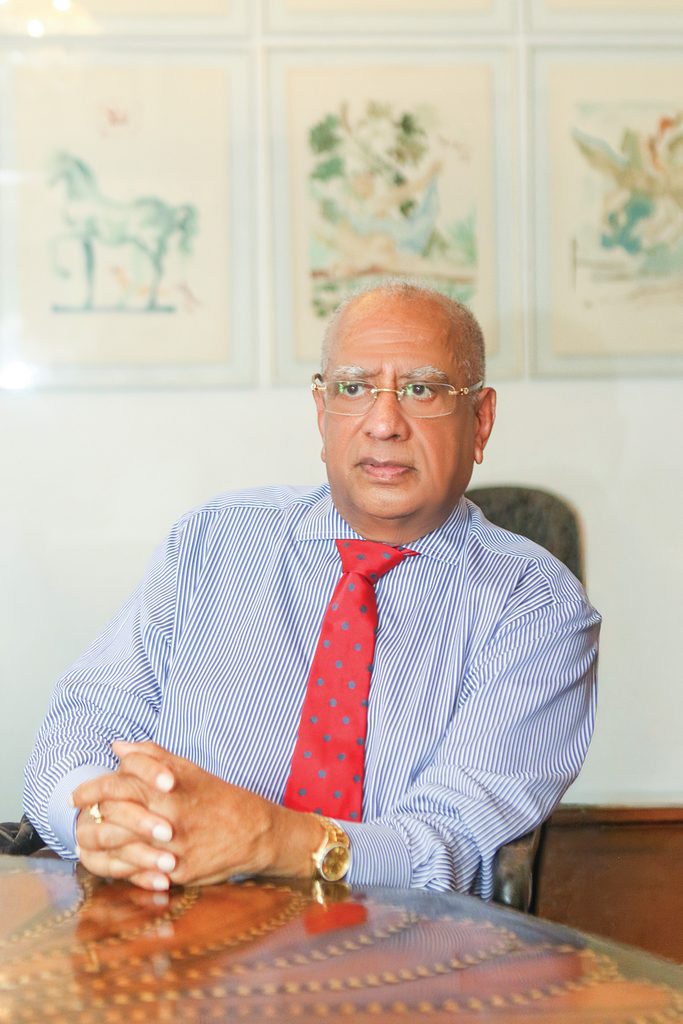
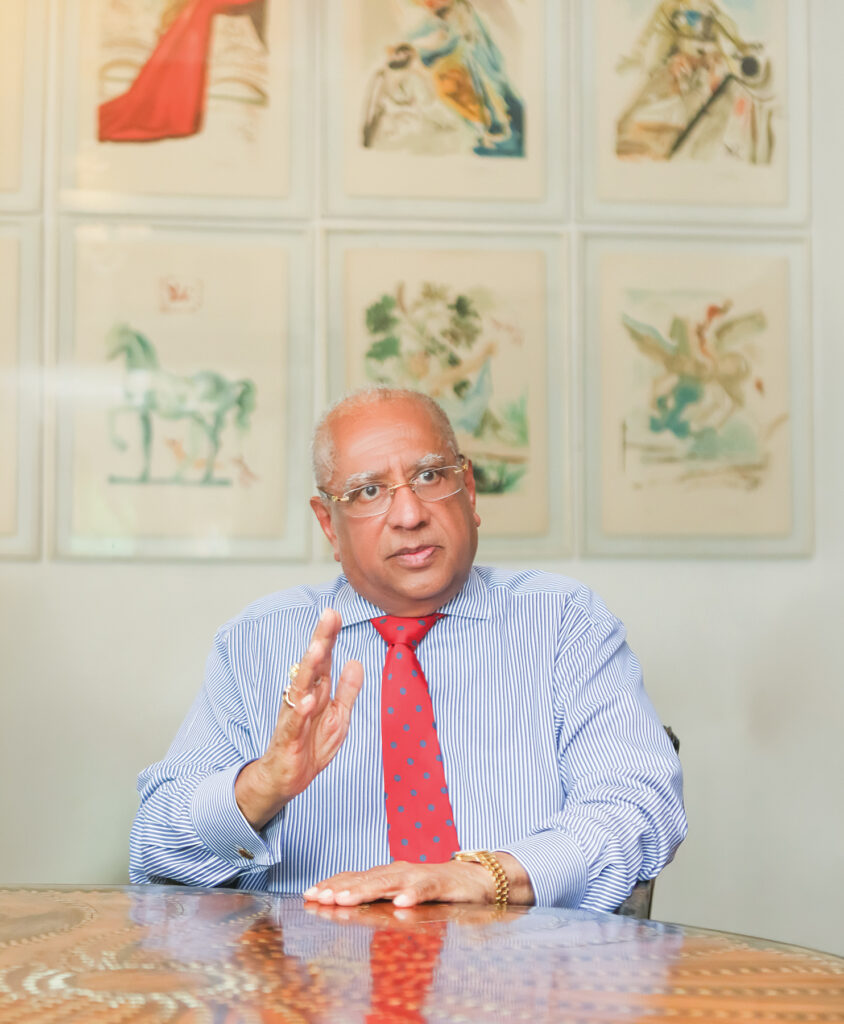
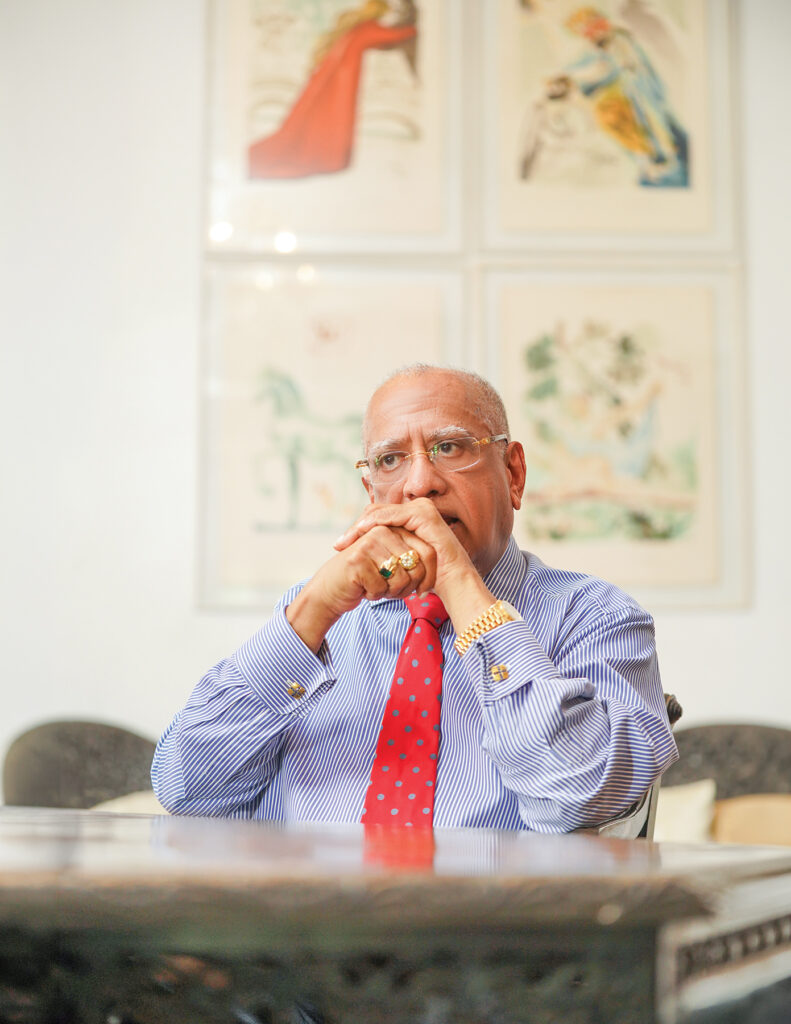
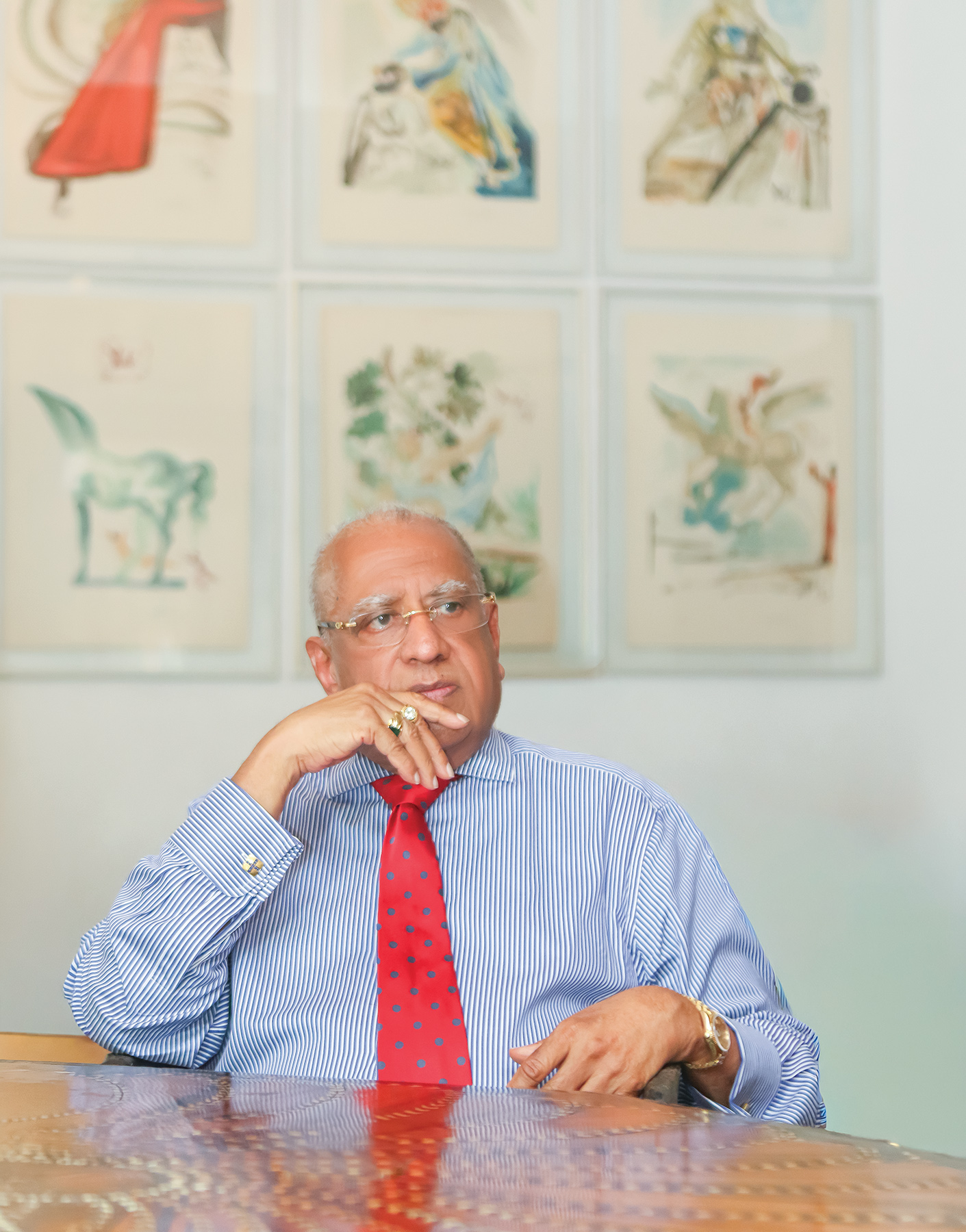
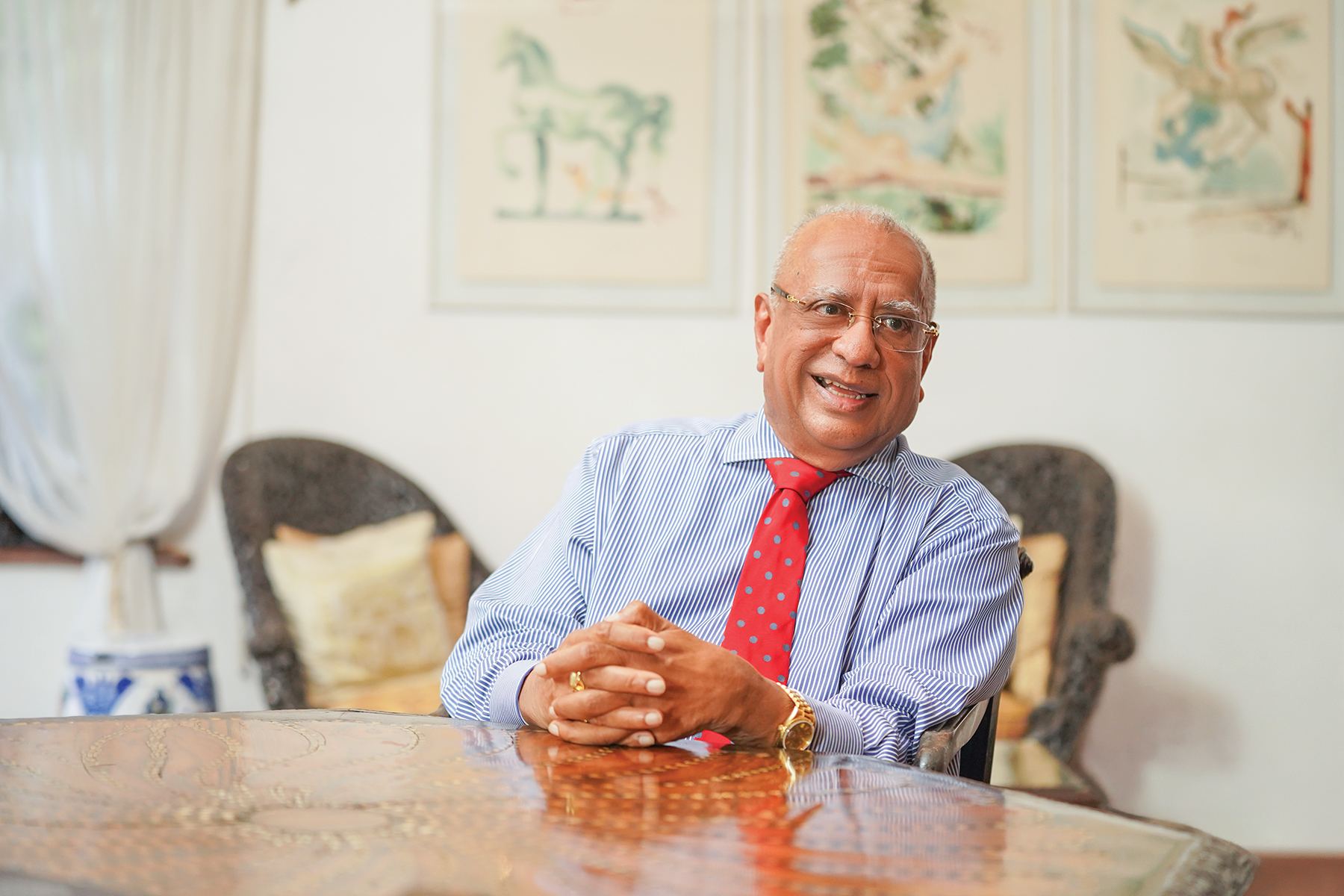
There was one occasion when we were in Hawaii and walked into an art shop selling Salvador Dalí’s works. I was collecting George Keyt at the time and did not intend to buy Dalí. Kili persuaded me to buy Dali, who was alive at the time, explaining that the artwork’s value would multiply after the artist’s death. I ended up buying 12 pieces. That was the kind of mutually supportive, selfless relationship we had. It was more like having a brother.
As a businessman, Kili was also a tough taskmaster. If you did your job, he recognized it and looked after you. If he trusted you, he trusted you completely.
After five decades at Capital Maharaja Group, how has your role changed as the next generation takes on greater responsibility?
When I joined, Maharaja was often in the sports pages of the newspapers because of our involvement in cricket. Kili used to joke that we were “in the news” as we were on the last page. I told him that we need to graduate from the last page to the front page.
Over time, the Group did become much more prominent in the business pages, but it was a hard grind.
There will never be another Kili Rajamahendran. You cannot replace someone like him. He was a once-in a-lifetime person.
As for me, I am still continuing. I am 80 years old, I enjoy what I do, and I am still developing projects. It’s a particular passion.
You were sent to boarding school at the age of five. How did that early experience shape you?
I was sent to boarding school at five because my Engineer father was stationed outside Colombo and was frequently transferred around the country. He felt that if I were at Trinity College in Kandy, my parents would be able to see me more often. At five, however, I did not enjoy being in the matron’s dormitory. After a few months, I climbed over the wall, found a rickshaw, and gave the driver my aunt’s address. I had no money, but he knew where it was. My aunt then called my mother and informed her that I had arrived.
Eventually, I returned to boarding school, and later I found that boarding life was actually a wonderful experience.
It teaches you not to place too much value on possessions because you share everything.
You learn that what matters is your relationship with people rather than your shirt, shoes, or shoe laces.
My friends and I would exchange clothes and shoes. Someone could even take your car, and you might not even ask for it back. You learn to get along with people and to understand that friendship is more valuable than material possessions.
Your connection with Trinity College has remained important to you. What did the school give you?
I owe a great deal to Trinity. I also spent two years at the Royal College because my father was a Royalist and wanted me to finish my education there.
I fitted into Royal quite well because of my boarding-school background. Trinity and Royal shared similarities, and my experience of boarding had taught me to adapt to different people and circumstances.
The friendships I made at school were particularly important.
I learned a great deal there, including, perhaps, how to avoid going to school occasionally. Most importantly, I made good friends who have lasted a lifetime.
You are 80 and still go to work every day. What keeps you working?
I enjoy doing new things. I watch movies in my spare time, although I have not had much time for them recently. I also go to the gym and take my health seriously.
I rarely travel abroad for holidays, I am not really one for holidays at all really. If I travel, it is generally for work. I also work from home or where ever I am, so not being in the office certainly does not mean that I am not working.
I continue because I enjoy what I do and because there are still new things I want to develop.
When you look back at the young accountant who started his career, what surprises you most about the life he eventually built?
I would not say I was the best accountant in the country. Many accountants have gone much further than I have in accountancy.
What helped me was the ability to move beyond accounts into a broader understanding of business. My accounting background helps me every day, but I do not depend on it.
I found that constantly reading balance sheets and preparing reports became boring after a while. Moving into business, varied projects, and problem-solving was much more interesting.
Many people have followed the same path, moving from accounting or another technical discipline into business. It is not a unique story, but it has worked well for me.
My work in the minerals sector is an example. Exploration could take another five to ten years, and production could take even longer.
I may not be around to see the outcome, but someone will benefit. Why not work toward that when I can?