
As technology reshapes how people live, work, and transact, connectivity is evolving into a broader digital ecosystem. Dialog Axiata has moved beyond its traditional role as a telecommunications provider to build platforms spanning connectivity, digital services, fintech, and AI.
Speaking with Business Today, Group Chief Marketing Officer, Lasantha Theverapperuma discusses how technology can create greater customer value, and the role of people and culture in sustaining transformation. He also looks ahead to the opportunities for digital payments, AI, and connected platforms to accelerate Sri Lanka’s digital economy.
Words: Jennifer Paldano Goonewardane.
Photography: Rasanga Dissanayake.
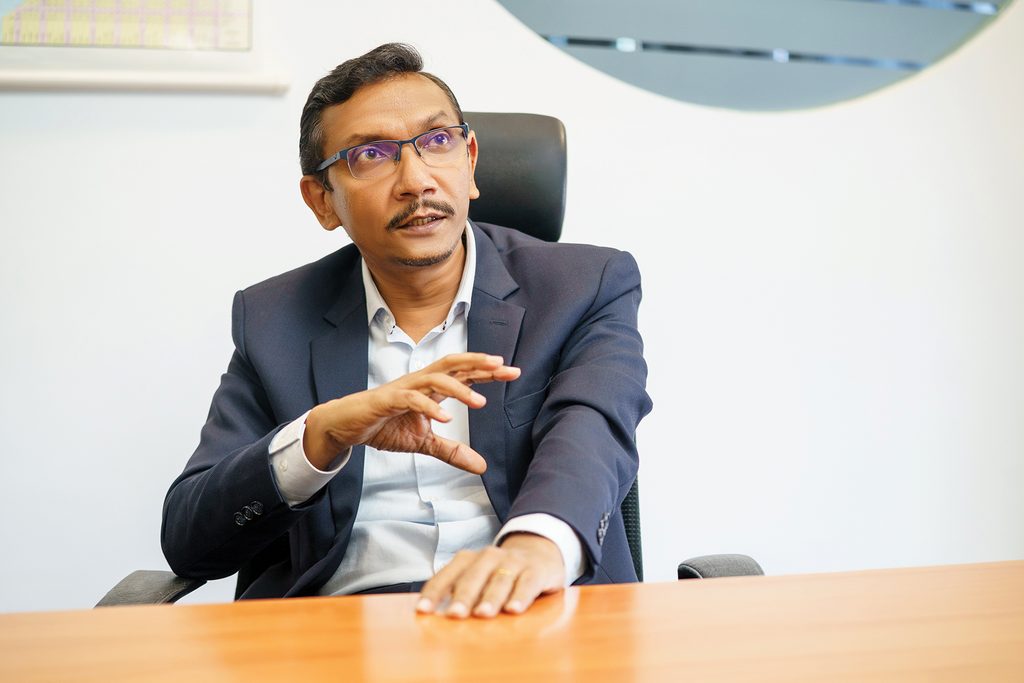
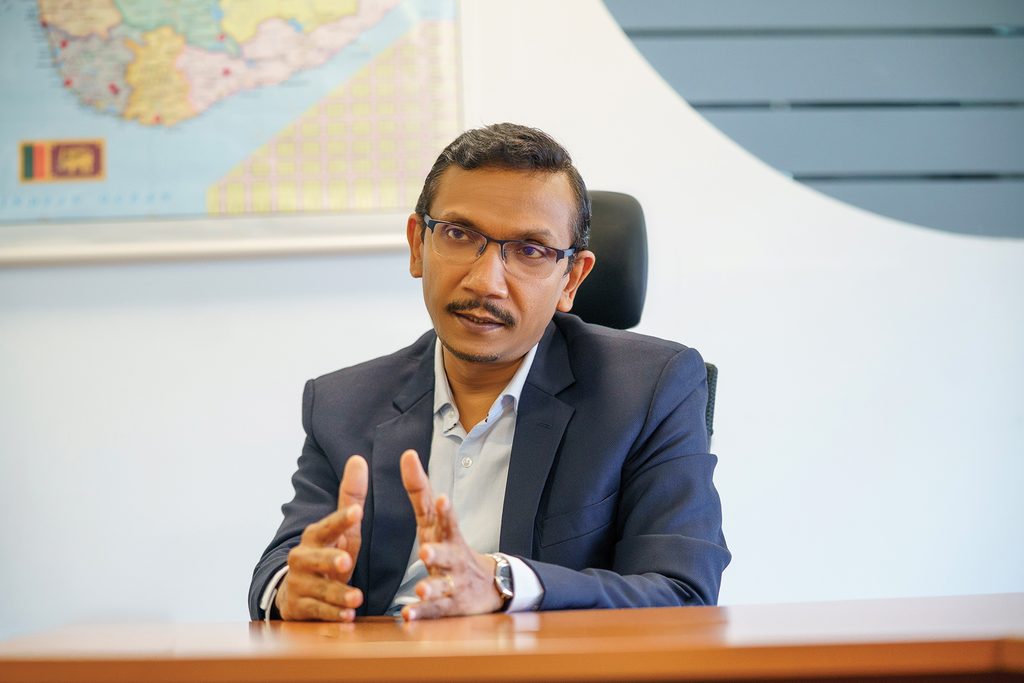
Lasantha Theverapperuma, Group Chief Marketing Officer, Dialog.
Dialog has evolved from a telecommunications provider to a quad-play business, a digital enabler, and, increasingly, a fintech player. What has driven this evolution, and how has it changed the role Dialog plays in the everyday lives of its customers?
Over the last 20 to 25 years, customer needs have evolved significantly. Initially, mobile phones were primarily used for making calls. Dialog entered the market at that point and has since looked at how customers and the world were evolving, ensuring that Sri Lankans remained connected to global trends.
We started with broadband, then moved into television, and eventually began integrating these services into an ecosystem. We had mobile, broadband, and TV operating as separate services, and we saw the need to bring them together. As customers became more engaged with this ecosystem, it marked the beginning of our digital journey.
At the same time, we identified fintech opportunities based on customer needs. Customers cannot always go to a bank or retailer to complete every transaction they need. This led us to develop services that addressed those needs.
This evolution has taken place alongside changes in customer behavior and the wider world, with Dialog playing a role in that journey. Our purpose is to empower and enrich all Sri Lankans, advancing people and the country. That purpose has guided the steps we have taken over the past 25 years.
Digital ecosystems are ultimately about making customers’ lives simpler and more connected. How is Dialog bringing together its different digital capabilities to create a more seamless experience across the customer journey?
Ultimately, it is about customer satisfaction, regardless of our digital capabilities. There are two main areas we focus on. One is the product itself. We have to ensure that we provide a product that meets the customer’s needs.
Alongside the product, we have to make sure customers can access it, raise concerns, resolve issues, and receive service with as little effort as possible. We look at how we can reduce the customer’s transactional costs, including the time and hassle of going through lengthy processes to resolve an issue.
When these two come together – a good product and easy access to service – customers should be able to resolve an issue, access a service, purchase a product, or clarify a bill or product-related matter within seconds.
Bringing the product and service experience together in this way improves customer satisfaction and builds trust. Customers need to know that the product works and that any concerns or questions can be resolved quickly. This trust is what we are focused on building across the ecosystem, which ultimately leads to Brand Love, an important outcome for us.
From a CMO perspective, our focus is on ensuring that we address every part of the customer journey and deliver a seamless experience.
You mentioned building “Brand Love” as an important outcome. Where does Dialog stand in that journey today, and what are you doing to strengthen that connection with customers?
It is a journey. All of us are working towards it, and we are doing several things across the business to get there.
Take the launch of 5G, for example. We are behind some of our peers in Asia, but once the licenses were issued, we deployed more than 1,000 sites within six months, allowing customers to experience the technology. That is one example from the product side.
Today, we cover 99 percent of the population, but 5G does not yet reach everyone. There are customers who are still not covered, and that is part of the journey we have embarked on through continued investment and finding the right balance to achieve wider coverage.
We are investing to ensure customer satisfaction. At the same time, across our digital apps and customer journeys, we are working to improve the experience as much as possible.
Every portfolio at Dialog is on a journey towards building Brand Love.
AI is rapidly reshaping the way businesses engage with customers. Beyond automation and efficiency, where do you see AI creating the greatest value in making customer experience simpler, more intuitive, and more relevant?
AI is a buzzword today, but we look at it more broadly. For us, the question is what value AI can create, and ultimately, that means value for the customer.
AI can bring efficiencies to the business, but in Sri Lanka, where we have access to labor, the opportunity is not necessarily about reducing costs. It is more about improving efficiency. On the customer side, however, there is much greater potential, particularly in reducing the transactional cost and making information more accessible.
For example, when you call a contact center today, you go through several steps before reaching an agent – selecting a language, verifying your number, and providing additional information. By the time you explain the problem, the process itself can create frustration.
We have addressed part of this through the MyDialog app, which allows customers to manage their mobile, television, and broadband services, monitor usage, make payments, and reload their accounts. The next step is our AI-enabled chatbot, DIA, available through WhatsApp. A customer can simply ask to check their balance in Sinhala, Tamil, or English, select the relevant account, and receive the information within seconds. Because the interaction starts on the customer’s phone, there is no need to repeat the verification process.
We are also applying AI in other areas. Govi Mithuru, for example, enables farmers to scan a plant, identify potential diseases, and receive advice on what action to take. Customers can also ask questions by voice. The objective is to make information easier to access and more relevant to their needs.
Our approach to AI is also about bridging AI platforms with local information. Platforms such as ChatGPT and Gemini do not necessarily have access to this information. Our role as a technology enabler is to bridge that gap.
For example, Sri Lankan agriculture has its own conditions, including differences in soil and cultivation practices. Govi Mithuru brings together relevant information from the agriculture sector and AI to provide guidance tailored to Sri Lankan farmers. That is where we see an important role for Dialog in applying AI.
As digital payments become part of everyday life, how do you see the convergence of connectivity and financial services reshaping the customer experience and accelerating Sri Lanka’s transition towards a more digital economy?
Dialog’s journey into fintech began in 2012, when we invested in mobile money. The platform enabled retailers and the wider community to make transfers through a digital wallet, which has since evolved.
We later acquired Dialog Finance, adding financing capabilities to the ecosystem. In parallel, our digital ecosystem continued to grow, particularly through the MyDialog app, which now has more than four million monthly active users. We saw an opportunity to bring these capabilities together and make fintech services more accessible to customers.
That is where Dialog Pay comes in. Integrated within the MyDialog app, Dialog Pay brings payments and financial services closer to a platform customers already use in their everyday lives. Customers can make QR payments using funds from any bank account, eZ Cash or a Dialog Finance savings account, across a growing network of more than 100,000 merchant outlets. The focus is on making digital payments simple, accessible and relevant enough to become part of daily transactions. Just as the growth of telecommunications creates value for the wider community, we believe a strong digital economy is essential for Sri Lanka to move to the next level. The Government and banks have important roles to play, but as a telecommunications company with a broad network of customers and retailers, we also play a role in enabling digital transactions.
We have an ecosystem that brings together our digital platforms, retailers, and partners, allowing customers to transact through these channels. Our aim is to take fintech to the next level and contribute to the development of Sri Lanka’s digital economy. That is the direction of our journey and our mission.
Digital transformation extends beyond the end customer to the businesses and retailers that serve them. How is Dialog using its digital capabilities to empower its wider retail and partner ecosystem?
Customers do not evolve in isolation; they are part of a wider ecosystem. In
Sri Lanka, the local retailer continues to play an important role. Customers often rely on the storekeeper for advice, information about new products, and guidance on what is available in the market. We recognized this and began looking at how we could digitally empower our retail network.
Five years ago, when a customer wanted to obtain a SIM or connection, the process involved filling out forms, signing documents, and physically sending them for processing. Information then had to be entered manually, which created delays and errors.
Today, that process has been digitized through our Retail Hub app. Retailers can complete connections using the customer’s NIC and photograph, significantly simplifying the process.
We then brought mobile money into the platform, allowing retailers to collect bills, including electricity and water bills.
We subsequently added other services such as government payments and doctor channeling. Today, through Dialog Pay, retailers can also accept payments and make transfers via QR code.
Retailers are an important part of our ecosystem. We have around 100,000 retailers across the country, and we are continuing to bring the digital capabilities we develop, including AI, into that network. This creates another path to the customer. We can serve customers directly through our digital platforms, while retailers can also take these services to customers. In that way, the retailer becomes an extension of the digital ecosystem, bringing these services closer to the customer.
As a telecommunications company with a broad network of customers and retailers, we also play a role in enabling digital transactions. We have an ecosystem that brings together our digital platforms, retailers, and partners, allowing customers to transact through these channels.
With a retail network of this scale and turnover, how does Dialog maintain consistent standards, governance, and security across its retailers?
We have a governance unit that oversees the retailer ecosystem, which is important given its scale. We have around 100,000 retailers, with approximately 2,500 new retailers joining and a similar number leaving each month as businesses cease operations or change.
We also have a distributor network of nearly 1,000 people who regularly visit retailers. They ensure that retailers follow our processes, replenish stocks, and address any gaps in knowledge or training.
With a network of this size, we cannot simply issue instructions from the center and expect them to be followed. Our distributor network serves as the link between Dialog and retailers, ensuring they maintain the required standards and are equipped to serve customers effectively.
Building a digital ecosystem requires marketing, technology, data, product, operations, and customer experience to work increasingly as a single, cohesive ecosystem. How does this change the way established organizations need to operate and lead?
There are two aspects to this. First, building a digital ecosystem requires specialized skills. We have dedicated teams for areas such as AI and analytics, technology, and other specialized functions, each led by a leader. This allows these teams to move quickly within their respective areas of expertise.
At the same time, we have recognized the need for a horizontal layer that brings these specialized functions together. The end result is not the work of one division; it is about combining these capabilities to create customer value. That requires leaders who can connect the different areas and understand how they work together.
These leaders need experience in their respective disciplines, but they also need cross-functional knowledge. An AI or analytics specialist, for example, needs to understand the business requirement, the customer perspective, and how technology can be applied to address it. Marketing, customer service, technology, engineering, and business need to come together.
That is why we encourage our leaders to move across different parts of the organization and gain practical experience. This cannot be learned from a textbook alone. You need to work within these functions and understand their objectives and challenges.
In my case, I started in finance, then moved into strategy, business leadership, operations, and digital, and now into marketing. That experience has helped me understand how different functions look at the same issue.
For example, when finance raises concerns about spending, I understand the perspective behind that. Similarly, when evaluating a customer proposition, I consider what we can invest, the value we are creating, and the return on that investment. There needs to be a balance between what we want to deliver and what the business can sustain.
Digital ecosystems require the same balance. We serve customers directly, through retailers, and through partners, so we need to understand the customer and the role of each part of the ecosystem.
Increasingly, I believe organizations need a layer of leadership that connects the customer to the organization’s different functions. That ability to connect these areas is an important differentiator.
With such a diverse customer base and a growing number of products, how are data and AI changing the way Dialog segments customers and measures the effectiveness of its marketing?
I think it is promising rather than challenging. If you go back ten years, marketing was largely one-way communication. An advertisement would be developed, approved internally, and placed on television or radio. We would then use surveys to understand the response, but there was limited visibility into how customers were actually responding.
Today, as soon as we run an advertisement or marketing communication, we can see whether it is working and gather customer feedback. That allows us to make decisions and adjust our approach much faster.
It also allows us to target different customer groups. For example, if we are marketing a product such as Air Fiber, we know the target group and can direct the communication to those customers rather than communicating to the entire market. Analytics and AI allow us to segment customers and use those profiles to deliver the right communication to the right audience.
The communication itself can also be tailored, whether in Sinhala, Tamil, or English, so that customers receive information relevant to them. We can identify which channels to invest in, determine how much to invest, and measure the return from each channel.
The marketing budget itself may not necessarily come down. The reason is that the number of products and propositions we offer has increased significantly. Today, we have hundreds of products, so we need to understand which products are relevant to which customers.
The objective is therefore not necessarily to spend less, but to make the investment more effective. Instead of offering one product to everyone, we can identify what is relevant to each customer and communicate accordingly.
Through Dialog Pay, we are bringing together our digital and financial services capabilities to make digital payments simpler and more accessible for customers, while helping drive greater adoption of cashless transactions.
Technology can be acquired, but transformation ultimately depends on people. What kind of culture and mindset will organizations need to continually evolve as technology and customer expectations change?
Technology today is largely accessible to everyone. Our competitors and we can have similar technology stacks. The differentiator is the people who use that technology and how they create value for customers.
Technology is an enabler; it will not create that value on its own. To make the most of it, organizations need a culture that enables people to work towards a common purpose.
Culture will continue to evolve, but the fundamentals should remain consistent. There needs to be a clear purpose for the organization’s existence and how each employee contributes to it. When people understand the organization’s purpose and where it is going, they can work towards a common goal.
At Dialog, we focus on empowering our people, particularly the younger generation. The world is changing quickly, and someone who joins the organization today may have knowledge that is more relevant to a particular issue than someone who has been there for years. We therefore want everyone to have an equal opportunity to contribute ideas and challenge existing thinking.
Hierarchical organizations can limit this. At Dialog, we try to reduce those barriers. The CEO, CXOs, and other employees work together, and we are willing to listen to someone who has recently joined the organization because that person may have knowledge that can contribute to a decision.
That requires respect, equal opportunity, and a willingness to learn from one another. Beyond the common purpose that holds the organization together, the culture needs to remain fluid enough to allow people to contribute and bring out their best.
Employee mobility is also part of organizational continuity. How does Dialog balance the movement of people with the need to retain knowledge, culture, and a sense of purpose within the organization?
I see people moving between organizations or jobs as part of a natural cycle. Younger employees may leave to gain more exposure, experience, or benefits, and I encourage that. If you look at my own career, I have rarely stayed in the same role for more than two or three years. I have been at Dialog for 22 years, but I have moved across different roles and functions.
I moved because I wanted to see what was beyond what I was already doing. That helps an individual evolve, expand their knowledge, and develop professionally. Moving between organizations can be part of that same journey.
One reason I stayed at Dialog is that I could see opportunities to move across functions. I joined finance, my core area, then moved into strategy, digital transformation, operations and eventually into my current role as Group Chief Marketing Officer. We try to create similar opportunities for people within Dialog through cross-functional movements. As a large organization, we can move people across divisions. We also have programs where employees can apply to move to another division at a higher level.
So, if people want to move, we try to create opportunities for them to do so within the organization. At the same time, even when people leave, if we maintain a clear purpose and mission, they take that with them. They have contributed to the organization, learned from it, and, in turn, helped develop it.
I don’t see people who leave after two or three years as a loss. They have contributed while they were here, and someone else comes in to continue the journey. Some will stay and eventually take on greater leadership roles. The people who move in and out also contribute to the organization’s evolution.
It is therefore important that we respect that movement. If we question why someone has stayed only two or three years, that creates the wrong attitude. People should be given the opportunity to grow, whether that growth happens within the organization or elsewhere.
Looking ahead, how do you see the convergence of connectivity, digital platforms, payments, and AI shaping the next phase of Sri Lanka’s digital economy? And what role can companies such as Dialog Pay in enabling that future?
Sri Lanka is an island, and in some ways, we can be complacent because we are comfortable with what we have. That can slow the adoption of new technologies and transformations.
For example, people may be used to going to a shop and transacting with cash. We have 5G today, but many people will continue using their existing phones because they are comfortable with them. That is part of our culture. But in an increasingly digital world, we also need to accelerate our adoption of technology and new trends.
Bridging that divide is part of Dialog’s role. The Government is introducing many reforms, and with access to around 20 million customers, 100,000 retailers, and a thousand people in the field, we believe we have a responsibility to help bridge that gap.
It is not about changing our culture, but about retaining what is valuable while moving towards a more digital economy. That requires a balance between the two. Digital ecosystems, AI, and digital platforms can help bridge that gap.
Our digital tools, such as Govi Mithuru, DIA, the MyDialog app, and Retail Hub, can help Sri Lankans become more comfortable with digital services. This is also why we have entered the fintech space. Through Dialog Pay, we are bringing together our digital and financial services capabilities to make digital payments simpler and more accessible for customers, while helping drive greater adoption of cashless transactions.
Digital payments, particularly QR payments, are still in their early stages in Sri Lanka. There is a significant gap compared with markets such as India and China. As digital payments and fintech adoption increase, there can also be economic benefits from greater efficiency and reduced costs associated with handling and transporting cash.
This evolution has already started and is accelerating. Dialog plays an important role in that journey. Our mission is to empower and enrich
Sri Lankan lives and enterprises, and we need to be part of taking the country towards the next stage of its digital economy.