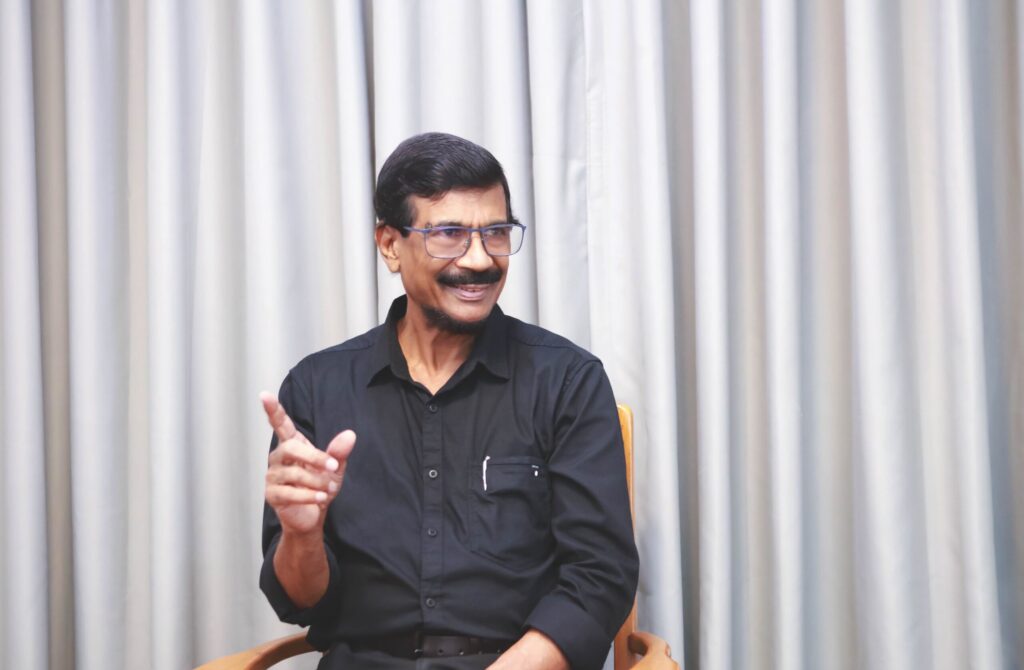

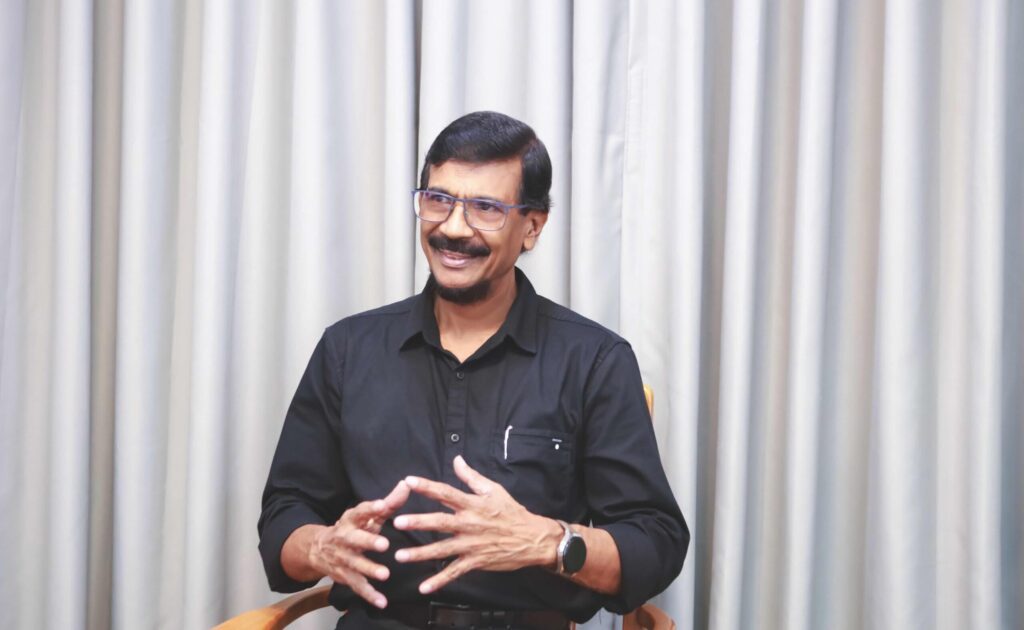
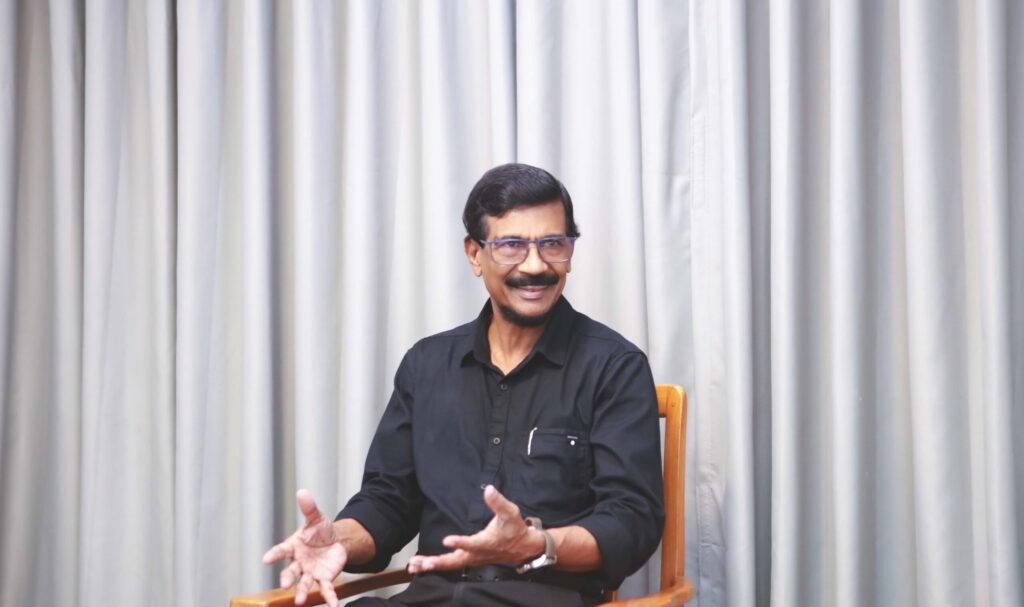
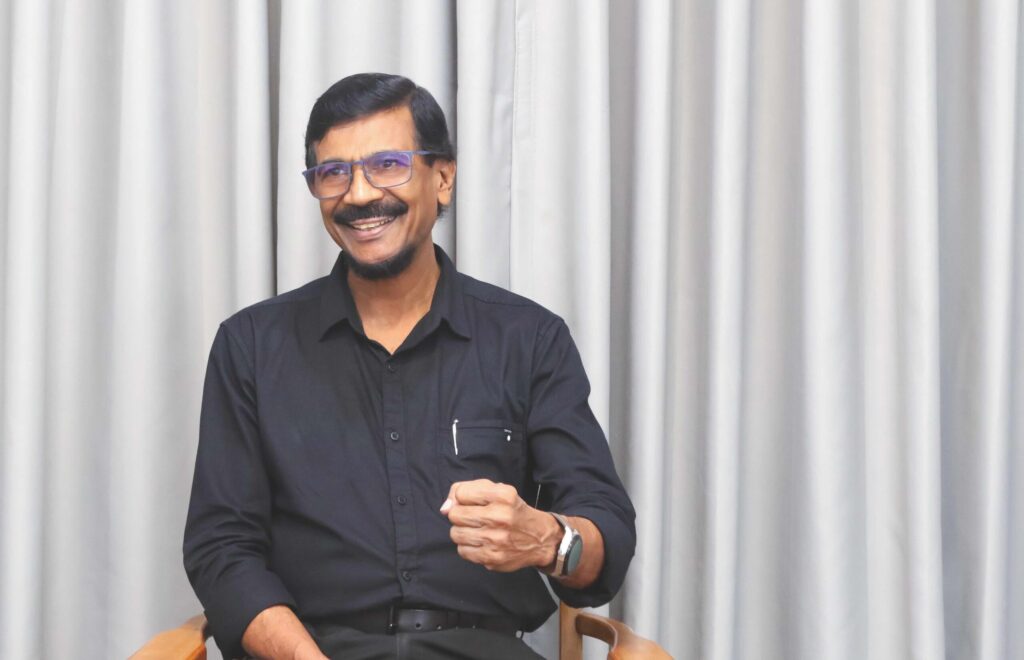
Tilvin Silva, General Secretary, JVP.
The NPP government entered office promising to reshape Sri Lanka’s political culture while steering the country out of its worst economic crisis in decades.
Speaking to Business Today, JVP General Secretary Tilvin Silva assesses the administration’s progress, discusses the challenges of governing during recovery, and explains the priorities that will shape the remainder of its first term.
Words: Jennifer Paldano Goonewardane.
Photography: Sujith Heenatigala and Dinesh Fernando.
As the NPP government approaches its second year in office, how do you assess its performance in restoring economic stability and advancing its broader governance agenda?
As a government, we have been in office for one and half years and will complete two years in November. Looking back, we are satisfied with the progress made in stabilizing the country and laying the foundation for its future development.
When we assumed office, Sri Lanka was facing bankruptcy. Businesses had contracted, many people were leaving the country, and the State was unable to meet its debt obligations. At one stage, former President Ranil Wickremesinghe had stated that the country would have to sell several State-owned enterprises to repay its debt.
Since the NPP-led government came to power, we have focused on restoring economic stability, strengthening fiscal discipline, and rebuilding confidence among businesses and the public. We believe these efforts have demonstrated that the country can recover from the economic crisis.
Our progress has been driven by disciplined financial management. The IMF-supported program was already in place when we assumed office, and we continued to engage with the IMF to ensure its successful implementation.
One of the key outcomes has been the country’s fiscal performance. During the first five months of 2026, Sri Lanka recorded a budget surplus of 197 billion rupees, marking a significant shift from the budget deficits that had characterized previous years. This was achieved through stronger revenue collection and expenditure management.
Government expenditure increased by only seven percent, while tax revenue grew by 25 percent. No new taxes were introduced; instead, we focused on improving tax administration, strengthening compliance, and reducing corruption and malpractice. Revenue from income tax, customs duties, and excise duties exceeded targets in 2025.
The broader economy also showed encouraging results. Export earnings reached a record 17 billion dollars in 2025, while worker remittances exceeded eight billion dollars. Tourist arrivals surpassed 2.3 million during the year. IMF program disbursements also strengthened the country’s foreign reserves, which now stand at around 6.8 billion dollars. Together, these indicators suggest that the economy has moved from crisis towards greater stability.
We have also resumed stalled development projects, including highways, bridges, and public infrastructure. These projects reflect our efforts to restart economic activity and improve connectivity. At the same time, we have sought to create an environment in which businesses can operate without unnecessary interference, thereby fostering greater confidence in the private sector. Beyond the economy, we have prioritized social cohesion.
During our administration, there have been no incidents of ethnic or religious violence, despite attempts to create tensions. We acted promptly to prevent such incidents while ensuring that all communities received equal attention. This has strengthened public confidence, particularly among people living in the Northern and Eastern Provinces, that they can live and work in a stable environment.
There has been criticism of the government’s welfare programs. However, Sri Lanka continues to have more than 200,000 people living in poverty, and we believe it is the State’s responsibility to support vulnerable groups. Assistance has been increased for the elderly and those with illnesses. Schoolchildren receive an annual allowance of 6,000 rupees for books and stationery. Public sector salaries have been increased, while we have also encouraged higher wages in the private sector.
The plantation sector presented a separate challenge. When discussions on wage increases encountered resistance from plantation companies, the government introduced a daily allowance of 200 rupees for estate workers. Housing programs and road development projects have also been initiated in plantation communities.
According to IMF representatives, Sri Lanka’s economy is now better positioned to withstand external shocks. During our tenure, we faced two major challenges: Cyclone Ditwah in November 2025 and the conflict in the Middle East.
The World Bank estimated that Cyclone Ditwah caused damage exceeding USD four billion. Following the disaster, the government provided compensation to affected families through a separate allocation of 500 billion rupees, without diverting funds from the national budget.
The Middle East conflict has also presented economic challenges, but we have sought to minimize its impact on the country. Fuel prices have not been increased despite global pressures. At present, the government absorbs a loss of around 100 rupees per liter of diesel to maintain affordability for consumers. Taken together, these measures have, in our view, established a stronger foundation for Sri Lanka’s recovery.
Our objective has been to move the country from crisis to stability through prudent financial management, equal application of the law, reduced political privileges, and policies aimed at improving public welfare.
The NPP pledged to change the country’s political culture. What progress has been made in achieving that objective?
One of our key priorities after assuming office was to change Sri Lanka’s political culture. The 2022 Aragalaya movement was driven largely by public demands to end corruption and political privilege. Those expectations formed an important part of the mandate we received.
Our first step was to address corruption at the highest levels of government. Former Singaporean Prime Minister Lee Kuan Yew once compared eliminating corruption to sweeping a staircase, arguing that it must begin from the top. We adopted the same approach. We have sought to establish a culture in which ministers uphold high standards of integrity and in which bribery and abuse of office are not tolerated.
We believe this has also contributed to restoring confidence among investors and development partners. Several Japanese-funded projects that had been delayed due to governance concerns have resumed. Strengthening governance has also supported improvements in tax administration by reducing corruption and malpractice in the revenue collection process.
Another important objective was to strengthen the rule of law. Our position is that no individual is above the law, regardless of status or position. Anyone found to have committed an offense is subject to the same legal process.
We also acted on our commitment to reduce the privileges historically enjoyed by politicians. Parliamentary pensions have been discontinued, presidential privileges have been reduced, and the issuance of duty-free vehicle permits has been stopped. The Proceeds of Crime Act, introduced in 2025, provides a legal framework to recover assets obtained through unlawful means. We also revised expenditure within Parliament, including increasing the price of meals served in the parliamentary canteen and reducing the annual insurance cover for Members of Parliament from one million rupees to 250,000 rupees.
These measures were intended to demonstrate that public funds should be used responsibly rather than to maintain political privileges. We believe they have strengthened public confidence in the government’s management of taxpayer money while contributing to greater fiscal discipline.
Another area of focus has been reducing political interference in public institutions. For many years, political influence affected the functioning of law enforcement agencies, State institutions, and the wider public sector. Senior appointments were often influenced by political considerations, while businesses frequently encountered political involvement in routine commercial activities.
Our objective has been to reverse that culture. We have sought to allow State institutions to operate independently, enabling public officials to perform their responsibilities without political pressure. Similarly, we have worked to create an environment in which businesses can operate without being expected to provide political favors or financial support.
Changing long-established political practices is an ongoing process. However, we believe the reforms introduced over the past one and a half years have strengthened institutional independence, improved governance, and created a more predictable environment for both citizens and the private sector. In our view, these changes are essential for sustaining public trust, strengthening institutions, and supporting long-term economic development.
The government has introduced several national initiatives alongside its economic reforms. What outcomes do you expect these programs to deliver? We are implementing three major national initiatives that we believe will support the country’s long-term development.
The first is the Clean Sri Lanka program. While it focuses on improving public spaces, its broader objective is to encourage civic responsibility, discipline, and higher standards across society. Several initiatives have been implemented under this program, including the renovation of transport infrastructure. The Fort Bus Station has been refurbished, while railway stations across the country have either been renovated or are currently undergoing restoration under the Dream Destination initiative. Renovation work is also underway at the Fort Railway Station.
The program also includes efforts to modernize public transport. The Ministry of Transport has introduced low-floor, air-conditioned buses, while the newly established Metro Bus Company is expected to add more than 100 buses to its fleet in the near future. These services will initially operate in Colombo before expanding to other major cities. Our objective is to improve the quality, accessibility, and reliability of public transport for commuters.
The second initiative, Praja Shakthi, aims to reduce rural poverty through community-led development. Under this program, every Grama Niladhari Division will have a Praja Shakthi Committee comprising the Grama Niladhari, a Development Officer serving as secretary, and representatives from the local community. We have placed particular emphasis on the participation of women and young people, recognizing their role in community development.
These committees identify local development priorities and submit proposals to the Divisional Secretariat for funding. While they do not control financial allocations directly, they play an important role in determining the development needs of their respective communities. Approximately 75 percent of the country’s 14,000 Grama Niladhari Divisions have already established these committees.
The program is intended to strengthen local participation in development planning by enabling communities to identify projects they consider most important, whether community centers, playgrounds, roads, or other local infrastructure. A budget allocation of 25 billion rupees has been made for the program in 2026, with all relevant ministries expected to support projects that fall within their respective areas of responsibility. We believe this approach will strengthen rural communities while promoting greater decentralization in development planning.
The third priority is accelerating the country’s digital transformation, both within the public sector and across the wider economy. A key milestone has been the introduction of GovPay, a centralized digital platform designed to modernize government revenue collection and simplify financial transactions between citizens, businesses, and the State. By enabling online payments for government services, the platform is intended to reduce paperwork, improve efficiency, and provide real-time access to public services.
More broadly, the government’s digital transformation agenda, led by the Ministry of Digital Economy, aims to expand Sri Lanka’s digital economy to 15 billion dollars by 2030. We see digitalization as a key driver of economic growth, productivity, service delivery, and greater government efficiency, while supporting a more citizen-focused approach to public administration.
How is the government addressing organized crime and drug trafficking while strengthening public institutions?
Addressing organized crime remains one of the government’s more complex challenges. In our assessment, the underworld that existed before we assumed office was closely linked to drug trafficking and had connections with sections of the political establishment, law enforcement agencies, and parts of the public sector. These networks operated in a coordinated manner, making them difficult to dismantle.
Our priority has been to break those networks and strengthen the rule of law. This is a gradual process because organized criminal groups continue to possess weapons and, in some instances, maintain links with individuals within State institutions. We therefore recognize that this requires sustained investigation, institutional reform, and effective law enforcement.
Our objective is to dismantle the drug trafficking networks and protect future generations from the impact of narcotics. As an island nation, Sri Lanka’s illicit drugs originate from outside the country, and we have strengthened efforts to intercept these shipments. However, criminal organizations continue to adopt new methods to evade detection, requiring law enforcement agencies to continually adapt their operations.
One important change, in our view, is that organized criminal groups no longer receive political protection from government officials. The political environment that previously enabled such relationships has changed. Nevertheless, we acknowledge that individuals within certain institutions who maintain links with these networks may still remain, which can hinder enforcement efforts. Identifying and addressing those connections is therefore an important part of our strategy.
We are also conscious that some weapons previously held by the State remain unaccounted for, and there have been recent incidents that have raised questions about attempts by criminal elements to influence public officials. Such developments reinforce the need for continued vigilance and thorough investigations into any links between organized crime and State institutions. Our approach is to conduct these investigations carefully and within the law. Public support has been an important factor in this effort, as communities are directly affected by organized crime and drug trafficking.
We also believe that the absence of political patronage within the current administration has strengthened the independence of law enforcement agencies. Without political protection, criminal organizations face greater difficulty in sustaining their operations. At the same time, we are committed to ensuring that investigations and prosecutions proceed through due legal process.
While we recognize that eliminating organized crime is a long-term undertaking, we believe the measures introduced so far have begun to weaken these networks. Our objective is to continue strengthening institutions, enforcing the law impartially, and creating a safer environment for citizens. Our broader vision remains unchanged: to build what we described during the election campaign as “A Thriving Nation and a Beautiful Life” through stronger institutions, economic progress, and accountable governance.
What progress has the government made in attracting foreign investment while strengthening Sri Lanka’s international partnerships?
We have made progress in attracting foreign investment, although implementation has, at times, been slowed by regulatory processes. Several Japanese-funded projects are expected to commence shortly, while China, India, and several countries in the Middle East are currently investing in projects. One of the most significant developments, in our view, has been the improvement in Sri Lanka’s international reputation as an investment destination.
We believe governance reforms and efforts to strengthen transparency have contributed to changing investor perceptions. While I acknowledge that corruption has not been eliminated at every level of the public sector, we have sought to ensure higher standards of integrity at the highest levels of government.
At the same time, we have worked to minimize political interference in business, enabling companies to operate in a more predictable environment. We also recognize that administrative delays remain a challenge. To address this, the government is implementing reforms, such as the Single Window Trade Portal, intended to simplify procedures, improve efficiency, and facilitate trade and investment.
We also believe Sri Lanka’s international standing has improved in other areas. Countries that had previously expressed concerns regarding governance and minority issues have, in our assessment, recognized the steps being taken to strengthen institutions and promote social stability.
As a result, we believe Sri Lanka is engaging with the international community from a stronger position.
Our foreign policy has been guided by the principle of maintaining constructive relations with all major partners. We continue to engage with India, China, the United States, and other countries in line with Sri Lanka’s national interests rather than aligning with any particular geopolitical bloc. Our objective is to maintain balanced relationships while expanding economic and development partnerships.
We believe recent diplomatic engagements have reflected this approach. Decisions on regional developments have been guided by international norms and Sri Lanka’s foreign policy principles. Our focus has been on maintaining constructive relationships with all countries while safeguarding the country’s interests.
Sri Lanka has also received several international recognitions in tourism in recent months, including being named the World’s Best Island Destination and the Number One Trending Wellness Destination. We view these recognitions as reflecting the country’s recovery and improving international profile following the economic crisis.
Domestically, we have also sought to change aspects of the country’s political culture by promoting greater simplicity in public office and placing greater emphasis on governance and public service. While we recognize that challenges remain, our focus has been on delivering reforms that strengthen public confidence and support long-term national development.
Our approach to international economic relations has also been based on dialogue and engagement. When Sri Lanka faced higher United States tariffs, we entered into discussions to address concerns raised, including trade imbalances between the two countries. Through continued engagement, we were able to negotiate a reduction in those tariffs.
In our view, credibility has been an important factor in these discussions. We have sought to be transparent about what Sri Lanka can realistically undertake and to build relationships based on consistency and mutual trust. This approach has enabled us to maintain constructive relations with the United States while engaging openly on areas where there may be differences of opinion.
At the same time, we have expanded our engagement with other partners. Relations with Russia have strengthened, particularly in discussions relating to energy cooperation. During the recent disruptions to global energy markets, negotiations were initiated with Russian suppliers, and two Russian companies are expected to begin supplying oil to Sri Lanka. Importantly, these engagements have not affected our relationships with other international partners.
Our objective is to pursue a balanced foreign policy that expands Sri Lanka’s economic opportunities while maintaining constructive relations with all countries.
Public sector reform is often regarded as essential for improving the ease of doing business. How does the government plan to modernize the public service and strengthen institutional efficiency?
While we believe we have strengthened public confidence by addressing corruption at the highest levels of government, we recognize that some State institutions responsible for facilitating business and investment have yet to achieve the level of efficiency we expect. For this reason, public sector reform remains one of our priorities. We believe meaningful change requires not only improvements to systems and processes but also a gradual shift in organizational culture and attitudes across the public service.
At the same time, outdated regulations and administrative circulars need careful review, while organizational structures should be modernized to improve efficiency and decision-making. One of the challenges we have identified is a reluctance among some public officials to assume responsibility for decisions. This can result in unnecessary administrative hurdles for businesses and investors, with greater emphasis placed on procedural obstacles than on facilitating investment.
Our objective is to foster a more service-oriented public sector that supports economic activity while maintaining appropriate regulatory standards. We also recognize that these reforms cannot be achieved overnight. Our government has been in office for less than two years, and we inherited a public service that had evolved over several decades under successive administrations. Rebuilding institutional capacity and improving performance is, therefore, a long-term undertaking that requires careful planning and consistent implementation.
Critics have questioned the experience of some Cabinet ministers. How do you respond to those concerns?
Many of our ministers assumed office for the first time under this administration. However, they have approached their responsibilities with commitment and a strong sense of public service.
They have had to govern during a challenging period, managing economic recovery while implementing a broad program of reforms. Despite these demands, they have remained focused on fulfilling the responsibilities of their respective portfolios.
I believe they have demonstrated a willingness to learn, adapt, and strengthen their understanding of governance as needed. As with any leadership role, experience develops over time, and we expect them to continue growing in their responsibilities.
Above all, they have sought to carry out their duties with integrity and accountability. In our view, their commitment to serving the public has been one of the defining characteristics of this administration, and we are confident they will continue to develop as policymakers and administrators.
We have sought to allow State institutions to operate independently, enabling public officials to perform their responsibilities without political pressure. Similarly, we have worked to create an environment in which businesses can operate without being expected to provide political favors or financial support.
How do you respond to criticism that the government has not pursued enough large-scale development projects?
We understand why some people hold that perception. For many years, successive governments prioritized large infrastructure projects that attracted significant public attention. In our view, some of these projects imposed a considerable financial burden on the country while delivering limited benefits to the public. As a result, many people came to associate development with large-scale construction projects.
Our immediate priority has been different. We have focused on completing smaller projects that directly improve people’s daily lives, particularly those that had remained unfinished for many years. At the same time, this does not mean we have abandoned major infrastructure development.
Work has already commenced on the Kurunegala–Galagedera section of the Central Expressway. The project is being financed through Treasury funds rather than external borrowing, which we believe represents a different approach to infrastructure financing.
We have also sought to change how public resources are used for government events and official activities. Previous administrations placed considerable emphasis on public displays and promotional campaigns. Our view is that public funds should be directed primarily towards development priorities rather than extensive ceremonial or promotional expenditure. Public communication remains necessary, but it should be carried out responsibly and within reasonable limits. While some critics argue that the government has not undertaken enough large-scale projects, we believe public confidence remains strong. A recent national survey conducted by the Center for Policy Alternatives reported that 75.5 percent of respondents were satisfied with President Anura Kumara Dissanayake’s performance.
We view this as an indication that many citizens recognize the direction the government is moving in. We also believe our policies have strengthened engagement with communities that have historically felt underserved. In the plantation sector, we have sought to improve workers’ welfare by supporting wage increases, providing government allowances where necessary, and advancing housing development initiatives. In our view, these measures demonstrate the government’s commitment to addressing long-standing social and economic challenges.
Similarly, we believe the government has strengthened its relationship with communities in the Northern and Eastern Provinces by adopting an approach that serves all citizens equally. While challenges remain, our objective has been to ensure that every community feels represented and included in the country’s development. Many of the government’s initiatives have been guided by inclusivity. For example, the introduction of low-floor buses was intended to improve accessibility for persons with disabilities, older citizens, and others who benefit from more inclusive public transport. We believe development should respond to the practical needs of all segments of society.
We recognize that criticism is an inherent part of democratic governance. Opposition parties and other stakeholders will continue to express differing views, and that is part of the democratic process. Our focus remains on implementing our policy agenda, strengthening public institutions, and delivering outcomes that we believe will contribute to the country’s long-term development.
Some business groups have suggested that access to government is uneven, with larger businesses receiving greater attention than smaller enterprises. How do you respond to those concerns?
We do not differentiate between businesses based on their size or their political affiliations. Our responsibility is to create an environment in which all legitimate businesses and entrepreneurs can operate and contribute to the country’s economic growth.
The private sector plays a central role in expanding national production, creating employment, and generating investment. Accordingly, our focus is on improving the conditions under which businesses operate. This includes examining ways to reduce energy costs, considering future tax incentives where appropriate, and improving the public service’s efficiency so businesses receive faster, more effective support.
Our policies are intended to benefit the wider business community rather than any particular group. If businesses comply with the law and meet their tax obligations, it is the government’s responsibility to facilitate their operations and encourage investment.
At times, some business groups have expressed concerns about access to ministers and senior officials. However, not every proposal presented to the government is supported by a viable business plan. In some cases, individuals seek meetings based solely on concepts, without the necessary technical, financial, or commercial assessments.
This is evident in sectors where investment trends can quickly become concentrated. For example, the rapid expansion of rooftop solar installations created operational challenges for the national electricity grid. By contrast, utility-scale renewable energy projects are developed within an agreed regulatory framework that allows the system operator to manage grid stability. We therefore encourage investors to evaluate opportunities carefully and base investment decisions on sound commercial analysis rather than short-term market trends.
A similar pattern can be seen in agriculture, where producers often shift collectively to crops that performed well in a previous season, leading to oversupply and lower prices. Sustainable investment decisions require careful planning and market assessment. When businesses need assistance engaging with the government, we are prepared to facilitate those discussions. We have helped industry groups and investors connect with the relevant ministers and institutions where appropriate. At the same time, investment proposals must proceed through established regulatory processes.
For example, foreign investment proposals are expected to follow the procedures administered by the Board of Investment and other relevant agencies. We cannot support attempts to bypass established approval mechanisms or financial regulations. Similarly, all investment funds must enter the country through the formal banking system in compliance with Sri Lanka’s obligations under international anti-money laundering and financial transparency frameworks.
We also acknowledge that there may be occasions when ministers are unable to accommodate every meeting request immediately because of the demands of their responsibilities. This should not be interpreted as a lack of willingness to engage with the private sector. If there are genuine concerns about access to decision-makers, we are prepared to review these issues and improve communication channels.
Changing long-established political practices is an ongoing process. However, we believe the reforms introduced over the past one and a half years have strengthened institutional independence, improved governance, and created a more predictable environment for both citizens and the private sector.
How does the government plan to transform agriculture into a more productive and commercially viable sector?
Agriculture remains one of the most important sectors of Sri Lanka’s economy, contributing significantly to national output while providing employment for around one-quarter of the workforce. However, many parts of the sector continue to operate on a largely informal basis, creating challenges in productivity, market access, and income stability.
We believe the government’s responsibility is to support farmers while helping transform agriculture into a more organized and commercially sustainable sector. Since assuming office, we have introduced several measures to improve farmer incomes. The fertilizer subsidy has been increased from 15,000 rupees to 30,000 rupees per hectare, while the guaranteed purchasing price for Nadu paddy has been raised from 98 rupees to 120 rupees per kilogram.
At the same time, we recognize that significant challenges remain. Our approach has been to engage directly with farming communities, understand the issues they face, and develop practical solutions. While there is political debate over the government’s performance in the sector, our focus is on addressing genuine challenges affecting farmers and rural communities.
We acknowledge that poverty remains widespread in many agricultural areas, with farmers and plantation workers among those facing the greatest economic hardship. Improving rural livelihoods, therefore, remains an important part of our broader development agenda, and we recognize that further interventions will be required.
One of the steps taken by the government has been to reopen a number of paddy storage facilities that had ceased operations in previous years. Improving storage capacity is intended to strengthen the paddy supply chain, support farmers, and enhance market stability.
Managing the rice sector requires balancing the interests of multiple stakeholders, including farmers, millers, traders, and consumers. The government must ensure that farmers receive a fair return while keeping rice affordable for consumers. Achieving that balance remains a key policy challenge in the sector, particularly given the costs of processing, transport, and distribution.
We have also encouraged farmers to consider cultivating higher-value varieties, such as Keeri Samba, when market conditions are favorable. More broadly, we believe the sector requires a greater emphasis on planning, productivity, and market-oriented decision-making rather than relying solely on traditional cultivation practices.
Another priority is developing value-added industries linked to agriculture. Compared with countries that have built competitive agro-processing sectors around products such as dehydrated fruits and vegetables, Sri Lanka still has considerable scope to expand agricultural manufacturing and value addition. At present, much of the sector remains focused on primary production rather than processing and industrial development.
Our long-term objective is to transform farming into a modern agricultural industry that creates greater value, improves productivity, expands export opportunities, and generates higher and more sustainable incomes for farmers. The Ministry of Agriculture has developed a strategy to support this transition, and we intend to continue implementing those reforms over the coming years.
One of the most significant developments, in our view, has been the improvement in Sri Lanka’s international reputation as an investment destination. We believe governance reforms and efforts to strengthen transparency have contributed to changing investor perceptions.
What are the government’s priorities for the remainder of its first term, and what outcomes do you expect to achieve?
Our focus is to deliver on the commitments outlined in our election manifesto while maintaining the country’s economic recovery.
Governance reform remains an important priority. This includes implementing the constitutional reforms we proposed, including the abolition of the Executive Presidency. We believe these reforms must be carried out carefully and through a consultative process to ensure they are durable and broadly accepted.
Economic development will remain at the center of our agenda. Our objective is to create opportunities that enable people to become economically independent rather than relying on State support. Achieving this will require sustained investment, private sector growth, and improved productivity.
Reducing energy costs is another priority. We are expanding renewable energy generation and investing in energy storage infrastructure to support greater use of solar and wind power. Our expectation is that these investments will help lower energy costs over time, improving businesses’ competitiveness while reducing costs for consumers.
We also intend to continue modernizing the country’s transport network. Alongside ongoing highway development, we are focused on improving public transport through integrated bus and rail services, multimodal transport hubs, and the expansion of the railway network. Our objective is to provide a more efficient, reliable, and commuter-friendly transport system.
Investment in health and education will remain a key part of our development strategy. The government is strengthening public healthcare by upgrading hospital facilities and equipment, while education reforms planned for 2027 aim to create a more balanced and student-centered education system that encourages creativity alongside academic achievement.
What is your assessment of the current political opposition, and how does it influence the government’s approach to governance?
We believe Sri Lanka’s political landscape has undergone a significant change since 2022. Public expectations have evolved, with greater emphasis on accountability, integrity, equality before the law, and more responsible governance. In our view, these expectations have reshaped the country’s political culture.
There have been occasions when allegations have been made against the government, including claims relating to public administration. Where appropriate, we have sought to address such allegations through established institutional processes. For example, when concerns were raised about container clearance at the Port of Colombo, a parliamentary committee, including opposition members, was appointed to examine the matter. Our position is that allegations should be investigated through transparent and accountable mechanisms.
We believe the role of the opposition is to scrutinize the government, acknowledge progress where it occurs, and hold the administration accountable when shortcomings arise. Constructive criticism contributes to better governance, and we welcome it. However, we believe criticism should be supported by evidence and presented in a manner that strengthens democratic institutions.
From our perspective, the government’s priority remains implementing its policy agenda rather than responding to political speculation. We were elected with a clear mandate, and our focus remains on fulfilling the commitments we made to the public.
We have also sought to establish standards of conduct within the administration. In our view, appointments should be based on merit rather than personal or family connections. We believe this approach reflects our commitment to good governance and institutional integrity. At the same time, we recognize that no government is beyond criticism. We remain open to credible observations and recommendations and are prepared to review our policies and correct shortcomings where necessary. We believe that a willingness to listen, learn, and improve is an essential part of responsible governance.
The JVP has evolved from a marginal political movement to a leading force in government. How does that experience shape your vision for Sri Lanka’s future?
Throughout its history, the JVP has experienced periods of growth, adversity, and political isolation. Despite those changes, we have remained committed to a consistent vision for the country. Our objective has always been to build what we describe as “A Thriving Nation and a Beautiful Life”—a Sri Lanka where all citizens enjoy equal rights and opportunities, social cohesion is strengthened, and economic development is matched by improvements in the quality of life.
In our view, economic growth alone is not sufficient. A strong economy should also create opportunities, reduce inequality, and improve people’s well-being. The party’s history has reinforced the importance of resilience and long-term commitment. There were periods when our parliamentary representation declined significantly, and many questioned our future. Yet we remained committed to our principles and continued to pursue the same objectives. We believe that consistency, rather than short-term political expediency, enabled us to earn the electorate’s confidence. Today, governing the country provides us with the opportunity to translate those principles into public policy. We see this mandate as a responsibility to strengthen the economy, improve public institutions, and create conditions for sustainable national development.
Our approach has not changed with the transition from opposition to government. We continue to pursue the objectives that have guided the party over the years, while recognizing that governing requires practical solutions, institutional reforms, and sustained engagement with all sectors of society. We believe the success of this administration will be measured not by political achievements alone, but by whether Sri Lanka emerges as a more stable, prosperous, and inclusive country. Our focus remains on building a stronger economy while ensuring that development delivers tangible benefits to all citizens. That, in our view, is the purpose of the mandate we have received.
Our focus is on improving the conditions under which businesses operate. This includes examining ways to reduce energy costs, considering future tax incentives where appropriate, and improving the public service’s efficiency so businesses receive faster, more effective support.
As General Secretary of the JVP, how do you maintain unity and cohesion within the National People’s Power while ensuring effective governance?
I would not describe the NPP as a conventional political coalition. Traditional coalitions are often formed primarily to secure electoral victory, with constituent parties maintaining separate agendas and negotiating for ministerial portfolios and positions after an election. Those competing interests can create internal tensions and affect stability.
The NPP was established as a broader political movement that brings together political parties, professionals, civil society organizations, and individuals around a common policy framework and shared objectives. From the outset, our emphasis has been on collective decision-making rather than the pursuit of individual or organizational interests.
The movement operates through two principal bodies—the Steering Committee and the Executive Committee—which work together through dialogue and consultation to guide policy and governance. This structure encourages consensus and has helped maintain organizational cohesion. Over time, members have increasingly identified themselves with the broader objectives of the NPP rather than the individual organizations from which they originated. We believe this shared sense of purpose has strengthened the movement and reduced the divisions that can emerge in more conventional political alliances.
Another feature of our approach is the separation between governance and party organization. Many senior members of the movement continue to contribute to policy discussions and grassroots political work without holding government positions. Likewise, many active members of the JVP and the wider NPP have chosen to continue their organizational responsibilities rather than seek public office.
We believe this division of responsibilities enables individuals to focus more effectively on their respective roles. Governing the country and managing political organization each require significant time and commitment, and combining both responsibilities within the same individual can reduce effectiveness.
This structure also strengthens internal accountability. Those in government remain focused on public administration and policy implementation, while those within the party and the movement continue to engage with communities, communicate public concerns, and contribute to policy development. In our view, this balance has supported both organizational stability and effective governance.
NPP’s objective has been to demonstrate that political power should be exercised in the service of the country rather than for the pursuit of positions or personal privilege. We believe that a shared purpose, clear organizational structures, and defined responsibilities have been central to maintaining unity within the movement while supporting government work.