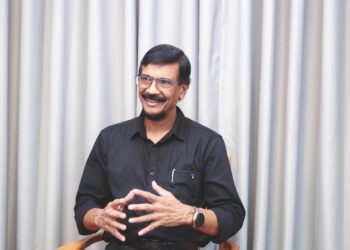

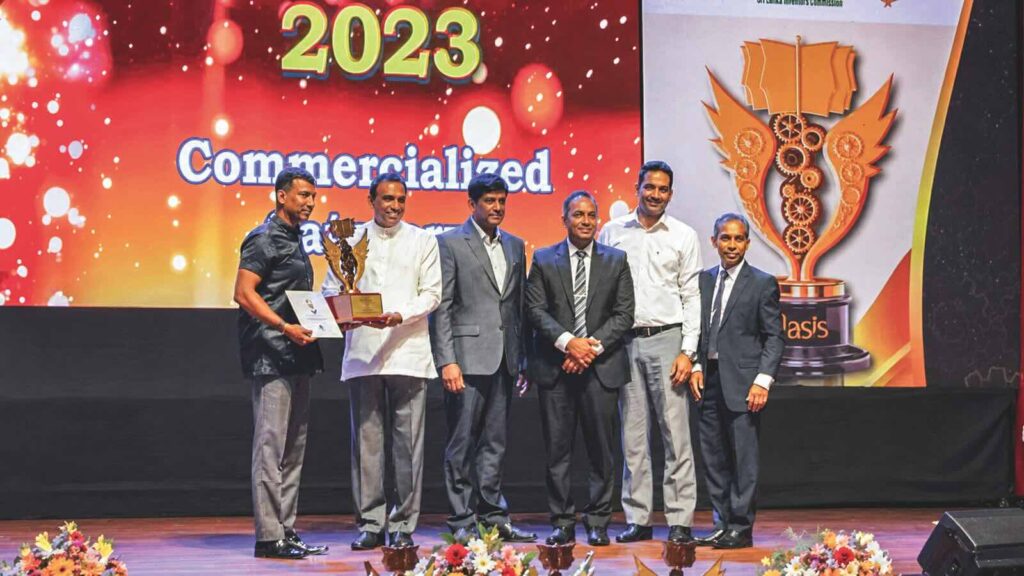
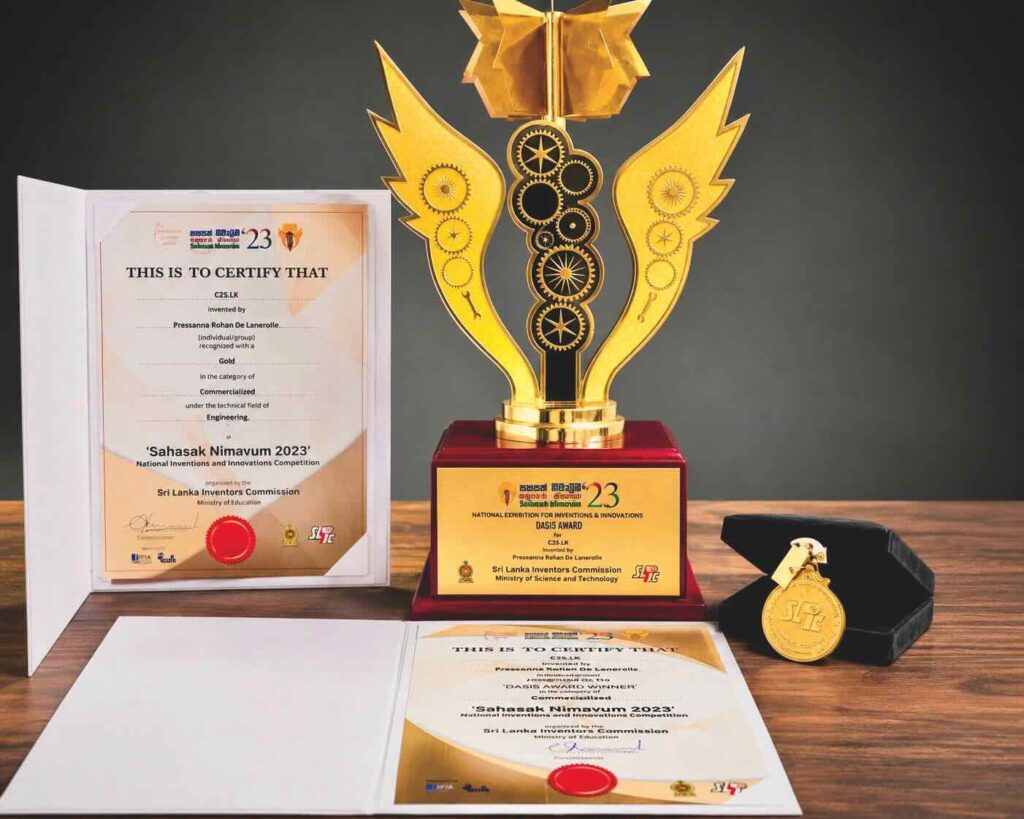
The journey of Prasanna Rohan De Lanerolle demonstrates how one patented invention has evolved into the foundation of a new engineering industry with the potential to transform Sri Lanka’s manufacturing future. At an age when many have long since retired, 80-year-old inventor, engineer, and entrepreneur Prasanna Rohan De Lanerolle has achieved what every innovator aspires to accomplish—not merely inventing something new, but transforming a patented idea into a commercially successful technology that now serves leading tea manufacturers around the world. This year, that achievement was recognized with the Dais Award, the highest honor presented by the Sri Lanka Inventors Commission, after he was awarded the Gold Medal in the Commercialized Category at the Sahasak Nimavum National Inventions and Innovations Awards, organized under the Ministry of Science and Technology.
The recognition is particularly significant because the Commercialized Category is reserved for patented inventions that have successfully progressed beyond the drawing board and into industrial application. Every year Sri Lanka witnesses remarkable innovations from schools, universities, research institutions and private inventors. However, only a small number become patented technologies, and fewer still are successfully commercialized to create businesses, exports, and employment. De Lanerolle’s invention has achieved precisely that.
Solving a Global Manufacturing Challenge
For decades, tea bag manufacturing relied on staples to attach the string to the tea bag. While universally accepted, the process left room for improvement in efficiency, sustainability and manufacturing performance. Driven by a vision to eliminate the staple altogether, De Lanerolle spent three years developing what would become Sri Lanka’s patented Staple Free Tea Packaging Technology. Yet the invention itself was only the beginning. The greater opportunity lay in helping tea manufacturers modernize their existing production facilities without replacing their machinery. New tea bag packaging machines typically require investments of between USD 700,000 and USD one million. Instead of asking manufacturers to discard these valuable assets, De Lanerolle’s patented engineering solution enables legacy tea bag packaging machines to be converted into modern staple-free systems for a fraction of the replacement cost. The concept has fundamentally changed the economics of tea packaging. Machines that would otherwise continue to depreciate can now be upgraded, extending their operational life while significantly reducing capital expenditure.
Creating an Industry, Not Just an Invention
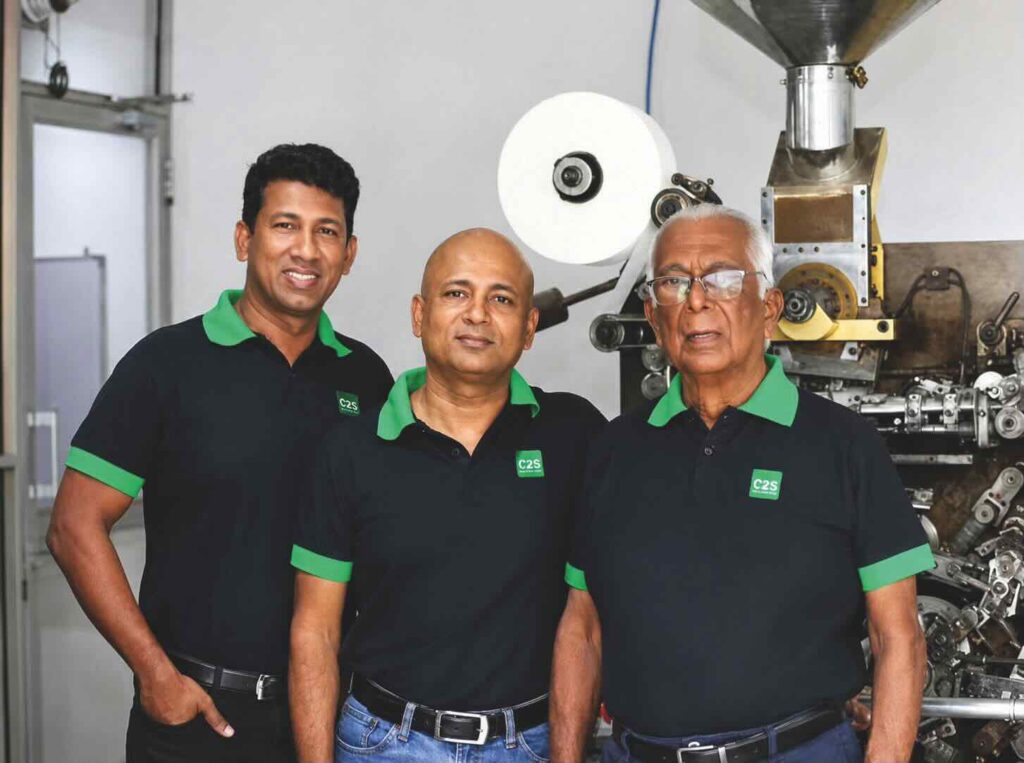
Many inventions receive patents. Far fewer create industries. Recognizing the enormous potential of the technology, Prasanna Rohan De Lanerolle established C2S.LK, the specialist engineering brand of Abacus Tea, is to pioneer a new engineering industry centered on converting legacy tea bag packaging machines into modern staple-free systems. What began as a single patented invention has evolved into a specialized engineering capability serving tea manufacturers worldwide.
Today, more than 60 machine conversions have been successfully completed for some of the tea industry’s most respected companies, including Akbar Brothers, Sri Lanka’s largest tea exporter, George Steuart & Co., and companies within the Hindustan Unilever and Tata Consumer Products groups. Building on the success of these patented conversions, C2S.LK has also expanded beyond retrofit solutions to engineer complete staple-free tea bag packaging machines, enabling manufacturers to choose between upgrading existing production lines or investing in entirely new systems based on the same patented technology. What makes this achievement particularly significant is that it represents far more than the success of one company. It demonstrates how a Sri Lankan invention can evolve into a specialist engineering industry capable of competing internationally while generating skilled employment, engineering exports, and valuable foreign exchange for the country.
A Blueprint for Sri Lanka’s Future
Every year, Sri Lanka produces brilliant inventors. The country is rich with ideas emerging from schools, universities, research institutions and private innovators. The challenge has never been creativity. The challenge has been commercialization. Too often, inventions remain prototypes or patents without ever becoming businesses. The journey of De Lanerolle’s invention demonstrates that there is another path. When inventors are supported beyond the patent stage—through engineering, manufacturing, financing, industry partnerships, and export development—innovation becomes far more than an intellectual achievement. It becomes an industry.
Imagine if dozens of Sri Lankan inventions followed the same journey. With stronger collaboration between the Ministry of Industries, the Ministry The Dais Award and Gold Medal from the Sri Lanka Inventors Commission. of Science and Technology, the Sri Lanka Inventors Commission, the Export Development Board, the Industrial Development Board, universities and private industry, Sri Lanka has a genuine opportunity to build globally competitive engineering sectors based entirely on Sri Lankan intellectual property. Instead of exporting only products, Sri Lanka can increasingly export technology, engineering expertise and patented manufacturing solutions. That transition has the potential to reshape the country’s industrial landscape.
Choosing Sri Lanka
Following the successful development of his invention, De Lanerolle received offers from major international companies interested in purchasing the patented technology. Accepting those offers would have secured his family’s future. Instead, he made a different decision. He chose to retain the intellectual property in Sri Lanka and build a Sri Lankan engineering capability around it, believing the invention should benefit the country that inspired it.
Reflecting on receiving Sri Lanka’s highest honor for commercialized innovation, De Lanerolle said, “I never gave up. It took me three years to perfect this invention, while many others around the world are still trying. My advice to the younger generation is simple: believe in yourselves, keep trying, and be proud to be Sri Lankan. Countries like India and China have shown what can be achieved when a nation believes in its own innovation. Sadly, we too often look overseas before looking at what we have at home. After completing my invention, I received several offers from large international companies to purchase it. My family and I could have retired on that money, but I wanted this technology to remain Sri Lankan. That is why C2S.LK was born. I may not live to see the full potential of this journey, but I sincerely hope my children and future generations will. With the support of our dynamic Ministry of Industries, I hope this technology will grow into a Sri Lankan industry and become an engineering export to the world.”
More Than an Award
The Dasis Award recognizes an exceptional inventor. But its greatest significance lies in what it represents. It proves that Sri Lanka has the capability not only to invent, but to patent, commercialize, and export world-class engineering innovation. For business leaders, it demonstrates that investing in Sri Lankan technology can create measurable commercial value. For young inventors, it proves that an idea can become a global business. And for policymakers, it offers something even more important—a working blueprint for how Sri Lanka can build entirely new industries founded on local intellectual property. At 80 years of age, Prasanna Rohan De Lanerolle has shown that innovation knows no age.
His greatest invention may not simply be a patented staple-free tea bag technology. It may demonstrate that a single Sri Lankan invention, when successfully commercialized, can create an entirely new industry for the nation.