
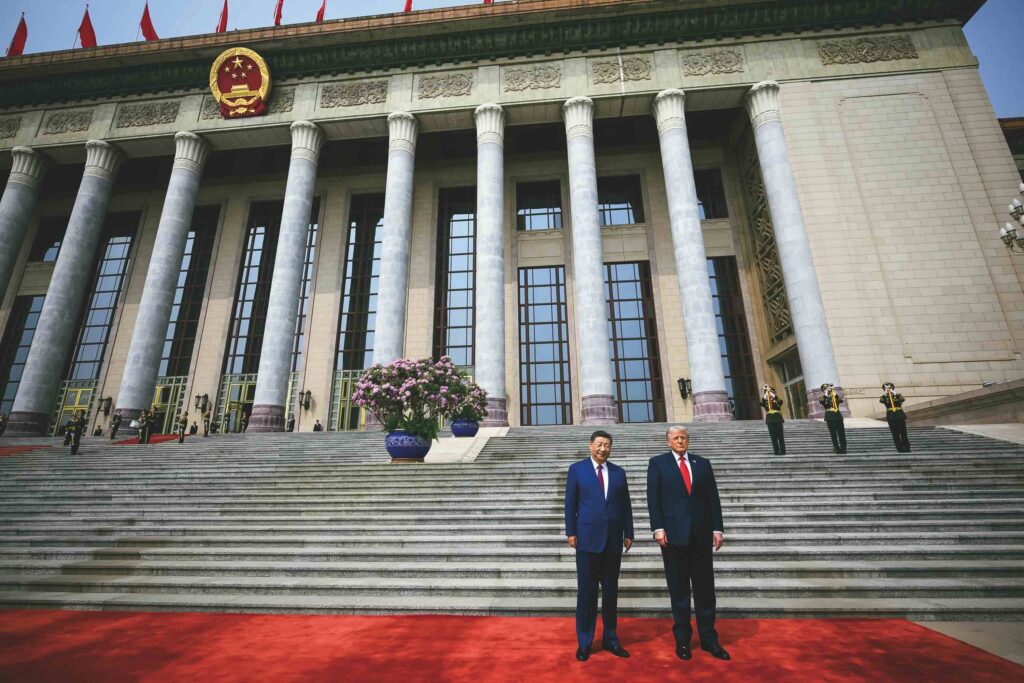
President Donald Trump’s state visit to China marked one of the most closely watched diplomatic engagements of the year. Against a backdrop of strategic rivalry, economic interdependence, and shifting global dynamics, the meeting between President Donald Trump and Chinese President Xi Jinping demonstrated that while competition between the United States and China continues, both nations recognize the importance of dialogue, trade, and business cooperation. Accompanying President Trump was a powerful delegation of American business leaders, reflecting the growing role of corporate diplomacy in international relations.
©Alexander Sterling.
A visit that captured Global Attention
When President Donald Trump arrived in Beijing, the visit was viewed as far more than a routine diplomatic engagement. The relationship between the United States and China remains one of the most influential in the world, affecting global trade, investment flows, technology development, manufacturing, and financial markets.
The visit provided an opportunity for both leaders to engage directly on issues ranging from trade and economic cooperation to regional security and geopolitical stability.
While expectations for major political breakthroughs were modest, the significance of the meeting lay in its ability to maintain communication and reduce uncertainty between the world’s two largest economies. The presence of an influential business delegation further underscored the economic dimension of the visit. It signaled that despite political differences, commercial ties remain a cornerstone of the relationship.
President Trump’s Message: Economic Strength through Engagement
President Trump approached the visit with a strong focus on economic outcomes. Throughout his engagements in Beijing, he emphasized the importance of expanding opportunities for American companies, increasing exports, and creating jobs through international trade.
Trump highlighted the need for balanced economic relations and greater commercial opportunities for American businesses operating in China. He stressed that constructive engagement between the two countries could generate significant benefits for both economies while supporting global growth.
For President Trump, the visit represented an opportunity to demonstrate that economic diplomacy remains a critical tool in advancing American interests. His message centered on practical cooperation, investment opportunities, and strengthening commercial ties where mutual benefits exist. At the same time, Trump reaffirmed the United States’ commitment to protecting its strategic interests while maintaining open channels of communication with Beijing.
Xi Jinping’s Message: Stability and Mutual Prosperity
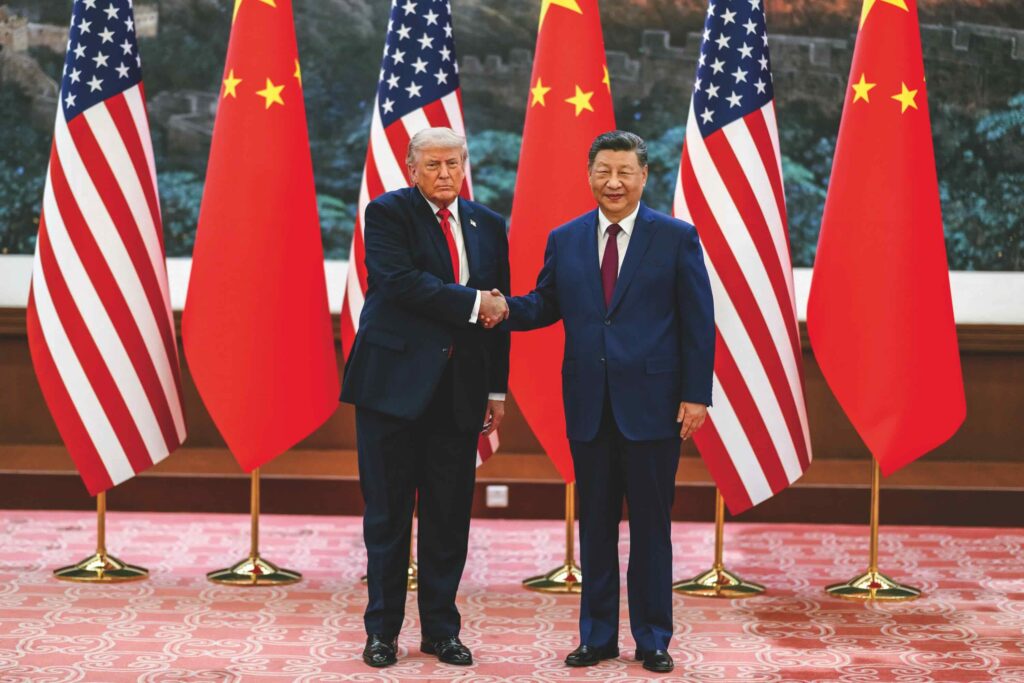
President Xi Jinping welcomed the American delegation with a message centered on stability, cooperation, and long-term engagement. Xi emphasized that China and the United States share significant responsibilities as the world’s two largest economies. He reiterated the importance of managing differences through dialogue while seeking opportunities for mutually beneficial cooperation.
A key theme in Xi’s remarks was China’s commitment to economic openness. He highlighted China’s ongoing efforts to improve its business environment, attract international investment, and create new opportunities for global companies. Xi also stressed that a stable relationship between Beijing and Washington is not only important for the two countries but also for the broader international economy.
In an increasingly interconnected world, both nations have a vested interest in maintaining economic confidence and supporting global growth. His comments reflected China’s broader objective of positioning itself as a reliable partner for international business while continuing to pursue its own economic development goals.
The Business Delegation: Corporate America comes to Beijing
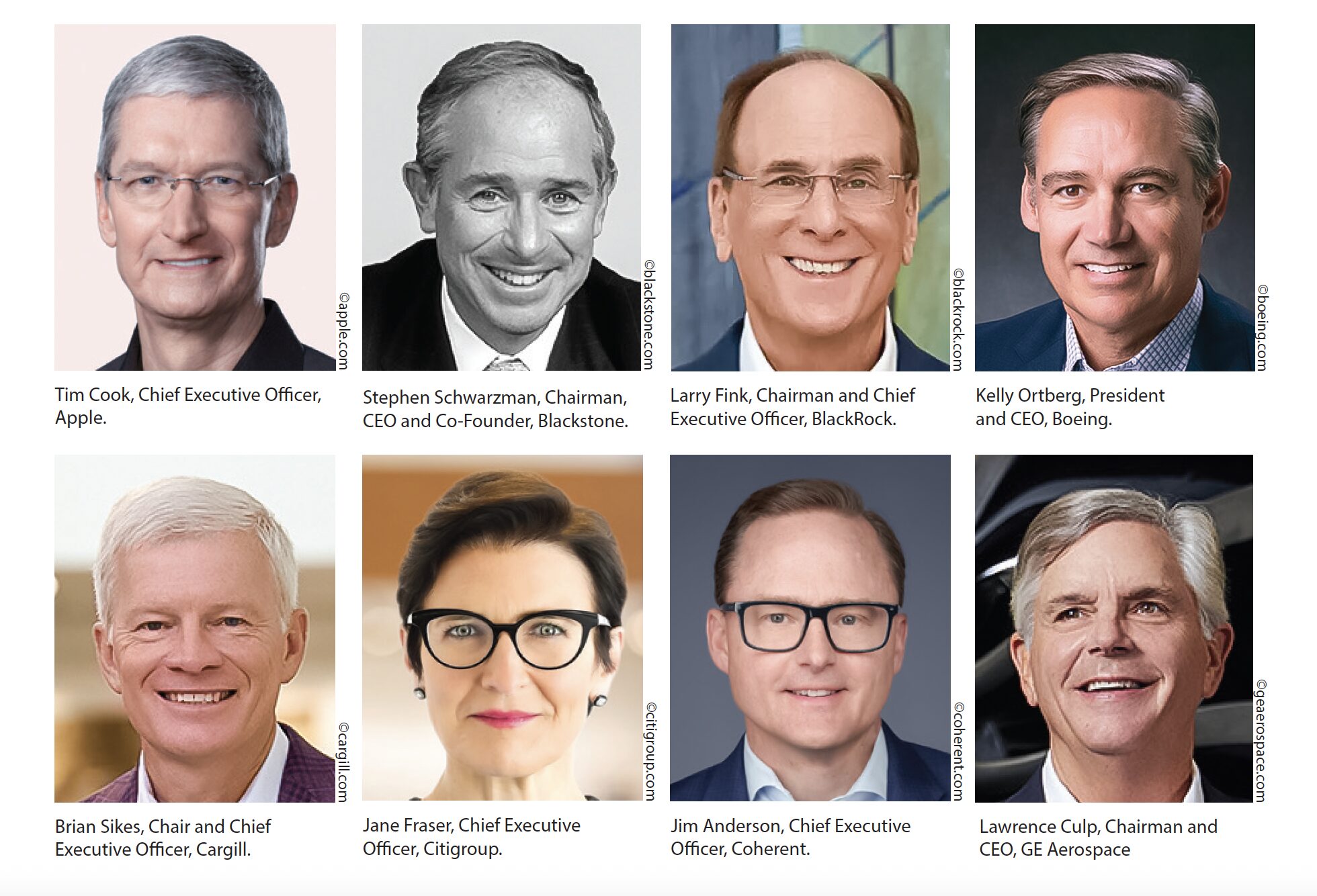
One of the defining features of the visit was the presence of an extraordinary delegation of American business leaders.
The group represented some of the world’s most influential corporations and highlighted the continued importance of the Chinese market to global business. The delegation included senior executives from sectors such as aviation, technology, finance, manufacturing, agriculture, consumer products, and energy.
Among the prominent participants were leaders from Boeing, GE Aerospace, Apple, Tesla, Goldman Sachs, Citigroup, Qualcomm, Visa, Mastercard, Cargill, and several other major corporations. Their presence demonstrated that despite geopolitical tensions and policy disagreements, American companies continue to view China as an essential component of their global strategies. For many of these firms, China represents not only a vast consumer market but also a critical part of global supply chains, manufacturing networks, and future growth opportunities.
Boeing and the Aviation Opportunity
The aviation sector was among the industries closely watching the visit.
For Boeing, China remains one of the most important long-term markets for commercial aviation. As Chinese airlines continue expanding their fleets to meet growing passenger demand, opportunities for aircraft sales remain significant.
The discussions surrounding aviation cooperation reflected the broader importance of maintaining commercial relationships that support both economic growth and international connectivity. For the aerospace industry, stability in US-China relations remains a crucial factor in long-term planning and investment decisions.
Apple and the Future of Global Supply Chains
For Apple, the visit carried special significance. Few companies are as closely connected to China’s manufacturing ecosystem as Apple. Over the past two decades, China has become central to the company’s production capabilities, supplier network, and operational efficiency.
Apple’s participation highlighted the continuing importance of maintaining constructive relationships between governments and businesses. As global supply chains evolve and diversify, Apple remains deeply engaged with China while also expanding production capabilities in other regions. The company’s presence reflected the practical realities of modern global commerce, where economic integration often transcends political differences.
Tesla and China’s Electric Vehicle Revolution
Tesla’s participation drew considerable attention, given China’s status as the world’s largest electric vehicle market. China has played a crucial role in Tesla’s growth, both as a manufacturing base and as a major consumer market. The company’s Shanghai operations have become an important part of its global production strategy.
For Tesla and the broader automotive industry, cooperation between the United States and China remains important across advanced manufacturing, battery technology, renewable energy, and sustainable transportation. The company’s presence underscored the extent to which innovation and business opportunities continue to connect the two economies.
Financial Leaders seek Greater Opportunities
The financial services sector was also strongly represented. Executives from leading financial institutions, including Goldman Sachs and Citigroup, engaged with Chinese policymakers and regulators to discuss investment opportunities, capital markets, wealth management, and financial sector development.
China’s expanding middle class and growing financial markets continue to attract global institutions seeking long-term growth. For these companies, regulatory clarity, market access, and economic stability remain key priorities. Their participation in the visit reflected confidence in the long-term potential of the Chinese market despite ongoing geopolitical uncertainties.
Agriculture and Food Security
The agricultural sector also featured prominently in discussions. American agricultural exporters have long regarded China as a critical market for products ranging from grains and soybeans to meat and food ingredients.
Business leaders from the sector emphasized the importance of maintaining predictable trade relationships that benefit farmers, consumers, and food supply chains in both countries.
As global food demand continues to rise, cooperation in agriculture remains one of the most significant areas of economic engagement between the United States and China.
The Rise of Corporate Diplomacy
Perhaps the most important takeaway from the visit was the growing role of business leaders in international diplomacy. In previous decades, diplomatic engagement was largely confined to governments. Today, CEOs increasingly serve as influential participants in global discussions about trade, investment, technology, sustainability, and economic development. The executives accompanying President Trump were not merely observers.
They represented companies employing millions of people, investing billions of dollars worldwide, and influencing economic outcomes across multiple industries. Their presence highlighted the reality that economic relationships often provide continuity even when political disagreements emerge. Corporate diplomacy has become an increasingly important mechanism for maintaining dialogue, building trust, and identifying areas of mutual interest.
Managing Competition in a New Era
Neither side entered the summit expecting to resolve every disagreement. The United States and China continue to compete in areas such as technology, manufacturing, geopolitical influence, and national security. These differences are likely to remain a defining feature of the relationship for years to come. However, the visit demonstrated that competition does not necessarily preclude cooperation.
Both President Trump and President Xi acknowledged the importance of maintaining communication and exploring opportunities where collaboration serves mutual interests. For businesses, investors, and policymakers around the world, this approach offers a degree of predictability in an increasingly complex international environment.
The Global Business Perspective
For corporate leaders worldwide, the visit reinforced an important reality: the US-China relationship remains central to the global economy’s future.
Decisions made in Washington and Beijing influence everything from supply chains and manufacturing to technology development, capital flows, commodity markets, and consumer demand. The strong business representation accompanying President Trump reflected confidence that economic engagement remains valuable despite broader strategic competition. Many executives view continued dialogue as essential for reducing uncertainty, encouraging investment, and supporting long-term growth.
Conclusion
President Donald Trump’s visit to China ultimately served as a reminder that diplomacy and commerce remain deeply interconnected. While political differences persist, both nations recognize the importance of maintaining stable economic relations and open channels of communication. President Trump emphasized economic opportunity, trade, and business expansion.
President Xi focused on stability, cooperation, and mutual prosperity. Together, their messages reflected a shared understanding that the world’s two largest economies have much to gain from constructive engagement. The influential business delegation that accompanied the President further reinforced this reality.
From aviation and technology to finance and agriculture, corporate leaders demonstrated that economic cooperation continues to serve as an important bridge between nations. In an era defined by competition and uncertainty, the visit highlighted a simple but powerful truth: dialogue remains indispensable, and business continues to be one of the strongest forces connecting the global economy.