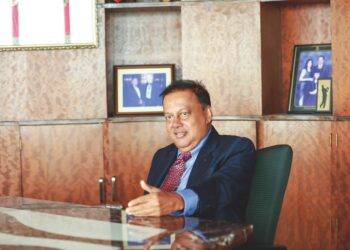

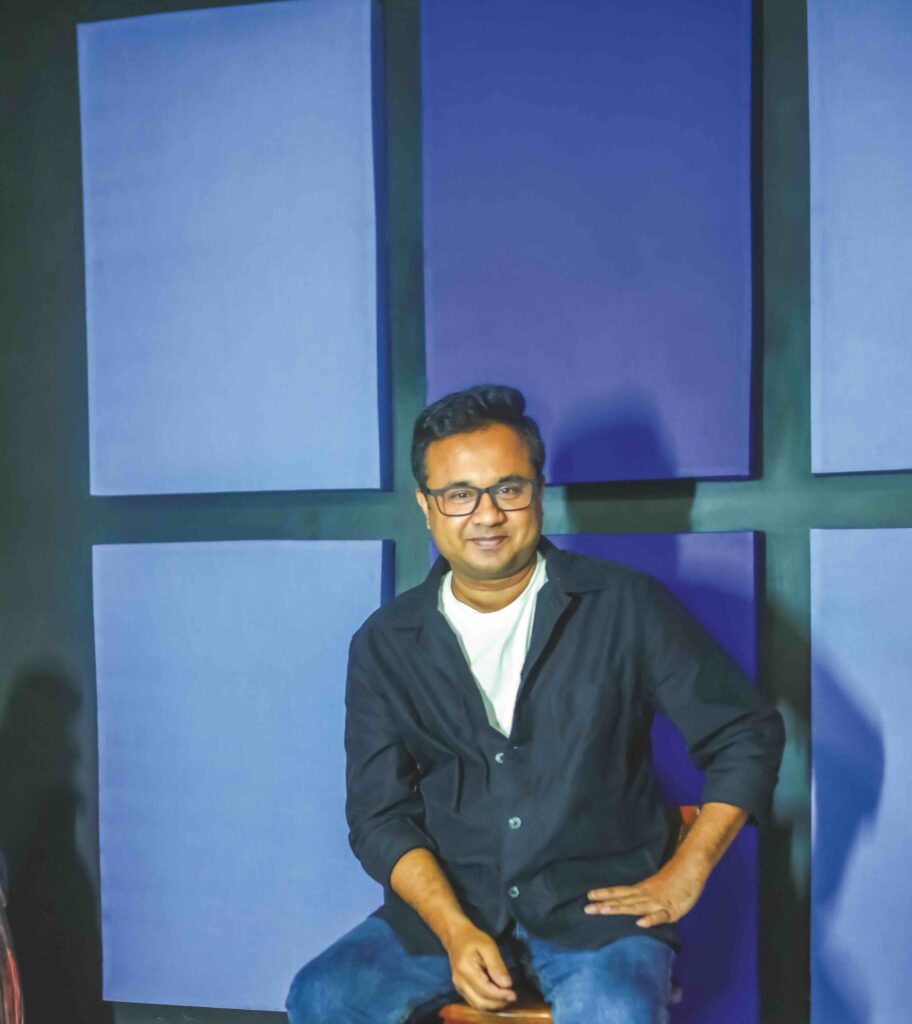
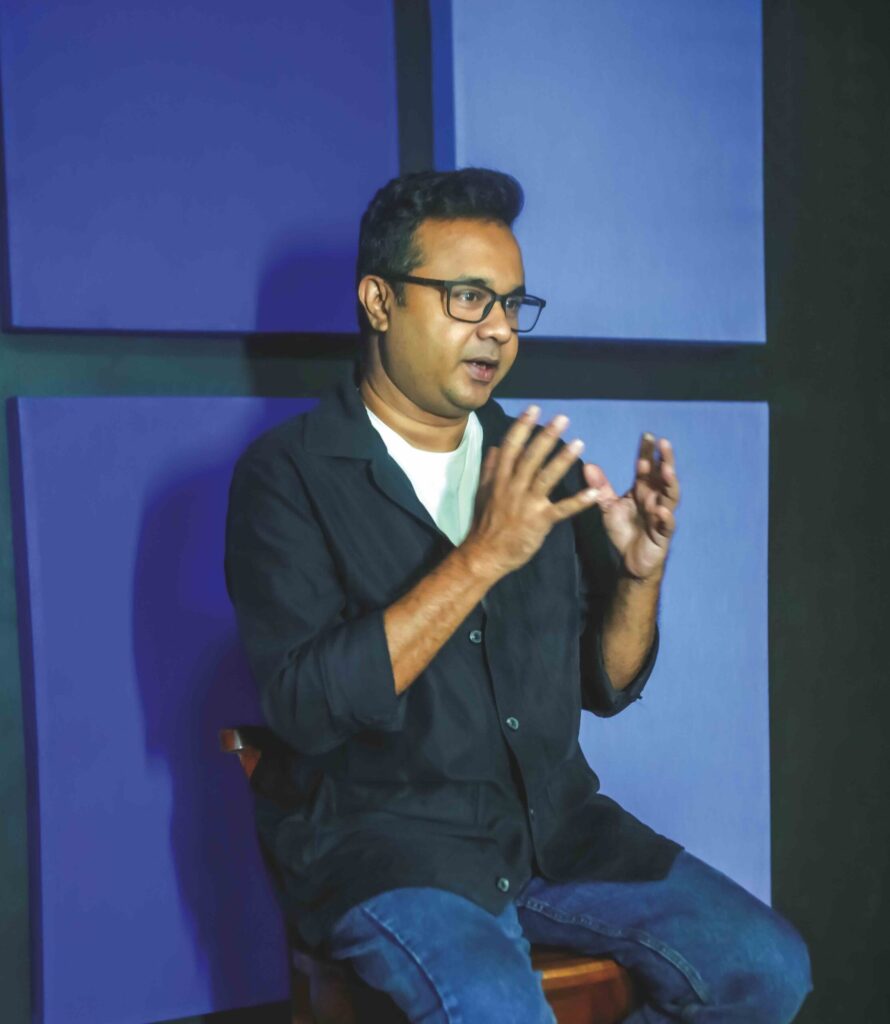
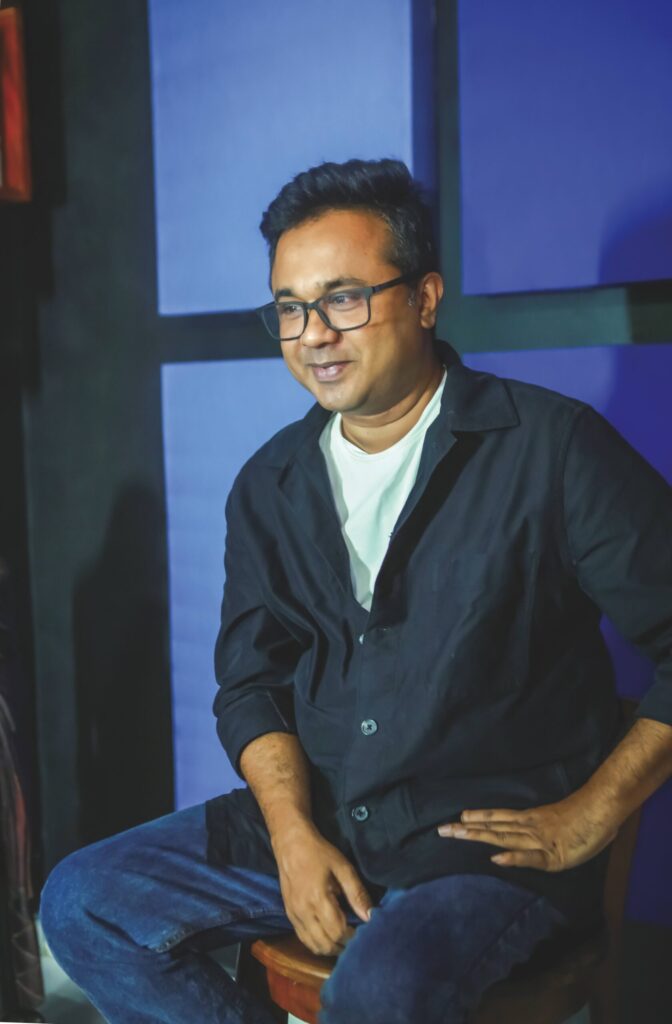
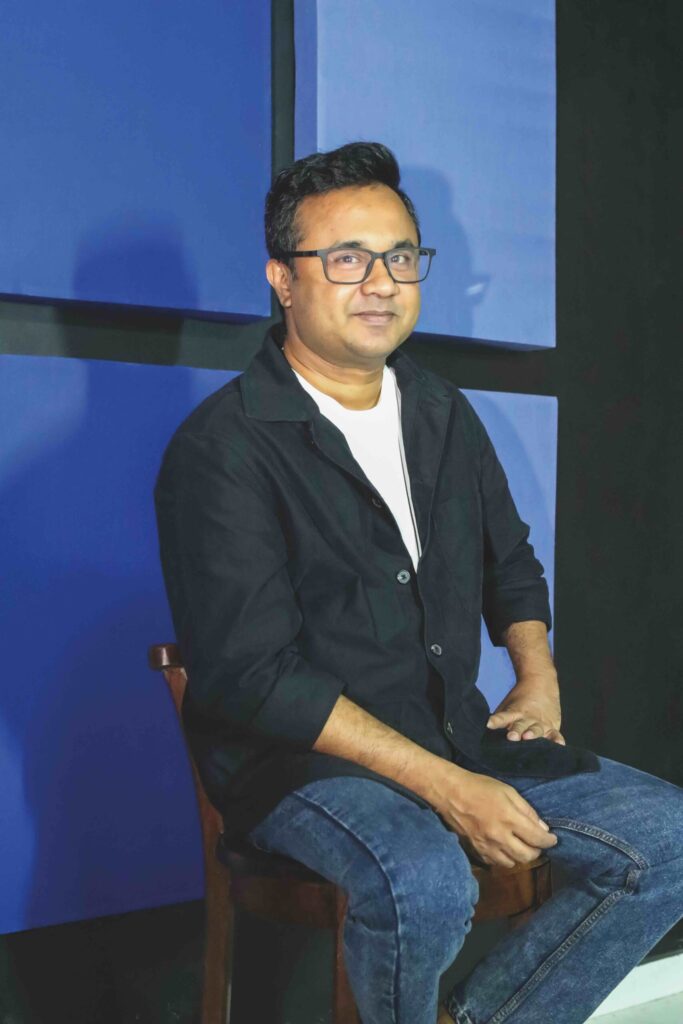
Political YouTuber Waruna Rajapaksha is a familiar name and face on digital media. Since launching his channel in January 2025, Waruna has reached 50,000 subscribers. A political activist since school, his ideological evolution has shaped his approach to commentary today. Drawing on his experience, he offers a perspective that challenges conventional ideas of journalism, audience engagement, and political responsibility. From the influence of the Aragalaya movement to global geopolitical shifts, he argues for a more analytical, openly positioned, and debate-driven digital public sphere.
Words: Jennifer Paldano Goonewardane.
Photography: Sujith Heenatigala and Dinesh Fernando.
What motivated you to enter the already crowded space of political content on YouTube, and what gap did you feel existed at the time?
We must recognize that, in recent years, social media platforms have become among the most influential forces shaping political narratives. Unlike traditional media, the digital sphere offers creators greater freedom while engaging highly active online audiences.
Given these dynamics, digital platforms have increasingly influenced public opinion, shaping how people think, interpret events, and make decisions. However, for much of social media’s evolution, political influence and opinion-making remained relatively limited. The space was largely dominated by entertainment and comedy content, while political commentary, when present, was often brief and lacked depth.
One of the defining characteristics of the digital sphere is its ability to capture audiences quickly and build substantial subscriber bases within a short period. My entry into this space was driven by the desire to foster meaningful political discourse and debate while challenging the prevailing trends in online content. I believe I have successfully established that platform for discussion and engagement.
Did you begin with a clear audience in mind, or did your viewership shape your content over time?
I did not begin with a clearly defined target audience when I launched my program. What I had was a political perspective that I wanted to express. The Aragalaya, the uprising at Galle Face Green marked a turning point in Sri Lanka’s history. It had a profound impact on society, reshaping public attitudes and, in many ways, breaking down long-standing social and political divisions.
What interested me was understanding where people stood in the aftermath of the Aragalaya, rather than creating content aimed at a specific demographic. My political perspective remained central to the content I produced, and over time, I naturally found an audience that identified with and subscribed to those viewpoints. That said, anyone working in media inevitably develops an ongoing interaction with their audience. Feedback and responses become important indicators of how content is being received. It’s a continuous process and, more importantly, a learning experience, because such insights allow us to adapt, improve, and sometimes even rethink our direction.
My journey in the digital space has therefore been shaped by a process of mutual engagement and growth. Today, I see a distinct audience that consistently follows and engages with my program.
You’ve been associated with leftist politics earlier in your journey. What shaped those initial views, and what led to your transition toward supporting more traditional political parties?
My involvement in leftist politics began during my school years. My grandfather was a member of the Communist Party of Sri Lanka and worked closely with the party’s propaganda newspaper, Aththa. That environment naturally influenced me to gravitate towards leftist politics as a student. We grew up surrounded by Soviet literature at home, reading those books and even playing with toys gifted from the Soviet Union.
As a young central committee member of the Janatha Vimukthi Peramuna, I was entrusted with a range of responsibilities. In 1999, at a relatively young age, I was appointed to the Provincial Council, and by 2005, I had become the party’s group leader in the Western Provincial Council. I also served on the party’s education and foreign affairs committees, worked extensively in propaganda activities, and organized the party’s youth wing. I held numerous responsibilities, and I believe the leadership recognized my commitment and performance by eventually appointing me to the party’s central policymaking body.
My work within the party, particularly in propaganda and education, required extensive study of political and economic material to formulate responses to opposition parties. One of the most defining moments in that process came in 2002, when I was tasked with studying the United National Party’s “Regaining Sri Lanka” report. I examined the document line by line in preparation for constructing a counterargument. However, that process also led me to confront growing doubts about my own ideological beliefs. I began questioning the practicality of leftist ideology, particularly in light of global realities and Sri Lanka’s development needs. I thought deeply about the youth migrating from villages to cities in search of opportunity, and how the country could create pathways for them as they prepared to take on positions of responsibility and leadership. Those reflections gradually pushed me towards a broader ideological transition. It was not a shift from one political party to another, as is often the case in politics. Rather, it was a transition from left-wing to right-wing ideology. In my view, history demonstrates that many societies have progressed and evolved within liberal political and economic frameworks, creating opportunities, reducing poverty, and addressing social inequality through more open systems.
My journey in the digital space has therefore been shaped by a process of mutual engagement and growth. Today, I see a distinct audience that consistently follows and engages with my program.
Did you feel more aligned with the core principles of the Regaining Sri Lanka program?
Sri Lanka today finds itself in a complex geopolitical environment, and, in many ways, current global conditions reinforce aspects of the thinking behind the “Regaining Sri Lanka” program. The crisis linked to tensions around the Strait of Hormuz highlights how interconnected and vulnerable the global economy has become, while also creating opportunities for strategically positioned countries like Sri Lanka.
The disruption of established tourism and transit hubs in parts of the Middle East presents an opportunity for Sri Lanka to position itself as an alternative destination. In this context, facilities such as the Mattala Airport and developments like Colombo Port City could play a greater role in supporting a growing regional services and leisure economy.
India remains central to Sri Lanka’s future, and the “Regaining Sri Lanka” program placed strong emphasis on enhancing connectivity with India—an approach that remains relevant today. India itself is advancing major initiatives such as the India-Middle East-Europe Economic Corridor and the International North-South Transport Corridor, which could offer wider global linkages if Sri Lanka integrates more effectively with them. Sri Lanka is also part of China’s Belt and Road Initiative, so the broader strategy must focus on building multiple regional and global partnerships rather than remaining limited by geography.
What is striking is that, more than 25 years ago, the “Regaining Sri Lanka” program had already outlined in detail the importance of India–Sri Lanka connectivity. Had those proposals been pursued consistently at the time, Sri Lanka today may have been better positioned to mitigate supply chain disruptions and energy-related challenges arising from crises in the Middle East and Iran. The program presented a systematic vision for Sri Lanka’s development, with global and regional connectivity forming one of its central pillars.
How would you describe your current political philosophy—has it stabilized, or is it still evolving?
Slovenian neo-Marxist philosopher Slavoj Žižek has spoken about the fluid nature of political thought, arguing that politics is not fixed but an evolving, often chaotic process that requires continuous, pragmatic re-evaluation rather than rigid adherence to a single ideology.
That, however, doesn’t necessarily mean shifting between political parties. In my case, the major ideological shift I experienced was from left-wing to right-wing politics. History demonstrates that political thinking must evolve alongside global political realities. To explain what I mean, we grew up in the bipolar world of the Cold War, shaped by the intense rivalry between the United States and the Soviet Union. That world fundamentally changed with the collapse of the Soviet Union.
Today, particularly with the political resurgence of Donald Trump, we are increasingly witnessing an era defined by regionalization and power-based politics rather than the rules-based international order that previously dominated global affairs. In such an environment, we cannot continue operating within outdated political frameworks while the global order itself is rapidly transforming. Economic realities have also shifted significantly. The United States and Europe, once Sri Lanka’s dominant export markets, no longer occupy the same position they once did, compelling countries like ours to rethink strategy and place greater emphasis on Asia and regional par tnerships. These developments demonstrate why political thinking cannot remain static. Adaptation is essential, and if one is unwilling to evolve with changing realities, then one should not be in politics at all.
As such, my own ideas continue to evolve. As a supporter of the Samagi Jana Balawegaya, I firmly believe in democracy and reject the idea of a one-party state or totalitarian system, while also disagreeing where it matters. Democracy undoubtedly has its flaws, just as one-party systems may possess certain advantages. China, for instance, has demonstrated how a highly centralized political structure can respond effectively during periods of global economic uncertainty and crisis. Nevertheless, I continue to believe that a multi-party democratic system remains the best path for Sri Lanka, even as we adapt to contemporary global realities.
Do you prioritize audience interest, national relevance, or your own curiosity when choosing content?
The most popular ideology is not always the correct one. While I firmly oppose racism, I also recognize that it and extreme nationalism are often the easiest ways to gain rapid public attention. At the same time, the least popular view is not necessarily wrong. For instance, when social media reacted strongly to an alleged incident involving a student and teachers at a school in Colombo, the dominant response was condemnation.
However, I chose to approach the issue differently, focusing on possible social and psychological factors, including whether the student may have been affected by a dysfunctional environment or other underlying circumstances. I believe such situations require a more mature and nuanced discussion, even when that perspective is unpopular or challenges the dominant narrative.
In this case, I spoke against the public vilification the student faced, which naturally drew criticism. However, I am not in the YouTube space merely to pursue popularity. I see myself as a political content creator guided by principles and an ideology I believe in. I aim to engage an audience that is open to alternative perspectives. Meaningful social change does not require universal agreement; it can begin with a smaller group willing to think differently and engage critically.
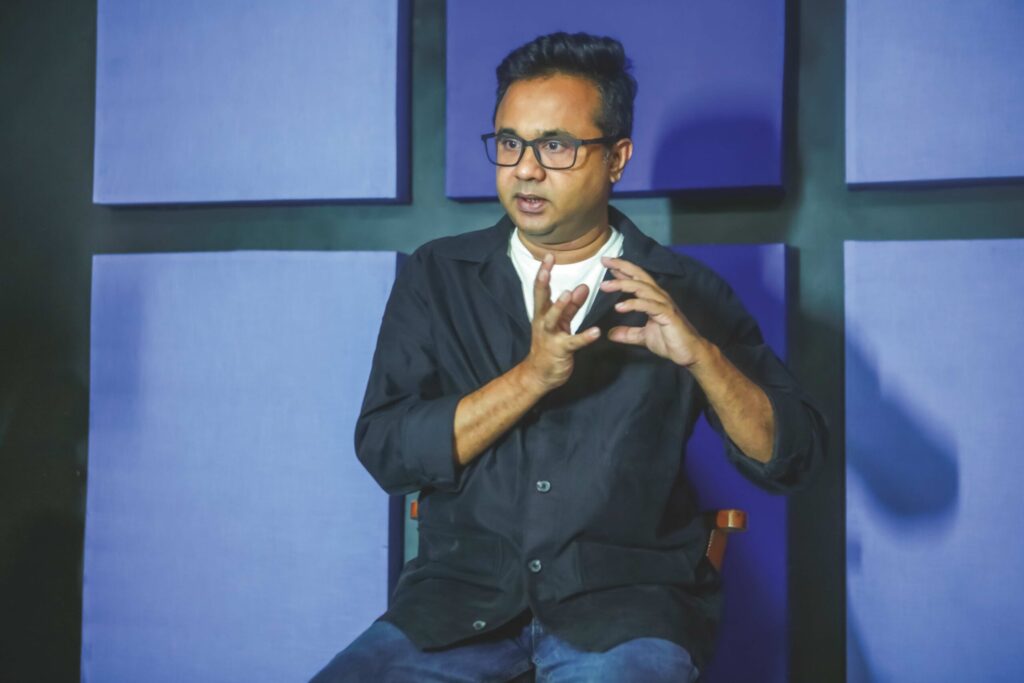
Your delivery often blends commentary with analysis. How do you strike a balance between opinion and fact?
Facts are essential in attracting and sustaining an audience. However, facts alone are not enough; they can be interpreted and presented in very different ways. I believe that, rather than simply listing facts, a content creator’s responsibility is to use information to construct a broader narrative. For me, information is a tool, but it is ultimately shaped around the perspective and analysis I seek to present. Take, for example, the divisions in global opinion regarding Iran, Israel, and the United States. Many content creators openly align with one side or the other.
I prefer to approach such conflicts differently, analyzing them as geopolitical struggles for regional and global influence. Unless we examine the wider geopolitical picture, we risk overlooking the deeper forces driving such conflicts.
We have also seen allegations of insider trading within the US stock market during periods of conflict, highlighting how wars can evolve into opportunities for economic exploitation and personal gain. These dimensions are often ignored when conflicts are reduced to simplistic narratives of one side versus another. At times, my analysis may create the impression that I am sympathetic towards Iran. That is not necessarily the case. I don’t support rigid theocratic governance, but I also don’t believe it’s my role to determine how another country should govern itself.
My objective is to encourage viewers to understand conflicts from multiple perspectives rather than through narrow binaries. Every issue requires presenting facts and thoughtful analysis that help audiences engage with complexity. If our programs can encourage people to think more critically, engage with more substantive content, and sharpen their analytical abilities, then we are contributing something meaningful to public discourse.
I aim to engage an audience that is open to alternative perspectives. Meaningful social change does not require universal agreement; it can begin with a smaller group willing to think differently and engage critically.
Do you believe political YouTubers have a responsibility to remain neutral, or is it acceptable to take a clear stance?
In the digital sphere, it’s widely understood that content creators are not necessarily bound by the same neutrality standards as in conventional media. I believe that audiences who choose to watch a particular creator generally do so with the awareness that the individual may hold a distinct political perspective or allegiance. What matters most, in my view, is not whether a creator takes a position but whether those ideas are presented critically, thoughtfully, and through reasoned argument.
Across the digital space, many creators openly support particular political blocs or ideological camps, and most do not hesitate to acknowledge that openly. The real problem arises when individuals present themselves as independent and neutral, while consistently producing content that clearly favors or targets a particular party, ideology, or individual. Likewise, audiences engage with their content knowing what perspective to expect.
How do you handle the risk of misinformation in such a fast-moving digital environment?
If you recall, two major developments emerged during the Good Governance government period in 2015. One was the introduction of the Right to Information Act, while the other was the proposal to regulate the digital space. I was also involved in discussions surrounding these developments.
Most countries today have introduced mechanisms to regulate online content in one form or another. However, our position was that any such framework must never be politically motivated. We believed regulation must focus primarily on curbing racism, religious extremism, hate speech, and content harmful to children and society. The challenge in countries like ours is that society is deeply politicized.
As a result, any attempt by a government to introduce oversight or checks on digital content quickly becomes politicized and associated with partisan interests. Furthermore, determining what constitutes “harmful content” is itself highly subjective and often depends on the interpretation of the individual or institution enforcing those regulations. For these reasons, I believe that, rather than relying excessively on censorship or control, a more sustainable approach would be to educate and sensitize the public to critically engage with, interpret, and assess online content. Media literacy is becoming increasingly important in the digital age.
At the same time, the risks associated with misinformation are real and cannot be ignored. We have seen the influential role social media has played in mass demonstrations and political upheavals in countries such as Bangladesh and Nepal, where digital platforms significantly shaped public mobilization and political narratives. That influence can be both powerful and problematic, a reality we can no longer escape and one we must learn to navigate responsibly.
What kind of impact do you hope your content has on viewers—awareness, persuasion, or something else?
Personally, I’d like viewers to engage with and appreciate my perspectives. But more importantly, people must confront, question, and challenge my views. That process of engagement is valuable because it pushes both sides to evolve. I don’t claim to be entirely correct about everything, and public criticism often serves as a mirror that helps us examine ourselves more honestly. There is a continuous exchange of ideas — disagreement, debate, criticism, and competing perspectives. When necessary, I am prepared to rethink and change my own positions as well.
Mao Zedong famously said, “Let a hundred flowers bloom, let a hundred schools of thought contend.” What is interesting about social media today is that, in many ways, it has created the kind of environment Mao once spoke about — a space where countless voices coexist, while others continuously engage with them through agreement, disagreement, criticism, and debate. That dynamic exchange of ideas is what gives the digital space its unique power and relevance.
Do you worry that politically charged content on platforms like YouTube could deepen polarization?
Society has always contained elements of polarization. At various points in Sri Lanka’s history, divisions such as urban versus rural, capital versus labor, and elites versus the working class have been quite pronounced. The Aragalaya marked a significant shift in these dynamics, with social media playing an influential role in shaping and amplifying these perceptions. In many ways, it reframed existing social divisions into a more visible distinction between the elite and the broader public.
There were also underlying structural reasons for this shift. Since independence, key institutions such as the public service, political system, and private sector were largely dominated by established elites — individuals who, at the time, possessed the education, skills, and access required to lead these sectors.
However, the expansion of free education fundamentally altered this landscape. It enabled young people from rural areas to access higher education, move into urban centers, and eventually assume leadership roles across both the public and private sectors.
Today, many senior positions in government ministries and major corporations are held by individuals educated in regional and rural schools, reflecting this transformation. However, this transition didn’t occur in the political sphere to the same extent.
Political power has largely remained concentrated within a limited number of families. It was this imbalance that the Aragalaya movement sought to challenge, particularly in its call for a change in political culture and a break from entrenched family-based political dominance.
Although the JVP was not initially part of the Galle Face protests, it eventually emerged as the political voice articulating these demands for change. Many people came to see it as representing the transformation they were seeking, which ultimately contributed to its electoral success. Social media played a significant role in communicating and amplifying this narrative, thereby influencing public perception and contributing to political change. However, the polarization that emerged through this process is yet to be fully resolved.
I believe that political parties will, over time, need to adapt and respond more effectively to public expectations. If they fail to do so, similar shifts will continue to occur, as seen in other contexts, such as elections in Tamil Nadu, where voters have also rejected established political structures in favor of change.
How do you engage with viewers who strongly disagree with your views?
One advantage is that no one is compelled to watch my programs. As I mentioned earlier, I would welcome more people watching my content and engaging with it critically. Sri Lankan society, however, is highly politicized, and people’s preferences are often closely tied to their political affiliations, making it difficult to define my audience in absolute terms.
Nevertheless, based on the feedback I receive, I observe that supporters of the political party I am most closely associated with tend to engage the least, while viewers aligned with parties such as the Sri Lanka Podujana Peramuna and the United National Party appear to be more active in watching, commenting, and directly engaging with me.
What I find particularly encouraging is the openness with which many of them express their views. They often acknowledge that, while they may not support my political position, they still agree with certain aspects of my analysis. This creates room for meaningful interaction, even across political differences.
In that sense, despite ideological disagreements, there remains space for dialogue. And through that engagement, there is always the possibility that either side may reassess or even change their perspective over time.
People must confront, question, and challenge my views. That process of engagement is valuable because it pushes both sides to evolve. I don’t claim to be entirely correct about everything, and public criticism often serves as a mirror that helps us examine ourselves more honestly.
Do you believe complete neutrality in political commentary is possible, or even desirable?
Not necessarily. For example, I may be broadly aligned with the SJB, but that doesn’t mean I agree with everything the party stands for. Even during my time with the JVP, I often held differing views. I remained within the party while still disagreeing with them on specific matters.
My support has never been unconditional or absolute toward any political party I have been associated with. Therefore, I believe it is important to be transparent about one’s political affiliations in the digital space and to use one’s platform to encourage open discussion and debate. There is no strict requirement to be completely neutral on social media, and in practice, absolute neutrality is neither realistic nor achievable.
How do you see the relationship between ideas shared in digital spaces and activism—can one meaningfully exist or create change without the other?
Although it’s commonly believed that ideas and commentary alone carry significant power and influence, I personally feel that activism gives ideas real context and direction. In that sense, activism is what ultimately grounds perspective and places it within a meaningful framework.
My early engagement with leftist politics was significantly shaped by my family’s environment and their activism. Likewise, no matter how much discussion or expression occurs on social media platforms, its impact remains limited if it does not translate into real-world engagement or action. At the same time, ideas themselves are undeniably powerful.
The Aragalaya demonstrated how a convergence of voices, perspectives, and sustained activism can eventually drive demands for change. Ideas on their own are not sufficient to produce transformation; it is their connection to collective action and activism that gives them the capacity to effect real-world change.
My journey in the digital space has therefore been shaped by a process of mutual engagement and growth. Today, I see a distinct audience that consistently follows and engages with my program.
How transparent are you with your audience about your own biases?
I speak openly and as often as possible about my political affiliation. As I have mentioned, although I broadly support the SJB, I don’t agree with the party on every issue, and I also address areas of disagreement in my program. At the same time, there are practical limits to how extensively such internal differences can be discussed on my platform.
My disagreements are not limited to the party I support; I also have differing views on other political groups and positions, which I similarly express in my content.
However, the purpose of acknowledging and engaging with these differences is not to disengage from them, but rather to remain within those political and ideological spaces while continuing to critique them constructively. In this way, even when I disagree, I can still maintain my association and engagement with the political parties and groups I am linked to. Ultimately, this is how I am understood and identified within the broader public sphere.
How do you view the role of YouTubers in comparison to traditional media in shaping political discourse in Sri Lanka?
I believe conventional media still holds an important place in the public’s mind. In this country, there remains a strong perception that the printed word carries more authority and credibility than YouTube or online content. People are often more inclined to trust information that appears in print.
Even in communication or messaging strategies, content is often first published in print form and then adapted for digital platforms, allowing it to be attributed to a newspaper or magazine, which in turn enhances its perceived reliability. Globally, despite the rise of digital media, traditional media continues to play a significant role alongside online platforms.
Do you think digital creators are filling a void left by mainstream journalism or creating a parallel narrative ecosystem?
Today, the distinction between mainstream media and digital creators is increasingly blurred, with many content creators working across both spaces. Traditional media programs are also widely distributed on digital platforms, while electronic media continues to draw on newspaper reporting each morning, often adding brief analysis or interpretation.
Similarly, conventional media now frequently features discussions of popular online content. In this way, mainstream journalism and digital creators increasingly acknowledge and complement each other’s roles.
Rather than operating in isolation, the two ecosystems are becoming more interconnected and mutually reinforcing.
What changes would you like to see in how politics is discussed in the Sri Lankan media overall?
I still believe that political debate in Sri Lanka remains underdeveloped. Much of it is limited to personal attacks, excessive criticism, or ridicule—whether in news or televised political discussions. Instead of moving beyond surface-level reporting, such as simply detailing events, there is a need to engage with the deeper strategic intentions and broader implications behind global and local developments.
However, this deeper analysis is often missing. Political talk shows tend to prioritize confrontation and shouting matches because they attract viewership, while many participants themselves lack the analytical depth to meaningfully interpret complex issues. We need a media environment that encourages critical questioning and a more informed audience. For that to happen, media institutions and actors must contribute to a more thoughtful and responsible culture of debate.
At present, political discourse often allows unverified or unrealistic promises to go unchallenged, where political claims are rarely scrutinized for feasibility or legal grounding. In contrast, more mature media systems subject every statement made by political leaders to rigorous examination and fact-based analysis. This is the standard we need to move towards.
Digital media, in particular, has the potential to fill this gap by holding political statements to greater accountability, ensuring that public discourse becomes more informed, responsible, and constructive.
What I find particularly encouraging is the openness with which many of them express their views. They often acknowledge that, while they may not support my political position, they still agree with certain aspects of my analysis.
How satisfied are you with your work on YouTube?
When I consider the limitations of mainstream media—where ownership is concentrated in the hands of individuals or groups with their own agendas and political leanings—there is often a mismatch between those perspectives and my own, which can restrict how content is shaped and presented. In contrast, I feel much more satisfied working in the digital space.
YouTube operates outside many of those constraints and offers greater freedom of expression. It allows me to share my views more openly, while also enabling audiences to respond and engage directly. I greatly value that interaction and exchange. I strive to perform my role as a content creator to the best of my ability, without pursuing personal gain. At times, overextending or over-framing a message can ultimately be counterproductive.
When Ranil Wickremesinghe assumed office with the backing of a party other than his own, he implemented difficult IMF-led reforms that received limited support in Parliament and among the public. During that period, I took it upon myself to explain these measures to a wider audience.
Given my background in politics, I was able to present these issues with clarity. This position did attract significant criticism, but I was willing to accept any impact on my reputation because I felt it was important to communicate that perspective. I remain satisfied with that decision.
Over the years, I have maintained cordial relationships with political actors across the spectrum, built through my long engagement in politics. While my critiques can be firm, they are not personal, and that is generally understood. This has allowed for continued dialogue and engagement across political divides.
Who is Waruna Rajapaksha?
I am still the energetic young individual who joined the JVP in 1998 after leaving school. I have matured through my experience in politics, but at my core, I remain someone who didn’t pursue personal ambition but believed in social change and wanted to contribute towards it.