

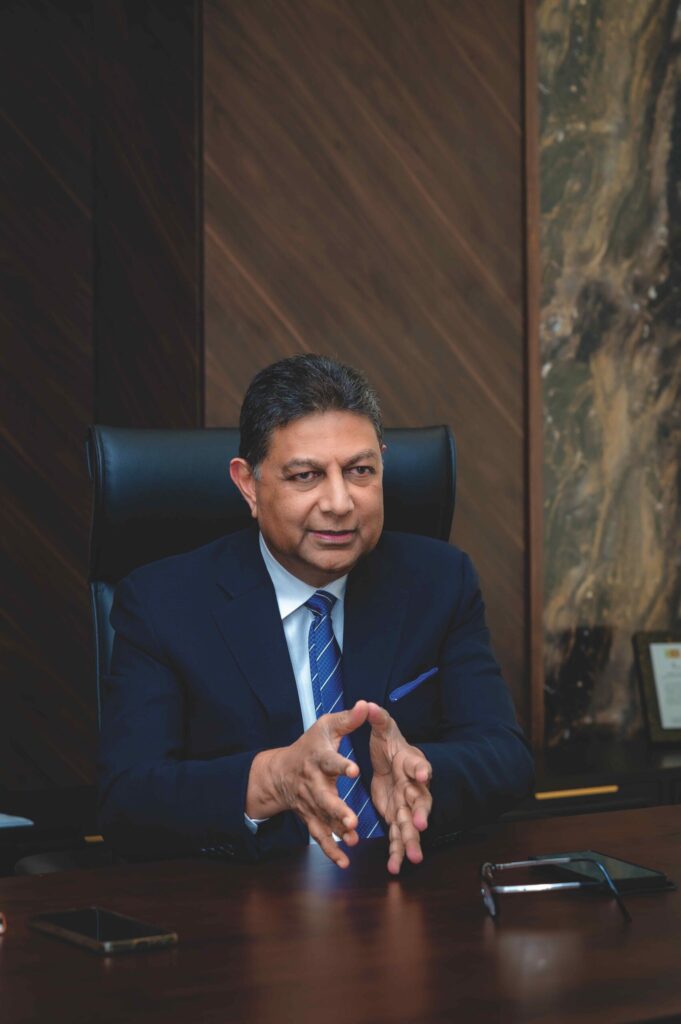
President’s Counsel Harsha Amarasekera is widely regarded as one of Sri Lanka’s most respected practitioners in corporate and commercial law. His legal expertise combined with extensive board- level experience across several leading listed companies has had a significant influence on the country’s corporate and governance landscape and now has a reputation of being one of Sri Lanka’s most impactful corporate leaders. He currently serves as the Chairman of Sampath Bank, CIC Holdings, Vallibel Power Erathna, Swisstek (Ceylon), Swisstek Aluminum and CIC Agri-Business. He was also recently appointed as the Chairman of the Colombo Port City Economic Commission. He was also the Co-Chairman of Vallibel One and Royal Ceramics, the former being a diversified conglomerate with interests spanning finance, manufacturing, power generation, and lifestyle sectors. Harsha Amarasekera was also associated with several other major corporates across multiple industries and served as an Independent Director in several such companies listed in the Colombo Stock Exchange including Chevron Lubricants, Expolanka Holdings and Amana Bank. In his interview with Business Today, Amarasekera emphasized the importance of effective governance, decisive leadership, and institutional resilience in driving sustainable progress. He underscored the need for balanced growth, responsible regulation, and measured ambition in advancing institutional reform in order to support economic recovery.
Words Jennifer Paldano Goonewardane.
You have served as an Independent Director across several leading listed companies. In today’s complex business environment, what do you see as the most critical responsibility of an independent director?
I view independent and non-independent directors as sharing common core responsibilities. While independent directors are tasked amongst other responsibilities, with protecting minority shareholder interests and broader stakeholder rights, their role today extends far beyond traditional oversight.
In the current environment, independent directors must contribute actively to strategy, offer rigorous oversight and support organizational growth on par with executive directors. Their involvement can no longer be confined to compliance or periodic board meetings.
Beyond the customary governance responsibilities, independent directors must meaningfully engage in strategy formulation and be prepared to step in decisively when circumstances demand, even if this required participation outside the formal confines of the boardroom.
For instance, when a significant acquisition or strategic opportunity arises, the board’s involvement cannot be limited to scheduled meetings. Independent directors may need to engage in urgent weekend consultations or virtual platforms to support timely and well considered decision-making. The role today demands far greater engagement, agility and responsiveness than previously practiced or envisaged.
With the right mix of independent directors, boards benefit from diverse expertise, cross-sectoral perspectives, and broader strategic insight. This diversity enables companies to move beyond operational silos and conventional thinking that can sometimes accompany day-to-day operations, enabling more informed, balanced and forward-looking decision-making.
Sri Lanka’s recent crises—terror attacks, the pandemic, and protests—demanded business adaptability and quick board responses. Directors were called upon to act swiftly, on occasion through virtual meetings and at other time through urgent consultation to guide companies through changes as were required at that time. In this context, the roles of both independent and non-independent directors have evolved fundamentally. Board responsibilities have shifted from largely static, meeting-centric function to a more dynamic, hands-on, and responsive model. This evolution mirrors the realities of today’s unpredictable and fast-paced business environment where timely judgment and adaptability are critical.
Corporate governance has received increased attention over the past decade. How do you assess its evolution in Sri Lanka, and where do you believe further strengthening is necessary?
Corporate governance in Sri Lanka has advanced considerably over the past decade. In many of the companies where I serve as a director, governance frameworks are now so well established and robust such that further regulation may actually risk constraining operational effectiveness rather than enhancing accountability. Directors now recognize the responsibility and time required and thus engage more in their roles than in the past.
Sri Lanka has also benefitted from a strong, rule-based governance framework developed under the auspices of the SEC and in the case of banks, the Central Bank. This framework proved its resilience during recent economic crises, particularly within the banking sector, which remained stable and dependable while supporting government policy measures. In my experience, governance and compliance standards within these institutions are rigorously applied. That said, governance must remain an enabler rather than an obstacle. Excessive compliance can stifle initiative, agility and commercial judgment. The challenge lies in maintaining strong governance without undermining the ability of businesses to operate effectively and competitively.

During periods of economic stress and volatility, how important is boardroom discipline and clarity of oversight in ensuring organizational stability?
That is an excellent question that goes to the heart of effective leadership and I am pleased you raised it. During periods of economic stress and volatility, boardroom discipline and clarity of oversight are not merely important —they are decisive in determining an organization’s ability to move forward. Strong board discipline enables organizations to remain stable and confident in the face of uncertainty. Without it, decision-making becomes fragmented, overly cautious or short-term, exposing institutions to unnecessary risks.
A disciplined board provides what I would describe as a steady hand — one that is essential during turbulent periods. It ensures that management remains focused on strategic priorities, while preserving the institution’s financial resilience and maintaining stakeholder confidence. Clear oversight is rooted in separating governance from management, especially during crises. The board must ask tough questions and base decisions on data, not sentiment, ensuring alignment with risk appetite and strategic goals. It’s especially easy for sentiment to dominate during periods of widespread uncertainty. During the COVID-19 crisis for instance, concerns around currency availability, liquidity and broader economic stability were ever-present. It is precisely at such moments that boardroom discipline becomes critical, enabling organizations to respond decisively without compromising their core values or undermining the prudential foundations on which they were built.
Across the Boards on which I serve, one of the greatest strengths has been the diversity of expertise across the board. This has been invaluable— not only to the respective institution, but to me personally in my role as Chairman. These boards bring together deep experience across banking, risk management, economics, human resources, technology, law, and corporate governance. This diversity allows us, particularly during volatile periods, to assess challenges from multiple perspectives. Even in short or urgent board meetings, it allows for well- rounded assessment of macroeconomic conditions, regulatory development s , technolo gical considerations, and customer-centric priorities thereby enabling well-balanced decisions.
Equally important during times of stress is the tone set at the top. A disciplined board — particularly within a financial institution — establishes a culture of accountability, ethical conduct, and constructive challenge to management. This tone cascades throughout the organization and reinforces confidence at a time when markets, customers, and employees are acutely sensitive to leadership signals. They look for reassurance: Is the board composed? Is it aligned? Is there consistency in direction and decision-making?
Ultimately, effective board oversight during periods of economic stress is not about micromanagement. That is a common misconception. The board’s role is to provide strategic clarity, calm leadership, and principled decision-making — while allowing management the space to manage. When these anchors are firmly in place, they enable an institution to remain stable, credible, and forward-looking, while also empowering management to perform their responsibilities with confidence and without fear.
As Chairman of Sampath Bank, how do you view the bank’s role in supporting economic recovery while promoting sustainable and responsible growth?
As a systemically important bank — and currently the youngest among them — Sampath Bank has a clear responsibility to play a constructive and proactive role in supporting Sri Lanka’s economic recovery. At the same time, we must ensure that growth is sustainable, responsible, and value-accretive over the long term. We do not view ourselves merely as intermediaries of capital. Banks today must serve as catalysts for confidence, investment, and economic renewal. The challenge lies in managing multiple, often competing expectations.
On one hand, we must deliver value to our shareholders, investors, and depositors. On the other hand, we must enable businesses — particularly small and medium enterprises — to access funding at levels that allow them to grow and remain competitive. Balancing these competing expectations remains one of the most complex challenges facing the banking sector.
For instance, many retirees depend on deposit income, and prolonged declines in interest rates significantly affect their livelihoods. At the same time, businesses continue to seek lower borrowing costs to sustain operations and expand. Reconciling these competing needs is not straightforward, and there is no perfect formula. Reconciling these competing needs is complex and requires prudence and sensitivity.
In the post-crisis context, our role extends well beyond balance sheet repair. It involves actively enabling the productive sectors of the economy to perform and recover. This includes supporting viable SMEs, export-oriented industries that generate much-needed foreign exchange, agriculture to ensure food security, renewable energy initiatives, and infrastructure-linked enterprises that create employment and long-term economic value. These areas became particularly important in the aftermath of the crisis, when dollar inflows, energy security, and domestic production were critical national priorities.
Sustainable growth also requires a disciplined approach to risk management, capital allocation, and governance. At Sampath Bank, these principles are non- negotiable. We adhere to strong underwriting standards, maintain transparency in disclosures, and operate within a robust risk management framework. Responsible banking also requires alignment with environmental, social, and governance (ESG) principles. While adopting ESG standards — particularly in a developing economy emerging from a severe crisis — can be costly and time-consuming, it is a necessary investment. At Sampath Bank, ESG considerations are embedded into our lending and investment decisions, reflecting our long-term responsibility to the economy and society.
Digital enablement represents another critical pillar of economic recovery. By leveraging technology to expand access, improve efficiency, and reduce transaction costs, banks can play a meaningful role in promoting financial inclusion and enhancing productivity across the economy. Importantly, this transformation must be implemented in a secure, resilient, and customer-centric manner. From a leadership perspective, we see Sampath Bank as a trusted partner to policymakers, businesses, and communities. By maintaining a strong capital base, high governance standards, and a long-term strategic outlook, the bank contributes to confidence in the broader financial system — a prerequisite for sustained economic recovery. Our objective has never been growth at any cost. Rather, it is growth that is resilient, inclusive, and capable of withstanding future shocks- which for a country like Sri Lanka, are inevitable. Preparedness, prudence, and adaptability are not optional; they are essential.

What do you consider to be the key priorities for the banking sector as it balances post-crisis stability, digital transformation, and rapidly evolving customer expectations?
Digital transformation is no longer optional for the banking sector. It is unquestionably the path forward. However, this transformation must now move beyond basic automation towards intelligence — particularly through the effective use of artificial intelligence and advanced analytics. Data-driven decision-making is becoming increasingly central not only to operational efficiency but also to personalization, credit assessment, and risk management.
At Sampath Bank, the shift is already underway. A practical example is our ten-second loan facility for pre-approved customers, which operates 24 hours a day, 365 days a year. Using AI-driven analytics, the system evaluates customer data — including repayment behavior and transaction history — to determine eligibility. Customers who meet the criteria receive an automated message confirming their pre-approved status and upon acceptance of the terms, can access a loan of up to three million within ten seconds, at a predetermined interest rate. Importantly, this entire process is fully AI-enabled, and the non-performing loan ratio for this portfolio remains below one percent to date. As this initiative continues to scale, it will continue to be monitored and refined. However, it clearly demonstrates that technology, when applied responsibly, can enhance both customer experience and risk discipline. Institutions that fail to embed analytics into their core decision-making processes risk steadily losing relevance within the financial ecosystem.
I firmly believe we now operate in what is often described as a BANI world — one that is brittle, anxious, non-linear, and incomprehensible. In such an environment, banks cannot afford to be reactive. We must anticipate change rather than respond after the fact. This requires keeping one eye firmly on the horizon to identify emerging risks and opportunities — whether arising from macroeconomic shifts, geopolitical developments, technological disruption, or evolving customer behavior. Agility, foresight, and preparedness will be the defining attributes of resilient banks in the years ahead.
Agriculture remains a cornerstone of Sri Lanka’s economy. How can the private sector play a more meaningful role in strengthening food security and improving productivity?
Agriculture remains one of the most critical pillars of Sri Lanka’s economy, yet there are relatively few large-scale private sector entities meaningfully engaged across the agricultural value chain. Among them, CIC stands out as a leading example. Agriculture must be viewed not only as cultivation, but as an integrated ecosystem that includes inputs, research, farmer education, production, and market access. CIC, for instance, operates across this entire spectrum. Its tagline, “Nurturing Lives,” is sometimes questioned, particularly given its involvement in the production of fertilizers, pesticides, and herbicides.
However, the realities of global food production must be acknowledged. Today, only about two percent of the world’s population consumes purely organic food. The remaining 98 percent depend on modern fertilization processes to ensure food availability and yield sufficiency. The issue, therefore, is not the use of agricultural inputs per se, but their responsible application — in the right quantities, at the right time, and in the right manner to achieve optimal yields while minimizing environmental impact. CIC is at the forefront of responsible agriculture in that its “inputs” are from the world’s leading principals and are as close to being as green as possible and this is practiced across all segments of that value chain thus justifying the tagline “nurturing lives”.
Private sector participation plays a vital role in this regard. Corporate involvement reduces the burden on government resources and taxpayer funding, particularly in farmer education. Most established agricultural input companies maintain dedicated field officer networks that regularly engage with farmers, providing practical guidance on crop management and responsible input use. CIC, for example, conducts continuous field-level engagement, offering farmers structured and practical support to improve productivity and sustainability.
Beyond inputs, another critical contribution lies in research and development. Traditionally, the development and propagation of seeds and crop varieties have been driven by the state. CIC, however, operates as a research-based agricultural company that develops and propagates its own seed varieties. This approach directly empowers the rural economy. When seeds are provided to farmers, they are accompanied by an assured offtake — a commitment to purchase the harvest. This gives farmers security and predictability, while reducing their dependence on intermediaries who often exploit price volatility. Transparent pricing and structured market access can create a more equitable agricultural value chain. This model can be replicated across multiple crops. By improving productivity, increasing yields, and supporting structured market access, private sector participation directly contributes to import substitution — a matter of national importance for Sri Lanka. Strengthening food security is not merely a commercial objective; it is a strategic national priority.
One of the key constraints, however, remains access to land. Most private sector entities do not have the scale of land ownership required to operate independently. CIC has addressed this through an outgrower model, using its own farms primarily for seed propagation while working with a network of outgrowers whose harvests are purchased and channeled to the market.
In this context, what role can organizations such as CIC play in modernizing agriculture through technology, innovation, and sustainable practices?
Over the past two decades, CIC has played a leading role in modernizing Sri Lanka’s agricultural sector through technology and innovation. The company was among the first to introduce combine harvesters improving harvesting efficiency and reducing post-harvest losses. It also pioneered the early use of drone technology — initially ahead of its time — which is now being effectively deployed to support precision agriculture.
Today, drones are used to assess crop conditions and identify specific areas within a field that require fertilization. More importantly, they help determine which nutrients are lacking in different sections of land, enabling targeted application rather than the traditional blanket approach. This not only reduces input costs but also improves yields and enhances sustainability. Sri Lanka also has significant potential to adopt advanced farming methods such as growth tunnels, hydroponics, and vertical farming — particularly given the country’s land constraints. While large-scale corporate farming presents challenges, CIC has focused on areas where it can add the greatest value: improving yields, deploying technology and supporting outgrower networks. By providing better pricing structures and productivity-driven solutions, the objective is to improve income per acre and make agriculture more attractive to younger generations. Ultimately, enhancing productivity and profitability at the farm level is essential if Sri Lanka is to remain food-secure and sustain its agricultural economy over the long term.
You are associated with diversified conglomerates spanning manufacturing, power generation, and lifestyle sectors. How important is diversification in building long-term business resilience?
Diversification is a critical factor in building long-term business resilience, particularly in an environment as volatile as Sri Lanka’s. Diversified conglomerates are not always fully valued by capital markets—which often favour sector-specific plays- diversification has nevertheless proven to be an effective buffer against volatility.
The ability to offset losses in one business unit with gains in another helps cushion overall performance and stabilize the bottom line. This cross-sector balance provides a steadier flow of revenue and reduces sharp fluctuations in earnings — an important advantage during periods of economic stress. At Vallibel One, where I served as Co-Chairman, the group spans across financial services through LB Finance, manufacturing through the Royal Ceramics, and lifestyle-related businesses through entities such as Delmage, Swisstek, and others. For example, as the only local tile manufacturer in Sri Lanka, Royal Ceramics faces significant cost pressures stemming from labor and electricity expenses.
When subsidized imports or under-invoiced products enter the market, margins are immediately impacted. In such circumstances, diversification across sectors becomes a vital risk-mitigation tool. That said, there is also merit in focused excellence. Individual businesses must remain specialists in their respective domains. Diversification works best at the holding company level, while subsidiaries concentrate on mastering their core operations. Overall, given the structural and economic uncertainties the country continues to face, I remain a strong proponent of diversification as a means of strengthening resilience and ensuring long-term sustainability.
What opportunities do you see for Sri Lankan manufacturing brands to expand their presence and competitiveness within the regional market?
This is a challenge Sri Lankan manufacturer have grappled with for many years. Only a handful of local brands have successfully established a meaningful presence overseas. Dilmah stands out as one of the most notable examples, while brands such as Elephant House have expanded regionally. Within the CIC Group, products like Samahan have also gained international visibility, supported by endorsements from global personalities. In reality, taking a Sri Lankan brand beyond domestic borders requires significant investment, particularly in marketing and brand building. Advertising costs are substantial, and regulatory frameworks in target markets are often complex and time-consuming. While regional markets such as India and Bangladesh offer enormous potential — given their population size compared to Sri Lanka’s 22 million — accessing them is far from straightforward.
India, in particular, has proven challenging. Despite free trade arrangements, state-level regulations and non-tariff barriers often make market entry difficult for Sri Lankan companies. In contrast, markets such as Bangladesh and Pakistan, while still competitive, may offer relatively more accessible pathways for brand expansion. The global marketplace is inherently demanding.
Success requires careful market selection, a clear entry strategy, and a well-defined execution plan. Sri Lankan manufacturers must therefore be highly selective — deciding not only where to expand, but also how and when — if they are to build sustainable regional competitiveness.
Amid rising input costs and global uncertainty, how can local manufacturers remain agile, efficient, and globally competitive?
This is perhaps the most difficult question facing manufacturers today. If there were a simple answer, companies that had solved it would be valued more highly than gold. The reality is that local manufacturers face challenges that go well beyond global uncertainty. Sri Lanka’s input costs remain significantly higher than those of our regional competitors. Energy prices are among the highest in the region, while labor legislation offers limited flexibility to adjust workforce levels when production declines. As a result, fixed costs remain elevated even when output falls, driving unit costs even higher.
In such an environment, agility has its limits. Regardless of how responsive a board or management team may be, there is only so much that can be done internally. Over the past five years, demand constraints have also been severe — when consumers have no purchasing power, markets cannot simply be “pivoted” overnight. Developing export markets takes time, often a year or more, and by then manufacturers find themselves competing against regional producers whose selling prices are sometimes lower than our cost of production. For instance, Royal Ceramics, which produce tiles of international quality, has faced situations where export markets were dominated by imports priced below our production costs — making its export commercially unviable. Therefore, to remain globally competitive, manufacturing facilities must become far more cost-efficient.
A critical solution lies in transitioning to sustainable, renewable energy. With the declining costs of solar panels, battery storage, and related technologies, factories must increasingly generate their own power, reduce dependence on the national grid, and lower energy-related input costs. Having said that, today, as production volumes recover and unit costs decline, manufacturers are once again approaching a point where regional expansion becomes feasible.
As the Chairman of Vallibel Power Erathna, how do you see the future of renewable energy in Sri Lanka, and what structural or policy reforms are needed to attract sustained private-sector investment in this space?
Sri Lanka is fortunate to possess abundant renewable energy resources, particularly solar and wind, which are both naturally available and increasingly cost-effective. While the country has largely maximized its hydroelectric potential, the combination of solar and wind — supported by rapid advances in energy storage technology — presents a truly transformative opportunity. With battery costs steadily declining, renewable energy can now deliver reliable power at scale, even for industrial users. This creates a pathway to reduce dependence on fossil fuels and to significantly cut foreign-exchange outflows spent on coal and oil. Instead, investment can be redirected towards domestic energy assets such as battery storage systems and grid infrastructure.
Globally, industries are moving rapidly towards electrification, and Sri Lanka is already highly electrified across most regions. If competitively priced renewable electricity is made available, it would significantly enhance manufacturing growth, energy security, export competitiveness, and long-term economic resilience.
In this context, companies such as Vallibel Power Erathna — and others focused exclusively on power generation — are well positioned to support this transition. With years of experience in renewable development, these companies increasingly view themselves not merely as power producers, but as contributors to a broader national effort to reshape Sri Lanka’s energy landscape.
From a policy perspective, several structural reforms are necessary. These include accelerating solar and wind deployment through faster project approvals, expanding and strengthening the national grid to accommodate higher renewable penetration, and addressing long-standing transmission and distribution constraints. Equally important is the electrification of industry. Manufacturers must be encouraged to shift from fossil-fuel-based processes to electric alternatives, supported by the expansion of EV charging infrastructure as electric mobility grows. Competitive industrial power tariffs are also essential. High energy costs currently undermine Sri Lanka’s global competitiveness and limit export potential.
Finally, policy stability and regulatory consistency are critical to attracting sustained private sector investment. Clear alignment and regulatory consistency between the Ceylon Electricity Board and the Public Utilities Commission is essential. Efficiency must remain central — an area where the private sector has consistently demonstrated strong performance through disciplined cost management and operational focus. Replicating this efficiency across the broader energy ecosystem will be crucial to unlocking Sri Lanka’s renewable future.

The construction and building materials sector plays a vital role in economic revival. What trends and recovery signals do you foresee over the medium term?
The construction and building materials sector is likely to play a significant role in Sri Lanka’s medium-term economic recovery, particularly with the anticipated development of the built-up space within the Colombo Port City. This will drive substantial demand for cement, sand, metal, and a wide range of construction inputs.
Sri Lanka already has capable domestic manufacturers that can meet many of these requirements. While there is a tendency to rely on imported materials such as aluminum profiles and tiles, several local companies are producing to very high-quality standards. In terms of quality, manufacturers such as Alumex and Swisstek are now of international standards, supported by partnerships with accredited global counterparts.
The key challenge lies less in quality and more in pricing competitiveness. Sustainable recovery will require integrated development. Construction capacity alone is not sufficient. Supporting infrastructure and institutions must evolve in parallel. For example, as high-rise developments increase, emergency services such as the fire brigade must also be adequately equipped to respond to incidents at higher elevations. Meaningful recovery in the construction sector must be matched by coordinated progress across the broader built-environment ecosystem.
As Chairman of the Port City Economic Commission, what is your long-term vision for Colombo Port City as a regional financial and commercial hub?
The long-term vision for Colombo Port City is to create a fully integrated economic ecosystem that leverages Sri Lanka’s strategic location and the unique advantage of the zone’s immediate adjacency to the central business district. Unlike many special economic zones that are developed away from capital cities, Port City is effectively an extension of Colombo itself, located next to Fort and within the Greater Colombo area.
Port City will be developed as a living, breathing urban ecosystem — not merely a financial district. Approximately 50 percent of the development will be residential, encompassing villas, leisure facilities, and lifestyle amenities, while close to 30 percent will be dedicated to commercial activity. It is envisioned as a regional services and knowledge hub supporting fund management firms, business process outsourcing operations, IT companies, and disaster recovery centers, particularly for regional markets such as India. The zone’s dual-purpose structure — including flexible work visas for foreign professionals — is designed to create long-term economic value.
Drawing from your experience across banking, manufacturing, agriculture, energy, and law, how would you assess Sri Lanka’s current economic position?
If someone had asked me two years ago whether Sri Lanka would be where it is today, I would have said, “No way.” I think on the whole we are still running a primary surplus, current account surplus, both, a first for Sri Lanka since independence. The first time we ran it, we did so for two consecutive years. The government is showing remarkable discipline in its expenditure. I’m cautiously optimistic that we will be able to meet all the IMF targets. We must continue to be disciplined in respect of both our spending and focused on revenue collection, and companies must be encouraged to do their business.
Looking ahead, where do you see the strongest growth potential emerging over the next five to ten years?
If I look at Sri Lanka over the next five to ten years, I see the strongest growth potential emerging in a few key areas where the country has clear structural advantages and where recent reforms are beginning to take effect.
First, knowledge-based services—particularly ICT—stand out as the most scalable growth engine. Sri Lanka already has a strong talent base, high literacy, and cost competitiveness, while the global demand for software development, digital engineering, fintech, and AI-enabled services continues to grow.
This sector earns foreign exchange with relatively low capital and import intensity, which is critical for Sri Lanka’s external stability. Second, tourism will remain a major driver, but the growth model is changing.
The opportunity now is not just higher volumes, but higher value—eco-tourism, wellness, medical tourism, MICE, and longer-stay digital nomads. If Sri Lanka can consistently improve product quality, infrastructure, and destination management, tourism can generate significantly higher earnings per visitor while creating employment across regions.
Third, renewable energy and green infrastructure offer strong medium-term potential. Sri Lanka’s push towards solar, wind, storage, and grid modernisation is not only about sustainability—it directly reduces fuel imports, strengthens energy security, and opens up new private-sector investment opportunities, including in emerging areas like battery storage and green hydrogen.
Finally, I see meaningful upside in value-added agriculture and food exports. While traditional crops like tea, spices, and coconut remain important, the real growth will come from branding, processing, and niche segments such as organic products, specialty foods, and high-value horticulture. This is also crucial for inclusive growth and rural income generation. Overall, I think Sri Lanka’s strongest growth over the next decade will come from export-oriented, hi gh – v a lu e, and re l ati ve l y low-import-dependent sectors. If macroeconomic stability is maintained and reforms stay on track, these areas together can drive more resilient and sustainable long-term growth.
From a leadership perspective, we see Sampath Bank as a trusted partner to policymakers, businesses, and communities. By maintaining a strong capital base, high governance standards, and a long-term strategic outlook, the bank contributes to confidence in the broader financial system — a prerequisite for sustained economic recovery.
What structural reforms do you believe are most critical for ensuring long-term economic stability and investor confidence?
Consistency is more important than constant reform. There cannot be year-on-year changes. Many of the reforms that were probably necessary have been brought to play with the IMF coming in. If the government focuses on governance rather than commercial activity and allows the private sector to operate, investment and growth will follow. The business of government is not to do business; the business of government is to govern.
In times of national and corporate uncertainty, what qualities do you believe define effective and credible leadership?
Clarity of thought, a calm demeanor, and a transparent opportunity to facilitate a fruitful and meaningful discussion in the boardroom so that people can articulate their opinions responsibly. Thereafter, the collective decision of the Board needs to be communicated to the Management in a clear and concise manner and all of this must be tinged with a very strong dose of common sense.
At the end of the day, there is no substitute for hard work. The profession demands long hours and complete commitment. However, the most valuable learning came from being involved in complex, high-profile matters — observing how these senior practitioners analyzed cases, approached strategy, and applied disciplined legal reasoning.
Finally, as one of Sri Lanka’s most respected practitioners in corporate and commercial law, how has your legal journey evolved over the years, and which experiences have most shaped your professional philosophy?
My legal journey has evolved steadily over the years, shaped largely by discipline, exposure, and the privilege of working with two of Sri Lanka’s most distinguished legal minds — H.W. Jayewardene, QC, and Dr. Romesh de Silva, President’s Counsel. I had the opportunity to work with Dr. H. W Jayewardene for several years before his passing, and thereafter spent a significant part of my career under Dr. de Silva’s mentorship prior to being appointed President’s Counsel. At the end of the day, there is no substitute for hard work. The profession demands long hours and complete commitment. However, the most valuable learning came from being involved in complex, high-profile matters — observing how these senior practitioners analyzed cases, approached strategy, and applied disciplined legal reasoning. My exposure to the corporate world began relatively early, when I was appointed as an independent director at around 35. That experience proved invaluable. Sitting on the other side of the boardroom helped me understand business realities, commercial pressures, and risk considerations.
As a result, I learned to approach disputes not purely from a legal standpoint, but from the perspective of delivering commercially workable solutions — legal answers that can function in the real marketplace rather than in the abstract. In many ways, my professional philosophy has been shaped by the ability to bridge legal expertise with an understanding of business, and as a commercial lawyer, my role has always been to find solutions within the law that enable clients to execute projects safely, efficiently, and pragmatically.
At the end of the day, I remain a lawyer — not a corporate executive — who happens to serve on several boards. I rely heavily on common sense. More often than not, one’s initial instinct or gut reaction tends to be the right answer. When asked how I manage multiple responsibilities, my response is simple. First, surround yourself with good and capable people. A
ll of the Boards which I chair have excellent Board members. Strong teams make leadership easier, and organizations must inculcate a culture where the Management too surround themselves with capable people as opposed to viewing them as potential threats. Second, do not hesitate to make decisions. In most boardroom situations, a decision is almost likely to be correct in large part. Waiting for the perfect information to further refine that decision often costs more than the marginal benefit gained from the delay. Discipline, sound judgment, strong people, and timely decision-making have ultimately shaped both my legal career and my approach to leadership.