
At a time when Sri Lanka’s energy sector is navigating price controls, economic recovery, and a global transition toward cleaner fuels, Lanka IOC has continued to deliver steady growth through strategic diversification and disciplined execution. The company has strategically diversified into lubricants, bunkering, petrochemicals, and non-fuel retail, building businesses that not only complement its core fuel operations but also provide earnings stability and growth potential. Through disciplined execution, operational efficiencies, and targeted investments, Lanka IOC has managed to expand volumes, optimize margins, and strengthen its overall market position despite external constraints.
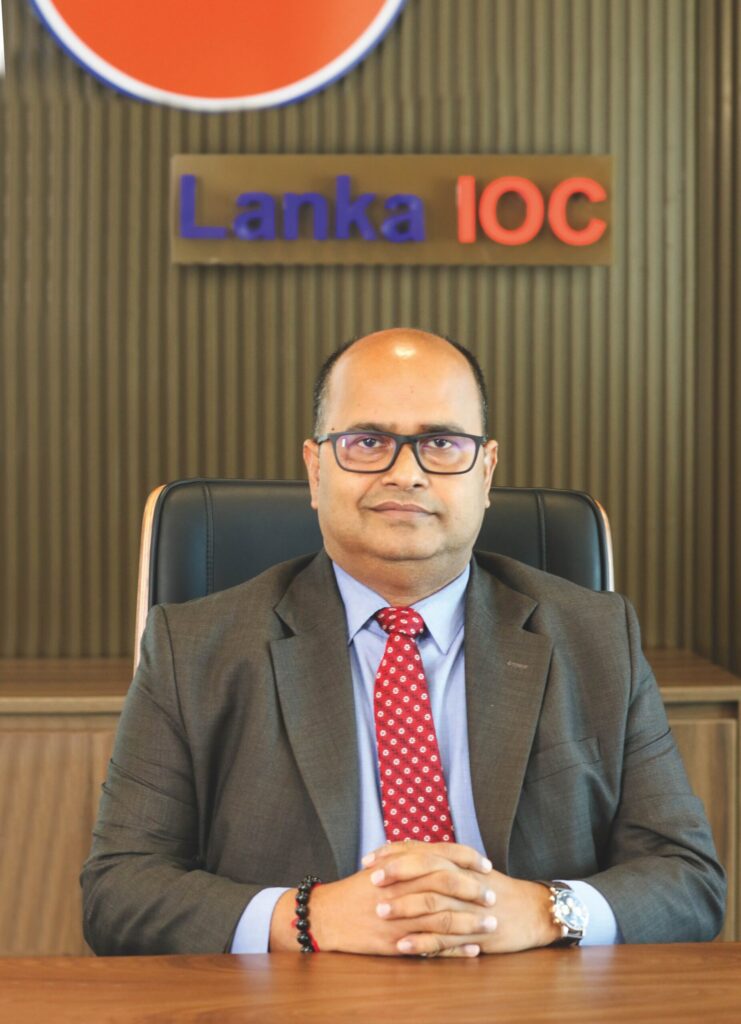
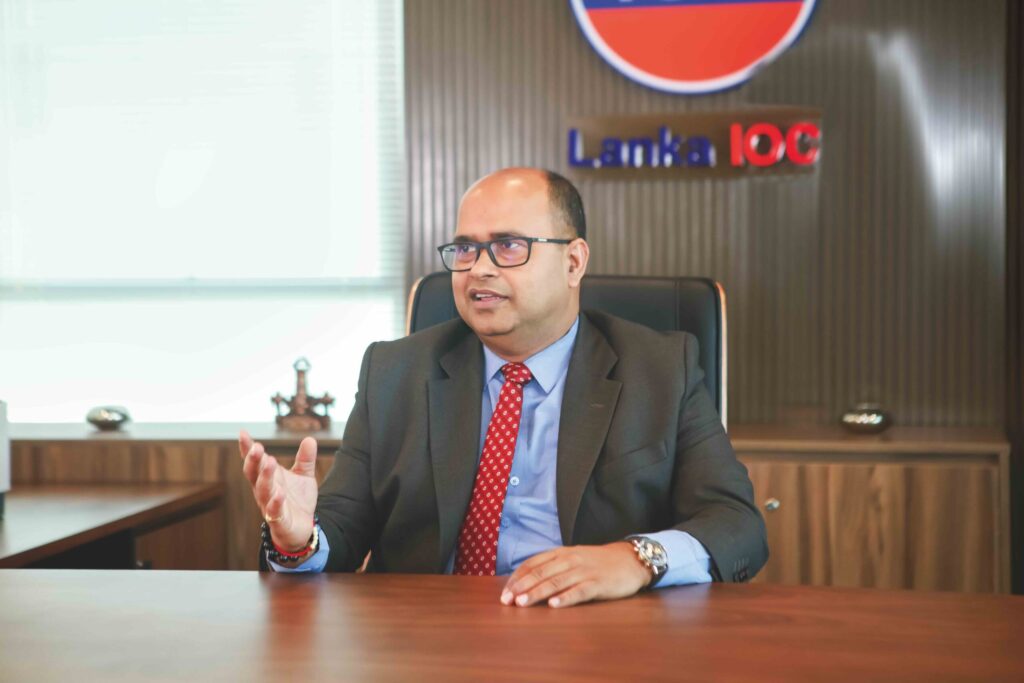
Lanka IOC is positioning itself for a dual mandate: supporting near-term economic recovery while preparing for the long-term energy transition. From EV infrastructure and cleaner fuels to renewable energy initiatives and digitally enabled operations, the company is laying the groundwork to evolve from a traditional fuel retailer into a future-ready, innovative energy partner. Speaking with Business Today, Managing Director Dipak Das discusses how strategic diversification, technological adoption, and inclusive workforce practices are shaping Lanka IOC’s journey toward becoming Sri Lanka’s leading energy company by 2030.
Words Jennifer Paldano Goonewardane.
Photography Sujith Heenatigala and Dinesh Fernando.
Lanka IOC delivered topline growth despite price controls, volatile crude prices, and demand shifts. How critical was your diversification into lubricants, bunkering and petrochemicals in stabilizing earnings in 2024/25?
Diversification was absolutely central to stabilizing earnings in 2024/25. The fuel retail business, while large and essential, operates within a regulated pricing framework that inherently limits margin flexibility and exposes earnings to volatility arising from fluctuations in crude oil prices, global market dynamics, and policy interventions. In such an environment, relying solely on fuel retail would have left the company vulnerable to both short-term shocks and longer-term structural pressures.
In this context, our diversification into lubricants, bunkering, and petrochemicals provided an important counterbalance. These segments operate with relatively greater pricing flexibility and are driven more by market forces than regulatory constraints, allowing us to partially offset pressures in the core fuel business. More importantly, these are not opportunistic additions made in response to short-term challenges — they are strategic verticals that have been developed steadily over several years. We have invested in building scale, enhancing technical capability, strengthening distribution networks, and cultivating deep customer relationships across industrial, commercial, and institutional clients.
The cumulative effect of these initiatives has been significant. By broadening our revenue base, we have been able to smooth cash flows and reduce our dependence on a single revenue stream, which in turn strengthens the resilience of our overall business model. Additionally, these verticals have opened up new avenues for growth and innovation, enabling us to capture value in adjacent markets, create cross-selling opportunities, and reinforce our position as a diversified energy and industrial solutions provider. In essence, diversification has not only stabilized earnings in a challenging environment but also laid the foundation for sustained, medium- to long-term growth.
What were the key drivers behind the five percent revenue growth when the core fuel market remained highly regulated and competitive? The revenue growth was driven by a combination of volume recovery, portfolio diversification, and disciplined execution across all levels of the organization. Even though retail fuel prices remained regulated and competitive pressures were intense, we saw a gradual recovery in demand within the auto fuel segment, largely supported by improving economic activity and a steady revival in transportation and industrial usage. This uptick in demand helped underpin overall revenue growth despite the constraints on pricing flexibility.
In parallel, investments made over the past several years to upgrade and modernize our retail network have begun to yield tangible results. Enhancements in station infrastructure, customer service facilities, and operational efficiency translated into higher throughput per station and better overall customer engagement. Operational improvements across supply-chain planning, logistics, and inventory management also played a critical role, particularly in the performance of our bunkering and petrochemicals businesses, where reliability and timely delivery are key differentiators.
Additionally, sustained brand-building initiatives and targeted marketing campaigns in our lubricants segment helped us capture incremental volumes even in a highly competitive market. The combined effect of these factors — increased volumes, a stronger product mix, improved operational execution, and strategic marketing — enabled Lanka IOC to deliver topline growth and maintain momentum in a market characterized by regulatory limitations and external volatility. This demonstrates the resilience of the business model and the effectiveness of our multi-pronged growth strategy.

Did the growth come more from increased volumes or improved product mix and pricing strategies?
The growth in 2024/25 was primarily volume-driven. Our disciplined execution of strategic initiatives across all business verticals enabled us to capture rising demand as the market gradually stabilized, despite the constraints imposed by regulated fuel prices. In the core auto fuel segment, we saw a steady recovery in consumption, which contributed significantly to overall throughput. At the same time, strong performance in non-fuel segments — including lubricants, bunkering, and petrochemicals — added additional volume-led momentum to revenue growth.
While improvements in product mix and targeted pricing strategies played a supporting role, their impact was secondary to the effect of increased volumes. The focus on scaling operations, optimizing station efficiency, and expanding market reach across different customer segments ensured that we could maximize the capture of available demand. In essence, the combination of higher throughput, disciplined operational execution, and targeted non-fuel expansion allowed us to strengthen topline performance and maintain momentum, even in a market where pricing flexibility is inherently limited.
With lubricant revenue growing around ten percent despite intense competition, what differentiates Lanka IOC in this segment—branding, distribution, or product innovation?
It is a combination of all three, but distribution strength and product credibility are the most critical differentiators. Lanka IOC benefits from one of the widest and most reliable distribution networks in the country, providing reach across retail, industrial, and institutional customers. This ensures availability, consistency, and service reliability, which are decisive factors in the lubricant business.
. At the same time, our lubricant portfolio is supported by strong R&D capabilities, international formulations, OEM approvals, and proven performance across applications. This builds long-term trust with customers. Branding reinforces these fundamentals, but sustainable growth ultimately comes from product performance, technical credibility, and dependable distribution rather than marketing alone.
The bunkering business benefited from higher vessel movements and dynamic pricing. Do you see Lanka IOC evolving into a regional marine energy hub?
Yes, evolving into a regional marine energy hub is a clear medium to long-term aspiration for Lanka IOC. Sri Lanka’s strategic location along major international shipping routes provides a natural competitive advantage, positioning the country — and by extension Lanka IOC — to play a more prominent role in regional maritime energy supply. Even today, there remains substantial untapped potential in the bunkering segment, which can be strategically captured through both organic growth and targeted investments in infrastructure and service capabilities.
To realize this potential, we are focused on progressively enhancing bunkering-related infrastructure at the Colombo Port and other strategic locations. As port capacity expands and vessel traffic continues to grow, the scale and value of the bunkering business are expected to increase significantly over time. Our approach emphasizes operational reliability, service excellence, and the gradual introduction of innovative products and services tailored to maritime customers.
Lanka IOC envisions playing a broader regional role, not only as a reliable fuel supplier but also as a provider of integrated marine energy solutions that cater to the evolving needs of the shipping and logistics sectors. This strategic evolution will be deliberate and disciplined, closely aligned with market demand, regional growth trends, and infrastructure readiness, ensuring sustainable expansion and long-term value creation for both the company and its stakeholders.
Your petrochemical volumes surged fourfold after launching PROPEL products. Is this a niche opportunity or a scalable long-term growth platform?
We view PROPEL not as a niche or isolated opportunity, but as the initial phase of a scalable, long-term growth platform within Lanka IOC’s portfolio. The fourfold surge in petrochemical volumes following the product launch reflects both strong latent market demand and a positive reception to the PROPEL range, underscoring the strategic potential of this business segment.
Scalability will depend on expanding applications across industries, deepening customer relationships, and broadening the product portfolio over time. Petrochemicals align well with our strengths in sourcing, logistics, and industrial marketing, making this a strategically attractive business. As we continue to invest in technical expertise, enhance customer engagement, and improve operational capabilities, we are confident that this segment will evolve into a significant and sustainable contributor to the company’s revenue and profitability over the long term.
How do you decide how much capital and management focus to allocate between traditional fuels and these fast-growing non-fuel segments?
Our capital allocation framework is deliberately balanced. We are experiencing continued growth in demand for traditional fuels with pick-up in economic activities. This segment continues to anchor our cash flow, network relevance, and national energy role. So, efficiency, reliability, and safety in this segment remain priorities. Other existing business verticals such as lubricants, bunkering, petrochemicals, and convenience retail—are assessed based on growth potential, scalability, and return on capital. At the same time, we are evaluating opportunities to diversifying into other emerging avenues in the energy sector to improve the top line as well as the bottom line. Management focus follows the same logic. We aim to protect and optimize the core while systematically scaling adjacent businesses that can structurally diversify earnings and improve resilience over the medium term.
In a market where fuel prices are heavily influenced by government policy, how do you protect margins and cash flows?
We focus on what is within our control. Cost discipline, inventory optimization, supply-chain efficiency, and tight working-capital management are critical focus areas to protect margins and cash flows. Company continuously engages with suppliers from different geographies across the globe to optimize sourcing cost. We also constantly invest in infrastructure to being in operational efficiency across the value chain to mitigate the impact of pricing constraints. In a way, thin margins force us to constantly innovate and improvise to balance out and meet the interest of various stakeholders.
Beyond this, diversification plays an important role. Earnings from non-regulated segments such as lubricants, bunkering, non-fuel retail, and finance income provide a degree of margin stability. A diversified portfolio enables us to absorb volatility in regulated segments while maintaining overall financial stability.

What role has automation, supply-chain optimization, and digital monitoring played in cost control and station productivity?
We are in the midst of a significant technology upgrade program over the next two years, which will be a major enabler of efficiency and productivity. We are in the process of automating all our retail stations. This will help to improve monitoring of operational losses, enhances safety, and streamlines processes. By replacing manual processes with digital, IoT-driven systems, we can improve consistency in services and product delivery and allow for early detection of issues before they affect the consumer.
Digital monitoring systems provide real-time visibility into inventory levels, throughput, and station performance, benefiting both Lanka IOC and our channel partners. This enables faster, data-driven decision-making and supports more targeted sales incentive programs for customers and dealers. Collectively, these initiatives are expected to deliver meaningful improvements in cost control and productivity.
Globally, IOC is transitioning towards green fuels, renewables and EV ecosystems. What does that roadmap look like for Lanka IOC specifically?
Lanka IOC’s transition pathway is pragmatic and phased, aligned with local market realities and infrastructure readiness. We are actively evaluating a comprehensive rollout of EV charging infrastructure across our retail network and expanding cleaner fuel offerings.
Sustainability is also being embedded into our operations through energy efficiency initiatives and emissions reduction. In addition, we are evaluating investments in renewable energy, and rooftop solar installations at several outlets already represent an initial step towards reducing our carbon footprint and operating costs.
Your fully automated all-women-run station has become symbolic. Is this a pilot for broader rollout across the network?
Indeed, the fully automated, all-women-run station serves both a symbolic and strategic purpose for Lanka IOC. Beyond its representational significance, the initiative underscores the company’s belief that inclusive workforce practices can coexist with — and even enhance — operational productivity, safety standards, and overall service quality. By challenging conventional operating models, this station demonstrates that gender diversity and technological innovation can be effectively integrated into the core of business operations, creating a progressive and future-ready workplace.
While it is not envisaged that every station in the network will replicate this model in its entirety, the insights gained from this pilot are proving invaluable. Operational learnings, efficiency improvements, and best practices derived from the experience are being rigorously assessed for applicability across other locations, wherever feasible. In this way, the initiative not only promotes diversity and inclusion but also contributes to broader operational excellence, workforce engagement, and service innovation throughout the Lanka IOC network.
How did the nine months of FY2025/26 compare with your expectations in terms of demand, margins and volumes?
The performance of Lanka IOC during the first nine months of FY2025/26 broadly aligned with our internal expectations. Demand and sales volumes reflected a gradual normalization of economic activity, following the disruptions of previous years, while margins remained under some pressure due to prevailing pricing dynamics, regulatory constraints, and cost factors affecting the fuel sector. Despite these challenges, the company’s diversified portfolio proved to be a stabilizing factor.
Notably, non-auto fuel segments, including lubricants, bunkering, and petrochemicals, continued to outperform, demonstrating the strategic value of our long-term diversification initiatives. These segments not only provided a counterbalance to margin pressures in the regulated fuel retail business but also contributed positively to overall revenue growth and cash flow stability. The strong performance across these non-fuel verticals reinforced confidence in the resilience of Lanka IOC’s business model, underscoring the importance of maintaining a balanced approach to growth that leverages both core and adjacent business segments.
You are navigating both an energy transition and a post-crisis economic recovery. Which of these presents the bigger strategic challenge?
While both the post-crisis economic recovery and the energy transition present significant strategic considerations, the energy transition represents the larger and more complex long-term challenge for Lanka IOC. The recovery from recent economic disruptions primarily demands near-term operational adjustments, financial discipline, and careful management of market dynamics. These are critical for maintaining stability and ensuring continued business continuity.
In contrast, the energy transition requires a fundamental re-evaluation of the company’s business models, capital allocation strategies, and organizational capabilities. It involves anticipating structural shifts in the energy sector, investing in new technologies and sustainable energy solutions, and preparing the workforce and operational processes for a future that is likely to be markedly different from the traditional fuel landscape.
Our strategic challenge, therefore, is twofold: we must manage the immediate demands of economic recovery while simultaneously building the foundations for a structurally transformed energy business. Achieving this balance requires careful sequencing of initiatives, disciplined investment in both core and emerging business areas, and ongoing capability development across the organization. Success will depend on our ability to navigate these parallel priorities effectively, ensuring that Lanka IOC remains resilient today while positioning itself as a future-ready energy leader.

By aligning with national energy security priorities and addressing the evolving needs of businesses and consumers alike, Lanka IOC seeks to deliver value across the entire energy spectrum, positioning itself as a trusted and forward-looking leader in the country’s energy transition.
What do you want Lanka IOC to be known for by 2030—Sri Lanka’s leading fuel retailer or its most innovative energy company?
As Sri Lanka navigates a complex energy landscape marked by regulatory constraints, shifting demand, and a pressing need for sustainable solutions, Lanka IOC has positioned itself at the forefront of both stability and innovation. The company has not only delivered consistent growth in traditional fuel retail but has also strategically diversified into high-potential segments such as lubricants, bunkering, and petrochemicals. This dual focus has allowed Lanka IOC to stabilize earnings, enhance operational resilience, and capitalize on emerging opportunities across the energy sector.
Looking ahead to 2030, Lanka IOC aims to be recognized not merely as Sri Lanka’s leading fuel retailer, but as a future-ready, innovative energy partner. The company envisions differentiation through a combination of technological innovation, sustainability initiatives, digital excellence, and customer-centric energy solutions.
By aligning with national energy security priorities and addressing the evolving needs of businesses and consumers alike, Lanka IOC seeks to deliver value across the entire energy spectrum, positioning itself as a trusted and forward-looking leader in the country’s energy transition.