
October 17-18, 2025.
Prime Minister Dr Harini Amarasuriya’s speech at NDTV World Summit 2025
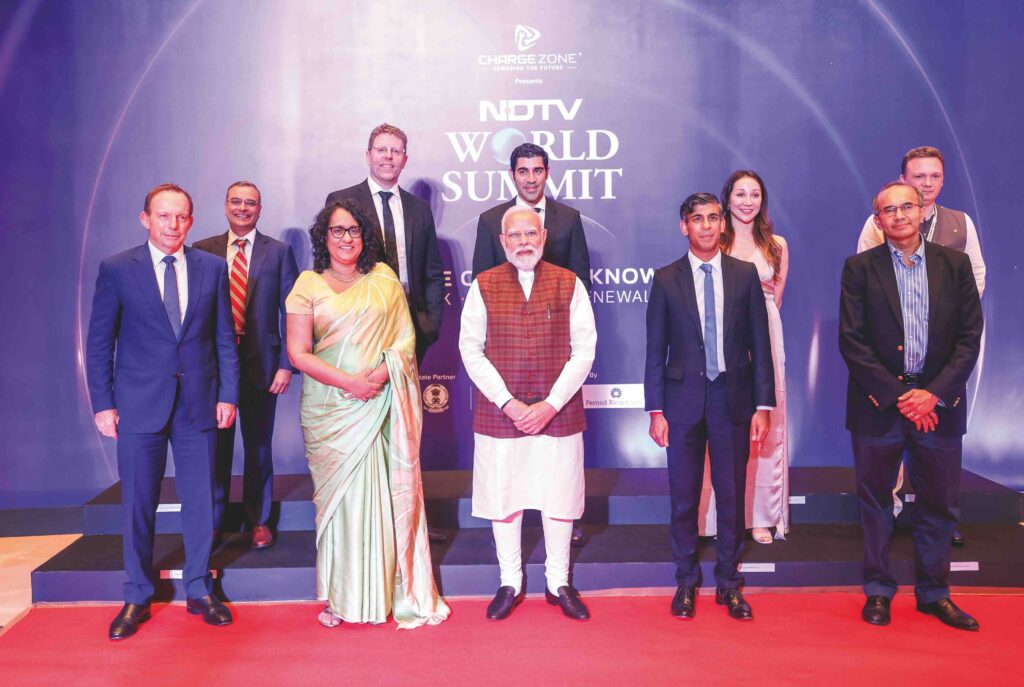
Standing front: Tony Abbott, Former Prime Minister of Australia; Prime Minister Dr Harini Amarasuriya; Indian Prime Minister Narendra Modi; Rishi Sunak, Member of Parliament of the United Kingdom and Prof Tarun Khanna, Jorge Paulo Lemann Professor, Harvard Business School. Standing behind: Nitin Mittal, Deloitte Principal, Global AI Leader, Author of WSJ Bestseller, All-in on AI; Neil Thompson, Director, FutureTech Research Project, MIT’s Computer Science and Artificial Intelligence Lab; Parag Khanna, Founder and CEO of AlphaGeo; Merritt Moore, Professional Ballet Dancer and Quantum Physicist; and Nick Booker, Co-Founder, IndoGenius.
It is a pleasure to join you at the NDTV World Summit 2025 here in New Delhi – a city that holds some of my most formative memories. I thank NDTV for the invitation to be part of this global gathering and for creating a forum for meaningful dialogue. Since its establishment, NDTV has been a prominent news organization and a platform for vigorous public discourse. Over the years, it has evolved as a convenor of ideas, bringing together leaders, thinkers, innovators, cultural icons, and other voices to engage in dialogue at the NDTV World Summits. Standing here in Delhi feels like coming full circle. Three decades ago, in the early 1990s, I was a student at Hindu College – a young student from Sri Lanka navigating a world in flux. Delhi was a city of ideas then, as it is now, reflecting the enduring spirit of India through the centuries. It was a period of change and economic reform. For many of us students, it was our first encounter with the concept of “risk” – in life, in economics, in politics, and in identity. Returning now, several decades later, I see an India transformed: a confident, vibrant nation of 1.4 billion people charting its own path. India today stands among the fastest-growing major economies in the world. Its digital revolution, green transition, and infrastructure initiatives are laying the foundation for Viksit Bharat — a vision of a developed and prosperous nation. India’s journey offers valuable lessons for all developing countries, including my own.
This spirit of progress and partnership was also evident during President Anura Kumara Dissanayake’s state visit to India, his first overseas visit in 2024, and during Prime Minister Modi’s visit to Sri Lanka in April of this year. Reaffirming Sri Lanka’s place in India’s “Neighbourhood First Policy” and “MAHASAGAR Vision,” the discussions highlighted practical, multi-dimensional cooperation, reflecting a shared focus on resilience, growth, and mutual prosperity.
The conferring of Sri Lanka’s highest honour, the “Mitra Vibhushana,” on Prime Minister Modi symbolized the strength of the enduring friendship and partnership between our two nations and, importantly, our peoples. On behalf of the people of Sri Lanka, I would like to express our deepest gratitude to Prime Minister Modi and, most importantly, to the Indian people for the assistance and sustained support extended to us during Sri Lanka’s most severe economic crisis in 2022. This support is a lasting reminder that India’s help at our hour of need is remembered and deeply valued by our people.
The theme of this Summit – “Risk, Resolve, Renewal”, captures the reality of our age. We live in an era when change no longer follows predictable cycles. Instead, it arrives in shocks: a pandemic, a climate crisis, geopolitical shifts, and rapid technological disruption have together redefined what leadership demands. Uncertainty today is not episodic; it is structural, affecting not only economics and security but also trust, values, and the very meaning of progress. Yet, uncertainty also brings opportunity. It compels us to rethink, to adapt, and to imagine new possibilities. Leadership in such times is about equipping societies to respond with resilience, fairness, foresight, empathy, and effective communication.
Risk is often portrayed as peril, sometimes mistaken for recklessness. However, risk is also the first step toward renewal and progress. Without taking risks, growth and change remain impossible.
Sri Lanka’s path has been challenging. The past few years have been a lesson in both fragility and fortitude. Sri Lanka faced a period of severe economic and political crisis in the aftermath of the COVID-19 pandemic. Financial instability, shortages, and institutional challenges were compounded by political uncertainty, testing the nation’s governance and social cohesion. Yet, the resilience and determination of the Sri Lankan people shone through.
Sri Lanka’s political history is marked by persistent popular mobilisation, yet electoral processes have continued. The 2022 aragalaya stands out in this long history of dissent for its scale, character, and impact. Unlike earlier movements, the aragalaya forced the resignation of the former President, Prime Minister, and Cabinet through largely peaceful protests, without any visible political party leadership or a central figure guiding the movement. While loosely organized coordination structures existed, no single individual or group controlled the movement, reflecting a deliberate departure from traditional party-driven politics. Though it did not immediately change the government, the aragalaya reshaped public consciousness and laid the groundwork for subsequent political shifts.
The significance of the aragalaya lies not just in the act of protest. Still, in the citizen mobilisation it exemplified—a self-conscious, non-partisan demand for systemic change, transparency, and accountability. Even as state-sanctioned violence attempted to suppress these demands under the banner of law, order, and political stability, citizens’ engagement persisted. Surveys conducted after the aragalaya indicated a sharp decline in trust in politicians and political parties, yet a simultaneous rise in public political engagement. In essence, the movement revealed a critical distinction: Sri Lankans mistrusted the political establishment, but not democracy itself. The insistence on leaderless organisation and the emphasis on “people power” signified a demand for deeper, participatory democracy, challenging entrenched elite dominance.
“Sri Lanka’s partnership with India has transformed into a dynamic, future-focused collaboration spanning development, energy, digitalisation, education, trade, defence, tourism, and people-to-people ties.”
The 2024 Presidential election illustrates the enduring impact of the aragalaya. Voters elected Anura Kumara Dissanayake (AKD) and his National People’s Power (NPP) party, a political outsider and a complete departure from the traditional elite, reflecting widespread anti-establishment sentiment. In the presidential election, AKD secured 42 percent of the vote, symbolising a shift in the class bases of political power— from a Colombo-centric, westernised elite to a broader coalition of non-elite social forces. Just two months later, citizens reinforced this mandate with a two-thirds majority win for the NPP in the parliamentary general election. These outcomes underscore the power of people’s mobilisation and the resilience of Sri Lankan citizens in exercising their democratic rights and maintaining faith in elections as a mechanism for accountability.
The broader engagement of women in mainstream politics has increased significantly: until 2024, the highest percentage of women in Parliament was just 5.8 percent, whereas it now stands at nearly ten percent. For the first time in Sri Lanka’s history, the 225-member Parliament includes 22 women, of whom 20 are from our party, the National People’s Power. This includes two Cabinet Ministers, including myself, and a Deputy Minister. All of these women have no prior political lineage. Notably, for the first time, women from the Malayagam community have been elected. While we recognize that this is not enough, it is a meaningful start. Additionally, one male member is a person with visual impairment, representing the disabled community, reflecting our government’s commitment to diversity in Parliament. This milestone reflects not only a significant shift in political representation but also the broader impact of the aragalaya in creating space for new voices, promoting inclusivity, and enabling meaningful participation of previously underrepresented groups in governance.
The Presidential and Parliamentary elections of 2024 gave the National People’s Power (NPP) government a clear mandate for transformational change – to build a clean, inclusive, accountable, and forward-looking Sri Lanka.
Under President Anura Kumara Disanayaka’s leadership, we have chosen to take responsible risks. We have reaffirmed our commitment to sound macroeconomic management and fiscal discipline. We are restructuring debt, modernizing governance, digitizing public services, implementing structural reforms under the IMF Extended Fund Facility, increasing revenue through fairer taxation, protecting social safety nets for the most vulnerable, and encouraging investment. The IMF now recognizes this resolve. Inflation has decreased (peaking at 70 percent in September 2022 during the crisis), reserves are being rebuilt, and confidence, although fragile, is returning.
This month, the IMF and Sri Lanka reached a staff-level agreement on the Fifth Review of the program, which, once approved by the Executive Board, will unlock approximately USD 347 million in further support. This follows the successful completion of the Fourth Review in July of this year, when the IMF commended Sri Lanka’s fiscal recovery and progress on debt restructuring.
For us, economic reform is not an exercise in austerity. It is an investment in trust. Our goal is not only growth, but growth that uplifts and includes, while ensuring stability and long-term sustainable development and prosperity for our people. We aim to open new avenues for trade, sustainable tourism, green investment, and technology entrepreneurship, thereby creating the conditions for a resilient economy that rewards productivity and integrity.
While risk ignites change, it is Resolve that sustains it. While, as I said before, the IMF’s latest assessment acknowledges Sri Lanka’s recovery, and the World Bank’s Public Finance Review of September this year (2025) acknowledges Sri Lanka’s fiscal consolidation as one of the largest in the country’s history, equal to about eight percent of GDP over three years, both the IMF and the World Bank remind us that progress is fragile and that we must stay the path. Resolve, therefore, for us, is not just about endurance, but about moving from crisis management to strategic governance.
Renewal is not about returning to where we were, but transforming into something better, stable, sustainable, and resilient. President Disanayaka has articulated a vision of a unified, just, reconciled, and dignified Sri Lanka – one that heals old divisions while embracing future opportunity and upholds social justice. His call for integrity and transparency aligns with our citizens’ demand that renewal must not only lift GDP, but raise fairness and faith in public institutions, and corruption-free governance. His call for inclusive governance, for a “Digital Sri Lanka”, and for transparency at every level is based on the recognition that recovery is hollow unless citizens feel a sense of ownership of it.
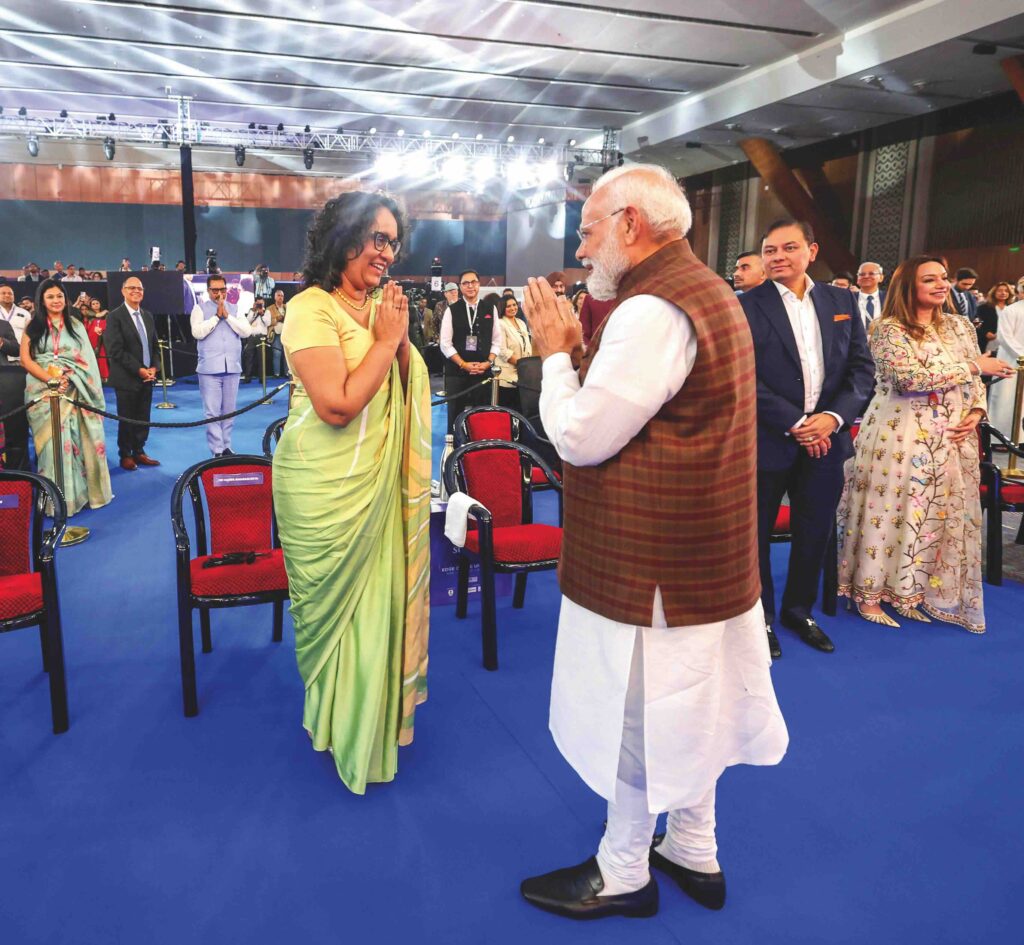
Prime Minister Dr Harini Amarasuriya greets India’s Prime Minister with a gesture of friendship and respect at the NDTV World Summit 2025.
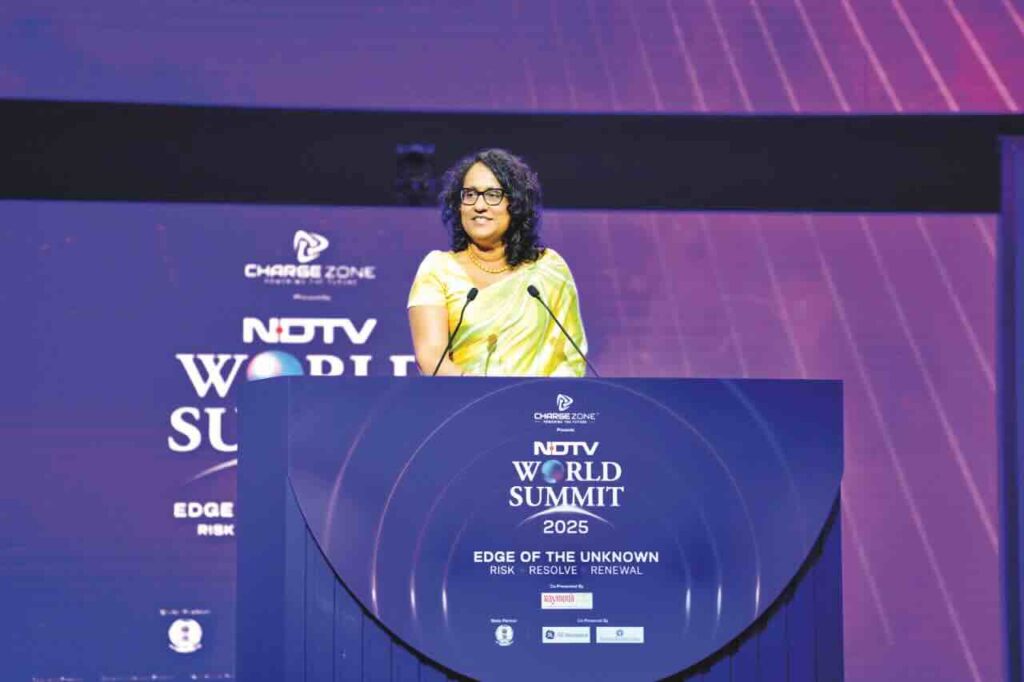
Dr Harini Amarasuriya.
As a strategically located island nation, Sri Lanka is well-positioned to complement the trade and development ambitions of its neighboring countries. Enhanced trade routes and port infrastructure can drive economic benefits not only for Sri Lanka but also for the broader region.
The World Bank’s latest Development Update supports this approach – highlighting how technology, clean energy, and sustainable tourism can drive equitable growth. It is accepted that Sri Lanka’s continued reform momentum, coupled with social protection, is what will ensure Sri Lanka’s rebound lasts.
Renewal also means partnership. The Agreements signed during Prime Minister Modi’s visit to Sri Lanka in April this year are not transactional. They are foundational to the India–Sri Lanka partnership built on sustainability, shared security, and prosperity.
The title of my Address – “Steering Change in Uncertain Times” to my mind, reflects the task of every government and generation, and more so now in the face of climate change, AI, geopolitical shifts and changes, and weakening multilateralism.
Countries such as mine cannot control the tides of global change, but what we can control is how we respond with clarity of mind and purpose, a sense of cooperation and partnership, and values.
Today, as Sri Lanka rebuilds, our partnership with India has evolved into a forward-looking multi-faceted collaboration in every conceivable area – from development cooperation, training and capacity building, connectivity including grid connectivity, energy security, digitalisation, education and technology, trade and investment, defence, tourism, and cultural, and people-to-people connectivity. Steering change in uncertain times requires precisely this—the courage to collaborate; the humility to learn; and turning solidarity into shared strength. We envision building a “Digital Sri Lanka” where every citizen has access, every transaction leaves a trace, and every public service, to the extent possible, is transparent.
We launched GovPay, a unified digital payment gateway for government services, and are integrating e-identity systems, open data portals, and online procurement to eliminate the opaque middle ground where corruption thrives.
Our objective is to make technology work to enhance accountability. We are determined to strengthen existing legislation and enact new legislation where necessary, to strengthen institutions, and to combat corruption. But we are deeply aware that laws alone cannot cleanse or build a nation, and that values are required. We are therefore investing in ethics education, civic participation, and public service reform to make honesty a habit, not an exception.
To steer change in uncertain times, Clarity of Purpose (knowing why we act), collaboration (building bridges, not silos), and courage (making choices that may be difficult but necessary) are essential. We are deeply aware that true leadership is not the pursuit of popularity, but of progress, and it is our nation’s progress and our people’s interests that drive us.
Although Sri Lanka cannot determine the course of global change, our own transformation reflects the vision for the world we wish to see – one that is just, sustainable, and inclusive. A world where growth regenerates, not depletes; where governance is open, not opaque; where digitalisation serves humanity; and where women and youth lead innovation.
Therefore, I want to say to the young people of India, Sri Lanka, and beyond – you live in an era where the boundaries of geography matter less than the boundaries of imagination. The most powerful innovation in this AI age, perhaps, is not so much technological anymore, but moral – the ability to imagine systems that are fair, inclusive, and humane. I therefore urge young people to be conscious of the world that they create.
When I was a student here in the early 90s, I could never have imagined that I would one day return to this City as the Prime Minister of Sri Lanka. But perhaps that is the beauty of democracy – that it allows journeys of ordinary people to merge with the destiny of nations.
Sri Lanka’s journey today is one of renewal through responsible governance, creating pathways for economic progress, sustainable development, reconciliation, and peace. In terms of the UNDP’s Human Development Index, Sri Lanka ranks in the “High HDI” category and is the highest ranked in South Asia. As an island nation, Sri Lanka has maintained its independence while preserving its distinct identity and individuality, thanks to its close historical ties with India. Throughout this journey, as we engage with multiple countries and international organizations, India remains a longstanding partner of trust and collaboration.
Today, India is Sri Lanka’s largest trading partner, most significant source of tourism, and a leading investor. A lesser-known fact, perhaps, is that Sri Lankan companies have also invested in India. Sri Lanka’s flagship investment, Brandix India Apparel City in Visakhapatnam, employs about 20,000 Indians, of whom roughly 18,000 are rural women from villages in Andhra Pradesh.
Sri Lanka aims to develop as a maritime hub for the Indian Ocean region, providing a cost-effective gateway for global trade through its deep-water and well-equipped ports along the East-West shipping lanes. These ports can be further developed as international trade hubs, supporting regional connectivity and economic growth. As a strategically located island nation, Sri Lanka is well-positioned to complement the trade and development ambitions of its neighboring countries. Enhanced trade routes and port infrastructure can drive economic benefits not only for Sri Lanka but also for the broader region.
Of course, the India–Sri Lanka Free Trade Agreement, which was a first for both our countries in 1998, needs to be upgraded. It would be mutually beneficial to explore how Sri Lanka can integrate more fully into India’s manufacturing and service sector value chains. As India positions itself as a global manufacturing hub under the vision of Viksit Bharat (Developed India), Sri Lanka could serve as a complementary production base, particularly in sectors such as textiles, electronics, and food processing, supporting regional economic growth and collaboration.
Indian Ocean security is a shared concern for both our countries, underscoring the importance of continued collaboration on maritime security, regional cooperation, and energy security, with a particular focus on renewable energy development for our mutual benefit.
The deep historical and cultural ties between our two countries also create opportunities for enhanced tourism cooperation and people-to-people exchanges, supporting economic development on both sides. The tourism sector offers opportunities ranging from hospitality to infrastructure, as well as creating new and exciting experiences for visitors from around the world.
It is crucial that India-Sri Lanka relations, particularly in trade and investment, are not viewed as a zero-sum game. It is to the advantage of both countries that the business communities on both sides of the Palk Strait begin to adopt a long-term perspective, treating Sri Lanka as a common space for trade and investment.
I would like to take this opportunity to warmly invite the people of India, as well as the Indian business community, to visit and rediscover Sri Lanka, thereby fostering stronger ties across the Palk Strait.
We are building a nation that learns from its past, that places a premium on transparency and competence. With the highest literacy rate in South Asia, our workforce is ready to demonstrate what can be achieved when given the opportunity. Our commitment to good governance is steadfast, recognizing that sound investment—focused on public benefit—follows trust, and that trust must be earned.
In a fragmented and uncertain world, nations like ours can only thrive by building bridges—bridges of trade, knowledge, trust, and partnership. India’s rise, coupled with its inclusive approach, provides an anchor of stability. For Sri Lanka, this partnership embodies a shared belief that we achieve more and rise stronger when we rise together.
Thank you, NDTV, for convening this dialogue of ideas. And thank you, India, for your warm and gracious welcome.
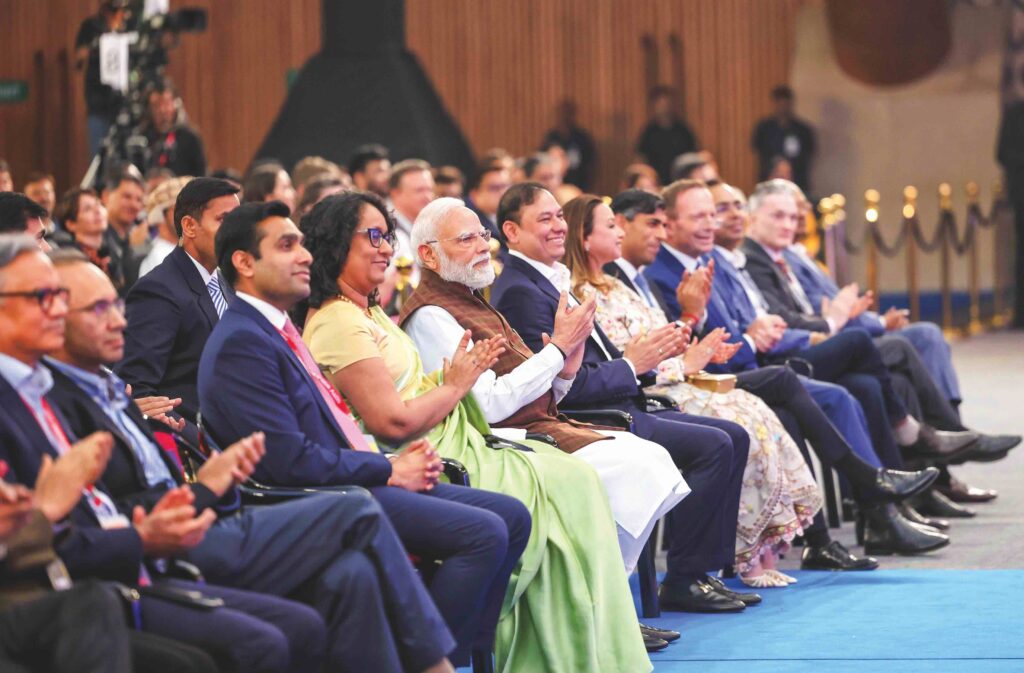
Prime Minister Dr Harini Amarasuriya attends the NDTV World Summit 2025 alongside global leaders, highlighting shared commitments to innovation and sustainable growth.