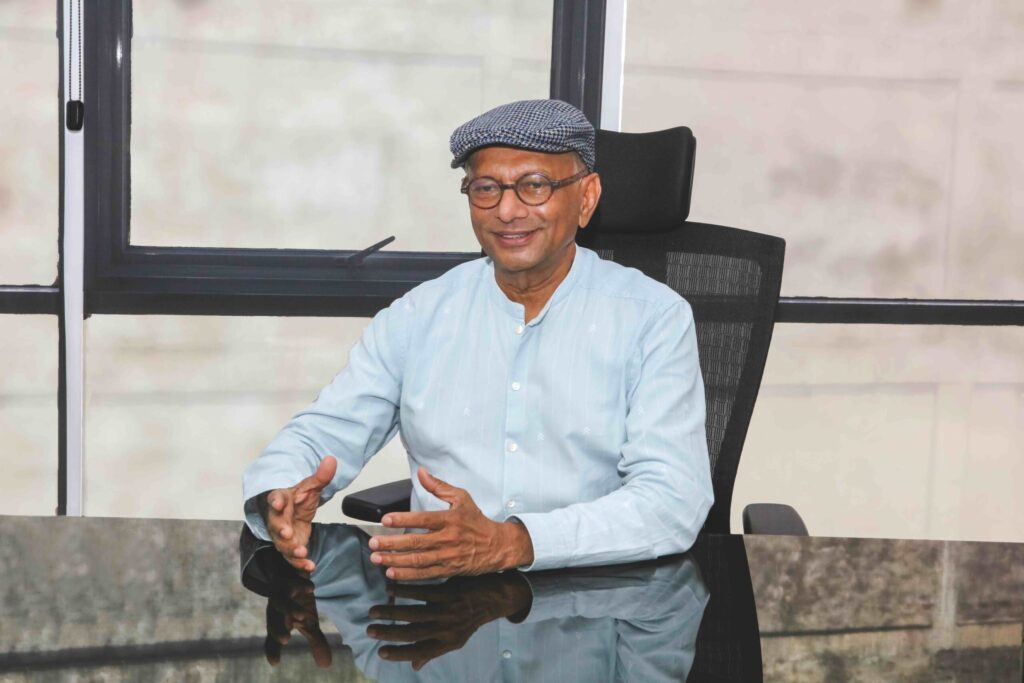

Chandra Wickramasinghe. It is only fitting to call Chandra Wickramasinghe the doyen of Sri Lanka’s tourism industry. Twenty-twenty-five marks his fiftieth year in hospitality and tourism, a milestone he celebrates with pride and gusto. He has built an impressive portfolio of properties under his iconic Thema Collection. In a conversation with Business Today, Wickramasinghe reflected on his humble beginnings in the 1970s, when he struggled to find direction after leaving school. His hotels operate on the foundations of sustainability, cultural authenticity, and creating meaningful employment opportunities. He also shared his philosophy of continuous learning and innovation, encouraging the younger generation to “learn more to earn more” and to cultivate practical skills that enhance employability. Among his many achievements, Wickramasinghe fondly recalls the proudest moment of his career: opening his first hotel, the Culture Club, in 1994. Standing at the reception counter as its owner, he remembered his beginnings as a young receptionist years earlier – a reminder of how far he had journeyed.
Words Jennifer Paldano Goonewardane.
Photography Sujith Heenatigala.
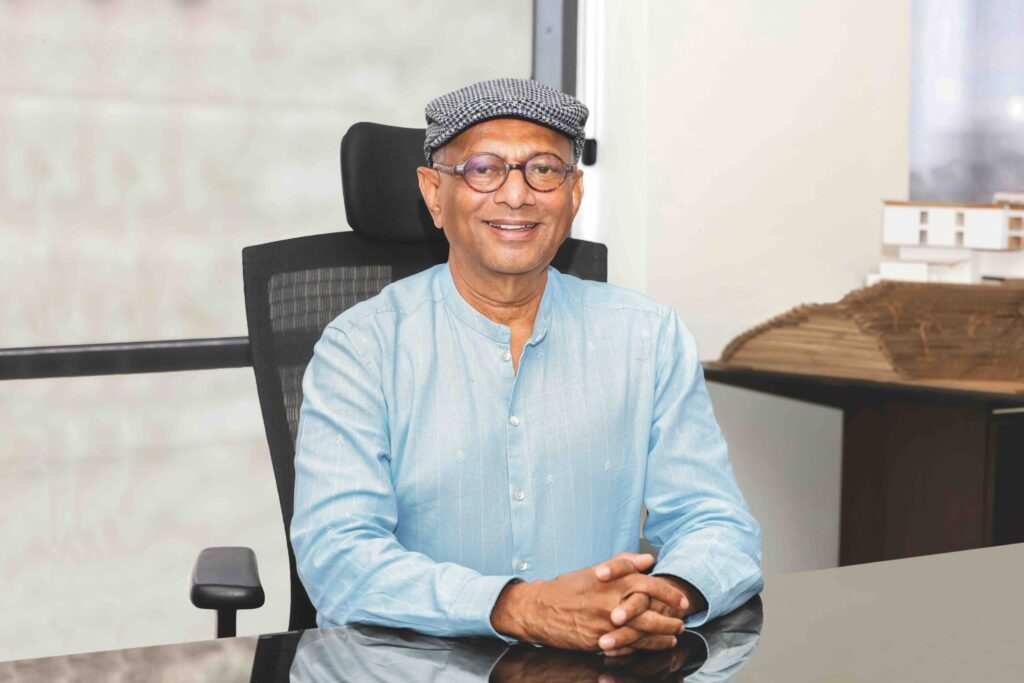
Chandra Wickramasinghe.
Looking back at your 50-year journey in tourism, what stands out as your proudest moment or moments?
When I left school in 1973, Sri Lanka faced a difficult time with insurrections and minimal job opportunities. I came from Kurunegala, and opportunities were scarce for someone like me trying to enter the corporate world. Most available jobs in private companies were secured by those who spoke fluent English, usually from Colombo’s top schools. As young people, we often had no clear direction—our choices were to join the Police or Army, pursue higher education, or try to start a business.
Ironically, one of the best things that happened to me at the time was when my name was struck off a list of candidates for a bank job by our local Member of Parliament. That disappointment pushed me to Colombo, where I enrolled at the Colombo Technical College, which had just begun offering courses in tourism.
Later, I applied to the Ceylon Hotel School to follow their three-year program, but wasn’t selected. At the time, the Germans were managing the Ceylon Hotel School in collaboration with Sri Lanka, and I could only get into a short six-month diploma in Front Office Management. That course, however, became my stepping stone. Soon after, I was offered a job at the Samudra Hotel as a receptionist, earning a salary of 150 rupees. From there, I moved to Neptune Hotel, again working behind the reception desk. I had studied French at the Alliance Française de Colombo. My fluency in French quickly proved an advantage, especially in guest relations. Thereafter I went to France to follow the Certificate in Spoken French at the Alliance Française de Paris. Upon my return, I obtained the National Tour Guide Diploma from the Tourist Board and started practicing as a guide lecturer and freelance tour guide for French operators. At the time, few people could guide French tourists, so they would hire me frequently to accompany them because of my language skills. In 1982, less than ten years into my career in tourism, I took the bold step of cofounding Connaissance De Ceylan, a specialized travel agency that in a short period emerged as a pioneering company in inbound tourism. Looking back, I realize I struggled for about two years after leaving school before finding my direction through tourism training and language studies. With Sri Lanka’s tourism booming between the 1960s and 1983, it was the right path. But my proudest moment came years later, when I opened my first hotel, Culture Club, under the Connaissance banner. Standing in front of the reception counter, I could not help but think back to my beginnings behind such a counter more than a decade ago. To be there now as the hotel’s owner was both humbling and deeply fulfilling. That day, when I spoke to the men and women working behind the reception desk, I told them that the reception counter is the best place to start, because it allows you to learn the most. “The more you learn, the more you will earn,” I advised them.
What key lessons did you learn at each stage of your career?
I realized early on that I needed to create a unique selling point for myself, especially since I did not come from an elite background at a time when school networks or cricketing connections helped secure jobs. A handful of colonial-era companies dominated the travel trade, and even when I owned a hotel, many overlooked me. Some major tour operators in Germany and the UK even denied me an appointment because of a tightly controlled sector. Fortunately, this status quo began to shift as those dominant players faded, creating space for new entrants like myself.
Many people were surprised when I sought land to build a Culture Club during the years of conflict in Sri Lanka. Even President Premadasa thought I was living in a dream, trying to invest in such a project, and expected it to succeed at such a turbulent time. But I trusted my instincts—and succeeded. Culture Club established a trend that celebrated Sri Lankan culture and tradition. One of my biggest challenges was the industry’s archaic structures, which failed to recognize Sri Lankan talent. The most significant barrier was the refusal to see that people bring unique knowledge and abilities regardless of the school they attended or their social background. I turned those barriers into motivation, determined to prove otherwise. That experience shaped my leadership style: I do not choose team members based on superficial criteria but on the capabilities and value they bring to the table.
Another key lesson was about partnerships—bad partnerships can be very damaging. I learned the importance of being selective and building relationships aligned with my vision and values.
One thing has remained constant through it all: I never gave up. Giving up is not in my DNA. You have to start, fight for your vision, and keep going. Even when the bottom line isn’t the strongest, the positive feedback from clients makes the journey worthwhile.
I am proud to have built my career in tourism, not only because it allowed me to create hotels but also because it enabled me to develop people and livelihoods. Many of my employees have gone on to run their own hotels and travel agencies. My journey has been defined by refusing to follow tradition and instead keeping a keen eye on emerging trends—an approach that helped me create a portfolio of hotels that stand apart.
One thing has remained constant through it all: I never gave up. Giving up is not in my DNA. You have to start, fight for your vision, and keep going. Even when the bottom line isn’t the strongest, the positive feedback from clients makes the journey worthwhile.
What is the philosophy behind the Thema Collection, and how does it reflect your vision for Sri Lankan hospitality?
My philosophy has always been to “Sri Lankanize” tourism, with a strong focus on sustainability. From the outset, I introduced innovations ahead of their time, such as employing naturalists in my hotels to educate guests about nature and sustainable practices. Today, we have 20 naturalists across our properties, engaging with visitors on biodiversity, water management, upcycling, and recycling.
I have always believed in thinking outside the box. When I built Culture Club in Kandalama in the 1990s—when no major company had ventured into that terrain—I drew inspiration from native concepts of the lake, the dagoba, the village, and the temple. The idea was to allow visitors to experience the authenticity of Sri Lankan village life.
Each property in the Thema Collection reflects the essence of its location. For instance, the Kandy property shows Kandyan architectural influences, while the one in Nuwara Eliya draws from colonial heritage and the Ceylon Tea experience. Aliya Resort pays tribute to the majestic elephant and highlights the human–elephant conflict, a significant issue in Sri Lanka. Amba Yaalu, located on a mango orchard, is run entirely by women, celebrating the land and women’s empowerment.
For decades, Sri Lankan tourism was heavily centered around the beaches, particularly Bentota, with charter flights bringing visitors straight to the south. The Thema Collection, however, offers a window into the island’s diversity—its rich biodiversity, varied landscapes, and vibrant communities. Guests encounter paddy fields, rubber, cinnamon, tea, and countless other forms of vegetation that reflect the richness of our island.
I also take pride in creating unique forms of employment. For example, I was the first to hire hotel astrologers, recognizing that guests are often curious about Sri Lanka’s cultural practices. Meeting astrologers allows them to engage with an authentic tradition and gain deeper cultural insights. Similarly, my hotels integrate elements such as traditional music, with flutists playing at sunset, or farming demonstrations to showcase the rhythms of local life.
At the heart of the Thema Collection is a simple principle: every property must resonate with its surroundings and people. We employ from the communities where we operate, creating livelihoods and ensuring guests gain genuine insights into local culture and traditions.
My philosophy has always been to “Sri Lankanize” tourism, with a strong focus on sustainability. From the outset, I introduced innovations ahead of their time, such as employing naturalists in my hotels to educate guests about nature and sustainable practices.
How has innovation played a part in your Thema Collection?
For me, innovation is a daily habit. From the moment I wake up, I think about how to do things differently, to create something new and authentic. Post-COVID, travelers have become more conscious of natural spaces and fresh air, so I have focused on designing properties that embrace those needs while reflecting Sri Lankan culture.
Each property under the Thema Collection carries a distinct theme. For example, we introduced a spice garden restaurant and incorporated traditional culinary elements like Weligama Ambul Thiyal. At Amba Yaalu and Waraka, we creatively highlight local produce such as mango and jackfruit, using them in our menus in innovative yet traditional ways. At the heart of it, I strive to do what others have not done. That is the signature of the Thema Collection—properties built around unique themes and infused with innovative elements that allow visitors to discover new insights and experiences while staying deeply connected to Sri Lanka’s culture.
As a veteran in the industry, what can Sri Lanka do better to meet the expectations of international travelers and attract more tourists?
International travelers come to Sri Lanka precisely for cultural exposure and authentic experiences, looking for something unique and memorable that distinguishes our island from other destinations.
From the warmth of a welcome to the thoughtfulness of a farewell, every gesture shapes a visitor’s impression and influences whether they wish to return. Equally important is cleanliness—an area where we, as a country, must do better. Proper waste management is essential, yet we continue to discard plastic bags and bottles along roadsides. Today, cleanliness is a global benchmark for tourism, and Sri Lanka must rise to meet that expectation.
We can also learn from international examples. Rwanda, for instance, transformed its image by banning single-use plastics and adopting innovative tourism promotion strategies. Through high-profile sports sponsorships—such as branding “Visit Rwanda” on Arsenal’s shirt sleeve and later partnering with Paris Saint-Germain and Atlético Madrid—it successfully rebuilt its tourism industry after the genocide, particularly capturing the British market. Sri Lanka, too, can pursue similar initiatives, especially leveraging cricket, which has a massive international following. A well-crafted campaign during a World Cup, when millions are watching, could effectively showcase Sri Lanka’s culture and hospitality to the world.
Now that you have been in the tourism sector for five decades, how would you describe the transformation of Sri Lanka’s tourism industry?
Sri Lanka’s golden era of tourism was from the 1960s until 1983. After that, as the conflict escalated, the industry continued functioning, but with stunted growth. Many of us kept building and operating hotels despite limited returns, driven purely by passion. Our journey has been anything but smooth, with travel advisories issued whenever there were explosions at bus stations, train stations, or religious sites. Yet even after 50 years, Sri Lanka has still not realized its full tourism potential. It was only after 2009 that circumstances truly began to change. To put this in perspective: in 1983, Sri Lanka welcomed 340,000 tourists, and 30 years later, in 2009, we still received roughly the same number. Because of the conflict, Sri Lanka neither overbuilt nor attracted large-scale investments, which in some ways prevented overdevelopment but also held us back. Today, however, the opportunity to harness our potential is greater than ever.
The challenge lies in where we focus our development. We have placed too much emphasis on Colombo. While city development is essential, “city tourism” is not Sri Lanka’s strongest asset. I call this trend Dubaiism—trying to replicate models like Dubai or Riyadh. But competing with cities pumping billions into attracting urban tourism is unrealistic. Why would tourists who choose Riyadh for city experiences opt for Colombo instead? Sri Lanka’s true strength lies outside Colombo—in the north and east, from Jaffna to Arugambay, and in countless untouched regions across the island. That is where tourists want to experience simplicity, authenticity, and natural beauty. For example, a tour operator I work with in Africa has said they can bring 2,000 tourists who want nothing more than to camp in tents near a river or a lake. These are the experiences Sri Lanka can offer, but access to land remains a significant obstacle. Since the State owns about 80 percent of the land, obtaining approvals can take over two years, making development painfully slow.
The potential is enormous, but to unlock it, Sri Lanka must move beyond Colombo, streamline access to land, and pursue regional development smoothly and sustainably. Only then can we fully realize the promise of our tourism industry.
I make it a point to visit universities as a guest lecturer, advising students to “learn more to earn more” and to focus on developing practical skills that will make them truly employable. I encourage the next generation of tourism professionals to gain hands-on experience and a deep knowledge of Sri Lanka’s attractions.
How have travel expectations changed since you first entered the industry in the seventies?
While everything is moving toward artificial intelligence in every sector, from marketing and bookings to hospitality, hotels must focus on EI, that is, emotional intelligence. While technology facilitates bookings, tourists still want authentic human connections and experiences when they arrive. They want to see the real Sri Lanka, touch things, participate in activities like cooking, rowing on a lake, walking on beaches, and mingling with locals. Experiential tourism is now essential.
After 50 years, what continues to motivate you in this industry?
Employing Sri Lankans is a significant motivation, as I recall my struggles with unemployment after leaving school. Creating livelihoods for families while contributing to Sri Lanka’s foreign reserves is tremendously satisfying, which is why every government must support industries generating foreign currency to meet future financial obligations.
How do you mentor and inspire the next generation of tourism professionals in Sri Lanka?
I make it a point to visit universities as a guest lecturer, advising students to “learn more to earn more” and to focus on developing practical skills that will make them truly employable. I encourage the next generation of tourism professionals to gain hands-on experience and a deep knowledge of Sri Lanka’s attractions. Too often, I meet students who have never even visited iconic sites like Sigiriya. Without firsthand experience, it is not easy to share the story of our island with visitors. I emphasize the importance of practical learning over purely theoretical knowledge—mastering foreign languages, understanding how to innovate with Sri Lankan cuisine, or experiencing the richness of our landscapes. Take cuisine, for example: Sri Lankans have already taken our flavors overseas, with Australia being a strong example. The MasterChef platform has showcased our spices and dishes brilliantly, reminding us that our culinary traditions are a powerful tourism asset. Young people entering this industry must engage with the “touch and feel” of things—nature, food, traditions, and culture—because visitors seek authentic experiences. To deliver those experiences, our youth must first internalize and appreciate them. At the same time, the industry itself must step up to recognize talent and open opportunities. At Amba Yaalu, the only women-led hotel in Sri Lanka, our team of engineers are women, led by a woman who are qualified and bring with them a wealth of knowledge and experience. These women are effectively managing their department because we believed in their potential. We must reward merit, talent, and hard work. Unfortunately, because avenues for growth are often limited, many young people work in the industry for only a short time before seeking employment abroad, where they feel their abilities will be recognized and rewarded. We must inspire, support, and empower our youth here at home to retain talent.
How has learning helped you in your career?
I have always been very curious by nature. In the early days, I learned a great deal from the tourists I guided—many were academics or professionals who often knew more about specific subjects than I did. That experience taught me the value of keeping an open mind and learning from others. Even today, I continue to learn from successful tourism models worldwide, such as Rwanda, and from culinary experts like Peter Kuruvita, who has promoted Sri Lankan cuisine internationally. His simplicity, presentation style, and fearless curiosity about exploring the island’s diverse palate have inspired me. In tourism, learning is not optional—it is essential. We must enjoy discovering new things, whether from where we build our hotels or everyday experiences like visiting local markets, where vendors often share invaluable insights into sourcing the best products. The most meaningful learning often comes not from books but from real-world encounters, experiences, and a willingness to stay curious.
If you could make one wish for the future of Sri Lanka tourism, what would it be?
My wish extends beyond tourism to Sri Lanka as a whole. I hope to see the country rise above religious divisions and unite as one nation. Tourism can play a decisive role in this journey by creating opportunities for people, including work abroad, where they can gain experience and return with enhanced skills and income. Ultimately, I wish for greater social equality and an improved quality of life for all Sri Lankans.