
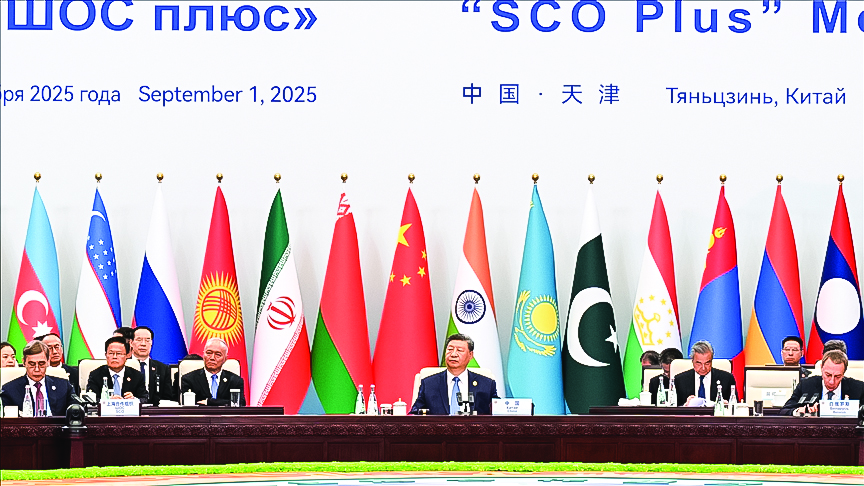
Chinese President Xi Jinping addressing the 2025 SCO Tianjin Summit.
The Gathering in Tianjin: More than a Regional Meet
On the last day of August 2025, Tianjin—a bustling port city and industrial hub near Beijing—became the stage for history’s largest Shanghai Cooperation Organization (SCO) summit. Over two days, leaders from more than 20 countries and representatives of ten international organizations convened at the Tianjin Meijiang Convention and Exhibition Center.
At first glance, it was another multilateral summit. However, a closer look shows it was something else entirely: a powerful reassertion of China’s ambitions to reshape global business, trade, and governance.
From new financial institutions to green energy pledges, and from artificial intelligence pacts to bold statements on world order, the Tianjin summit signaled that the SCO is no longer just about regional security. It’s evolving into an alternative platform for global economic governance—with Beijing in the driver’s seat.
SCO 101: From Borders to Balance of Power
Founded in 2001 by China, Russia, and four Central Asian republics, the SCO began as a security forum to manage borders and combat terrorism. Over two decades, it expanded to include India and Pakistan (2017), Iran (2023), and Belarus (2024).
Today, the SCO represents 42 percent of humanity and nearly a quarter of global GDP. The SCO’s charter emphasizes non-alignment and respect for sovereignty. But it has become a forum for balancing Western influence—a Eurasian bloc that combines energy-rich states, nuclear powers, and rapidly growing economies.
The Tianjin Summit marked the SCO’s 25th Heads of State Council meeting. Its scale, ambitions, and unmistakable message set it apart: the organization is no longer content with being a “talk shop.”
China’s Grand Stage: Tianjin Transformed
The Chinese government left nothing to chance. In the run-up to the summit:
Tianjin underwent a citywide facelift, with upgraded stormwater systems, roads, and the Haihe River nightscape.
The Meijiang Convention Center was refurbished to meet global media standards.
Nearly 1,000 student volunteers were recruited for logistics and guest services. This wasn’t just about logistics. It was about symbolism. Tianjin, long positioned as China’s northern gateway to the world, was chosen to send a clear message: China is the convener of Eurasia’s future.
The Outcomes: 24 Documents, One Vision
When the final gavel struck, the Tianjin Summit had produced 24 official documents. Among the most significant:
The Tianjin Declaration – A political statement affirming SCO unity.
SCO Development Strategy 2026–2035 – A roadmap extending the organization’s reach into economics, tech, and governance.
Commemorative statement on the 80th anniversary of the UN and the end of WWII.
Sectoral action plans on digital economy, energy, security, and counter-narcotics.
But beyond paperwork, the summit also created new institutions and platforms that could change the trajectory of global business.
Xi Jinping’s Big Bets
President Xi Jinping used the summit to showcase China’s economic statecraft. His announcements were sweeping:
- SCO Development Bank
Xi called for accelerating the creation of an SCO Development Bank—a financial institution meant to rival the IMF and World Bank. Until then, the SCO relied on its Interbank Consortium. Beijing pledged ten billion yen in loans (2026–2029) and offered its financing capacity to get the bank rolling. - Green Energy Push
Xi pledged to expand wind and solar power capacity by ten million kilowatts each within five years across the SCO states. China also promised two billion yen in aid for renewable projects. One deal—a wind farm in Uzbekistan—will be settled in renminbi, giving rise to what analysts dub the “electro-yuan”: a currency regime for green energy akin to the petrodollar system. - BeiDou and Digital Economy
China opened its BeiDou satellite navigation system to SCO members and launched a digital economy platform for data, e-commerce, and fintech cooperation. - Global Governance Initiative (GGI)
Xi unveiled his fourth major global framework, after the Global Development, Security, and Civilization initiatives. The GGI envisions the SCO as a rule-shaper, not just a participant, in global governance. In short, Xi used Tianjin to position China as a power within the world order and as an architect of a parallel order.
India Plays Its Hand: SCO as Security, Connectivity, Opportunity
Prime Minister Narendra Modi’s first visit to China in seven years was to the Tianjin Summit. He brought a concise agenda: “SCO = Security, Connectivity, Opportunity.”
Security: “No exceptions, no double standards,” Modi stressed, in a thinly veiled reference to Pakistan’s track record on terrorism.
Connectivity: He emphasized infrastructure and logistics projects that are “transparent and trustworthy”—a contrast to China’s Belt and Road.
Opportunity: Modi argued for SCO reform, emphasizing people-to-people ties and youth engagement.
Modi also met Xi bilaterally, signaling a thaw in icy Sino-Indian relations since the 2020 border clashes. While India didn’t endorse all SCO joint statements—particularly those critical of Western allies—its participation underlined New Delhi’s strategy of balancing East and West.
The Russia Factor: Moscow’s Pivot East
For Russia, isolated from the West after Ukraine, the SCO has become a critical diplomatic and economic lifeline. President Vladimir Putin used Tianjin to underscore Russia’s role as a Eurasian energy supplier and strategic partner.
Putin aligned with Xi on the need for multipolarity, while also seeking to keep India engaged. The summit thus showcased a tentative Moscow–Beijing–Delhi triangle, an axis that could shift the global balance of power if it holds.
Beyond Security: Business at the Center
Unlike earlier summits, Tianjin pushed business to the forefront. Three areas stand out:
- Finance and Currency
The proposed SCO Bank and the electro-yuan initiative directly challenge dollar dominance. Settlement of energy trade in yuan internationalizes the renminbi and insulates members from Western sanctions. - Green Economy
By making renewables the centerpiece, China positioned itself as the green workshop of Eurasia. This also aligns with global ESG investment trends, making SCO projects potentially attractive for international investors—though governance risks remain. - Artificial Intelligence
The summit saw a landmark AI cooperation pact, with members agreeing to share knowledge and resources. India pushed hard for inclusivity, stressing that “All nations should have equal rights in AI development.”
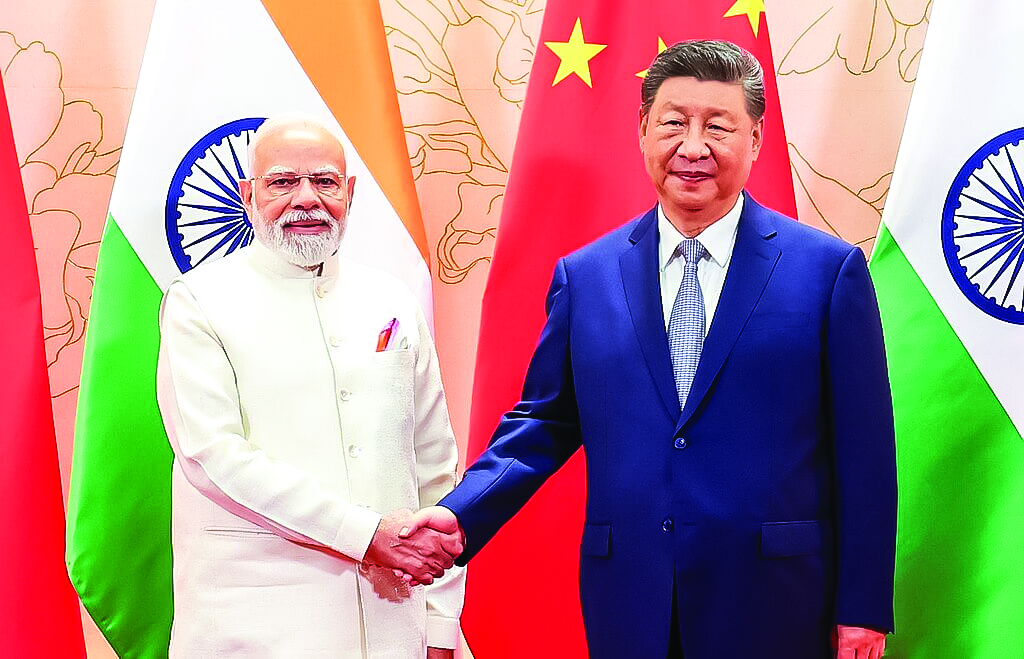
Indian Prime Minister Narendra Modi with Chinese President Xi Jinping.
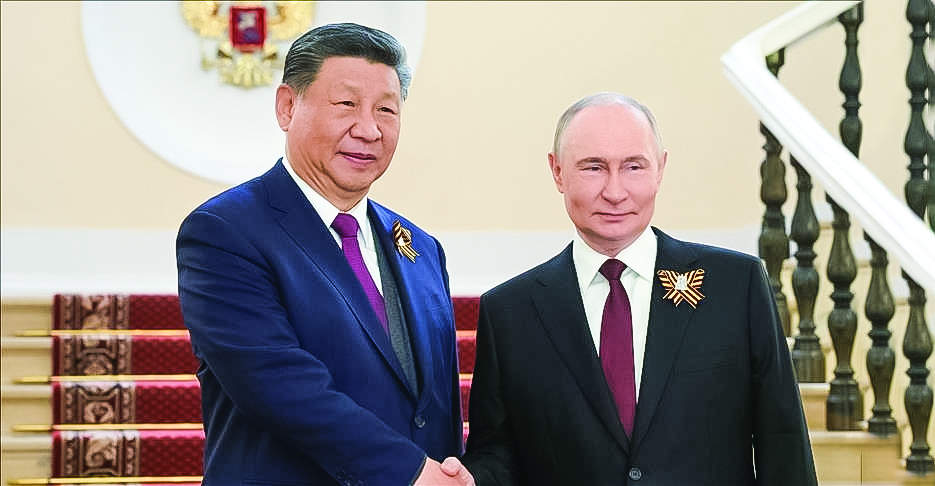
Chinese President Xi Jinping with Russian President Vladimir Putin.
A Multipolar World in the Making?
The symbolism of Tianjin cannot be overstated. The SCO’s combined footprint—spanning East Asia, South Asia, Central Asia, and parts of the Middle East and Eastern Europe—makes it a formidable bloc.
At the summit:
Xi, Putin, and Modi were photographed in trilateral discussions—a moment some analysts dubbed a “reverse Nixon,” suggesting a realignment of Asian powers against U.S. dominance.
Leaders openly discussed reducing dependence on Western-led institutions.
The narrative was straightforward: a new pole of power is crystallizing. But cracks remain. India remains wary of Chinese-led initiatives. Central Asian states want economic cooperation but fear overdependence. And ideological differences—especially on democracy and human rights—remain unresolved.
The Business Implications
For businesses and investors, the Tianjin Summit has three big takeaways:
New Financing Channels: The SCO Bank, if realized, could offer companies alternative capital sources for infrastructure, energy, and digital projects—particularly for those excluded from Western funding due to sanctions or political risk.
Green Energy Opportunities: With China pledging billions in loans and expanding capacity, renewable energy projects across Central and South Asia may accelerate. This opens doors for Indian, Russian, and Chinese firms alike.
Shifts in Trade Settlement: If the electro-yuan gains traction, global firms may increasingly need to transact in renminbi—not dollars—when negotiating Eurasian energy and infrastructure contracts.
Challenges Ahead
Despite the grand announcements, the SCO faces formidable hurdles:
Divergent Interests: India’s refusal to sign onto all statements shows the bloc’s limits.
Institutional Overstretch: With new banks, energy platforms, AI pacts, and governance initiatives, the SCO risks trying to do too much too quickly.
Western Pushback: The U.S. and EU are unlikely to ignore the rise of a parallel order. Secondary sanctions could complicate financing and project participation.
Trust Deficit: Historical rivalries—China vs. India, India vs. Pakistan—remain obstacles to deep integration.
Tianjin as a Turning Point
The SCO Tianjin Summit of 2025 was not business as usual. It was business rewritten. By announcing bold financial, technological, and energy initiatives, China positioned the SCO as a platform for reshaping global commerce and governance. India, Russia, and others signaled cautious engagement, balancing cooperation with sovereignty.
Tianjin was a signal for businesses: the world’s economic center of gravity is shifting eastward. Whether the SCO becomes a genuine alternative to Western-led institutions remains to be seen.
But one thing is clear—the era of unipolarity is over, and Tianjin was the summit where that message was written in bold.
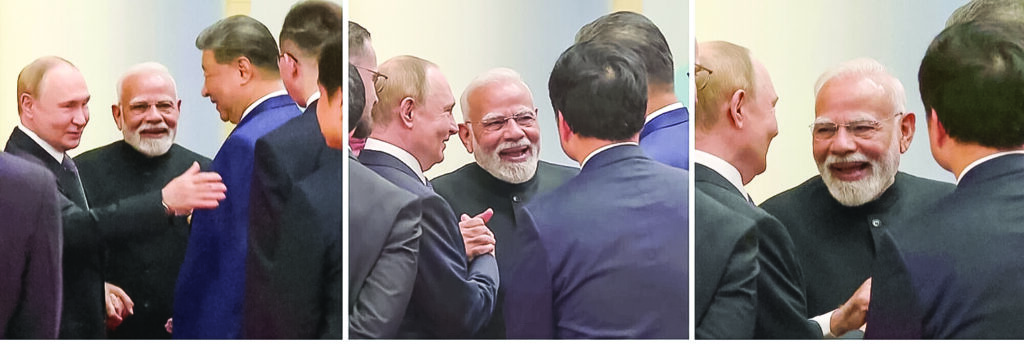
A friendly exchange of gestures between Russian President Vladimir Putin, Chinese President Xi Jinping, and Indian Prime Minister Narendra Modi.