
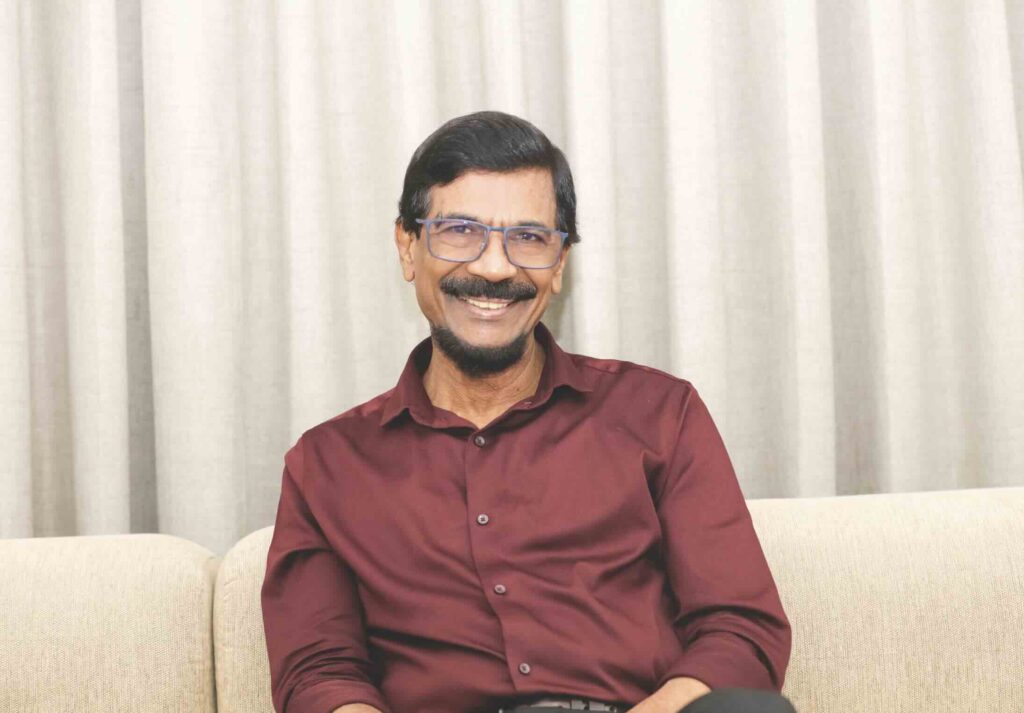
Tilvin Silva, General Secretary, JVP.
The National People’s Power (NPP), led by the Janatha Vimukthi Peramuna (JVP), a broad coalition of organizations, is in government, becoming a credible power in a fragmented political landscape. As the government, with mostly newcomers, manages the intricacies of governance, the JVP continues to be a powerful force driving its agenda for the country, vowing to keep its promises to the people. Tilvin Silva, the General Secretary of the JVP, is a force to reckon with in that scheme of things. Speaking with Business today, Tilvin Silva talked about their journey, from triumph to defeat, to highs and lows that marked their road to victory. Through their vicissitudes, they stood firm, unwavering in their commitment to their fundamentals and policies. Endurance – the ability to persevere through hardship was a significant lesson for him and his party. As he looks back, he contends that the journey has been challenging, yet they bore it all until triumph. He knows the road ahead is long and will inevitably include setbacks. They have much work to do. He appeals to the people to stand with the government, trust their commitment, and give them the time needed to deliver the complete transformation they have pledged.
Words Jennifer Paldano Goonewardane.
Photography Sujith Heenatigala.
Twenty-five years ago, in an interview with Business Today, you had said that the JVP is a party that adapts and evolves with the changing political climate. In what ways have you guided the JVP to reflect this principle?
We would not have been able to come to power had we failed to adapt to the evolving political landscape while remaining true to our core principles and policies. Across the world, we have seen leftist parties falter because they rigidly adhered to outdated ideologies, thereby limiting their political potential and ability to gain power. In contrast, our party has continuously evolved in response to changing political dynamics, while unwaveringly upholding our foundational objectives.
The powerful movement we have built—the National People’s Power (NPP)—is a testament to our commitment and capacity for transformation. As we embarked on this new path through the NPP, we collectively prepared for elections with a unified purpose. Our success marks the first time in Sri Lanka’s history that a progressive, leftist democratic force has secured a significant victory and a resounding public mandate.
This historic achievement was possible because we were willing and able to transform ourselves according to the demands and realities of the time.
In January 2019, Anura Kumara Dissanayake during an interview with us, stated that the country needed real change. However, your party secured only three percent of the vote in the presidential election and won just three seats in Parliament that year. Since then, how did you change course, and what strategies did you adopt to ascend to the national stage?
When we formed the NPP, we collaborated with a broad coalition of organizations. Together, we developed a comprehensive set of policies—sector-specific and overarching—following a rigorous evaluation of the prevailing conditions. This policymaking process was grounded in dialogue, consultation, and collective input.
After the 2019 elections, we launched our campaign with renewed energy and a clear purpose. At the time, the Sri Lankan public greatly trusted Gotabaya Rajapaksa. It simply was not our moment. The disillusionment with the previous Good Governance administration had driven most voters toward Gotabaya Rajapaksa. While we knew victory was unlikely in 2019, we viewed that election as a strategic platform to present our vision and policies to the public. Our campaign meetings served as crucial entry points into national political discourse.
Then came the economic crisis. We foresaw that the structural weaknesses of the SLPP government and the leadership failures of Gotabaya Rajapaksa would lead to a collapse in governance. As poor decisions mounted and the crisis deepened, public frustration culminated in the Aragalaya protest movement at Galle Face Green. That moment marked a turning point—the people demonstrated their collective strength and the ability to remove leaders from power. However, while leadership changed, the people could not choose the leader. Only a fresh mandate through a democratic election could enable that.
By then, our confidence had grown. We understood that the people had grown disillusioned with traditional political parties. Exhausting all other options, they began viewing the NPP as the only viable alternative. This shift in public sentiment was a key reason behind our eventual success.
The setbacks of 2019 did not weaken our resolve. We remained steadfast in our mission and confident that our time would come. In the intervening period, we worked tirelessly— leading protests, building alliances, and uniting diverse segments of society under one banner. We contacted professionals, academics, scientists, retired military and police personnel, and the working class. We engaged with them directly, sharing our policies and vision for the country.
The NPP grew into a formidable force. That strength and unity enabled us to rise from a mere three percent public support to nearly 60 percent.
Our success marks the first time in Sri Lanka’s history that a progressive, leftist democratic force has secured a significant victory and a resounding public mandate. This historic achievement was possible because we were willing and able to transform ourselves according to the demands and realities of the time.
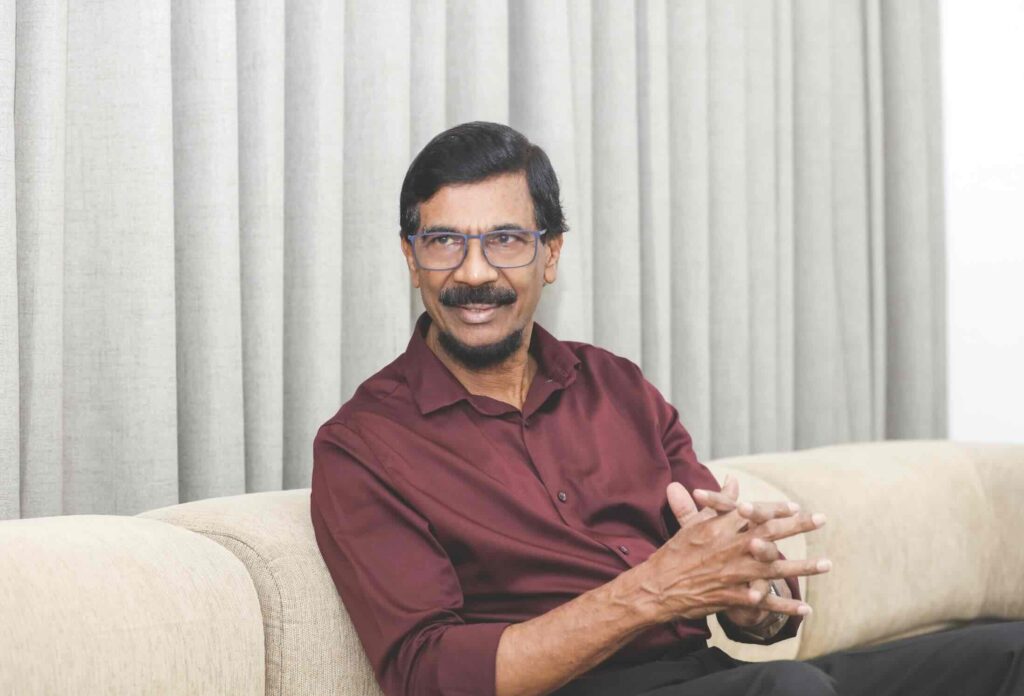
Within five years, the public began shifting away from traditional political parties and started paying attention to your message. What changed? And as the General Secretary of the JVP, what role did you play in guiding the party to this position and making its message relevant?
People do change—but not necessarily according to our expectations or timelines. Change occurs in response to real, tangible conditions on the ground. Until the environment is conducive, no effort can bring about the transformation we seek. Likewise, if we fail to act when the moment is right, that opportunity for change may pass. That was a reality we understood well.
Therefore, we made it a priority to engage continuously with the public. We met with individuals and small groups nationwide, listened to their concerns, and presented our perspective on various issues. As this engagement continued, we observed an evident decline in the influence of traditional political parties.
The structural disintegration of those parties was apparent— the SLPP emerged as a breakaway from the SLFP, while the SJB separated from the UNP. These splits weakened the traditional power blocs that had long dominated Sri Lankan politics.
In this fragmented political context, the public began seeking a credible alternative. We also recognized a perception among the people that the JVP, on its own, could not secure an electoral victory. We understood we had to offer the public a vision and a viable, winnable political movement. That led to the formation of the NPP, a broad-based coalition of diverse organizations and individuals. We led this transformation with a clear vision and a strategic plan. Nothing occurred by chance; every step was deliberate and structured. That enabled us to grow from a minor political force into a formidable national movement.
Notably, most who voted for us were not JVP or NPP members. Traditional parties such as the UNP and SLFP enjoyed a loyal base, typically securing at least 30 percent of the vote, even in defeat. They could rely on this core and compete for floating votes to achieve victory. We did not have the benefit of such a guaranteed base.
However, in this election cycle, a significant segment of the electorate abandoned those traditional parties and aligned with us, not as members but as citizens willing to trust something new. For many, this was an act of hope, an experiment motivated by their desire for genuine change.
That brings us to the challenge ahead: meeting the expectations of those who have trusted us. We must now deliver on our promise of stability, progress, and transformation.
Our success marks the first time in Sri Lanka’s history that a progressive, leftist democratic force has secured a significant victory and a resounding public mandate. This historic achievement was possible because we were willing and able to transform ourselves according to the demands and realities of the time.
So you have clearly understood the challenge that lies ahead. You’ve also acknowledged that the way people vote today has changed significantly.
Yes, absolutely. The world has evolved, and with it, the nature of political engagement. Advances in mass communication have made it easier than ever for people to access and understand current events. While this era has also seen a troubling rise in misinformation and fake news, the upside is that politicians can no longer hide their actions from public scrutiny. Information reaches people within seconds.
As a result, traditional politics has lost much of its relevance. We are also witnessing a decline in elite-driven politics and the erosion of the culture of reverence once extended to political figures. People no longer view politicians as untouchable figures of authority. As this old political landscape continues to disintegrate, there is a growing demand for a genuine alternative to fill the void.
However, such an alternative cannot be a superficial rebranding of the same old political forces. It must represent a genuinely new and credible force. Our strength lay in our resolute commitment to our identity, core values, and principles, even as traditional parties dominated the political arena.
Had we compromised our vision in a rush for power by aligning with these traditional parties, we too would have likely been discredited and cast aside along with them. Instead, we exercised patience, confident that our moment would come. And when that moment did arrive, we were prepared. That is what led to our success.
What strategy did you ultimately adopt to succeed as a collective force?
It is essential to distinguish between policies and strategies— they are not the same. We did not involve ourselves directly in the National People’s Power (NPP) policy formulation process because we recognized that we did not possess all the answers. There are experts in various fields—ranging from Business to education and beyond—who are far more qualified to shape sound, effective policy. We entrusted that responsibility to them.
However, when determining our strategic direction, we made those decisions collectively within the party. Once we agreed on a strategy, we implemented it with collective commitment and discipline.
We had individuals within our ranks with strong strategic capabilities. We listened to their insights and were willing to adapt when necessary. Unity was key to our success—we functioned as a cohesive force. Whether in victory or defeat, we responded together as one collective body.
For a long time, the JVP lacked support from the private sector. That changed in this election, with several prominent figures from the business community backing your party. How did you manage to shift perceptions and gain their trust? What message did you convey to the private sector to convince them of your intentions?
For many years, perceptions of the JVP were shaped not by direct engagement with us, but by how we were portrayed in the mainstream media and by those in power. As a result, members of the private sector and the intellectual community viewed us from a distance, often assuming that we were unrefined, extreme, or ideologically rigid.
However, the recent economic crisis prompted many to look closer at who we truly are. At the same time, it compelled us to adopt a more open and humble approach—we reached out to the business community. We brought private sector members together, held one-on-one meetings, and shared our policies and vision. We invited them to our headquarters and created opportunities for honest dialogue.
Those interactions were transformational. They saw our sound policies, conduct, discipline, and willingness to listen. The shift in perception was not driven solely by policy; it was also influenced by how we presented ourselves—our character, professionalism, and engagement with others. Today, we have built a strong and enduring relationship with the private sector, and that partnership is a valuable asset as we take on the responsibility of governing the country.
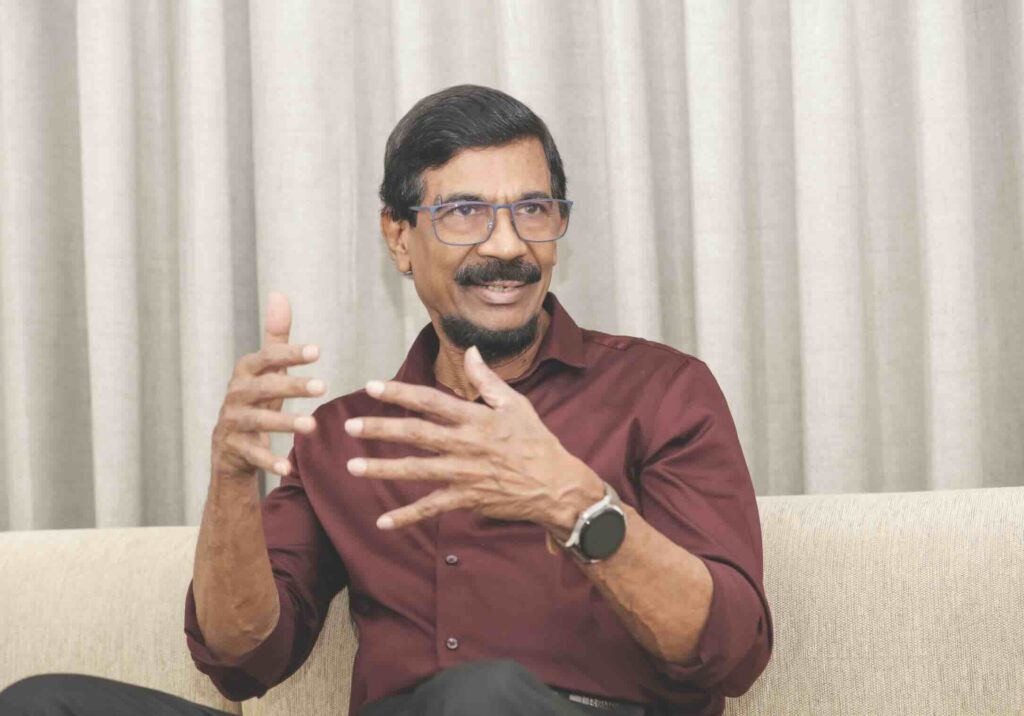
Until now, none of the major political parties has succeeded in securing widespread minority support. However, this changed in the last parliamentary election. Your party overcame ethnic and religious divides, becoming the first to win all districts—except one—including those in the North and East. As the General Secretary of the JVP, how did your party achieve this monumental success? What was your message to the minority communities, and what does this victory reflect about the people’s aspirations?
We have always believed that we would eventually succeed if we consistently stood for what is right. As a party, we have been unwavering in our stance against racism and intolerance. Unlike many others, we have never allied with racist or extremist forces, even when such alliances promised political gain.
The unfortunate reality in Sri Lankan politics is that those who oppose racism often face unpopularity, while those who exploit it tend to gain support. Historically, a predictable pattern has persisted—one had to be a Sinhala racist to secure Sinhala votes, and a Tamil racist to secure Tamil votes.
We chose a different, more difficult path. We deliberately rejected Sinhala, Tamil, and Muslim racism and stood firmly for national unity. In times of ethnic unrest, we intervened—not to inflame tensions, but to resolve them. The public was observing these actions closely. Over time, as people grew increasingly disillusioned with the traditional political establishment, they became weary of the South’s politics and the status quo in the North and East. Even within the Muslim community, there was growing dissatisfaction with their longstanding representatives.
What became evident was that Sinhala, Tamil, and Muslim politicians alike had long thrived by fueling racist sentiment, manipulating communities through divisive rhetoric. But as the consequences of such politics became unbearable—corruption, inefficiency, inequality, and privilege—the public began seeking a genuine alternative. This shift in sentiment led to growing trust and admiration for Anura Kumara Dissanayake, not because he made region-specific promises, but because his message was consistent and principled across the country.
We carried the same message to the North as we did to the South—unity, peace, and reconciliation. We refused to engage in ethnic pandering. I believe that consistency and integrity in our message finally bridged the longstanding North-South divide and brought communities together to support us.
Another major factor behind our success was the public’s frustration with traditional politics, defined by corruption, privilege, deception, and elitism. People no longer tolerate the inconveniences imposed by outdated hierarchies—such as stopping for a presidential motorcade—or the wasteful spending of public funds. These longstanding frustrations compelled them to turn away from the old guard and rally around our movement.
Moreover, people recognized that we were not engaged in shallow or opportunistic politics. They saw how we remained true to our principles, even during the most challenging times. Our victory is a reflection of that steadfast commitment.
It is also important to note that our success in the North and East did not happen overnight. Though we had not previously won in those areas, we built a strong grassroots organizational network there. These structures remained active even after the formation of the NPP, and our continued efforts to strengthen local engagement gave us a significant advantage. Our long-term groundwork at the grassroots level was key in securing support across all regions.
As a party, you have maintained a strong presence at the grassroots level. How did you organize your supporters in the lead-up to the recently concluded local government election? And what role did you play as the party’s general secretary?
As I previously mentioned, we have been actively organizing at the grassroots level for a considerable period, even when we did not secure electoral victories. Our focus was on educating and empowering the people. We are one of the few political movements that systematically provide our members with political education. We trained them, nurtured their understanding, and built lasting relationships.
Unlike most traditional political parties, where grassroots members often have limited access to party leadership and must address them with deference and formality, our approach has always been different. We engaged directly with our grassroots members, lived among them, stayed in their homes, and treated one another with respect and camaraderie, addressing each other as comrade, brother, or sister. This approach fostered a strong, trust-based bond.
As a result, our grassroots activists are unlike the typical political foot soldiers. They serve voluntarily, motivated by a shared vision for the country rather than personal gain. Even after we formed the government, many of these grassroots members continue to dedicate themselves full-time to the cause without expecting titles or positions. They are the first to hear the people’s concerns and are deeply committed to addressing those challenges. We have cultivated a unique culture at the grassroots level, and that solid foundation played a crucial role in our success at the local government elections.
At the same time, we are a party that values learning, adaptation, and the recognition of talent. When selecting candidates for the local government elections, we did not reserve opportunities solely for longstanding or senior members of the JVP. If we identified capable new individuals who were aligned with our principles and willing to work within our framework, we allowed them to contest. This country’s transformation depends on bringing capable and committed individuals to the forefront of governance.
As a result, many of our candidates were fresh faces who went on to win in their respective areas. Including these new forces strengthened our movement, and we continue to uphold this practice. We recognize that a political party’s long-term survival and relevance depend not only on its leadership but also on the strength and integrity of its grassroots base. That is why we have continuously invested in and strengthened that foundation throughout our journey.
This shift in sentiment led to growing trust and admiration for Anura Kumara Dissanayake, not because he made region-specific promises, but because his message was consistent and principled across the country.
In 2002, the JVP secured a significant victory by winning the Tissamaharama Pradeshiya Sabha, and your party’s governance attracted local and international attention. Then, in 2004, the JVP won 39 parliamentary seats. However, your political fortunes declined thereafter, with the party once again winning only the Tissamaharama Pradeshiya Sabha in 2006, and eventually losing even that in 2011. How do you reflect on this chapter in the JVP’s history—its dramatic rise and sharp decline—and how did you manage this trend and work toward recovery over the years?
That is the nature of politics—it is never static. There will always be highs and lows, and it is essential to recognize and accept that reality. Historically, we have been strong in the South. When the people of Tissamaharama endorsed our development plan and elected the JVP to power in 2002, our administration became a model of good governance. We implemented numerous initiatives to improve the lives of residents. For example, we abolished taxes for farmers, established a significant number of preschools, and provided every preschooler with a glass of milk each morning. Our efforts earned Tissamaharama national recognition, winning re-election in 2006.
However, we lost control of the Tissamaharama Pradeshiya Sabha under exceptional circumstances. The war had just ended, and Mahinda Rajapaksa was riding high as the leader who had brought the conflict to a close. He became royalty in the public eye, and he had overwhelming support. Many voters felt obligated to express their gratitude by supporting him and his party.
Compounding the challenge, in 2007, before the 2011 election, the Rajapaksa government dissolved the Tissamaharama Pradeshiya Sabha and installed a commissioner to govern. This move cut short our second term. It was a politically motivated intervention. Additionally, the government’s propaganda machinery was in full swing during the post-war period. Amid concerns about human rights violations and international scrutiny, the narrative promoted at the time speculated the likely prosecution of Mahinda Rajapaksa internationally and that re-electing his government was the only way to protect him and, by extension, the nation. It was within this climate of fear and manipulation that we lost Tissamaharama.
Nonetheless, the legacy of our governance in Tissamaharama endured. At one time, other local authorities aspired to replicate the Tissamaharama model. Today, we have regained control of Tissamaharama and several other local government institutions.
The 2004 general election was also a significant milestone for us. We won 39 parliamentary seats at a time when the country faced uncertainty. Ranil Wickremesinghe had signed a covert agreement with the LTTE, creating fears of national instability. We allied with then-President Chandrika Kumaratunga to prevent national division and safeguard stability. It was a policy-based alliance, not a political convenience.
Our candidates received the highest preferential votes in every district in that election. Even SLFP supporters voted for JVP candidates, because we had earned their trust and respect. We secured 30 percent of the alliance’s total votes. After joining the government, we served for about a year. But when Chandrika Kumaratunga deviated from the agreed-upon policies, we relinquished our ministerial positions and exited the government. This decision drew criticism and personal attacks, but reaffirmed our principled political approach.
We base our politics on policy, not the pursuit of power or position. We have always been ready to make difficult decisions when necessary to uphold our values, even when those decisions came at a cost. As a result, we lost our parliamentary presence, reducing us to a few seats.
However, we remained patient. We never wavered in our commitment to our principles and always believed our time would come. That perseverance has led us to where we are today.
You previously stated that changing political realities involves changing how your party uses language. How has that contributed to taking your message to the people?
A vital aspect of political education is learning how to communicate effectively. If our language fails to convey our objectives clearly to the public, or if people struggle to understand us because of the complexity of our words, then our message becomes meaningless. Rohana Wijeweera instilled in us the importance of speaking to the people in simple, relatable language. He taught us Marxism and socialism using clear, everyday terms. However, even then, there were times when our terminology didn’t resonate with the public. Over time, we made a conscious effort to change that, ensuring we delivered our message in words the people could understand.
But it wasn’t just about changing our language—we also changed our habits and presenting ourselves. There was a time when our politics was more insular, and we paid little attention to personal appearance. Our focus was purely ideological, not on how we dressed or presented ourselves. However, we realized that appearances matter when engaging with the public. While continuing to lead simple lives, we became more mindful of how we appeared in public. We did not compromise our values, but we adapted how we presented them so that they would resonate more broadly. We believe these changes were essential in advancing our political movement and building a deeper connection with the people.
In this election cycle, a significant segment of the electorate abandoned those traditional parties and aligned with us, not as members but as citizens willing to trust something new. For many, this was an act of hope, an experiment motivated by their desire for genuine change.
You will soon complete a year in government. How has the progress been so far, and what can the public expect going forward?
The public understands the magnitude of the challenge we inherited—we were handed a nation in freefall, riddled with systemic corruption. Today, a suspended Inspector General of Police is under investigation, as is the Commissioner of Prisons. Senior military personnel, members of national intelligence, and even the head of the RMV are under scrutiny. Several former ministers are in remand custody. The former chairman of Sri Lankan Airlines is also under investigation. That illustrates the depth of corruption that had permeated every level of the state apparatus. When institutions tasked with upholding law and order are compromised, they weaken the foundation of governance.
Our most outstanding achievement so far has been halting corruption at the top. While it may persist at lower levels, we have set a clear precedent—there is zero tolerance for corruption in the upper echelons of government. Eradicating it at the top creates the conditions necessary to tackle it.
We assumed office when the country was officially bankrupt. Since then, we have stabilized the economy. Although we have not fully restored it to normalcy, key indicators show improvement. The Sri Lankan rupee has remained stable, foreign reserves have gradually increased, and we recorded over five billion dollars in export earnings during the past six months. These are signs that we have embarked on a new path, emerging from the depths of economic collapse.
Despite the challenging circumstances, we took steps to ease the burden on citizens. We increased public sector salaries, supported schoolchildren, extended relief to small businesses, and raised the minimum threshold for PAYE taxation from 100,000 rupees to 150,000 rupees per month.
However, many of our issues are systemic and rooted in historical neglect. We face considerable resistance when attempting to reform government processes. Outdated regulations, bureaucratic lethargy, and reluctance from officials often hinder progress. For example, during a recent visit to the Southern District Councils, the President witnessed the dire state of public institutions—many were eager to voice complaints. However, they had made no effort to implement solutions. The administrative machinery is severely fragmented.
Our mission is twofold: reforming a dysfunctional state system and rebuilding a collapsed economy. We cannot complete such a monumental task quickly, but we have already demonstrated results despite this. Personal gain or titles don’t drive leadership. From the President downward, we have set a new standard of simplicity and integrity.
On the international stage, we have also made progress. The United Nations Human Rights Commission, which once heavily scrutinized Sri Lanka, now views us differently. The UN Human Rights Commissioner recently visited the country, met with the President and other officials, and later shared a positive message—something unprecedented recently. That is a testament to the change in our political direction. We have moved away from divisive ethnic and nationalist politics and have restored dignity and decency to public discourse.
The business community still faces challenges, but we have created an environment where they can operate without the burden of bribes or undue influence. We have established a Cabinet that is clean and untainted by corruption. We have instructed the business sector not to pay or offer favors to ministers or officials in exchange for services. While we acknowledge obstacles, we are committed to resolving them.
Our government consists of newcomers to governance, so there is a learning curve. But we are united, guided by a shared vision—to build a just, equitable, and prosperous nation. We are laying the groundwork for a national renaissance. Though the transformation will take time, we are confident in our direction and dedicated to fulfilling our promise to the people.
We are realistic. It may not be possible to achieve all our goals within four years. But within that time, we aim to build a strong foundation. Countries like China, Vietnam, Singapore, and Malaysia all took decades—beginning in the late 1970s— to reach their current levels of development. We cannot expect miracles in six months. We will dedicate our first five years to addressing the most critical issues, such as debt repayment and economic stabilization.
We appeal to the people to support us, trust our commitment, and give us the time to deliver the complete transformation we have pledged.
Since you’ve spoken about the inefficiencies within the State machinery, don’t you think politicians themselves are responsible for stifling public sector officials’ independence and problem-solving capacity?
You are right in your assessment. Our public sector has capable, intelligent, and experienced individuals. Successive governments have made numerous political appointments, undermining the sector’s professionalism. Historically, the public service has not operated according to a national development plan but rather at the whims and directives of politicians. As a result, many public servants have become accustomed to that culture and cannot function beyond that outdated framework.
We must reform this system, but we can do it using the existing cadre of public servants. We are developing prototype models to demonstrate how the system can function more effectively. We acknowledge that some individuals will resist, and we will use the law as necessary for those unwilling to adapt. However, we also recognize and appreciate that most public servants are open to reform. We will collaborate with them to implement the transformation the country needs. Much work lies ahead, but this change is necessary and achievable.
Every political party must have a succession plan. However, many parties fail to prepare the next leadership level due to internal power struggles. What has the JVP done to develop future leaders?
The JVP stands out as one of the few political parties in Sri Lanka that has consistently prioritized the development of its next generation of leaders. Today’s ministers representing the JVP in government are young, newly emerging party members. In the most recent local government elections, we introduced a significant number of new faces, and we will continue this trend by bringing in fresh talent and enrolling new members into our central committee.
A political party cannot survive without renewal. Refusing to evolve or empower emerging leaders ultimately leads to stagnation and decline. We have seen this in some of the older leftist parties in Sri Lanka, where leadership remained concentrated in the hands of a single individual. When that individual passed away, the party faded with them, failing to foster a new generation of leadership.
Today, Sri Lanka lacks true political parties in the traditional sense. Instead, we see factions or groups centered on individuals. In the past, parties like the SLFP and UNP functioned as structured political organizations with central committees that met regularly, made collective decisions, and actively recruited and mobilized members. These were strong, institutional parties.
Personal interest and political privilege drive its members, and they leave when they cannot realize their narrow motives. This fragility undermines their long-term sustainability. In contrast, the JVP has continued functioning as a strong, structured political party. We are committed to institutional growth and continuity by consistently recruiting young members and developing the next tier of leadership. That is how we ensure both relevance and resilience.
What is your foreign policy stance?
Our foreign policy is rooted in non-alignment. We do not believe in aligning with geopolitical blocs, as doing so does not serve the best interests of our nation. As a progressive political movement, we are committed to maintaining an independent stance that allows us to support and critique any country based on merit, without bias or obligation.
We maintain strong and respectful relations with India, our closest neighbor, and China, a key player in Asia and the global economy. China’s achievements in poverty alleviation, technological advancement, and economic development offer valuable lessons for Sri Lanka, and we recognize the investment potential from both countries.
We welcome cooperation and assistance from all nations. A non-aligned policy allows us to engage openly and equally with the international community while ensuring our sovereignty and independence remain intact. Sri Lanka must not become subservient to any external power. Past administrations compromised our national autonomy by entering into unsustainable borrowing arrangements, a path we must not repeat.
Although we are a small nation, we firmly believe that our sovereignty and people’s dignity are non-negotiable. Our approach is one of diplomacy and mutual respect—we do not interfere in the internal affairs of other countries.
We continue to engage constructively with the United States, particularly on trade tariffs, to secure more favorable terms for Sri Lankan exports. The United Kingdom has extended tariff-free access to a broader range of Sri Lankan goods, which we view as a positive step. We are optimistic about regaining the GSP+ facility in 2027, especially given the European Union’s increasingly favorable view of Sri Lanka.
The international community has recognized our firm stance against corruption, racism, and discrimination. When a country governs with integrity, it earns the world’s trust, admiration, and respect.
Even during our darkest times, we stood firm through assassinations and member desertions because of our shared courage and conviction. I joined the JVP with the firm resolve that I would never abandon it, no matter the circumstance. Over the years, I’ve built strong relationships across the party, which allowed me to help maintain unity during turbulent periods.
You’ve served as the General Secretary of the JVP for over 30 years, navigating the party through turbulent times— political repression, internal dissent, members leaving, even assassinations. Yet the party has remained united. How did you keep it intact and prevent it from breaking into factions?
It was never an individual effort—it was always a collective one. I’m one of the most senior members of the JVP and have had the privilege of serving as its General Secretary for three decades. Over that time, we built deep trust among our members—a trust in our mission, work, and each other. That has been our strength. Political journeys are never without difficulty; we’ve experienced victories and setbacks, repression and losses, betrayals and grief. But we never chose the easy path. We never pursued politics for titles or material gain. What kept us going was a shared commitment among trustworthy individuals and an unwavering belief in our cause. That commitment is what defines the character of our party.
Even during our darkest times, we stood firm through assassinations and member desertions because of our shared courage and conviction. I joined the JVP with the firm resolve that I would never abandon it, no matter the circumstance. Over the years, I’ve built strong relationships across the party, which allowed me to help maintain unity during turbulent periods.
Institutionally, the General Secretary plays a pivotal role in maintaining party integrity. According to our constitution, the party’s ownership and continuity rest with the General Secretary. So even when there were defections, the party’s core identity remained intact because it remained constitutionally anchored.
One of the reasons for this longevity is my conscious decision not to pursue positions of power. Many have asked why I’ve not entered Parliament. It’s a deliberate choice. Some of our members serve in Parliament, while others, like me, serve the party from outside. Assuming additional titles would not serve the best interests of the party. I’ve never had personal ambitions for office, which has helped set an example. We must live the values we advocate—if we say we’re not in politics for power or privilege, our actions must reflect that. People have noticed that. Those who have taken up office from our ranks do not misuse the privileges of their positions.
True satisfaction comes from the work itself, not from a title. Our joy lies in contributing meaningfully to a cause we believe in. We cannot measure fulfillment by wealth or status. More importantly, we value the genuine love we receive from the people, not fascination, but love built on years of consistent, principled service. Fascination can be short-lived. What we’ve earned is trust, and that’s something far more meaningful.
Some former members who left the party for personal gain and positions of influence now live in fear of exposure. In contrast, we live in peace because we have nothing to hide. I live a simple life by choice, not out of necessity but because I believe in it. I work hard because I love what I do.
As General Secretary, I also initiated a key change in our party constitution – that the General Secretary need not hold government positions. That wasn’t just symbolic—it was strategic. We believe that power should never be overly centralized. The post of General Secretary carries significant influence, and if combined with external governmental authority, it risks undermining the party’s internal democracy. I can focus entirely on the party’s mission by avoiding external positions. It also prevents a conflict of interest, where responsibilities in governance could compromise party duties, or vice versa.
Our model is rooted in democratic checks and balances, and I believe it’s a structure others could learn from. This clarity of purpose, collective responsibility, and disciplined leadership enabled us to survive, evolve, and emerge as a national force.
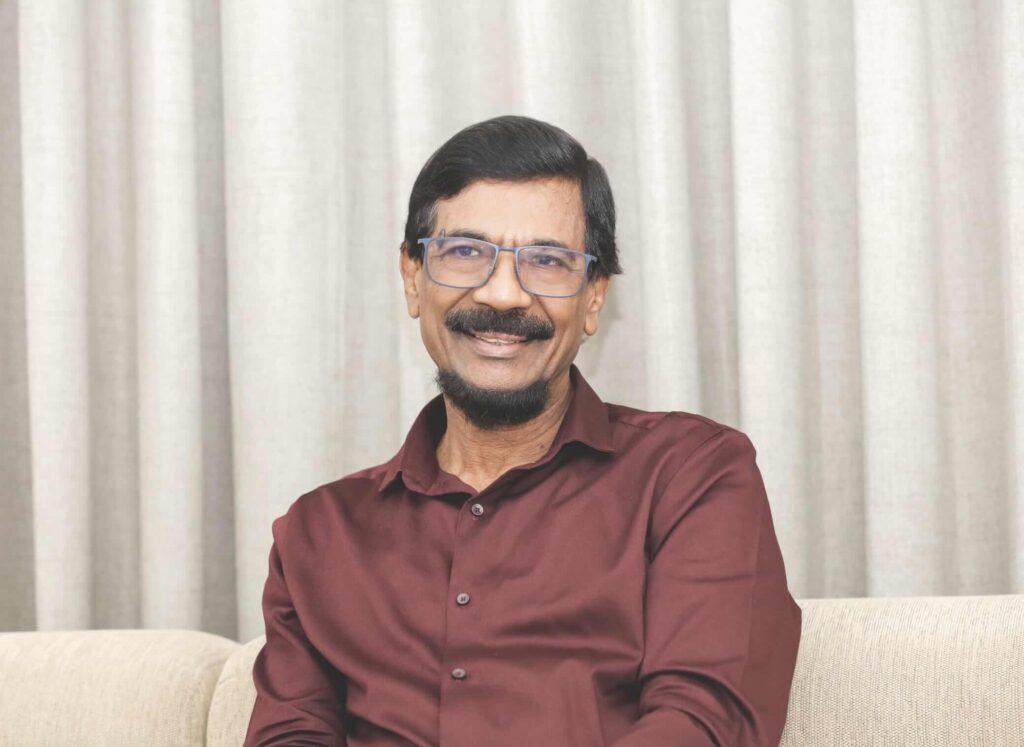
What has been the important takeaway for you as the General Secretary of the JVP, and how did you navigate the changing circumstances?
I have always believed victory is possible when one consistently adheres to one’s principles. Those who falter and collapse in the face of adversity will never prevail. I have come to understand this truth deeply; it is a lesson we all have learned. There is no easy path to success; we must necessarily take the more difficult route. Choosing the easier path would only lead us astray.
One of the most significant lessons I have learnt is the value of endurance, the ability to persevere through hardship. The journey has been challenging, yet we bore the burdens and withstood the changes. Today, we understand that enduring transformation challenges ultimately lead to triumph.
For example, we remained steadfast even when senior members of our party chose to leave. As a result, we stayed united and have emerged stronger, while those who departed are now politically diminished. This experience reinforced the importance of camaraderie, solidarity, and mutual support.
Furthermore, we must never assume that what we currently know is sufficient or believe that we possess all the answers. We must remain open to continuous learning and embrace new ideas, which we actively integrate into the party. We must stand unwaveringly for what is just and proper.
Muhammad Ali once said, “You don’t lose if you get knocked down; you lose if you stay down.” We draw inspiration from this sentiment. We have a dream—a vision of a beautiful and prosperous Sri Lanka for all its citizens. While some have dismissed this vision as unattainable, we remain committed to it because we believe we can realize it.
The road ahead is long and will inevitably include setbacks. As we assume responsibility for governance, we expect criticism and protests—this is natural and even necessary in a functioning democracy. However, we are prepared to confront these challenges, address the issues, and remain focused on our objectives.
Our collective experience has equipped us with the confidence to face the future and its uncertainties, and to work tirelessly toward shaping Sri Lanka into the nation we envision.