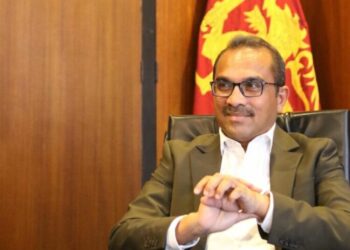

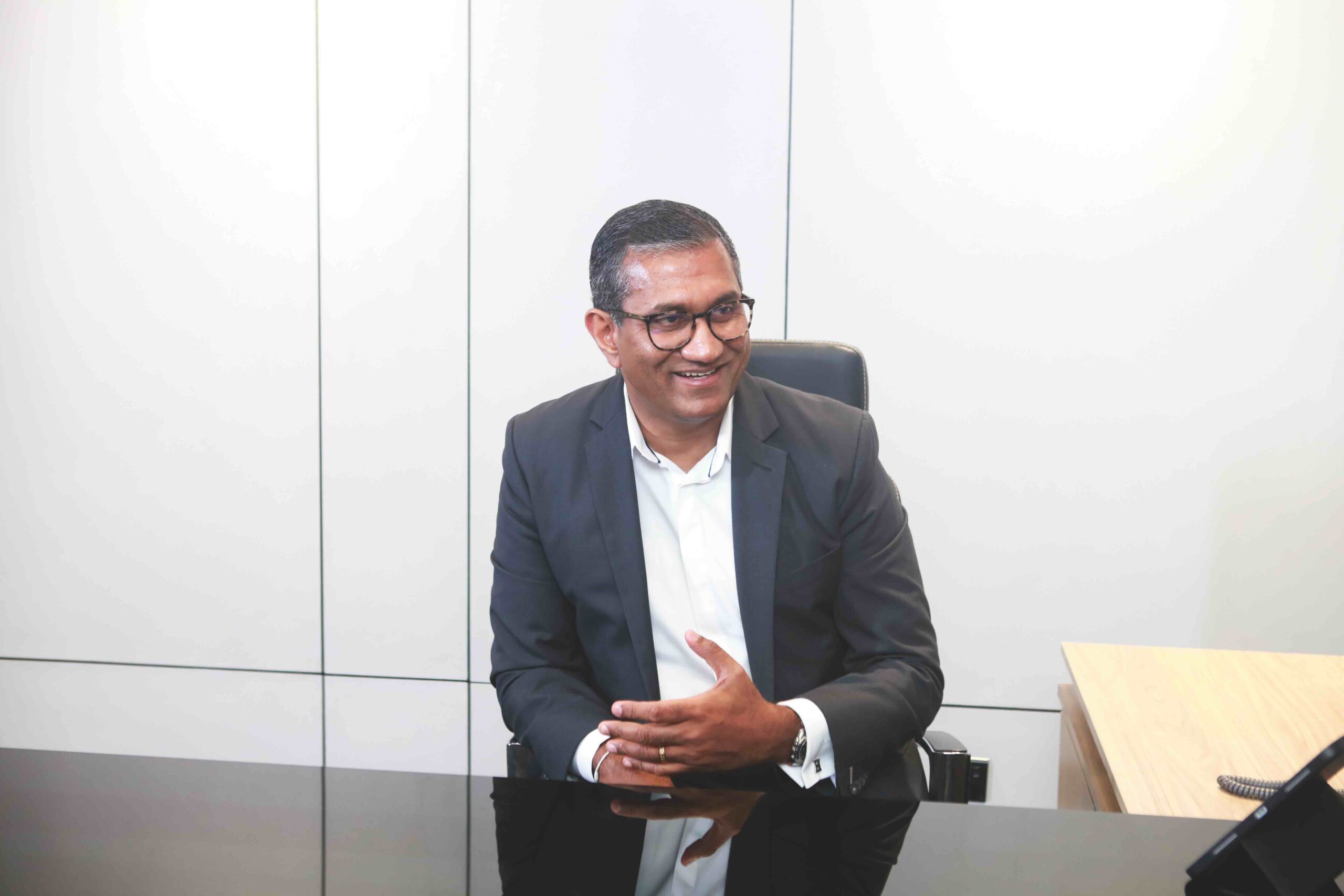
Nations Trust Bank (NTB) stands out among Sri Lanka’s private sector banks for its resilience and consistent performance, achieving strong profit growth for several successive years, alongside strong capital, liquidity, and asset quality. Under CEO Hemantha Gunetilleke’s leadership, NTB used the challenges of the pandemic, the sovereign debt crisis, and ongoing macroeconomic uncertainty to reshape its operating model, strengthen governance, and sharpen its strategic focus. NTB now enters its next growth phase with confidence. This is built on disciplined risk management, strong customer relationships, and a commitment to digital innovation, ESG-led lending, and inclusive growth. Acquiring HSBC Sri Lanka’s retail banking business marks a major milestone. This deal strengthens NTB’s premium banking and cards presence and expands its national footprint.
CEO Gunetilleke told Business Today how NTB balances scale with service, uses technology and data for growth, and remains committed to responsible banking.
Words Jennifer Paldano Goonewardane.
Photography Sujith Heenatigala and Dinesh Fernando.
In the first nine months of 2025, NTB delivered a 23 percent year-on-year increase in PAT, coupled with very strong capital and liquidity ratios. To what extent was this growth driven by structural changes you initiated during earlier crises versus improving macro conditions?
It was a combination of both. When we speak of crises, we can trace them back to the pandemic in 2020, followed by the sovereign debt crisis in 2022. From the onset of the pandemic, we recognized that the banking industry would face prolonged and complex challenges. In response, we mapped out a series of strategic measures to strengthen the bank’s resilience and long-term positioning.
A key part of this repositioning involved redefining our customer engagement and clarifying our customer strategy. Nations Trust Bank is fundamentally a customer-centric institution, organizing its business around three core segments: Consumer, SME, and Corporate. We serve each group deliberately.
During the crisis, we refined our approach for more focused engagement and strengthened our risk management, particularly in how we select and manage customers within each segment. By the time the country entered the sovereign debt crisis in 2022, we had already implemented several critical measures to rebalance and strengthen our risk profile.
As a result, the bank was in a significantly more stable position relative to the broader market. This preparedness allowed us not only to manage risk effectively during the downturn but also to continue driving sustainable growth thereafter. In parallel, we placed strong emphasis on cost discipline—streamlining processes, improving operational efficiency, and actively managing our cost-to-income ratio. Today, nearly three years after the sovereign debt crisis, the bank is in a far stronger position to pursue growth by supporting our customers with confidence. At the same time, the current macroeconomic environment has become increasingly supportive. Over the past 18 to 24 months, we have seen greater stability, with moderating interest rates, low inflation, and a steady build-up of foreign currency reserves that have exceeded IMF targets. In such a stable environment, our well-structured operating model enables us to capitalize on opportunities and accelerate growth in a disciplined and sustainable manner.
With industry-wide credit caution persisting, which risk management practices enabled sustained profitability and improvements in asset quality over the past year?
It’s based on the types of clients we bank with. We are very selective in the consumer, SME, and corporate segments. After selecting clients, we use robust credit evaluation models to evaluate risk. We give clients what they need in banking and lending. This approach ensures long-term safety for both customers and the bank. We also use strong, internationally recognized risk management processes with an increasing use of data and AI.
Early 2025 performance shows solid earnings growth and significant loan growth in 1H. How do these results reflect NTB’s strategic priorities for scaling business sustainably?
In the past four years, we have quadrupled our bottom line and reported ROE over 20 percent for several quarters. This is among the highest in the banking sector. About 95 percent of profits after tax and dividends go back to the balance sheet, strengthening our capital base. Rapid profit growth has expanded our balance sheet and enabled us to better support client growth each year. We select the right clients, work closely with them for the long term, and grow together. Our clients’ growth also strengthens our balance sheet and funding base as we manage costs. This is how we drive sustainable, long-term growth.
NTB has been a frontrunner in digital banking with its FriMi platform. How do you plan to evolve your digital ecosystem to deepen customer engagement, especially as digital adoption rises across all segments?
NTB has always focused on digital banking. We maintain just over 90 branches, but compete through a strong digital platform. We launched Sri Lanka’s first digital bank, FriMi, about ten years ago. In addition, separate proprietary banking apps serve consumer, SME, and corporate segments under our digital proposition ‘Nations Direct’. We place great importance on user interface and user experience to deliver seamless, engaging experiences. We have banking and digital platforms for each segment. Features matter, but user experience keeps customers loyal, like preferred phone brands. As we build our digital footprint, we want to ensure our offerings appeal to users.
You’ve credited strategic work from the pandemic period for recent resilience. What operational efficiencies have stayed permanent, and what new efficiency initiatives are underway now?
The pandemic taught us new lessons about remote work and managing large teams, prompting us to rethink our entire operating model and client outreach. This led to extensive digitization and lean initiatives that reduced manual handoffs in our banking value chain and accelerated our evolution. We have institutionalized these changes and maintained these practices for the long term. We have achieved one of the industry’s lowest cost-income ratios at 31-32 percent.
Today, about 95 percent of consumer banking transactions are conducted digitally, delivering a great customer experience while reducing the need for branch visits. This strategic shift has ensured NTB is efficient, client-oriented, and cost-effective.
With the acquisition of HSBC Sri Lanka’s retail banking business, what competitive advantages does this bring, and how will it accelerate NTB’s strategic roadmap?
Acquiring HSBC Sri Lanka’s retail banking franchise was a natural, strategic fit for Nations Trust Bank. Both banks operate in similar market spaces, especially in consumer banking and the premium, high-net-worth segment.
NTB has over 25 years of experience in Private Banking. We have an experienced team of 45 to 50 Private Banking Relationship Managers and have a strong presence in the premium banking space. HSBC holds a similar position, serving a niche, affluent customer base with comparable services.
Combining these portfolios significantly strengthens our presence in the premium segment. Some client overlap is possible, but we see this as an opportunity to deepen relationships and grow wallet share. The merger increases both scale and quality in a key segment for our long-term strategy.
A key strategic advantage is in the credit card business. NTB has partnered with American Express in Sri Lanka for over 25 years and is the largest issuer of credit cards in Sri Lanka. HSBC is a close second to us in terms of market share. Combining the top two players is compelling and will position us uniquely to serve our customers with a market-leading card proposition offering Amex, MasterCard, and Visa. We will be the only bank able to offer customers all three major card networks under one roof. While most banks provide Visa and MasterCard, only NTB offers the exclusive American Express Centurion Line.
For our Private Banking and Inner Circle clients, this means the flexibility to choose between AMEX, Visa, and MasterCard, allowing them to optimize benefits, rewards, and privileges based on their needs at any given time. In effect, NTB will be a one-stop solution for credit cards, delivering greater convenience and a superior overall customer experience.
What is your integration strategy to ensure a seamless experience for incoming HSBC retail customers, and how will you retain customer loyalty during the transition?
The objective of the integration process that is currently underway is to safely transfer about 200,000 customer records via system integrations during a cutover weekend at the end of April. In addition to the transfer of customers, at the cutover date, HSBC’s branch network will also be rebranded as Nations Trust Bank.
Together, both banks are working to ensure that customers don’t feel the transition – they’ll receive NTB credit cards and debit cards one month before the changeover date, along with detailed communications on when to activate them. The same relationship managers will also continue serving customers, providing familiarity and continuity. Seven branches will be rebranded as Nations Trust Bank, including premium locations such as Flower Road and Bambalapitiya.
A significant amount of work is underway behind the scenes to ensure a smooth, well-managed transition. Over the past six months, the integration process has been progressing steadily, and we are now in the fourth month of the project. This is a meticulously planned exercise, supported by international expertise, to ensure every aspect of the transition is handled with precision. Our careful and deliberate investment in this process is aimed at delivering a seamless experience for HSBC customers as they transition to Nations Trust Bank. From their perspective, we do not want the change to be noticeable — ideally, it should feel no different before and after the changeover.
From a client experience standpoint, our absolute priority is continuity. We are particularly pleased to be welcoming a significant number of HSBC professionals into NTB, including the teams that currently manage HSBC’s retail banking operations.
This continuity extends to relationship management as well — customers will continue to engage with the same relationship managers they are familiar with, ensuring trust, comfort, and consistency. While the branding, products, and physical spaces will transition to NTB, the people and relationships that customers value will remain intact.
What do you think helped NTB to successfully acquire the retail operations of HSBC when there are seasoned players in the industry?
The portfolio was awarded through a highly competitive process. Several banks competed for this opportunity. Our understanding is that the selection of NTB was not purely due to our financial bid, but also due to the strategic fit between the two institutions. That fit has three key dimensions.
The first is customer alignment, since NTB has been serving the premium consumer segments in Sri Lanka for over 25 years through our Private Banking proposition. Our strong track record in delivering a high-quality, relationship-managed banking experience is another key factor.
The second was alignment in products and propositions. Modern banking, especially in the premium segment, goes beyond basic transactional services. It is proposition-driven, relationship-managed, and experience-focused. Our long-standing strengths in Private Banking and lifestyle-led credit card offerings closely mirrored HSBC’s approach, making the integration both natural and credible.
The third — and perhaps most critical — factor was people and culture. Successful integrations across industries depend on cultural compatibility. This transaction extends well beyond the technical cutover weekend; it involves the long-term servicing of nearly 200,000 customers. Even in a digitally advanced environment, banking remains a people and service-driven business, particularly at the premium end, where deep relationship management is essential. We are confident that the values, service quality, and cultural alignment that HSBC recognized in NTB will ultimately resonate strongly with customers over the long term.
As the Bank scales (including a major customer base acquisition), how do you balance growth ambitions with maintaining service quality and customer experience — particularly in premium segments?
We will continue to focus on relationships. We are a relatively young bank, about 26 years old. Service has been ingrained in our DNA from day one. We’ve risen to become the fourth-most-profitable private bank, with a dominant market share in premium segments, through absolute focus on service excellence. Our team members rarely say no to clients unless it involves regulation, law, or compliance matters. Our teams have been trained to deliver service excellence. The challenge is maintaining this DNA as we grow, ensuring we don’t lose sight of our early advantages as we evolve and scale up as an organization.
Given the muted credit environment in previous periods, what sectors or asset classes do you see as primary engines of future loan book expansion?
We’re predominantly a client-led bank in terms of lending strategy – we look at the client before the industrial sector because every sector has both great and risky clients. Post-crisis, we see green shoots in construction, which has been muted for five years but is picking up due to low interest rates and a stable macro environment. Cyclone Ditwah in December, while tragic, is expected to generate reconstruction activity. The export industry has been doing well, the automobile industry has picked up, and consumer lending is increasing. We’re also looking at predictive lending using AI-based, data-led approaches in consumer and SME spaces.
As NTB scales more complex operations, how are governance and risk frameworks being strengthened, especially for retail credit, cybersecurity, and compliance?
Our philosophy is safe growth – selective expansion with proper safeguards. We’ve always been built on strong governance and compliance culture. We maintain one of the highest capital adequacy ratios, at close to 20 percent, versus the regulatory requirement of 12 percent. Our Stage 3 loans are below one percent, the lowest in the market. Our cost-income ratio is in the low 30s, one of the lowest among peer banks.
The challenge as we scale up is to maintain those dynamics. It’s easy to scale up while burning fuel and going the distance, but not being efficient. The challenge is to ensure we scale up while remaining safe in terms of credit underwriting, risk ratios, capital adequacy, and compliance. Because ultimately, that’s what gives the market confidence among shareholders and clients. Ultimately, banking is an industry of trust. Depositors come to us because they have faith in the bank, in the institution, and its people. So those financial ratios and the track record are really what build trust. As we scale up, we must ensure that we only keep strengthening it.
You’ve emphasized responsible lending and ESG integration. Can you share specific ESG commitments or targets NTB aims to achieve in the next three to five years?
ESG is a strategic priority for Nations Trust Bank and is fully embedded in the way we conduct our business. We do not view ESG as a standalone pillar; rather, it is integrated into our overall business model, decision-making processes, and lending practices.
One of our key focus areas over the next three to five years is renewable energy. Sri Lanka has set a national target of achieving 70 percent renewable energy by 2030, and we see it as our responsibility to actively contribute towards that goal. Across our corporate, commercial, and consumer banking portfolios, we have already introduced several programs that support environmentally sustainable and climate-friendly financing.
Another major priority for us is supporting sustainable SMEs and empowering female entrepreneurs. These segments play a critical role in inclusive economic growth, and we have deliberately expanded our lending and advisory support in these areas.
A significant milestone in this journey was the recent closure of a USD 70 million funding line from the International Finance Corporation (IFC). This facility is primarily earmarked to support SMEs, women-led businesses, and sustainable lending initiatives. Importantly, this transaction also represents strong external validation of NTB’s governance and financial strength.
We were the first bank in Sri Lanka to raise international debt funding since the 2022 financial crisis — a period marked by extremely limited access to external capital following the sovereign default. The funds raised will be channeled directly into client lending, with a clear focus on ESG-aligned sectors. Over the next few years, this will remain a central pillar of our growth strategy as we continue to build a resilient, responsible, and future-ready bank.
NTB has engaged with vulnerable businesses and SMEs. How do you see the Bank’s role in enabling broader economic revival and financial inclusion in the years ahead?
When we lend to a business, we are ultimately supporting an entire ecosystem. An SME or mid-market enterprise — particularly in manufacturing — creates employment not only within the business itself, but also across its supplier, distributor, and service networks. Many of these sectors also record high female labor participation, which adds a powerful social dimension to economic revival.
For instance, we work closely with value-added coconut exporters in areas such as Wayamba, including Kuliyapitiya and surrounding districts. These are highly labor-intensive businesses, in which nearly 95 percent of the workforce is women. Many factories are located in remote regions where employment opportunities are limited, and a single facility can provide livelihoods to 200–300 individuals and their families. While entrepreneurs take the business risk, banks play a vital role in enabling expansion and sustaining these ecosystems.
A key advantage of supporting regional industries is that it promotes balanced national development. Economic growth should not lead to excessive migration to Colombo or the Western Province, as this is neither sustainable nor socially desirable.
When employment opportunities exist within communities, families can remain together, reducing many of the social challenges that arise when parents are forced to relocate for work. We are also seeing encouraging models of decentralized production. In some cases, parts of the manufacturing process are home-based, allowing individuals to earn an income while remaining within their households. The social impact of such models is significant, fostering micro-entrepreneurship and improving family well-being.
The coconut industry is a strong example of this potential. As it continues to grow, it could eventually rival traditional export sectors such as tea. With the Government’s initiative to develop a Northern Coconut Triangle across Jaffna, Kilinochchi, Mullaitivu, Mannar, and Vavuniya, supported by a 500 million rupee investment, there is an opportunity for both economic expansion and meaningful grassroots impact. Supporting such sectors is not only a business opportunity for banks — it is a shared responsibility in driving inclusive and sustainable national development.
What innovations — whether in fintech, customer data analytics, or new financial services — do you believe will be pivotal for NTB’s next growth phase?
Our future investments will definitely be in enhancing our digital landscape. The future is AI and data, which is here to stay. As a mid-sized bank, we have advantages – we don’t carry heavy branch network costs with about 90 branches, and we’re nimble with about 3,000 people post-transaction. Digital investment is our direction, supported by regulatory policy.
For digitization to work fully, there needs to be national policy action to reduce cash transactions, which I think is now underway. In an environment of savvy digital apps, ATMs are becoming less and less important. Some developed markets have done away with such processes and become mainly cashless. When everyone transacts digitally, records are kept, everyone pays taxes as required by law, and financial crime becomes easier to detect. It’s encouraging to see that some government institutions have started accepting credit cards and QR code payments, which is a good starting point that can be expanded to a wider network. It’s important that we eliminate the ability for large transactions, such as property purchases and other high-value asset purchases, to be conducted in hard cash through suitable legislation.
The banking industry is working closely with the regulator and the government to drive these agendas because it’s good for the economy. The banking sector is investing heavily in digital while encouraging the public to embrace digital transactions.