
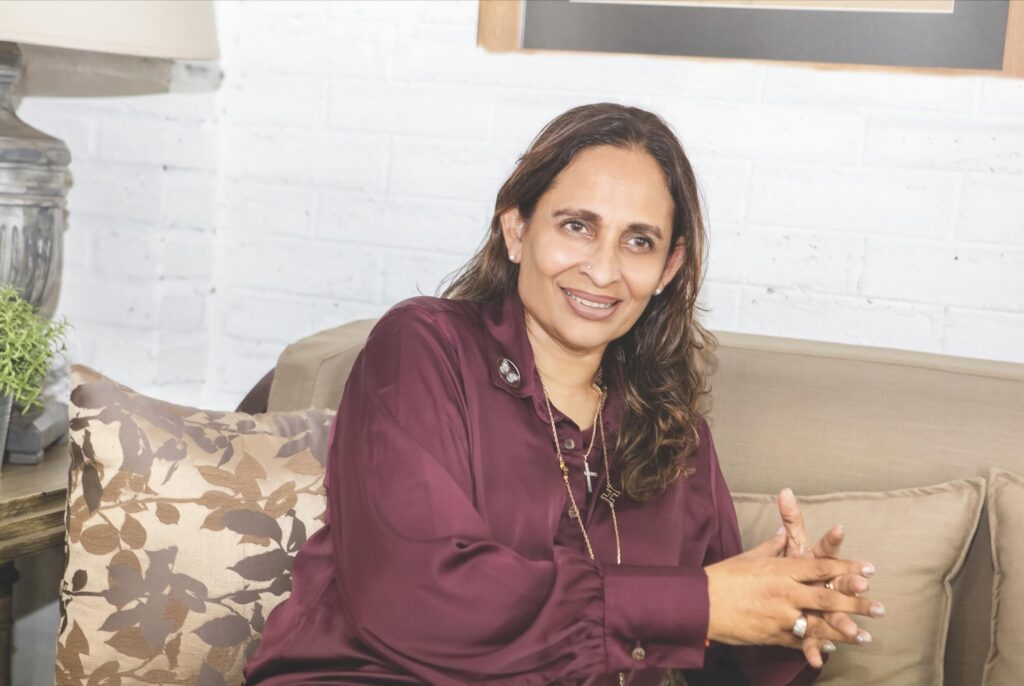
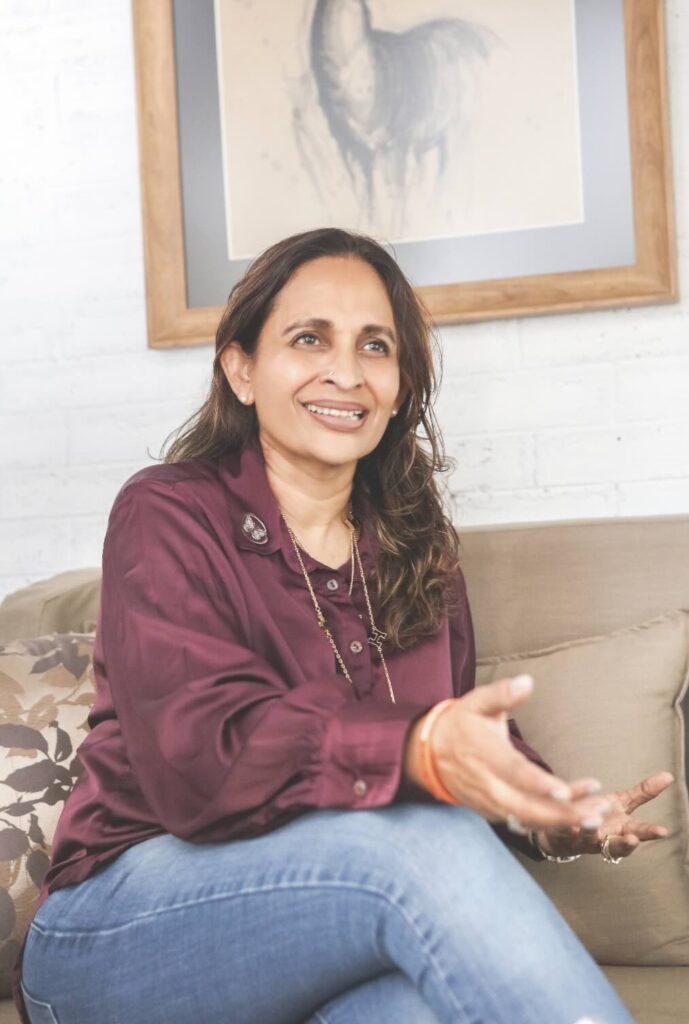
Ruwanmali Jayasinghe founded Suriya, a lifestyle store celebrating its 25th anniversary. What started as charity grew into a personal ambition: harnessing the potential of Sri Lankan artisans while creating opportunities for them to grow and reach their potential. It was also an ambitious project to develop and showcase Sri Lanka’s craft tradition. Today, Ruwanmali can proudly claim that she has enabled more than a hundred families to become economically independent, giving them a lifeline through her work. Speaking with Business Today, Ruwanmali reminisced about her entrepreneurial journey, attributing her longevity in business to a value-enriched, strong foundation, commitment, confidence, and vision.
Words Jennifer Paldano Goonewardane.
Photography Sujith Heenatigala and Dinesh Fernando.
What motivated you to become an entrepreneur, and how did you turn that idea into a viable business?
I have always had a strong inclination toward design and a deep passion for the arts. My early involvement in charity work, particularly in women’s empowerment, further deepened this interest by exposing me to the world of arts and crafts. As a mother of three boys, I spent my early years nurturing my family while dedicating my spare time to charitable activities. This work made me realize that charity alone cannot achieve meaningful, lasting change. It must come from creating opportunities that empower people to grow and reach their full potential.
However, transitioning into entrepreneurship was not easy. Being an entrepreneur demands constant innovation, a willingness to take risks, and a drive to build and create. When I decided to tap into the untapped potential of domestic talent and begin my entrepreneurial journey, I did so with a dual vision: to uplift the artisans I worked with and to build a sustainable and purpose-driven business.
I understood early on that without a clear business vision—complete with goals and growth targets—I wouldn’t be able to truly impact the lives of the people I wanted to support. I began in the year 2000 with just ten suppliers. Today, through Suriya, I am proud to support 158 families, helping sustain Sri Lanka’s traditional cottage industries and crafts for future generations. Remarkably, many of my original suppliers are still with me; some have even passed their craft on to the next generation.
What began as a charitable foundation has since evolved into a full-fledged home décor and design solutions provider. We continue expanding our partnerships with artisans nationwide, providing them opportunities to grow, innovate, and thrive. At the heart of Suriya is a commitment to giving back to people, heritage, and the future.
Being an entrepreneur demands constant innovation, a willingness to take risks, and a drive to build and create. When I decided to tap into the untapped potential of domestic talent and begin my entrepreneurial journey, I did so with a dual vision: to uplift the artisans I worked with and to build a sustainable and purpose-driven business.
What were the most significant risks you took in your journey, and how did you manage them?
One of the most significant risks I took was expanding Suriya internationally. In 2008, I boldly decided to establish a store in the United States, when the country faced the Great Recession, one of the most severe economic downturns in its history. Despite the challenging economic climate, I received the necessary approvals to register my company in the US and a specified market entry time. Although the conditions were far from ideal, I chose to move forward with the expansion. It was a significant risk that ultimately paid off, as the store has since become a great success.
Back home, the situation was equally volatile. We were recovering from the tsunami and still in the final stages of a prolonged civil conflict. It was a tumultuous time for local and global businesses, as the economic slowdown affected exports and disrupted domestic activity. Yet, I held on to my vision and trusted my journey. When you have the grit, clarity of vision, and motivation to take your business to the next level, you cannot afford to waste time. Despite uncertainty, I remained committed to pushing forward, and that resilience helped shape Suriya’s success.
You have sustained Suriya for 25 years. How did you manage that when others have struggled?
My longevity in business is rooted in a strong foundation and unwavering core values. I had a clear vision from the beginning and remained committed to it. Remarkably, I still sell many products I introduced 25 years ago. Before officially launching Suriya, I spent 1998 and 1999 experimenting—collecting samples, researching, and studying market trends. I saw untapped potential in the country’s rich craft heritage and harnessed that as my brand’s identity.
Over the years, I have grown the business gradually and organically. While many similar outlets have come and gone, their struggle stems from a lack of identity and purpose. Often, enterprises emerge in imitation of others’ success, without understanding the depth of work and commitment required to build a lasting brand. Without a unique vision, it becomes difficult to endure.
At Suriya, I take pride in offering limited-edition and one-of-a-kind pieces. I’m willing to produce and sell even a single item—whether a handcrafted piece of furniture or décor—if that’s what my client desires. Most others shy away from that, as they don’t see value in small-scale or customized production. But I do. I see value and identity in every single piece we create. This philosophy has been my guiding mantra. It has helped me maintain consistency, preserve authenticity, and stay relevant. That is how Suriya has remained sustainable for 25 years, even when many others have not.
As a female founder, have you had to lead or manage differently? Do you believe being a woman in business comes with unique strengths?
Managing comes naturally to women. As wives and mothers, we often juggle multiple roles and responsibilities, and that instinctive ability to multitask and problem-solve is invaluable when running a business. That was certainly true in my case. While managing a business does present its unique challenges—particularly for women—I was fortunate to navigate this path without significant resistance.
I started small, learned gradually, and expanded organically. The foundation of my business was always rooted in a desire to help people, and that purpose remains at the core of everything I do. From the outset, I was determined to make my venture meaningful. As I began working with artisan families, I collaborated creatively and equipped them with financial literacy and product development skills to elevate their craftsmanship for international markets. Over time, they learned to think beyond Sri Lanka and to create with a global mindset.
One of the key differentiators in our model is that we don’t mass-produce; we cater to a niche market. My teams at the grassroots level have risen to this challenge and adapted their work to meet evolving demands. I’ve worked closely with rural communities and, notably, never encountered resistance because of my gender. On the contrary, we’ve built lasting relationships based on trust and mutual respect—some of which continue into the next generation.
Much good has come from these partnerships. As Sri Lanka faced shifts in its economic landscape—including import restrictions—our artisans were able to fill the gap by offering high-quality, locally made alternatives. Because they had already received training to meet international standards, they were well-positioned to provide solutions, particularly for the hospitality sector’s growing demand for custom interior products.
Over the years, I’ve guided them with insights into current design trends and encouraged them to look beyond traditional boundaries. At Suriya’s 25-year mark, I take immense pride in creating an ecosystem where artisans are producing for global markets and thriving. I’m equally proud of how I’ve managed these relationships—with open communication, empathy, and shared goals—resulting in a long-standing, win-win collaboration for everyone involved.
What strategies have helped you scale your business and expand your customer base?
In business, relationships are everything. They form the foundation of growth and sustainability. We build strong relationships based on product quality, timely delivery, ethical work practices, and exceptional customer service. At Suriya, we’ve always prioritized our customers’ needs and expectations, often going the extra mile to customize products according to their preferences. This adaptability has been a key driver in expanding our customer base.
Although I started small, I had a solid foundation rooted in purpose and vision. Within the first seven to eight months of launching, I realized there was significant potential for growth. Recognizing this, I expanded our showroom and moved to a larger property in Colombo to accommodate the brand’s development and growing clientele. This strategic shift allowed me to position the business to scale fully and bring more people into the Suriya community.
Where the business stands today is a direct result of the credibility we’ve built over the years. Suriya has become a trusted brand that supplies hotels and offers interior design solutions for homes and commercial spaces. We’ve also extended our services internationally by providing online interior design solutions to clients living abroad. Our success has stemmed from a consistent focus on quality, reliability, and relationship-building. Anyone starting a business must establish short and long-term goals and pursue them with persistence and strategic intent.
How do you differentiate Suriya in a market increasingly influenced by mass-produced global brands?
Mass production is easy; anyone can do it. However, creating carefully crafted, curated pieces in limited quantities and consistently and sustainably for 25 years requires vision, commitment, and significant effort. At Suriya, we’ve taken a different path by working closely with village-based artisans, many of whom live far from our operations. While I provide the specifications and guidance, they understand my expectations. Still, the challenges are many—sourcing raw materials, meeting deadlines, managing transportation—but we’ve overcome them to grow the business and establish Suriya as a distinctive and respected brand in Sri Lanka.
I never intended for Suriya to cater to the mass market. I wanted to serve a discerning, niche clientele that values uniqueness, craftsmanship, and cultural identity. Every piece we produce tells a story and carries inherent value—this sets us apart in a world dominated by uniform, mass-produced goods.
Our products also embody deeply held values. For instance, I have always been sensitive to the social impact of economic choices. I do not support the model of women leaving their families to work in the Middle East, only to return and find their families fragmented. Instead, I have created opportunities for women to work from home, allowing them to remain present for their families while gaining economic independence. In many cases, these women have become the primary earners in their households. Over time, I have witnessed the remarkable transformation in their lives and livelihoods.
At the same time, Suriya’s work plays a vital role in preserving cultural identity. As native arts and family-based crafts face the risk of extinction, our collaboration with artisans has helped keep these traditions alive. Many artisans I began working with years ago have passed on the work to their second and third generations. Some have grown beyond supplying only to Suriya—they now serve multiple clients, and I take pride in that. I see it not as competition, but as progress. For example, I started with a single family in Ambalangoda to reproduce temple paintings. Today, a small initiative has evolved into a thriving enterprise with growing demand. In some cases, entire villages produce and supply to large-scale clients.
While our artisans remain based in their communities, I have nurtured long-standing relationships with them. I engage with them directly, offering creative input and guidance on how to elevate their craftsmanship. I also ensure due compensation, because unless we value their skill, time, and effort appropriately in our pricing, they cannot continue or grow their work.
The process is deeply personal. Beyond design and production, I have shared financial literacy and business development know-how. A true entrepreneur is someone who helps others become entrepreneurs. I’ve seen this transformation firsthand, where livelihoods and lifestyles have improved significantly. Investing in our artisans, empowering them, and creating meaningful relationships ensures that each product is unique, irreplicable, and rich with identity—qualities that mass-produced goods can never replicate.
Does Sri Lanka have the space for more businesses like yours to come to the fore?
Absolutely—there is immense potential. Many stores call themselves lifestyle or handicraft outlets today, but few truly reflect our cultural identity. I can proudly say that Suriya is a Sri Lankan store. In a time when economic development and tourism are priorities, we must ask: How many places genuinely offer locally made products for visitors to take home? Sadly, too few. Our artisan communities have a wealth of untapped talent and traditional knowledge, but not enough people are stepping up to mentor and empower them.
Sri Lanka has a rich history—spanning indigenous crafts to colonial influences— which we can showcase through high-quality, tangible products. These communities can thrive with proper infrastructure, training, and market access. The State has a role in creating the foundation, but individual initiative is equally crucial.
Beyond tourism, the local housing market presents a strong opportunity. With the rise of apartment living, many homeowners seek interior design solutions—something I offer using locally made products. These customers are willing to invest in quality, and we must ensure that local artisans can meet that demand.
By working directly with artisans and offering them guidance, fair compensation, and product knowledge, we can help restore dignity to their traditional crafts. When artisans understand the value of their work, they are motivated to continue and grow. I buy everything I commission, pay upfront, and work closely with them to refine their output—sometimes even reworking a piece multiple times to get it right. This personal, supportive approach ensures quality and sustainability, ultimately contributing to rural communities’ economic independence.
I never intended for Suriya to cater to the mass market. I wanted to serve a discerning, niche clientele that values uniqueness, craftsmanship, and cultural identity. Every piece we produce tells a story and carries inherent value—this sets us apart in a world dominated by uniform, mass-produced goods.
You have recently started working with artisans in the North of Sri Lanka. What can you tell us about that?
When I was 16, the LTTE kidnapped my father. He never returned. Since then, I have carried a deep emotional connection to the people of Jaffna, who have endured decades of hardship and conflict. For a long time, I wanted to engage with communities in the North, but the lack of infrastructure made it difficult to travel and establish meaningful connections. Today, with improved access—primarily through air travel—I’ve finally begun this long-awaited journey.
The northern region has immense potential but faces significant challenges, particularly in accessing natural resources and raw materials. There is a clear need for thoughtful intervention and investment initiatives that empower local artisans and bring their skills and products to the forefront. We must plant the seeds of support in Jaffna to help communities harness their abilities and thrive.
Working with artisans in Jaffna is not simply a business initiative. It is deeply personal. It’s not about profit; it’s about building lives. I aim to establish the necessary infrastructure to begin and sustain their work. That is a purpose-driven effort, grounded in compassion and a desire to see these communities rise with dignity and self-sufficiency. Helping them find their footing and purpose is a cause that comes from the deepest part of my heart.
Have you encountered gender-based obstacles in your entrepreneurial journey?
Not really. I believe that when you are focused on your vision and respect others in the same field, gender does not have to be a barrier. My journey began on a small scale but grew significantly because I wasn’t distracted by competition or by those who might have tried to obstruct me. Instead, I invested my time learning about the market, design trends, logistics, and how to scale my business. With a strong foundation and a clear vision, I could move forward without being held back by gender-based challenges.
What advice would you give women on building credibility and authority in male-dominated industries?
I advise women to recognize their strengths and pursue what they’re good at. Invest in learning and sharpening your skills. Don’t be afraid to start something of your own—have a clear vision, trust your instincts, and stay true to your purpose. One rule I always share is to be cautious with finances. Avoid borrowing from large institutions when starting; seek small-scale support from family or friends if needed. Start at a manageable level, build steadily, and understand your direction before expanding. Begin small, but think big— with vision, discipline, and persistence, credibility will follow.
You won the Woman Entrepreneur of the Year award at the Business World International Awards 2025 in recognition of your work. How important is that for you as an entrepreneur?
I’m naturally reserved and prefer to work quietly, away from the spotlight. However, receiving an award is meaningful. It acknowledges the years of hard work, commitment, and values that have gone into building the business and supporting communities. Awards are essential recognition markers, especially for women, who often downplay their achievements despite being key drivers of this country’s households, industries, and leadership roles. It’s truly an honor to be honored.
Working with artisans in Jaffna is not simply a business initiative. It is deeply personal. It’s not about profit; it’s about building lives. I aim to establish the necessary infrastructure to begin and sustain their work. That is a purpose-driven effort, grounded in compassion and a desire to see these communities rise with dignity and self-sufficiency.
What have been some of the most valuable lessons you’ve learned as an entrepreneur?
I have learned the importance of understanding my value and capacity. Honesty and integrity are foundational, as are consistency and sustainability. It is essential to be someone others can rely on. Entering any market with confidence and fearlessness has been key. Above all, I believe in standing by my word and following through—this builds respect and honor. These are values every entrepreneur—and every person—should uphold.
Where do you see your business in the next five years?
My focus is on expanding internationally, targeting severe European markets and Dubai. Plans are underway to franchise the Suriya concept to select international markets within the next two to three years.
You’ve often spoken of the spiritual side of your life and its impact on your work. How has it changed your life?
I was raised a Christian and have always had a spiritual foundation. In 2022, I joined The Glorious Church of Prophet Jerome Fernando, where I deepened my understanding of God’s Word and aligned my life accordingly.
Prophet Jerome’s teachings are profound, rooted directly in the Bible, and he is a trusted spiritual mentor. Though he faces criticism, I encourage others to experience his ministry firsthand. I have witnessed his prophetic insights, and I admire his ministry’s extensive work. Since joining, my spiritual life has matured significantly.
The church has a dedicated business cell that supports entrepreneurs of all sizes, emphasizing ethical practices such as paying taxes and running righteous businesses.
This initiative nurtures business leaders who contribute positively to the economy. Prophet Jerome’s deep business knowledge offers insights beyond formal education, helping members grow personally and professionally.
I also participate in the prison ministry, which began following Prophet Jerome’s own experience in prison. The purpose is to empower incarcerated women by teaching them skills to rebuild their lives after release, preventing recidivism.
Being part of this church has elevated my spiritual values and created a strong sense of community. We worship and work together as one family in a transformative, love-filled environment.
This spiritual journey has given me a profound sense of purpose, not only in my personal growth but in serving the wider community and contributing to Sri Lanka’s future.