
In a year marked by uneven demand, cost pressures, and shifting consumer behavior, Vallibel One demonstrated the strength of disciplined diversification and execution-led growth. For the financial year 2024/25, the Group delivered resilient performance across its multi-sector portfolio, with standout contributions from aluminium and consumer businesses, while continuing to invest in innovation, regional expansion, and sustainability.
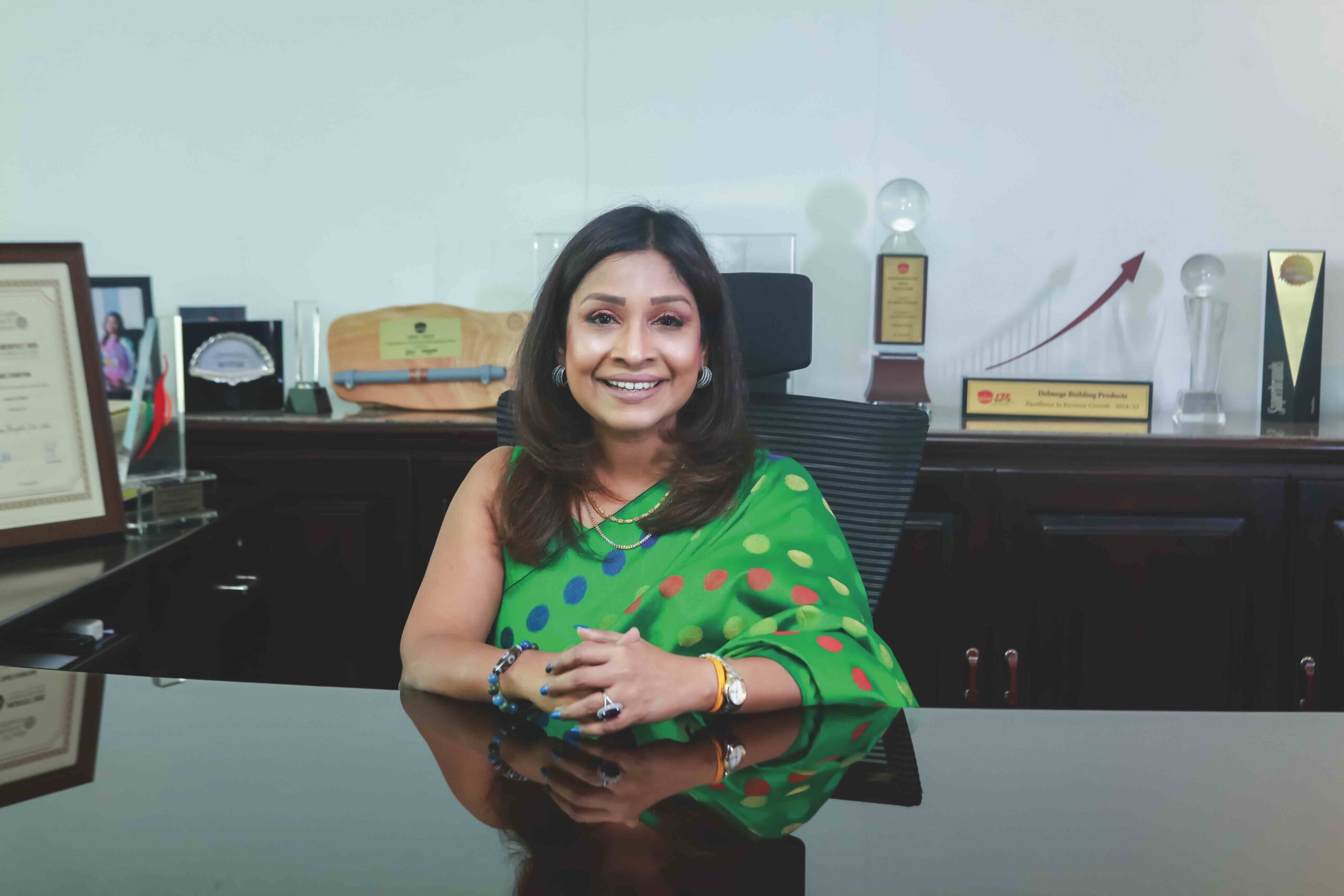
Speaking with Business Today, Managing Director Dinusha Bhaskaran discusses how Vallibel One leveraged operational excellence, system-led innovation, and strong governance to navigate a complex operating environment. She shares insights into the Group’s performance drivers, evolving consumer trends, regional growth strategy across South Asia and East Africa, ESG priorities, and how a performance culture anchored in discipline and accountability continues to guide Vallibel One’s transformation into a future-ready conglomerate.
Words Jennifer Paldano Goonewardane.
Photography Sujith Heenatigala and Dinesh Fernando.
Vallibel One’s diversified portfolio cushioned the impact of subdued demand in certain sectors. How do you evaluate the effectiveness of this diversification strategy during the 2024/25 cycle, and were there sectors that surprised you with their performance?
Vallibel One’s diversified portfolio was a critical factor in ensuring resilience during the 2024/25 cycle, allowing us to navigate economic challenges with strong performance across various sectors. The aluminium sector delivered exceptional results, posting a 66.3 percent increase in revenue, driven by increased demand in urban development and the expanding solar energy sector. The consumer sector also experienced robust growth, with a 22.3 percent rise in revenue, demonstrating the effectiveness of continuous product innovation and an expanded distribution network. This diversification strategy, coupled with strategic investments in high-growth areas, enabled us to achieve overall revenue of over 120 billion rupees, reflecting an increase from the previous year. The Group reported a profit after tax (PAT) of 16.02 billion rupees and EBITDA of 34.5 billion rupees, with net profit attributable to equity holders rising 19 percent to 11.76 billion rupees, compared to 9.89 billion rupees in the previous year. By balancing risk across sectors, we have positioned ourselves for sustainable growth and long-term value creation.
While the aluminium and consumer segments outperformed, lifestyle and finance faced headwinds. What specific operational or strategic shifts helped those outperforming sectors lead overall resilience?
While the lifestyle and finance sectors faced challenges, they remained key contributors to Vallibel One’s bottom line, a testament to the effectiveness of our carefully crafted strategic approach. The aluminium and consumer segments, in particular, outperformed due to key strategic and operational shifts that reinforced overall resilience across the Group. In the aluminium segment, we focused on improving operational ef f iciencies by streamlining manufacturing processes and minimizing waste, which enhanced margins and allowed us to maintain competitive pricing. The Business Excellence Program at Vallibel One played a crucial role, concentrating on spend management, production efficiency, working capital, and inventory optimization through process, people, and technology. This approach led to the successful completion of 1,096 KAIZEN projects, achieving 43 percent of our targeted savings for the 2025/26 fiscal year. A 360-degree marketing strategy also strengthened Swisstek Aluminium’s brand positioning and leadership in the market. In the consumer segment, we optimized route-to-market execution, increased sales productivity, and focused on high-rotation SKUs. By managing promotional spending more effectively, we drove volume growth while maintaining margins. Enhanced distributor engagement and quicker decision-making further supported resilience. Together, these efforts ensured that both the aluminium and consumer segments played a significant role in the Group’s overall performance, driving growth despite external challenges.
In the lifestyle segment, customer preferences seem to be shifting quickly. What were the key insights that drove the product mix refinements, and how do you anticipate consumer behavior evolving in the next 12–18 months?
In the lifestyle segment, our global research capabilities enable us to stay ahead of evolving design trends and shifting consumer expectations. This insight has helped us recognize that customers increasingly view tiles and bathware not merely as functional building materials, but as integral elements of lifestyle expression and personal identity within living spaces. As a result, design, texture, finishes, and customization have become as important as durability and performance. By working closely with leading international design houses and monitoring global architectural and interior trends, we are able to identify emerging preferences early and translate them into products that resonate with local market sensibilities. This has guided our product mix refinements, allowing us to introduce contemporary collections that balance global aesthetics with local practicality. Looking ahead over the next 12–18 months, we anticipate consumers becoming more discerning and value-conscious, while still seeking differentiation. Demand is expected to grow for personalized solutions, sustainable materials, and products that offer long-term value through quality, design longevity, and functionality. This shift reinforces our focus on innovation-led portfolios that combine aesthetics, performance, and responsible manufacturing.

With cautious spending impacting the finance arm, can you share examples of how cost optimization and operational efficiency were implemented to sustain profitability?
We have adopted a comprehensive and disciplined approach to cost optimization across Vallibel One’s entire value chain to ensure profitability amid cautious market conditions. This includes improving manufacturing efficiencies through initiatives such as heat recovery systems, material reuse, and process re-engineering, which have helped lower energy consumption and reduce input costs without compromising product quality.
In parallel, we have focused on logistics and supply-chain optimization by enhancing packaging efficiencies, rationalizing transportation routes, and improving load utilization. These measures have contributed to meaningful cost savings while strengthening delivery reliability. Tight controls have also been implemented over operational expenditure, with non-essential spending deferred and greater scrutiny applied to discretionary costs. At the organizational level, shared service structures have been strengthened to eliminate duplication across business units and leverage economies of scale in areas such as f inance, procurement , and administration. In addition, strong governance over pricing and margin management has ensured that cost efficiencies are translated into sustainable profitability. Together, these initiatives have enabled the finance arm to remain resilient despite subdued demand and a cautious lending environment.
“Innovation” has been a recurring theme in recent reports. Could you pinpoint one or two innovations from the past year that had the most material impact on performance or competitive positioning?
Innovation has been a cornerstone of Vallibel One’s strategy. Over the past year, we’ve implemented several key innovations that have had a significant impact on performance and competitive positioning. In manufacturing, we’ve optimized production efficiencies with energy-saving technologies and material innovations such as advanced digital printing and heat recovery systems. These initiatives have reduced operational costs and enabled faster, more customized, high-quality product offerings. Our digital transformation efforts, including sales force automation and advanced performance dashboards, have improved decision-making and execution, driving productivity across the organization.
Market-driven innovations, such as the Slimline Siding Series and Anti-Static Corrugated Boxes, have helped us differentiate ourselves in competitive markets. Our customer experience innovations, especially in transforming retail spaces into interactive hubs, have strengthened our market presence and opened new growth opportunities.
This diversification strategy, coupled with strategic investments in high-growth areas enabled us to achieve overall revenue of over 120 billion rupees, reflecting an increase from the previous year… By balancing risk across sectors, we have positioned ourselves for sustainable growth and long-term value creation.
What product innovations or technological advancements in the aluminium division are you most excited about, and how do these differentiate Vallibel One in competitive markets?
The aluminium division’s system-led innovation approach is what excites us the most. Rather than competing solely on individual aluminium profiles, we have deliberately shifted towards offering fully engineered, proprietary systems that integrate profiles, hardware, accessories, and fabrication standards into a single, cohesive solution. This approach moves us up the value chain and allows us to deliver consistent performance, superior reliability, and long-term durability to customers.
A key differentiator within this strategy is our premium rod-cut system, which has been rigorously tested and validated as a complete end-to-end solution. This enables us to confidently offer a ten-year warranty that extends beyond the aluminium profiles to include associated components and system performance. Such comprehensive assurance is rare in the market and significantly reduces long-term operational and maintenance risk for developers, fabricators, and end users. In addition, our focus on precision engineering, stringent quality controls, and continuous product testing ensures uniformity across large-scale projects—an increasingly important requirement in high-rise, commercial, and institutional developments. By combining innovation, technical expertise, and system accountability, Vallibel One is able to differentiate itself not merely as a materials supplier, but as a premium aluminium solutions partner. This positions the business strongly in competitive markets where customers increasingly value performance certainty, lifecycle value, and long-term reliability over price alone.
Vallibel One continued regional expansion in East Africa and South Asia. What were the major milestones in these markets during 2024/25, and what are the biggest strategic priorities for these regions in 2025 and beyond?
Vallibel One’s regional expansion continued to gain strong momentum across both East Africa and South Asia during 2024/25, marking an important phase in the Group’s international growth journey. In South Asia, a key milestone was the opening of a new Lanka Tiles showroom in the Maldives through a strategic partnership with Alba International, strengthening our presence in a premium, tourism-driven market. In parallel, Bangladesh and India were identified as priority growth markets, with focused efforts on building brand visibility, strengthening distribution networks, and developing a sustainable customer base.
In East Africa, the Group made meaningful progress through Unidil, with the establishment of Unidil Packaging Kenya and the acquisition of Perfect Packaging. These moves signi f i cantl y enhanced our manufacturing footprint, local market access, and competitive positioning within the Kenyan packaging sector, while also providing a platform for future regional expansion.
Looking ahead to 2025 and beyond, our strategic priorities include scaling manufacturing capabilities, particularly in environmentally sustainable packaging solutions, in line with evolving regulatory and customer expectations in Kenya.
In South Asia, the focus will be on expanding operations in high-growth Indian states such as Kerala, strengthening partnerships, improving supply-chain efficiency, and tailoring product offerings to local market needs. Collectively, these initiatives are aimed at building resilient, scalable regional platforms that support long-term growth and reinforce Vallibel One’s position as a competitive multinational player.
By working closely with leading international design houses and monitoring global architectural and interior trends, we are able to identify emerging preferences early and translate them into products that resonate with local market sensibilities. This has guided our product mix refinements, allowing us to introduce contemporary collections that balance global aesthetics with local practicality.
What operational or market challenges have you encountered in these international markets, and how have they reshaped your approach to regional growth?
We have battled several operational and market challenges across regions. In the lifestyle sector, high production costs, price competition from China and India, and fast product development cycles have been key challenges. We are addressing these by improving production efficiency, reducing costs, and creating more innovative products that command higher prices. In Kenya, import tariffs and competition from established local manufacturers have been obstacles. To mitigate this, we’ve leveraged regional Free Trade Agreements to optimize supply chains and reduce costs.
Delmege has faced regulatory fragmentation and delays, prompting us to implement strategic filters to ensure market readiness. In Swisstek Aluminium, managing project deadlines and cost structures in competitive markets has been challenging, but our successful fabrication partnership in Bangalore has set a strong foundation for further regional expansion.
How do you ensure best-in-class governance, talent development, and cultural integration across diverse markets?
Committed to best-in- class governance, talent development, and cultural integration, Vallibel One has implemented clear governance frameworks while ensuring localized execution across all markets. We have implemented a Group-wide Code of Conduct, conflict-of-interest disclosures, and whistleblowing mechanisms to promote transparency and accountability across markets. Leadership development is a key focus, with structured programs, cross-market mobility, and a strong emphasis on values-based leadership. Our governance includes policies such as the Occupational Health and Safety Management System and environmental objectives, which are reviewed regularly for improvement. We prioritize talent development, offering extensive training in leadership, SAP (HANA), AI, safety, and lean manufacturing. Additionally, HR digital transformation initiatives, including the automation of performance management and learning systems, enhance efficiency and engagement.
At Vallibel One, we cultivate a performance-driven culture through a deliberate balance of decentralized execution and centralized accountability. Each business unit is empowered to manage its own P&L, customer relationships, and market strategies, enabling agility and entrepreneurial decision-making.
Sustainability is central to Vallibel One’s future direction. Can you share specific ESG goals for the next three to five years, and how progress against those goals will be measured and reported?
Sustainability is embedded into Vallibel One’s core performance management through Key Sustainability Performance Indicators (KSPIs) aligned with long-term value creation, operational efficiency, and regulatory compliance. In the environmental domain, we aim to reduce energy intensity and emissions through renewable energy, improve water stewardship, and enhance circularity across operations.
Key initiatives include the group solar footprint, waste heat recovery systems, and on-site wastewater treatment. Socially, we focus on workforce capability, well-being, and community impact. Our “Adding Vitality” pillar addresses employee training, occupational health, safety, and community development. In governance, we align sustainability reporting with SLFRS and integrate ESG into risk management and decision-making. Progress will be tracked and reported annually to ensure transparency and accountability.
Is Vallibel One actively evaluating acquisition opportunities or strategic partnerships in new or adjacent sectors?
Mergers and acquisitions form an integral part of Vallibel One’s long-term growth strategy. As the Group continues to expand, we are actively evaluating selective inorganic growth opportunities in new and adjacent sectors that complement and strengthen our existing portfolio.
Our focus is on partnerships and acquisitions that provide access to differentiated products, advanced technologies, new customer segments, or entry into attractive markets. We place strong emphasis on strategic fit, operational synergies, and the ability to scale sustainably over time.
Potential opportunities are carefully assessed against clearly defined governance standards, risk parameters, and return thresholds to ensure disciplined capital allocation. Beyond financial metrics, we also evaluate cultural alignment and long-term value creation potential. Through this structured and selective approach, acquisitions and strategic partnerships serve not only as accelerators of growth but also as enablers of innovation, market leadership, and enhanced competitiveness across the Group’s diversified businesses.
Through close and structured engagement with senior management, the Board establishes robust governance frameworks, monitors performance against clearly defined benchmarks, and provides oversight on key financial, operational, and strategic risks. This collaborative yet independent oversight ensures that growth initiatives remain aligned with the Group’s values, sustainability commitments, and long-term objectives.
Managing a multi-sector conglomerate demands agility and vision. How do you cultivate a performance culture that aligns diverse business units with the Group’s core principles of discipline, innovation, and excellence? At Vallibel One, we cultivate a performance-driven culture through a deliberate balance of decentralized execution and centralized accountability. Each business unit is empowered to manage its own P&L, customer relationships, and market strategies, enabling agility and entrepreneurial decision-making. At the same time, the Group provides strong governance frameworks, clearly defined capital discipline thresholds, and robust risk management processes to ensure consistency, transparency, and long-term value creation across all sectors.
We place strong emphasis on data-driven performance rather than hierarchy. This is supported through a unified performance rhythm that includes monthly KPI dashboards, quarterly performance reviews, and structured variance analysis against targets. Transparent benchmarking across businesses encourages healthy competition and the sharing of best practices. Underperformance is identified early and addressed constructively, with timely interventions and capability support provided before issues escalate. In parallel, leadership development plays a critical role in reinforcing our culture. High-potential leaders are rotated across sectors to broaden perspective, deepen commercial understanding, and build cross-functional capabilities. Group-wide leadership and capability-building programs further embed our core principles of discipline, innovation, and excellence. Together, these mechanisms foster alignment across diverse business units, break down organizational silos, and ensure that performance culture remains consistent as the Group continues to scale and transform.

What is Vallibel’s approach to talent development and succession planning — ensuring it builds leaders who can steer complex, multi-market operations?
Talent development and succession planning are focused on building leaders capable of steering complex, multi-market operations. We emphasize early identification of high-potential talent and provide role-based leadership development programs that are aligned with business-critical needs rather than hierarchy. Succession planning ensures that leaders are prepared to take on critical roles and drive growth across diverse markets. We also recognize the evolving workforce needs, especially the aspirations of younger generations. Our focus on digital proficiency, leadership development, and communication skills ensures that employees are equipped to succeed in a tech-enabled business environment. Through exposure to complex challenges, we build leaders who can navigate ambiguity, lead diverse teams, and scale responsibly, ensuring long-term growth.
How does the Board of Directors — led by Chairman Dhammika Perera — contribute to strategic discipline and risk oversight in this period of growth and transformation?
The Board of Directors, led by Chairman Dhammika Perera, plays a critical role in reinforcing strategic discipline and ensuring strong risk oversight during this period of growth and transformation. The Board provides clear strategic direction, offering informed guidance on expansion initiatives, innovation priorities, capital allocation, and long-term value creation. Their collective industry experience enables management to balance growth ambitions with prudent risk management.
The Board actively promotes the adoption of global best practices, continuously reviewing emerging trends, technologies, and governance standards to ensure the Group remains competitive, resilient, and future-ready. By benchmarking against leading international frameworks and adapting them at the Group level, the Board strengthens institutional discipline and decision-making quality. Through close and structured engagement with senior management, the Board establishes robust governance frameworks, monitors performance against clearly defined benchmarks, and provides oversight on key financial, operational, and strategic risks.
This collaborative yet independent oversight ensures that growth initiatives remain aligned with the Group’s values, sustainability commitments, and long-term objectives. Together, this partnership enables Vallibel One to strike the right balance between ambition and prudence, supporting sustainable growth and responsible transformation.