
Hatton National Bank (HNB) Group delivered a strong performance in 2025, reporting a Group Profit After Tax (PAT) of 49.8 billion rupees, reflecting steady progress amid Sri Lanka’s improving economic landscape. The Bank’s standalone PAT reached 45.4 billion rupees, supported by robust balance sheet expansion and sustained improvements in asset quality.
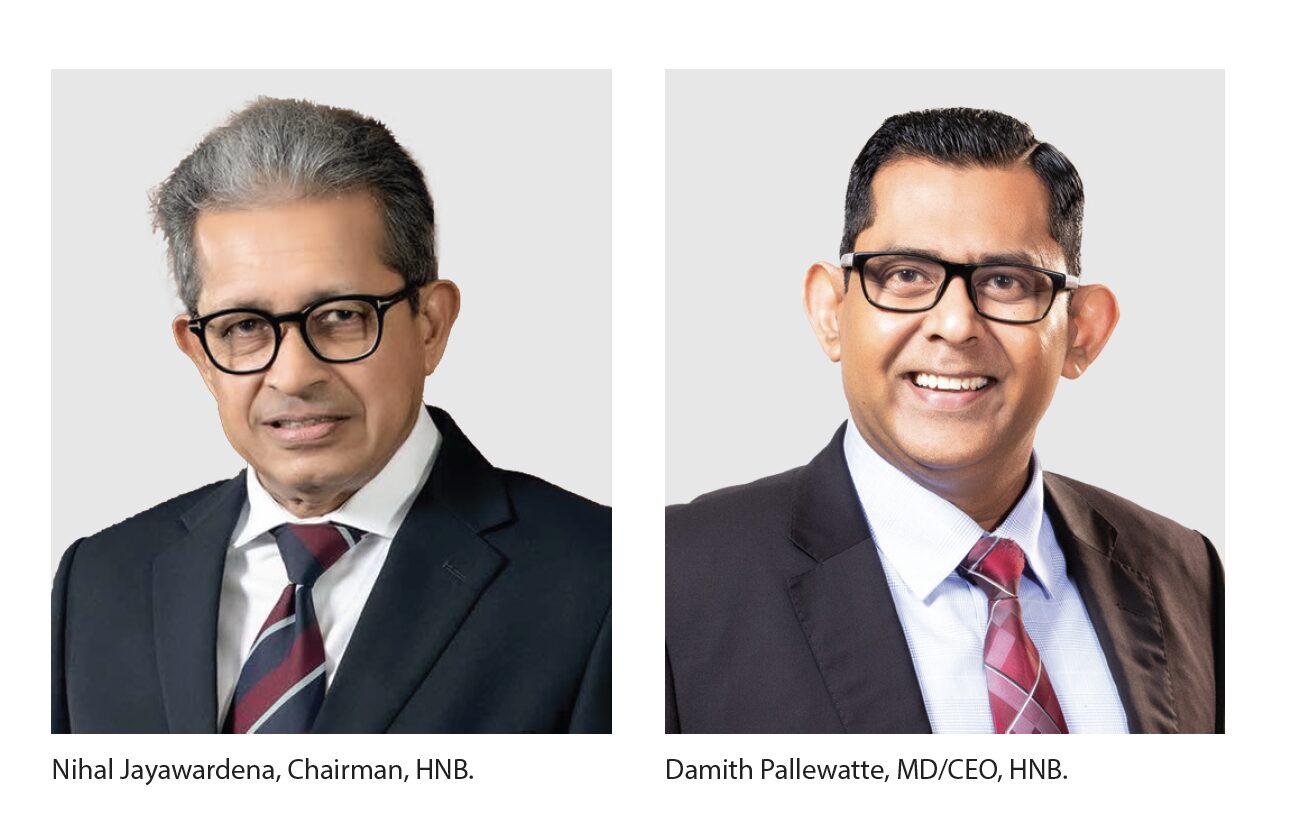
Nihal Jayawardena, Chairman, HNB stated that 2025 marked a decisive shift in Sri Lanka’s economic trajectory, driven by improving macroeconomic fundamentals, renewed private-sector confidence, and continued reform efforts. He noted that HNB’s disciplined risk management, strong capital position, and sustained investments in digital and operational capabilities have positioned the Bank to play a pivotal role in supporting the country’s revival. Despite the severe impact of Cyclone Ditwah towards the end of the year, he emphasized that the resilience shown by communities and institutions underscored the importance of a banking sector that remains agile and committed to national progress. The Bank recorded significant balance sheet growth during the year.
Total assets expanded by 15 percent year-on-year to 2.39 trillion rupees, driven largely by strong loan growth. Gross Loans and Advances increased by 354 billion rupees to exceed 1.5 trillion rupees, marking the largest annual increase in the Bank’s history.
The deposit base also grew by 246 billion rupees to 1.96 trillion rupees, supported by focused CASA mobilization and improvements to the overall funding mix. HNB strategically redeployed funds from government securities into customer lending, enhancing the asset mix. While credit growth remained strong, net interest margins faced pressure due to the accommodative monetary policy environment and lower market interest rates.
Net Interest Income declined marginally by 0.6% year-on-year, partly reflecting the impact of interest recognized in 2024 following the restructuring of Sri Lanka Sovereign Bonds. However, growth in the loan book and CASA deposits helped cushion the decline. Non-fund-based income provided a strong counterbalance. Net Fee and Commission Income rose by 28.9 percent year-on-year, driven by higher card usage, increased digital transactions, and stronger demand for trade-related services following the reopening of vehicle imports and improving trade activity. Trade finance emerged as a key contributor, while exchange income rebounded to 6.3 billion rupees, reversing a loss recorded in 2024.
Asset quality improved significantly during the year, supported by prudent underwriting, disciplined risk management, and focused recovery efforts. The Stage 3 portfolio recorded a net reduction, alongside an impairment reversal of 9.2 billion rupees. After recognizing prudent post-model adjustments related to potential cyclone-related vulnerabilities, the Net Stage 3 ratio improved to 1.09 percent by the end of December 2025, compared to 1.88 percent a year earlier. The Stage 3 coverage ratio remained strong at 75.97 percent.
Damith Pallewatte, MD and CEO, HNB, highlighted the Bank’s continued digital transformation, including next-generation platforms such as TradeX and HNB Accept, as well as enhancements to the HNB Mobile Banking App. Sustainability remained central to HNB’s strategy, marked by the issuance of a ten billion rupees Sustainable Bond and participation in a USD one billion sustainability-linked funding facility.
The Bank also strengthened climate risk integration and governance through a partnership with Transparency International Sri Lanka. Capital and liquidity buffers remained well above regulatory requirements, with Tier I and Total Capital Adequacy ratios at 16.85 percent and 19.95 percent, respectively, and an all-currency liquidity coverage ratio of 227.75 percent. Reflecting its strong performance, the Board proposed a total dividend of 20 rupees per share for 2025.