
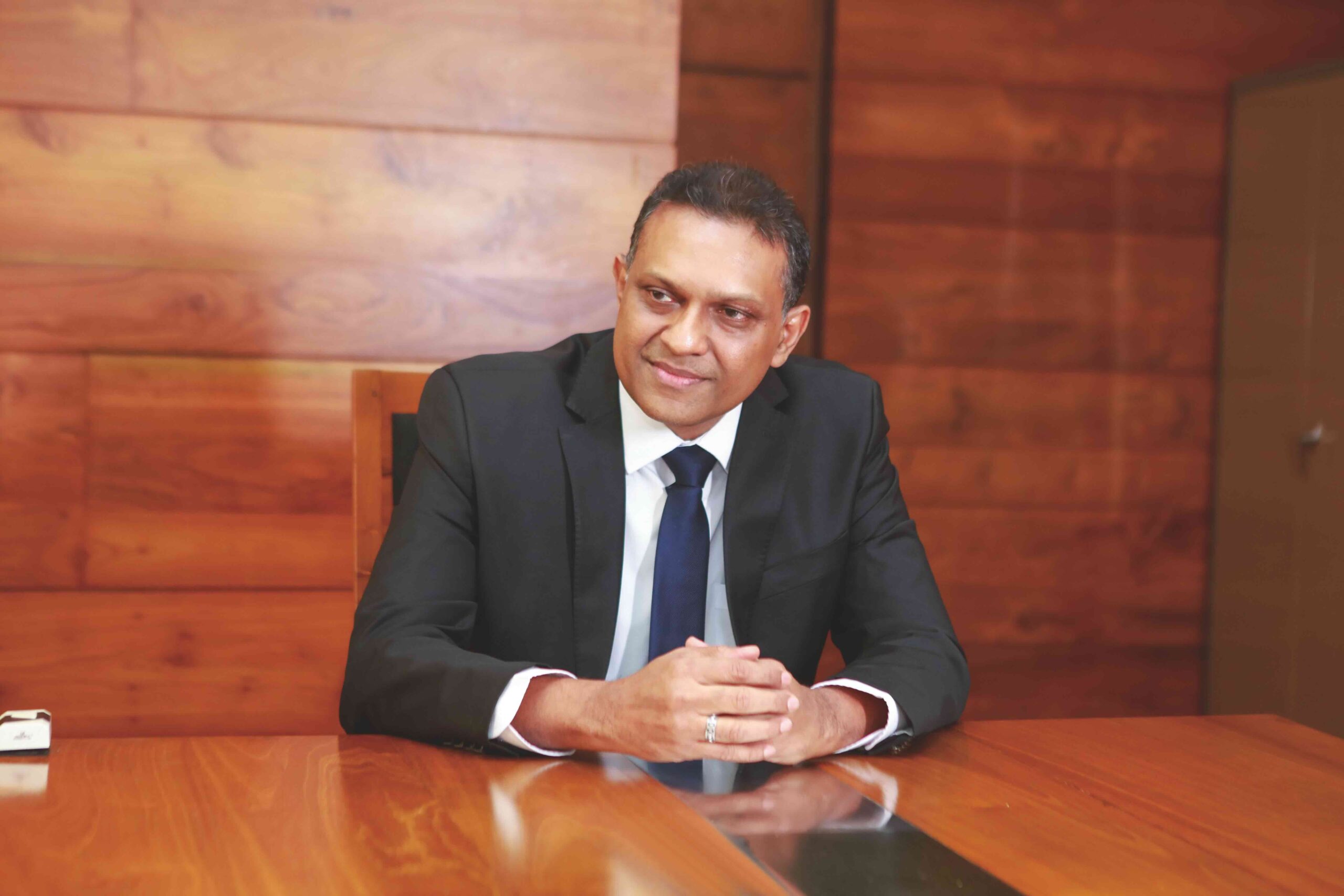
As Melstacorp enters a new era under fresh generational leadership under the stewardship of Hasitha Jayawardena, the Group is focusing its strategy amid a stabilizing yet complex economic climate. Group CEO Jude Fernando, an executive with over 35 years of experience in Sri Lanka’s top conglomerates, shared the insights of this transition.
Fernando brings deep operational expertise and strategic clarity, having guided organizations through crises and major transformations. In this interview with Business Today, he discusses Melstacorp’s financial rebound, disciplined capital allocation, leadership transformation, digital strategy, and vision to evolve from a domestic leader to a regional player, while staying true to the Group’s core values.
Words Jennifer Paldano Goonewardane.
Photography Sujith Heenatigala and Dinesh Fernando.
Melstacorp’s Profit After Tax (PAT), surged more than 75 percent in FY2024/25. To what extent was this driven by operational performance versus macroeconomic factors?
It’s a synergy of both, but I would say with a heavy emphasis on internal discipline. The easing of interest rates and the stabilization of the rupee reduced our financial costs.
These had significantly dragged the economy in previous years. Improved forex stability reduced volatility in input costs, enabling us to plan pricing and procurement with much greater confidence. Meanwhile, moderating inflation and interest rates in 2024 and 2025 supported a gradual recovery in consumer demand across both the beverage and tourism sectors. However, strategic decisions and operational performance were the primary drivers of the surge.
We streamlined the portfolio by exiting loss-making operations like Lanka Bell, Texpro Industries, and Melsta Laboratories, which together incurred losses of approximately 2.8 billion rupees in the prior year. Profit growth in our core beverage sector drove performance.
Strategic pricing, volume-led growth, tight control of expenditure, enhanced efficiency, and overall tighter supply chain management preserved margins. Additional excise taxes not only force customers to resort to unlicensed products, posing a significant health risk, but also deprive the government of much-needed tax revenue, which we hope authorities will note. A stellar recovery in Aitken Spence Group, which saw Earnings Before Interest, Taxes, Depreciation, and Amortization (EBITDA) grow by five percent while Profit After Tax grew by 92 percent, helped drive the remarkable growth in the year.
Financial management amplified operational gains. Lower interest rates cut finance costs from 15.5 billion rupees in FY2023/24 to 9.4 billion. This was critical because the Group is capital-intensive and carries notable interest-bearing borrowings.
Macroeconomic normalization gave us a supportive backdrop, but we did not wait for conditions to improve. We actively reshaped the portfolio, reinforced capital discipline, and optimized operations. As the top line stabilized, more value reached the bottom line. This reflects the core strength of our diversified portfolio, where ‘lean’ subsidiaries offset volatility elsewhere.
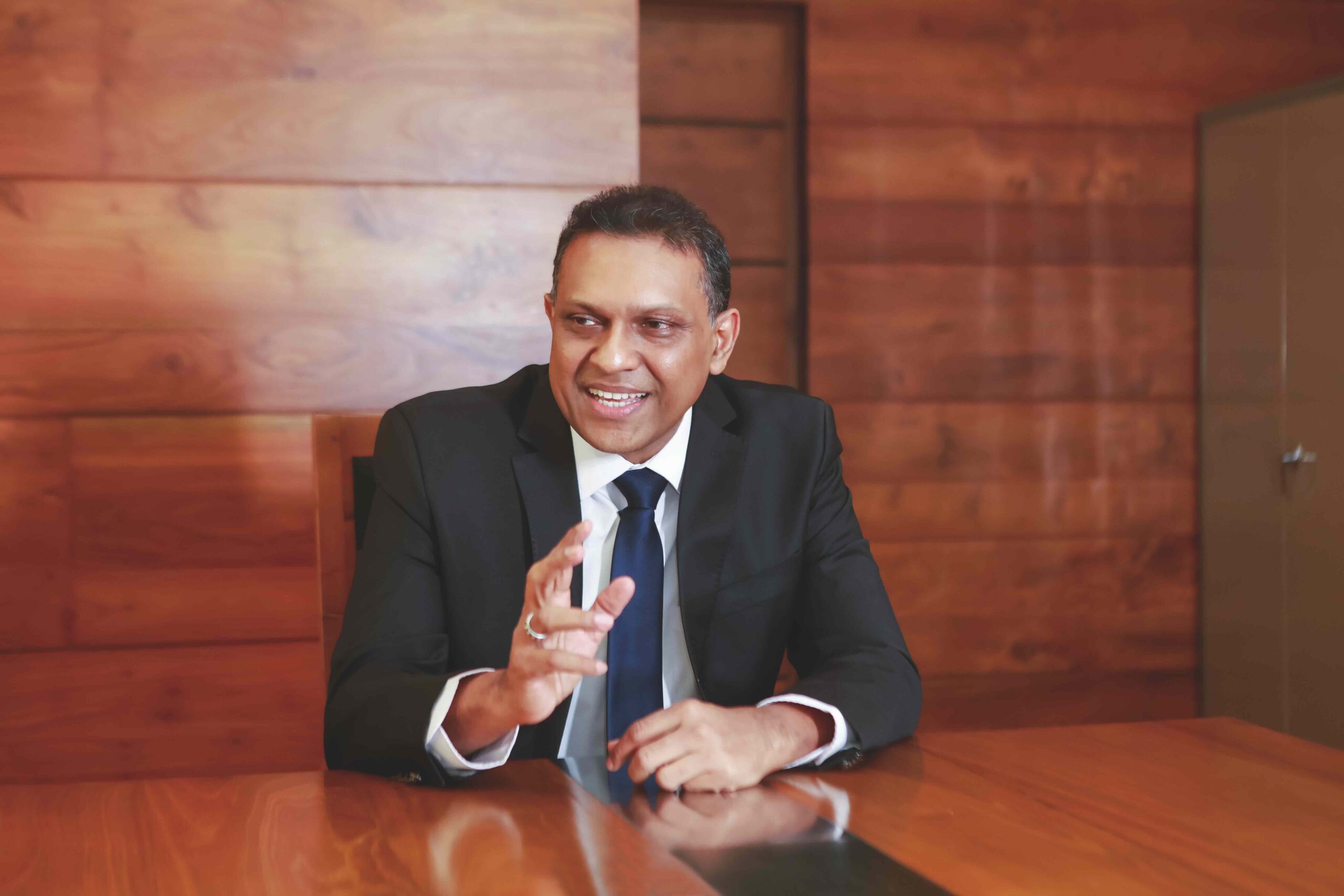
Fitch Ratings reaffirmed Melstacorp’s AAA(lka) rating with a stable outlook. How does maintaining this rating influence your capital allocation strategy, especially for growth versus shareholder returns?
Our AAA rating is one of our most valuable intangible assets. It is the highest national-scale credit rating in Sri Lanka and was held by only six non-financial corporates in 2025. Melstacorp has maintained it for seven consecutive years. This rating is our license to operate with agility, a promise of stability to lenders, and a badge of confidence for investors.
The rating also allows us to access capital at the most competitive rates, which is a significant competitive advantage when acquiring new distressed assets or expanding our footprint outside Sri Lanka. Our capital allocation strategy follows a ‘Value-First’ framework. We reinvest in high-yield, cash-generative sectors—those that generate more cash than they consume—such as logistics and beverages. We also maintain a consistent dividend payout to our shareholders. This approach uses a disciplined investment lens. Every allocation is assessed on return on invested capital (ROIC), which measures investment efficiency and profitability, and on long-term value creation, not short-term expansion.
We remain committed to a healthy dividend. The total dividend for FY24/25 was 7.32 rupees per share, with a recent interim dividend of 2.15 rupees per share as of November 2025. Our commitment is to sustainable value creation for shareholders. So, in my view, this rating doesn’t limit growth—it disciplines it. We ensure that growth and shareholder returns are not competing objectives, but complementary outcomes of a value-driven capital allocation strategy.
The decision to discontinue underperforming subsidiaries such as Lanka Bell, Texpro Industries, and Melsta Laboratories was significant. Was this purely financial, or were there deeper strategic or cultural reasons behind these exits? These exits were due to strategic focus. Yes, the decision was both financial and structural.
In a post-crisis economy, ‘distraction’ is a cost. Therefore, these were difficult but necessary ‘exits.’ These subsidiaries generated losses totaling 2.8 billion rupees in FY 23/24. In a conglomerate of this scale, there is a risk of ‘Capital Bleed’ where underperforming units consume the profits and cash flows of the stars. We were keen to stop this bleed. Lanka Bell and Texpro operated in highly competitive or shrinking niches. These businesses needed more capital than their strategic value justified. Over time, they absorbed cash rather than generating it, and their recovery prospects were poor. By exiting, we did not just cut losses; we also redirected capital and management focus to our core businesses. More importantly, the capital released from these exits could be redeployed into higher-return, balance-sheet-strengthening, and cash flow-generating opportunities across the Group.
Culturally, it sends a clear message—Melstacorp is performance-driven, not a collector of legacy assets. Performance matters more than presence. Each business must justify its place by delivering returns and staying strategically relevant.
With a leaner portfolio focused on sectors such as beverages, tourism, logistics, and plantations to drive revenue growth, how do you determine which sectors should receive priority investment and which should be divested?
We use a Dynamic Portfolio Matrix. We categorize our sectors into ‘Cash Cows’, ‘Growth Engines’, and ‘Strategic Options’. Sectors like tourism and logistics are our ‘Growth Engines’ due to their foreign exchange potential. Beverages remain our ‘Foundation,’ providing the Group with cash flow. Underpinning this is a strong emphasis on sustainable cash flow generation. We look beyond accounting profits and focus on recurring operating cash flows. On the other side of the equation, divestment decisions are governed by equally clear principles. Businesses that remain loss-making or earnings-dilutive over multiple years, consistently fall below hurdle rates, or fail to achieve scale, are reviewed critically. Naturally, sectors that generate foreign exchange, like tourism, those with high barriers to entry, like beverages, and those with strong growth potential, like health, will receive the lion’s share of reinvestment. This disciplined approach already shows results.
Most importantly, it sharpens our focus on core sectors (beverages, tourism, and logistics), ensuring each business has a clear and accountable role in long-term value creation. Are there emerging industries or sectors that Melstacorp is actively exploring for future expansion or partnership? If so, what excites you most about them? We aren’t just looking for new industries; we are looking for ‘new ways’ to lead existing ones. What excites me most is investing in technologies that make our existing billion-rupee businesses work sharply. With our massive distribution network in the beverage sector, there is a significant opportunity to monetize data and supply chain insights.
One of our biggest strengths is solid diversification, both within Melstacorp and across the extended Groups. This mix of defensive, cash-generative sectors and growth-oriented businesses keeps us resilient through cycles. It lets us explore new opportunities from a position of strength, not necessity. Our focus remains on leadership and trendsetting to build long-term advantage. Yet we are open and actively exploring other opportunities. In that respect, what excites me most are export-led or forex-earnings-led opportunities.
Our aspiration is not just to remain a local conglomerate but to become a regional player. Long-term growth will increasingly need to come from beyond Sri Lanka’s borders, whether through export-oriented manufacturing, services, or regional joint ventures that provide market access without heavy capital deployment.
Culturally, it sends a clear message—Melstacorp is performance-driven, not a collector of legacy assets. Performance matters more than presence. Each business must justify its place by delivering returns and staying strategically relevant.
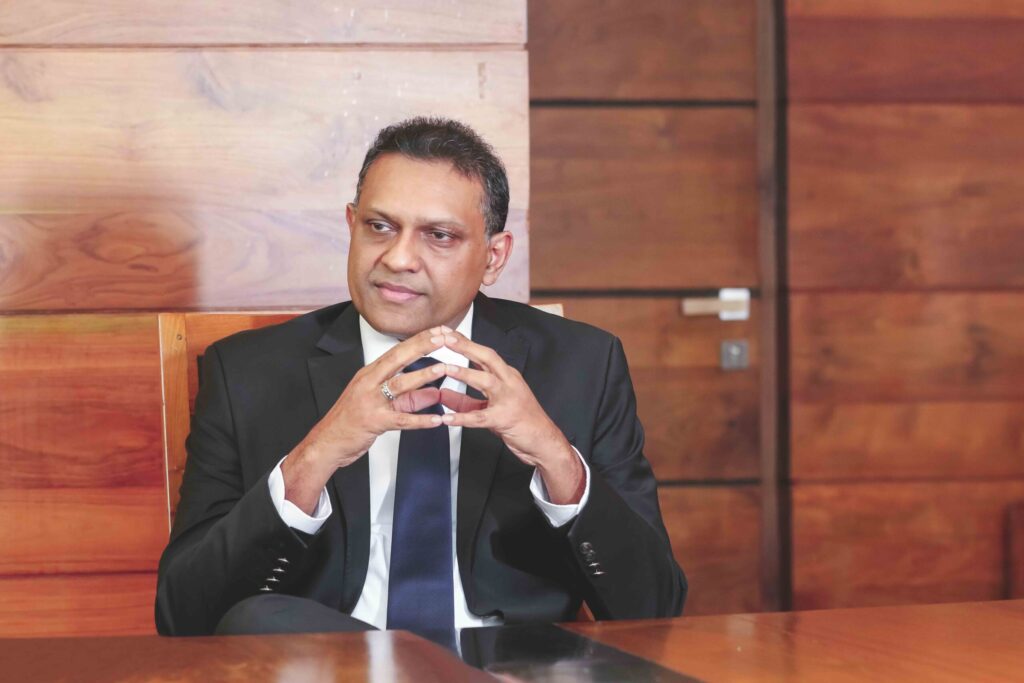
Digital transformation is a strategic pillar for Melstacorp. Beyond automation and analytics, how do you envision digital innovation reshaping the customer experience, especially in consumer-facing sectors such as beverages and tourism?
Digital transformation at Melstacorp is the ‘invisible thread’ connecting our diverse sectors. In tourism, it’s about hyper-personalization—using AI to anticipate guest needs before they check in. We hope to expand investments in direct hotel booking platforms that will strengthen customer engagement, improve transparency, and reduce distribution friction. In beverages, it’s about supply chain visibility. We need to move toward real-time inventory tracking and automated distributor management systems. This strengthens brand engagement through multiple digital touchpoints. Digital is not a ‘department’, it is the nervous system that will allow us to respond to market shifts in hours, not weeks.
We are mindful that, to be relevant to future consumers and the workforce, digital innovation is not an option but a necessity. From a Board perspective, as Chairman, Mr. Hasitha Jayawardena has emphasized, digital evolution is viewed as a powerful multiplier for building long-term resilience and fostering continuous innovation across the Group. We are embedding it into how Melstacorp operates, competes, and creates value across sectors in the broader Group for the long-term value creation.
The Annual Report highlights embedding sustainability into value creation. Can you outline specific, measurable ESG goals for the next three to five years?
Our ESG roadmap is no longer a separate CSR initiative; it is a value creation framework. For the next three to five years, our ESG priorities are anchored around three strategic “North Star” goals across our major sectors. One is Energy Sovereignty and Net Zero. Our ambition is to progressively increase the proportion of our energy needs met internally. In our Strategic Investments sector, the power generation segment has reached a major milestone, transitioning from thermal power to a 100 percent renewable energy portfolio. Through Aitken Spence, we are already a net contributor to the national grid, generating 134 GWh of clean energy in the previous year (FY2023/24).
Two is Circular Operations and Resource Efficiency. Our goal here is to work towards “Zero Waste to Landfill”. We are tackling this by reducing waste at source, maximizing reuse and recycling, and ensuring that any residual waste is treated or disposed of responsibly. At DCSL, we are actively minimizing single-use plastics and transitioning towards more sustainable materials. Across the Group, we are committed to repurposing or recycling solid waste and to treating and safely disposing of effluents.
Three is Social Inclusivity and Strong Governance. Gender diversity across leadership and the wider workforce will be tracked as a key indicator, alongside community engagement outcomes, ensuring accountability and transparency across the Group. From a governance perspective, our Board sets the tone at the top, actively monitors compliance with all legal and regulatory requirements, and oversees the implementation of sustainability and ESG objectives. These goals are being adopted into our operations, and we intend to sustain Melstacorp’s performance, resilience, and reputation over the long term.
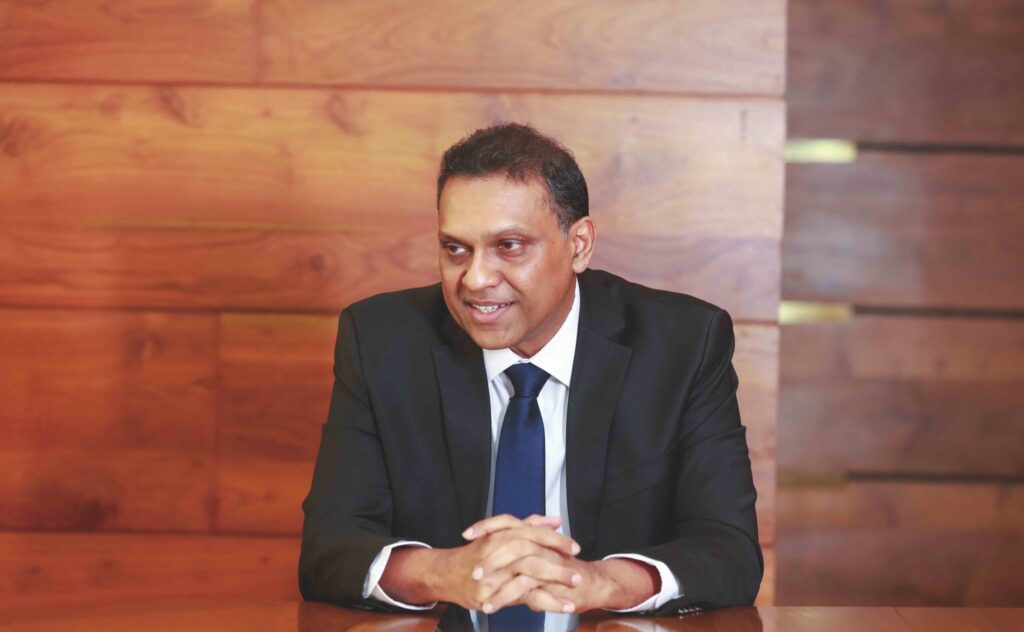
With strategic exits and organizational realignments, how are you nurturing morale and retaining talent, particularly in sectors undergoing transformation?
Exiting a business is never just a financial calculation; it’s a human one. When you exit a business, the human element is the priority. Undoubtedly, change can be unsettling, but clarity is the antidote to anxiety. During realignments, we prioritize transparent communication. Our strategy was ‘Responsible Transition.’ For the employees in sectors like Lanka Bell or Melsta Labs, we didn’t just close doors; we opened internal windows. We leveraged our Group’s diversity to facilitate internal mobility. We believe that morale is maintained by providing a clear vision. When people see that we are pruning the weak branches to strengthen the tree, they feel more secure in the ‘Fortress’ we are building. To retain talent, we nurture a culture of continuous learning through on-the-job training, internal workshops, and external programs designed to enhance skills and long-term employability. We also back our intent with investment. In FY2024/25 alone, the Group invested more than 80 million rupees in training and development, delivering over 300,000 training hours across the organization.
Our retention rates in core sectors remain high because we communicate that Melstacorp is a place for growth, not just employment. We are an organization that has immensely benefited from employee loyalty and long tenure, which are guiding principles of our late chairman.
Yet again, today’s organizations are perpetually challenged by the task of retaining talent. Give your experience, what do you observe in this evolving landscape?
Yes, we face significant challenges in attracting and retaining talent in Sri Lanka’s shrinking talent pool is due to skill migration. We must adapt the organizational culture to accommodate younger, digitally savvy employees while retaining existing talent. This involves changing traditional corporate norms and creating environments that appeal to new generation workers who prioritize different values and work-life balance approaches.
In building a “future-ready organization,” what mechanisms are in place for leadership development?
Traditionally, we are a “Hero-led “organization where some great leaders painstakingly built our fortress under the visionary leadership of the late Deshamanya Mr. Harry Jayawardena. Now we need to transition to an ‘Institutionalized’ leadership model. Fortunately, most of the great leaders who are instrumental in building this fortress are still with us to guide and navigate us on this journey. That’s our biggest strength and solid foundation to build on.
We will create a ‘Group Talent Pipeline’ where we identify high-potential managers for cross-sector exposure. We must focus on partnering with global institutions for executive coaching. Our immediate focus is to build and strengthen our ‘Leadership Bench’. Looking ahead, we will invest in Digital Fluency. We must train our next generation of leaders not just to manage people, but to manage data-driven ecosystems. We aren’t just looking for managers, we are cultivating ‘Intrapreneurs.’
Ultimately, the goal is to build a future-ready organization united by shared values, purpose, and an entrepreneurial spirit. Chairman Mr. Hasitha Jayawardena reinforces this vision, emphasising that empowering every employee to contribute and thrive is vital to creating a truly future-ready organization.
Given Sri Lanka’s macro environment, what are the biggest external risks you see impacting Melstacorp in FY2025/26, and how are you preparing the Group to mitigate them?
The biggest risks for 2026 are Global Supply Chain Fragility and Domestic Regulatory Volatility. Macro reality in Sri Lanka, where currency depreciation, ongoing tax reforms, and regulatory adjustments continue to create unpredictable cost pressures, which may dampen consumer confidence.
Our geographic diversification (through Aitken Spence’s overseas footprint) serves as a natural hedge against domestic currency volatility. We have also diversified our sourcing for the Beverage sector to avoid reliance on a single region. Our strength is our Diversification—when one sector faces a headwind, another usually finds a tailwind. This is exactly why our portfolio is structured around sectors with complementary risk profiles and cash flow characteristics. However, we recognize that macro risks go beyond supply chain and regulation to include external threats such as skills migration and the challenge of attracting and retaining talent. We are actively working on strategies to mitigate this, with each SBU working on focus and specific strategies.
Culturally, it sends a clear message—Melstacorp is performance-driven, not a collector of legacy assets. Performance matters more than presence. Each business must justify its place by delivering returns and staying strategically relevant.
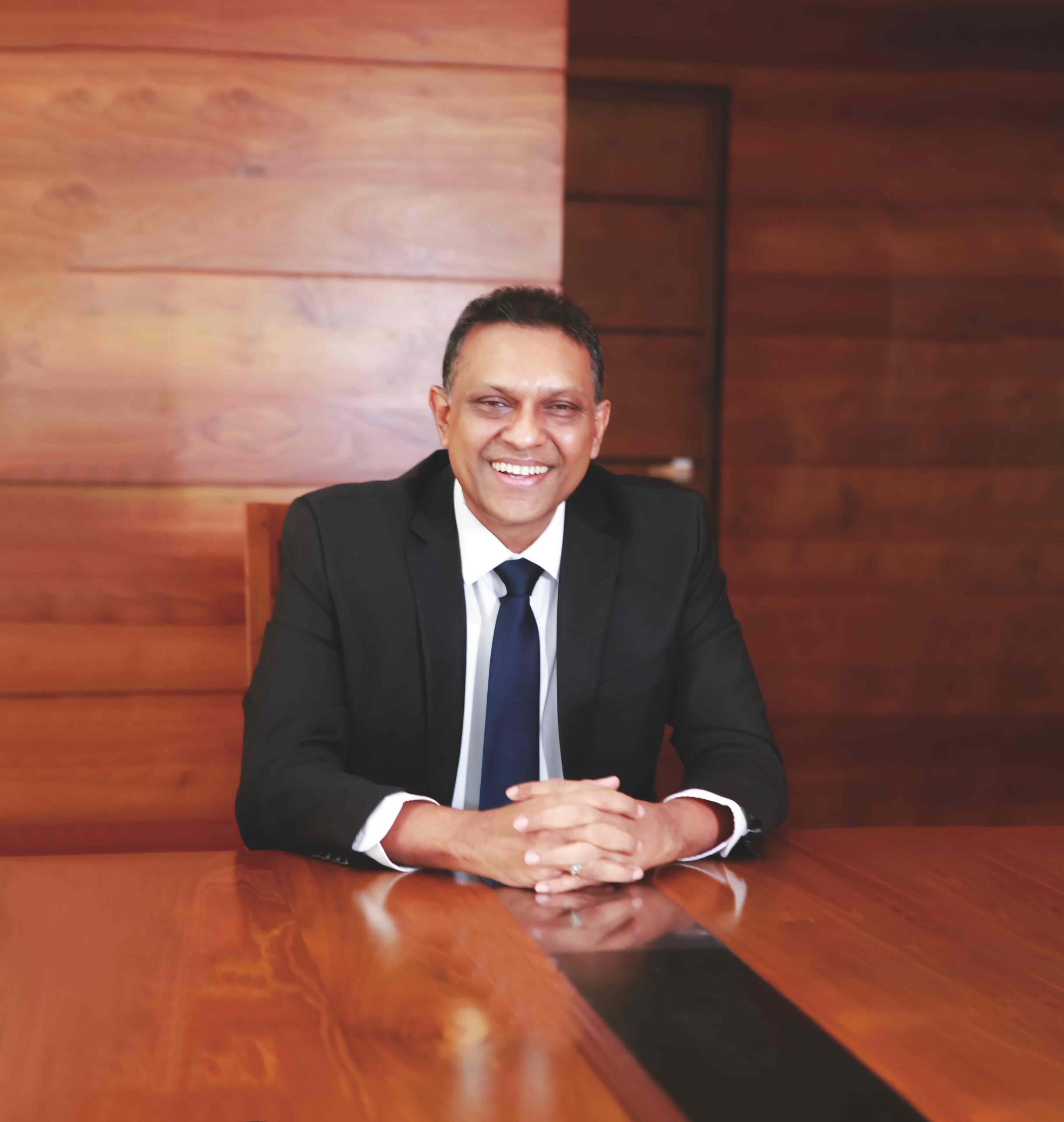
How does Melstacorp plan to capitalize on global trends (such as increased tourism flows, premiumisation in beverages, and supply chain optimisation) while safeguarding resilience amid headwinds?
I totally agree that the world is moving toward ‘Value over Volume.’ In beverages, we are seeing some shift toward ‘Premiumisation’—consumers drinking ‘better,’ not necessarily ‘more’. Our brand heritage in spirits allows us to lead this.
We are tailoring our portfolio to capture this high-end market. Having said this, we have a strong captive market that will sustain for a longer period for many reasons. In tourism, the global recovery in international arrivals and improved occupancy rates are strong tailwinds for us. Yet, we need to capitalize on the ‘Wellness and Experiential’ trend. Our resilience comes from being agile enough to pivot our offerings to where the global ‘wallet’ is moving. We are building resilience through strong balance sheet management and disciplined capital allocation. Our AAA (lka) rating gives us funding flexibility to invest in growth trends while maintaining strict financial discipline. Most importantly, our approach is prioritization. Capital should be allocated to scalable, high-return sectors so we can grow aggressively when headwinds ease, while staying protected when the environment becomes uncertain.
As the new Group Chief Executive Officer, what are your plans for the Group?
Melstacorp’s greatest strength is its exceptional diversification. Our portfolio has enabled the organization to sustain and thrive through multiple economic cycles. When one sector faces challenges, other sectors provide tailwinds, creating a natural buffer effect.
Moreover, the Group’s diversification extends beyond traditional boundaries, with various sub-groups within the main organization creating an even more robust business model. We have successfully captured the domestic market, which calls for a fresh strategic direction. Our strategic direction needs to evolve, with a focus on international expansion rather than further domestic diversification.
Sri Lanka’s size limitations necessitate looking beyond domestic markets for significant sustainable long-term growth, requiring a transition from being the largest conglomerate in Sri Lanka to becoming a regional player. However, this transformation requires long-term planning and cannot be achieved within one or two years. There are three critical strategic priorities for organizational development.
First, digital transformation and data analytics represent a major opportunity, given the vast amount of data the diversified business generates across sectors. We can leverage this data to improve operational efficiency and enable smarter decision-making. This digital transformation extends beyond consumer touchpoints to fundamental business operations across all sectors within the Group.
Second, leadership development will be a crucial focus area, developing institutionalized leadership structures while preserving the entrepreneurial spirit that built the company. The third priority is to maximize synergies across business units rather than focusing on individual business growth. We will continue to maintain the entrepreneurial culture and risk-taking appetite that have historically driven success while creating a unified vision and purpose across the Group.
Our strength is our Diversification—when one sector faces a headwind, another usually finds a tailwind. This is exactly why our portfolio is structured around sectors with complementary risk profiles and cash flow characteristics.
You have held senior positions at leading corporates in Sri Lanka, which means you have been through the various cycles. In those circumstances, how have you navigated the organization to ensure stability as a team?
When I joined the pharmaceutical business, it was at the height of COVID-19 — a particularly challenging period, as I was working more from home than from the office. Fortunately, it was an organization I already knew well, one that felt like family, and that support helped us navigate that uncertain time together. Soon after came the economic crisis. What these cycles have taught me is that, above all, leaders must provide vision, stability, and confidence. This comes through open and honest communication — even when the message is difficult. People need to trust what you say and believe that you will stand by it.
I have always been frank and transparent, including with the Board, while assuring our teams that we will find solutions and deliver through the strong capabilities we have. When that confidence is established, people rally around a shared purpose. At the same time, during challenging periods, it is important to empower people. I give my teams the space and freedom to make decisions, backed by trust and open communication. In a crisis, there is no luxury of lengthy deliberations — decisions must be made swiftly. When teams feel trusted and supported, communication improves, collaboration strengthens, and people step up to help one another navigate complexity together.
You are the new Group CEO of Melstacorp. While providing us with a background on your corporate footprint, how do you envision Melstacorp’s role in shaping Sri Lanka’s corporate landscape as the Group navigates a new era of leadership?
I began my corporate journey over 35 years ago at Royal Ceramics, where I started in finance and progressed rapidly. At the age of 24, I was appointed Head of Finance. As a publicly listed company, Royal Ceramics provided what I often describe as my greatest professional baptism. I was fortunate to work under a mentor who was exceptional in finance, and that period laid a strong foundation for everything that followed.
From there, I moved to Hemas, joining the FMCG sector as Commercial Director, and later took on the role of Supply Chain Director. I spent nearly a decade at Hemas, gaining invaluable exposure across multiple functions. Subsequently, I joined Kotmale as Director/CEO, successfully turned the company around, and delivered on the mandate for which I was brought in. Thereafter, I moved to Cargills, where I held dual responsibilities — continuing as Director/CEO of Kotmale while also serving as Executive Director – Sales and Marketing. My next chapter was with Janashakthi Insurance, where I returned as Director/CEO, overseeing both Life and General Insurance operations.
Subsequently, I moved back to Hemas, this time as Managing Director of the pharmaceutical business. Throughout this journey, I have had the privilege of working across diverse industries and gaining hands-on experience in finance, marketing, supply chain, and operations. This breadth of exposure has shaped my leadership approach and strategic thinking. My transition to Melstacorp came at a pivotal moment for the Group.
Having worked across many of the sectors represented within the portfolio, the role of Group Chief Executive Officer allows me to meaningfully apply my cumulative experience — something I find deeply fulfilling. When I joined Melstacorp, our Chairman, Deshamanya Mr. Harry Jayawardena, was no longer with us. The Group is now guided by a new generation of leadership, Mr. Hasitha Jayawardena — one that is poised to build its own legacy and chart a new chapter for the organisation and its extended business entities. I see my role as supporting this transition, strengthening governance, driving sustainable growth, and being a significant part of shaping Melstacorp’s next phase. I reiterate my commitment to contributing to this new era under the Chairmanship of Mr. Hasitha Jayawardena — to helping write the next chapter and establish a renewed legacy for the Group.