
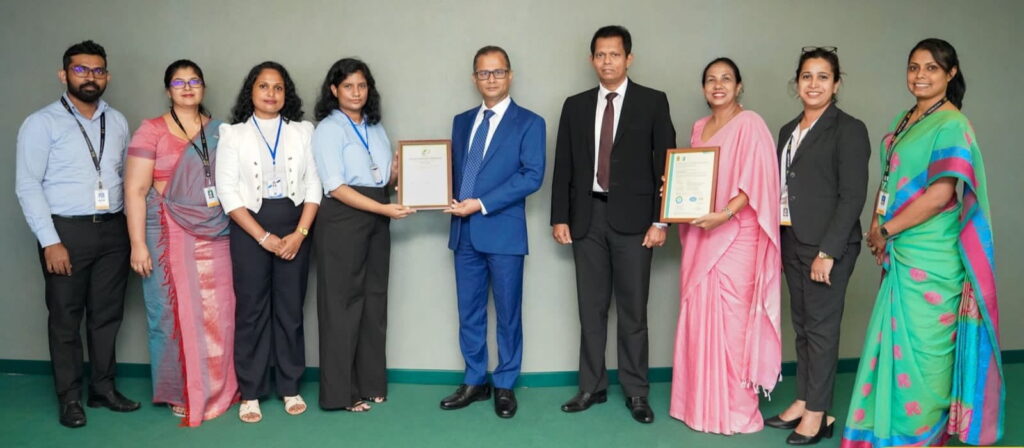
Bank of Ceylon has further strengthened its commitment to environmental sustainability by successfully completing its Greenhouse Gas (GHG) inventory assessment and independent verification for the year 2025 in accordance with internationally recognized standards.
The Bank’s GHG inventory was measured and reported in compliance with ISO 14064- 1:2018 and GHG protocol, while the verification was conducted in accordance with ISO 14064-3:2019, providing a reasonable level of assurance on the accuracy and reliability of the reported emissions data. The assessment covered all operationally controlled business activities of Bank of Ceylon, including its Head Office, Provincial Offices, 569 branches, staff quarters, and six subsidiaries across Sri Lanka.
According to the verified assessment, BOC recorded a total greenhouse gas emission footprint of 19,718 tons of CO₂ equivalent (tCO₂e) for the year 2025. This comprised 1,252 tCO₂e of direct emissions (Scope 1) and 18,466 tCO₂e of indirect emissions (Scopes 2 and 3). Scope 2 emissions arising from electricity consumption accounted for 11,188 tCO₂e, while other indirect emissions under Scope 3 amounted to 7,278 tCO₂e, except for Scope 3-financed emissions. The assessment included emissions generated through company-owned vehicles, standby generators, refrigerant leakage, employee commuting, business travel, electricity consumption, waste disposal, water usage, and transportation-related activities. The inventory was independently verified by the Sri Lanka Climate Fund recognizing the Bank’s commitment to transparent carbon accounting and environmental stewardship.
BOC recognizes that addressing climate change requires collective action and responsible business practices. The completion of this assessment demonstrates the Bank’s continued efforts to measure, monitor, and manage its environmental impact while aligning its operations with global sustainability frameworks and national climate priorities. BOC has consistently integrated sustainability into its business strategy through responsible financing, green initiatives, digital transformation, energy efficiency improvements, and environmental conservation programs. The verified GHG inventory provides a strong foundation for identifying opportunities to further reduce emissions and enhance operational efficiency across the Bank’s extensive network.
Bank of Ceylon reaffirmed its commitment to sustainability and supporting Sri Lanka’s transition to a low-carbon economy through continuous environmental monitoring and transparent reporting.
The Bank aims to contribute to climate action while creating long-term value for customers, stakeholders, and future generations. By adopting responsible business practices that balance economic growth with environmental stewardship, Bank of Ceylon continues to strengthen its role in driving sustainable development in Sri Lanka.