
Ceylinco Holdings has steadily evolved from its origins as an insurance-focused organization into a multi-sector enterprise spanning insurance, education, renewable energy, and healthcare. Speaking with Business Today, Executive Chairman and CEO Ajith Gunawardena emphasized that the Group has focused on prudent financial management, strong corporate governance, and long-term strategic planning to navigate the country’s evolving economic landscape. In 2025, the Group recorded steady growth supported by life and general insurance, expansion in education, and new ventures in renewable energy, while maintaining high standards of operational efficiency, digital transformation, and sustainability. Throughout its journey, Ceylinco Holdings has focused on nurturing homegrown businesses, cultivating a loyal workforce through robust employee welfare programs, and fostering partnerships with international universities to provide Sri Lankan students with global educational opportunities—all while carefully balancing growth with risk management and long-term value creation.
Words: Jennifer Paldano Goonewardane.
Photography: Sujith Heenatigala and Dinesh Fernando.
How would you assess the overall performance of Ceylinco Holdings in 2025 compared with 2024, particularly in the context of Sri Lanka’s evolving economic environment?
Despite the challenging operating environment and the economic uncertainties we faced toward the latter part of the previous year, Ceylinco Holdings delivered a resilient performance in 2025. The stabilization of Sri Lanka’s macroeconomic environment during the year also helped support business activity across the Group. Compared with 2024, the Group recorded steady growth of approximately 9.2 percent in 2025. This performance was largely driven by strong contributions from our core businesses in life and general insurance, as well as continued expansion in the education and renewable energy sectors. These remain the key pillars of our operations outside the insurance segment.
In the education sector, we are proud to be the largest private education provider in Sri Lanka, and demand for quality education continued to grow as consumer confidence gradually improved alongside the country’s economic outlook. Similarly, in general insurance, the relaxation of vehicle import restrictions created new opportunities in the motor insurance market. As vehicle imports resumed, we captured a significant share of this business.
Throughout the year, prudent financial management and strategic investments helped the Group maintain stability and sustain long-term growth. We have always placed strong emphasis on forward planning, anticipating emerging trends, and preparing for potential challenges. While unforeseen global developments—such as geopolitical tensions and disruptions to international trade—can impact the broader business environment, our disciplined financial approach and the reserves we have built over time have enabled us to navigate these uncertainties with resilience.
As the Group continues to grow in terms of total assets and turnover, maintaining financial discipline and effective risk management remain key priorities. A central part of this approach is the governance framework we have established…
As a diversified conglomerate spanning insurance, education, renewable energy, and healthcare, which sectors contributed most significantly to the Group’s performance in 2025?
Beyond our core insurance operations, the education sector was one of the most significant contributors to the Group’s performance in 2025. The education business recorded strong growth and improved profitability compared with the previous year. This was supported by our continued expansion, including the development of Wycherley International School at Bauddhaloka Mawatha and further growth through our schools in Dehiwala and Gampaha. These initiatives have strengthened our position as one of the leading private education providers in the country.
Renewable energy also contributed positively to the Group’s performance. We have invested in several solar power projects, three are already commissioned, while another is currently nearing completion. These investments form part of our longer-term strategy to expand our presence in the renewable energy sector.
In healthcare, we made a strategic investment by acquiring a significant stake in King’s Hospital, which we are currently managing. There is potential for us to increase our shareholding in the future. This investment is closely aligned with our life insurance business and operates under the Group’s broader umbrella.
Within the insurance segment itself, we have also seen growing demand for our international health insurance policies. These products have become increasingly relevant given the rising cost of healthcare both locally and overseas. Our international health policy offers substantial coverage—up to approximately 300 million rupees—providing customers access to treatment in many countries worldwide. As healthcare costs continue to rise, this product has become highly sought after among our policyholders.
Beyond our core insurance operations, the education sector was one of the most significant contributors to the Group’s performance in 2025. The education business recorded strong growth and improved profitability compared with the previous year.
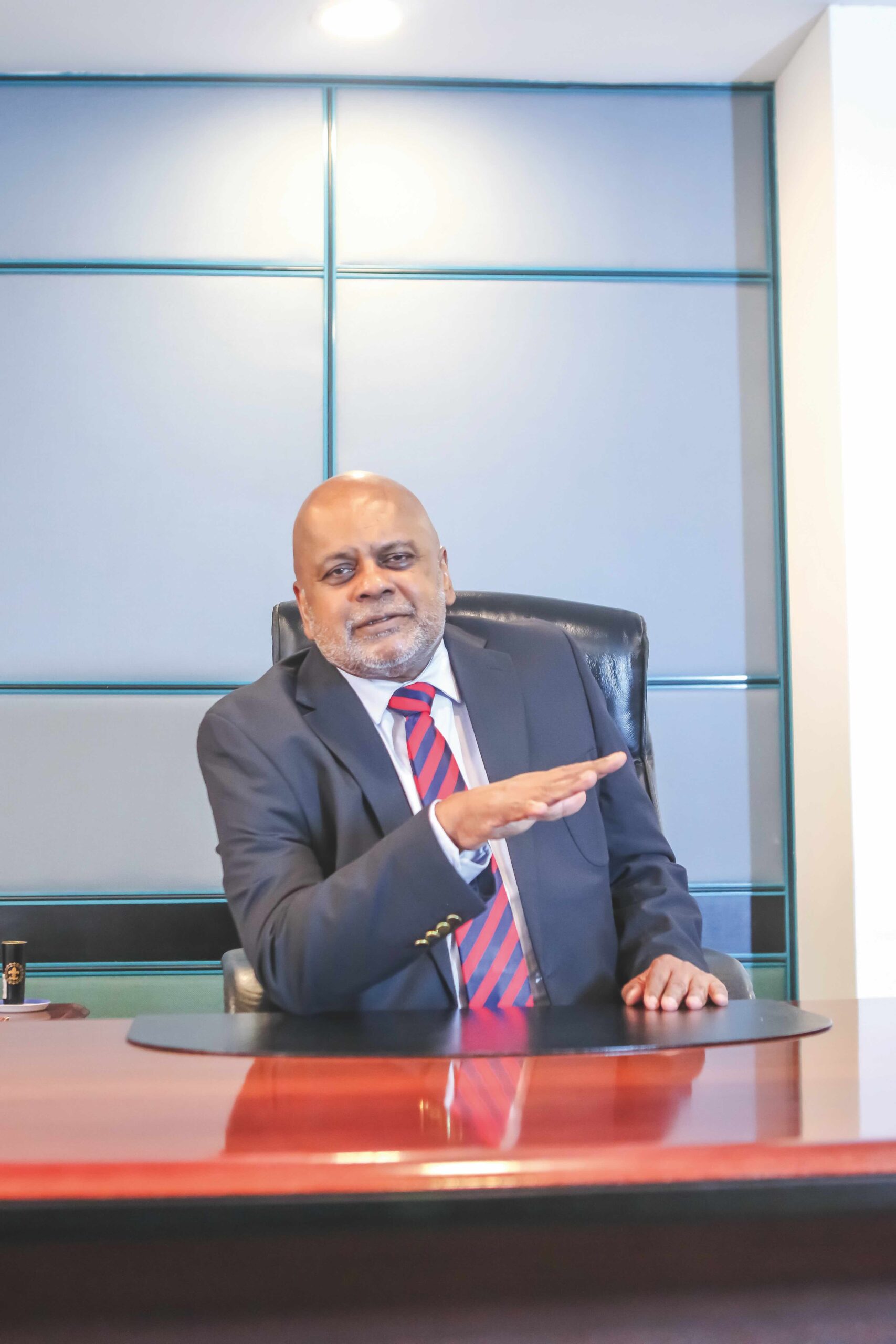
What were the most significant strategic decisions taken in 2025 that helped strengthen the Group’s long-term value creation?
One of the most significant strategic priorities in 2025 was strengthening the governance framework across the Group. While we continued to expand key sectors such as education and renewable energy, we placed particular emphasis on enhancing corporate governance, as we believe this is fundamental to sustaining long-term value creation.
For us, good governance is essential not only for the organization but also for the broader stakeholder community. It builds confidence among shareholders, policyholders, and the public at large. Strong governance also ensures that critical areas such as investment policies, financial oversight, and internal disciplinary processes are properly structured and managed.
Ultimately, by reinforcing these governance mechanisms, we have created a stronger institutional framework that supports responsible growth, transparency, and long-term sustainability for the Group.
Combining different corporate cultures often creates conflicts, favoritism, and operational challenges. All of our growth comes from homegrown businesses, which ensures alignment, cohesion, and sustainable profitability.
Following the company’s rebranding from Ceylinco Insurance to Ceylinco Holdings, how has the Group repositioned itself as a broader multi-sector enterprise?
I should first clarify that this was not a rebranding exercise. The establishment of Ceylinco Holdings was primarily driven by regulatory requirements. The regulator required the separation of the holding structure from the insurance operations, meaning that the same entity could not continue to operate both life and general insurance businesses while also functioning as the parent company.
We formed a holding company, with Ceylinco Holdings as the parent, and subsidiaries in life and general insurance, alongside our education and renewable energy interests.
Therefore, rather than a rebranding, this was the creation of a new corporate structure designed to consolidate the Group’s diverse businesses under a single holding company. This structure allows us to manage and oversee our multi-sector operations more effectively while ensuring full compliance with regulatory requirements.
With total assets and turnover continuing to grow across the Group, how are you balancing expansion with financial discipline and risk management?
As the Group continues to grow in terms of total assets and turnover, maintaining financial discipline and effective risk management remain key priorities. A central part of this approach is the governance framework we have established, which includes several committees that provide oversight and guidance across critical areas, including risk management and investments.
These committees help ensure that our expansion is carefully evaluated and aligned with the Group’s long-term objectives. They review investment strategies, assess potential risks, guide decisions on the balance between long and short-term investments, and identify sectors with strong growth potential. Operating within this governance structure enables us to make well-informed decisions while maintaining financial discipline. As a result, we have strengthened and stabilized the Group’s market position compared with the previous year, even as we continue to pursue new growth opportunities.
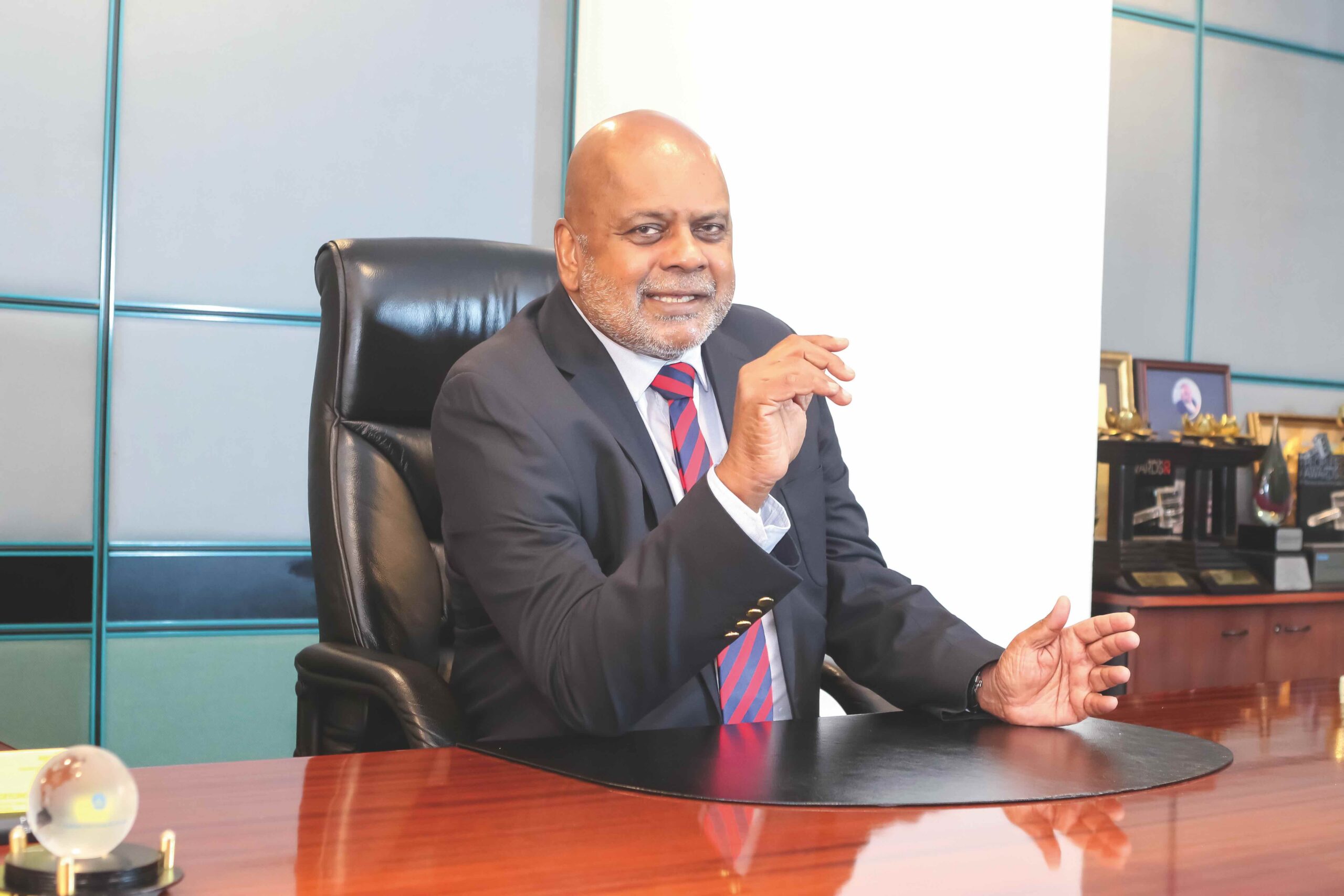
With the relaxation of vehicle import restrictions, what impact has this had on the performance of Ceylinco General Insurance, particularly in the motor insurance segment?
The motor insurance segment remains the largest component of the general insurance market in Sri Lanka. With the relaxation of vehicle import restrictions, the overall motor insurance market grew by approximately 26 percent.
Ceylinco General Insurance performed even more strongly during this period, achieving growth of around 25 percent in the motor insurance segment. This indicates that we were able to capture a larger share of the new business generated as vehicle imports resumed. Overall, the policy changes helped stimulate activity in the motor insurance sector and contributed to the insurance industry’s growth compared with the previous year.
How is digital transformation shaping underwriting, claims processing, and customer engagement across the Group’s insurance businesses?
Digital transformation has played an important role in improving efficiency across our insurance operations. We have introduced technology-driven platforms to streamline underwriting processes, accelerate claims settlements, and enhance overall customer engagement.
These digital systems enable our teams to manage their operations more efficiently while providing customers greater convenience. Policyholders can now access information about products, services, and their policies more easily through our digital platforms.
Automation has also helped simplify and shorten many previously time-consuming internal processes. Tasks that once required larger teams can now be handled more efficiently with fewer resources, while also improving accuracy and transparency. Overall, digitalization has enabled us to deliver faster service, improve operational efficiency, and provide a better customer experience.
The Group also operates insurance operations in the Maldives. How significant are international markets to the future growth strategy of Ceylinco’s insurance businesses?
We have been operating in the Maldives for over 26 years, and today we are the second-largest insurer in that market. Our operations there have delivered strong growth and profitability over the years.
The Maldivian market differs somewhat from that in Sri Lanka. While motor insurance dominates the market here, in the Maldives, there is greater demand for marine-related insurance due to the large number of boats and vessels operating in the islands. This has provided us with additional opportunities to expand our underwriting capabilities, particularly in the marine insurance segment. Overall, our presence in the Maldives has been very successful. Beyond that, we also maintain a presence in several Middle Eastern markets, including Dubai, Oman, Bahrain, and Kuwait. In these countries, we operate through strategic partnerships rather than establishing full insurance operations. Through these collaborations, we work with local partners on product development and other initiatives, thereby extending our international reach in a measured and strategic manner.
With Sri Lanka increasing its focus on renewable energy, what expansion opportunities do you see for the Group’s power generation business?
Sri Lanka has significant potential to expand renewable energy, and this opportunity extends not only to our Group but to the country as a whole. However, realizing this potential requires strong government support and policy consistency, particularly by prioritizing renewable energy over fuel-based power generation. Greater emphasis on renewables would also help reduce the country’s dependence on costly fuel imports.
As a Group, we are willing to further expand our investments in renewable energy. However, like any business, such investments must be commercially viable. When evaluating projects, we look for a reasonable return on investment. If the tariff structures or rates offered are not viable, it becomes difficult for private sector players to participate.
The objective of any business is to create value for the company, its shareholders, and its customers; therefore, the financial fundamentals of a project must be sound.
At present, discussions and committee-level engagements are taking place regarding renewable energy tariffs and policy frameworks. We hope these will lead to constructive outcomes that encourage greater private sector participation. Targets such as increasing the share of renewable energy in the national power mix are encouraging, but achieving them will require consistent policies and practical implementation. While progress has been made, continued policy clarity and stronger governance in certain areas will be essential to accelerate investment and fully unlock the sector’s potential.
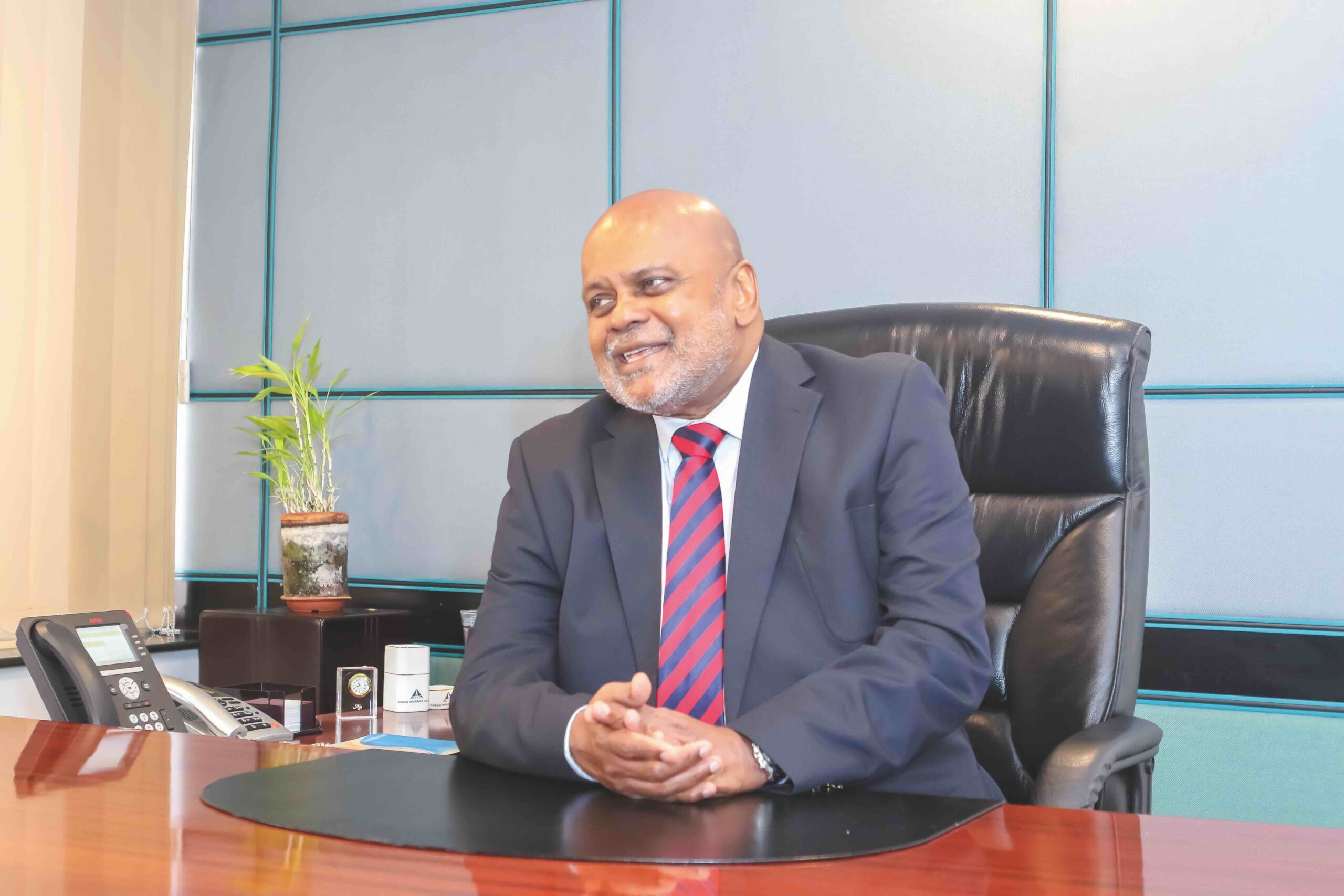
With Ceylinco Education serving students through International College of Business and Technology (ICBT), ANC Education, and Wycherley International School, what were the key developments in the education sector in 2025?
The education sector recorded several important developments in 2025 as we continued to expand both our infrastructure and academic partnerships.
At Wycherley International School, we invested approximately 1.3 billion rupees to construct a new state-of-the-art building at the Bauddhaloka Mawatha campus. This expansion was driven by strong and growing demand for quality international education. We also continued to expand our presence in other locations, including Gampaha, where we completed two new buildings at a cost of about 800 million rupees and commenced construction of another facility valued at around 600 million rupees. In addition, we acquired a new property in Panadura as part of our expansion strategy.
At the higher education level, both ANC Education and ICBT strengthened their international university partnerships. ANC has introduced programs with the University of West London, which will establish a branch Campus in Sri Lanka through ANC very soon. Meanwhile, ICBT continues its collaboration with Cardiff Metropolitan and several other Universities, enabling students to pursue internationally recognized qualifications.
These partnerships allow students to begin their studies in Sri Lanka and either transfer abroad to complete their degrees or finish the full program locally, earning the same internationally recognized certification. This approach significantly reduces the financial burden on parents, as studying locally can cost a fraction of the expenses associated with studying overseas, especially when living costs are considered.
Overall, demand for alternative higher education pathways continues to grow in Sri Lanka. With only a limited percentage of students gaining entry to state universities each year, institutions such as ANC and ICBT play an important role in providing students with internationally accredited educational opportunities.
The late Mr. Lalith Kotelawala pioneered these exceptional employee welfare policies, creating a legacy of family support, lifelong medical care, and financial security that continues to inspire loyalty across the Group.
With the rising demand for international qualifications and professional education in Sri Lanka, how is the Group expanding its academic programs and global university partnerships?
With the rising demand for international qualifications and professional education in Sri Lanka, we’ve focused on expanding both our academic programs and global university partnerships.
We have a strong base of qualified and trained lecturers, and we ensure that we attract and retain them by providing competitive opportunities. For us, quality is non-negotiable. We never compromise on the standard of education we offer, and at the same time, we maintain fair pricing. That balance is part of our hallmark.
The landscape of higher education in Sri Lanka has shifted over the years. While state universities were historically the primary avenue for students, increasing numbers are now seeking private institutions affiliated with foreign universities. This is driven partly by limited quotas in public universities and partly by the desire to gain internationally recognized degrees, diplomas, and postgraduate qualifications.
We believe there’s more than one pathway to achieving educational goals. Our international partnerships and program offerings provide students with alternative avenues to earn qualifications accepted worldwide without compromising on learning outcomes. The education delivered through our institutions meets, and often exceeds the expected standards. Ultimately, our goal is to ensure students have access to globally accredited programs that prepare them for professional success, even if traditional state university options are limited.
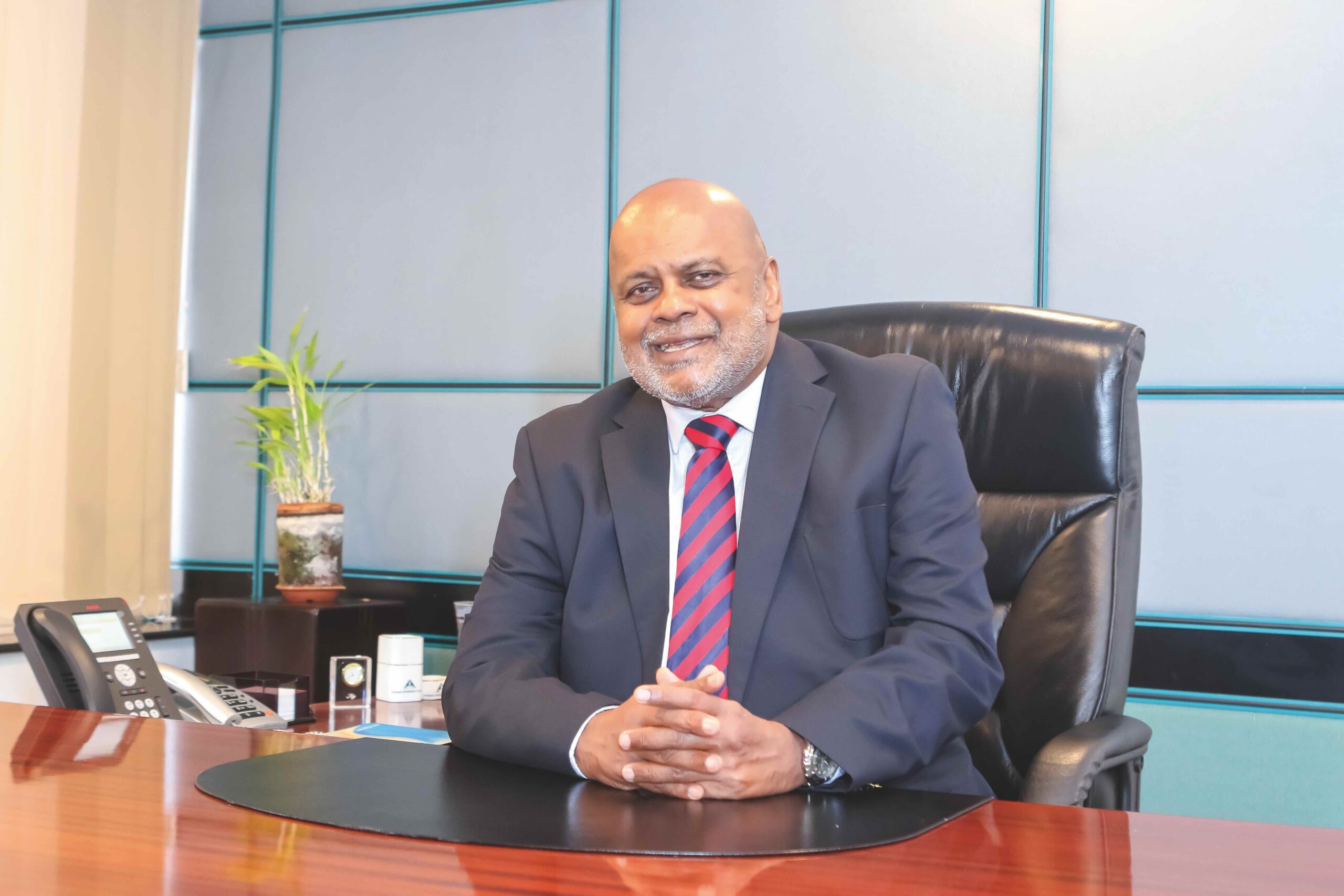
Digital transformation appears to be a strategic focus across the Group. What investments are being made to integrate technology across insurance, education, healthcare, and energy operations?
On digital transformation, we’ve made significant investments across our businesses—insurance, education, healthcare, and energy. The amount we’ve spent is substantial, and while I won’t disclose the exact figure, I can say we will continue investing as long as it delivers tangible benefits to the organization and our customers. Technology is a strategic enabler, and we view it as critical for improving efficiency, service delivery, and long-term competitiveness.
With sustainability and ESG considerations becoming central to corporate strategy, how is Ceylinco embedding sustainability into its long-term growth plans?
When it comes to sustainability and ESG, we integrate these considerations into all aspects of our long-term growth planning. We map out our strategies well in advance, looking ahead to the years and carefully evaluating which initiatives align with both our business objectives and customer benefits.
Across education, renewable energy, and insurance, we have think tanks and planning teams that assess new products, cost structures, resource requirements, and environmental impact. We only pursue initiatives where margins are sustainable, and value is created for both the company and our customers. Every decision—from product development to operational planning—considers efficiency, resource use, and long-term benefits. In short, ESG and sustainability are embedded in our growth plans, ensuring that we expand responsibly while delivering tangible value to all stakeholders.
As Sri Lanka’s economy gradually stabilizes, which sectors do you see offering the greatest growth potential for the Group over the next five years?
Looking ahead, I see the greatest growth potential for the Group over the next five years in education and renewable energy. Insurance will continue to be a stable, long-term business, but growth there is gradual and steady.
Education and renewable energy, on the other hand, still have significant untapped opportunities. Renewable energy, in particular, is a relatively new sector in Sri Lanka, and there is substantial potential for profitable expansion in these “virgin” markets.
What is your broader vision for Ceylinco Holdings as it continues to evolve from a leading insurance group into a diversified corporate powerhouse?
When I think about Ceylinco Holdings, we don’t aim to be a “corporate powerhouse.” That term isn’t part of our culture, and frankly, powerhouses often stumble over the smallest things. Our focus is on disciplined, sustainable expansion in the areas where we have deep experience and knowledge. We are cautious about entering unfamiliar businesses and prefer to strengthen what we already do well.
A core principle of our company is equality. Everyone—from executives to laborers—is treated fairly, with the same rules and opportunities. Historically, our staff has even owned a significant portion of the company without investing, and we continue to prioritize employee ownership as we expand into new avenues. Unlike many conglomerates, we avoid mergers and acquisitions. Combining different corporate cultures often creates conflicts, favoritism, and operational challenges.
All of our growth comes from homegrown businesses, which ensures alignment, cohesion, and sustainable profitability. This philosophy shapes how we operate today and guides how we envision the future: building on what we know, empowering our people, and growing organically, without shortcuts or compromises to our culture.
How does Ceylinco Holdings retain its staff and foster long-term employee loyalty?
Our staff retention is exceptionally high—except for Sales, turnover is less than two percent, even for employees who have worked for decades. We don’t terminate employees for inefficiency; the only reason someone would be asked to leave immediately is for dishonesty. If anyone leaves voluntarily, we honor their decision and ensure a smooth exit, including paying out notice periods, because no one should remain in an organization unhappily.
One of the main reasons people stay is the strong family-oriented benefits we provide. If an employee passes away, their surviving spouse continues to receive their full salary, with a ten percent annual increment, until the standard retirement age. Today, around 80 families benefit from this policy.
We also provide comprehensive support for sickness and medical needs, often covering full costs or providing additional financial assistance. If an employee passes away and their children are under 18, their family can continue using the company-provided vehicle until the children reach adulthood.
These policies apply across the Group and generally require a minimum of ten years of service, though medical benefits begin after five years. Even retired employees can continue receiving free health insurance. These programs were initially introduced by Mr. Lalith Kotalawala and have been continuously improved over the past 20 years. They reflect our commitment to staff well-being, fostering loyalty and a strong sense of belonging across the organization.