

Strengthening a historic partnership through finance, trade, and regional cooperation.
Sri Lanka and the Maldives share a relationship that extends far beyond formal diplomacy. Rooted in centuries of maritime trade, cultural exchange, and people-to-people connections, the partnership between the two island nations continues to evolve—today shaped by growing opportunities in finance, tourism, trade, and regional cooperation.
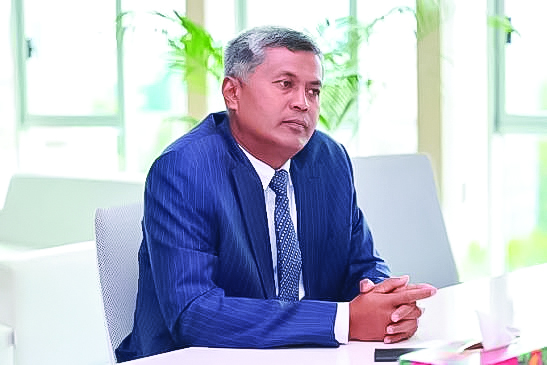
M. Rizvi Hassen, Sri Lanka’s High Commissioner to the Maldives, underscores the enduring strength of these ties and the need to reinvigorate economic engagement. At the heart of this relationship are institutions such as the Bank of Ceylon (BOC), whose long-standing presence in the Maldives reflects both trust and strategic alignment. The relationship between the two countries is deeply historical. Despite being separated by only a narrow stretch of ocean, their connections have been significant and sustained.
For decades, Maldivians have travelled to Sri Lanka for education, healthcare, and business, while Sri Lankan professionals and entrepreneurs have contributed meaningfully to the Maldives’ economic development. Even amid changing geopolitical dynamics, this relationship has remained resilient.
According to High Commissioner Hassen, it is built not just on diplomacy, but on cultural familiarity and mutual confidence. His priority is to restore the strong momentum that once defined bilateral engagement. The Easter Sunday attacks in Sri Lanka in 2019 temporarily disrupted this flow, particularly in tourism and business exchanges. Prior to that, engagement was robust, with between 20,000 and 30,000 Maldivians visiting or residing in Sri Lanka annually for various purposes. Reviving this level of interaction across sectors—tourism, trade, investment, and services—is now a key focus. Sri Lanka’s role in the Maldives’ early development further highlights the depth of this partnership. Sri Lankan businesses were instrumental in the establishment of the Maldivian tourism industry in the 1970s, contributing to some of the country’s earliest resort developments. This early collaboration laid the foundation for a durable and mutually beneficial relationship. Financial institutions have played a pivotal role in sustaining and strengthening these ties.
The Bank of Ceylon, marking over four decades of operations in the Maldives, stands as a prime example. As one of the first banks to establish a presence there, BOC has become an integral part of the Maldivian financial ecosystem, serving both businesses and individuals while facilitating financial connectivity between the two nations.
Looking ahead, the Maldives is actively pursuing economic diversification beyond tourism, with a focus on strengthening its financial services sector. With its expertise and proximity, Sri Lanka is well positioned to support this transition. Institutions like Bank of Ceylon act as practical bridges, enabling trade, investment, and financial collaboration. Opportunities for deeper engagement span multiple sectors, including hospitality, agriculture, construction, and financial services. Maldivian authorities have expressed a M. Rizvi Hassen, Sri Lanka’s High Commissioner to the Maldives. strong interest in partnering with Sri Lankan institutions, particularly in areas such as tourism training and agricultural development. High Commissioner Hassen offers a clear message to Sri Lankan businesses: opportunity should not be measured by geographic size.
The Maldives, though small in land area, presents significant economic potential. Rebuilding Sri Lanka’s historic maritime linkages across the Indian Ocean must now be a strategic priority. In this context, the Maldives stands not only as a trusted partner but also as a gateway for regional growth. Crucially, sustained policy alignment and private sector collaboration will determine the pace of progress. Strengthening banking connectivity, easing trade processes, and encouraging joint ventures can unlock new value for both economies. With institutions like BOC leading the way, the Sri Lanka–Maldives partnership is well-positioned to evolve into a model of regional cooperation in the Indian Ocean.