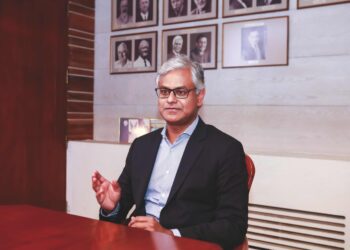

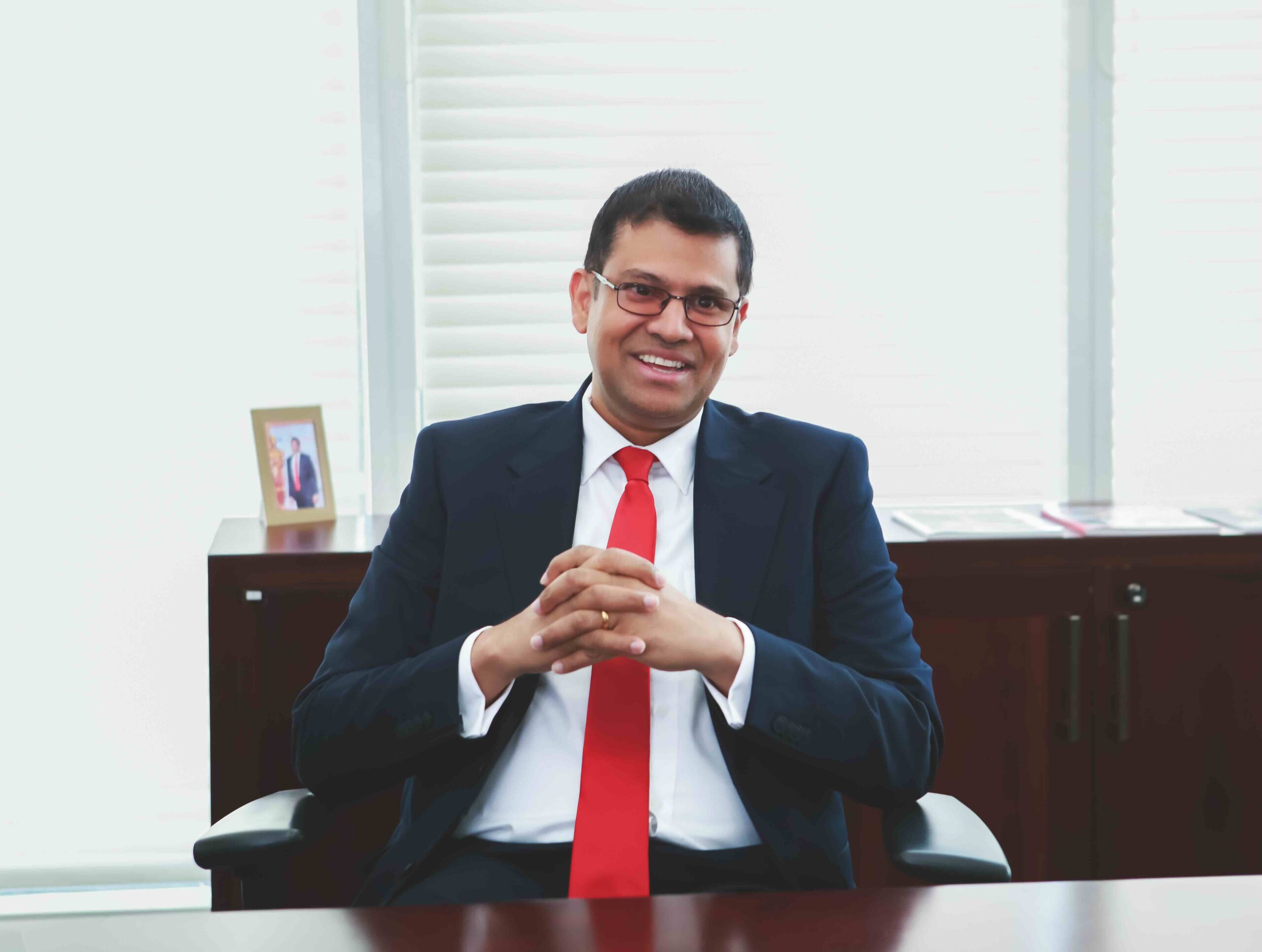
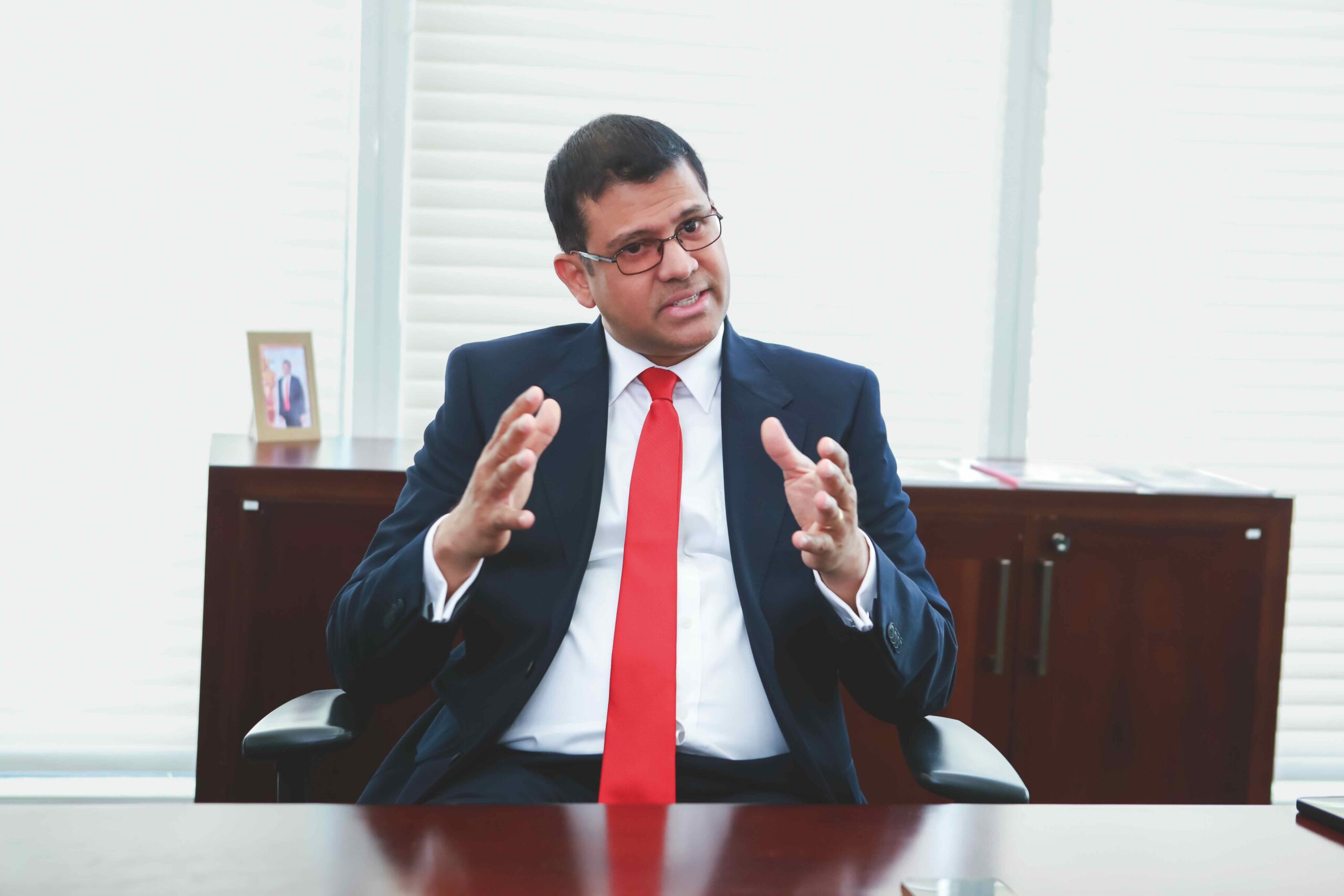
In 2024, Seylan Bank achieved its highest-ever after-tax profit, demonstrating strategic foresight and a commitment to customer-centric banking. Director/CEO Ramesh Jayasekara discusses the key drivers of Seylan Bank’s success: digital transformation, targeted credit growth, and extensive automation to improve customer service delivery. Seylan Bank continued its growth trajectory into 2025. He outlines how Seylan Bank nurtures talent, adapts to customer behaviors, and sets strategic priorities for sustained growth in Sri Lanka’s dynamic economy.
Words: Jennifer Paldano Goonewardane.
Photography: Sujith Heenatigala and Dinesh Fernando.
Seylan Bank recorded its highest-ever PAT in 2024, marking a major milestone in its 36-year journey. What were the defining strategic and operational drivers behind this record-breaking performance?
Our 2024 performance resulted from aligning strategic and operational commitments across the organization. First, digital transformation was a major priority. We invested significantly in mobile and internet banking platforms, focusing on user interface enhancements and customer education. Today, roughly 45 percent of our customers engage digitally, which has increased convenience, deeper engagement, and operational efficiency. Our credit growth remained disciplined and proactive.
Quick, tailored solutions for clients helped build our asset base and profitability. We emphasized automation and process optimization to reduce turnaround times and simplify customer interactions, driving greater efficiency in loan applications, payments, and onboarding new services.
We maintained fundamental banking principles, growing our deposit base and protecting loan quality to support liquidity and strengthen capital ratios. We also encouraged diversified revenue streams and strong risk management, keeping impaired loans manageable and provisioning robust.
The Bank delivered this performance amid the aftereffects of Sri Lanka’s 2022 economic downturn. What were the toughest challenges Seylan faced during this recovery phase, and how were they overcome?
Understanding our customers became the foundation of our response. We recognized that recovery would not happen overnight. Many clients required restructuring support, flexible repayment arrangements, and advisory guidance rather than just conventional banking solutions. So we worked closely with them, whether they were SMEs, corporates, or retail borrowers. Supporting them through difficult periods was not only the right thing to do but also critical for long-term sustainability.
We participated in industry relief measures during the crisis and strengthened internal risk oversight to maintain asset quality through disciplined provisioning and prudent lending decisions.
Liquidity and capital resilience remained priorities, with automation and digital channels bolstering stability during constraints. Perhaps most importantly, we adopted a long-term mindset. Banking is not about good times alone. Customers will experience ups and downs.
Our role is to support them through the downturns so that when recovery begins, they are in a position to grow again.
Today, we are seeing many of those customers who struggled during the crisis come through stronger. Businesses are stabilizing, credit demand is improving, and confidence has gradually returned.
Our sector’s recovery reflects collective resilience and discipline. For Seylan, the key lesson is clear: relationship banking matters most in difficult times. By understanding our customers and supporting them in their toughest moments, we built today’s strong performance.
Following the strong performance in 2024, how has Seylan Bank sustained its growth momentum into 2025?
So far, the year has been very encouraging. As we close in on finalizing our 2025 financials, the trends through the year has been positive. We are on track to deliver another strong performance. While full-year figures are still being finalized, the underlying momentum — especially in credit growth — gives me confidence.
I believe 2025 could be even better than 2024. We have maintained disciplined expansion in our loan portfolio. Our teams have been thoughtful in identifying sound lending opportunities. Specifically, we focused on segments showing post-crisis recovery and demand, such as exports, healthcare, renewable energy, and productive corporate credits.
As a result, this sustained credit growth contributes to both net interest income and long-term customer engagement. Our investments in digital capabilities are delivering results, with customers increasingly choosing online platforms for transactions and account management, improving efficiency and reducing costs.
In 2025, we placed even greater emphasis on fee and commission income and intentionally positioned it as a strategic complement to interest income. We continue to sharpen operational and risk frameworks. Maintaining robust credit quality remains central, supported by prudent underwriting, forward-looking provisioning, and vigilant monitoring. A deep understanding of customer needs underpinned our growth momentum and strategic progress in 2025.
Have you observed shifts in customer behavior, credit demand, or investment patterns in 2025 compared to the immediate post-crisis period?
In the aftermath of the economic crisis, customers were understandably cautious. Spending patterns were subdued, and appetite for borrowing was limited. Both individuals and businesses focused on conserving liquidity. There was a general sense of restraint as people adjusted to higher interest rates, inflationary pressures, and economic uncertainty.
However, 2025 marked a clear turning point. One of the most noticeable developments was the surge in demand for vehicle financing. When vehicle import restrictions were lifted in February 2025, we witnessed a significant spike in demand from individual customers and SMEs. That translated into strong vehicle loan growth for us during the early part of the year. While that demand has since normalized, the surge contributed meaningfully to our credit expansion in 2025. We also observed a broader revival in credit demand. As interest rates declined, borrowing became more attractive and viable again. This supported a steady expansion of our credit book, driven by more confident consumer and corporate sentiment.
We also noticed an encouraging rebound in consumer spending. In December 2025, we saw strong transactional volumes across cards and digital channels. Customers who previously spent cautiously have shown more confidence. Increased activity across retail payments, merchant transactions, and digital banking platforms reflects improving sentiment and economic stabilization.
If current trends continue, this improving demand environment holds well for 2026 as well. Our focus remains on supporting that growth responsibly, ensuring that credit expansion is sustainable, asset quality remains strong, and customer confidence continues to build.
Trade Finance emerged as a standout contributor with significant growth in 2024. How has this segment evolved in 2025, and what opportunities do you foresee in regional and global trade flows?
One of the most immediate drivers in early 2025 was the easing of import restrictions, particularly on vehicles. When restrictions were lifted in February, we saw a sharp increase in Letters of Credit (LCs) being opened for vehicle imports. We did not initially expect demand to be that strong, especially given the revised duty structures. However, pent-up demand over nearly four years led to significant trade volumes flowing through the system. That provided a meaningful boost to our trade finance portfolio.
Also, as economic stability gradually returns, we are seeing increased movement in both imports and exports. Trade flows are becoming more active, and transaction volumes are steadily growing. Moreover, as Sri Lankan exporters expand production, there is a corresponding increase in import activity. This interdependence naturally strengthens trade finance demand across multiple segments.
We will capture the opportunities that these shifts offer by strengthening correspondent banking relationships to facilitate smoother cross-border transactions, enhancing our digital processing capabilities to improve turnaround times for LCs, guarantees, and documentary collections, providing tailored working capital solutions to exporters and importers, and supporting SME exporters, who are increasingly looking at regional markets for growth.
Seylan Bank made notable progress in improving asset quality, with the Net Impaired Loan ratio declining significantly. What internal frameworks or recovery strategies enabled this turnaround?
This turnaround was driven by a disciplined and structured approach across several pillars. First, we shifted decisively toward cash flow–based lending. We focused on understanding the borrower’s actual cash generation capacity. Every lending decision was anchored on whether sustainable cash flows could support repayment. This approach naturally improves portfolio resilience because repayment ability becomes the primary driver.
Second, we refined our sectoral risk appetite. We consciously directed lending toward sectors we believed had strong structural growth and resilience. These included healthcare, education, export-oriented industries, and agriculture. By aligning our portfolio toward these segments, we strengthened both asset quality and earnings stability.
Third, we adopted a far more data-driven credit culture. We enhanced our internal analytics and monitoring frameworks, using a broader set of data points to evaluate borrowers, sector trends, and early warning signals. This allowed us to make more informed credit decisions about whether to lend, how much to lend, what structure to use, and what risk mitigation to apply.
Fourth, we strengthened our recovery and monitoring mechanisms. We intensif ied post- disbursement monitoring and engaged proactively with customers showing early signs of stress. Where necessary, we implemented restructuring solutions that were commercially viable while safeguarding the bank’s interests.
Underpinning all of this is a strong risk governance framework. As a result of these combined efforts, we have seen meaningful improvements in our Stage 3 ratio and overall impaired loan levels. I believe the frameworks we have put in place position Seylan Bank to maintain high portfolio quality even as we continue expanding our credit book.
We also observed a broader revival in credit demand. As interest rates declined, borrowing became more attractive and viable again. This supported a steady expansion of our credit book, driven by more confident consumer and corporate sentiment.
As credit demand gradually strengthens, how is Seylan ensuring a balance between aggressive growth and prudent risk management?
We are always cautious in our approach. Growth is important, but quality growth matters most. When credit demand improves, there is naturally pressure to expand the portfolio quickly. However, we make it very clear internally that we will not onboard credit that does not meet our risk standards, regardless of how attractive short-term numbers may look. Our approach is anchored in a clearly defined risk appetite framework.
Every quarter, we conduct a comprehensive review of sectoral performance, macroeconomic trends, and internal portfolio analytics. Based on that assessment, we identify sectors with strong structural growth and healthy cash flow patterns, sectors where we prefer moderate exposure, and sectors where we intentionally constrain lending. For example, we are comfortable lending into areas such as healthcare, education, export-oriented industries, and select segments of agriculture — sectors that demonstrate resilience and sustainable demand. Conversely, where we see volatility, weaker fundamentals, or elevated systemic risk, we deliberately moderate our exposure. This dynamic calibration allows us to grow where we have confidence, while limiting concentration risk elsewhere.
Our philosophy is that growth must be calculated. If lending decisions are based on disciplined analysis, aligned with our defined risk appetite, and supported by strong governance, then expansion can be both profitable and sustainable.
Are there particular sectors of the Sri Lankan economy that Seylan is prioritizing or approaching cautiously in the current lending environment?
Yes, as part of our disciplined growth strategy, we are very intentional about which sectors we prioritize for lending and which ones we approach with caution. This is not based solely on broad industry perception, but on ongoing data-driven assessments of sector dynamics, cash flow viability, and the future outlook.
Some industries are still in the early stages of recovery or face structural challenges that make credit risk harder to predict. In these areas, we are not closing doors; we are just very selective. However, if we already have an existing customer in a cautious sector, we continue to support them. For new entrants or new credit relationships in those sectors, we apply heightened risk measures — including deeper due diligence, stricter cash-flow analysis, and more conservative structuring.
Our sector-specific approach complements our broader lending framework — one that balances the need for growth with prudent risk governance, supported by robust credit analytics and a strong monitoring culture. It’s this balance that enables us to expand responsibly while safeguarding the bank’s financial strength.
Customer satisfaction and relationship deepening are key pillars of Seylan’s strategy. How is the Bank strengthening long-term customer loyalty in an increasingly competitive banking landscape?
Our tagline is the ‘Bank with a Heart,’ defines how we approach banking. What I consistently tell my team is that banking is about relationships. Transac tions are temporar y. Relationships are long-term. When I meet customers across the country, many tell me they have been banking with Seylan for 20, 25, or even 30 years.
That continuity does not come from one product or one competitive rate, it comes from trust and connection. Customers will experience good times and difficult times. Our responsibility is to stand by them through both. During challenging periods, particularly in the recent economic crisis, we made a conscious effort not to default to saying “no.” Instead, we sat down with customers — especially SMEs and mid-tier corporates — to understand their situation. If restructuring was needed, we explored viable options. If repayment schedules required adjustment, we worked collaboratively to structure solutions that protected both the customer and the bank. That partnership mindset is embedded in our culture. We operate through a network of over 170 branches across Sri Lanka, and that physical presence remains a strategic advantage. Our branch managers and relationship officers know their customers personally. In many cases, they understand not only the client’s business profile but also their family background and long-term aspirations. Importantly, our service standards are externally recognized as well. In 2025, we were honored with international recognition for customer service excellence, reinforcing that our relationship-centric approach resonates not just internally but also within the broader industry landscape.
As Seylan accelerates digital adoption across its operations, what key digital innovations introduced in 2024 and 2025 have had the most significant impact on customer experience and operational efficiency?
In 2024 and 2025, we accelerated our digital transformation to make banking faster, simpler, and more convenient for our customers. We introduced three key innovations that have had a major impact on customer experience and operational efficiency.
One is a pawning top-up and partial online settlement. Under this facility, if a customer has a pawning transaction with us and the underlying asset value supports it, they can request a top-up or partially settle the loan directly through internet banking, without visiting a branch. This is particularly helpful for customers who need additional liquidity quickly or want to reduce interest by partially settling, all at their convenience. We also introduced a cashback facility that allows customers to access funds against their fixed deposits in just a few clicks. Through the Fast Facility Against Fixed Deposits (FDs) via internet banking, customers no longer need to visit a branch. If they urgently need money, they can log in, complete a few simple steps, and receive the funds instantly. This has significantly enhanced turnaround times and customer satisfaction.
Onboarding new customers used to involve completing paper forms, taking multiple copies of documents, and waiting for account activation. Now, through our EKYC process, everything is digital. When a customer comes to open an account, we capture details and photographs digitally. Within 20 minutes, the customer receives an account number, a debit card, e-statements, and can start transacting immediately. This has drastically reduced paperwork, eliminated delays, and improved the onboarding experience.
We view these digital initiatives as part of a broader strategy to expand beyond brick-and-mortar banking. While branches remain important for relationship management, the future of banking lies in seamless, digital-first experiences. By continuing to introduce smart, customer-centric digital solutions, we aim to ensure that our clients can engage with us effortlessly, anytime, and anywhere.
With growing optimism about Sri Lanka’s economic recovery, which macroeconomic indicators give you confidence in stronger banking sector growth moving forward?
First and foremost is GDP growth. Our forecasts suggest that the economy could expand by around 3 to 4 percent in 2026, which is encouraging given the uncertainties following the challenges of previous years. Strong GDP growth typically translates into higher business activity, improved income levels, and ultimately, greater demand for banking products — from credit to transactional services. Interest rates are another key factor. In 2025, rates came down significantly, and we expect them to remain relatively stable into 2026. Lower borrowing costs make credit more affordable for both individuals and businesses, supporting sustainable credit growth. At the same time, it creates a conducive environment for investment and consumption, which benefits both the economy and the banking sector.
Inflation is also under control. In 2025, inflation averaged around two percent, and the Central Bank has indicated its intention to maintain inflation at or below five percent. Low and stable inflation helps maintain the real value of savings, preserves purchasing power, and reduces pressure on interest margins, all of which are positive for banks.
Even with external shocks, such as Cyclone Ditwah, these macroeconomic fundamentals provide a solid foundation for banking sector growth. When GDP expands, rates are moderate, and inflation is stable, we expect both consumer confidence and credit demand to remain strong.
How do you see interest rate movements and monetary policy shaping credit demand and banking profitability in 2025 and beyond?
In 2025, we experienced strong credit demand across retail, SME, and corporate segments, largely supported by the lower interest rate environment. If interest rates remain stable into 2026, we expect a similar pattern to continue – healthy loan growth without compromising asset quality.
Monetary policy also plays a critical role in shaping the banking landscape. The Central Bank’s focus on maintaining inflation at manageable levels — around five percent — provides predictability and stability, which is vital for both borrowers and lenders. Stable inflation preserves the real value of repayments, reduces pressure on interest margins, and helps maintain overall profitability in the banking sector.
When you combine stable interest rates, controlled inflation, and projected GDP growth of around three to four percent, the environment becomes conducive for sustainable credit expansion. I think 2026 has the potential to mirror the positive trends of 2025. The combination of supportive monetary policy and stable rates gives us confidence that credit growth and profitability will remain strong.
In terms of promoting financial inclusion, how much do you focus on supporting women entrepreneurs?
We are deeply committed to promoting financial inclusion, and a key part of that is supporting women entrepreneurs, who play a vital role in Sri Lanka’s economy. Women are often the backbone of families and communities, contributing significantly to the economy and society. Empowering women to grow their businesses has a multiplier effect on households, employment, and overall economic activity.
To support this, we recently launched a dedicated product called ‘Dinana Aya,’ which translates to ‘The Woman Who Wins.’ This scheme is specifically designed for women-led SMEs and aspiring women entrepreneurs who want to start or expand their own businesses. Whether it’s cookery, bridal dressing and makeup, artisanal crafts, or other ventures, this product provides affordable, low-interest credit to help them launch and scale their businesses.
Our philosophy is that growth must be calculated. If lending decisions are based on disciplined analysis, aligned with our defined risk appetite, and supported by strong governance, then expansion can be both profitable and sustainable.
How strong is the bank in ESG implementation?
We take ESG very seriously. One of the cornerstones of our approach has been supporting education. For over a decade, we have run a flagship initiative called ‘Seylan Pahasara,’ a library project aimed at promoting literacy and learning across Sri Lanka.
When we first started, we aimed to establish 50 libraries. But as the project’s impact became clear, the initiative grew. Today, we have opened our 290th library, and by the end of this year, we expect to surpass 300 libraries. Importantly, we focus on reaching the smallest schools, particularly those in underserved areas, to help provide children with a level playing field regardless of their background. We strongly believe that education is one of the most powerful tools for empowerment and social mobility.
In addition to traditional books, libraries offer laptops, smartboards, and internet access, giving students access to digital learning tools. We also integrate practical programs. For example, Math Days, cookery workshops for girls, and basic financial literacy sessions, to make learning engaging and relevant. The goal is to instill curiosity, critical thinking, and lifelong learning habits from a young age. Education is just one pillar of our ESG framework. But it is a particularly strong one because it reflects our long-term commitment to the community. We believe that supporting learning and literacy empowers the next generation to succeed, thereby contributing to broader economic and social development.
As Seylan builds on its strong financial performance, what are the Bank’s top strategic priorities for the next three to five years?
Digital transformation remains central. Our goal is to make banking seamless and convenient for our customers. We want them to transact with us quickly and efficiently without having to visit a branch. To achieve this, we are continuously introducing new digital products and services, expanding mobile and internet banking capabilities, and enhancing self-service options. The aim is to create an environment where customers can manage their financial needs anytime, anywhere.
Operational efficiency and internal transformation are key priorities. We have established a dedicated Digital Transformation and AI unit, headed by a Deputy General Manager (DGM), to evaluate our internal processes and identify opportunities for automation and cost reduction. By streamlining workflows and reducing manual intervention, we improve efficiency.
Credit growth remains a core strategic pillar. We are adopting a selective and aggressive approach, focusing on sectors and segments where we have expertise and strong risk management frameworks. By concentrating our lending in high-potential areas, we aim to outperform competition while maintaining portfolio quality. ESG integration is a long-term priority. We continue to strengthen our ESG policy, with initiatives such as green lending, renewable energy financing, and education projects like Seylan Pahasara.
This approach ensures that Seylan Bank can continue to innovate, respond quickly to market changes, and maintain its competitive edge, all while developing the next generation of leaders within the organization.
How is Seylan nurturing talent, innovation, and agility within the organization to remain future-ready?
We deliberately maintain a blend of experienced staff and new, agile talent. Our experienced employees understand our complex systems and operational frameworks, which are critical for stability and continuity.
At the same time, we bring in young, dynamic talent who are not afraid to question established processes and think creatively about how to transform, innovate, and improve. This combination allows us to plan strategically, thinking not just about today but one, two, and three years ahead, and ensures that we have the right skills to execute our long-term vision.
To nurture engagement and openness, we conduct quarterly Town Halls across all 13 Regions of the bank. I personally visit each region — for example, in the Northern Area, I would meet staff across all branches in Northern Region. These Town Halls are open forums, where employees can ask questions about any thing — promotions, increments, transfers, or suggestions for improvement. Transparency is critical.
We want our staff to understand not just the ‘what’ but the ‘why’ behind decisions. Initially, there were reservations about whether HR-related questions should be addressed publicly, but I made it clear that nothing should be hidden, and every legitimate concern should be heard and explained. This approach has been very positively received, creating trust and a sense of inclusion among our teams. We also focus on recognition and appreciation, which are essential for engagement and morale. We introduced a monthly ‘Thanking Day’ to take time to acknowledge and celebrate employees who have performed well. Not only do I participate, but so do our Deputy General Managers and other leadership, which encourages a culture of appreciation that flows throughout the organization. Simple acts, like thanking people for a job well done, go a long way toward motivating staff and reinforcing a positive, high-performance culture.
The workforce of today is very different from that of two decades ago, and we adapt by fostering curiosity, encouraging agility, and combining them with deep institutional knowledge. This approach ensures that Seylan Bank can continue to innovate, respond quickly to market changes, and maintain its competitive edge, all while developing the next generation of leaders within the organization.
Today, organizations are dealing with a young, new-generation workforce. How they regard employment differs from previous generations. How do you deal with such dynamics?
As I said earlier, we recognize that today’s workforce’s expectations are very different from those of previous generations. Many new employees view employment in shorter time horizons and seek experiences that are meaningful, flexible, and rewarding. Our average staff tenure is around 14 years, reflecting a mix of long-serving senior staff and newer employees. To engage and retain this new generation, we must adapt our management philosophies. Traditional hierarchical structures, where employees had to navigate multiple layers before sharing ideas, are no longer effective. Today, if someone has a good idea, they must be able to communicate it directly, including to senior leadership, without unnecessary bar r ier s . Encouraging open communication fosters innovation and ensures that we capture the energy and creativity of our younger staff. Work-life balance is another crucial factor. In the past, long hours were considered a measure of commitment. Now, younger employees expect balance. This is true not only for junior staff but also for senior employees. Recognizing contributions, providing timely feedback, and celebrating achievements are all essential to maintaining motivation and engagement.
We understand that HR philosophies must evolve. The old ways of enforcing rigid structures or expecting unquestioned loyalty no longer work. Employees today are willing to move on if their needs are not met, and they expect workplaces to be agile, responsive, and adaptive. That said, Seylan Bank has a strong and established people-friendly culture. Our approach is gradual and balanced, we integrate flexibility and responsiveness where they matter, while maintaining the stability and values that have shaped our organization over the decades.