
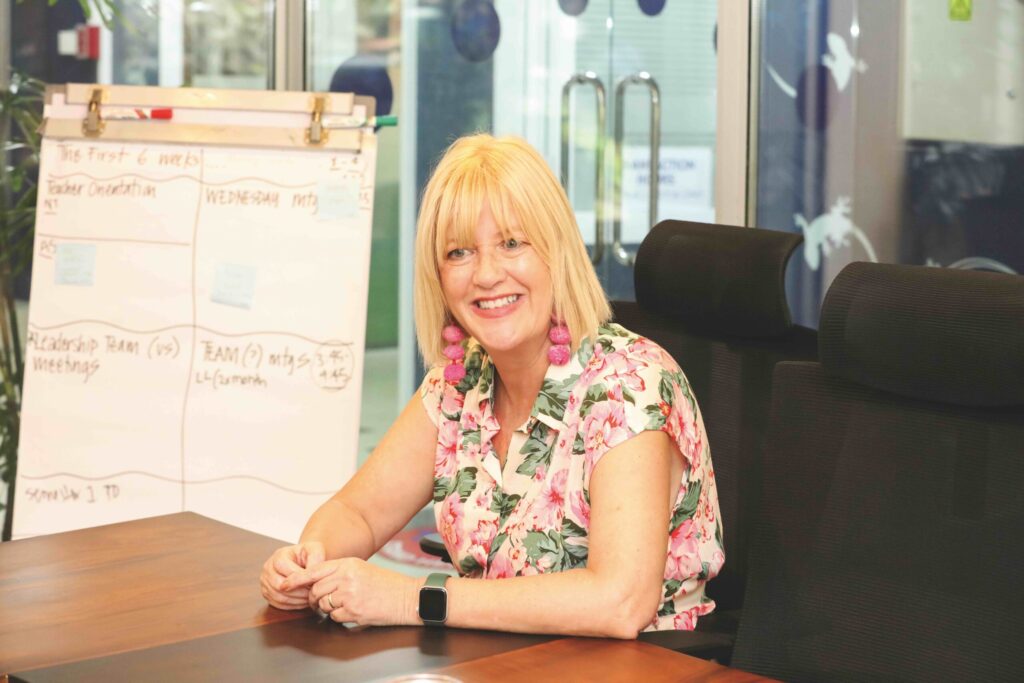
Nel Capadona, Head of School, The Overseas School of Colombo (OSC).
Nel Capadona is the new Head of School at The Overseas School of Colombo (OSC). Nel brings with her a thirty-year career in education. OSC’s community-based approach and alignment with her values of compassion, curiosity, and unity in diversity appealed to her. Speaking with Business Today, Nel emphasized OSC’s focus on creating a safe learning environment through restorative practices, parent partnerships, and student empowerment, while also addressing how the school approaches modern challenges like technology and AI in education. As the only international school in Sri Lanka offering the full International Baccalaureate (IB) continuum, she highlighted how the IB program differs from traditional education and its advantages in creating globally minded individuals. OSC has a modern approach to teaching and learning, ensuring a balance between academics and extracurricular activities, and a commitment to environmental sustainability.
Words Jennifer Paldano Goonewardane.
Photography Sujith Heenatigala and Dinesh Fernando.
Please tell us about your professional journey in education and the experiences that have shaped your leadership style.
Originally from the UK, I have been an educator for over 30 years and knew from a young age that I wanted to teach. School was my sanctuary, and the care of my teachers shaped who I am today. I began by teaching at-risk students in high-poverty, inner-city schools, which deeply influenced my commitment to equity and student well-being.
An international teacher exchange brought me to Arizona, where I became certified in trauma-informed instruction and later worked as a literacy specialist, instructional coach, and university lecturer. For the past 20 years, I have served as a Head of School, eight years in the U.S., followed by international leadership roles in Thailand, Latvia, and now Sri Lanka.
My leadership remains grounded in my early teaching: uplifting others, helping them reach their potential, and creating communities where everyone feels valued and heard.
What attracted you to OSC, and what excites you most about taking on the role of Head of School?
When I first heard about the position, it immediately spoke to me. OSC is a community-based school with values and a mission that inspires compassion, courage, and curiosity.
I believe in our motto of “unity in diversity” and felt this was a school where the values already reflected who I am as a leader and educator. The opportunity to work with a collaborative Board was also key. Having been appointed more than a year ago, I have had time to visit, connect with the team, and prepare myself to serve the community.
OSC is the only international school in Sri Lanka offering the full International Baccalaureate (IB) curriculum. How significant is this for the school and the country?
Founded in 1957, OSC has been IB-accredited since the 1980s. While many IB schools offer one or two programs, we are the only school in Sri Lanka authorized to offer all three: the Primary Years, Middle Years, and Diploma Programs.
The IB prepares students for academic success and equips them with critical skills such as inquiry, communication, and problem-solving. Just as importantly, it fosters compassion, global awareness, and a lifelong love of learning.
How does the IB curriculum differ from traditional syllabi, and why is it better suited for today’s world?
The IB educates the whole child, encouraging international-mindedness and recognition of our common humanity. Unlike traditional models where knowledge is delivered to students, IB places students at the center of their own learning.
Teachers guide them to discover passions, collaborate with peers, and learn responsibility toward one another and the planet. This approach nurtures creativity, inclusivity, and adaptability, qualities essential in a changing global context.
What are the advantages of the IB curriculum for expatriate students who move from country to country?
The IB was created in 1968 to provide continuity for internationally mobile families, allowing students to transition smoothly between schools worldwide. Beyond consistency, it also fosters global citizenship, intercultural understanding, and appreciation of peace. For families, the IB offers the assurance of a globally recognized curriculum that opens doors to schools and universities everywhere.
Why should Sri Lankan parents consider OSC for the IB curriculum? What sets OSC apart?
We recognize that Sri Lanka has many excellent schools, and OSC is proud to be a school of choice. Families choose us because they share our vision of nurturing globally minded students who want to make a positive difference. What sets us apart is our strong sense of community, where parents are valued partners and students are encouraged to find joy in learning within a truly international environment.
OSC has consistently achieved a high pass rate in the IB Diploma. To what do you attribute this success?
We encourage every student who wishes to pursue the IB Diploma to do so, and we measure success not only in pass rates but also in the joy of lifelong learning that students develop along the way. Not all students take the Diploma, and we support multiple graduation pathways to meet diverse needs. Our results reflect a community effort of teachers, parents, staff, and students working together to empower learners and help them take ownership of their growth.
OSC emphasizes small class sizes. How does this help teachers give more personalized attention?
Small class sizes allow teachers to truly know each student, their strengths, challenges, and learning styles, so they can provide more personalized support.
With students ranging from age three to eighteen, we adapt our approaches to meet developmental needs at each stage, ensuring all learners thrive.
What would you say about the strength and caliber of OSC faculty?
Our faculty share a passion for serving students with care. They meet students where they are, honor individuality, and believe in every child’s capacity to succeed. Beyond academics, they see students as whole people and work closely with parents to prepare them for success at OSC and beyond. Their expertise, compassion, and commitment make learning both rigorous and joyful.
What’s your selection process like when it comes to hiring teachers?
We seek globally minded educators who see diversity as a strength, embrace the IB philosophy, and differentiate instruction to meet diverse needs. Hiring involves the leadership team as well as faculty and staff to ensure strong community alignment. Above all, we look for teachers who put children first and empower students as advocates for their own learning.
What is the composition of teachers and students in terms of nationality?
OSC has about 60 faculty representing nearly 20 nationalities, with around 20 percent Sri Lankan. Our student body of roughly 300 represents more than 40 nationalities, with about 20 percent Sri Lankan. This diversity is also mirrored in our School Board, ensuring rich perspectives throughout our community.
How does this cultural diversity enrich the learning environment?
Diversity at OSC reflects the wider world and gives students daily opportunities to practice open-mindedness. We strive to go beyond tolerance toward genuine appreciation and curiosity. This environment helps students grow as globally minded leaders who recognize bias, value multiple perspectives, and build meaningful connections across differences.
How important is the balance between academics and extracurricular activities?
At OSC, academics and extracurriculars are inseparable. Research shows that children learn best when they feel safe socially and emotionally as well as academically. By supporting the whole child, we create a balance that helps students feel confident, engaged, and able to thrive in their learning.
In what ways can Sri Lankan children benefit from studying in such a multicultural environment?
We want Sri Lankan children and families to feel they are part of a valued community, not an elite group. Students share their own culture while also experiencing a global, IB learning environment. This blend empowers them to take pride in Sri Lanka while building the skills to thrive internationally.
What are the safety protocols in place at OSC?
Safety is a top priority. We have robust safeguarding initiatives to ensure students feel safe physically, socially, and emotionally. Rather than only relying on rules, we establish shared agreements across classrooms, staff, and parents that guide how we interact. These commitments are unique to our culture and reflect humility, respect, and care.
What can you tell us about parent-teacher relationships at OSC?
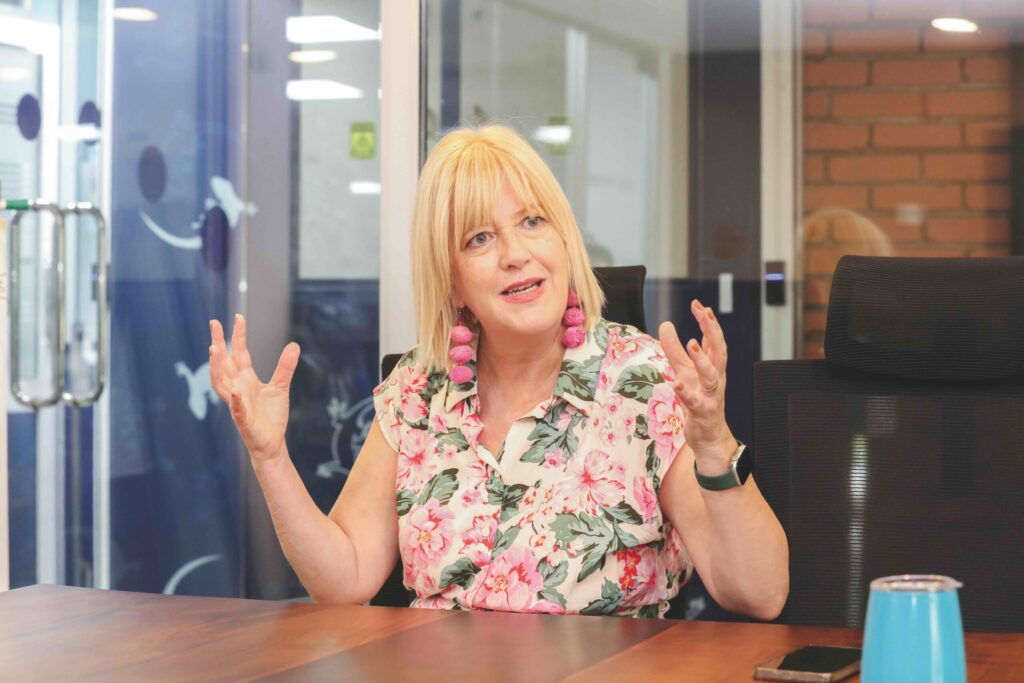
Parent–teacher relationships are defined by openness, collaboration, and shared responsibility. Parents are highly engaged and well-informed about their child’s learning journey. For example, at our Meet the Teachers evening, parents experienced a condensed version of their child’s school day, moving from class to class alongside teachers and guided by student ambassadors. This reflects our philosophy that every role, parent, teacher, or Head of School, is equally important in shaping learning.
“The IB at OSC nurtures not just bright minds, but future-ready leaders with purpose and global vision.”
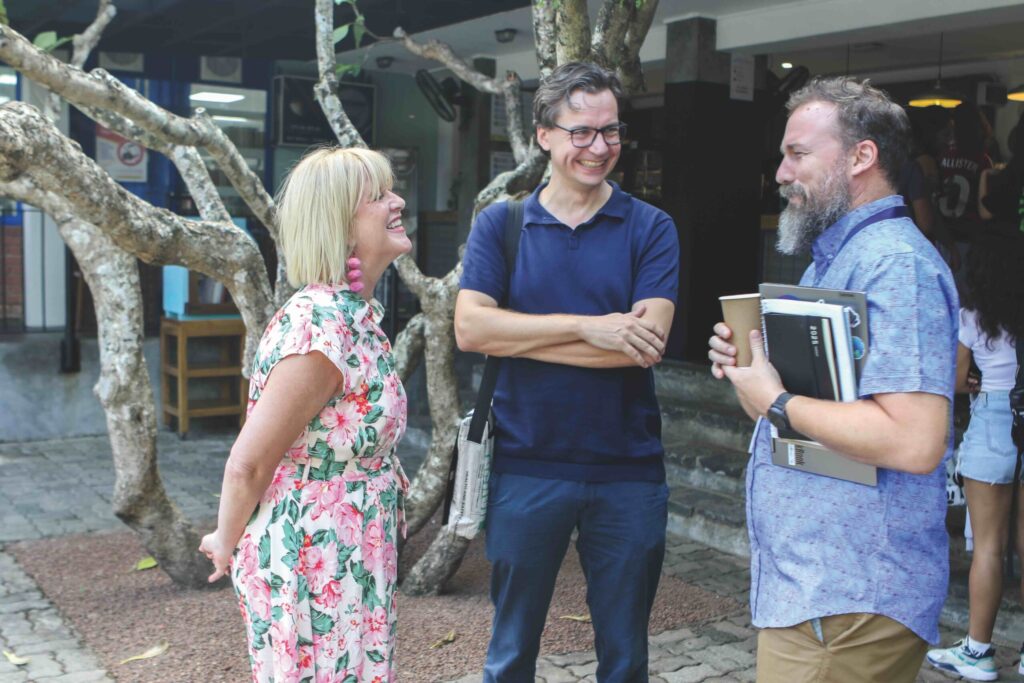
Nel’s hands-on approach reflects her commitment to building a connected, thriving community.
What are the key trends shaping global education today?
Education is increasingly about agility and adaptability. Students must know themselves as learners, collaborate with people who think differently, and recognize the value of multiple perspectives. Flexibility, open-mindedness, and effective collaboration are becoming essential for the future.
How is technology and AI shaping education?
Like calculators in the 1970s, AI initially sparked concern. Its value depends on how it is used. At OSC, we address risks such as dishonesty by understanding root causes and guiding students to use AI responsibly. We train teachers, encourage honest conversations, and focus on using technology as a tool to enrich learning while never replacing human connection.
Does the school have any special outreach programs?
Yes. Service and sustainability are central to OSC. Every division offers outreach opportunities, many of them student-led, with themes ranging from local to global engagement. We are proud to be the first school in the world to earn a green sustainability certification, driven entirely by student initiative.
How do you approach discipline and conduct at the school?
We believe in restorative practices, teaching students from the earliest years how to regulate their emotions and manage challenges in healthy ways. With dedicated teachers, leaders, and counselors across all divisions and a strong support team, we approach discipline proactively. Our focus is on positive discipline, guiding students to recognize difficulties, work through them, and grow from the experience.
How do you envision OSC evolving in the coming years?
Our future depends on staying connected with students. Adults cannot assume we know what they need; instead, we must listen, involve them in decision-making, and support them as whole individuals. By keeping student voices at the center, OSC will continue to thrive as a leader in international education in Sri Lanka.
What is your message to those who want to know more about OSC and its work?
We welcome anyone interested to visit us, whether to explore admissions or partnerships. Collaboration is central to our philosophy, and we value opportunities to share our work. It is important that every visitor feels welcome, and we are always delighted to open our doors to those who want to learn more about our community.